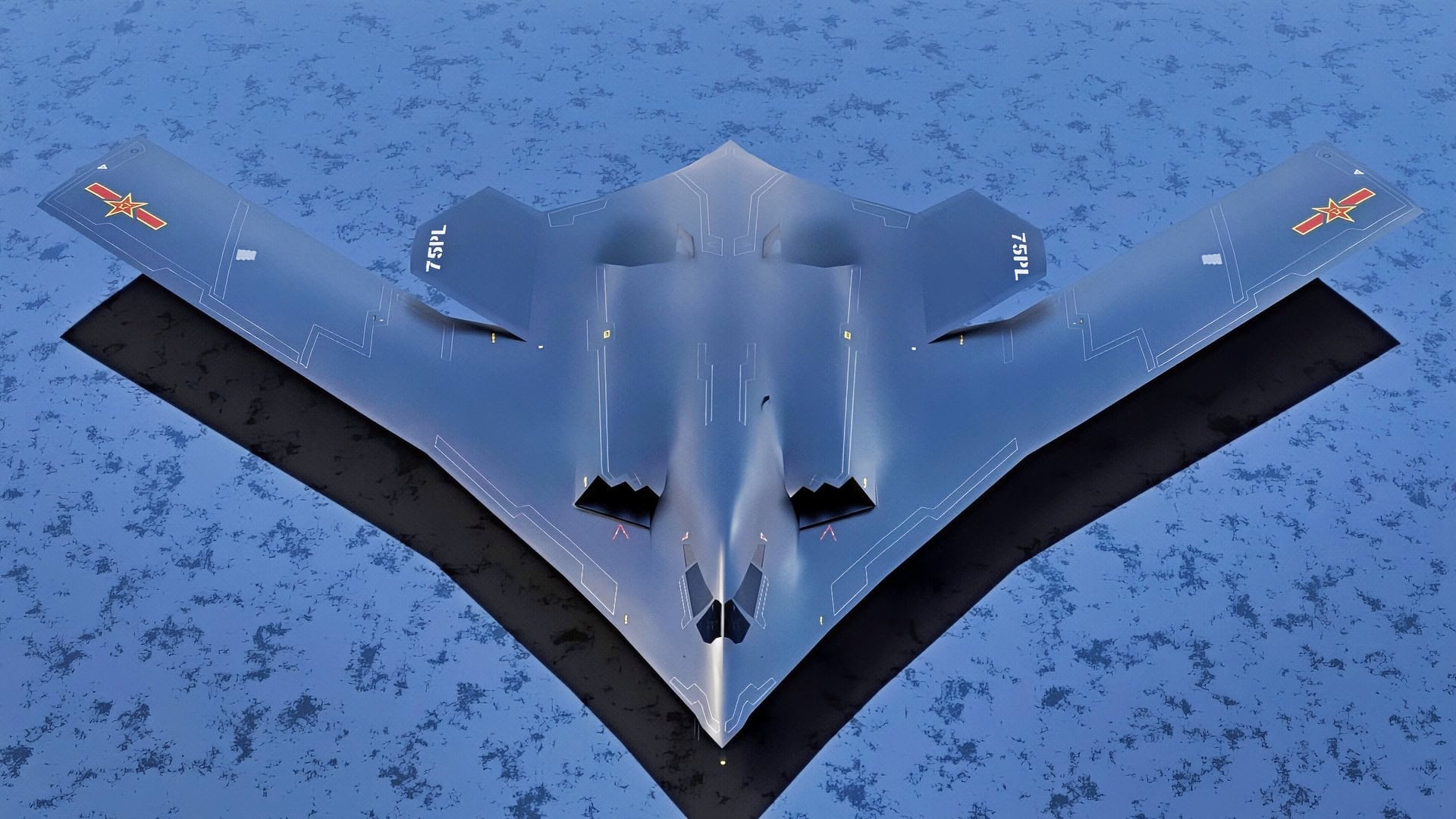
The H-20 Stealth Bomber Has Been Hyped Up for Years – And No One Knows Exactly Why It’s Not Flying for China’s Air Force Just Yet
MANILA – Two years ago, almost to the day, a short news story appeared about the People’s Republic of China’s (PRC) next-generation bomber, the Xi’an H-20. “After an official confirmation following an eight-year hiatus [of any program updates], the Air Force Deputy Commander has issued a ‘spoiler’ on the H-20: it’s almost here, just wait for it.”
Not much has been said about the program since, leading to questions about the true state of this aircraft’s production planning and schedule for introduction into service.
What was revealed at the time stemmed from conversations held at the end of the 2024 National People’s Congress (NPC) in Beijing. The NPC meetings are part of the annual March Lianghui, or the “two sessions”, which include a parallel sitting of the Chinese People’s Political Consultative Conference (CPPCC).
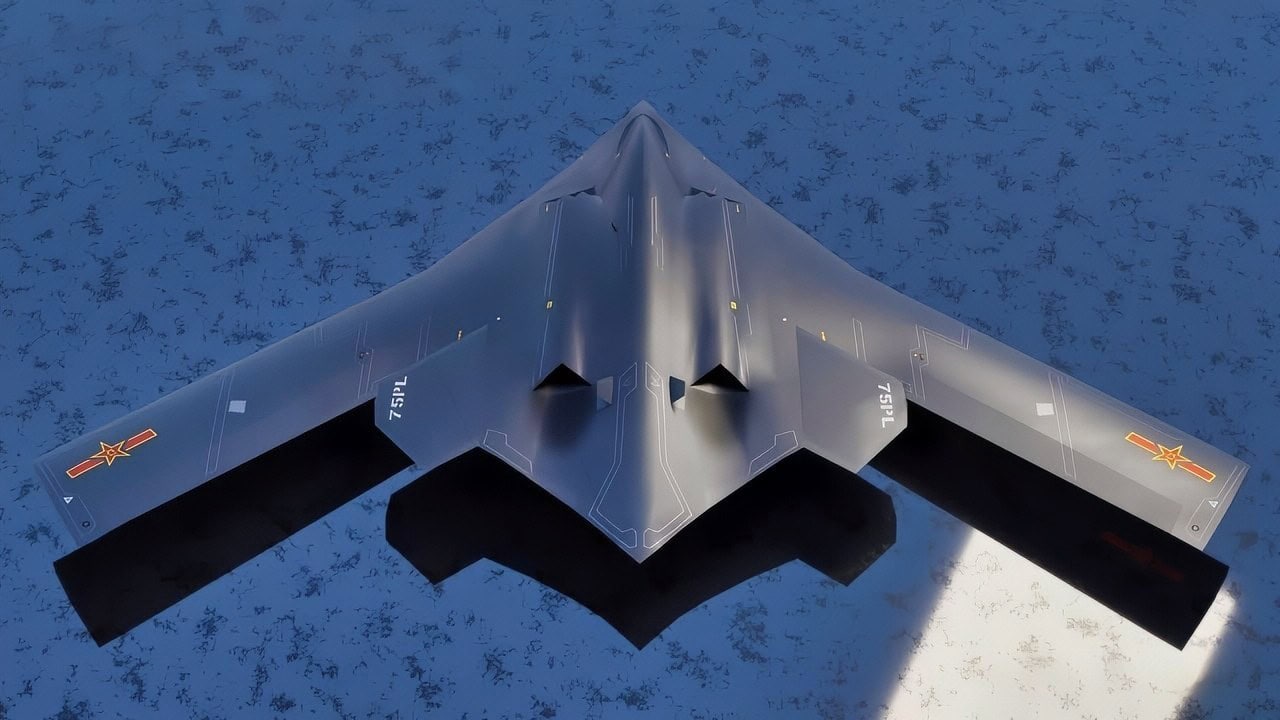
H-20 Bomber YouTube Screenshot Artist Rendering
These sessions are often news-making in that many of the participants are “double-hatted”. They occupy positions either within the defense industrial sector or the military, or in some other senior posting, while also serving as delegates to one of the two bodies that hold these conclaves every March.
“There is a tendency by all of these high-ranking individuals to engage in the favorite activity of any Chinese official, which is to show off,” said a retired Western diplomat who had been assigned to his embassy in Beijing in the past. “If you are running a big program and are looking for more funding, more recognition, or both, you want to be able to shout out and say ‘look what we are doing – aren’t we terrific’.”
It was during that event two years back that a correspondent from the Hong Kong Commercial Daily asked Lt. Gen. Wang Wei, who was Deputy Commander of the People’s Liberation Army Air Force (PLAAF), several questions about the force’s new and reportedly stealthy bomber, the Xi’an H-20.
At the time, Wei stated that the status of the H-20 would be announced publicly.
Like almost every other recent and next-generation combat aircraft program, he made a point of declaring that once it was engaged in preparing for the actual series-manufacturing, the production phase of the program would then proceed “very fast” immediately following the conclusion of the aircraft’s test flights.
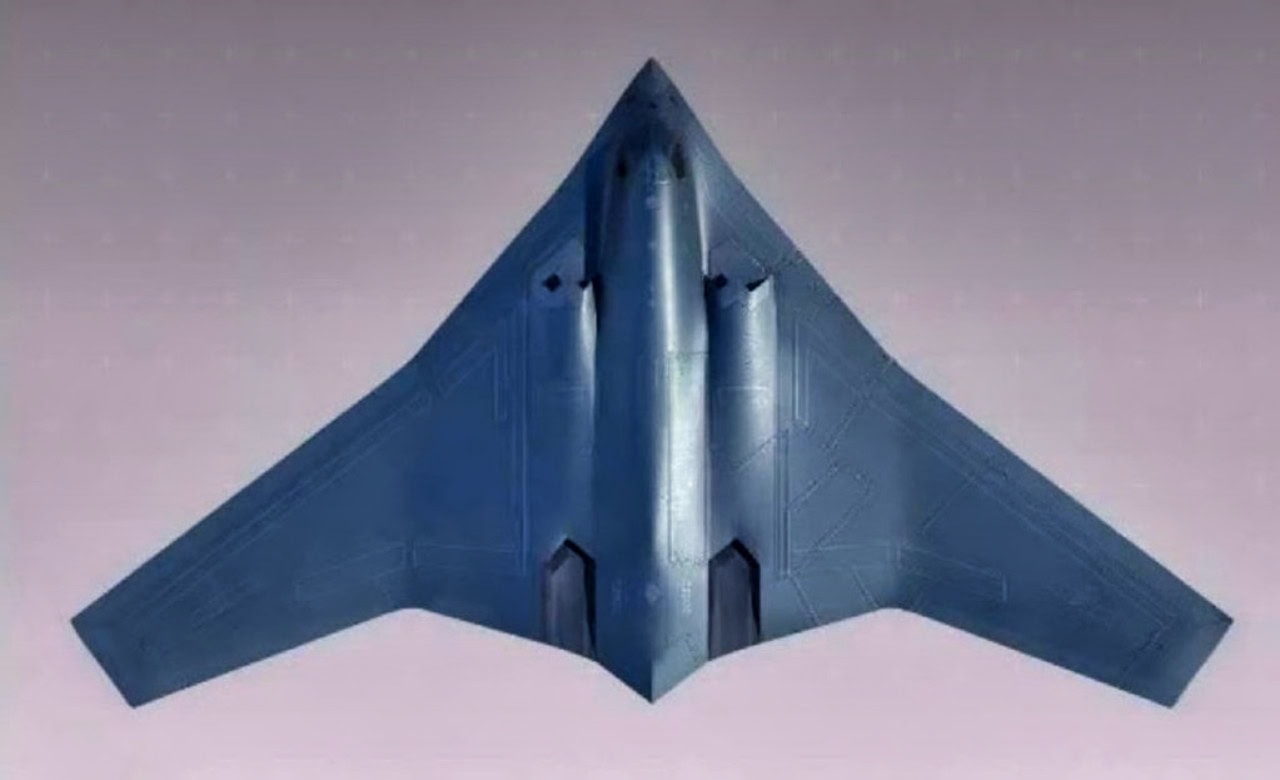
H-20 Bomber from China Artist Rendition.
H-20: Another Large-Scale Program
What Wei also had to say indicated that this bomber program was going to be another modern-era stealth aircraft that, like the Chengdu J-20, has and the J-35 have been projected to be built in large numbers.
But why the information, since this interaction has been scant, is a mystery, based on his other comments.
Wei continued to say that, despite this being the PRC’s first attempt at a “flying wing” design, the H-20 program had not encountered any technological bottlenecks that would delay the program’s schedule. He did, however, decline to speak about the program’s relative merits in reference to either the US first-generation B-2 bomber or the current-generation B-21.
Wei stated that evaluating the effectiveness or characteristics of the H-20 was not a matter of comparison but that, instead, the H-20 is intended to protect the PRC’s security interests and will answer that requirement.
Beijing’s state-controlled Ifeng television network also ran a report saying that the H-20 would be capable of breaking through the first and possibly also the second island chains – both of which are dotted with fortifications constructed by the US and its allies. The same broadcast also did not refer to the Republic of China (ROC) by name or even call it out as “Taiwan.”
Instead, the PRC broadcaster only used a generic label for the territory by calling it “the island,” and made veiled comments about the H-20 as a platform that would “shock” the ROC armed forces with its capabilities.
Does an Information Blackout Signal a Delay
In 2025, there was a blackout of information on the H-20, with almost no reporting on the program’s status.
This is doubly strange, say PLA watchers, given the many announcements from 2024 onward to the present on tactical aircraft programs like the Shenyang J-35 and the Chengdu J-36, a tailless 6th-generation fighter.
For its part, the US military and intelligence services have also not paid great attention to the program. Some in the technical and industrial analysis part of the US community suggest that the blackout of information indicates shortcomings that the Xi’an design team is having difficulty addressing.
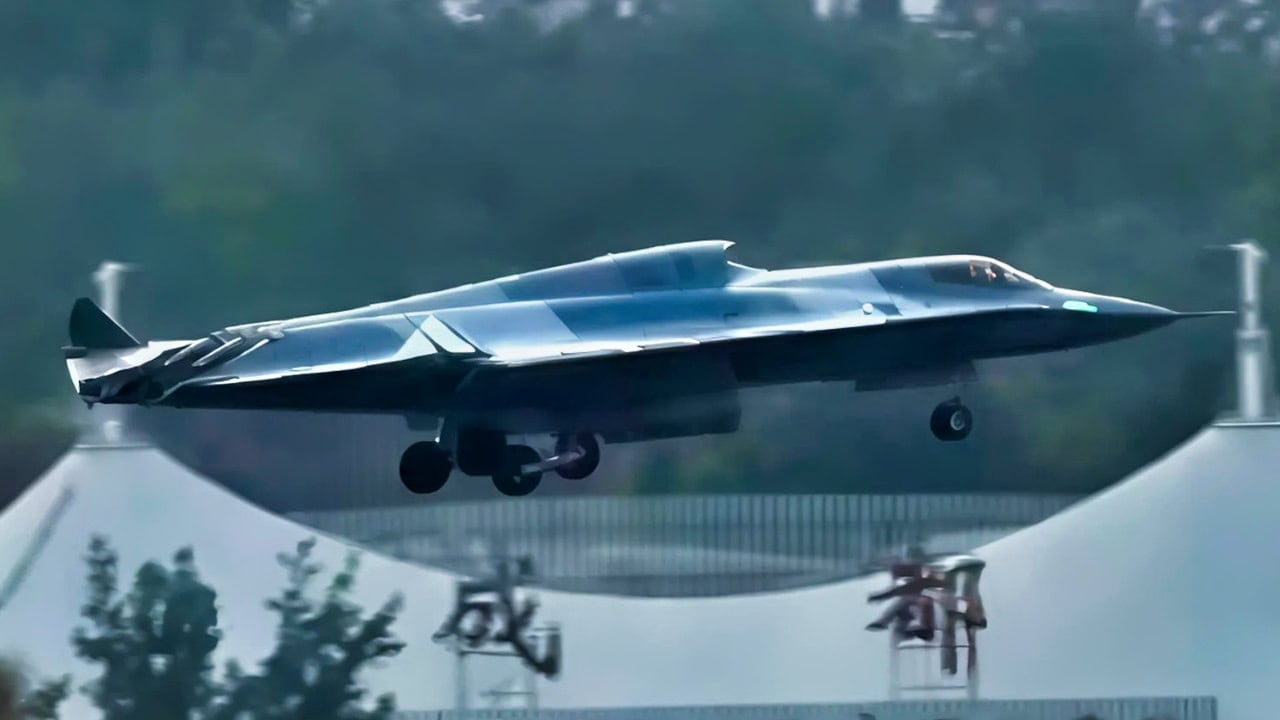
J-36 Fighter from X/Screenshot.
Overall, some US experts believe the aircraft will not be in service until the 2030s timeline. By this time, there will be a substantial force of B-21s in US service, putting the US (for once) ahead of the PRC in developing next-generation combat aircraft capability.
The 2 H-20 Problems That Might Need to Be Solved
Two potential problems are seen as hindering the H-20.
One is that the PRC has had difficulties developing the stealth technology needed for this kind of flying-wing design. In earlier times, the PRC had been relying on Russia for design techniques, such as materials and specialized RCS-reduction coatings
Russia has achieved some success in this area with fighter aircraft, but its Tupolev flying-wing PAK-DA concept has never progressed beyond the concept stage. If the PRC were counting on utilizing Russian experience with this kind of aircraft design, this could explain Xi’an Aerospace’s (XAC) lack of progress.
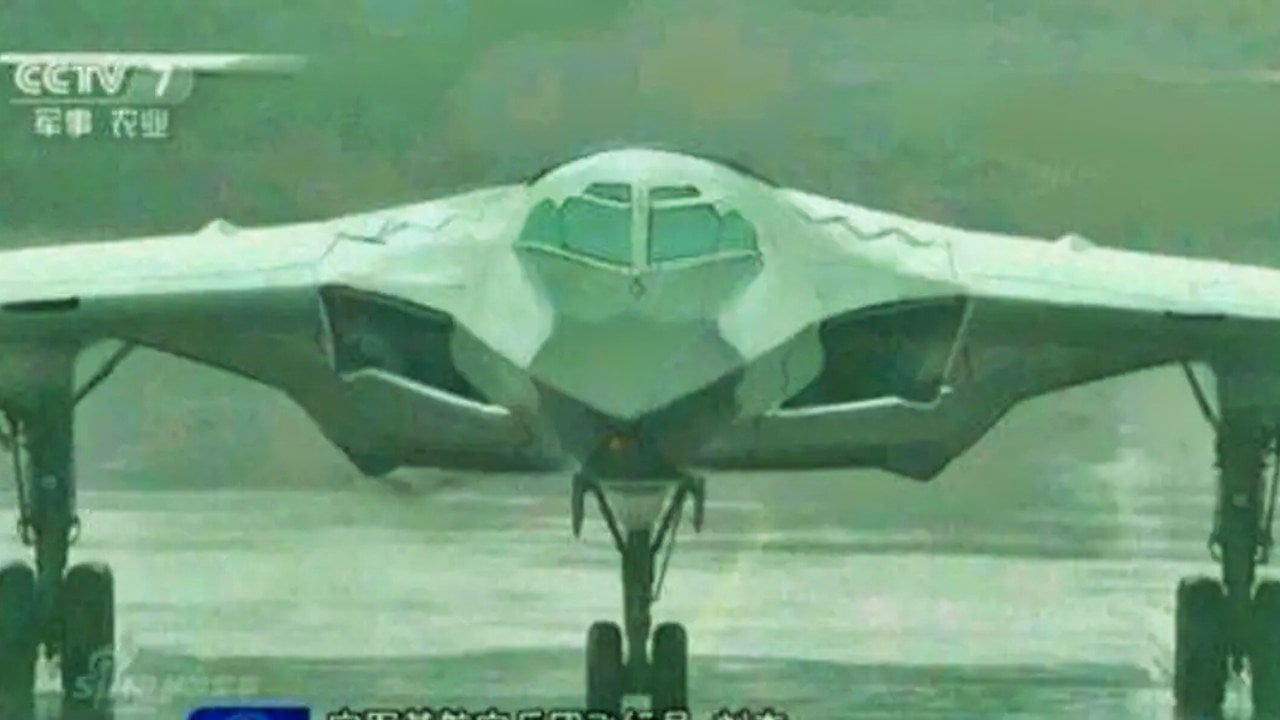
Image Credit of H-20 Bomber: Creative Commons.
Another issue could be engine performance. PRC turbofan engines run hotter and less efficiently than their western analogs, which potentially would make the H-20 more visible to infrared sensors, which are every bit as much of an issue as RCS in the rear hemisphere of the aircraft.
MORE – China’s Aircraft Carriers Have a ‘Missile Shield’
About the Author: Reuben F. Johnson
Reuben F. Johnson has thirty-six years of experience analyzing and reporting on foreign weapons systems, defense technologies, and international arms export policy. Johnson is the Director of Research at the Casimir Pulaski Foundation. He is also a survivor of the Russian invasion of Ukraine in February 2022. He worked for years in the American defense industry as a foreign technology analyst and later as a consultant for the U.S. Department of Defense, the Departments of the Navy and Air Force, and the governments of the United Kingdom and Australia. In 2022-2023, he won two awards in a row for his defense reporting. He holds a bachelor’s degree from DePauw University and a master’s degree from Miami University in Ohio, specializing in Soviet and Russian studies. He lives in Warsaw.