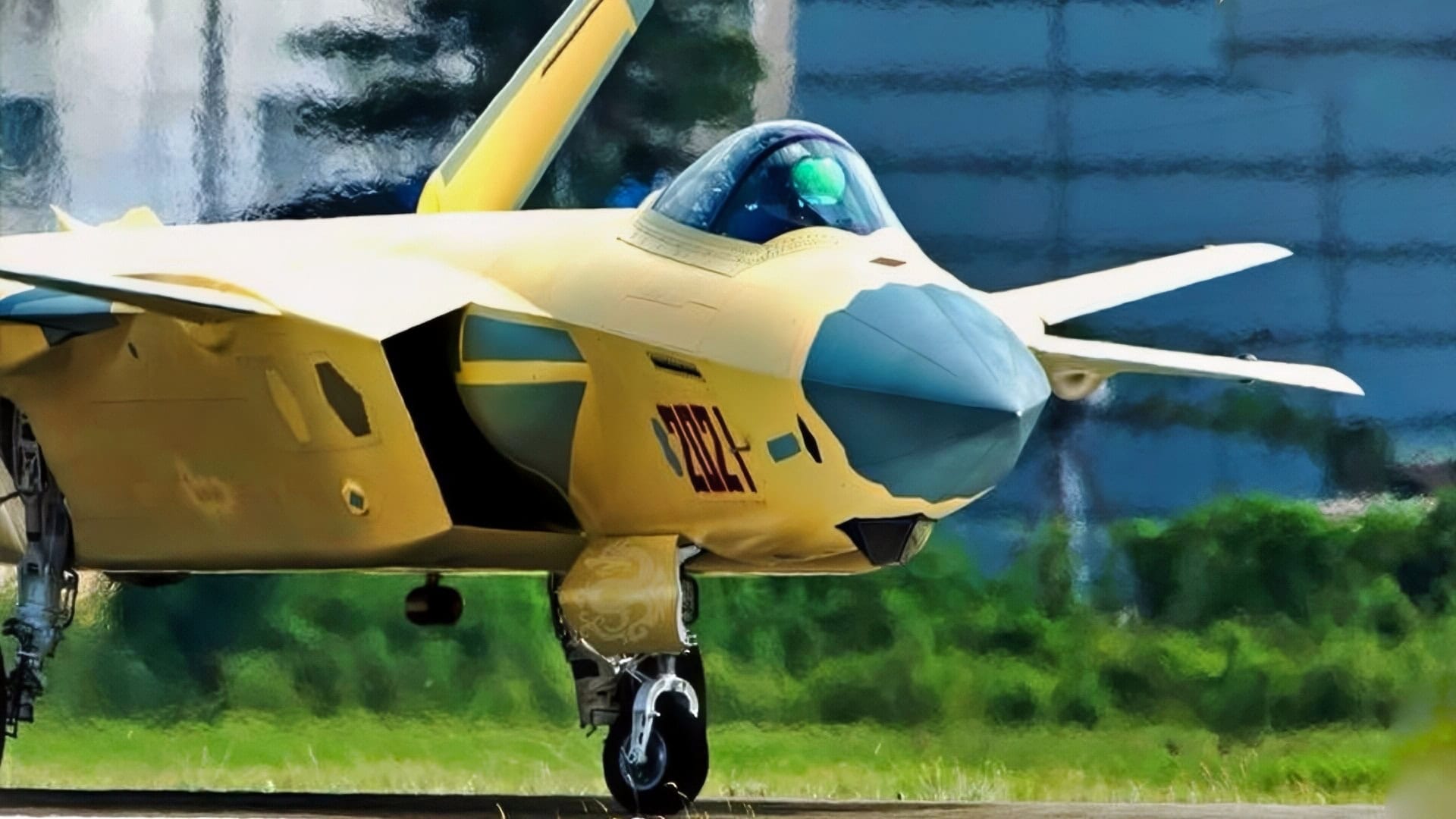
China’s J-20 vs. F-22 Raptor: Which Fighter Would Win If They Went Toe-to-Toe
As China’s much-discussed yet still somewhat mysterious J-20 blasts more fully into public view and appears in larger numbers, pundits are likely to analyze a difficult and “tough to know truly” question: could the People’s Liberation Army Air Force (PLAAF) J-20 outperform an F-22 in a one-on-one air combat engagement?
While it may seem that there are simply far too many variables and “unknowns” to generate any useful analysis, a handful of indicators may shed light on the question.
An initial, somewhat self-evident consideration is pure speed, an area where the F-22 has a known advantage.
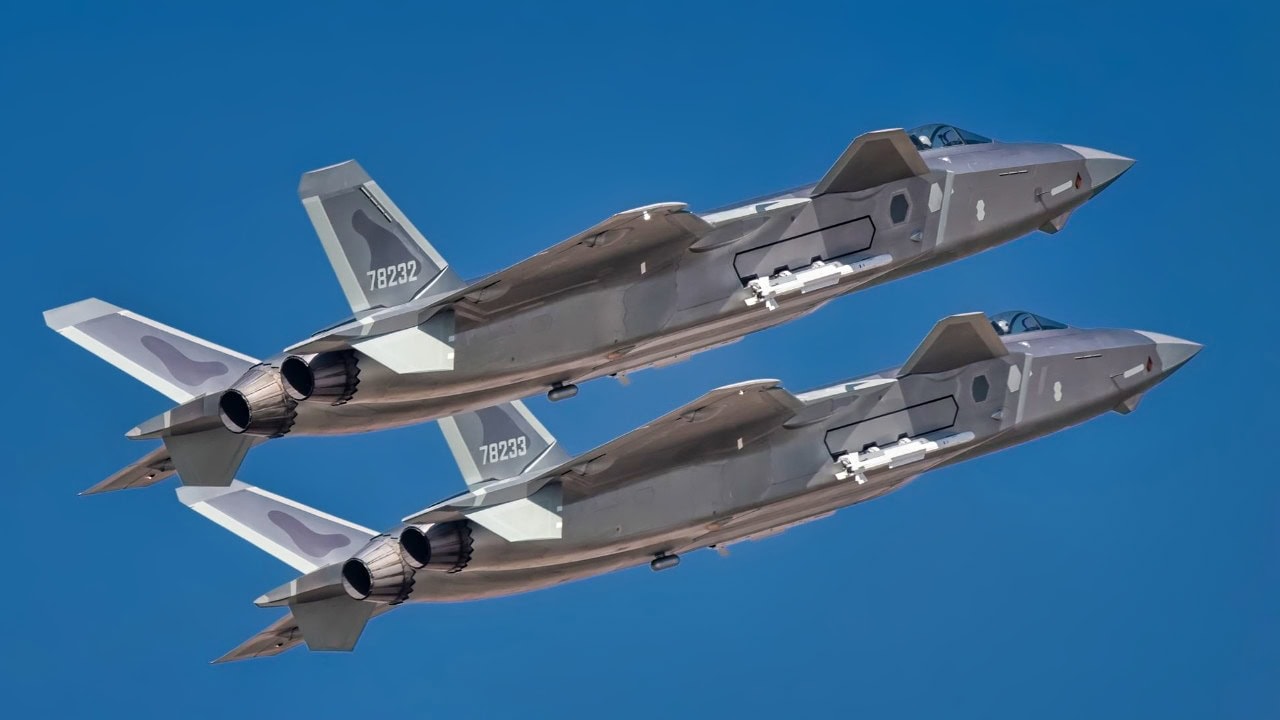
J-20 Mighty Dragon. Image Credit: Creative Commons
The Raptor’s Mach 2.25 is faster than the J-20’s cited speed of Mach 2.0, which might give the F-22 a slight advantage in high-speed aerial agility, a fundamental to dogfighting success.
However, longer-range sensing, Active Electronically Scanned Array (AESA) detection, engine thrust vectoring, and weapons reach could mitigate this advantage if the J-20 operates with advantages in these areas.
J-20 WS-15 Engine
In recent years, the PLAAF has regularly publicized in its state-backed newspapers that its domestically built J-20 engine upgrades, unlike the early J-20 Russian-engineered engines, are indigenously designed and built in China.
The latest J-20B engine model from 2022, called the Shenyang WS-15, is said to introduce new levels of engine-enabled thrust vectoring and bring F-22-like Supercruise technology, according to a 2022 article in the South China Morning Post.
Supercruise, the ability to sustain Mach 2 speeds without a high-powered fuel-consuming afterburner, greatly extends the ability to maneuver and vector in air combat for longer periods. Mach 2 speed, sustained without afterburner, means high speeds can be sustained longer without refueling.
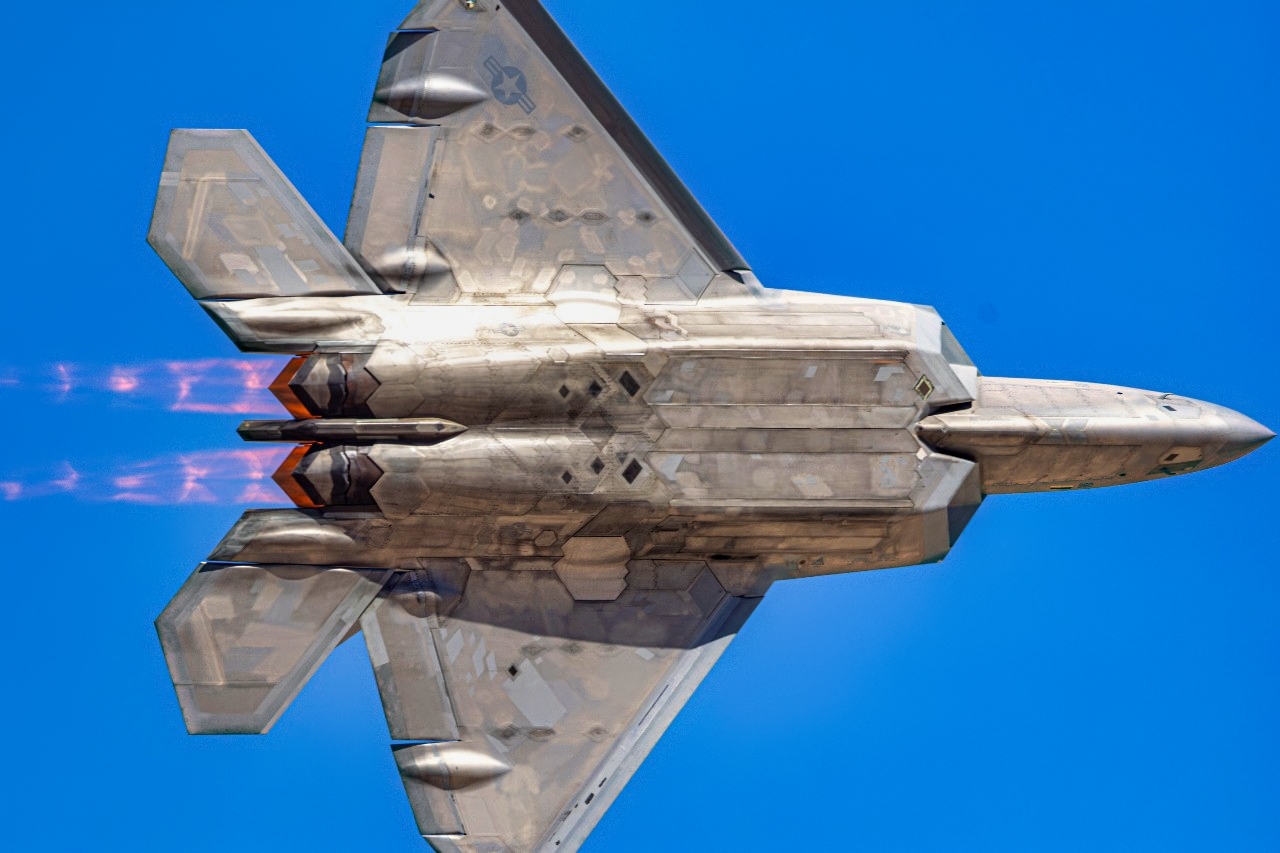
A U.S. Air Force F-22 Raptor performs an aerial demonstration during Aviation Nation 2025 at Nellis Air Force Base, Nevada, April 6, 2025. Aviation Nation is an airshow held at Nellis Air Force Base, showcasing the pride, precision and capabilities of the U.S. Air Force through aerial demonstrations and static displays. The F-22 Raptor performed there to highlight its unmatched agility and air dominance as part of the Air Force’s efforts to inspire, recruit and connect with the public. (U.S. Air Force photo by Staff Sgt. Lauren Cobin)
Thrust to Weight Ratio
The largest impact of improvements to the WS-15 is likely to be on thrust-to-weight ratio, which has a clear and decisive impact on a jet’s agility in air combat.
High-powered thrust combined with a lighter overall weight naturally increases speed, maneuverability, and sheer dogfighting prowess. The F-22 with “round nozzles” is reported to operate with a thrust-to-weight ratio of 1.37, the best in the world according to World Defence.
However, an article in the Aviation Geek Club in October 2024 states that the WS-15 improves the thrust-to-weight ratio of the J-20 to 1.25, making it more competitive with an F-22.
Perhaps the ultimate margin of distance would pertain to more difficult-to-discriminate variables, such as the ability to see, detect, and target an enemy fighter jet.
The J-20 has a larger nose radome than the F-22’s pointier nose, suggesting it has a more powerful, longer-range AESA radar.
This question is explored in great detail in an academic paper published by National Defense University China Aerospace Studies Institute called “A Look at China’s J-20 AESA Radar”.
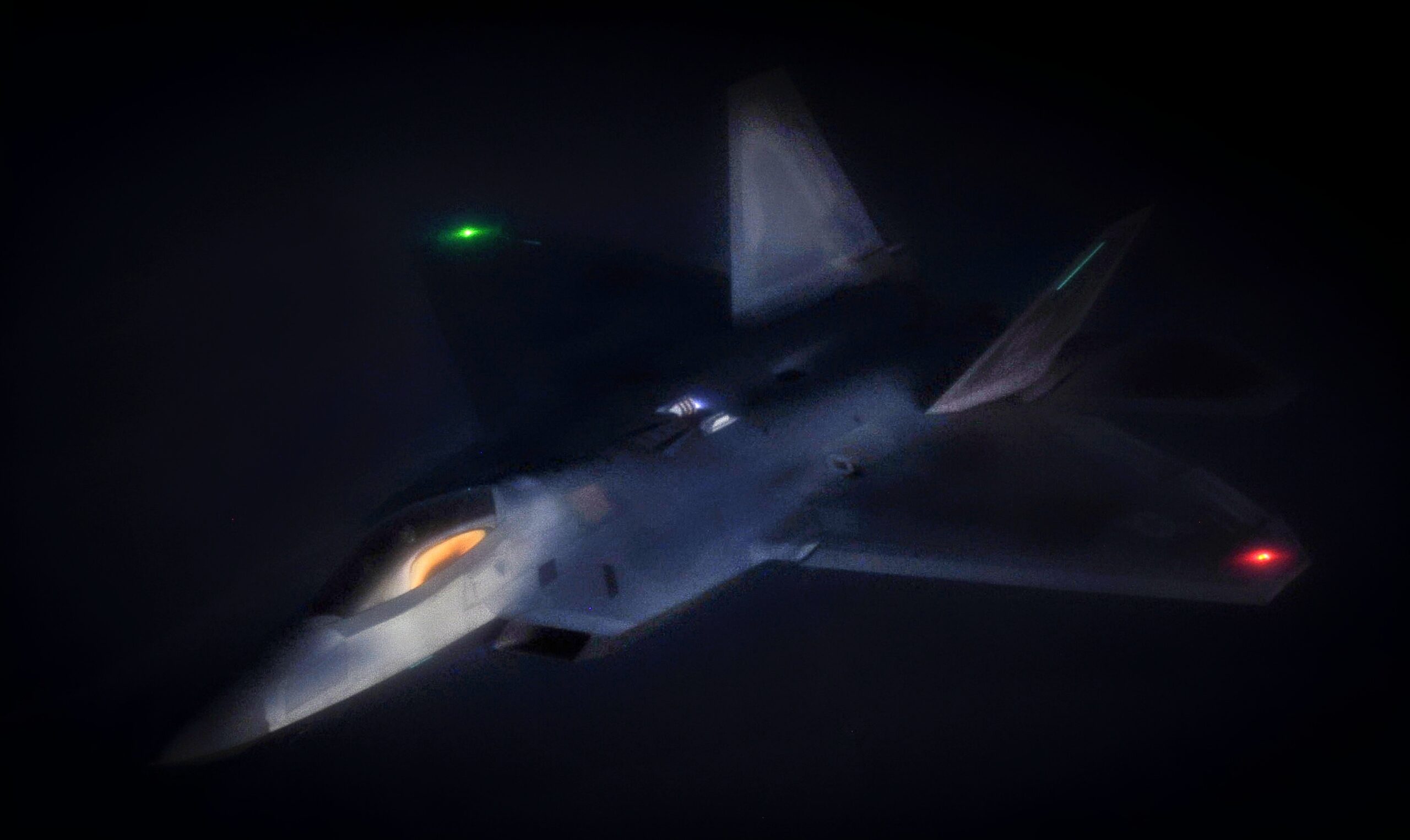
An F-22 Raptor fighter jet, assigned to the 433rd Weapons Squadron at Nellis Air Force Base, Nev., maneuvers after being refueled by a KC-135 Stratotanker during a Weapons School Integration mission over the Nevada Test and Training Range June 8, 2012. One of the most important planned aspects of this mission is holding it during the hours of darkness. (U.S. Air Force photo by Senior Airman Kevin Tanenbaum/Released)
The NDU “Air University” research explores the question as to whether the J-20 AESA radar is larger due the larger nose radome and packaged with more transmit-receive modules (T/R Modules) capable of detecting a target from longer ranges than an F-22.
A larger nose radome and more powerful RF radar signals, however, are not only less stealthy but also more vulnerable to jamming.
More power density packaged into a nose radome AESA also likely emits a stronger, more detectable heat signature, something that would clearly compromise stealth effectiveness.
Therefore, even if the J-20s’ AESA were longer-range, it might not translate into a one-on-one aerial combat advantage at close range.
Weight and Size
However, overall weight and size are also critical to this equation, and the J-20 is 7ft longer and arguably less agile and stealthy.
While the empty weight of an F-22 is roughly 6,000 pounds heavier, it appears capable of operating with a superior thrust-to-weight ratio.
As a result, a closer-in air-to-air engagement would likely favor an F-22, depending on weapons range and accuracy, targeting sensor fidelity, computing, and aerial fire control.
J-20 Mighty Dragon. Image Credit: Creative Commons
There are also the easy-to-overlook simple questions of weapons range and targeting efficiency. A fighter jet with better sensing and course-correcting, re-targetable long-range air-to-air missiles would seem better positioned to prevail, as it could hit and destroy an enemy jet at standoff distances where it cannot itself be targeted.
The J-20 is reported to have an F-35-like EOTS (electro-optical targeting system) and an IRST (infrared search and track) system.
The individual components of these sensing and targeting technologies, and their respective capabilities, would likely heavily impact the outcome of any J-20 vs. F-22 air engagement.
MORE – The X-43A Can Hit Mach 9.6 But Will Never Fly Again
MORE – The Aircraft Carrier Era Is Over
About the Author: Kris Osborn
Kris Osborn is the President of Warrior Maven – Center for Military Modernization. Osborn previously served at the Pentagon as a highly qualified expert in the Office of the Assistant Secretary of the Army—Acquisition, Logistics & Technology. Osborn has also worked as an anchor and on-air military specialist at national TV networks. He has appeared as a guest military expert on Fox News, MSNBC, The Military Channel, and The History Channel. He also has a Masters Degree in Comparative Literature from Columbia University.