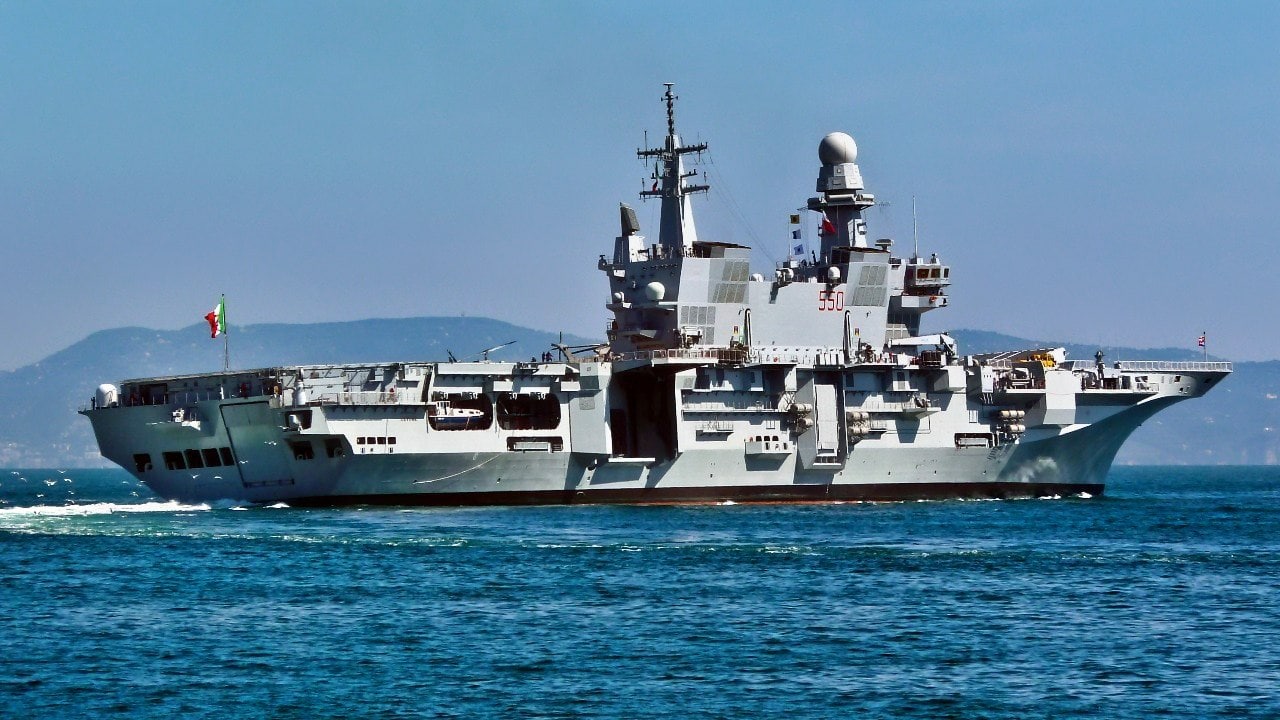
The Cavour Aircraft Carrier Was Designed in the Late 1990s for Mediterranean Peacekeeping and NATO Operations — Not High-Intensity Warfare
Largely forgotten in defense circles, the Italian Navy’s aircraft carrier, the Cavour, is a distinct type of vessel that is reflective of a very different set of operational priorities when compared to other, larger aircraft carriers like those in the United States Navy.
The Cavour is not a smaller version of a U.S. Navy-type aircraft carrier; it is instead a multi-role naval ship optimized for more modest goals: operations within Italy’s near abroad, flexibility, and a healthy dose of political signaling.
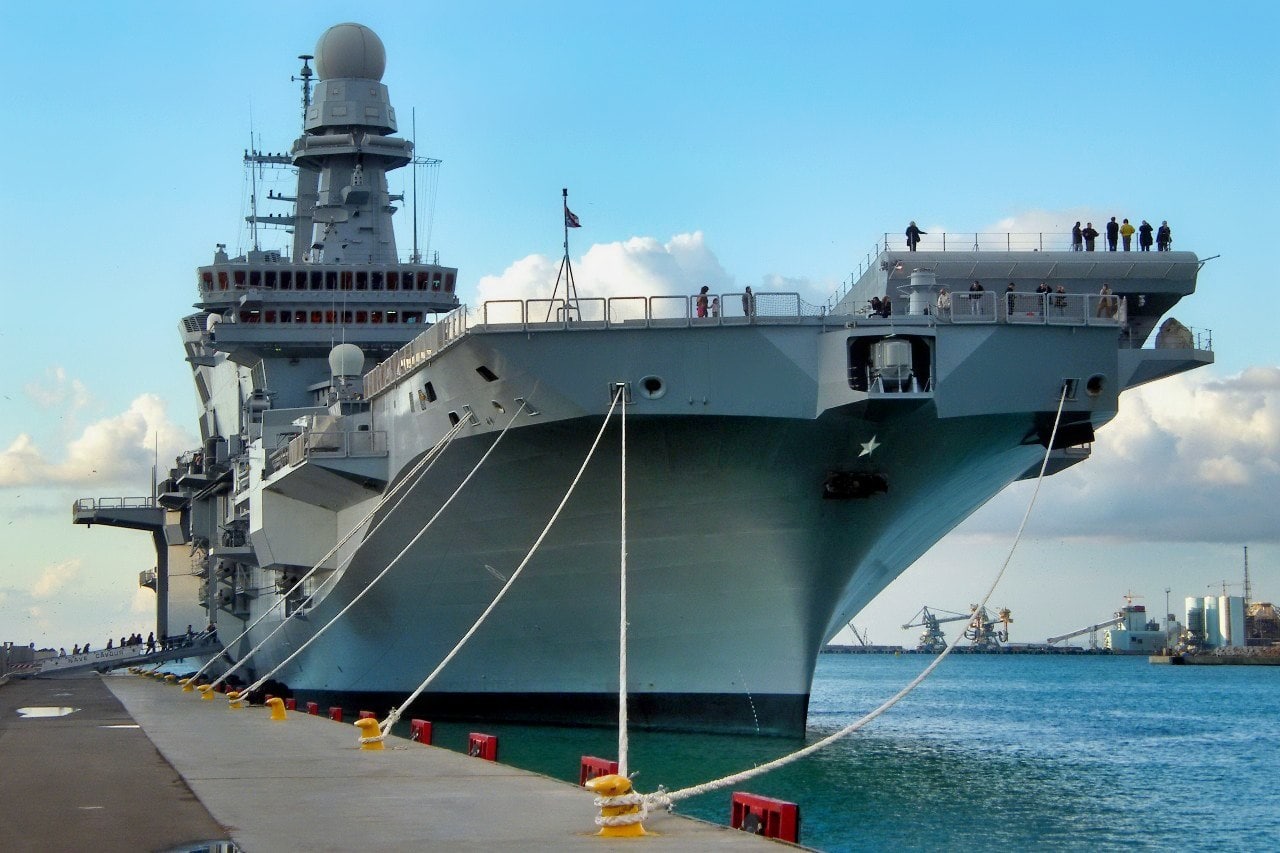
ITS Cavour at Port. Image Credit: Creative Commons.
Situation, Location, Response
The Cavour was conceived in the late 1990s and early 2000s, when Italy focused on regional expeditionary operations in the Mediterranean, the Balkans, and the Middle East that fell short of the threshold for major war.
Instead, the Cavour was optimized for peacekeeping, NATO intervention operations with allies, disaster response, and relief.
Instead of specializing in purely high-end naval aviation operations, the Cavour was designed as a light aircraft carrier using short takoff/vertical landing, or STOVL, aircraft and helicopters, an amphibious assault support ship that could embark marines, vehicles, and other equipment, a command ship for operations with foreign allies as well as the Italian Navy, and as a large and mobile humanitarian platform with robust medical facilities.
The Cavour is, then, a reflection of Italy’s strategic considerations, which are markedly different from those of the United States — Italy does not need to project power on a global scale. Instead, it is obliged to contribute to EU and NATO missions much closer to home.
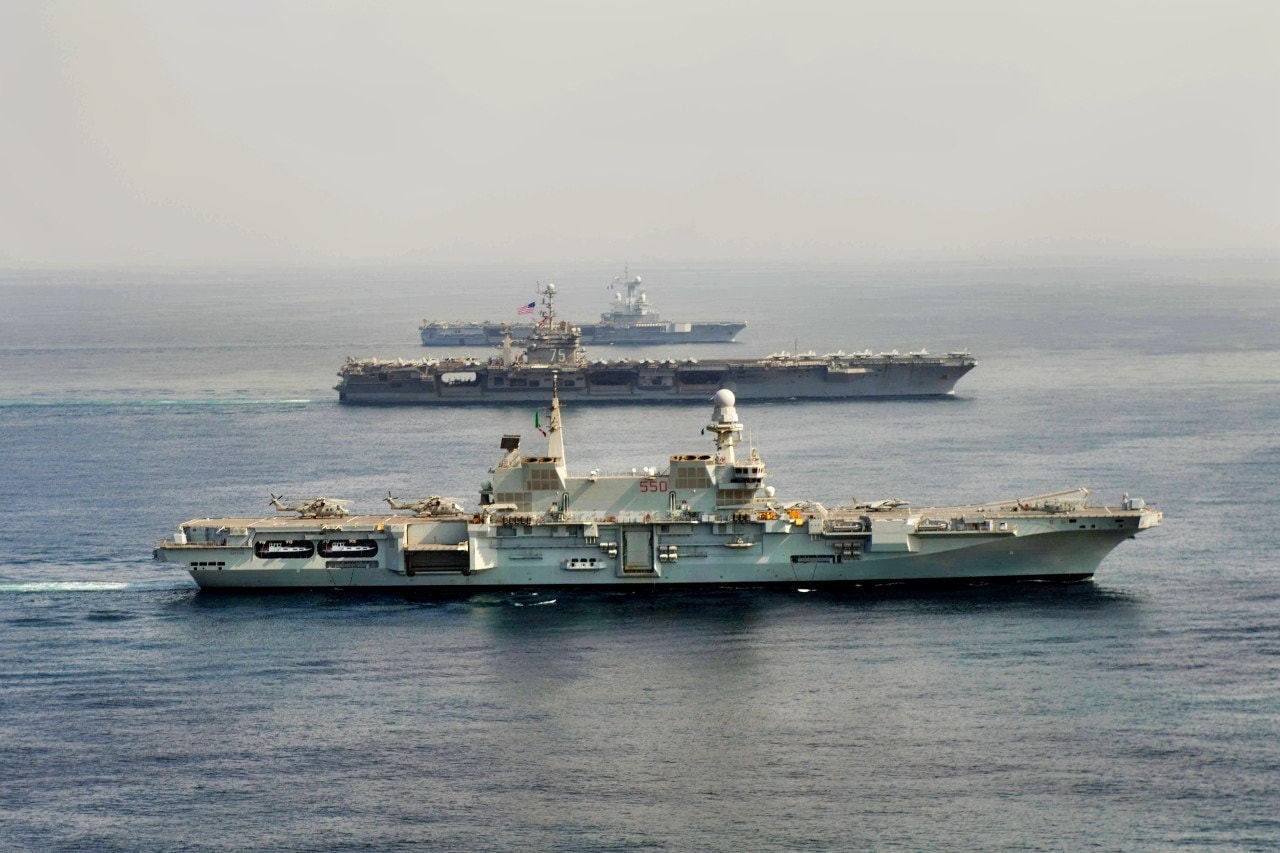
(Jan. 3, 2014) The Italian navy aircraft carrier ITS Cavour (CVH 550), front, the aircraft carrier USS Harry S. Truman (CVN 75) and the French navy aircraft carrier Charles de Gaulle (R 91), conduct operations in the Gulf of Oman. Harry S. Truman, flagship for the Harry S. Truman Carrier Strike Group, is conducting operations with Task Force 473 to enhance levels of cooperation and interoperability, enhance mutual maritime capabilities and promote long-term regional stability in the U.S. 5th Fleet area of responsibility. (U.S. Navy photo by Mass Communication Specialist 3rd Class Ethan M. Schumacher/Released)
Aviation Capabilities
The Cavour originally operated the AV-8B Harrier II, a previous-generation jump jet, a role that the F-35B stealth fighter now inherits.
As these newer stealth fighters can take off from short decks and use a ski-jump, the Cavour does not require arresting gear or catapults, which are defining characteristics of U.S. Navy aircraft carriers.
The Cavour’s air group is typically eight to twelve F-35Bs and a mix of helicopters for anti-submarine warfare, transport, and early warning.
This is significantly smaller than a U.S. Navy carrier air wing, and it puts a damper on sortie rates and the length and intensity of combat operations.
The Cavour is essentially a flexible multitool, capable of responding to a variety of scenarios in the region, but perhaps not as fearsome as a U.S. Navy carrier.
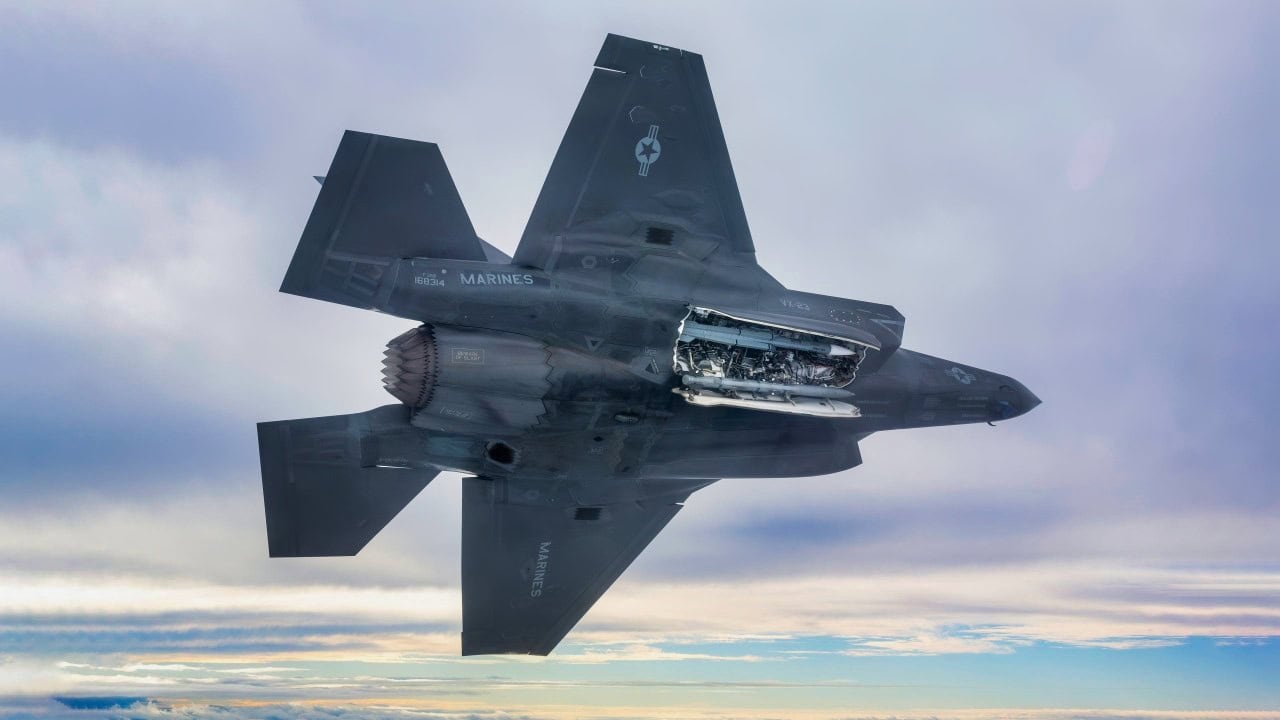
F-35B Armed with Meteor Missile. Image Credit: UK Government.
American Aircraft Carriers
By comparison, United States Navy carriers are built from the outset with high-intensity warfare against peer adversaries in mind. To that end, they carry anywhere from 60 to 75 aircraft and can conduct continuous, high-tempo strike operations.
U.S. Navy carriers also have their own dedicated airborne early warning, the E-2 Hawkeye, as well as bespoke tanker and electronic warfare aircraft.
The United States Navy’s aircraft carriers are the linchpin of Washington’s power projection capabilities.
Designed to fight and win major wars at sea or project power over nearby land, their air assets can penetrate contested environments and survive.
In contrast, the Cavour would hardly be expected to operate entirely or semi-independently in a conflict scenario, but rather in tandem with a broader regional or, perhaps, even global coalition.
Unmanned Systems
Given the size and sustainment limitations of the Cavour compared to other, larger carriers, the Italian Navy is leaning into unmanned systems to expand the Cavour’s footprint and extend its strike and surveillance capabilities.
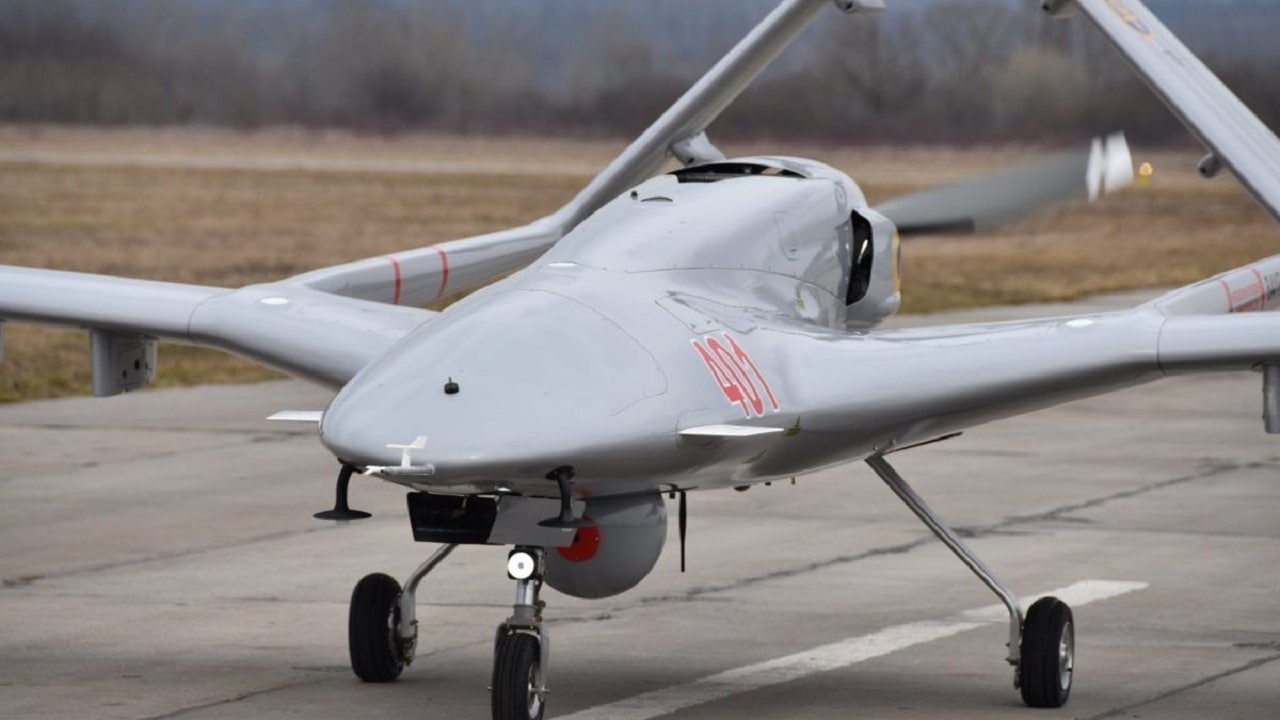
Bayraktar TB2 Drone of the Ukrainian Air Force.
Speaking to the Italian Parliament Foreign Affairs and Defense committee lat last month, Italian Navy Chief of Staff, Vice Admiral Giuseppe Berutti Bergotto, explained what is in store for the Cavour — and why the Italian Navy decided to acquire Baykar Bayraktar TB3 drones from Turkey.
“You know that this company has signed a cooperation agreement with Leonardo; therefore, the acquisition will be through Leonardo. It can be integrated on board the Cavour (aircraft carrier). This allows both surveillance and the possibility of carrying armament,” Vice Admiral Bergotto explained.
“We have acquired them recently. It is a system that extends the surveillance capability of naval units; it is quite small and easily integrable. The interesting thing is that it can release a drone that effectively becomes a munition and can go and strike the target,” the Vice Admiral added, raising the prospect of the Italian Navy fielding one-way attack drones.
Italy appears set to be the first European power to purchase the TB3, a navalized variant of the TB2.
The TB3 has conducted naval operations in the past and qualified from Türkiye’s TCG Anadolu carrier. With the introduction of the TB3, the Cavour is set to receive an unmanned strike and reconnaissance platform, which would enhance the carrier’s situational awareness and extend the reach of its strike aircraft, alleviating strain on the carrier’s high-end F-35B manned stealth fighters.
About the Author: Caleb Larson
Caleb Larson is an American multiformat journalist based in Berlin, Germany. His work covers the intersection of conflict and society, focusing on American foreign policy and European security. He has reported from Germany, Russia, and the United States. Most recently, he covered the war in Ukraine, reporting extensively on the war’s shifting battle lines from Donbas and writing on the war’s civilian and humanitarian toll. Previously, he worked as a Defense Reporter for POLITICO Europe. You can follow his latest work on X.