
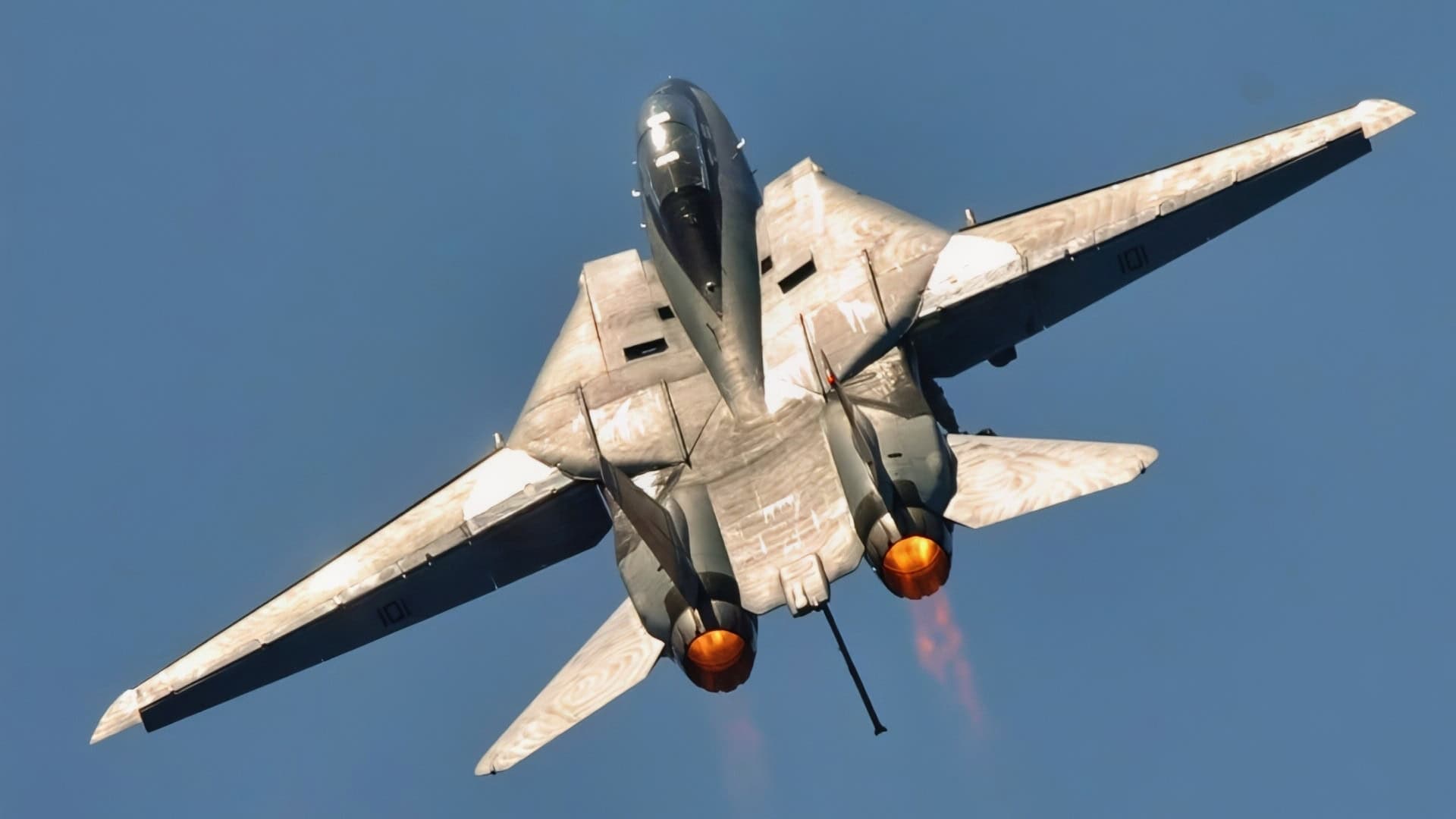
The Air Force Almost Bought the F-14 Tomcat. Grumman Built One in ADCOM Colors. It Never Happened.
In recent weeks, U.S. and Israeli strikes on Iranian military infrastructure have significantly degraded the capabilities of the Islamic Republic of Iran Air Force, including its aging fleet of Grumman F-14 Tomcat fighters.
Iran had long been the last operator of the aircraft, maintaining a limited number of airworthy jets decades after the United States Navy retired the platform in 2006. The effective loss of that fleet marks the likely end of the Tomcat’s operational history worldwide.
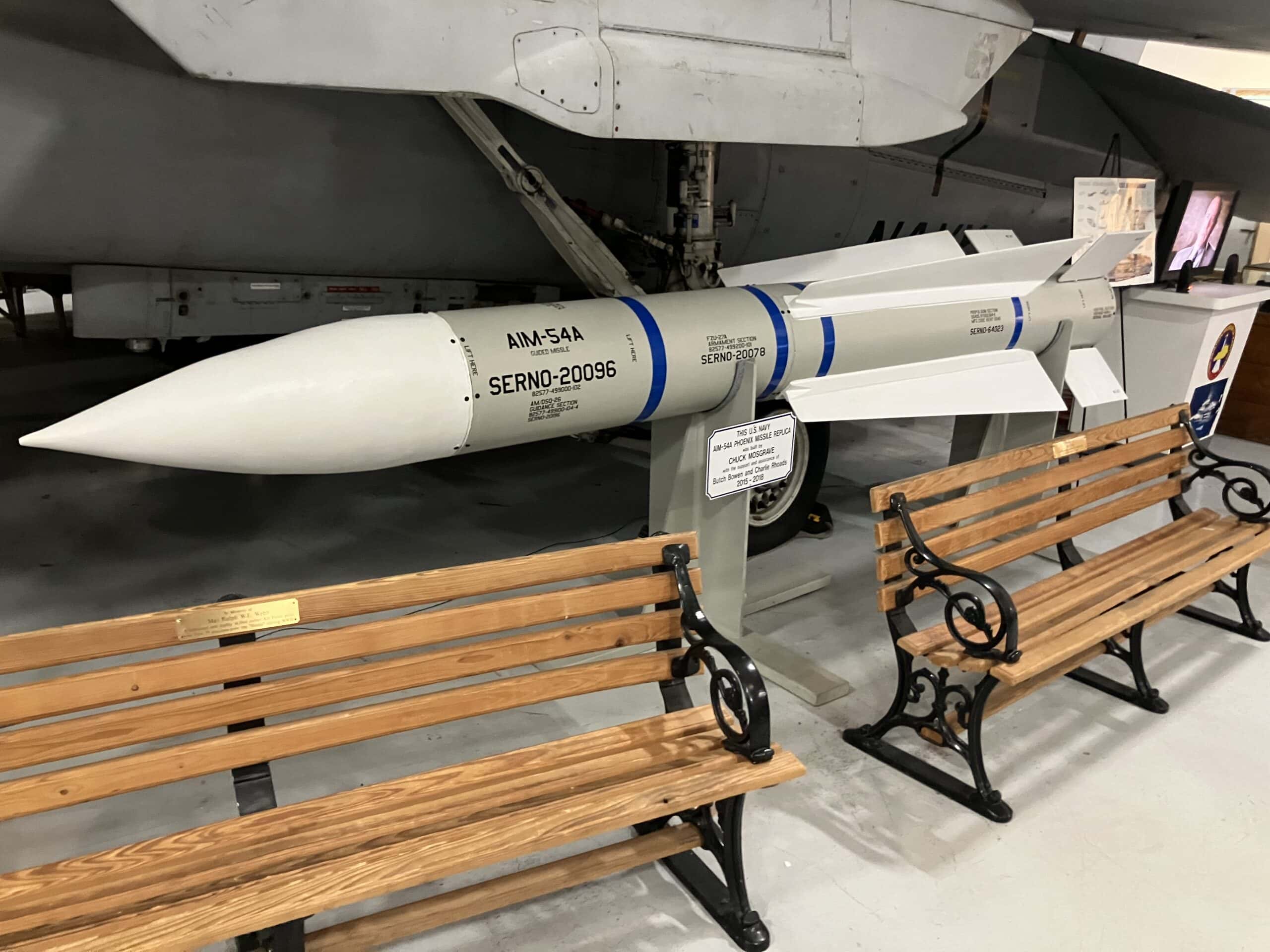
F-14 Tomcat Missile. 19FortyFive.com Image.
Before its slow death in Iran, the F-14’s story was long and fascinating. In the early 1970s, the aircraft was seriously considered for a very different mission: defending the continental United States.
Under the U.S. Air Force’s Aerospace Defense Command (ADCOM), the Tomcat was considered as a potential replacement for aging Cold War interceptors.
The so-called “ADCOM F-14” never entered service, but its story is a curious one that reveals how the United States approached air defense at a critical moment in the Cold War. It also reveals why the Air Force ultimately chose a different path.
Why ADCOM Needed a New Interceptor
By the late 1960s, the United States faced a growing air defense problem. Aerospace Defense Command, a major command of the United States Air Force, was tasked with protecting North American airspace from long-range Soviet bombers, particularly aircraft such as the Tu-95 and Tu-22, which were increasingly capable of carrying stand-off nuclear weapons.
At the time, the backbone of that mission was the Convair F-106 Delta Dart, an all-weather interceptor designed under the 1954 interceptor program. While it was a capable supersonic interceptor, it was aging and had been designed for a different threat environment. Its radar and weapons systems were optimized for relatively straightforward interception missions, and not the more complex, long-range engagements that were beginning to define the late Cold War.
The problem was that Soviet bombers could approach from multiple vectors, including over the Arctic, forcing U.S. defenses to begin covering vast areas.
The North American Aerospace Defense Command, therefore, required aircraft capable of detecting and engaging Soviet targets at long range, ideally before the bombers could launch their weapons. A next-generation interceptor was required – one that had long endurance and a powerful radar, and which could engage multiple targets from a distance. And such an aircraft had already been built.
Why the F-14 Tomcat Seemed Ideal for the Air Force
The Grumman F-14 Tomcat is the product of one of the most consequential and troubled fighter programs of the Cold War. Its origins lie in the failure of the General Dynamics F-111B, a Navy-adapted version of the Air Force’s F-111 that ultimately proved too heavy and unsuitable for carrier operations. In January 1969, the Navy selected Grumman to develop what became the F-14 under the Naval Fighter Experimental (VFX) program. The aircraft first flew in December 1970 and entered service in 1972.
The aircraft used the AN/AWG-9 radar system, capable of tracking up to 24 targets simultaneously and guiding weapons against six of them at once in a highly advanced track-while-scan mode. The radar was paired with the AIM-54 Phoenix, a long-range interceptor.
The Phoenix had a range exceeding 100 miles and could be guided toward multiple targets in a single engagement, giving the F-14 a level of stand-off capability unmatched by other fighters of the era.
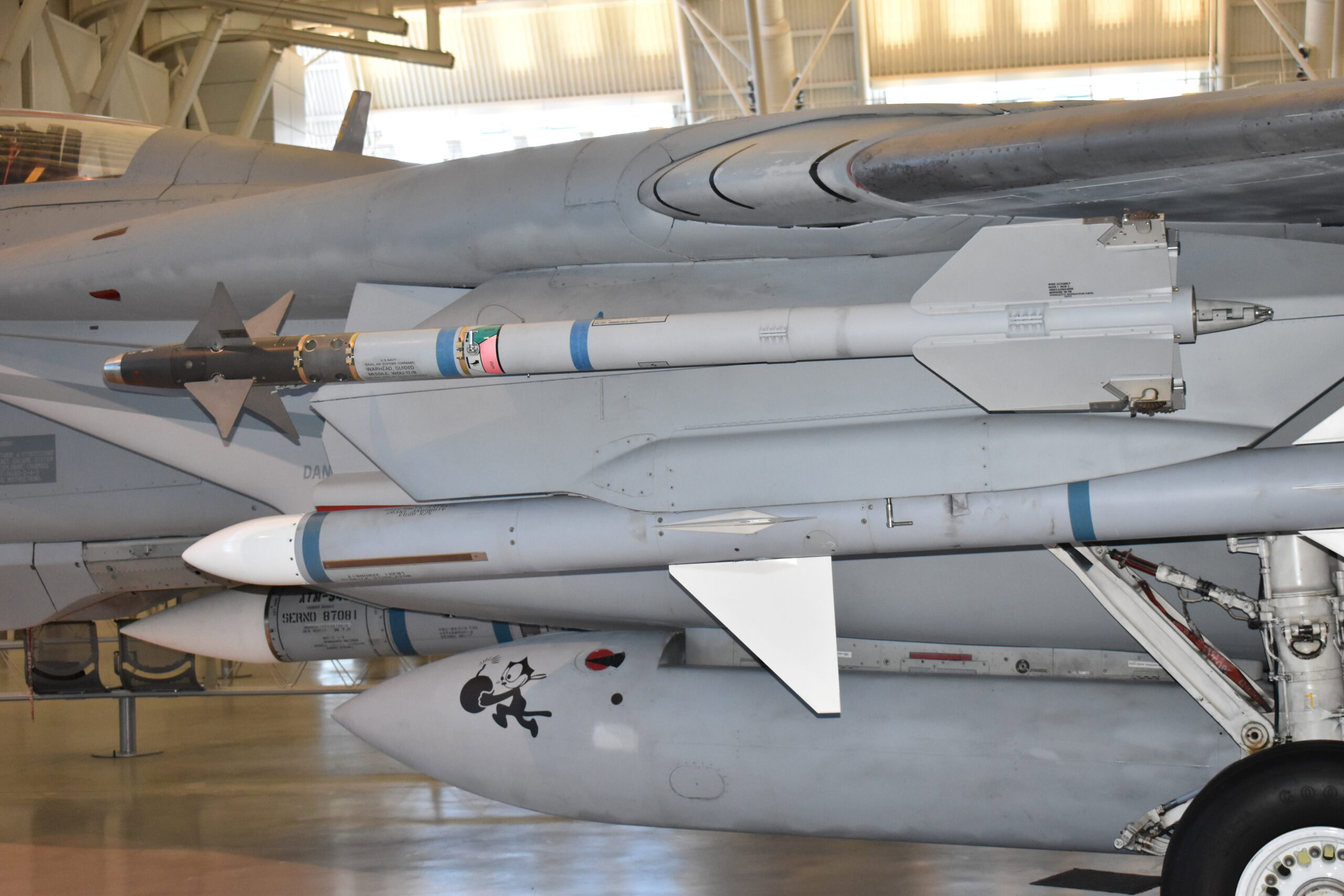
F-14 Tomcat at the Smithsonian. 19FortyFive.com original photo.
That combination allowed the Tomcat to do something that no other operational fighter could: engage multiple bomber-sized targets at extreme distances before they could threaten the defended asset.
The system was explicitly designed to counter large formations of enemy aircraft and not just individual fighters.
By comparison, the U.S. Air Force’s primary air-to-air weapon at the time, the AIM-7 Sparrow, offered significantly shorter engagement ranges and relied on continuous radar illumination, limiting its effectiveness. The F-14, then, was effectively already doing for the Navy what ADCOM needed to do for the United States: detect, track, and destroy incoming threats at long range.
The ADCOM F-14: What Was Proposed
Recognizing the overlap, Grumman proposed a version of the F-14 tailored to Air Force requirements in the early 1970s.
Often referred to as the “ADCOM F-14,” the concept was developed as a potential replacement for the F-106. The proposal, however, did not progress beyond the mock-up stage, but several modifications were included.
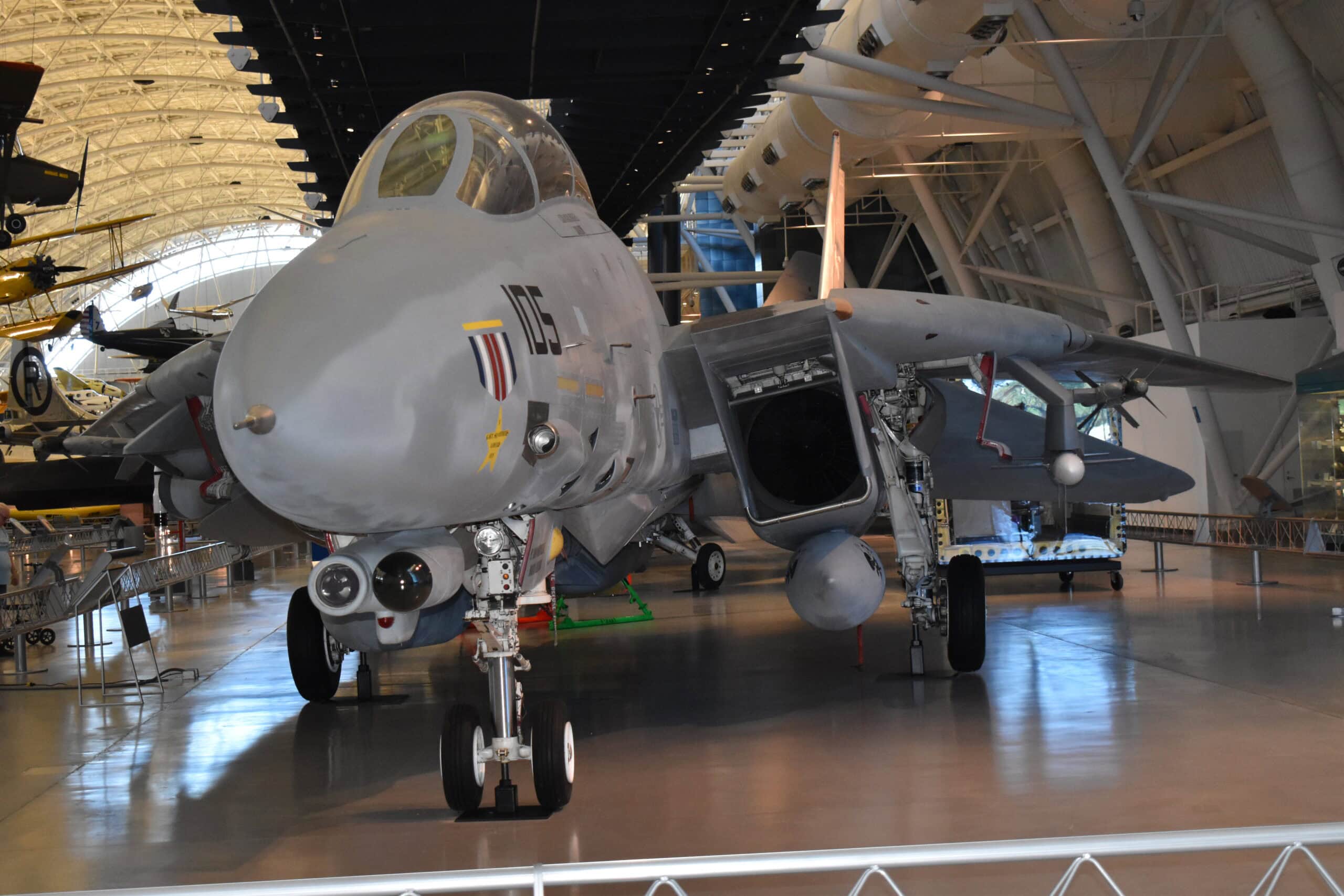
F-14 Tomcat at the Smithsonian. 19FortyFive.com original photo.
Those changes reportedly involved adjustments to missile carriage and internal fuel capacity to better suit long-range continental defense missions. The design’s emphasis remained on endurance and interception capability rather than on carrier-based operations.
Images of the mock-up design exist, showing the aircraft at the Grumman Calverton test facility in 1972. The aircraft was presented in U.S. Air Force markings, including ADCOM-specific livery (a standardized paint scheme), making it clear that the aircraft’s intended role was as a homeland defense interceptor and not a naval platform.
Despite the proposal being well-received, it never moved beyond the evaluation phase.
Why the Air Force Chose the F-15 Instead
Ultimately, the McDonnell Douglas F-15 Eagle was chosen over the F-14, driven by a combination of a shift in strategy and various technical considerations. Chief among the reasons for the decision was that the Air Force’s priorities were changing.
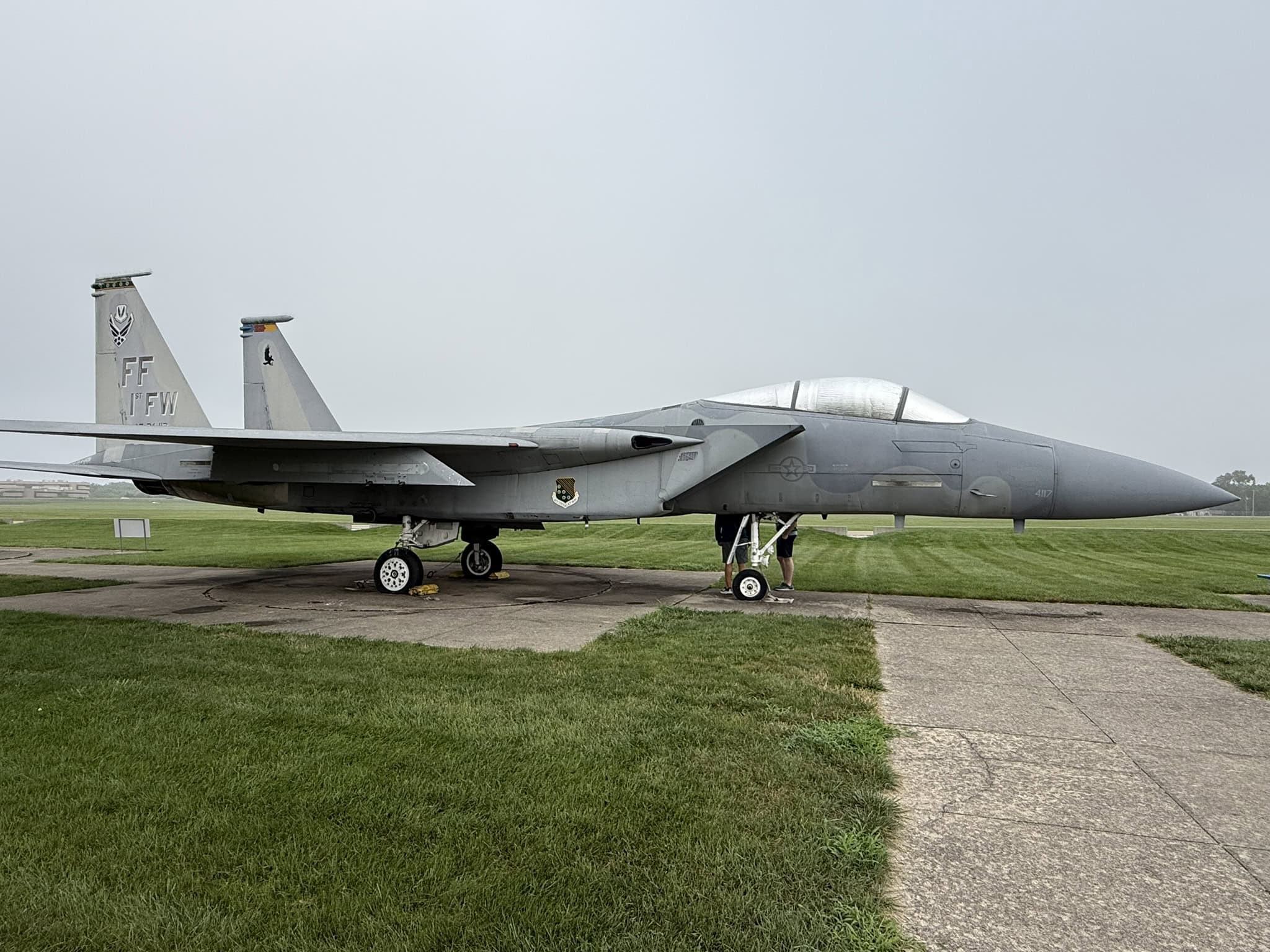
F-15 fighter sitting outside the National Museum of the U.S. Air Force. Taken by Harry J. Kazianis on July 19, 2025.
While ADCOM still required interception capabilities, U.S. air power was shifting toward air superiority – specifically, the ability to defeat enemy fighters in contested airspace. The F-15 was designed from the outside for this role, offering a combination of speed and maneuverability.
The F-14 was also a Navy-designed aircraft, and adapting it would have meant the Air Force relying on a platform developed outside of its own procurement system. Historically, U.S. military services have preferred to maintain control over their own programs, particularly for major acquisitions.
And then there was the fact that this would have been a costly and complex endeavor. The F-14 was a sophisticated, maintenance-intensive aircraft, particularly due to its radar and engine systems. Operating a platform like this across a large continental defense network would have required significant logistical investments.
And, because there was a doctrinal shift away from using dedicated interceptors – with missile and radar technologies advancing in the 1970s – it was clear the Air Force would be better suited by a more flexible platform. The F-15, which could perform both air superiority and air defense missions, ultimately won.
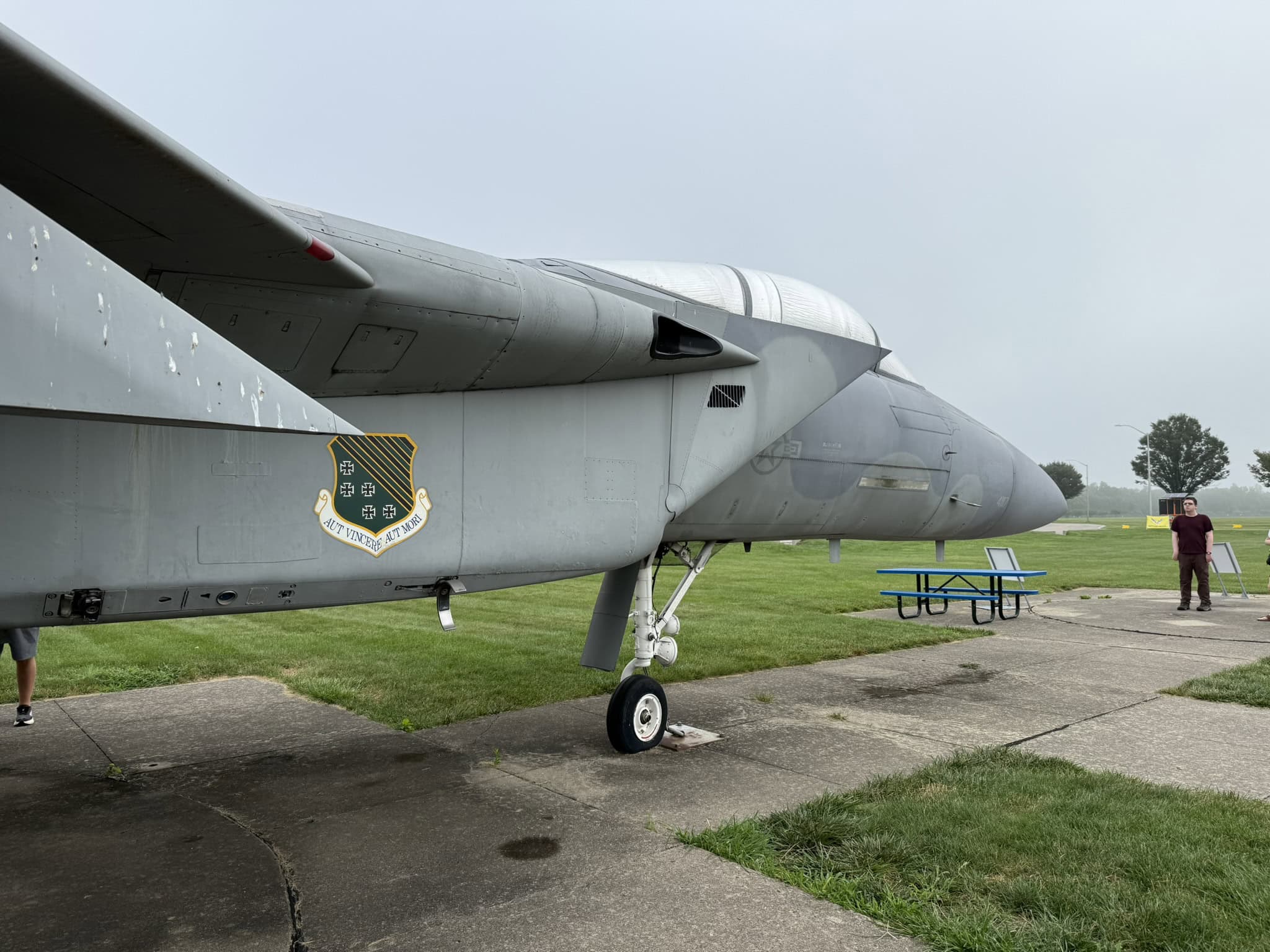
F-15 fighter sitting outside of the National Museum of the U.S. Air Force. Taken by Harry J. Kazianis on July 19, 2025.
A Concept Ahead Of Its Time?
In many respects, the F-14 anticipated how modern air combat would evolve. Its core concept – long-range detection, multi-target tracking, and beyond-visual-range engagement – has become standard in today’s fighter aircraft.
The Tomcat’s AN/AWG-9 radar, for example, was one of the first systems capable of tracking multiple targets simultaneously while guiding missiles in flight, a capability now fundamental to modern active electronically scanned array (AESA) radars.
Likewise, the AIM-54 Phoenix introduced the concept of engaging threats at extreme ranges, a role now performed by missiles like the AIM-120 AMRAAM, which is designed for beyond-visual-range combat and can engage multiple targets.
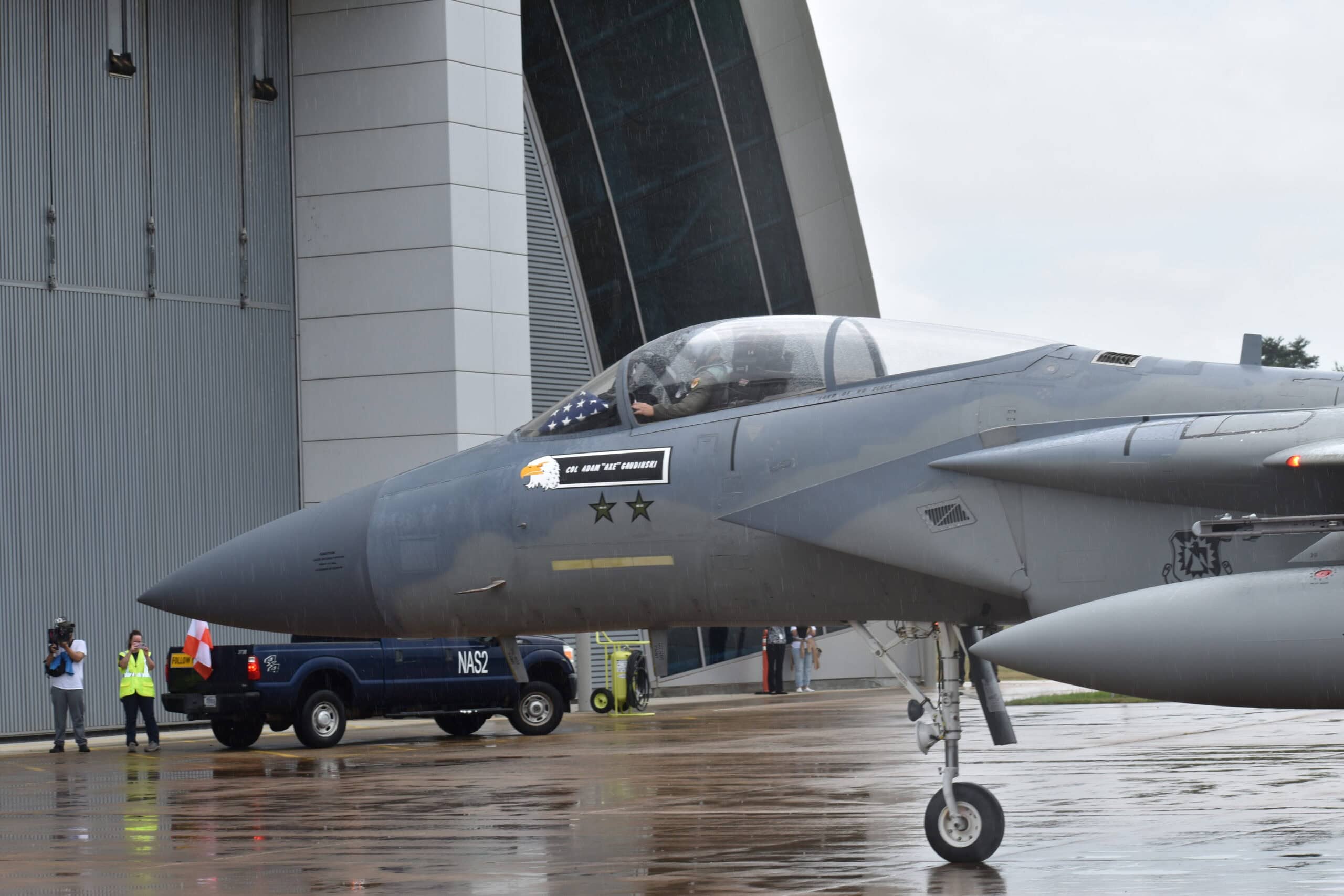
F-15 landing outside of the Smithsonian. 19FortyFive.com image.
Even the next generation of fighter aircraft, like what is being developed under the Next Generation Air Dominance Program, is expected to build on sensor fusion technologies and long-range engagement capabilities – principles that echo the original design philosophy of the F-14.
About the Author: Jack Buckby
Jack Buckby is a British researcher and analyst specializing in defense and national security, based in New York. His work focuses on military capability, procurement, and strategic competition, producing and editing analysis for policy and defense audiences. He brings extensive editorial experience, with a career output spanning over 1,000 articles at 19FortyFive and National Security Journal, and has previously authored books and papers on extremism and deradicalization.