
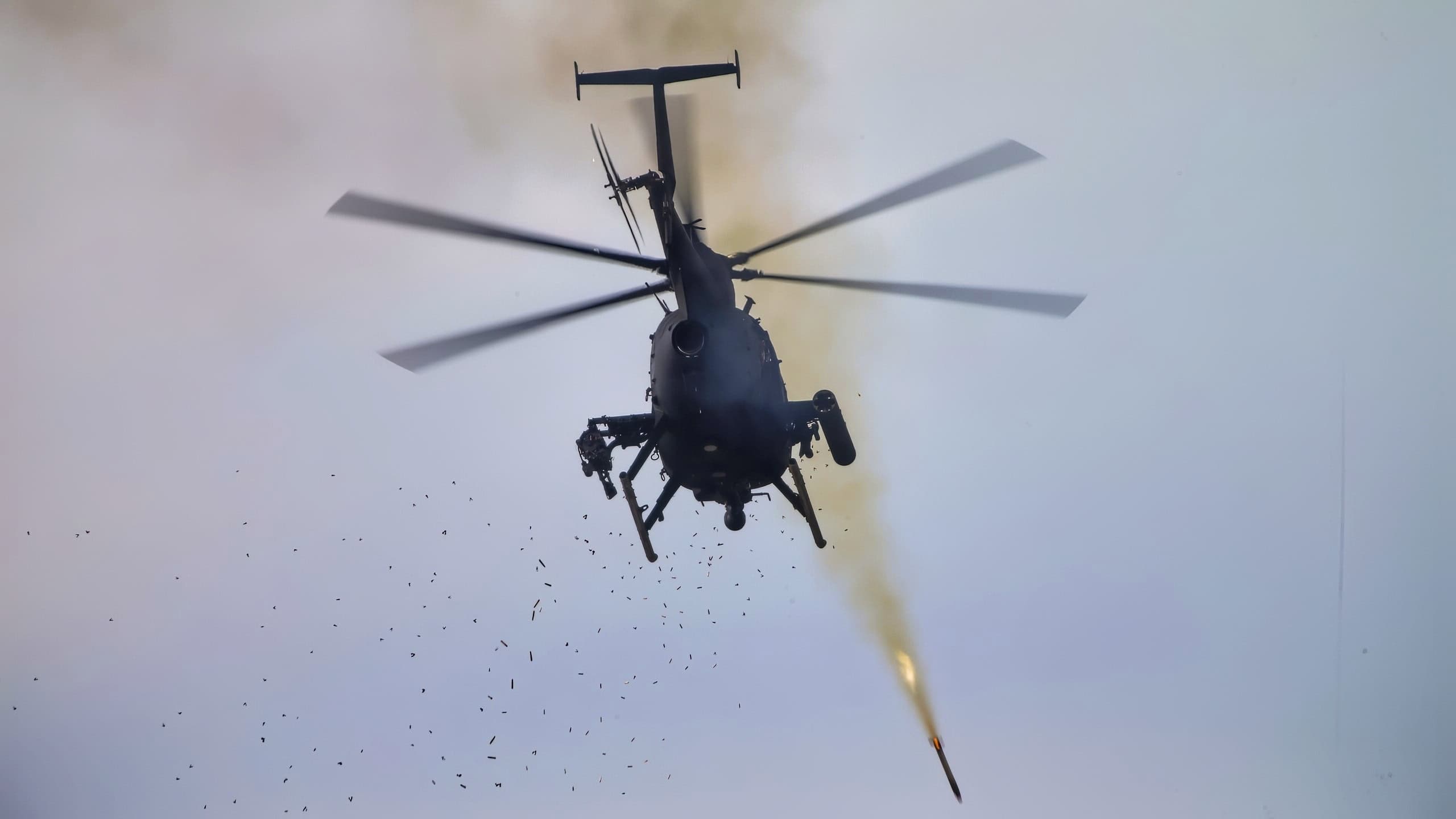
AH-6 Little Bird: The U.S. Special Operations Little Bird Helicopters Can Do It All – The helicopter that rescued a downed American pilot from behind enemy lines in Iran is so small it folds up inside a cargo plane — and so deadly that special operators call it the ‘Killer Egg’.
The Helicopter That Made History in Iran
Like many Americans and members of Donald Trump’s national security team, I was anxious when the downed weapons systems officer of the F-15E Strike Eagle was hiding in Iran.
The minutes ticked by slowly, and there was likely a sense of dread in the White House.
If the Iranians had found the missing colonel, it would have been disastrous and a major public-relations bonanza for Tehran, complicating negotiations and giving the Iranians the upper hand in talks.
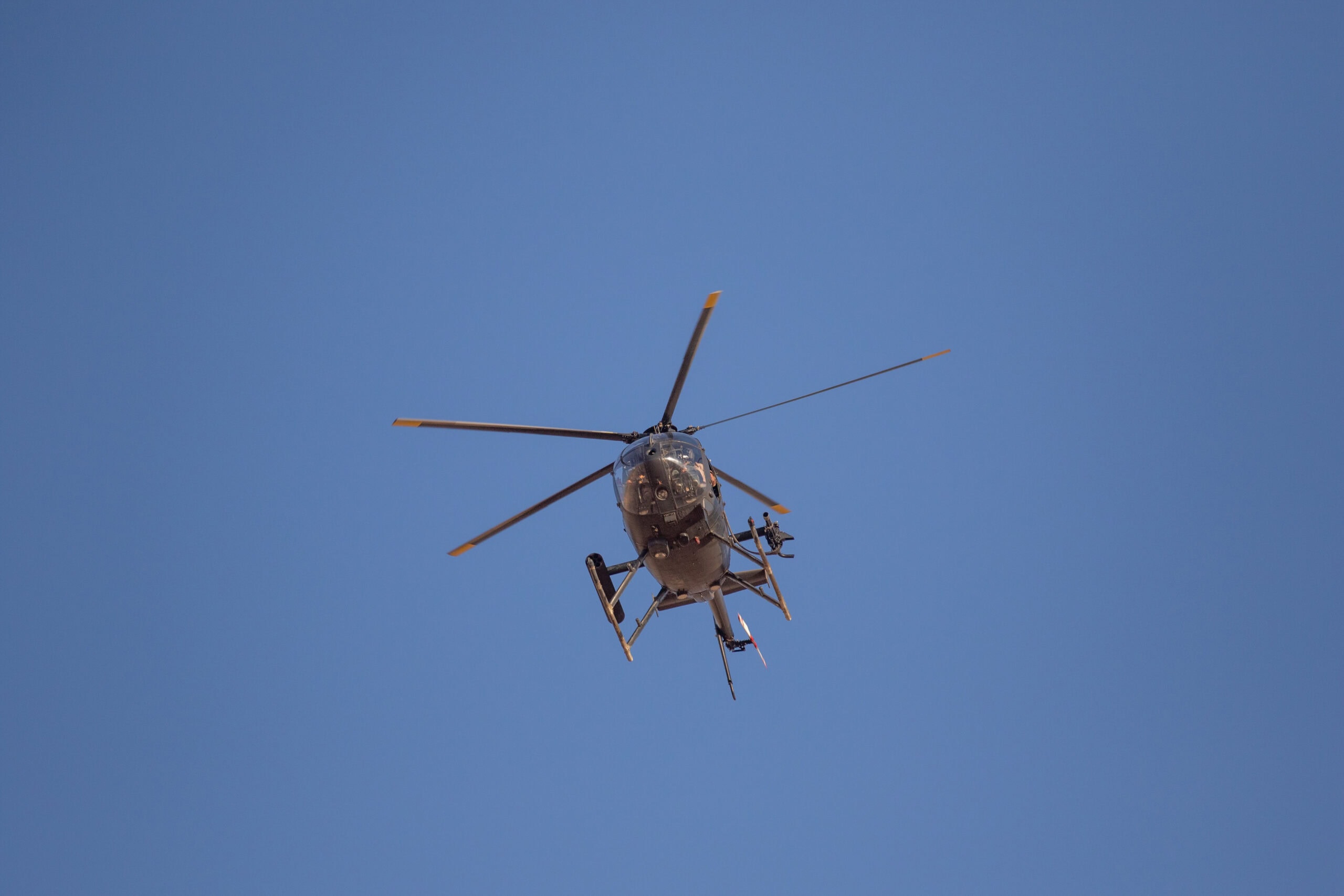
Jordanian Armed Forces conduct air maneuvers and attack with the AH-6 Little Bird helicopter during Exercise Eager Lion in Jordan, Sept. 11, 2022. Eager Lion 22 is a multilateral exercise hosted by the Hashemite Kingdom of Jordan, designed to exchange military expertise, and improve interoperability among partner nations. (U.S. Army photo by Sgt. Nicholas Ramshaw)
Tier One Operators Are Enhanced with Little Bird Capabilities
One piece of military hardware was critical to the success of the Iran rescue mission by the Joint Special Operations Command, SEAL Team Six, and Delta Force Special Mission Unit operators.
The AH-6 and MH-6 Little Bird helicopters performed like champions during the rescue mission.
These tiny helicopters were carried in by specially adapted MC-130J Commando II transport airplanes and made their presence felt immediately.
Night Stalkers Can Fly Little Birds Like No Other
The Little Birds were flown by expert pilots from the “Night Stalkers” of the 160th Special Operations Aviation Regiment (SOAR).
These aviators are known for conducting combat search and rescue and can do everything from eliminating ground targets to hauling special operators with sniper rifles and collecting intelligence data.
Two Configurations Are Mightily Effective
The AH-6 Little Bird is designed to eliminate enemy combatants. Special forces operators have nicknamed the AH-6 the “Killer Egg,” and it is equipped with ample firepower to make the enemy pay.
The Killer Egg is armed with 70 mm Hydra or APKWS rockets, Gatling-style miniguns, and Hellfire missiles.
Alternatively, the MH-6 focuses on light utility hauling, operator transport, and reconnaissance. These helicopters fly extremely fast, and it’s a rapid roller coaster ride for those on board.
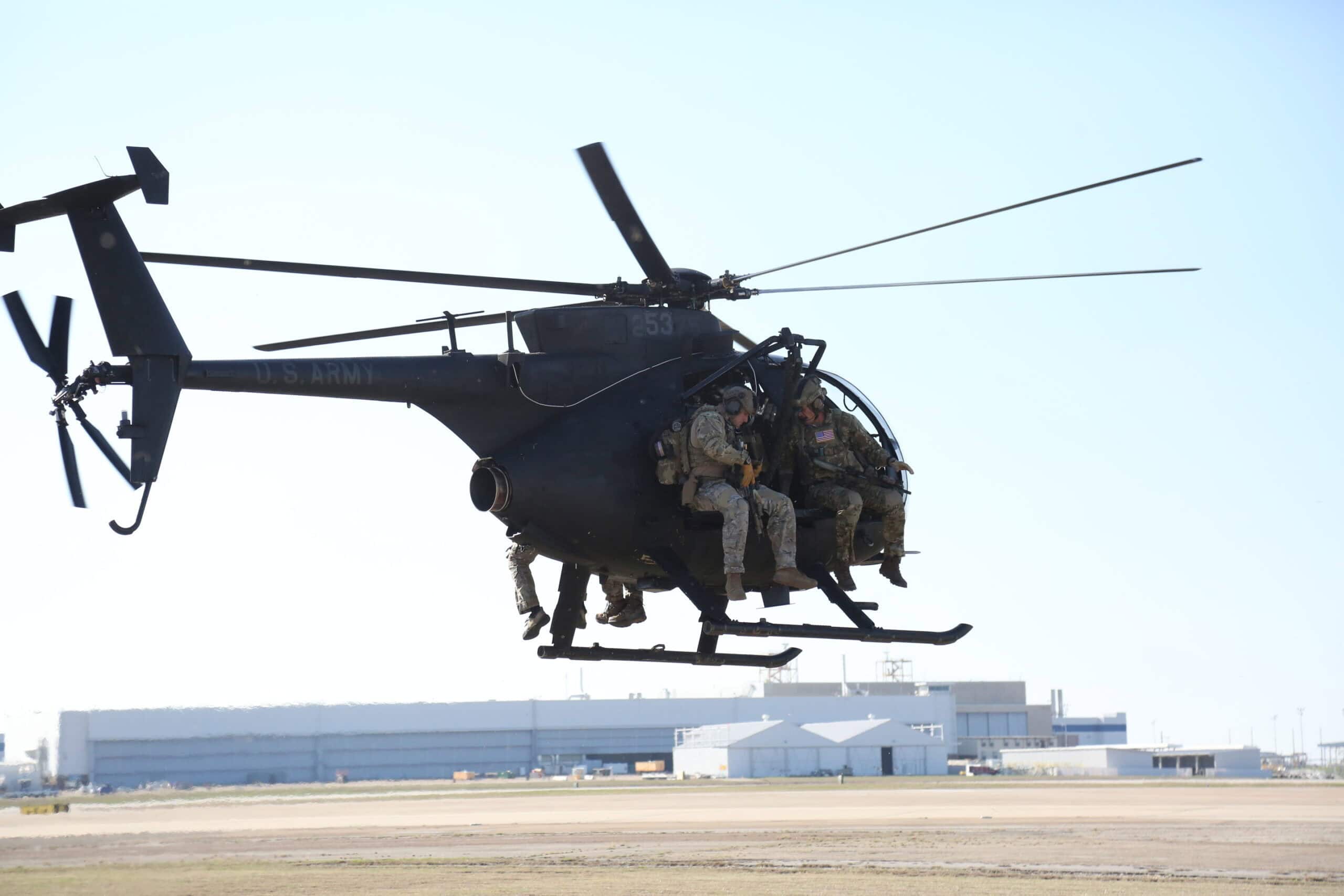
Soldiers assigned to 10th Special Forces Group (Airborne), conduct aviation insertion training using a AH-6 “Little Bird” helicopter, on Fort Carson, Colo., March 13, 2018. The training builds the Soldiers combat skill set and confidence. (U.S. Army courtesy photo)
How the Rescue Attempt Evolved in Iran
At least four Little Birds participated in the rescue mission. “Once the MH/AH-6Ms completed the rescue of the F-15E crew member, the aircraft returned to the forward operating base, where the two MC-130Js were waiting. However, neither aircraft was available for exfiltration, so a second wave had to be employed, possibly modified C295 medium transport aircraft configured for special operations support,” according to Zona-Militar.com.
But due to complications on an improvised runway, the Commando IIs were stuck. The operators had to destroy them along with the Little Birds.
Tailor-made for Maritime Operations Too
MH-6s can be useful on difficult missions like those in Iran. There was a daring maritime raid on the tanker Bella 1, where Navy SEALs were infiltrated to take over the vessel in an operation tailor-made for the maritime commandos. You could imagine the skill of the pilots who were attempting to insert the SEALs while the vessel rose and fell on the waves.
This was a good rehearsal for the rescue of the downed F-15E crewman. The rocky, mountainous terrain would have made flying difficult, and the possibility of enemy fire made the mission fraught with danger.
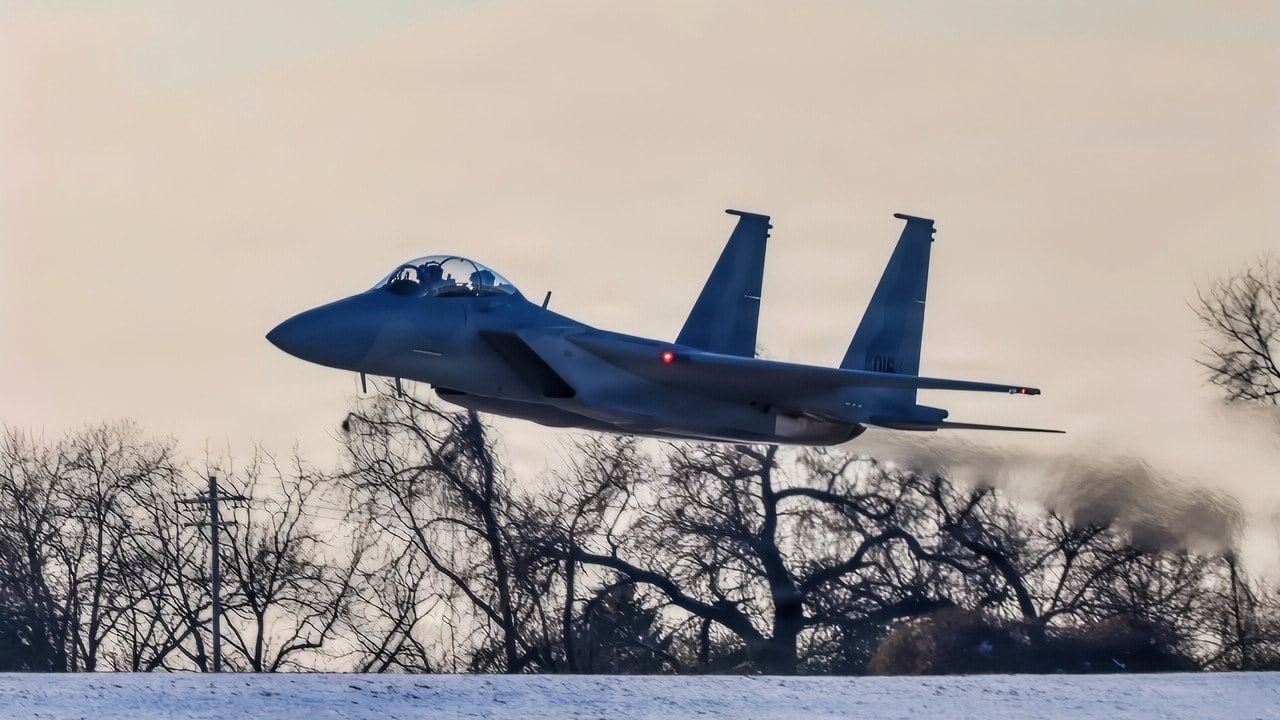
An F-15EX departs for Portland Air National Guard Base. The U.S. Air Force, in partnership with Boeing and the Defense Contract Management Agency, has resumed F-15EX Eagle II deliveries to the Portland Air National Guard Base, overcoming recent production delays. (Courtesy photo)
Folding Main Rotor Allows for Cargo Plane Transport
Little Birds are also valuable because their main rotors can be folded and transported on the MC-130J Commando II. They are like a force of drones, but instead are piloted by real-life SOAR Night Stalker pilots with no sense of fear. These missions are known as Agile Combat Employment (ACE).
Featured Assets in Afghanistan
They were deployed extensively in Afghanistan to protect remote Forward Operating Bases (FOBs). U.S. Army Special Forces and Army Rangers often assigned snipers to board the Little Birds for overwatch during ambushes against friendly forces.
The Little Birds could also fly ahead of other helicopters for reconnaissance. The small MH-6s and AH-6s were instrumental in providing close air support to U.S. and allied forces on the ground as they fought the Taliban. Many missions were “danger close,” with fire directed by forward tactical air controllers.
When paired with a Commando II airplane, the Little Birds can be transported, refueled, and replenished with munitions. This teamwork is a strong facet of the Joint Special Operations Command, which depends on intricate parts always running smoothly, especially during the recent rescue.
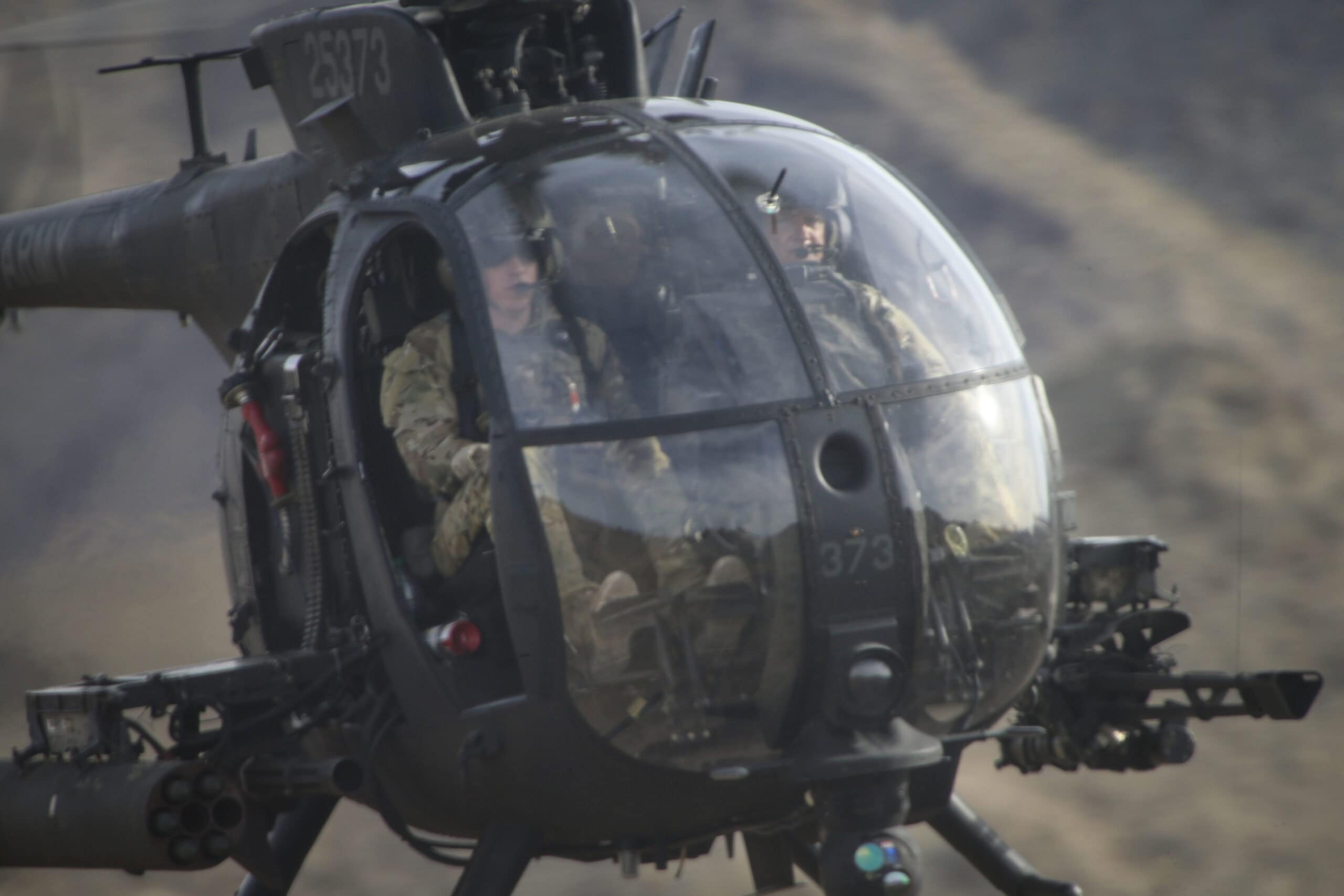
A U.S. Army AH-6 Little Bird in support of Marine Aviation Weapons and Tactics Squadron One (MAWTS-1) flies over designated targets during an offensive air support exercise at Mt. Barrow, Chocolate Mountain Aerial Gunnery Range, Calif., April 5, 2016. The exercise is part of Weapons and Tactics Instructor (WTI) 2-16, a seven-week training event hosted by Marine Aviation Weapons and Tactics Squadron One (MAWTS-1) cadre. MAWTS-1 provides standardized tactical training and certification of unit instructor qualifications to support Marine Aviation Training and Readiness and assists in developing and employing aviation weapons and tactics. (U.S. Marine Corps photograph by SSgt. Artur Shvartsberg, MAWTS-1 COMCAM/Released)
Enhancing Missions With Specialized Equipment
The helicopters are officially known as Mission Enhanced Little Birds. They can appear out of nowhere to surprise the enemy. The planks outside the aircraft allow special operators to ride in for transport or sniping.
Troopers can then fast-rope to their objectives, be picked up again, and infiltrate another area to repeat the mission. The AH-6 has removed the planks and small wings that carry the guns and launchers.
There Are Limitations
They are limited in range (about 250 miles) and loiter time due to the low fuel carried onboard.
That is one downside. Some can be fitted with extra fuel tanks, but they cannot refuel in the air.
However, they can also be transported by ship to conduct maritime operations alongside SEALs, thereby extending their combat radius.
The Little Birds are versatile tools, and JSOC operators would not be as effective without the diminutive yet powerful aircraft.
The speed and maneuverability are great. They can be configured for various mission types. Delta Force, SEAL Team Six, and other highly trained special ops personnel know how to rock and roll with a Little Bird.
You haven’t seen the last of the Flying Egg yet, and that is just fine with U.S. special operations forces, who can deploy anywhere and anytime for some of the most difficult and risky missions possible. Who knows, they just might be needed in Iran again if the ceasefire does not hold.
About the Author: Dr. Brent M. Eastwood
Author of now over 3,500 articles on defense issues, Brent M. Eastwood, PhD, is the author of Don’t Turn Your Back On the World: A Conservative Foreign Policy and Humans, Machines, and Data: Future Trends in Warfare, plus two other books. Brent was the founder and CEO of a tech firm that predicted world events using artificial intelligence. He served as a legislative fellow for US Senator Tim Scott and advised the senator on defense and foreign policy issues. He has taught at American University, George Washington University, and George Mason University. Brent is a former US Army Infantry officer. He can be followed on X @BMEastwood.