
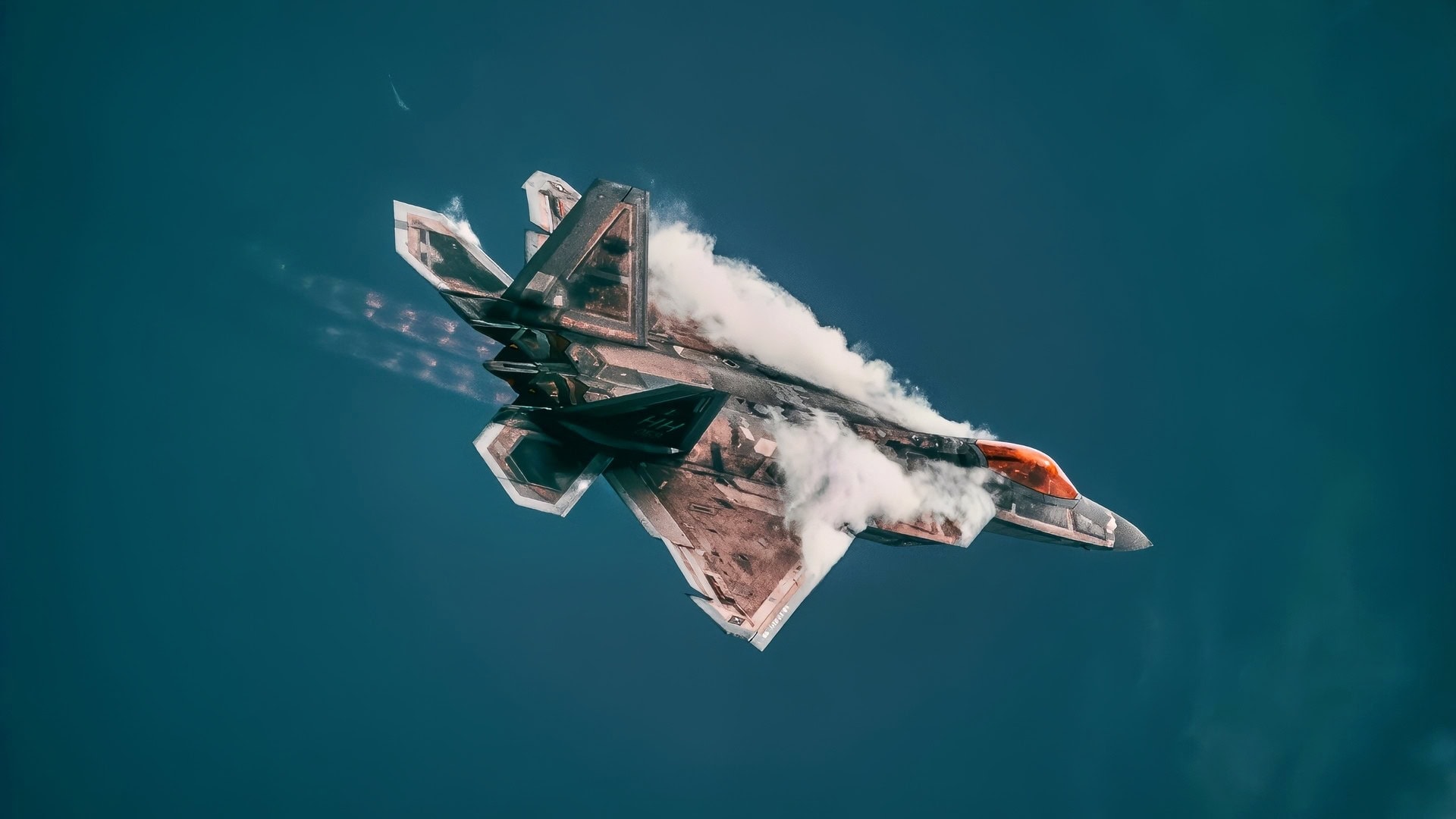
Captain Jeff Haney was suffocating at altitude in an F-22 Raptor with a known oxygen system defect. The Air Force blamed him for the crash — then the Inspector General proved they were wrong.
The F-22 Oxygen Problem, Revisited
Some journalists covering the U.S. Air Force and Members of Congress who oversaw the service were concerned and alarmed in 2010. That was not a good year for the F-22 Raptor program.
A pilot died when his stealth jet crashed in Alaska.
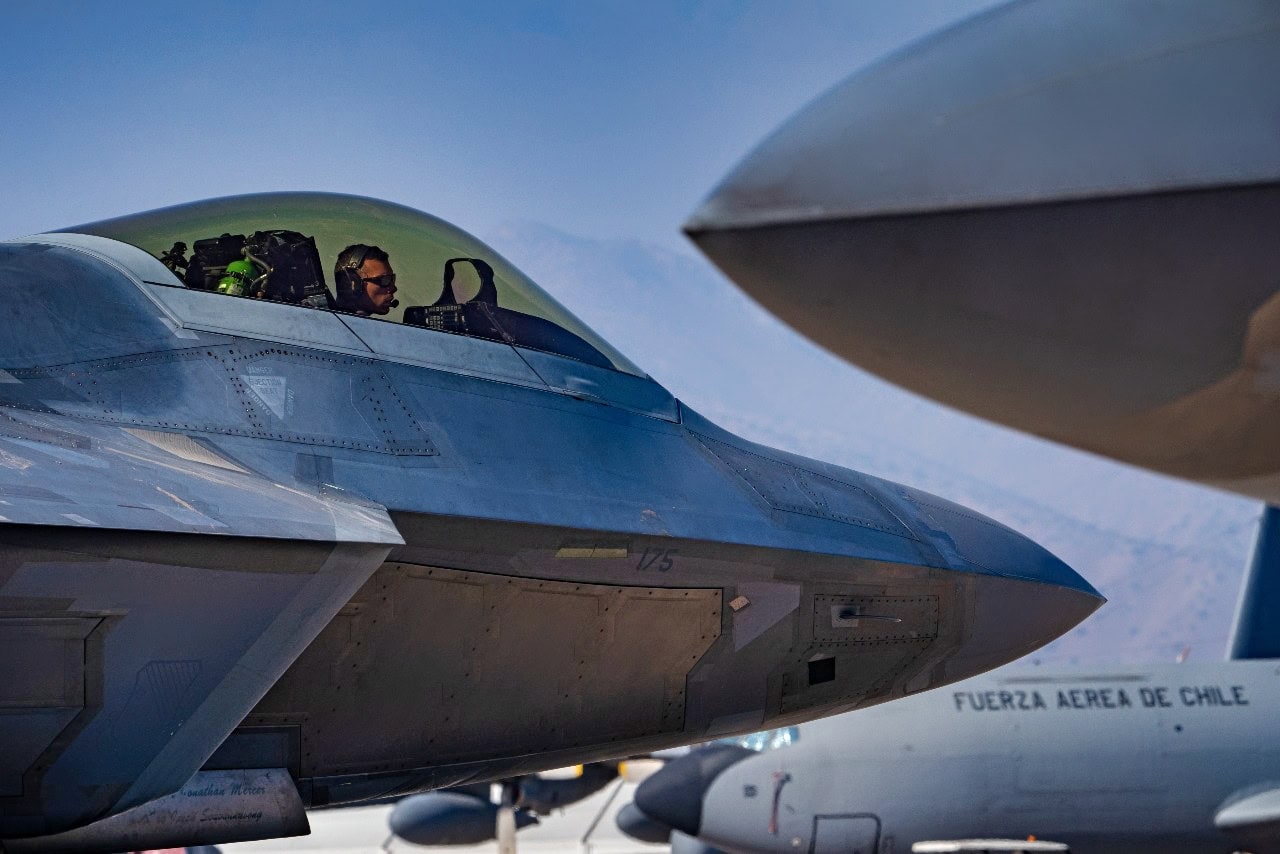
U.S. Air Force Technical Sgt. Fernando Llama, F-22 Demo Team avionics specialist, preforms an engine run to check all aircraft systems are good-to-go for the 2022 FIDAE Air & Trade Show, April 3, 2022 in Santiago, Chile. Avionics specialists like Llama are responsible for the maintenance of the onboard flight computers, integrated avionics, and many electrical systems and components. (U.S. Air Force photo by Staff Sgt. Don Hudson)
There were issues with the oxygen system, which affected his breathing. The aviator ran out of air, became asphyxiated, and the airplane tumbled downward into a fiery wreck.
What Happened?
Captain Jeff Haney was still training in his F-22 in 2010. He took his Raptor to the correct altitude and was cruising confidently, but then a red light illuminated and a buzzing warning filled his ears.
There was a problem with his oxygen system. Haney was experienced in flying other airplanes, and he knew this could be dangerous.
This Was Not Looking Good
His breathing became constricted. The award-winning pilot did everything he could to address the problem in the cockpit. The F-22 had a “bleed air leak” in a critical oxygen system.
He quickly went through his safety protocols, but shortness of breath was keeping oxygen from reaching his brain. A blackout could happen at any time, and he could lose control of the airplane.
Nowhere to Land
Haney started a dive to lower the jet’s altitude, thinking he could make an emergency landing. This would have been difficult because he was flying over wooded, rocky, and elevated terrain.
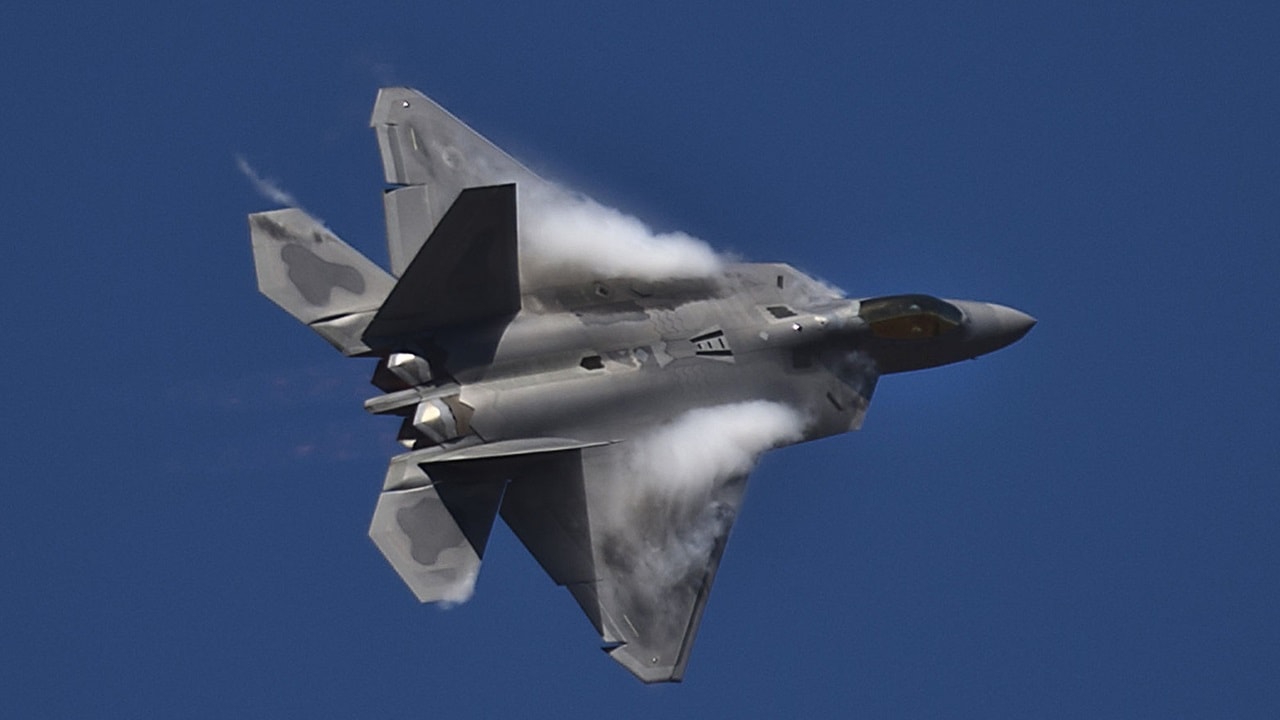
A U.S. Air Force F-22 Raptor from 94th Fighter Squadron Langley Air Force Base, Va., takes off to perform an aerial demonstration for an estimated 180,000 spectators at the Australian International Airshow, March 2, 2013 at Avalon Airport in Geelong, Australia. The F-22 demo team are currently deployed to the 18th Fighter Wing, Kadena Air Base, Japan to support pacific theater operations. This is the first official demonstration of the F-22 Raptors capabilities at an airshow outside the United States. The Australian International Airshow 2013 (AIA13), is held biennially, and is one of the largest international trade shows in the Pacific. The Airshow is expected to draw 350,000 visitors and has featured 500 defense exhibitors from 35 countries and is designed to bolster business opportunities in the international aviation sector. U.S. Pacific Command (USPACOM) participation in AIA13 directly supports theater engagement goals and objectives and further enhances relationships with other Pacific nations. (Department of Defense photo by U.S. Air Force Tech. Sgt. Michael R. Holzworth/Released)
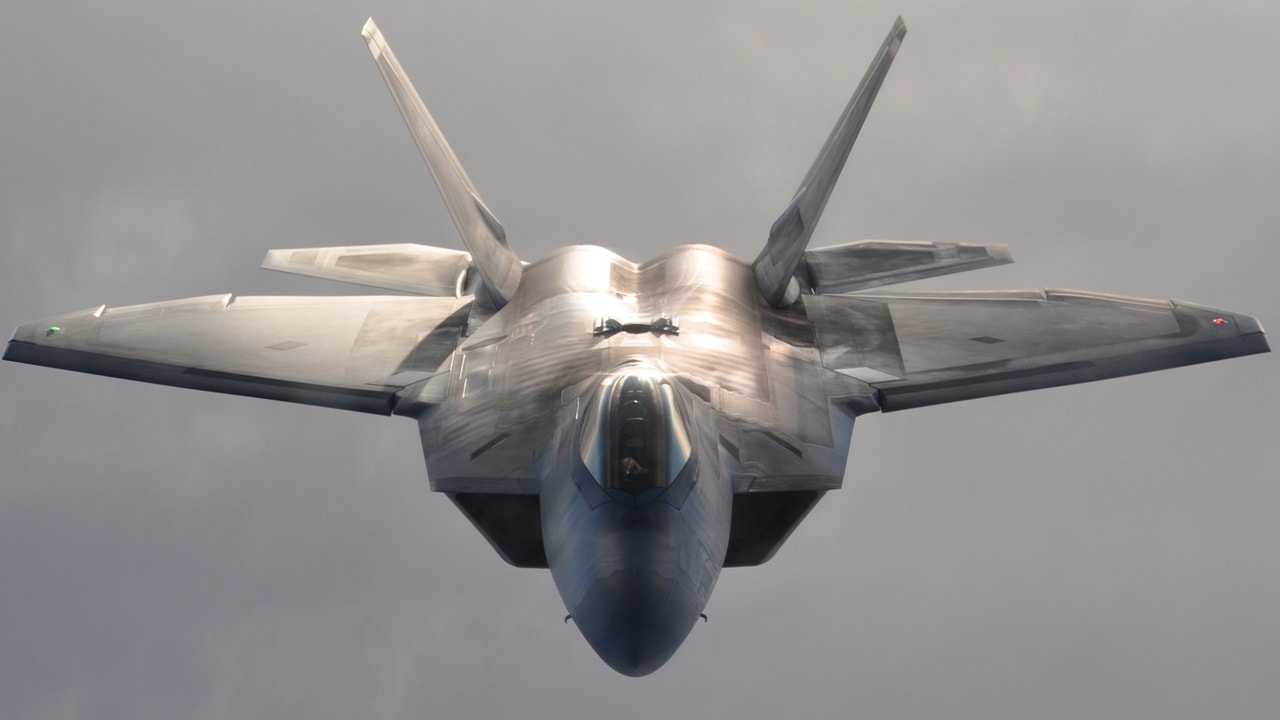
An F-22 Raptor flies over Alaska terrain after refueling Jan. 5, 2013. The F-22 is assigned to the 3rd Wing and flown by a Reserve pilot assigned to the 302nd Fighter Squadron at Elmendorf Air Force Base, Alaska. (U.S. Air Force Reserve photo/Tech. Sgt. Dana Rosso)
Did the F-22 Pilot Lose Consciousness?
“Haney took the plane to a lower altitude and then, curiously, entered a radical 240-degree roll and started falling fast. For approximately the next 15 seconds, ‘there were no stick inputs and only very minor pedal inputs,’” the report said.
Unfortunately, Haney began losing consciousness and could not save the warbird. It crashed, killing the pilot. Haney may have regained breathing for a short period during the fatal dive, but it wasn’t long enough to pull out of the maneuver and save the Raptor.
The Investigation Said He Began Suffocating
“During the [mishap sortie], the [mishap pilot] most likely experienced a sense similar to suffocation when airflow to the oxygen mask stopped,” the accident report stated, as noted by ABC News. “This was likely the [pilot’s] first experience under such physiological duress. The unique and added stress of the breathing restriction contributed to the [pilot’s] channelized attention.”
Was the Air Force Fair to Haney?
The Air Force was not kind to the dead pilot. Haney should have been able to turn on an emergency switch, investigators said. Even though he was having difficulty breathing, his attention was more focused on that problem than on flying the airplane. His superiors believed that if he had activated the emergency backup system, he could have regained his breath and pulled out of the dive.
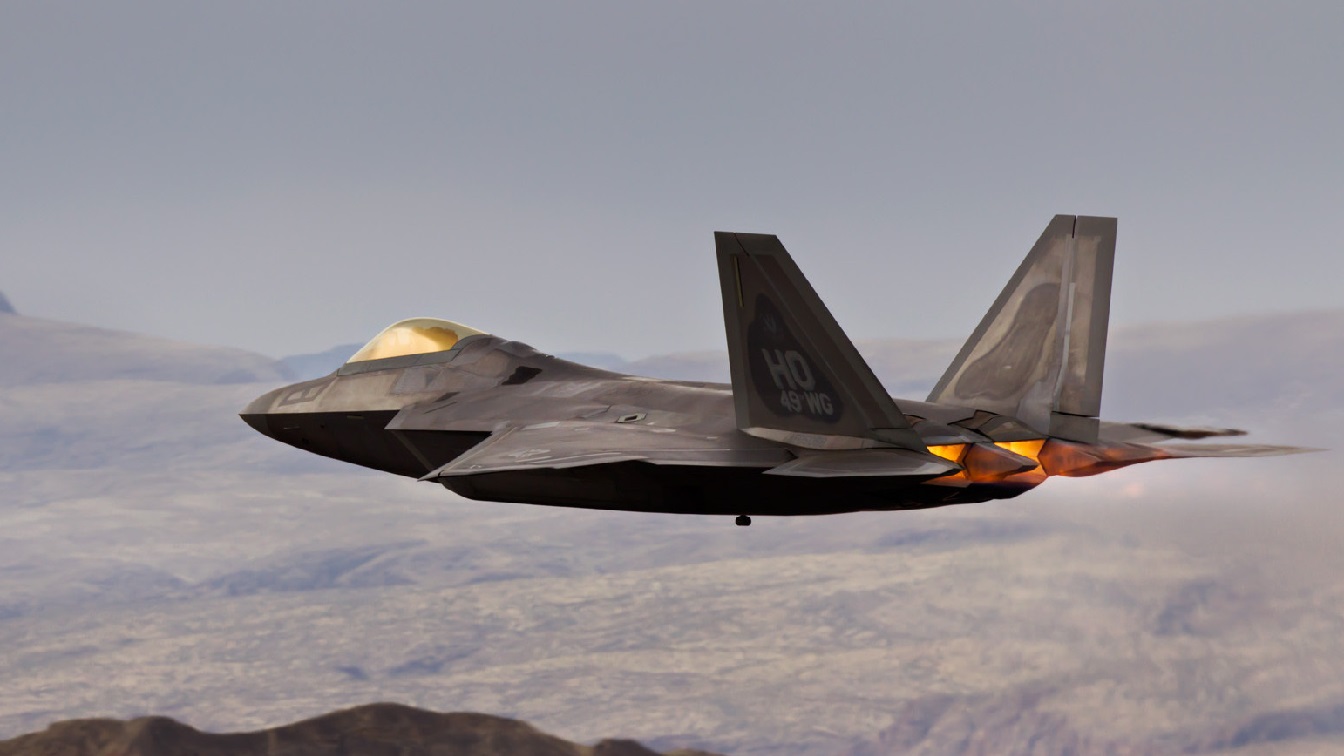
F-22 Raptor. Image Credit: Creative Commons.

F-22 Raptor. Image: Creative Commons.
“By clear and convincing evidence, I find the cause of the mishap was the [pilot’s] failure to recognize and initiate a timely dive recovery due to channelized attention, breakdown of visual scan, and unrecognized spatial disorientation,” the president of the investigation board, Brig. Gen. James Browne declared.
F-22 Oxygen System Issues Had Occurred for Two Prior Years
However, the Air Force had known about oxygen problems with the F-22 since 2008. There were 12 instances in which the oxygen supply was constricted, leading to hypoxia symptoms. This can cause dizziness and impaired judgment, which could affect piloting the airplane. Investigators did not believe that Haney had hypoxia.
The Air Force grounded F-22s for five months in 2011 to investigate and fix the oxygen system problems. However, this did not resolve all the issues. Later that year, a pilot again experienced hypoxia while flying the Raptor.
Congress Said It Was Because of a Faulty Pressure Vest
“In 2012, the House Armed Services Committee held a hearing to evaluate the results of the Air Force’s investigation. Ultimately, the Air Force found that the F-22 issues were not due to oxygen supply. Instead, a combination of factors was cited—most notably, that a valve controlling the pilot’s pressure vest could allow the vest to inflate unnecessarily, which physically restricted the pilot’s ability to breathe,” USNI reported.
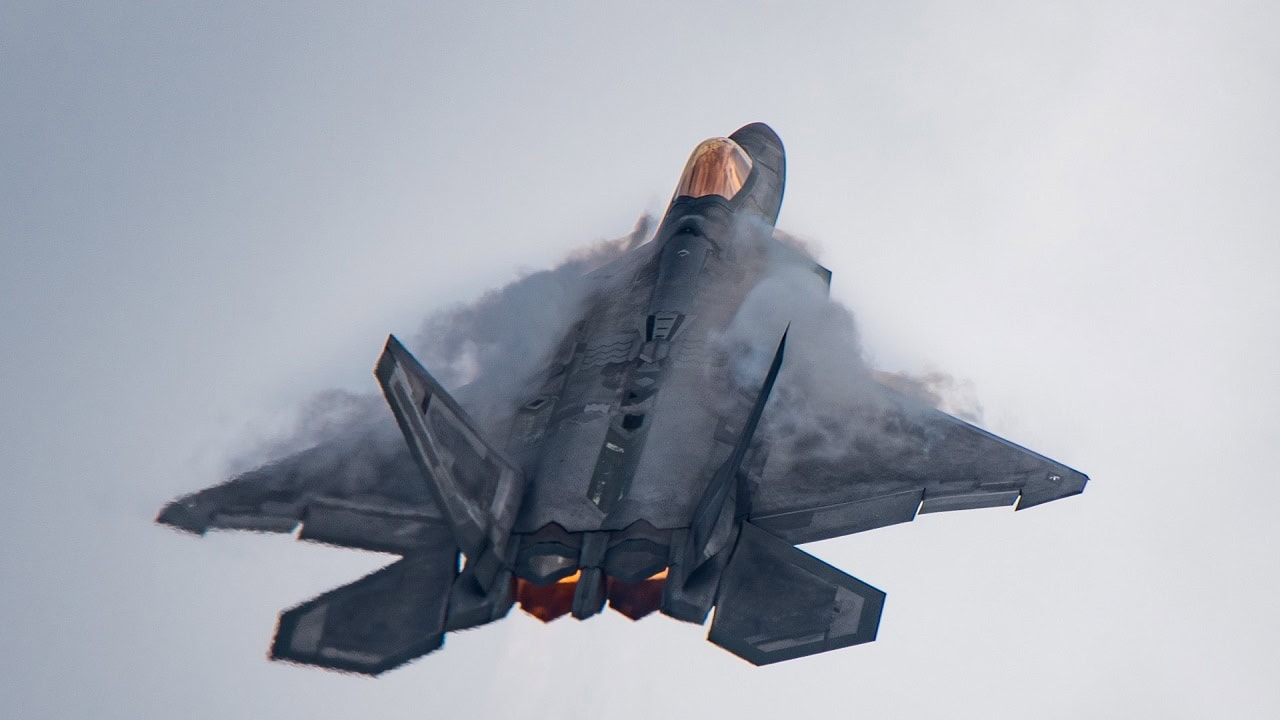
F-22 Raptor. Image Credit: Creative Commons.
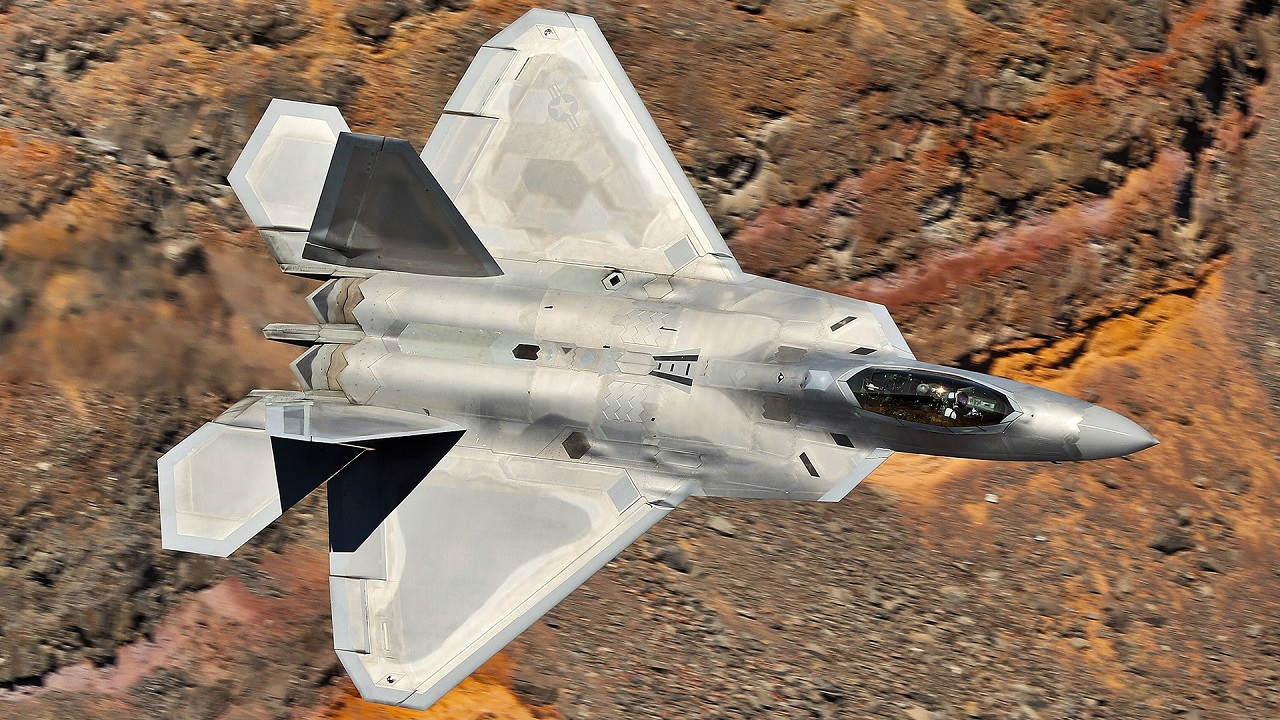
F-22 Raptor. Image Credit: Creative Commons.
That Doesn’t Make Total Sense
This finding raised more questions than it answered. Most pilots would have known that their pressure vests were not working properly. Was this the main problem? It seems the system itself was compromised.
In Haney’s case, the Air Force said he should have turned on the emergency oxygen apparatus, but how could he have done that if his pressure vest was inflated?
Did the Air Force Do Haney Wrong?
The investigation seemed unfair to Haney and his relatives and friends.
He was an excellent pilot and would have been familiar with the emergency procedures.
It seems to me this should have been taken into account during the investigation, but the Air Force was quick to assign pilot error rather than consider extenuating circumstances.
Sometimes, investigations can be too quick to judge a person’s ability to deal with systemic problems.
In Haney’s case, perhaps the service branch should not have blamed him so quickly without knowing all the facts that later investigations revealed.
This was a tragedy that could have been avoided with more training when the oxygen system failed, and maybe Haney would still be alive today.
Fortunately for Haney and his family, the Department of Defense Inspector General later conducted its own investigation, and the findings cleared Haney of pilot error in the crash.
His family felt vindicated, and his legacy remains intact.
About the Author: Dr. Brent M. Eastwood
Author of now over 3,500 articles on defense issues, Brent M. Eastwood, PhD, is the author of Don’t Turn Your Back On the World: A Conservative Foreign Policy and Humans, Machines, and Data: Future Trends in Warfare, plus two other books. Brent was the founder and CEO of a tech firm that predicted world events using artificial intelligence. He served as a legislative fellow for US Senator Tim Scott and advised the senator on defense and foreign policy issues. He has taught at American University, George Washington University, and George Mason University. Brent is a former US Army Infantry officer. He can be followed on X @BMEastwood.