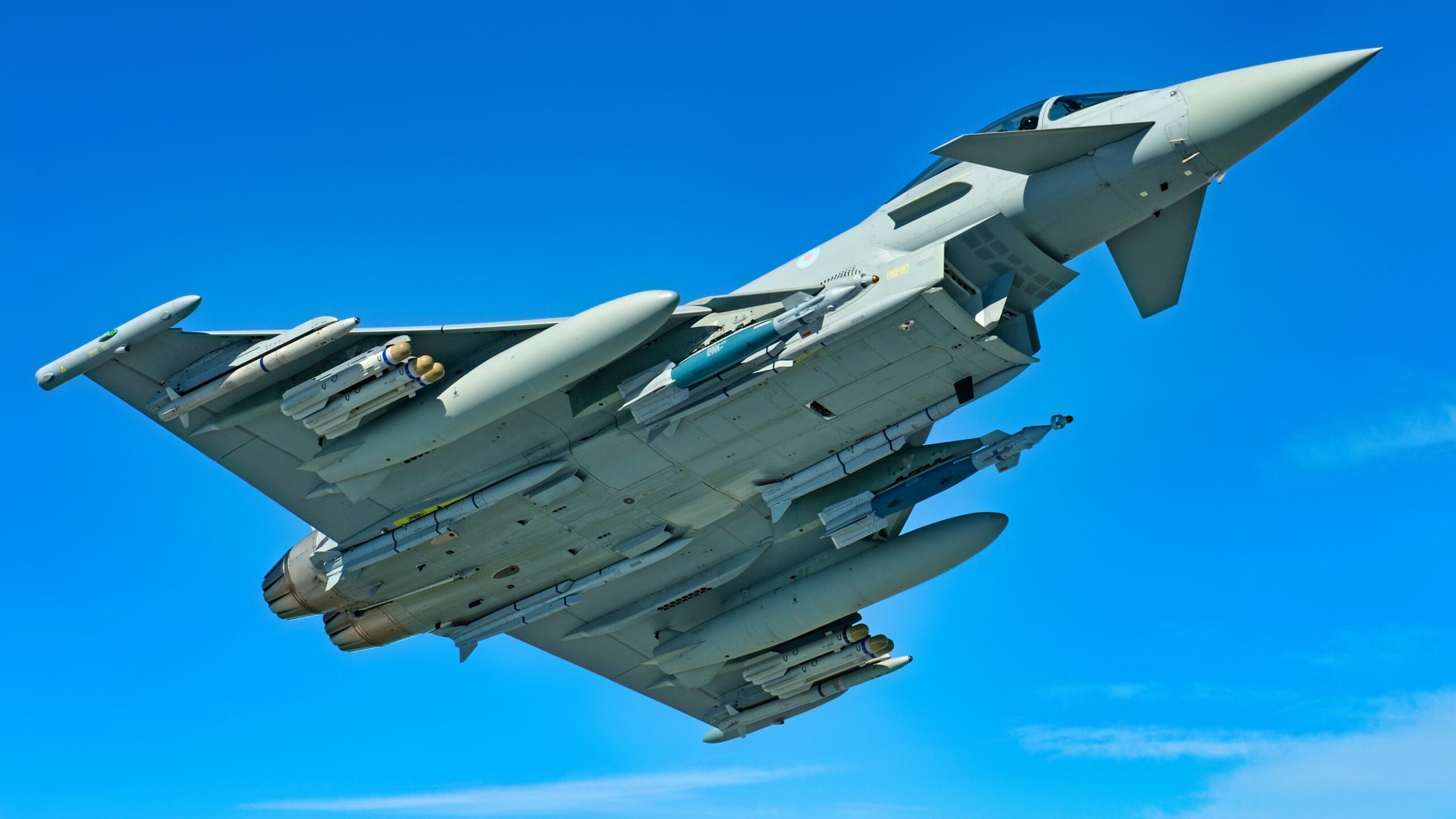
An Advanced Precision Kill Weapon System (APKWS), a laser-guided rocket, has been successfully fired from a Royal Air Force Eurofighter Typhoon. The test, undertaken by BAE Systems, shows just how fast Western air forces are having to rethink air defense, after years of drone-heavy combat in Ukraine and the Middle East.
The rocket was flown from BAE’s facility in Warton, Northwest England, using an RAF Eurofighter Typhoon test aircraft, striking a ground target at a British military range. The firing, which took place in March, is part of a Ministry of Defense-backed campaign to find more cost-effective anti-drone capabilities, with air-to-air trials expected to follow.
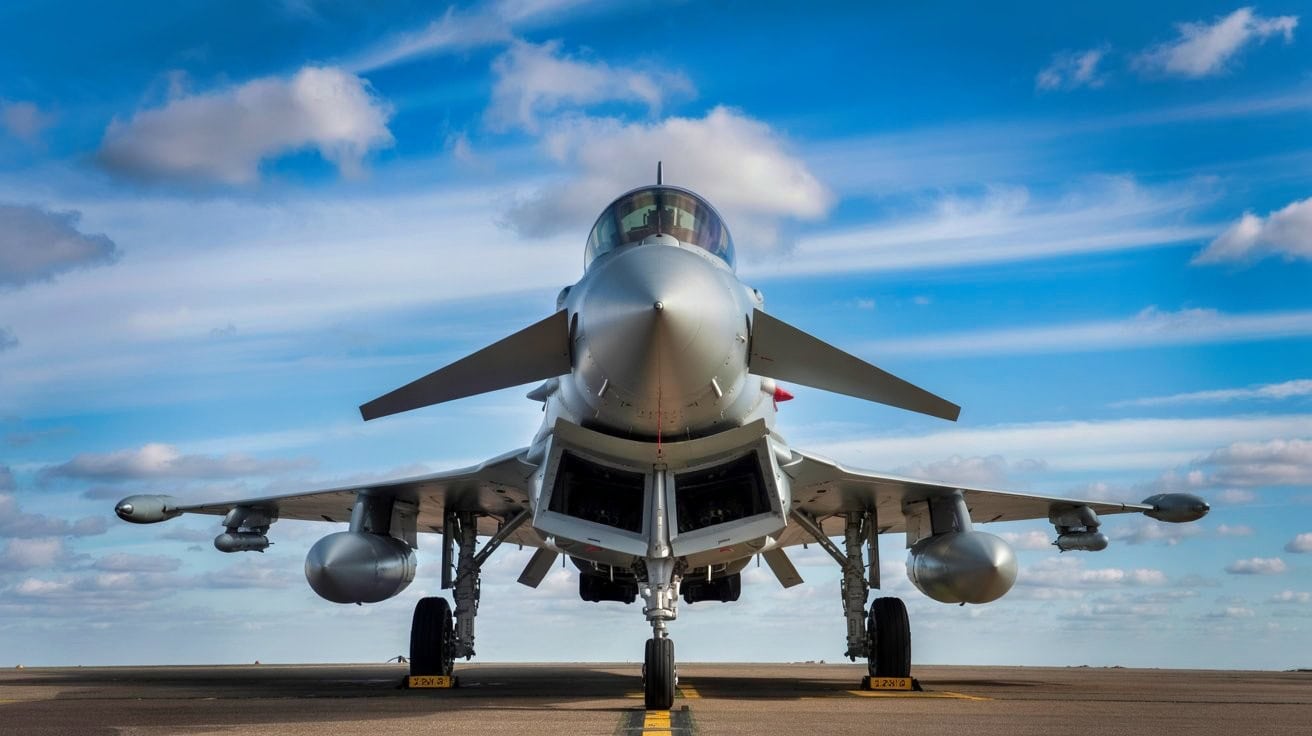
Eurofighter Typhoon. Image Created by Ideogram.
Drone Threats Are Cheap and Plentiful
The news comes at a time when the RAF’s Typhoons are no longer preparing for an abstract drone threat. They are already flying defensive missions in a real one. In March, Prime Minister Keir Starmer said British jets had been operating over Cyprus and the wider region, “shooting down multiple drones,” with at least one headed toward a base housing British military personnel.
He also announced the deployment of four additional Typhoons to Qatar to reinforce defensive operations across the region. The RAF has separately described how Typhoons and F-35Bs have been working together from RAF Akrotiri, carrying missile mixes intended to engage hostile aircraft or drones during those air defense missions.
The problem is not that the Typhoon lacks firepower, but that the weapons it normally carries were built for much more demanding targets than one-way attack drones. The jet’s air-to-air armament includes Meteor, AMRAAM, and ASRAAM, alongside a 27mm Mauser cannon.
None of these impressive weapons is cheap, so the RAF is wary of using them to intercept cheap drones.
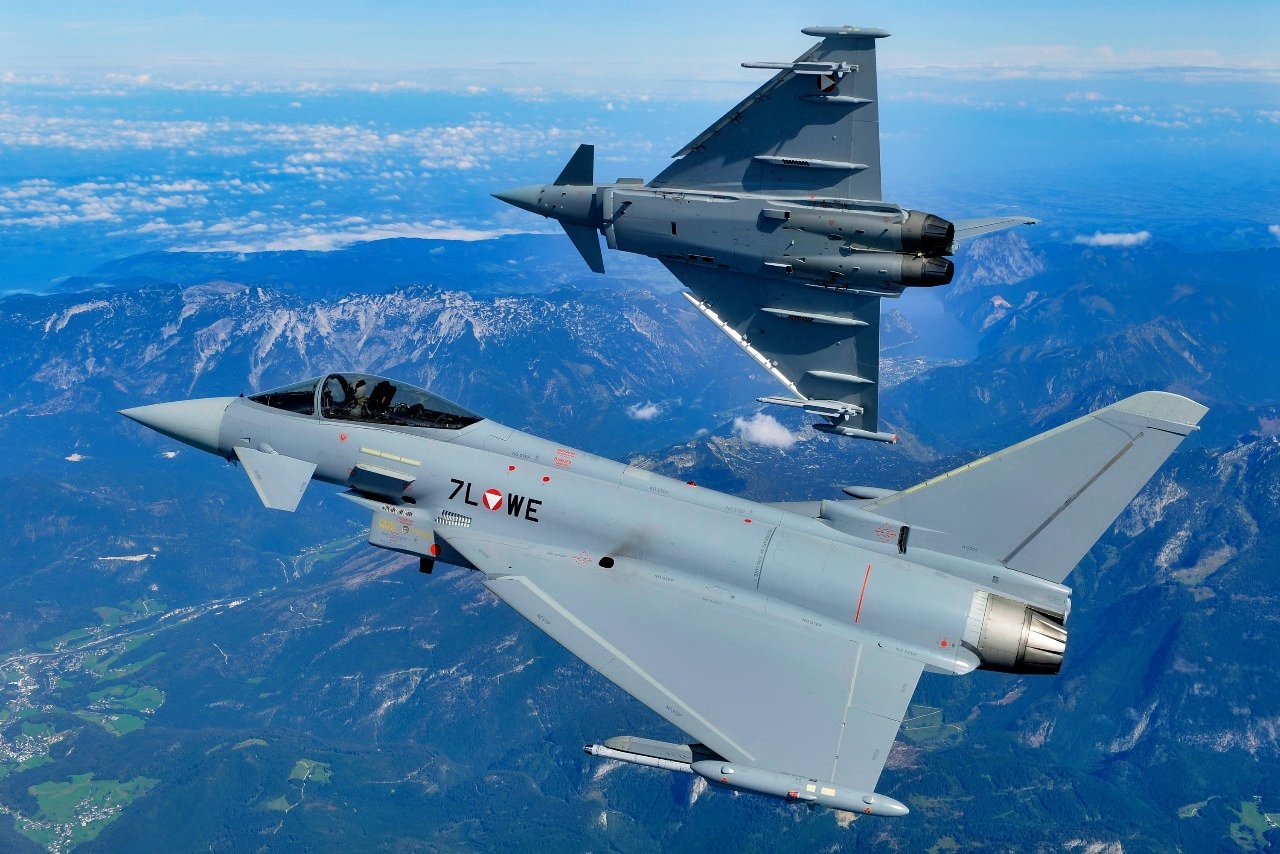
Eurofighter Typhoon. Image Credit: Creative Commons.
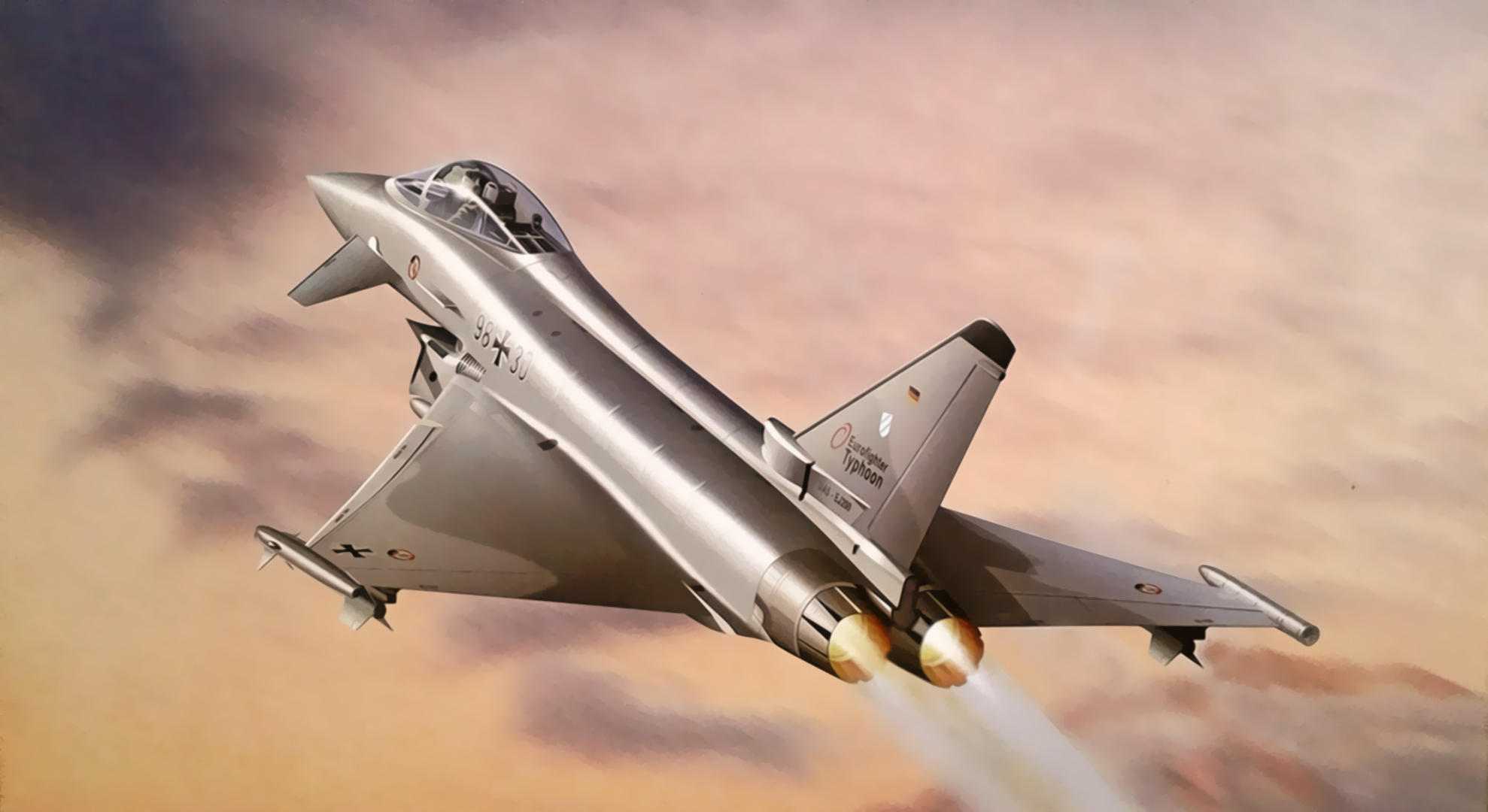
Eurofighter Typhoon. Image Credit: Creative Commons.
Eurofighter Typhoons Are Effective, But Not Cheap
The APKWS transforms mere unguided 70mm rockets into precision-guided munitions.
BAE and Breaking Defense have marketed the weapon as a cheaper answer to the counter-UAS mission, and The War Zone noted that the attraction is not only lower cost per shot but also greater magazine depth: a pod carries seven rockets, allowing a fighter to take more engagement opportunities into the air than if the same station carried a single conventional missile.
In plain terms, that means a Typhoon could stop being a very expensive way to shoot down one or two drones and start looking more like a practical drone-hunter.
Last year, the War Zone online magazine also revealed that APKWS had been promoted to the U.S. Air Force’s “primary” anti-drone weapon in the Middle East.
This certainly helps explain why BAE has been pushing this idea for Typhoons since at least the Defense & Security Equipment International (DSEI) arms fair in 2025, when the company announced it was investigating ways to improve the aircraft’s counter-drone capabilities. Janes, a defense publication, noted that the most recent firing occurred seven months after these assessments were publicly aired.
West Playing Catch-Up With Cheap Drone Threats
Naturally, there is a wider issue here regarding how exactly drone warfare is shaking up the entire defense industry.
For years, the prestige end of fast-jet procurement revolved around stealth, sensor fusion, and long-range missiles.
None of that has become unimportant.
The proliferation of cheap drones has created a parallel demand for affordable interception at scale. A top-tier fighter that must use a premium missile against every drone threat in its path is obviously doing its job, but not in the most financially sustainable way.
By contrast, APKWS could preserve all the good points about the Typhoon: its speed, sensors, and reach, while making each defensive sortie less of a drain on the public purse.
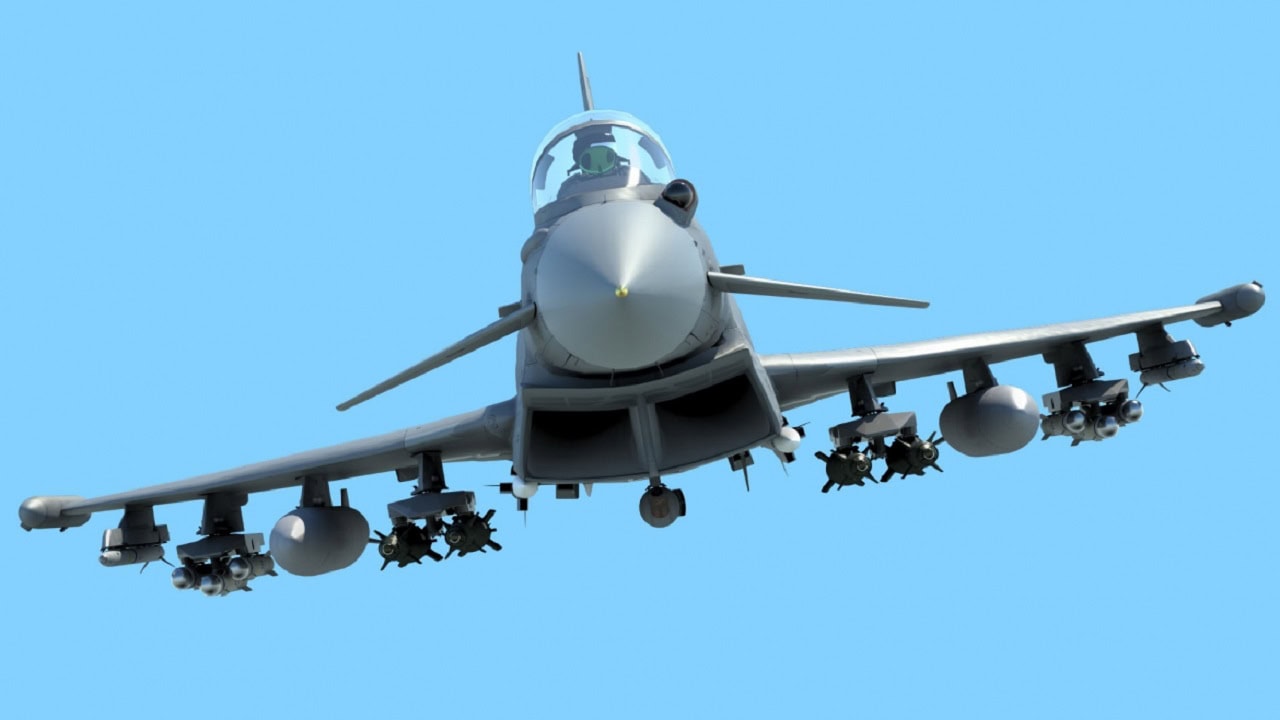
Typhoon fitted with the common launcher (computer generated image: for illustrative purposes only)
There are still caveats given that this was a ground-target firing, not the coveted air-to-air intercept.
The fact that the test was funded by BAE suggests that the industry is trying to advance the concept before governments promise to purchase it. Of course, the UK is the foremost near-term candidate, but the broader Eurofighter consortium will at some point be required to decide if this evolves into a wider fleet upgrade for Germany, Italy, and Spain as well.
The ongoing war with Iran did not suddenly create a case for a cost-efficient Eurofighter Typhoon weapon, but it has made the case much harder to ignore. What BAE tried out in Lancashire last month was only a test round, but it could have set the groundwork for more promising things.
About the Author: Georgia Gilholy
Georgia Gilholy is a journalist based in the United Kingdom who has been published in Newsweek, The Times of Israel, and the Spectator. Gilholy writes about international politics, culture, and education. You can follow her on X: @llggeorgia.