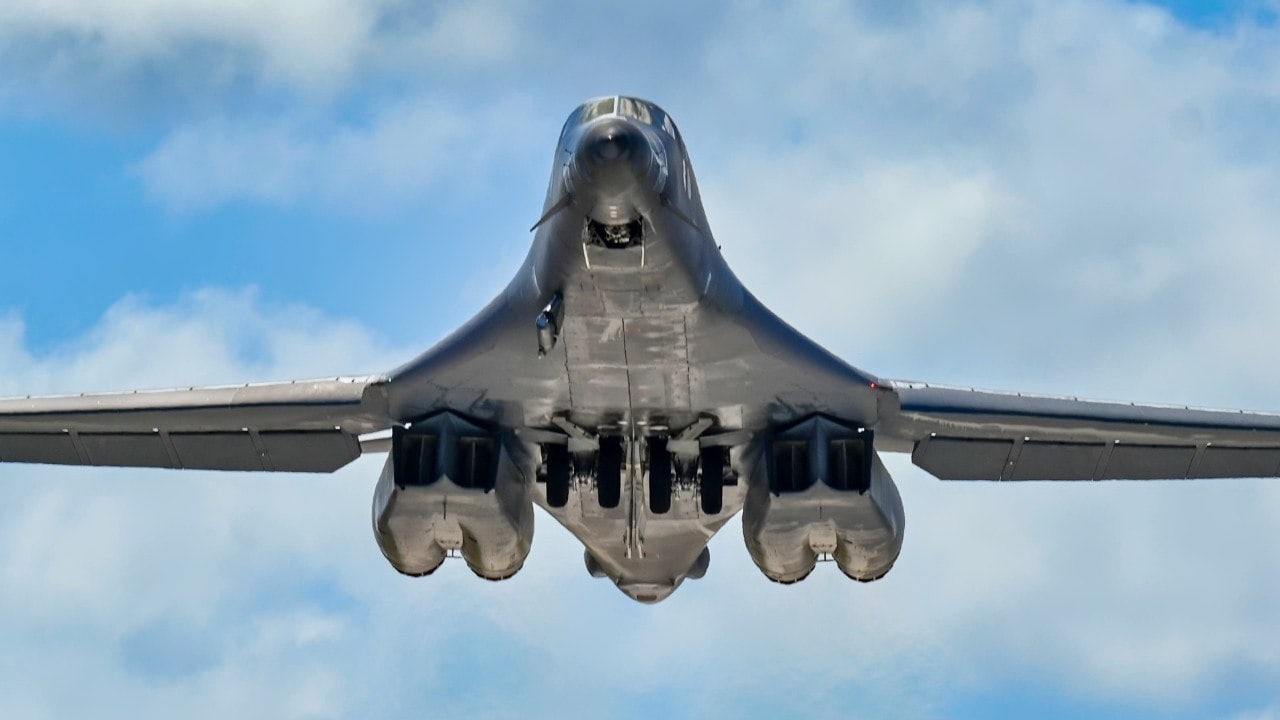
The B-1B Lancer dropped thousands of bombs across Iraq and Afghanistan and has proven its value in Iran — but against China’s layered air defense network, its lack of stealth is a fatal vulnerability. China’s HQ-9B can detect and engage targets at 300 kilometers, and its DF-21 missiles can destroy the airfields the B-1B needs before it ever takes off.
B-1B Lancer Can’t Beat Father Time
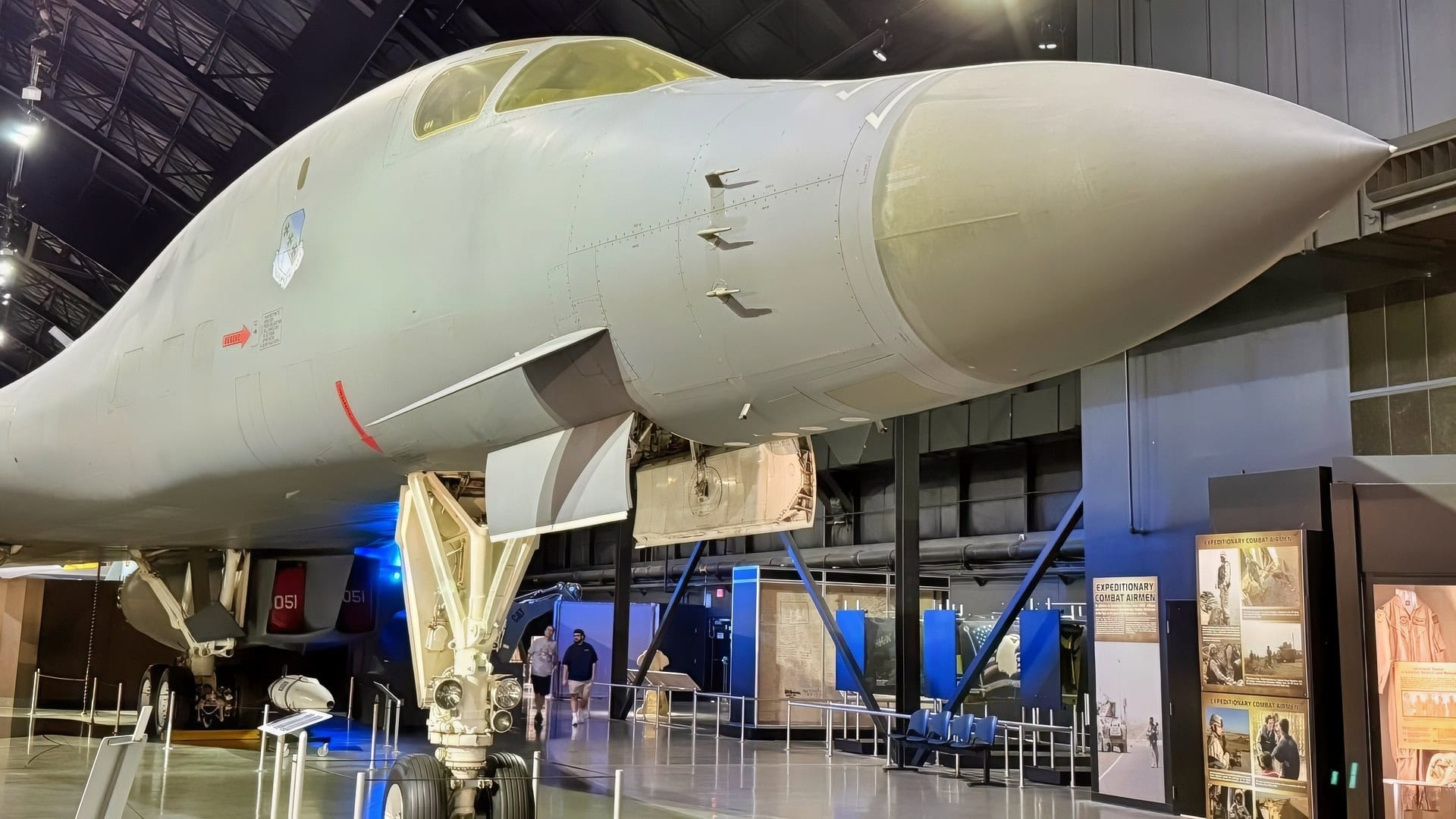
B-1B Lancer at National Museum of the U.S. Air Force. 19FortyFive.com Original Photo.
The U.S. classic B-1B Lancer bomber has been the steady backbone of U.S. Air Force lethality for decades. In recent years, the Lancer has been upgraded with a new bomb-rack unit, advanced avionics and computing, and a new generation of weapons integration, including being adapted for hypersonic weapons.
The Lancer has been a relevant platform during Operation Epic Fury, but even its enhancements may not be sufficient to ensure the non-stealthy airframe would be viable in a confrontation with a great-power rival such as China.
The B-1B will remain critical in any operational environment in which the United States has air superiority, but it may be quite vulnerable against advanced Chinese air defenses.
The B-1B’s engines have been refurbished in recent years to keep their performance sharp, and the Lancer has received new targeting and intelligence systems. An updated integrated battle station includes new aircrew displays and communication links for in-flight data sharing.
Another upgrade called the Fully Integrated Targeting Pod connects the targeting pod control and video feed into the B-1B Lancer cockpit displays.
The Lancer will also be able to increase its carriage capacity of 500-pound class weapons by 60 percent due to the bomb rack upgrades.
However, such upgrades would mean little if the B1-B were quickly seen by PLA air defenses.
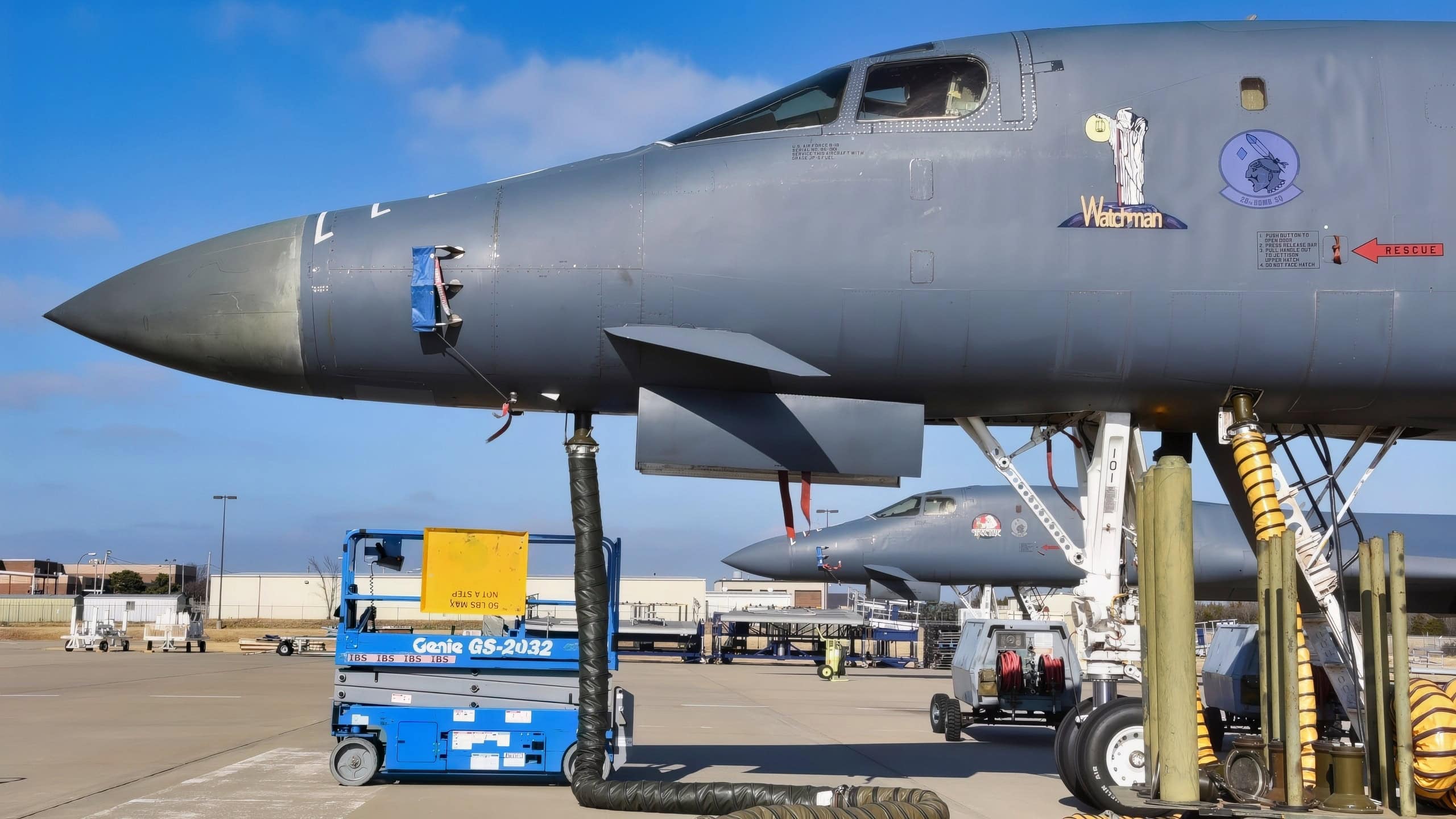
Boeing B-1B Lancer, serial # 86-0101, wearing ‘Watchman’ nose-art shown at the Maintenance, Repair and Overhaul Training Center Jan. 17, 2019, Tinker Air Force Base, Oklahoma. MROTC is a facility used for heavy aircraft maintenance in a public/private partnership between the Air Force and Boeing. (U.S. Air Force photo/Greg L. Davis)
China HQ-9 and the B-1B Lancer Bomber: The Death Sentence
One of the primary threats comes from China’s surface-to-air missile systems, such as the HQ-9 family. Some even say these air defense networks are a true ‘death sentence’ for non-stealthy bombers like the B-1B Lancer.
These long-range systems are designed to detect, track, and engage multiple aerial targets simultaneously.
Modern variants such as the HQ-9B reportedly have engagement ranges of up to 300 kilometers and are supported by advanced radar systems capable of scanning large volumes of airspace.
This creates a wide defensive umbrella that can threaten aircraft long before they reach their targets.
For a bomber such as the B-1B Lancer that lacks stealth characteristics, this means it could be detected and targeted at considerable distances, limiting its ability to penetrate defended airspace.
Long-range, ground-based Chinese radar is more than capable of bouncing electromagnetic pings off a large, non-stealthy B-1B aircraft to generate a return rendering. Its lack of stealth likely would exclude the B-1B from participating in any kind of stand-in bombing mission.
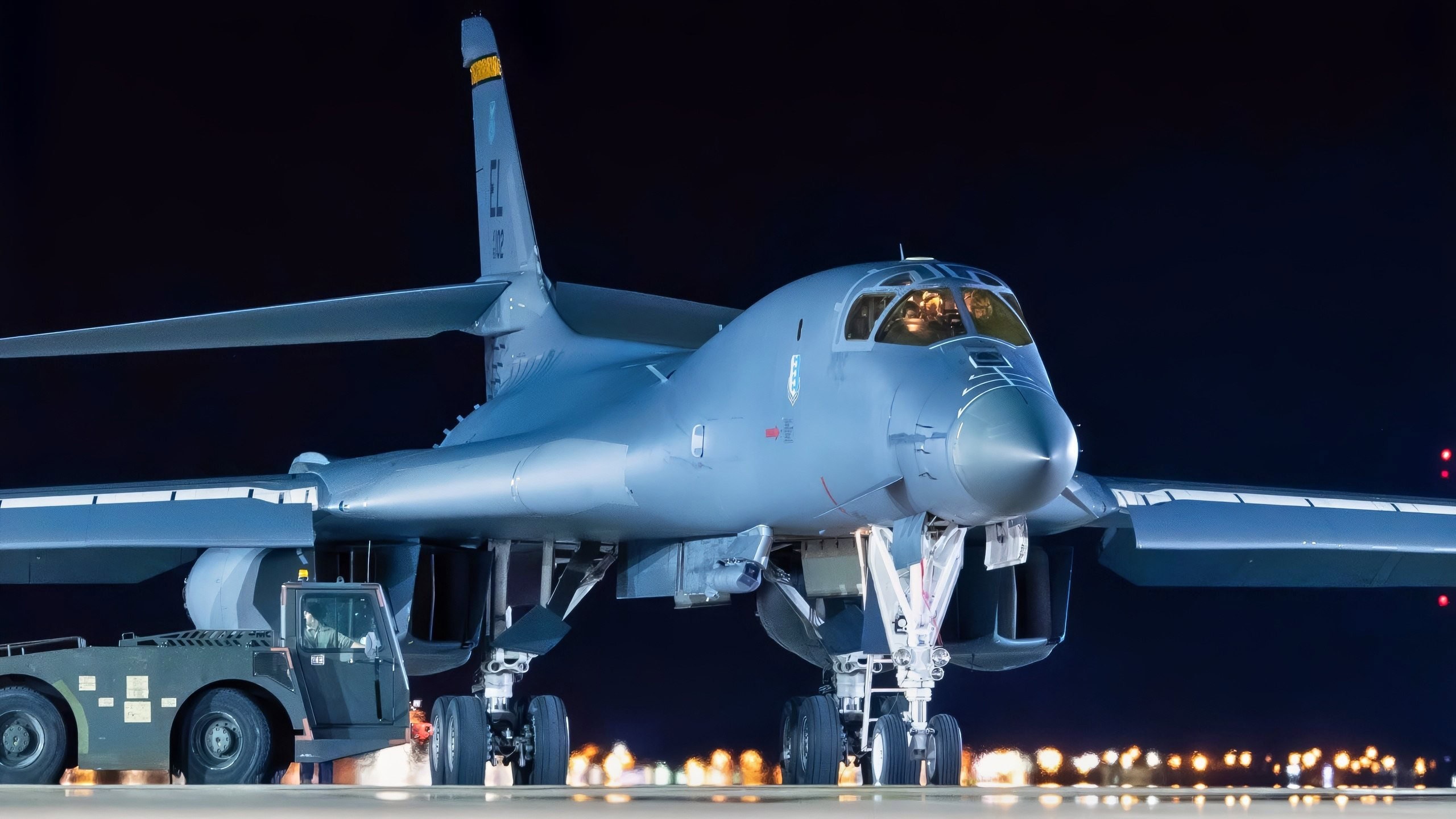
Aircrew piloting a B-1B Lancer prepare to park at Ellsworth Air Force Base, S.D., April 30, 2020. A pair of B-1s flew from the continental United States and conducted operations over the South China Sea as part of a joint U.S. Indo-Pacific Command and U.S. Strategic Command Bomber Task Force mission. (U.S. Air Force photo by Tech. Sgt. Jette Carr)
Chinese Targeting
China’s defensive strategy emphasizes a layered, integrated system, often described as an anti-access/area denial (A2/AD) network.
The approach combines multiple types of defenses—SAMs, fighter aircraft, electronic warfare systems, and space-based surveillance—to weave a cohesive “kill web.”
The goal is to create overlapping coverage zones that make it extremely difficult for adversary aircraft to operate without being detected and engaged.
In such an environment, the B-1B’s traditional strengths—speed and payload—are less relevant, as its survivability falls into doubt.
Newer systems such as the HQ-19, which is designed to intercept high-altitude and ballistic threats, further complicate the operational picture for the Lancer.
While primarily intended for missile defense, these systems demonstrate China’s broader investment in advanced interception technologies, including kinetic-kill vehicles and high-performance tracking radars.
These technologies could be adapted or integrated into broader air defense roles, thereby increasing the network’s overall effectiveness against various types of aerial threats.
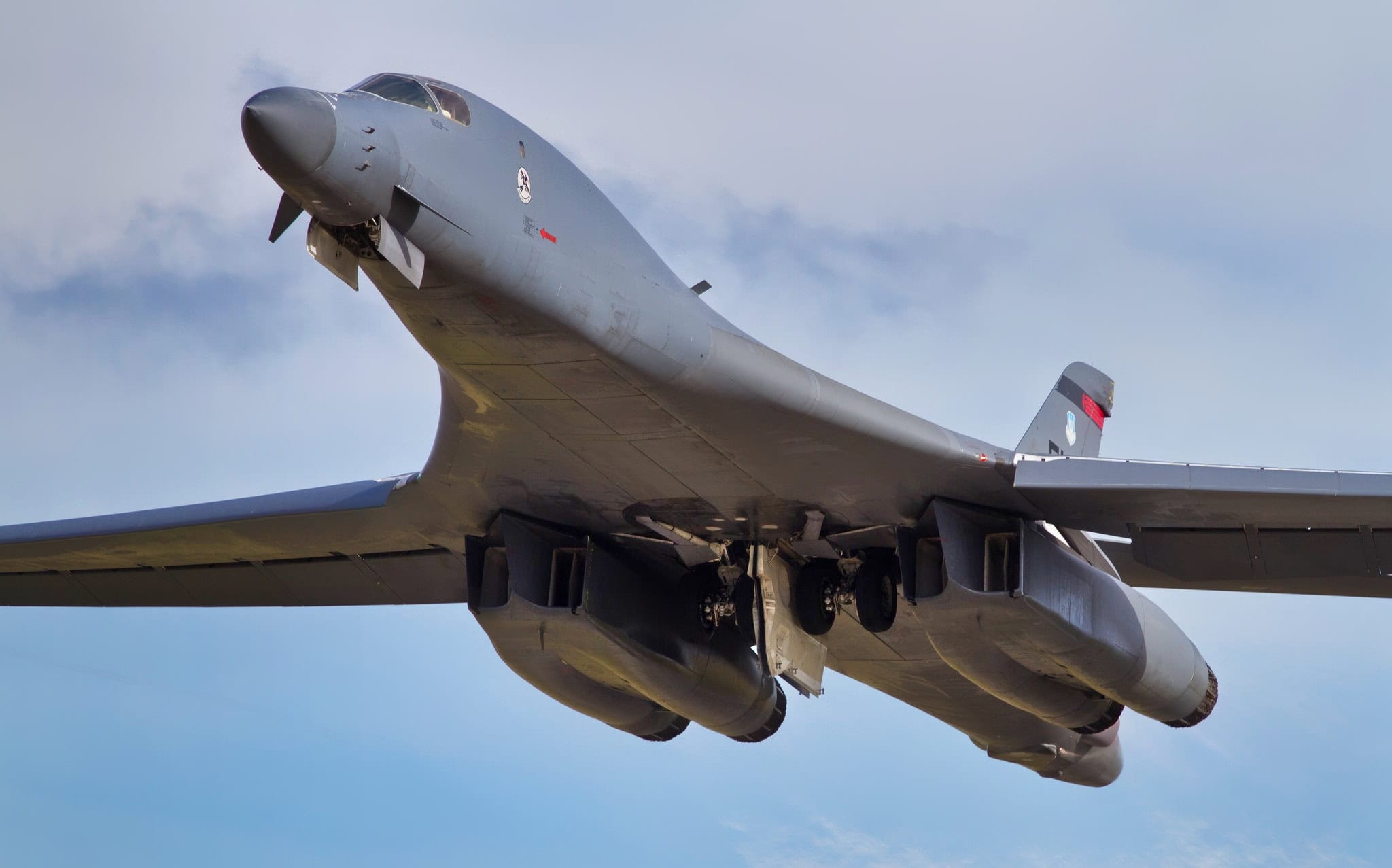
B-1B Lancer. Image Credit: Creative Commons.
Chinese Missiles
China’s growing missile arsenal also indirectly threatens platforms such as the B-1B. DF-21 medium-range ballistic missiles are designed to target forward bases and infrastructure, potentially limiting the ability of U.S. bombers to operate from nearby locations.
By holding airfields and logistics hubs at risk, China can force bombers to operate from greater distances, reducing sortie rates and increasing mission complexity.
Newer U.S. bombers, such as the upcoming B-21 Raider, are specifically designed with advanced stealth and electronic warfare capabilities to penetrate modern air defenses; the B-1B is simply much less survivable.
While it has been upgraded with modern avionics and can carry advanced standoff weapons, its large radar cross-section makes it inherently vulnerable in contested environments.
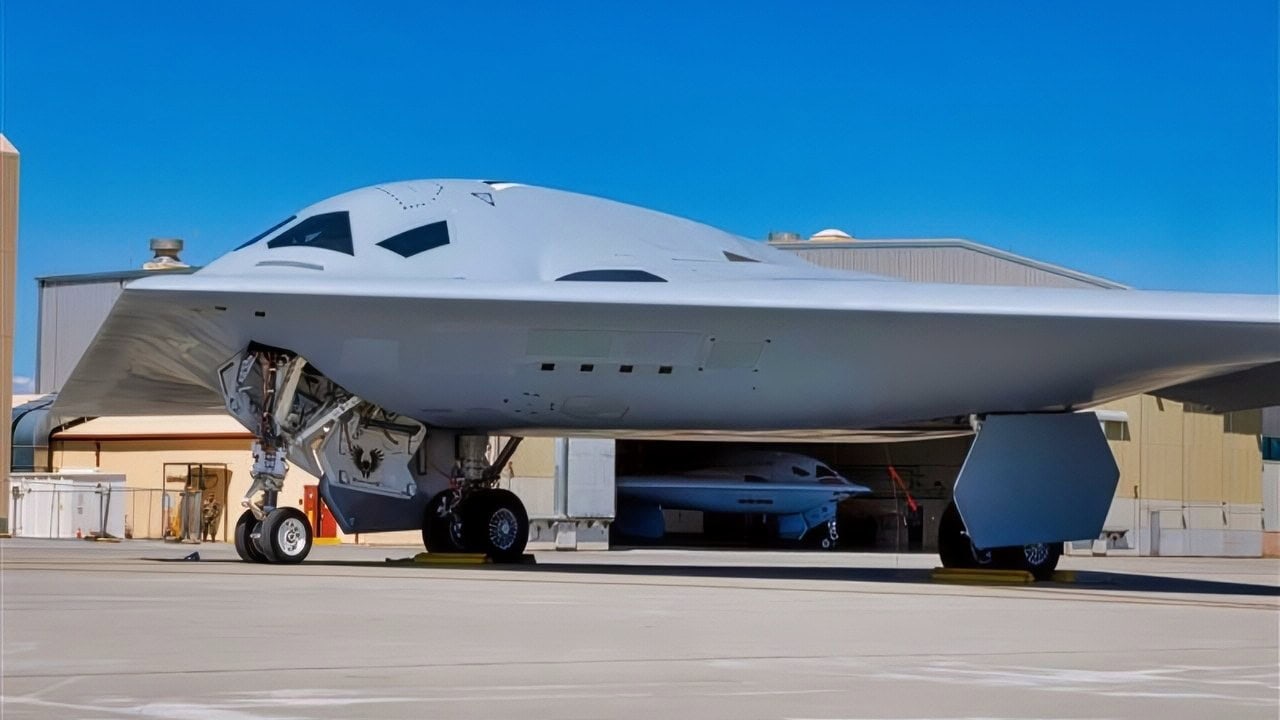
A second B-21 Raider, the world’s sixth-generation stealth bomber, test aircraft arrives at Edwards Air Force Base, Calif., Sept. 11, 2025. The addition of the second test aircraft expands mission systems and weapons integration testing, advancing the program toward operational readiness. (Courtesy photo)
As a result, the B-1B would likely need to rely heavily on long-range cruise missiles and operate outside the densest parts of China’s air defense network, rather than attempting direct penetration.
The B-1B, which had its combat debut during Operation Desert Fox in 1998, went on to drop thousands of Joint Direct Attack Munitions during the multi-year wars in Iraq and Afghanistan.
The B-1B Lancer can hit speeds of MACH 1.25 at 40,000 feet and flies to a ceiling of 60,000 feet. It fires a wide range of bombs, including several JDAMs: the GBU-31, GBU-38, and GBU-54. It also fires the small-diameter bomb GBU-39.
About the Author: Kris Osborn
Kris Osborn is the Military Technology Editor of 19FortyFive. Osborn is also President of Warrior Maven – Center for Military Modernization. Osborn previously served at the Pentagon as a highly qualified expert in the Office of the Assistant Secretary of the Army—Acquisition, Logistics & Technology. Osborn has also worked as an anchor and on-air military specialist at national TV networks. He has appeared as a guest military expert on Fox News, MSNBC, The Military Channel, and The History Channel. He also has a Master’s Degree in Comparative Literature from Columbia University.