
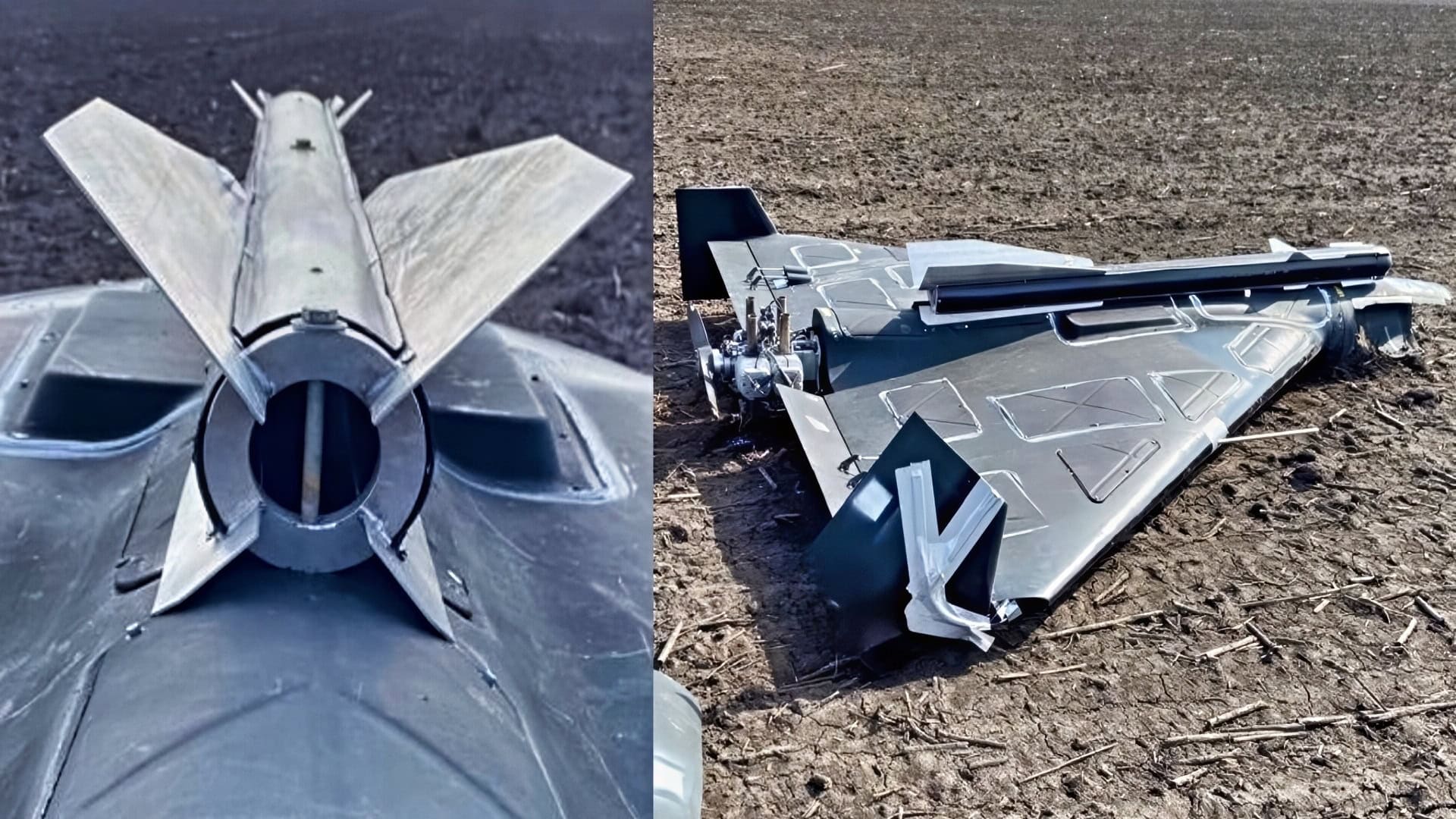
Russia’s defense industrial base has struggled to keep up in the war against Ukraine. Whether it’s trying to build tanks to replace disastrous losses or attempting to assemble howitzer shells, the Russians can’t seem to keep up. Now, another problem has confronted the defense industry. Russia obtained a license from Iran to produce Shahed drones for the war, but the country has not done a good job replicating the unmanned craft. In fact, they are self-destructing before they get to Ukrainian targets – not a good look since drones are so important in 21st-century warfare.
The Russians Are Producing Faulty Drones
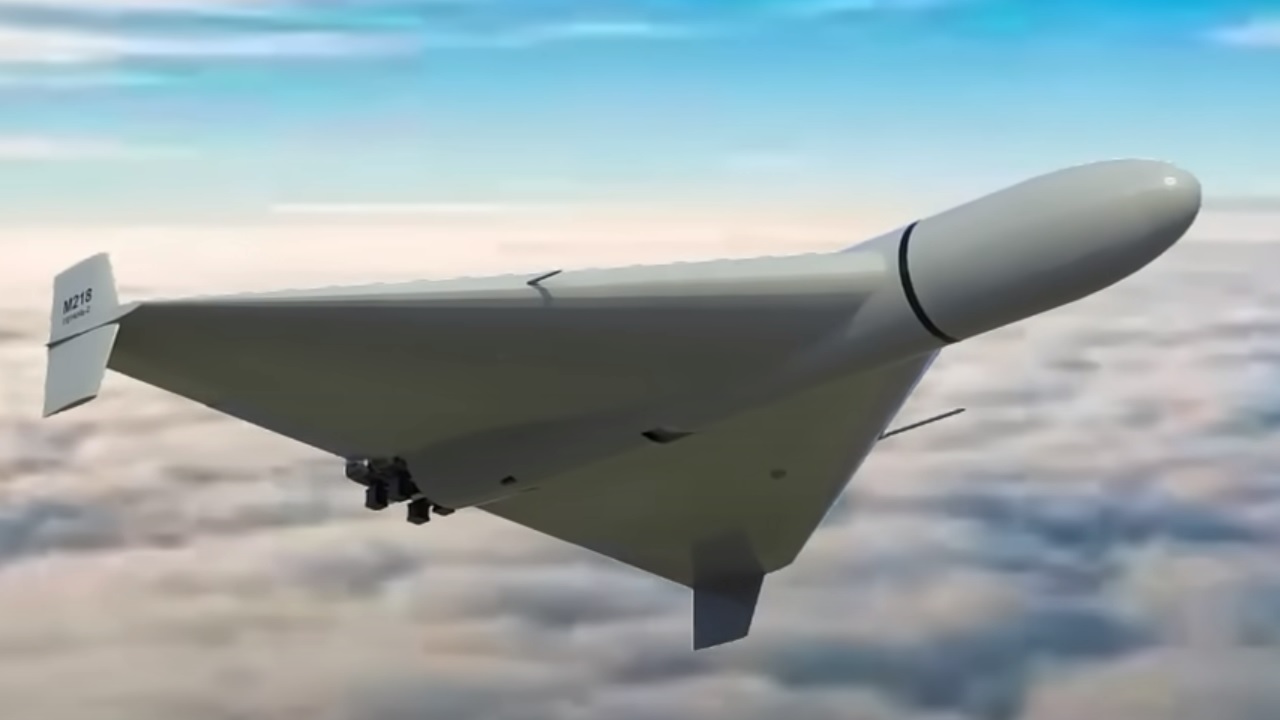
Shahed-136 Drone. Image Credit: YouTube Screenshot.
There are certainly factory failures as the drones are becoming damaged in flight.
After Ukrainians have shot down the Shahed one-way drones, they are being found with “detached access panels, bent wingtips, and missing nose fairings, indicating systemic assembly failures, according to Defence-Blog.
The ‘Geranium’ Drone Is Based on the Shahed 136
Russia calls these kamikaze unmanned craft the “Geran” or “Geranium,” and they are modeled after the Iranian-produced Shahed 136.
Ukrainians believe that the Geraniums are showing airframe damage before they hit the ground harmlessly after being neutralized. Ukraine is using Sting interceptor drones to destroy the Geraniums, and camera footage from the Ukrainian videos is showing that the Russian-made drone is faulty.
Ukraine doesn’t think the problems with the Geranium drones are due to their defensive efforts.
Many are just falling out of the sky, damaged during the flight to Ukraine.
More About the Geranium
The Geranium is a one-way craft with delta wings and a propeller engine.
It can fly at a top speed of 114 miles per hour as it drifts down to its target. The warhead weighs nearly 200 pounds.
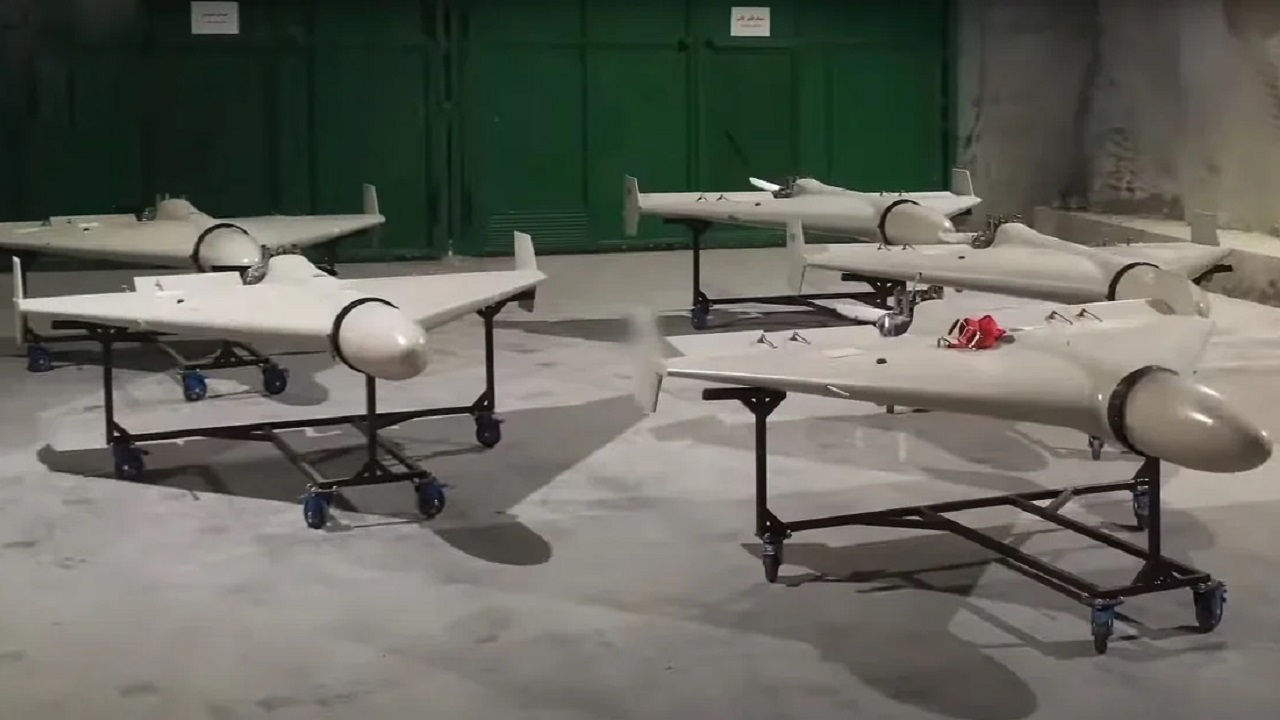
Shahed-136. Image Credit: Screenshot.
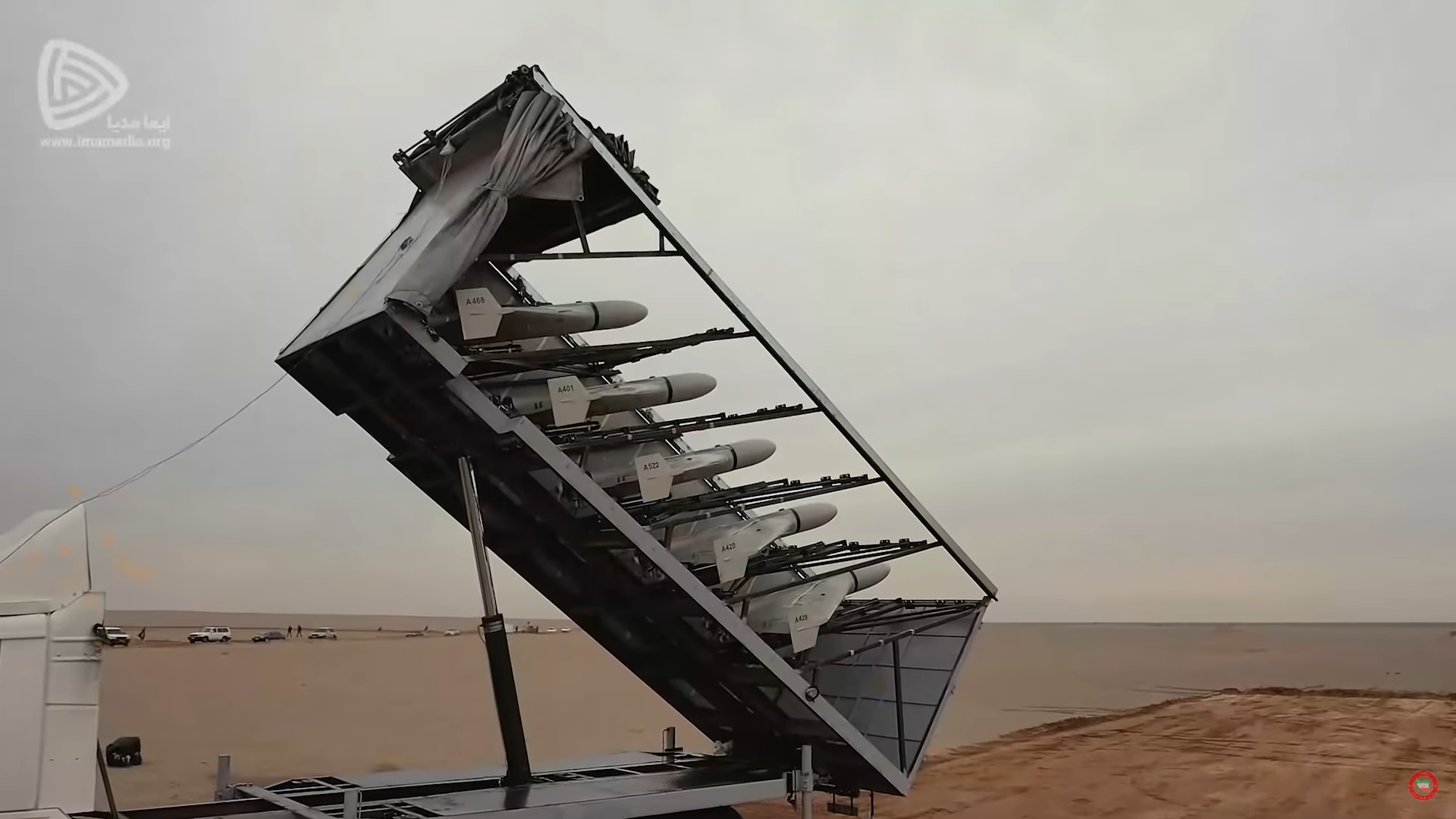
Shahed-136. Image Credit: Creative Commons.
“The airframe is built primarily from composite materials and relies on a rear-mounted pusher propeller engine, with flight guidance handled by a GPS/inertial navigation system. At its designed cruise profile, the drone typically flies at low altitude on pre-programmed routes before diving on its target,” as Defence-Blog described.
Many Teenagers from Africa are Working at the Russian Drone Factory
The factory that makes the drones may have problems because it relies mostly on teenage boys and girls to assemble them in the Alabuga Special Economic Zone in Russia’s Tatarstan region.
These are primarily people from Africa. Some are around 18 to 22 years old, and about 200 young people work at the plant.
Entrapping Foreign Workers By Promising the Moon
The Russian aerospace industry reportedly “traps” Africans to become laborers after promising them safe transport to Moscow and other cities with free airfare, a passport, Russian-language classes, and lucrative jobs, Defense-Blog revealed.
Then they are confined to work at the facility for long hours and low pay.
The Chinese-made Engines Are Also Faulty
The Chinese are also supplying parts to the Alabuga factory, and these could be faulty as well, due to poor quality control.
The Chinese Telefly engine powers the Geranium drone. These are not considered reliable or durable enough for constant use in warfare.
Bargain Basement Quality
Russia may also be cutting corners by seeking to produce drones at below-market prices rather than buying comparable craft directly from Iran. The Geranium variants can cost as little as $48,000, about 25 percent cheaper than the Shahed 136, Defense-Blog said.
Ukraine Is Attacking Russian Drone Factories
Ukraine’s drone production plants are also under fire from Ukrainian air strikes and drone attacks. This could be scaring the people toiling there and keeping them from working expertly on the drones. Ukraine may have the upper hand in unmanned craft production, while Russia must import more workers from Africa who can work under dangerous conditions.
Guidance and Accuracy Issues
The nose fairing problem is the worst part of the manufacturing process. This fairing guides the drone. When faulty, it cannot be directed effectively to the target. The Russians have tried to solve the problem, but worker quality could be the culprit. As a result, the Alabuga plant is producing drones in accordance with production quotas set by the Russian military.
Strip Them Down for Better Targeting
Russia has even begun to give up on the older Geranium models with delta wings. It has created a stripped-down version called the Geran-5, which acts more like a jet-powered cruise missile, and this is launched from Su-25 fighters. The Geran-5 is slower-moving than most missiles and is likely not that effective.
The Workforce Is Struggling
This is an example of how much Russia is struggling in the war. Forcing people to work long hours with low pay is problematic. You get the quality that you pay for. The morale of the African workers is likely not the best since they are effectively being forced to take these jobs at the drone plants that are under attack. A 15-year-old just isn’t going to have the kind of training and expertise to apply precision and advanced manufacturing techniques that drones require.
Human Capital Is a Weakness
Russia has a human capital issue. Many native adults do not wish to be factory workers who make munitions. So, Vladimir Putin’s defense industry is importing labor from countries that are not normally associated with military hardware production. Until Russia can get its human resources issues under control, it will have to deal with faulty production.
Ukraine may have the upper hand, as its military has shown that even lower-ranking soldiers can assemble their own drones with expertise and skill. Russia does not have the same ingenuity with its soldiers, and this is showing on the drone battlefield and could be a negative factor in the broader war.
About the Author: Brent M. Eastwood
Author of now over 3,500 articles on defense issues, Brent M. Eastwood, PhD, is the author of Don’t Turn Your Back On the World: A Conservative Foreign Policy and Humans, Machines, and Data: Future Trends in Warfare, plus two other books. Brent was the founder and CEO of a tech firm that predicted world events using artificial intelligence. He served as a legislative fellow for US Senator Tim Scott and advised the senator on defense and foreign policy issues. He has taught at American University, George Washington University, and George Mason University. Brent is a former US Army Infantry officer. He can be followed on X @BMEastwood.