
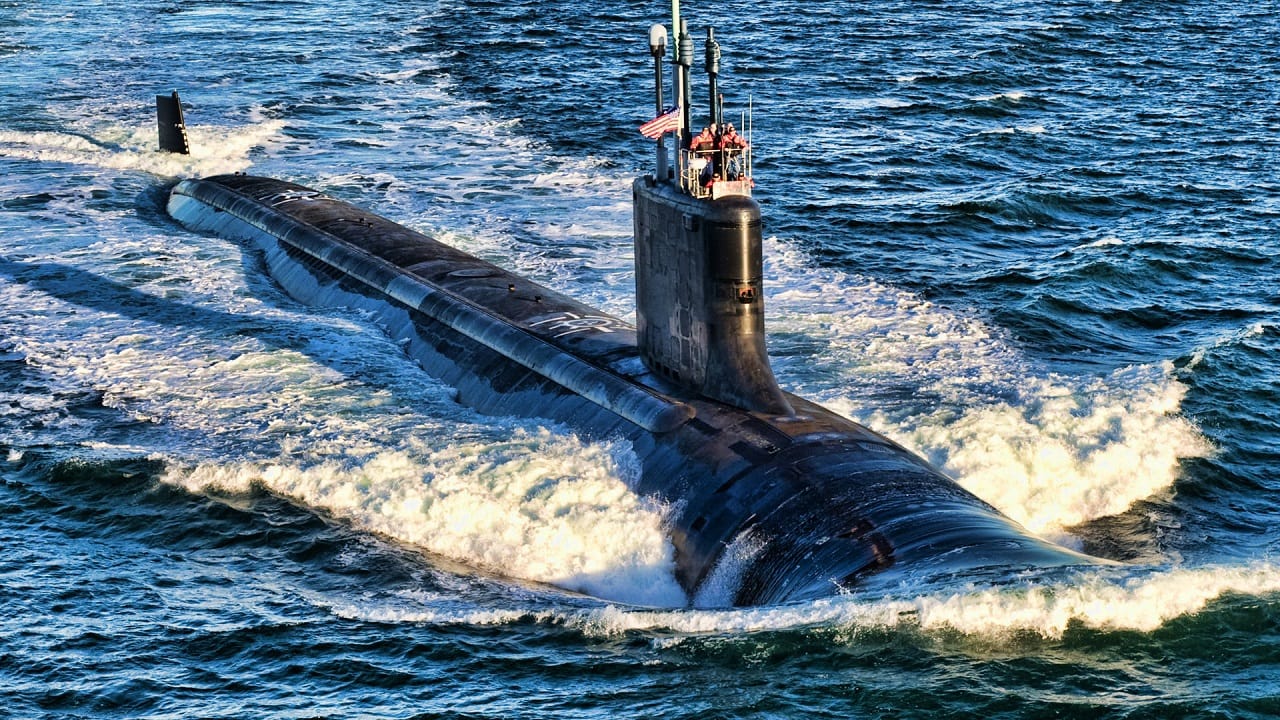
Australia may reach the 2030s without a single operational submarine if AUKUS fails to deliver, and the two countries supposed to provide them can’t build enough for their own navies. Britain’s sole available attack submarine was sent to Australia as proof of commitment, then recalled within weeks to support operations against Iran.
Australia Might Be Looking at a Submarine Crisis
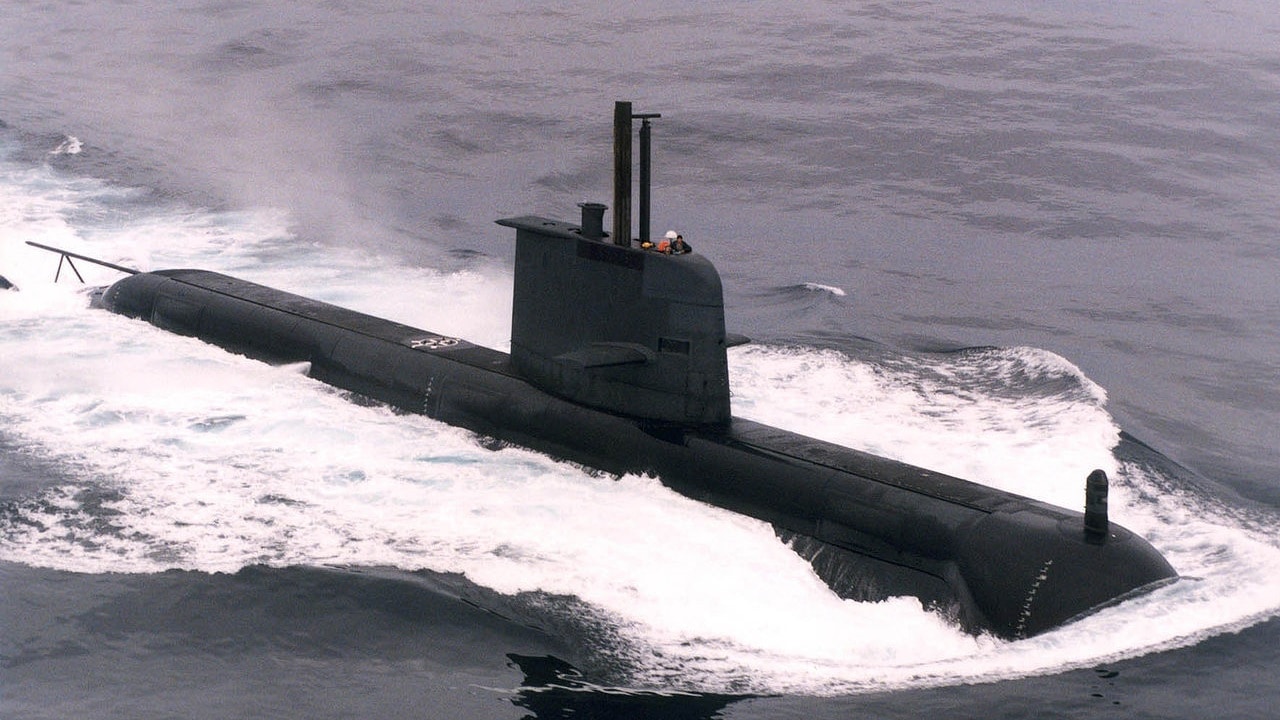
Collins-Class Submarine from Australia.
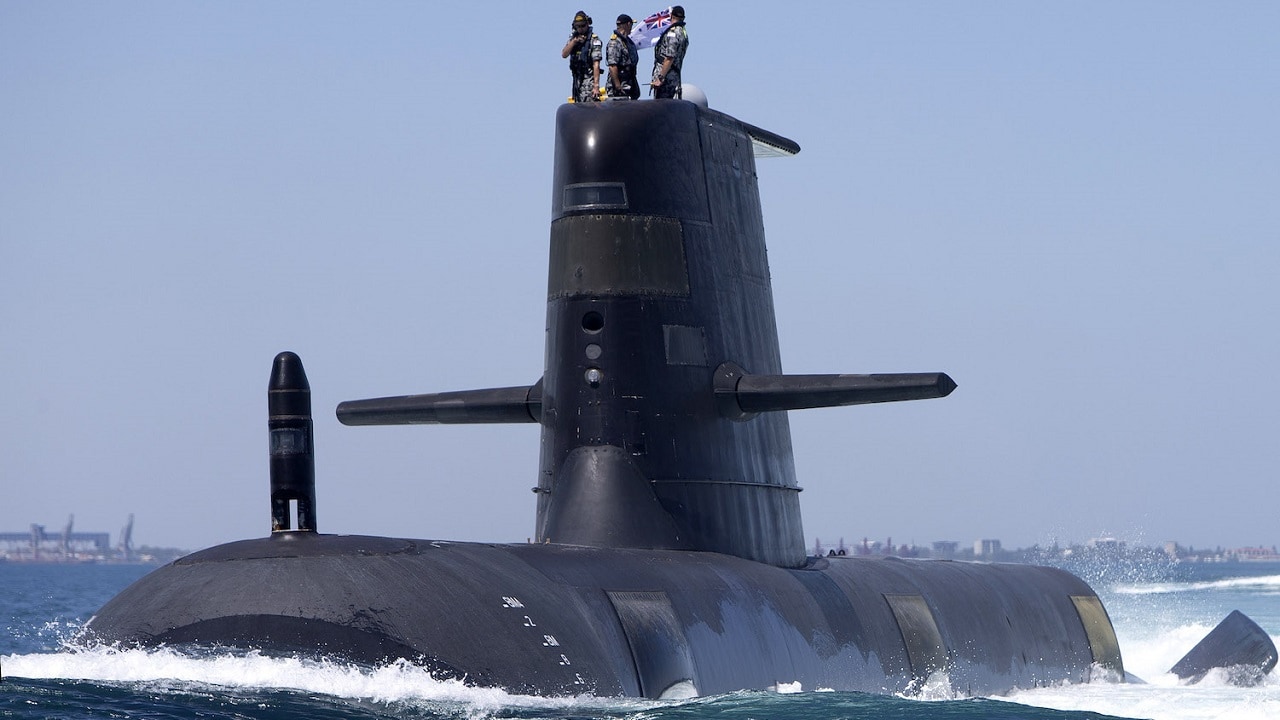
Collins-Class Submarine from Australia’s Navy.
Australia could face a future without a functioning submarine fleet if delays or failures within the AUKUS program continue to mount, according to senior defense officials.
Speaking on March 27, 2026, at a Sovereignty and Security Forum in Canberra, Hugh Jeffrey, Deputy Secretary for Strategy, Policy and Industry in Australia’s Department of Defense, warned that abandoning the agreement would leave the country without a viable submarine capability. His comments came as scrutiny intensifies over whether the United States and United Kingdom can deliver the nuclear-powered submarines promised under the AUKUS framework.
Those concerns were reinforced days earlier when the British attack submarine HMS Anson – deployed to Australia as a symbol of AUKUS cooperation – was abruptly recalled to support operations linked to tensions in the Middle East, highlighting the limited availability of operational submarines among partner nations. Unlike its partners, Australia relies entirely on foreign industrial capacity to replace its aging fleet, a dependency now at the center of a growing strategic risk.
No Submarines Without AUKUS
During the Canberra forum, Jeffrey made clear that Australia has no viable fallback plan if AUKUS fails to deliver.
“Defense has been directed to pursue Aukus, and we are pursuing Aukus, and that’s our plan. I would not venture into the space about ‘Plan B’ or ‘Plan C,’ Jeffrey said.
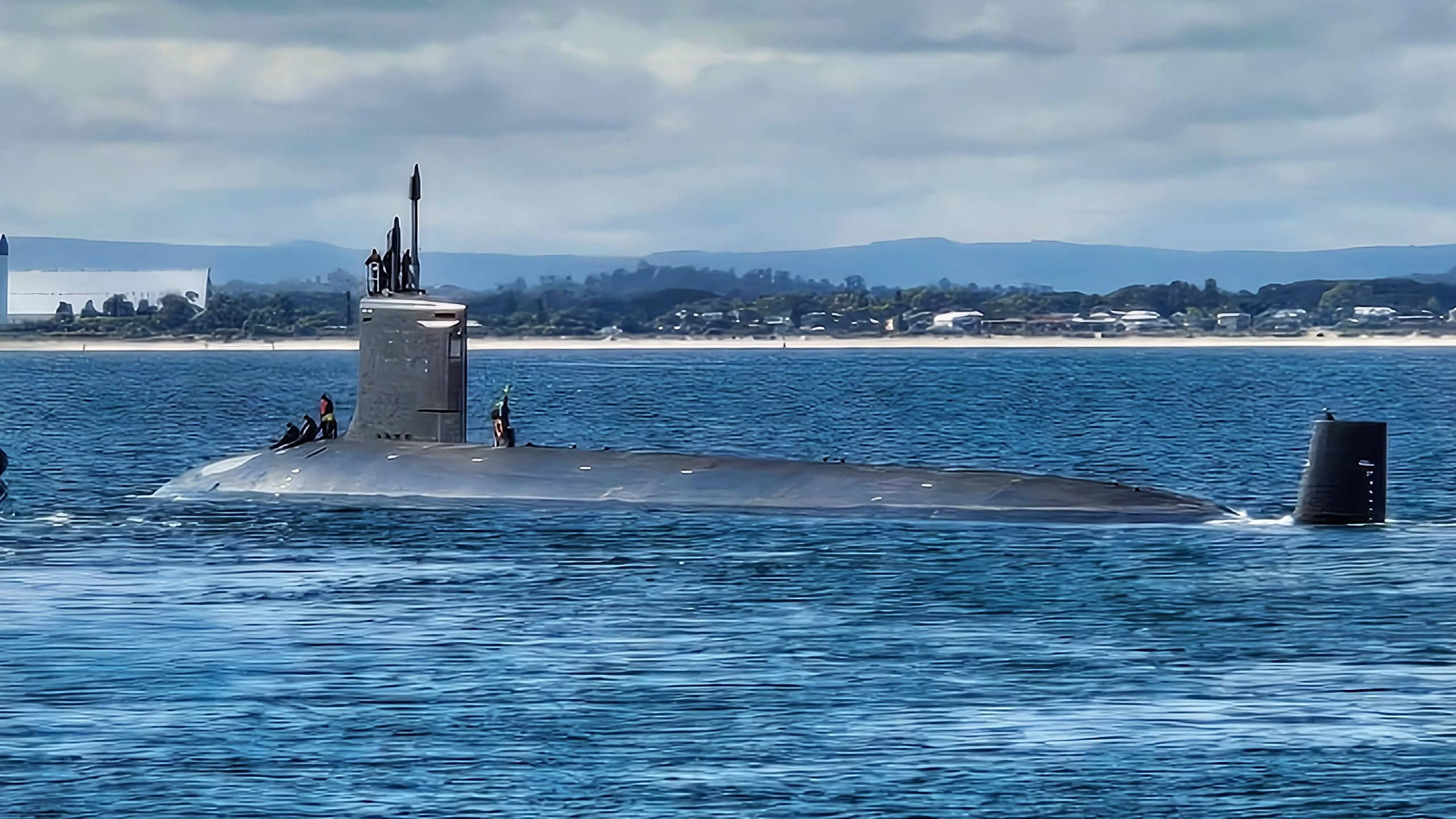
HMAS STIRLING, Western Australia, Australia (Sep. 10, 2024) — USS Hawaii (SSN 776) departs HMAS Stirling Sept. 10, marking the conclusion of a historic submarine maintenance period in Western Australia. As part of the Australia, United Kingdom, United States (AUKUS) Pillar 1 effort, Royal Australian Navy personnel assigned to submarine tender USS Emory S. Land (AS 39) worked alongside their U.S. Navy counterparts to make repairs on the U.S. Virginia-class SSN in Australia during a multi-week Submarine Tendered Maintenance Period, or STMP. (U.S. Navy photo by Rory O’Connor)
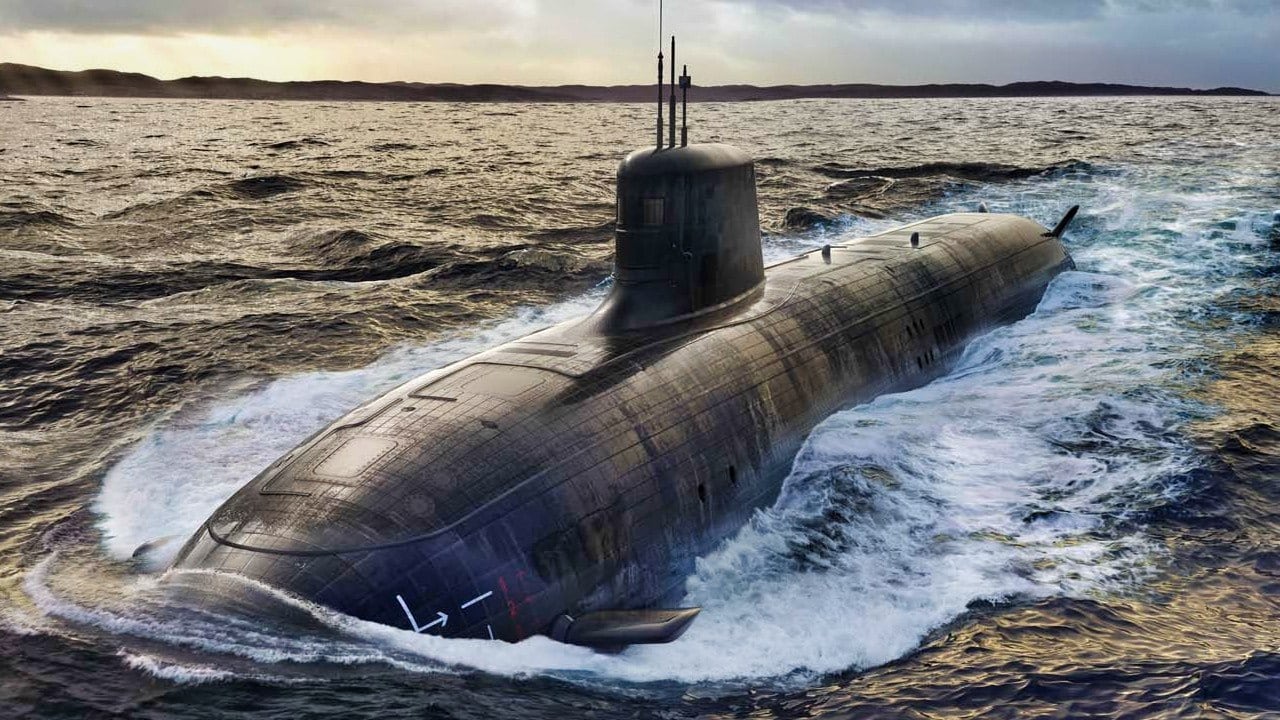
SSN-AUKUS Submarine. Image is Creative Commons Artist Rendering.
Pressed by former Prime Minister Malcolm Turnbull on contingency options, Jeffrey declined to offer alternatives, stressing that the program is now the sole pathway for Australia to develop new submarines.
“What is the government’s Plan B if we do not get any Virginia [class submarines] at all because the Americans are not producing enough for their own needs?” Turnbull asked Jeffrey. “What is the Plan B if we end up with no new subs and we’re left with the creaking hulls of the Collins?”
AUKUS is essential because Australia’s existing fleet of Collins-class submarine boats has already undergone life-extension work to remain operational beyond its intended service life, with no plans other than AUKUS to replace them.
Retired Rear Admiral Peter Briggs also warned that the United States and United Kingdom may not be able to deliver submarines on time, arguing that Australia should consider abandoning AUKUS. But Jeffrey countered by saying it was the fourth attempt to replace the Collins-class fleet since the 1980s, and that abandoning AUKUS now risks repeating past failures.
“If you really want to be in a position where we have no submarines, then ‘turn back,’” he said. “I do think, speaking as an apolitical public servant, we need to get out of this relentless politicization of defense capabilities.”
“Forgive me if I’m cynical about these questions. I do think we need to get on with business,” he added.
What AUKUS Is, and Where It Stands Today
The AUKUS agreement was formally announced on September 15, 2021, by U.S. President Joe Biden, then-UK Prime Minister Boris Johnson, and then-Australian Prime Minister Scott Morrison as a long-term defense partnership aimed at strengthening military deterrence in the Indo-Pacific. The agreement is structured around two core components. Under Pillar I, the United States and the United Kingdom will support Australia in acquiring a fleet of nuclear-powered attack submarines. Pillar II focuses on cooperation in advanced military technologies, including artificial intelligence, cyber warfare, quantum systems, and hypersonic weapons.
According to the “optimal pathway” announced by the three governments in March 2023, Australia is expected to receive between 3 and 5 Virginia-class submarines in the early 2030s. The submarines will be transferred from the U.S. Navy as an interim capability while a new class, known as SSN-AUKUS, is developed.
The long-term plan relies on the United Kingdom to design and build the first SSN-AUKUS submarine for the Royal Navy in the late 2030s, with Australia expected to begin construction of its own version in Adelaide in the early 2040s.
The program is valued at approximately $368 billion AUD over its lifetime, making it the largest defense investment in Australian history. As part of the agreement, Australia has already committed billions of dollars to expand submarine production capacity in both the United States and the United Kingdom, including direct funding for shipyard infrastructure. However, the U.S.-built submarines are intended only as a temporary bridging capability. Australia’s long-term submarine force will depend on the eventual successful development of the SSN-AUKUS class – putting significant weight on the U.K.’s ability to deliver a new generation of nuclear-powered submarines on schedule.
British Capacity and U.S. Constraints
While AUKUS is moving ahead, recent developments have exposed some structural constraints across all three AUKUS partners, prompting questions about whether the program’s timelines are achievable.
The deployment of HMS Anson to Australia earlier this year was presented by Australia and Britain as evidence that AUKUS was making progress, but it also highlighted the Royal Navy’s limited operational capacity, and the story went viral, particularly as U.S. forces ramped up strikes against Iran.
At the time of its visit, Anson was reported to be the only attack submarine in the British fleet available for deployment, with the remainder undergoing maintenance or refit. Other boats were also reportedly being used as parts donors to sustain other vessels.
The submarine was soon recalled to support operations relating to tensions in the Strait of Hormuz.
Production timelines also present a specific challenge. The U.K.’s Astute-class submarine program has historically delivered boats at a rate of roughly one every three to four years, while the AUKUS framework assumes production can accelerate to approximately one submarine every 18 months.
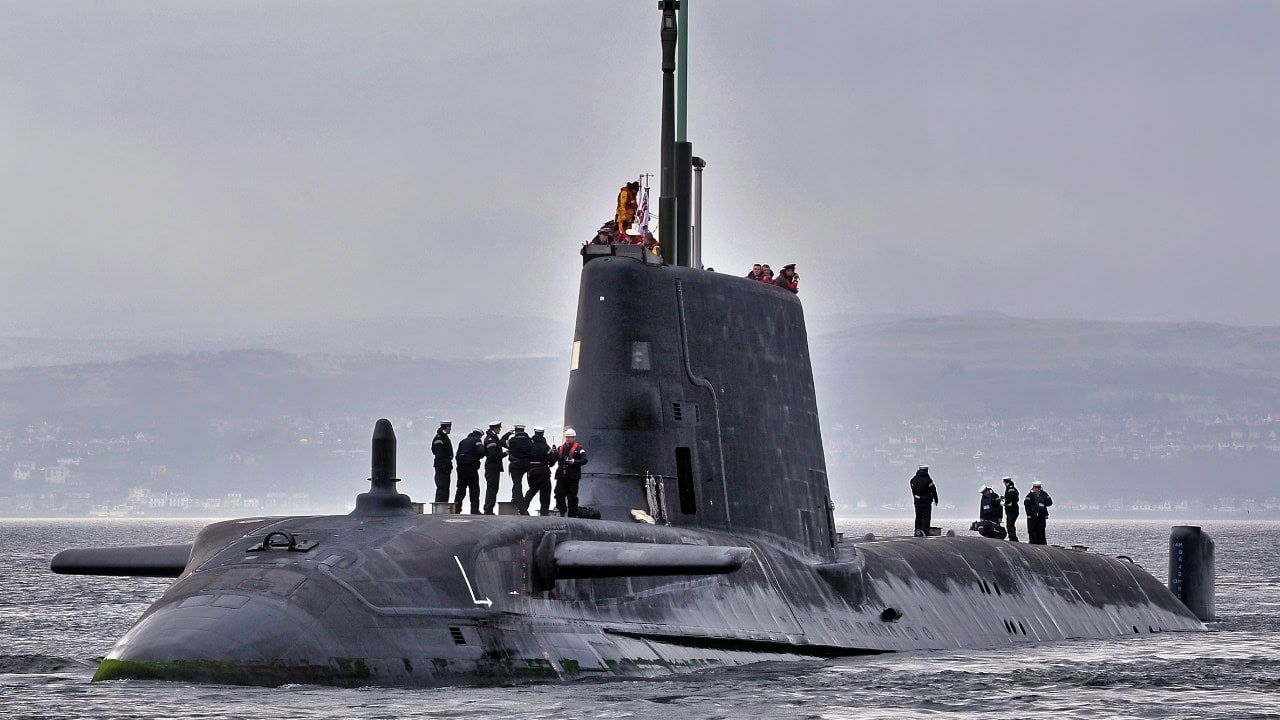
Astute-Class Submarine. Image Credit. Creative Commons.
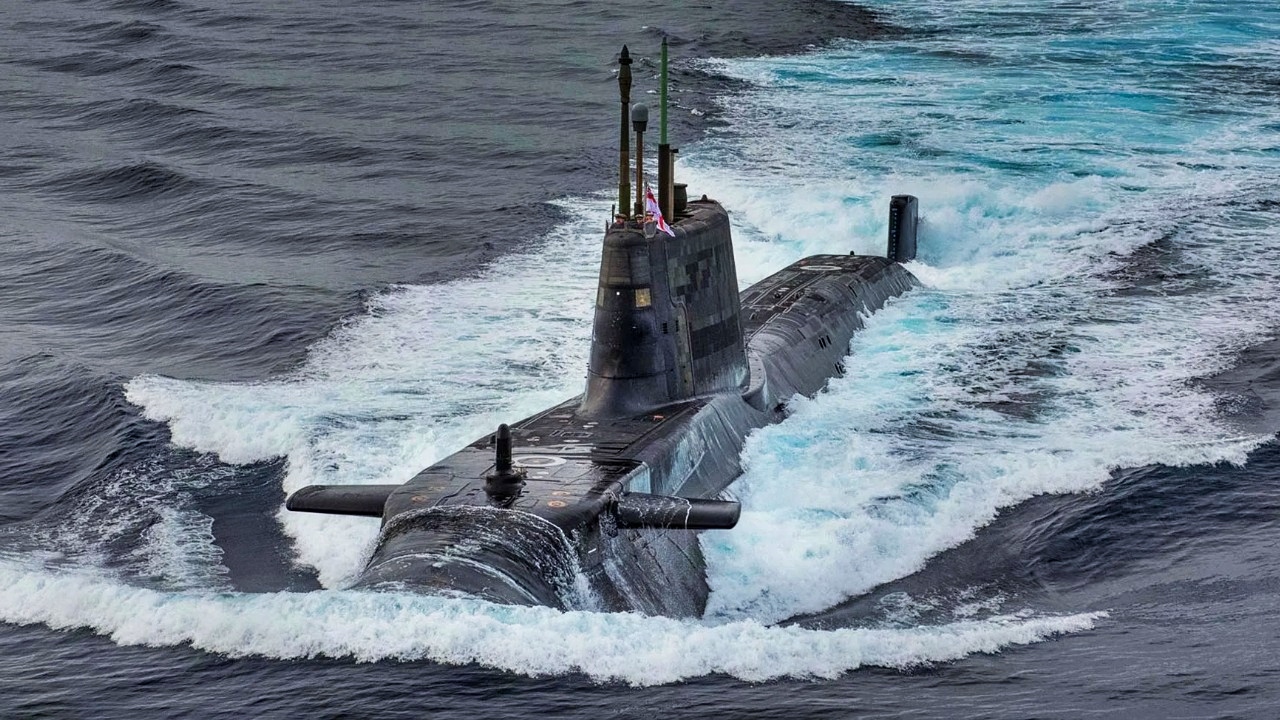
Astute-Class Royal Navy Submarine. Image Credit: Royal Navy.
HMS Agamemnon, the penultimate Astute-class submarine, took more than 12 years to complete, the longest built time for any British submarine to date, and a rate of progress that is frankly unsustainable.
In December 2025, reports described how Rear Admiral Philip Mathias, the former director of nuclear policy at Britain’s Ministry of Defense, said that Britain’s “silent service” was facing an unprecedented crisis that it was unlikely to recover from without radical measures. The former Navy chief even said that Britain was “no longer capable” of running a nuclear program. The comments come as the country’s industrial base faces continued supply chain troubles and a constrained industrial base concentrated at a single shipyard in Barrow-in-Furness, operated by BAE Systems.
What’s more, the Rolls-Royce-led program to produce nuclear reactor cores for future submarines has been repeatedly flagged by the British government’s Infrastructure and Projects Authority as high risk, including concerns about schedule, cost, and delivery feasibility.
It’s bad news for Britain, but the United States is facing its own proportionally-sized problems. Submarine production is also under pressure here, with the U.S. Navy struggling to meet its target of producing two Virginia-class submarines per year. The years-long effort to meet that minimum figure has prompted policy discussions in Washington about alternative methods, including rotating U.S. submarines through Australian bases rather than simply transferring ownership.
AUKUS remains Australia’s only path to a future submarine fleet, but with delays mounting and industrial constraints deepening across all three partners, the risk here is very real. It could soon mean that Australia reaches the 2030s without a credible undersea capability in place, leaving it unable to conduct long-range maritime surveillance and deter regional adversaries.
That’s critical as the U.S. and its allies prepare for potential contingencies across the Indo-Pacific.
About the Author: Jack Buckby
Jack Buckby is a British researcher and analyst specializing in defense and national security, based in New York. His work focuses on military capability, procurement, and strategic competition, producing and editing analysis for policy and defense audiences. He brings extensive editorial experience, with a career output spanning over 1,000 articles at 19FortyFive and National Security Journal, and has previously authored books and papers on extremism and deradicalization.

