
Iran reopened the Strait of Hormuz after two days of real pressure to block it. A former Pentagon official who lived in post-revolution Iran says it was about making payroll, not making peace. Iran will close it again the moment the U.S. Navy leaves. Paying $20 billion for uranium teaches every rogue state that nuclear extortion works. Trump is repeating Obama’s mistake with Republican branding.
The Strait of Hormuz: Really Opened or Not?
Oil futures dropped sharply amid rumors that the United States and Iran were close to a deal to restore normal freedom of navigation across the Strait of Hormuz. That optimism is unwarranted for several reasons.
While markets—and diplomats—welcomed Iranian Foreign Minister Abbas Araghchi’s statement that the Strait of Hormuz is completely “open,” this may not reflect a true Iranian change of heart. On April 12, 2026, President Donald Trump announced a blockade of the Strait to take effect the next day.
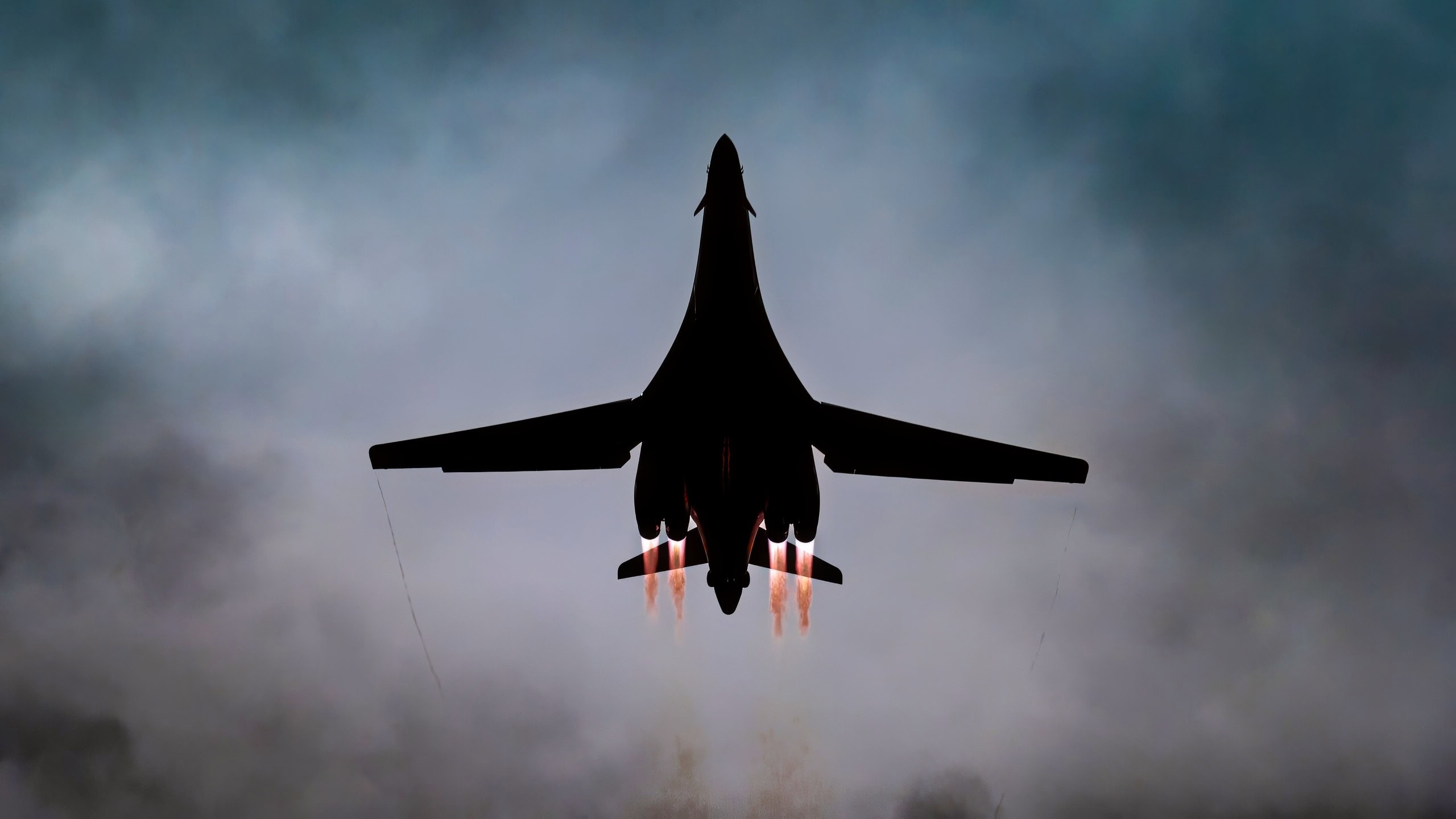
A B-1B Lancer assigned to the 9th Expeditionary Bomb Squadron takes off at RAF Fairford, United Kingdom, to participate in a Bomber Task Force Europe mission, Oct. 27, 2021. “Bombers enhance our ability to address dynamic threats and counter adversary actions in the region as an effective joint force,” said Gen. Jeff Harrigian, U.S. Air Forces in Europe – Air Forces Africa commander. Operations and engagements with NATO allies and global partners demonstrate the shared commitment to global security and stability. (U.S. Air Force photo by Senior Airman Colin Hollowell)
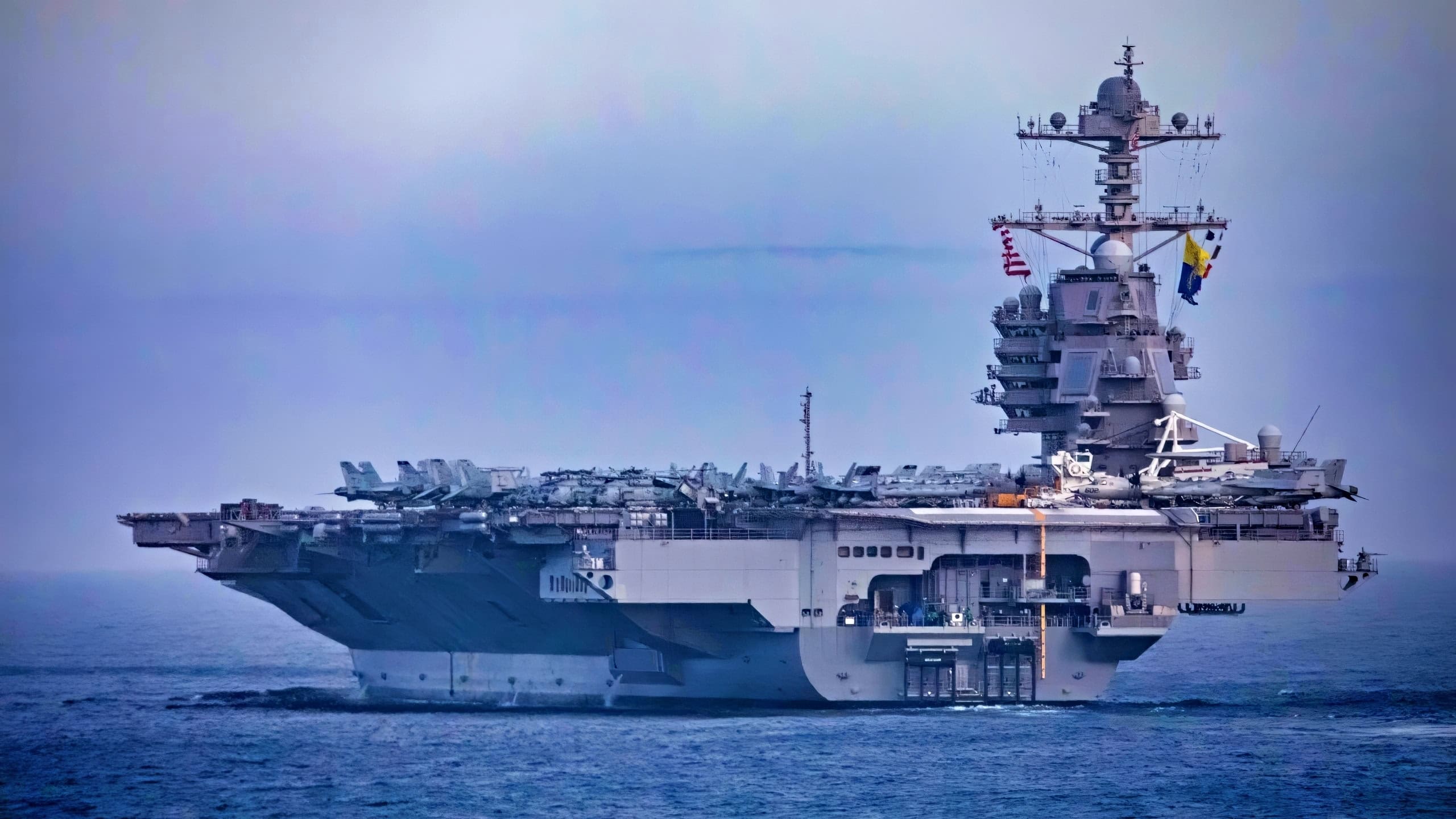
This was an exaggeration for two reasons. First, as U.S. Central Command clarified, the blockade would only apply to Iranian shipping and ports. Second, Trump’s penchant for ultimatums ignored military reality: it takes several days to deploy the assets for a naval blockade.
The real blockade of Iran began on April 15, and so Araghchi’s drawdown reflects only a day or two of pressure. The Islamic Republic’s about-face likely reflects concern about making payroll if unable to sell oil.
Conceding at a time of maximum leverage not only replicates President Barack Obama’s poor negotiation strategy prior to the 2015 nuclear deal but is also analogous to containing 90 percent of a wildfire, only to walk away and let it burn again.
Iran Could Change Its Mind on Strait of Hormuz
The problem now, however, is that Araghchi might change his mind as soon as those U.S. naval assets depart. The Iranian diplomatic playbook offers is clear: Under pressure, the Islamic Republic will take one step forward and then, when the crisis passes, will take one step back.
That pattern drags out talks, which is often Tehran’s goal when it believes time is on its side. In this case, Araghchi likely calculates that Trump needs an off-ramp ahead of midterm U.S. elections, and that Iran’s negotiating position and range of actions will improve once Trump orders the U.S. Navy to withdraw.
So long as Trump leaves the Islamic Republic with the capability to close the Strait, then the regime is likely going to utilize that capability again to blackmail the international community. The only way to prevent that dynamic is to ensure there is a regime in place that will respect freedom of navigation.
Releasing $20 billion to Iran as part of a cash-for-uranium scheme will also undermine U.S. national security. First, what happens in Iran does not stay in Iran. Trump may believe his deal resolves a crisis, but other rogue regimes will conclude that nuclear extortion pays. Expect Pakistan, North Korea, and perhaps even Saudi Arabia, Turkey, and Egypt in the future to leverage nuclear enrichment for extreme bailouts.
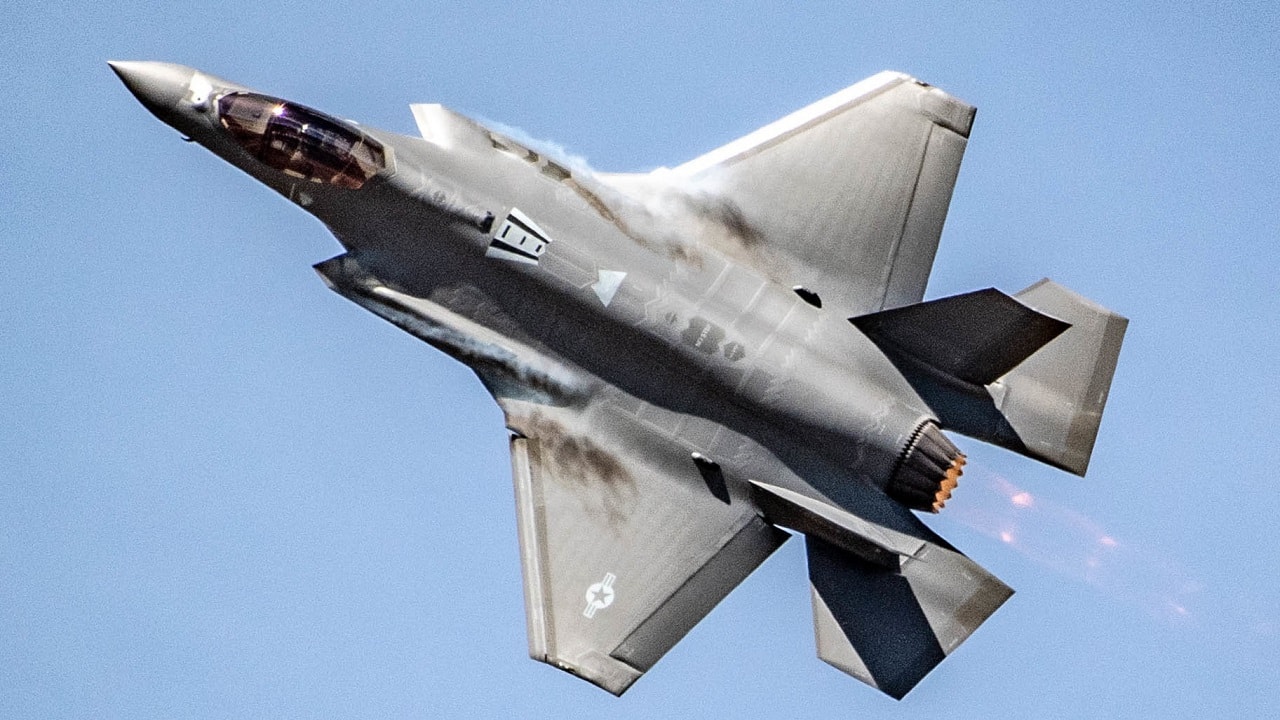
U.S. Air Force Maj. Kristin Wolfe performs a demonstration in the F-35A Lightning II during at the Reno Air Races in Reno, Nevada, September 19, 2021. The F-35 Lightning II Demonstration Team is based out of Hill Air Force Base, Utah. (U.S. Air Force photo by Tech. Sgt. Nicolas Myers)
This will mark the second time Trump rewards subterfuge. By making Pakistan his moderator of choice on the Iranian nuclear program, he rewards a regime that first seeded Tehran’s illicit program via rogue Pakistani nuclear scientist AQ Khan.
Second, Trump replicates Obama’s “pallets of cash” settlement that endangered U.S. national security and arguably contributed to the nuclear, drone, and ballistic missile programs that led to the current war. At the time, Obama administration officials argued that the $400 million they acknowledged transferring—in reality, it was closer to $1.2 billion—was a non-issue since it was “Iran’s money anyway.”
That is a spacious argument, firstly because Obama exaggerated the amounts owed to Iran. Second, by providing cash, Obama undermined the ability of the U.S. Department of the Treasury to monitor electronic transfers, the very methodologies that the U.S. government had used to intercept the Iranian plot to assassinate the Saudi ambassador in Washington, DC.
Obama compounded the error by transferring the funds to the Islamic Revolutionary Guard Corps, which operated the plane that received the cash. In effect, Trump may now be paying the salaries of those very same men who massacred upwards of 30,000 Iranians in January 2026.
A Deal Not Worth Making?
Perhaps Trump believes the deal is worth it. That arguably could be true if it represented a permanent peace. Just as likely, however, the Islamic Republic will pocket the cash but then resume its program as soon as Trump exits, calculating correctly that neither Democrats nor any future Republican administration will again strike Iran militarily.
At best, Trump appears to be paying for a tactical pause that will eventually allow Iran to restore its industrial-scale nuclear program.
In essence, Trump now repeats every mistake Obama made, but his Republican supporters simply try to spin it in the opposite way.
About the Author: Dr. Michael Rubin
Michael Rubin is a senior fellow at the American Enterprise Institute and director of policy analysis at the Middle East Forum. The opinions and views expressed are his own. A former Pentagon official, Dr. Rubin has lived in post-revolution Iran, Yemen, and both pre- and postwar Iraq. He also spent time with the Taliban before 9/11. For more than a decade, he taught classes at sea on the Horn of Africa and the Middle East, covering conflicts, culture, and terrorism to deployed U.S. Navy and Marine units. The views expressed are the author’s own.