Russia would like you to believe that its Su-57 fighter is the world’s leading stealth fighter. Sporting two large, high-output engines, a canted V-tail, and contouring along the nose and airframe intended to confound and defeat enemy radar, it ticks many of the anticipated boxes. But Russia’s newest fighter might be in trouble.
Russia’s Mighty Su-57 Felon Looks Great on Paper…
There are doubts about the Su-57’s true stealth capabilities. Is it really a fifth-generation fighter?
There are questions about future production capacity, too: a Su-57 production facility recently appears to have caught fire, according to satellite images.
Here’s what we know.
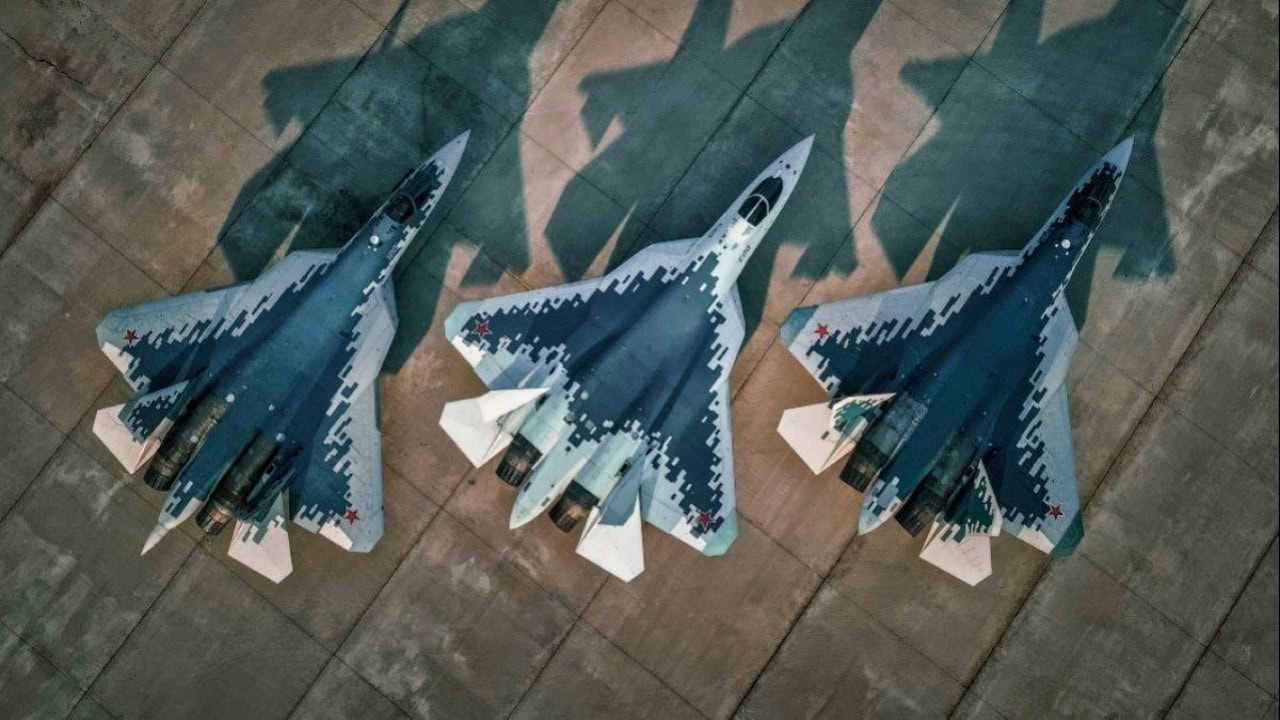
Su-57 Felon. Image Credit: Russian Government.
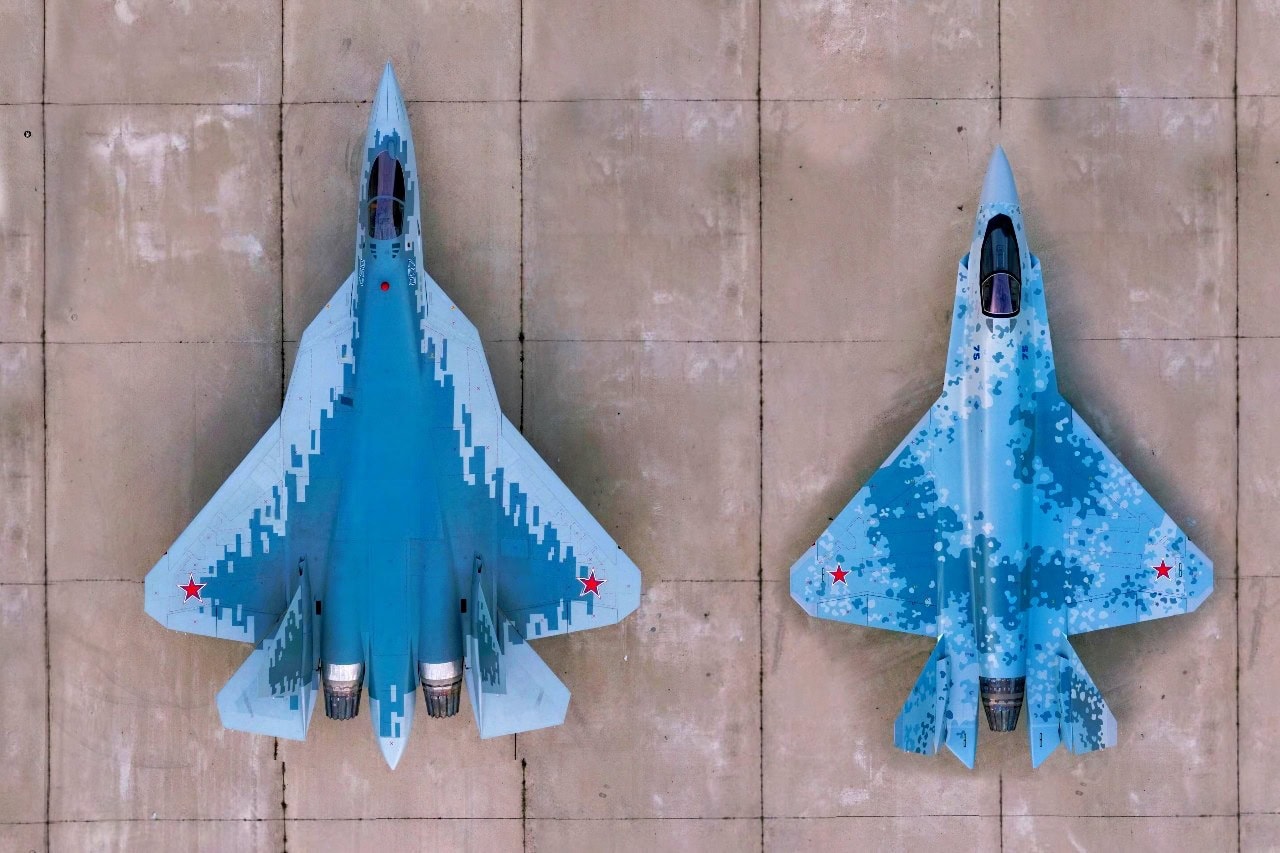
Su-57 Felon and Su-75 Fighters From Russia. Image Credit: Creative Commons.
Five Alarm Fire
At least one report has surfaced recently that the Komsomolsk-on-Amur Aircraft Plant in Russia’s Far East, which manufactures parts of the Su-57 jet, caught fire.
Several sections of the factory floors collapsed, a potential indication of extensive damage within the facility.
It is unclear what exactly caused the fire, but Ukraine’s strike campaign against Russia has included strikes on drone assembly factories, air bases, and against Russia’s long-range strategic bomber fleet itself.
The source of the fire is difficult to determine. But possible culprits could include sabotage, an accident, or a Ukrainian strike.
Import-Export
One video that made waves across social media earlier this year showed what is believed to be the first evidence of Russia’s export of the Su-57 abroad. The video, posted to TikTok, was shot from a farmer’s field in Algeria.
In the video, a Su-57 streaks overhead. Algeria is believed to have first shown interest in acquiring the nominally fifth-generation fighter in 2019, after the aircraft’s display at the MAKS air show in Moscow.
Production Woes
A report from the Royal United Services Institute, the United Kingdom’s leading defense and security think tank, examined the production potential of Russia and China’s combat aviation firms.
The report noted numerous nuances but found that the Chinese are making great strides in increasing production of their fifth-generation fighter aircraft. Russia’s production capacity on the other hand, is constrained.
The RUSI report says that as of “Late-2025,” Russia has manufactured a grand total of 21 Su-57s, with potentially one aircraft written off as a loss. If those figures are accurate, then Algeria’s Su-57 order, believed to be 14 in total, would be a significant addition to the global Su-57 fleet.
It is unclear how many fighters Algeria has received.
But if the full 14-aircraft order has not yet been filled, the previously mentioned fire could significantly crimp the fighter’s output. Though the Algerian purchase of Su-57s could aid production of that fighter, future production is far from guaranteed.
The Genuine Article?
Though Russia lauds the Su-57 as one of the world’s preeminent fifth-generation fighters, the jet may not be all it seems, and some aviation experts have questioned the jet’s true stealth capabilities.
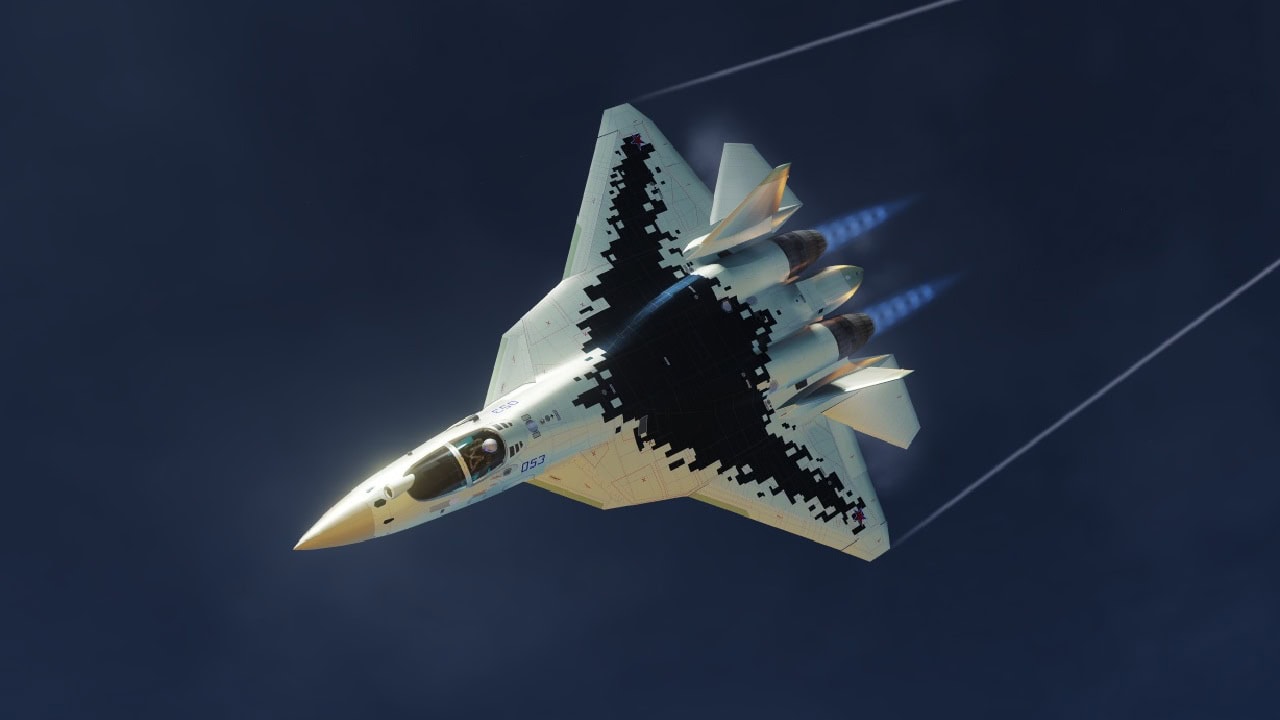
Su-57. Image Credit: Artist Created Image.
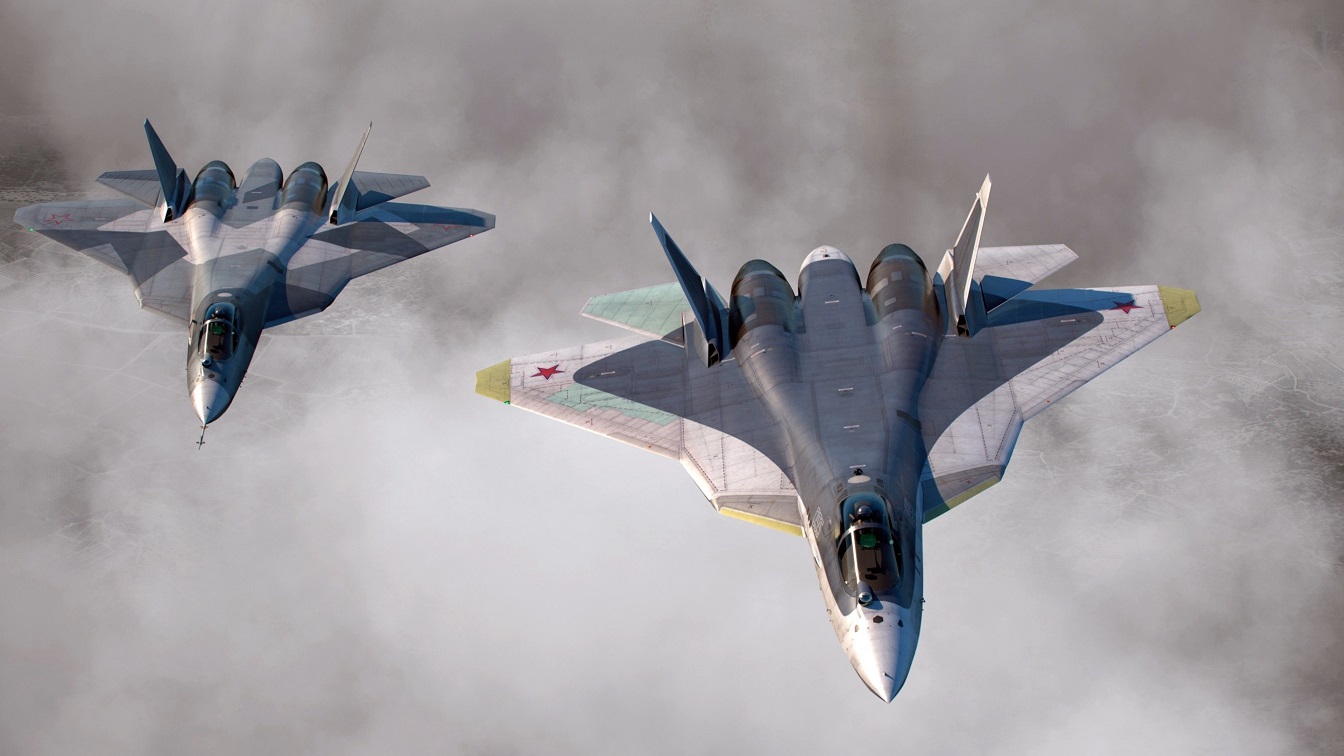
Su-57 stealth fighter. Image Credit: Artist Rendition.
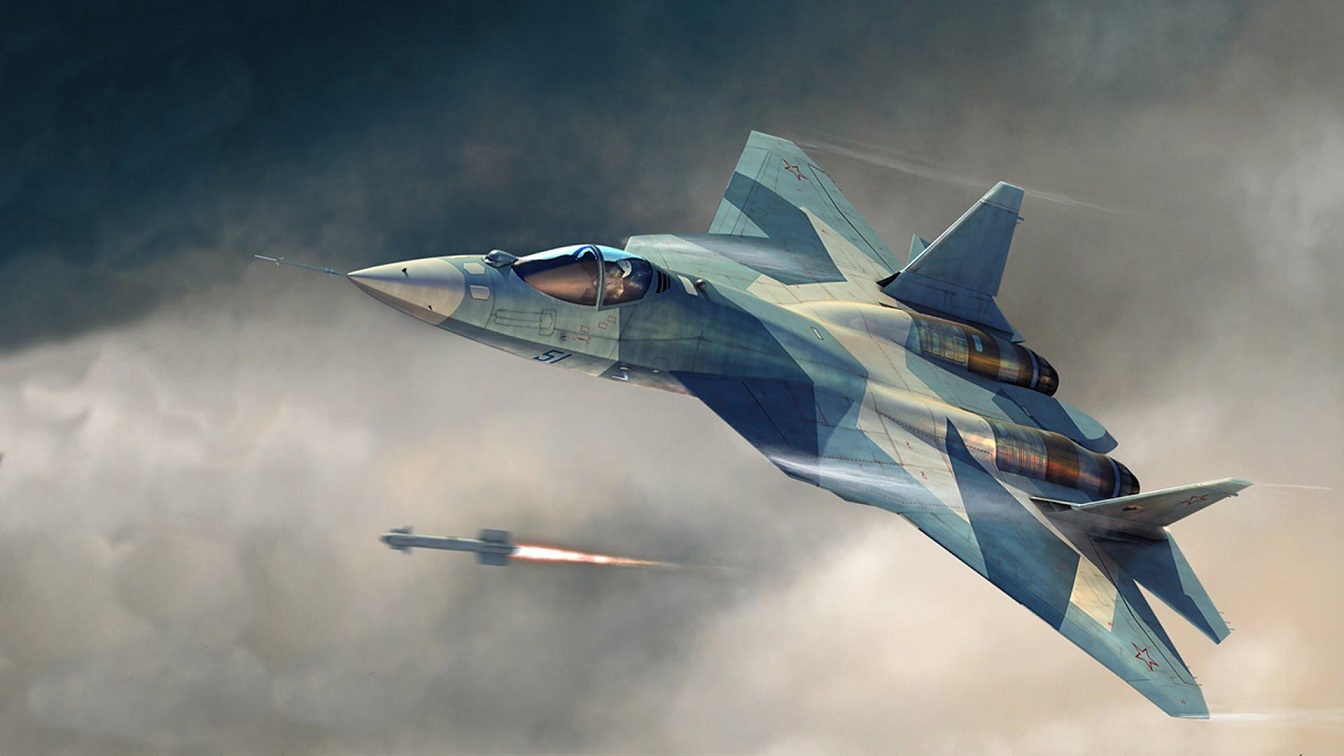
Su-57 artist rendering. Image Credit: Creative Commons.
One report in particular cast doubt on the jet. An analysis of the jet by the Center for European Policy Analysis questioned the jet’s ability to defeat adversary radar. The paper argued that the jet has more in common with Russia’s older crop of fourth-generation fighter aircraft. It is surmised that the jet may be a fraud.
The War in Ukraine
But questions about the jet’s capabilities aside, perhaps one of the more relevant factors in that platform’s success—or lack thereof—comes down to production and the war in Ukraine. The Russian defense budget allocates enormous sums to defense, at levels not seen in many years.
But despite the influx of rubles for defense projects, the Su-57 has little application to the war in Ukraine.
That conflict’s grinding, land-centric nature, as well as extremely robust air defenses on both sides of the front line, relate combat aircraft to supporting roles, used to aid Russian ground assaults of Ukrainian positions.
Though Su-57s have reportedly flown at least a few bombing runs, the munitions Russian aircraft typically deliver are long-range standoff munitions, a tactic that keeps Russian jets far from danger.
There is, in sum, likely little spare production capacity for Su-57s, and the jets have limited operational usefulness for the war in Ukraine. The future of the Su-57 fleet remains speculative.
About the Author: Caleb Larson
Caleb Larson is an American multiformat journalist based in Berlin, Germany. His work covers the intersection of conflict and society, focusing on American foreign policy and European security. He has reported from Germany, Russia, and the United States. Most recently, he covered the war in Ukraine, reporting extensively on the shifting battle lines in Donbas and writing about the war’s civilian and humanitarian toll. Previously, he worked as a Defense Reporter for POLITICO Europe. You can follow his latest work on X.