
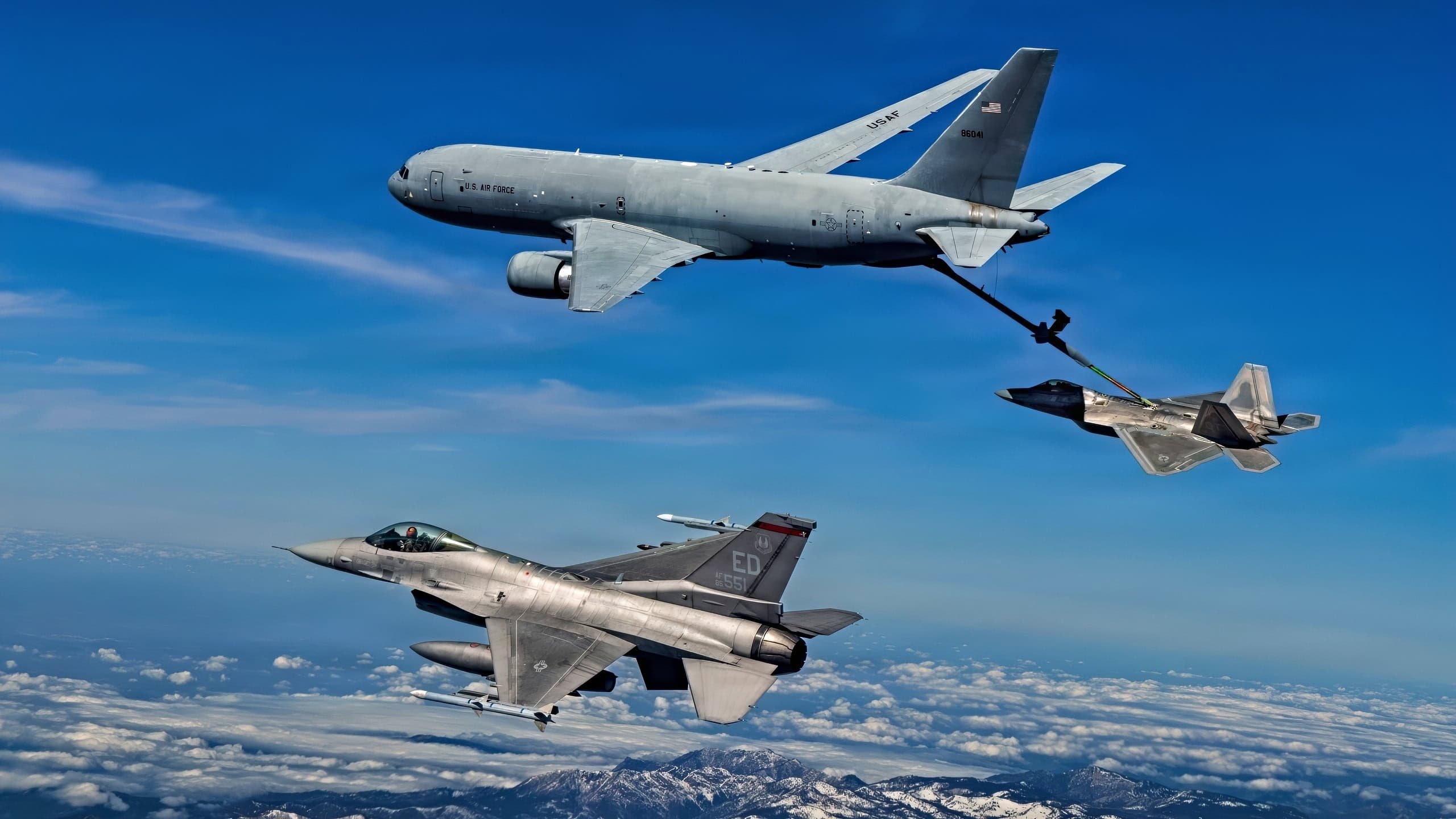
Summary and Key Points: The U.S. Air Force has accepted 105 Boeing KC-46 Pegasus aerial refueling tankers without ever fully certifying the program as operational, despite three active Category 1 deficiencies — the Pentagon’s most serious problem designation, reserved for failures that directly compromise an aircraft’s ability to execute its mission, according to defense analyst Dr. Andrew Latham of Macalester College. And the new B-21 Raider is counting on this tanker to deliver.
KC-46: The U.S. Air Force’s Tanker Troubles are Real
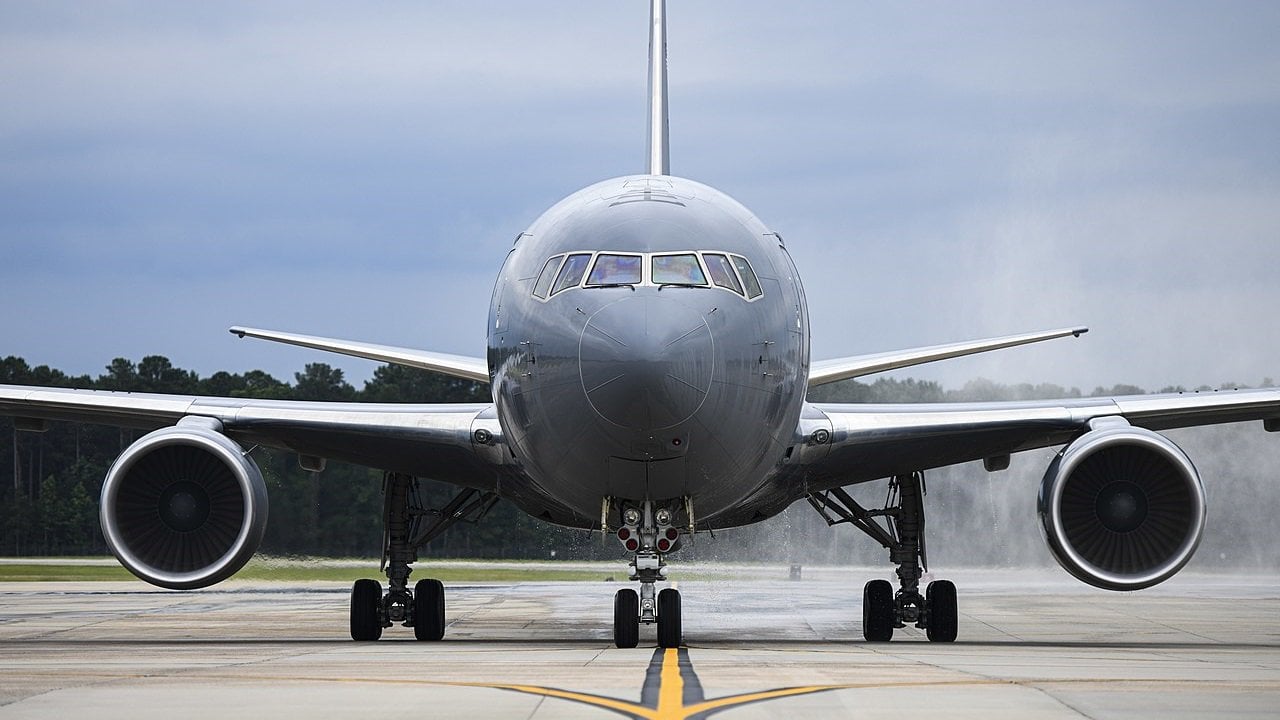
The first KC-46A tanker Pegasus lands at Seymour Johnson Air Force Base, North Carolina, June 12, 2020. The KC-46A Pegasus is a widebody, multirole tanker that can refuel all U.S., allied and coalition military aircraft compatible with international aerial refueling procedures. (U.S. Air Force photo by Senior Airman Jacob B. Derry)
Without tankers, American airpower doesn’t leave the continent. Every mission, whether in the Persian Gulf or the Indo-Pacific, runs through the refueling chain. The KC-135 Stratotanker — the aircraft holding that chain together — has been flying since Eisenhower was president. It is aging out. The KC-46 Pegasus was designed to replace it. It is not ready. That gap between what America needs and what it has is the story the Air Force would rather not tell.
This Wasn’t Bad Luck
The KC-46 carries a classification most Americans have never heard of, and the Air Force rarely advertises: Category 1 deficiencies.
That is the Pentagon’s most serious problem designation, reserved for failures that directly compromise an aircraft’s ability to do its mission. The KC-46 has collected them for years. Deliveries were halted in 2024 over structural issues, then quietly resumed. Mission-capable rates have remained persistently low across the fleet. The Air Force has now accepted 105 of these aircraft without ever certifying the program as fully operational.
This was not bad luck. It was not a production anomaly or a temporary setback. It was the predictable output of a program the Pentagon kept accepting below standard, and the bill is coming due at exactly the wrong moment.
To understand why, you need to understand three specific failures — and how long Washington has known about each one.
Problems Mount and the B-21 Raider Is Coming
The KC-46 has no rear-facing window for its boom operator.
The aircraft’s design doesn’t accommodate one. Instead, operators guide the refueling rod remotely via a digital camera system called the Remote Vision System (RVS). In theory, a technological solution to a design constraint. In practice, a documented disaster.
Operators reported eye strain, headaches, and disorientation during testing. More critically, they were frequently missing. Boom operators struck receiver aircraft outside the receptacle — the refueling contact point — at a rate the Air Force Research Lab considered unacceptable. On a system that has to work every time, in every lighting condition, over every ocean.
The Air Force ordered a full redesign. The new system — RVS 2.0 — was supposed to be ready in 2023. Then 2025. Then 2026. The current estimate is 2027, contingent on FAA certification that has already slipped once.

KC-46 tanker. Image: Creative Commons.
The aircraft America is counting on to refuel a B-21 Raider over the Western Pacific is currently operating on a vision system its own service declared unfit for purpose. The fix is at minimum a year away, and that assumes nothing else slips.
The boom doesn’t work either
The refueling boom itself — the telescoping rod that physically transfers fuel from tanker to receiver — is too stiff for lighter aircraft. The A-10 Thunderbolt II, still a front-line close air support platform, falls into that category. The KC-46 cannot reliably refuel it.
That is not a footnote. That is a tanker with a gap baked into its basic operational capability. The most recent serious boom incident was in July 2025. The best-case fix is late 2026. In the meantime, the aircraft the KC-46 was built to replace, keeps doing the job its replacement cannot.
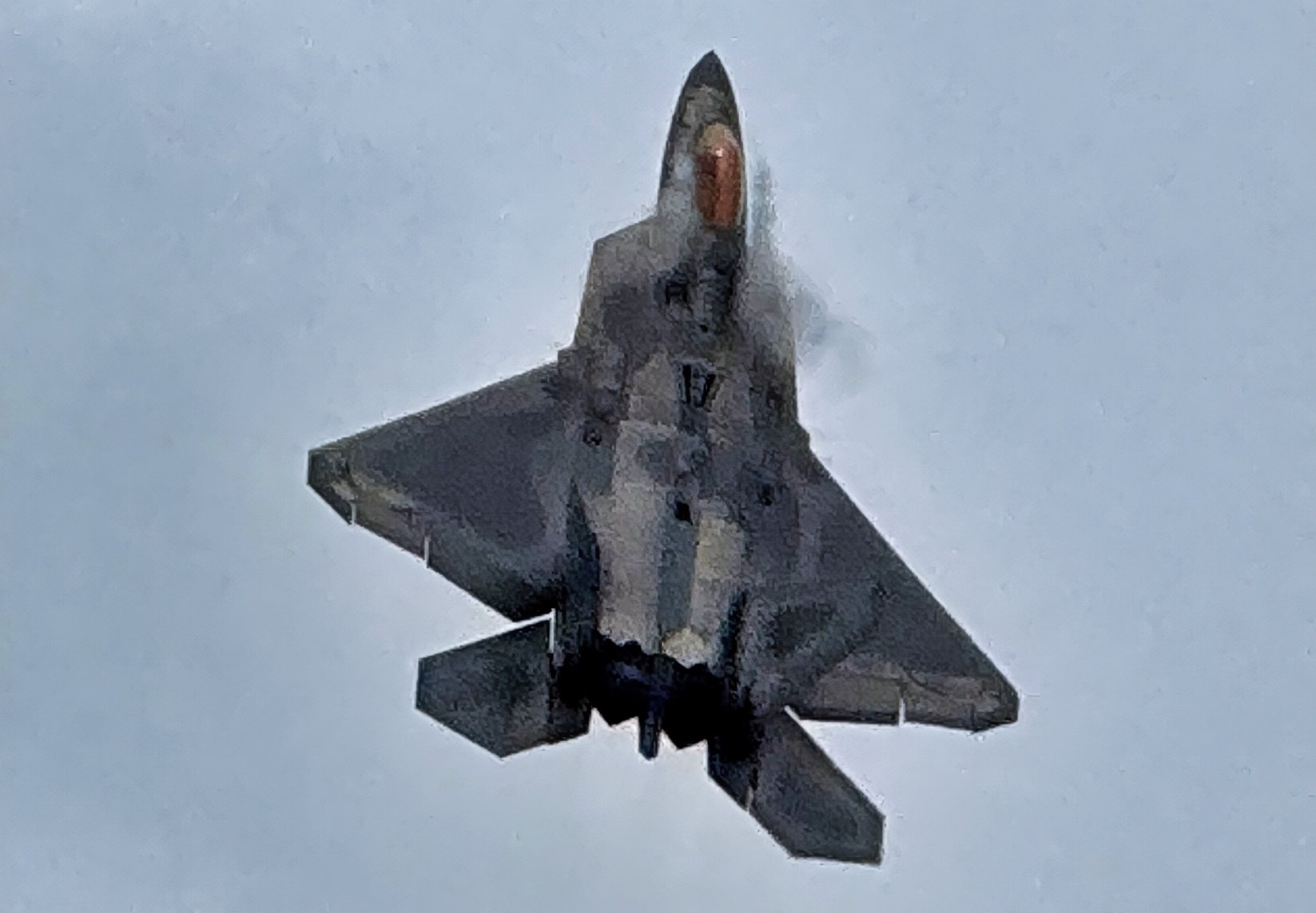
F-22 Raptor high in the sky. Image taken by Harry J. Kazianis in Lakeland, Florida on 4/19/2026.
The Aircraft Itself: A Tanker With A History
In 2025, inspectors found aileron hinge cracks across the KC-46 fleet. Not on one aircraft — across the fleet. Deliveries paused. Inspections followed. The Air Force designated it a high-priority safety alert.
The cracks matter beyond the immediate structural concern. They reveal something the program’s defenders consistently avoid: the KC-46’s problems are not confined to its systems. They extend to the aircraft itself. Three categories of failure, all Category 1, all still in some stage of remediation. One hundred and five of these aircraft are currently in operational service.
Now Run It in the Pacific
Those are not future problems awaiting a fix. They are the current condition of the fleet America will take into the next fight.
The KC-135 fleet, which is supposed to bridge the gap, is not holding. Congress blocked further KC-135 retirements in the FY2026 NDAA because the KC-46 couldn’t carry the load. The Air Force has pulled retired KC-135s out of the boneyard at Davis-Monthan just to meet current operational demand. Aircraft that were supposed to be done are flying again because the replacement isn’t ready. That is not a transition. That is a crisis with a procurement label.
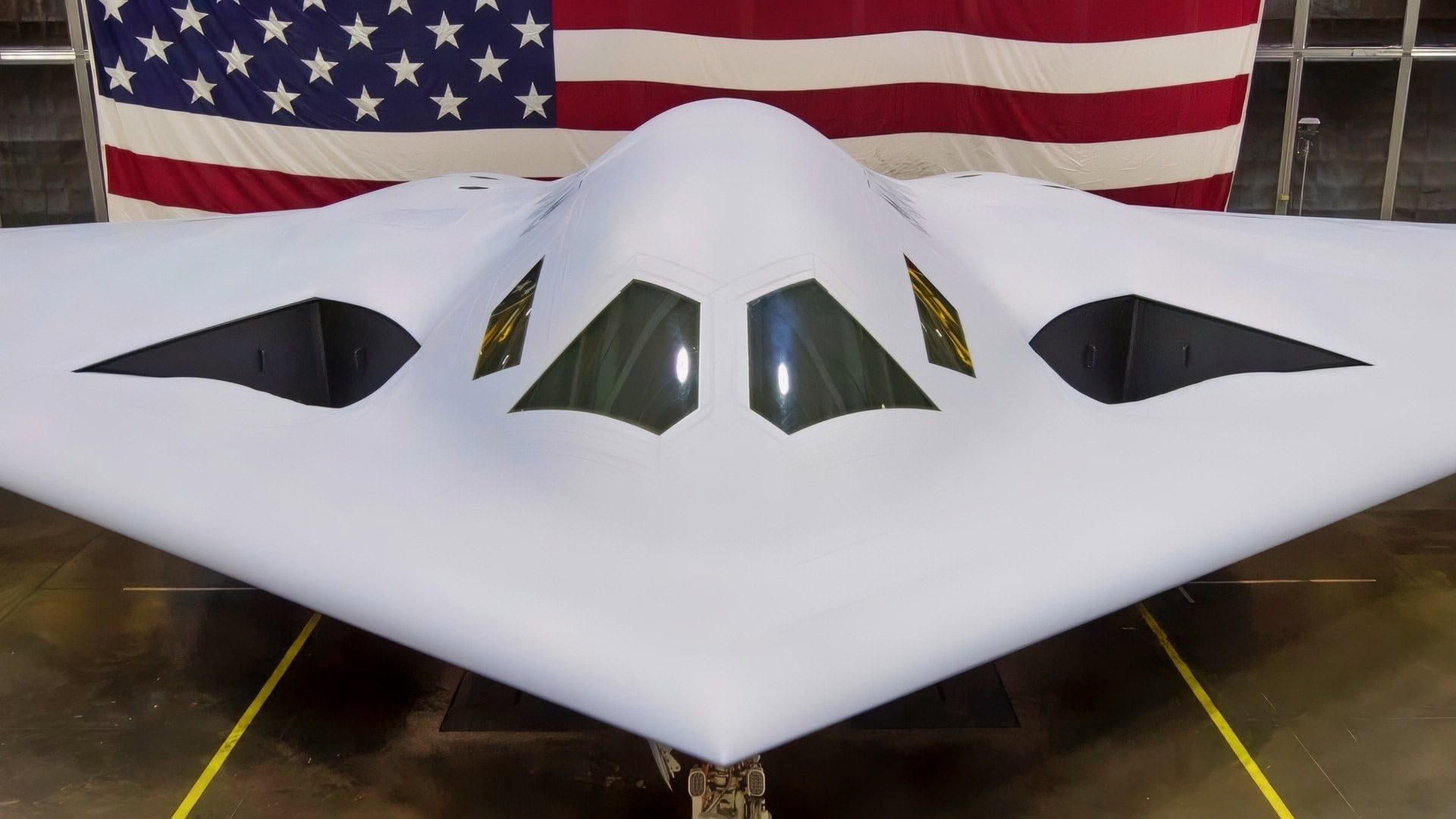
The B-21 Raider was unveiled to the public at a ceremony Dec. 2, 2022 in Palmdale, Calif. The B-21 will provide survivable, long-range, penetrating strike capabilities to deter aggression and strategic attacks against the United States, allies, and partners. (U.S. Air Force photo)
Run that scenario in the first 72 hours of a Taiwan contingency. Tanker availability in a Pacific fight is not a logistics variable — it is the variable. Without a functioning refueling chain, American airpower doesn’t reach the target area. It doesn’t matter what’s in the weapons bay.
A vision system that degrades under challenging lighting conditions. A boom that cannot service all receiver aircraft. Structural questions across an entire fleet type. In a permissive environment, these are serious problems. In a contested one, there are no margins of error. They are the difference between a mission and a catastrophe.
Beijing does not need to find the B-21. It needs to understand the refueling chain that keeps it flying.
Bigger than Boeing
Boeing has lost billions of dollars on this program. That is Boeing’s financial catastrophe, and Boeing’s engineering failure, and Boeing deserves the scrutiny it is getting.
But the harder question doesn’t end in Everett, Washington. The Air Force accepted 105 aircraft, but it never fully certified them. The Pentagon kept signing delivery paperwork while the Category 1 list grew. The KC-135s, the KC-46 was built to replace them, are being pulled out of the boneyard at Davis-Monthan because the replacement cannot carry the load.
The KC-46 didn’t fail America’s tanker fleet. The system that kept accepting it did — and that system isn’t Boeing.
About the Author: Dr. Andrew Latham
Andrew Latham is a professor of international relations and political theory at Macalester College in Saint Paul, MN. You can follow him on X: @aakatham. He writes a daily column for 19FortyFive.com.