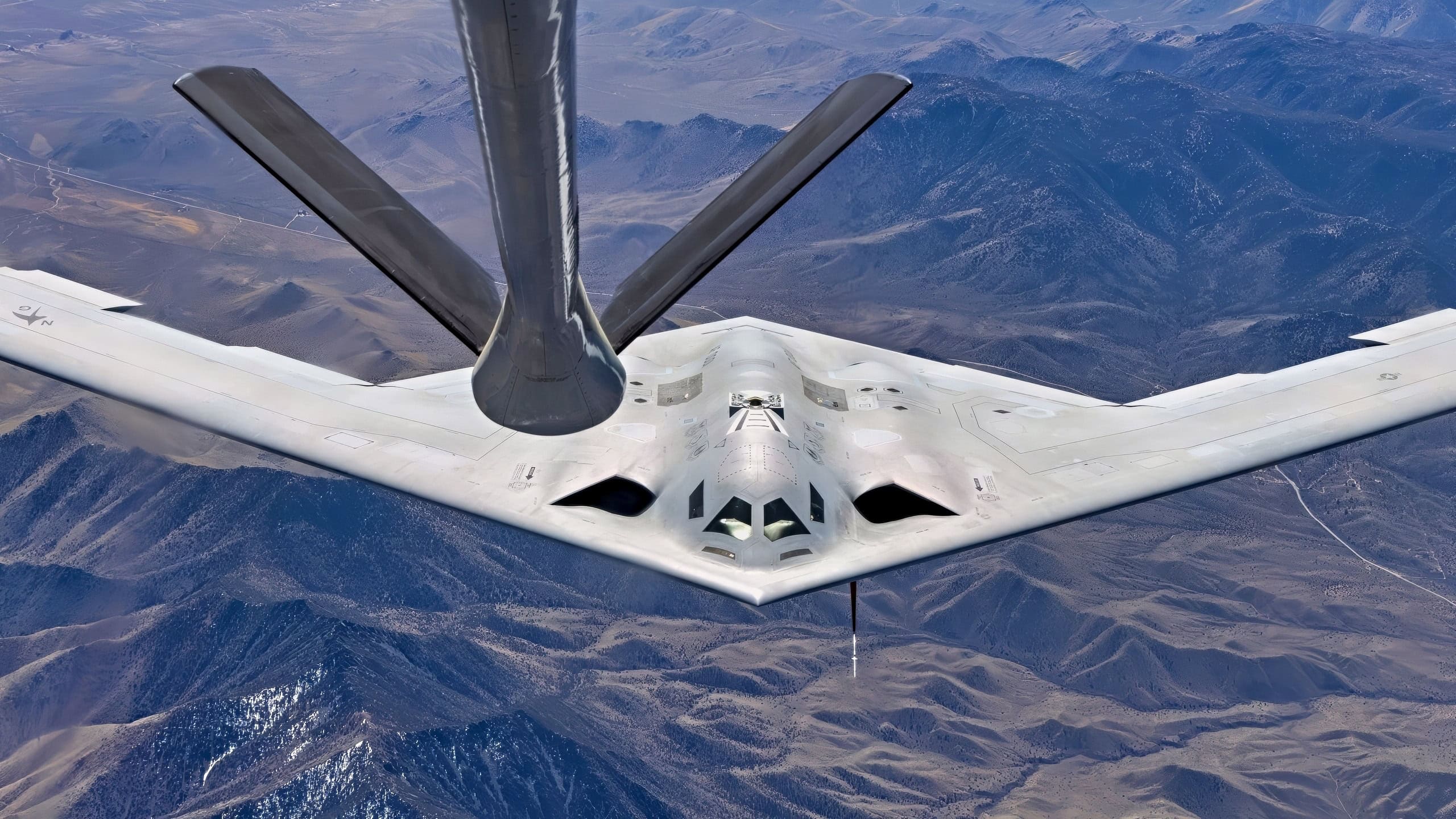
The US Air Force (USAF) has just released a set of new photographs showing the 6th-generation B-21 Raider stealth bomber engaged in air-to-air refueling test flights with a KC-135 Stratotanker. This is a major step in the program’s validation, as it verifies the new long-range strike bomber’s ability to perform the same mission profiles currently carried out by the B-2 Spirit – plus numerous other projected mission concepts.
While the actual number remains classified, it is known that during the 37-hour round-trip mission B-2s flew for Operation Midnight Hammer in June 2025, the aircraft had to conduct “several” high-altitude, high-volume refuelings, making this part of the aircraft’s performance a strategically critical requirement.
What the Experts Told 19FortyFive on the B-21 Raider Reveal
“Air-to-air refuelling is something that the flight crews make it look like it is a mundane occurrence, but it is actually more than slightly tricky,” said a retired USAF test pilot who spoke to 19FortyFive. “It is an event for which the potential hazards are multiplied when you are doing it for the first few times.”
“Ironing out all the wrinkles that might come up in the initial flight testing, if there are any, is not a simple task. But the fact that the flight test crews for the B-21 seem to pull this off without any glitches that we can see says a lot about the competence of the Northrop team that designed the aircraft,” he concluded.
Northrop and the USAF announced that these tests took place on 14 April, but did not specify an exact date. What can be seen in the photos reveals features of the aircraft’s low-observable design that have not been observed before.
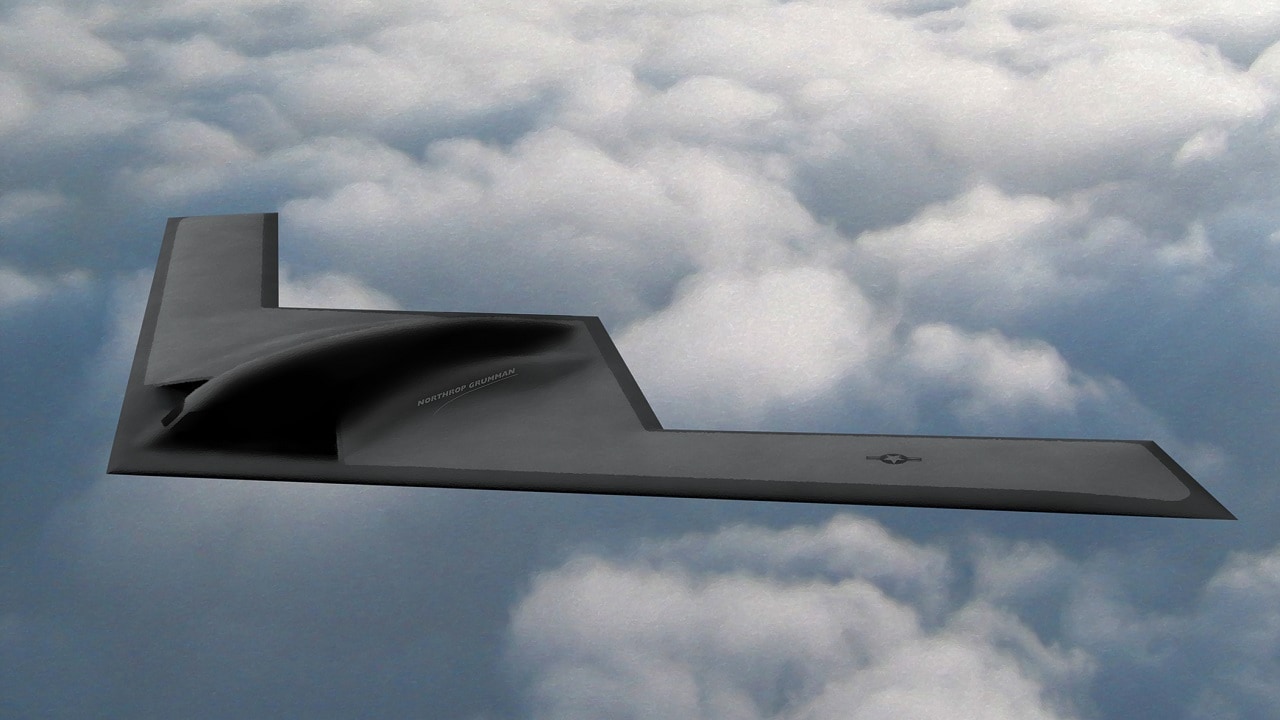
B-21 Raider bomber. Image Credit: Creative Commons.
The announcement of the B-21 Raider’s successful in-flight refueling test occurred slightly more than a month after aviation enthusiast tail spotters observed the stealth bomber flying with a KC-135 over Edwards Air Force Base.
USAF officials responded that the flights seen from the ground were designated “close-proximity” tests.
That verbiage indicates the B-21 never actually locked into the KC-135’s boom, but the flights were designed to ensure there are no aerodynamic or boundary-layer issues between the two aircraft during a refueling profile.
B-21 Raider Bomber Design Details: A Change Thanks to China and YF-23 Influence?
One of the newly released photos was taken from the KC-135 aircraft with the camera angle literally looking down the fuel probe at the B-21 head-on. It presents one of the best overall shots of the aircraft seen thus far, taken from above the bomber.
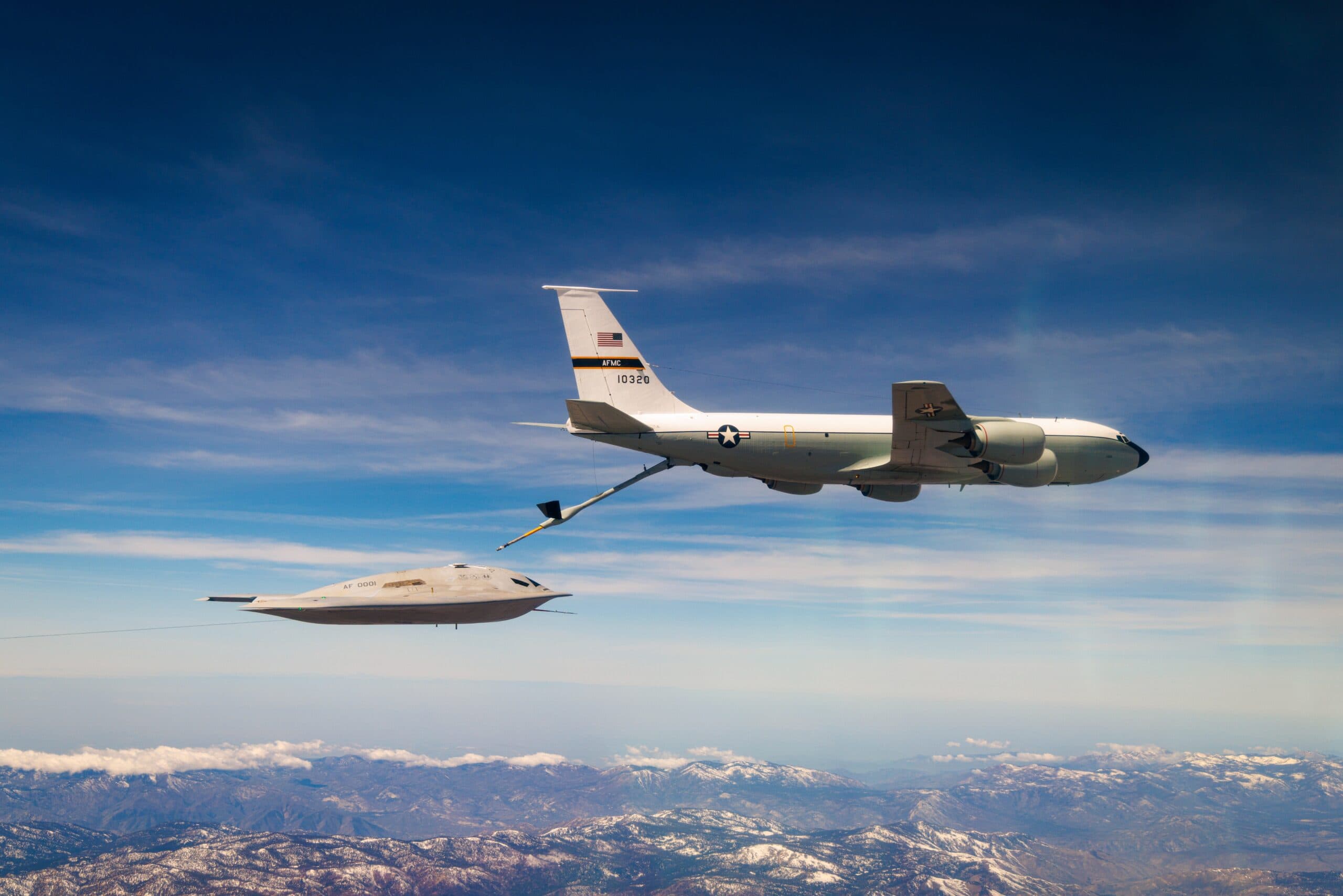
B-21 Raider Taking on Fuel. Image Credit: U.S. Air Force.
New features that were not part of the B-2 design and have been discussed extensively, such as the side windows for the aircrew and the different positions of the engine inlets, are even more evident here.
Details that have not been visible at all in these images to this point are from the aircraft’s exhaust section. The exhausts seen have a much more circular design. This is a complete change from the B-2’s quadrangular slot exhausts. This contradicts earlier reports that described the exhausts as a near copy of the B-2 design.
There is also no special material seen behind the exhaust as there is on the B-2. That design technique is judged to have possibly been a “copy-paste” of the rear hemisphere of the YF-23 prototype that was designed by Northrop for the US Advanced Tactical Fighter program. The YF-23 design ultimately lost the competition to the YF-22, which was selected by the USAF. Some of the photos we took last year of the YF-23 might help explain this.
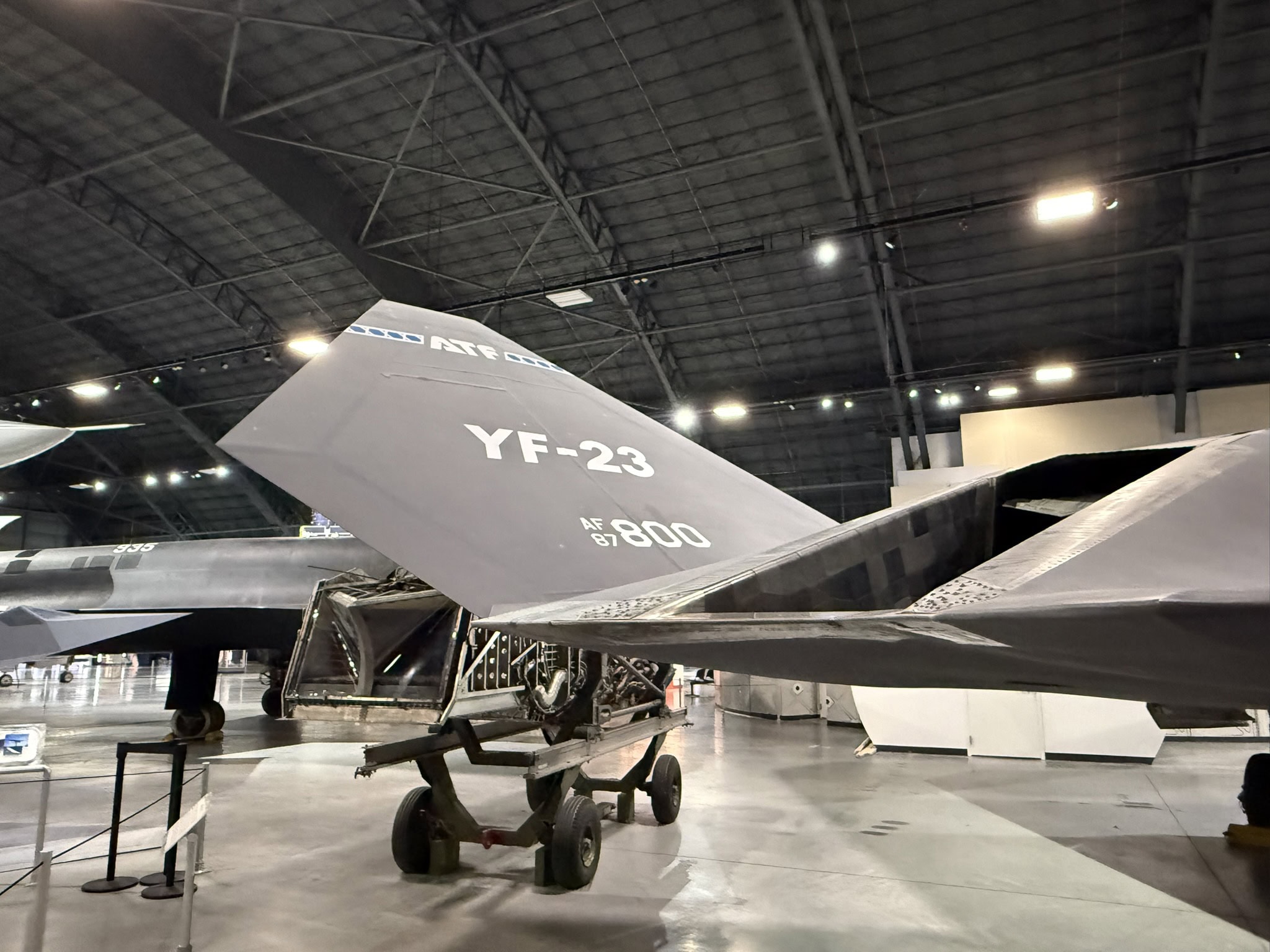
Back of YF-23. 19FortyFive.com image of the U.S. Air Force Museum by Harry J. Kazianis, taken back in July 2025.
Both the YF-23 and B-2 were designed by Northrop using what are known as “top-mounted” troughs to hide engine heat, as you can see from our images taken back in 2025.
This design choice was deliberately made to reduce the infrared (IR) signature and shield the engines from detection by ground-based IR-homing missiles.

YF-23 Stealth Fighter. Image taken by Harry J. Kazianis for 19FortyFive.
This new nozzle design also shows how the B-21’s rear hemisphere surface is very different from the B-2’s, with the surface angles joining at a single point.
The rather considerable change, said an analyst of US stealth aircraft, may be because the stealth design of the B-2’s rear section was judged to be compromised.
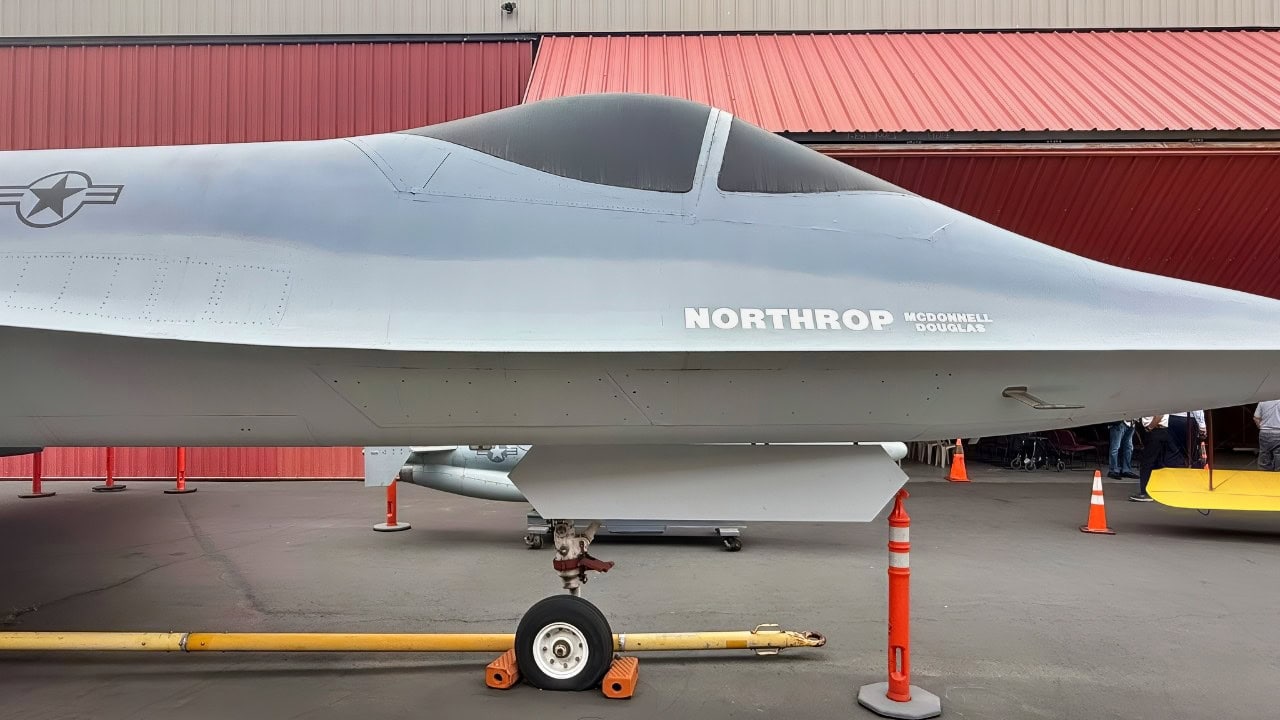
YF-23A Black Widow II 19FortyFive Image Taken by Harry J. Kazianis.
In 2011, a former Northrop design engineer on the B-2 program, Noshir S. Gowadia, was convicted and sentenced to 32 years for providing details of the B-2’s exhaust section to agents from the People’s Republic of China (PRC).
This might have made a radical departure from the B-2 configuration necessary.
Two Aircraft in Flight Test
The images also reveal that the bomber’s tail number during the refueling tests was AF-0001, the first aircraft ever delivered to the USAF. That airframe is reported to be the airframe designated for the B-21’s airworthiness and handling qualities testing.
This B-21 test platform will later be fitted with a new probe extending forward from the bottom of the aircraft, along with a trailing cone used to collect data. AF-0001 is one of only two B-21a known to be in flight test.
The first B-21 was delivered already in 2024, and the second arrived at Edwards in September 2025. At that time, USAF officials said the second aircraft would be used for tests of weapons and mission systems. The service also announced in February that the first operational B-21 bomber is scheduled to be delivered to a USAF base in 2027.
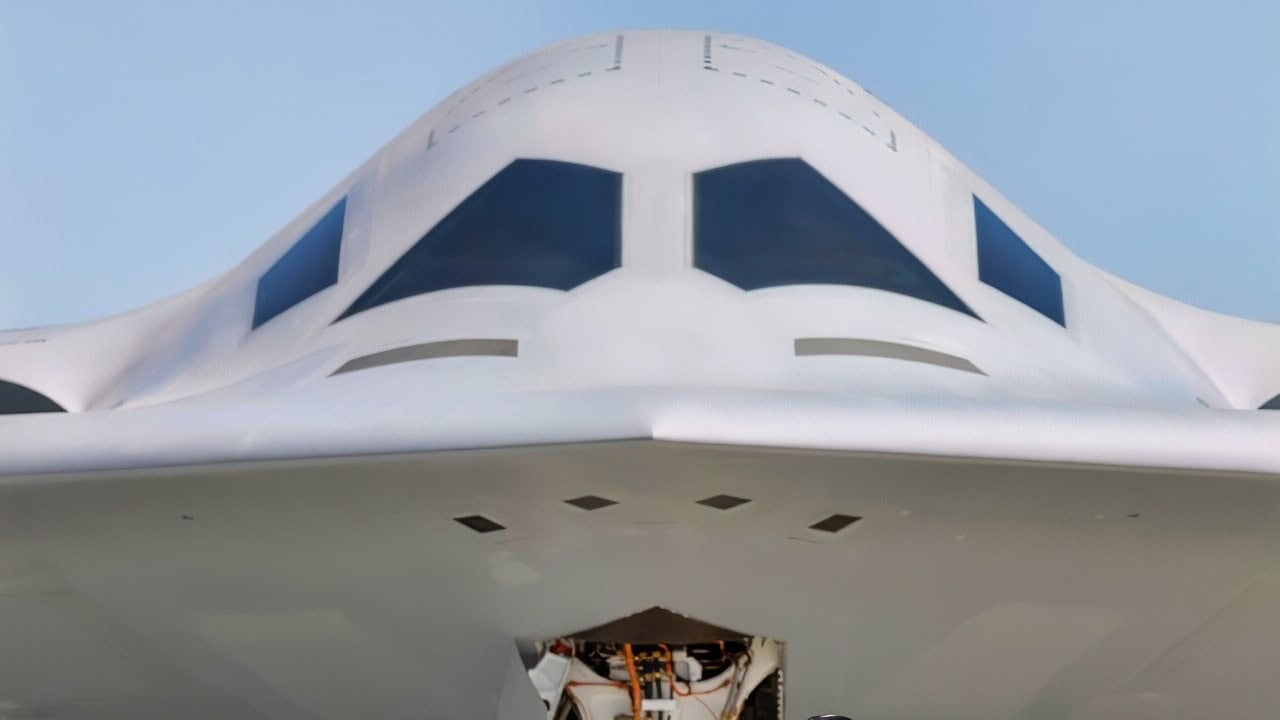
U.S. Air Force Airmen with the 912th Aircraft Maintenance Squadron prepare to recover the second B-21 Raider to arrive for test and evaluation at Edwards AFB, Calif., Sept. 11, 2025. The arrival of a second test aircraft provides maintainers valuable hands-on experience with tools, data and processes that will support future operational squadrons. (U.S Air Force photo by Kyle Brasier)
Operation of the B-21 is expected to be considerably less resource-intensive than the aircraft it is replacing. USAF Global Strike Commander Gen. S.L. Davis said in an announcement this month. “For our bomber crews and the combatant commands they support,” the B-21 design “is about endurance and mission readiness.”
A New Generation Engine?
The B-21 consumes a fraction of the fuel used by legacy aircraft such as the B-2 Spirit, making it the “most fuel-efficient bomber ever built,” read the announcement.
This level of fuel efficiency could likely be achieved only by the B-21 if the engine were to change at some point in the program. The engines installed in the test aircraft are reported to be derivatives of the same F135 that powers the F-35 fighter aircraft.
However, achieving the level of radar cross-section (RCS) reduction and still increasing fuel efficiency as described in the USAF announcement may require, at some point, a switch to one of the adaptive-cycle engine designs currently under development.
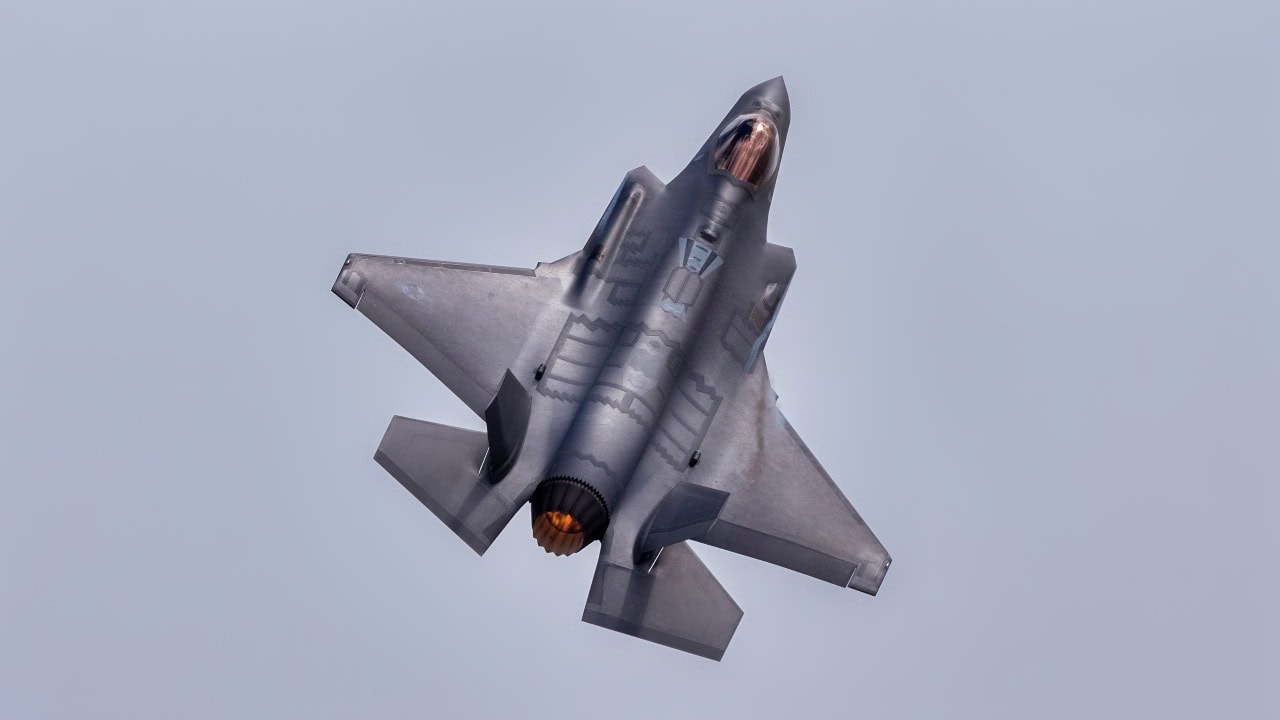
U.S. Air Force Capt. Kristin “BEO” Wolfe, the F-35A Demonstration Team pilot, climbs into the sky during a flight practice June 17, 2020, Hill Air Force Base, Utah. Air Combat Command’s single-ship aerial demonstration teams are required to regularly practice in order to maintain flight currencies and stay performance-ready. (U.S. Air Force photo by Capt. Kip Sumner)
This next-generation jet design features an engine that dynamically switches between high thrust for combat and high efficiency for range. This is partially accomplished by using a third bypass air stream.
These engines are supposed to deliver 25 percent improved fuel efficiency, 30 percent more range, and 10–20 percent more thrust than current fixed-cycle engines.
They are considered essential for any future 6th-generation aircraft, whether they are fighters or bombers.
MORE – There Is Only 1 Way to Solve the Strait of Hormuz Crisis
About the Author: Reuben F. Johnson
Reuben F. Johnson has thirty-six years of experience analyzing and reporting on foreign weapons systems, defense technologies, and international arms export policy. Johnson is the Director of Research at the Casimir Pulaski Foundation. He is also a survivor of the Russian invasion of Ukraine in February 2022. He worked for years in the American defense industry as a foreign technology analyst and later as a consultant for the U.S. Department of Defense, the Departments of the Navy and Air Force, and the governments of the United Kingdom and Australia. In 2022-2023, he won two awards in a row for his defense reporting. He holds a bachelor’s degree from DePauw University and a master’s degree from Miami University in Ohio, specializing in Soviet and Russian studies. He lives in Warsaw.