

Key Points and Summary – Steve Jobs, co-founder of Apple Inc., possessed what Prussian military theorist Carl von Clausewitz called coup d’oeil — the French term Clausewitz adopted in his foundational 1832 treatise “On War” to describe a leader’s ability to perceive the correct course of action in battle through flashes of genius that operate faster than conscious analysis.
Jobs applied this intuitive command capability to Apple’s product development and market strategy, building what would become one of the most valuable companies in corporate history.

Image Credit: Apple.
Quote of the Day by Apple’s Steve Jobs
“It would be a shame to have lost the war because we won a few battles.” – Steve Jobs
Steve Jobs, the co-founder of Apple, knew a lot about survival. He always kept his eye on the bigger picture. There were times of success and times of failure, but he knew how to come out on top thanks to the “hustle culture” he invented. Every founder faces a constant war against deadlines, a lack of users, revenue, and sales problems, stock price troubles, and other negative events.
When There Is No Good News
Jobs knew that startups have little good news. Most days, there is no news, so founders have to rely on their creativity and technology. This is what inspires a founder to overcome the various failures associated with starting a business.
Going to Market Regardless of the Odds
The main issue for Jobs was to get his software and hardware to market. There was only one way to develop a new product: to see it in consumers’ hands. Jobs was detail-oriented, but he also saw that there would be periods of downtime and failures in bringing products to the masses. He also did not want to get too deep into the weeds with technology development. He communicated a broad passion and an end state and allowed his employees to fulfill this vision.

iPhone 12 Pro Max. Image: Apple.
Creating a Winning Environment
He knew that survival was not a sprint – it was full of times of fast-moving action, but it did not mean that the product development cycle would be short. He wanted to foster a creative environment where hard work was always rewarded with new innovations that could change the world.
Working as a Team
Jobs knew that his Apple co-founder, Steve Wozniak, could provide the engineering prowess to complement and execute Jobs’ vision. They fit hand in glove. Both knew that the personal computer would be one of the biggest technological revolutions.
What Can Military Leaders Learn from Steve Jobs?
Military leaders can learn from Jobs. One way to survive is to win a series of small victories that build momentum and confidence. This anti-fragile approach to adversity could enable an army to overcome significant hurdles and losses along the way.
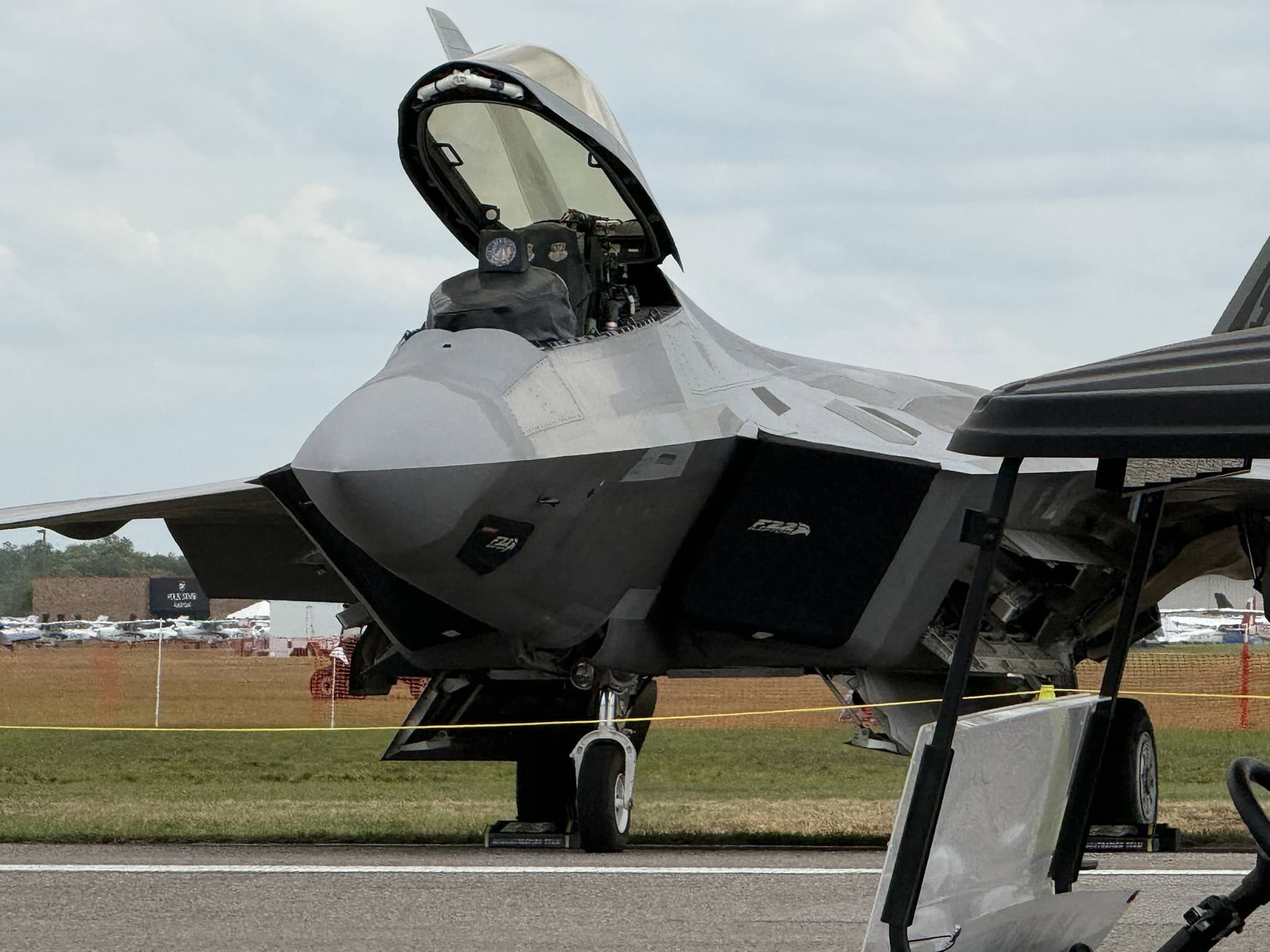
F-22 Raptor. Taken on 4/19/2026 by Harry J. Kazianis for 19FortyFive.com
It’s More Than Spit and Polish
Jobs can also show military leaders that commanders can have a vision, not just enforce spit-and-polish standards. The ability to foresee problems and issues that negatively affect a fighting force can be addressed through teamwork and a commitment to carrying out a leader’s vision.
Jobs as a General or Admiral
Jobs would have been too much of a free spirit to have passed through the early stages of a military career, when adherence to regulations and rules is so important. But as a flag officer, Jobs would have fared well. His ability to see the future could help secure victories on the battlefield.
Carl von Clausewitz Would Have Loved Steve Jobs
Jobs also had the Clausewitzian notion of a commander with Coup d’oeil. To Carl von Clausewitz, this meant that a leader should have “flashes of genius” that can turn a battle toward victory in a matter of seconds, with smart, visionary leaders operating at peak efficiency. Jobs would know how to build momentum with quick, knowledgeable decisions. This intuition and a high level of situational awareness would enable a decisive win to occur rapidly.
Jobs had a Coup d’oeil for business, and his genius was seeing what the public would want in the future. Military commanders could also sometimes see the future with Coup d’oeil.
Followership Is Important Too
Military leaders can find themselves outside of a command position. One aspect of the military is that officers are often not in command positions. They are instead staff officers who assist the commander and must devise a way to execute the commander’s intent.
Jobs was famously fired from Apple in 1985, but he later returned after successes with other organizations. This means that military commanders must also step back, study their profession, and excel at knowledge building and training. This is known as succeeding in followership positions.
Steve Jobs as Officer and Wozniak as Non-commissioned Officer
Fortunately for Jobs, he had talented staff around him, such as underlings who could sense what he wanted to turn his dreams into reality. In the military, officers also have noncommissioned officers who are adept leaders and can counsel the commander with expertise. Jobs would have fit into this construct during his partnership with Wozniak.
Jobs may not have excelled as a junior or company-grade officer, though, and he likely would not have passed the difficult training to become an officer. He excelled within his own chain of command as chief executive. Jobs had incredible potential and a high growth ceiling. He also attained his potential as a leader.
Steve Jobs As an Example of Success Against Odds
Generals and admirals thus have much to learn from Jobs. The ability to execute a vision and bring products to market with some of the most remarkable innovations of the 20th and 21st centuries inspires all military leaders to think big and hit home runs rather than singles.
Fighting By Minutes or Seconds
Jobs had flashes of brilliance that great military leaders also need to achieve victory, fighting minute by minute, second by second. This can bring out the best in military commanders and make an overall win in battle possible over a long campaign.

A-10 Warthog. Image Credit: 19FortyFive.com Taken on 4/19/2026.
Jobs knew how to survive the war and achieve an end state of successful products that changed the world, and he can inspire military leaders to win the war, even if some battles are lost.
About the Author: Brent M. Eastwood, PhD
Author of now over 3,500 articles on defense issues, Brent M. Eastwood, PhD, is the author of Don’t Turn Your Back On the World: A Conservative Foreign Policy and Humans, Machines, and Data: Future Trends in Warfare, plus two other books. Brent was the founder and CEO of a tech firm that predicted world events using artificial intelligence. He served as a legislative fellow for US Senator Tim Scott and advised the senator on defense and foreign policy issues. He has taught at American University, George Washington University, and George Mason University. Brent is a former US Army Infantry officer. He can be followed on X @BMEastwood.