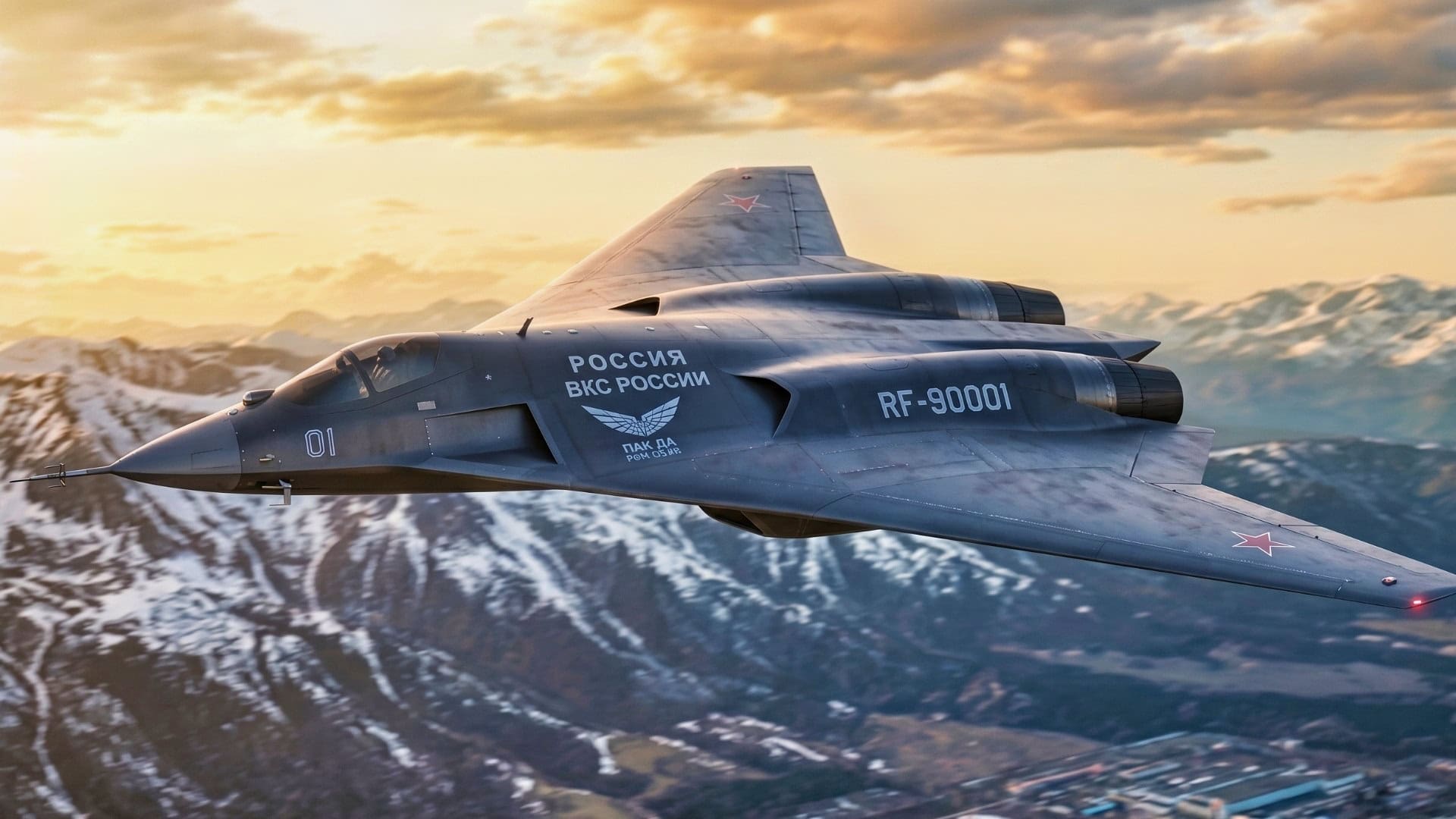
Summary and Key Points: Classified Russian defense industry documents leaked by the international intelligence collective InformNapalm on November 4, 2025 reveal that both of Russia’s most advanced aviation programs — the Sukhoi Su-57 Felon stealth fighter (NATO reporting name) and the Tupolev PAK DA Poslannik strategic stealth bomber — are crippled by Russia’s inability to manufacture critical components domestically, according to analysis of the documents combined with reporting from Russian aviation experts who spoke to 19FortyFive.
Su-57 Felon and PAK DA Have the Same Problem
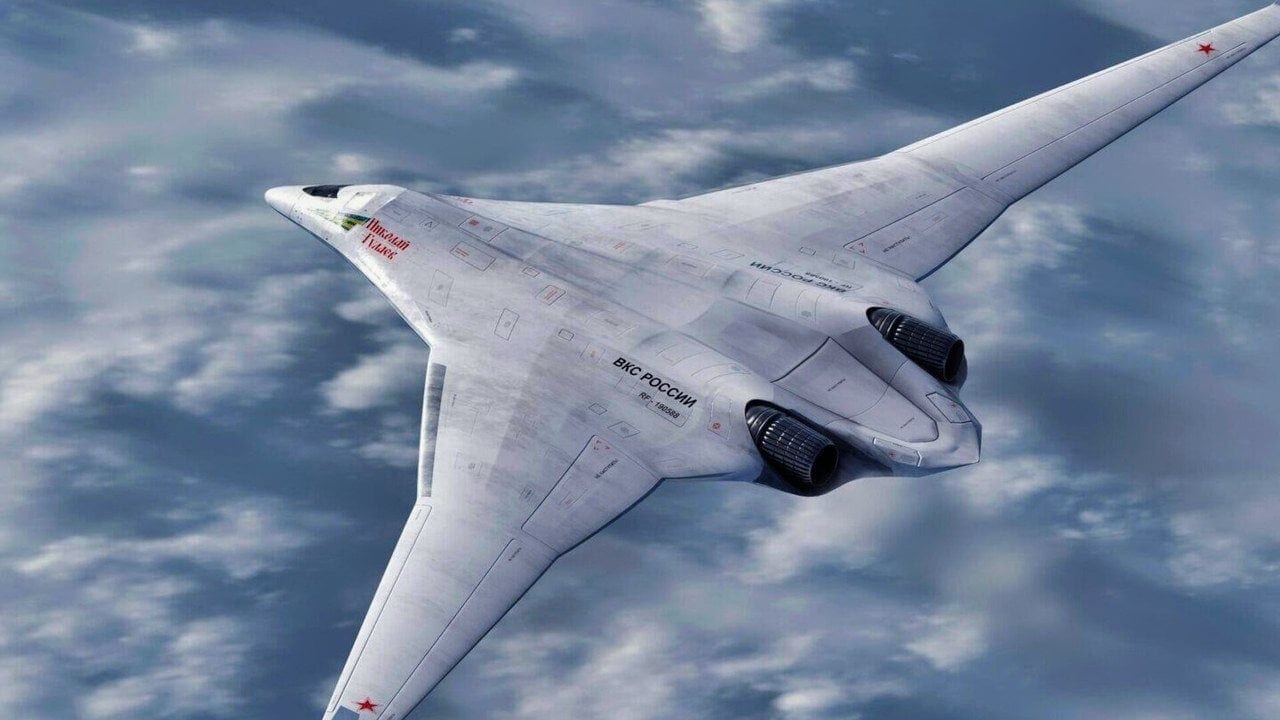
PAK DA Russian Stealth Bomber. Russian State Media.
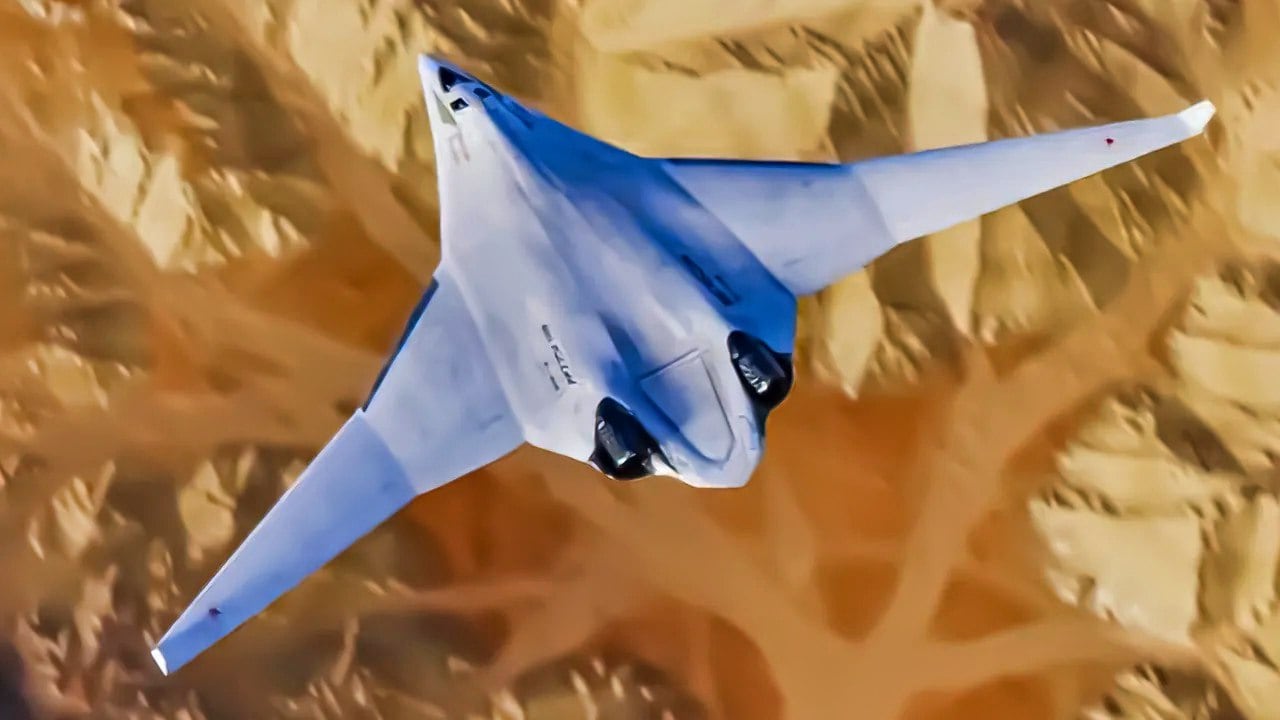
PAK DA Russian Bomber. Image Credit: Creative Commons.
Events over the past few months, including leaks of classified Russian aerospace industry documents on the nation’s two most advanced programs, have called into question whether the Russian aviation industry remains viable. It sounds counterintuitive, given the long-established history of Russia’s combat aviation design bureaux and the decades of exports of Russian fighter aircraft, from the darkest days of the early Cold War to the first two decades of the 21st century.
But the preponderance of evidence is that Russia lacks the resources – both in industrial technology and personnel – and the necessary network of second- and third-order suppliers that can provide the building blocks of modern weapon systems. The situation that has developed illustrates the timeless adage about the “kingdom being lost for want of a nail.”
The inability of Russian industry to produce some of the simplest and most common components needed for its newest, next-generation programs is – according to the classified defense industrial data that has been published in late 2025 – preventing Russia from manufacturing and fielding military aircraft platforms that are on par with those of its peer competitors like the US and the People’s Republic of China (PRC).
A November 2025 report from an independent intelligence assessment group, InformNapalm, found that both of Russia’s most advanced stealth aircraft programs are crippled by their reliance on foreign-made components and production machinery. The two programs remain in different states of stalled or anemic production due to the lack of access to this foreign technology, despite several years of Russia’s efforts to engage in import substitution.
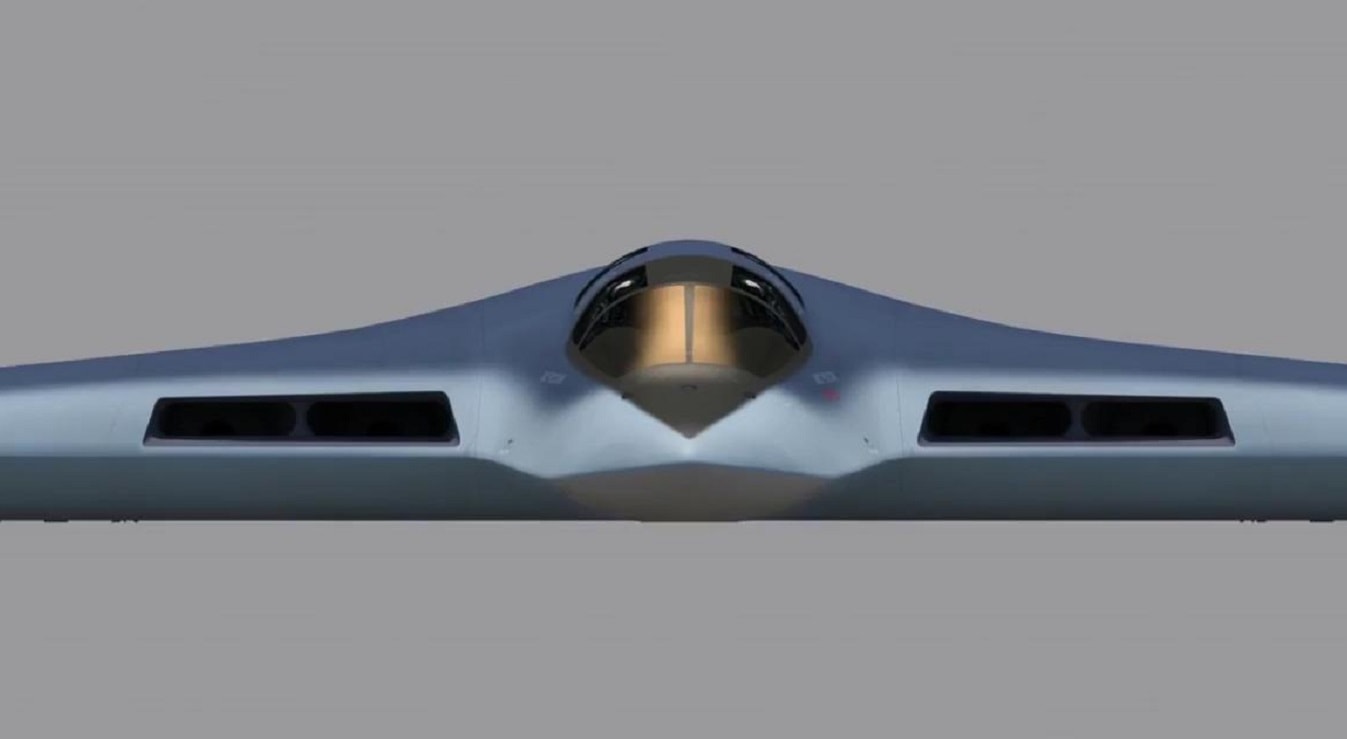
PAK DA. Image Credit: Artist Concept.
The two aircraft are, first of all, the Sukhoi Su-57 stealth fighter, originally known by its program development designation, T-50, or the PAK-FA, a Russian acronym meaning “Perspective Aviation Complex-Frontal Aviation.” The second is the PAK DA, another Russian acronym that denotes “Perspective Aviation Complex-Long-Range Aviation.”
The first program is an aircraft that was designed to replace the Su-30SM and Su-35 fighters in the Russian Aerospace Forces (VKS). When the program’s existence first became known, the aircraft was often described as being “larger than the [Mikoyan] MiG-29 and smaller than the Su-30 and Su-35 generation of fighters – and able to take on the missions of both.”
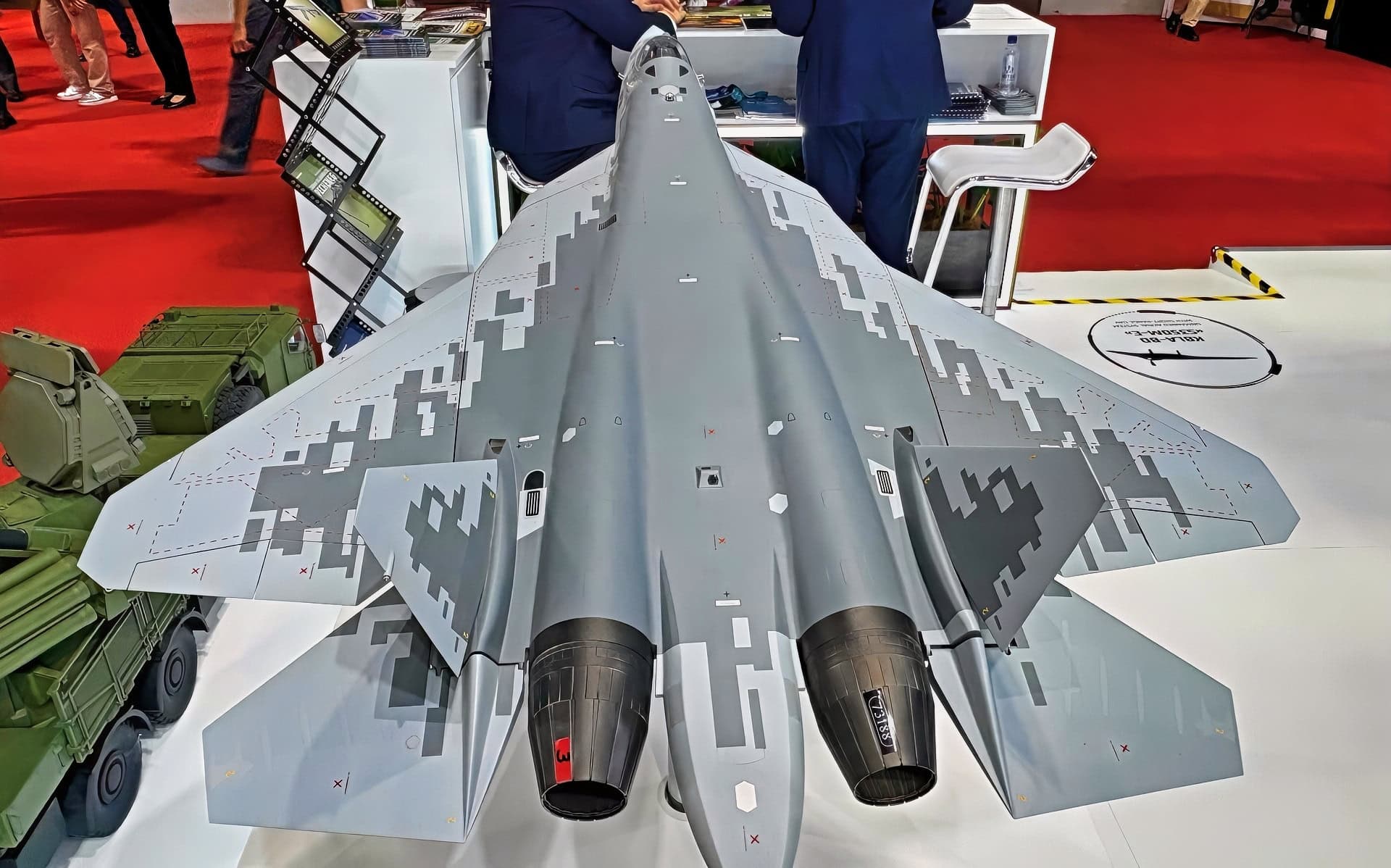
Su-57 Felon Model Aircraft. Image taken on 4/20/2026 by Reuben F. Johnson.
Initial pre-production prototypes of the fighter program were designated T-50. It is also these T-50 aircraft that have appeared at major international air shows organized by some of Moscow’s traditional customers and partners, rather than production-series operational models.
The main events where one of the prototype aircraft have been flown in public flights displays took place when prototype T-50-4 at Air Show China in November 2024 in Zhuhai in Guangdong Province, the T-50-4 prototype appearing again at Aero India in February 2025 where it flew in proximity to the US F-35, and the T-50-9 at the Dubai Air Show in November 2025, where the aircraft opened its internal weapons bays for the first time in public.
Su-57 Felon: Lack of Stealth Design Technique
But Russia’s inability to obtain or develop certain critical technologies is a shortcoming. Mastering the use of materials to create a truly stealthy external aircraft surface is another. Those deficiencies were seen in the prototypes of the aircraft that were flown and also displayed statically.
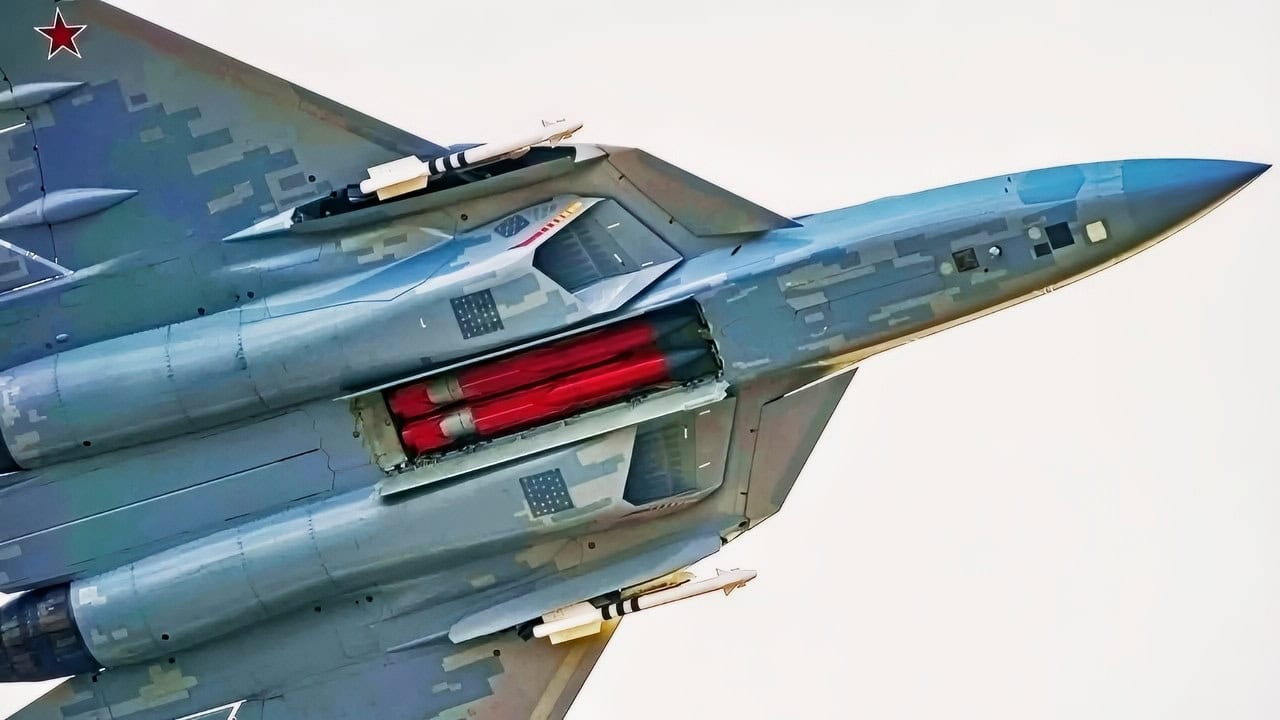
Su-57 Felon Fighter UAC Stock Photo.
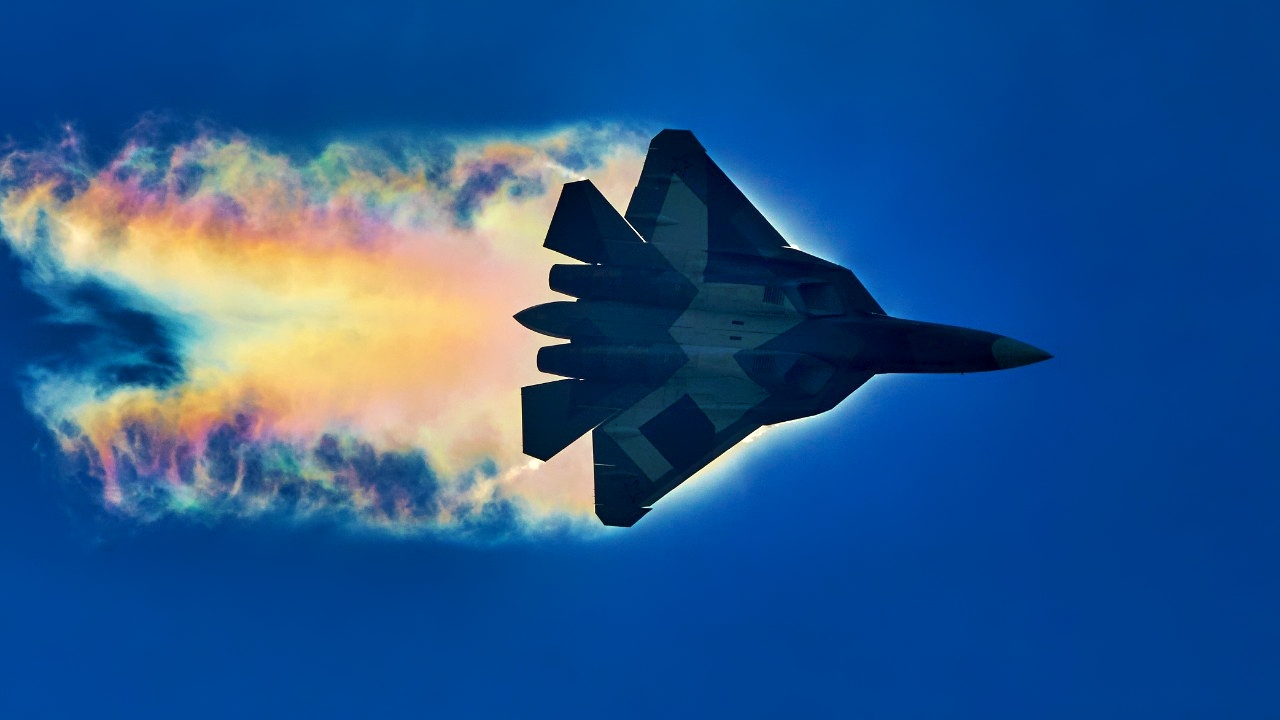
Russia’s Su-57 Felon Fighter

Su-57 Felon Fighter from Russian Air Force.
At the Indian and PRC expositions, the aircraft’s external appearance was derided for having numerous exposed bolts, rivets, and other fasteners, which were literally an embarrassment to those who had organized for the Su-57 fighter jet to participate in an international event. Airshow China 2024 in Zhuhai, wrote one author in a Ukrainian publication, “was the final nail to the coffin of the myth that this aircraft belongs to the 5th-generation [of technology and design techniques].”
And [it is] also proof that all Russian aircraft construction technologies remained at the 20th-century level.” Other than the Su-57 prototype’s design being so lacking in the extreme tolerances required to maintain a stealth-level low radar cross section (RCS), the use of radar-absorbing composite materials is also still less than one would expect in a design of this kind.
“The oversight on the Russians’ part was that they failed to organize a no-access zone for spectators, and the Chinese event visitors could freely come up unprecedentedly close to the Su-57 model demonstrated at the exhibition. What especially catches the eye is the huge number of bolts holding the fuselage panels together, but this is not news, as previous models had the same look. A whole different matter is that the quality of joints fails to meet any reasonable expectations [of a low observable configuration].”
The Ukrainian publication also pointed to “photos of the tail part, which are published for the first time. Look at the bolts: they have different drive types for fastening — there are single-slotted, Phillips, and with a hexagonal head.” This appears to be a production process of “use whatever is there and available,” rather than standardized hardware designed to eliminate radar-reflecting surface imperfections.
“The joints connecting the weapon bay doors with other elements of the fuselage also speak volumes about the real technological level of aircraft construction in Russia and its production culture as a whole.”
This profile of the T-50 aircraft states that it is “worth noting” that the T-50-4 is not the final production model but a prototype. Considering its bort [fuselage] number is 054, and the model ID is T-50-4, which means already the fourth among test articles, the presented model was supposed to be perfected at this point.” Unless there are dramatic improvements between the prototypes and series-production models, the Su-57 will not meet the standards of a 5th-generation aircraft.
PAK DA: The Bomber That’s Still Mostly on Paper
The PAK DA is a program that has been in the making for almost two decades, beginning with the definition of initial requirements and the allocation of funding in 2008. But specific factors have been instrumental in delaying the program and moving the first flight date to the right more than once.
On April 2014, the then-head of Russia’s Unified Aircraft-Building Corporation (OAK), Mikhail Pogosian, announced that the design concept for the aircraft was complete. Three years later, in 2017, it was announced that the PAK DA (Prospective Aviation Complex for Long-Range Aviation) digital design was finalized by Tupolev and OAK. The concept was for it to be a flying wing-type bomber in the same class as the US B-21.
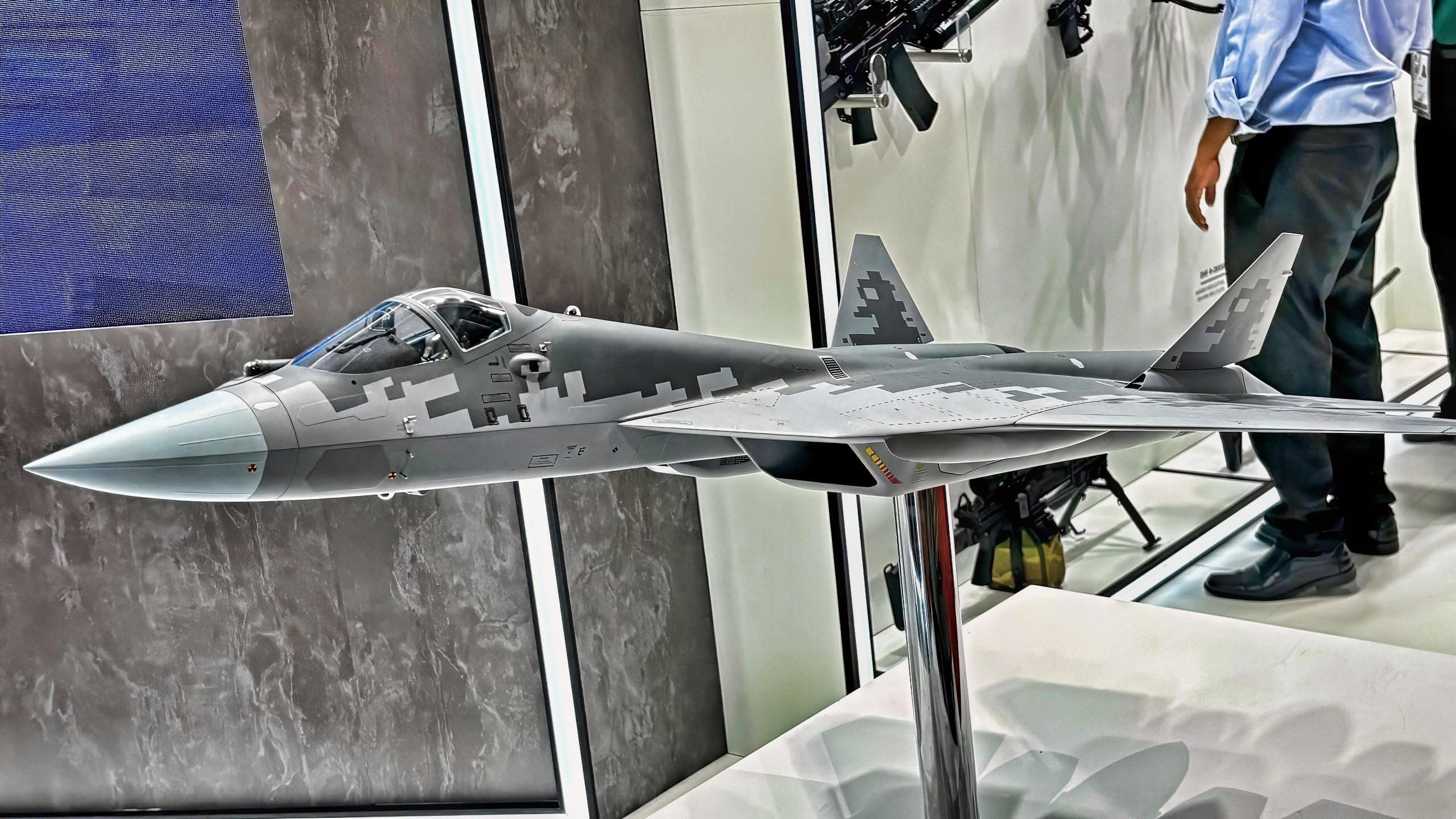
Model Su-57 Felon Fighter. Image taken by Reuben F. Johnson for 19FortyFive.com on 4/20/2026.
The development of a final design for these aircraft was an accomplishment beyond having a set of digital blueprints. Pogosian and other OAK officials announced that the process of having the Tupolev design bureau migrate to a digital design process also facilitated the transition to a single, unified information system for modeling and validation of the design.
The digital model, according to OAK and Tupolev representatives, enables and facilitates full-cycle development from simulation to production. Four years later, in 2021, reports on the program confirmed that the digital design model had enabled the rapid development of the bomber’s engine and aircraft structural components.
Where and why the program has stalled, according to Russian aviation experts who spoke to 19FortyFive, is that there are just too many sectors of the industry today that are no longer capable of supporting the final stages of the program’s design, much less transitioning it to the production phase.
Personnel Demographics
One of the increasing difficulties is that the Russian government has devised no remedy for its growing shortage of human capital needed to support these programs. Over 40 percent of all Russian factories are currently experiencing a deficit of personnel and engineers. By late 2023, the total workforce deficit in Russia’s aircraft industry was estimated at more than 14,000 people.
The year before, in 2022, the OAK required 8,500 workers and engineers to shore up its shortages. These shortages were then exacerbated by Russia’s “partial mobilization” campaign launched to mobilize more volunteers to compensate for losses on the front lines in Ukraine. Moscow’s use of “human wave” attacks on the Ukrainian frontlines then produced increasingly higher levels of casualties, making a bad situation worse.
While the war in Ukraine has exacerbated the shortage of skilled workers in the industry, Russian companies have struggled to fully staff their teams for years – even before the war began- and this has had an increasingly negative impact on Moscow’s ambitious production objectives.
A 2023 report by the Jamestown Foundation illustrates how the demographics of the aviation sector have been trending in the wrong direction for a long time. And as described above, the war in Ukraine has only exacerbated the situation.
“In reality, this problem also subsists as the number of technically trained workers in Russia has dropped. Taking data from Russian universities, the number of students enrolled in aircraft engineering programs at Russian technical universities in 2023 is less than 1,500,” reads the document. “Considering the fact that 18 percent (more than 16,000) of UAC employees were 50–59 years old and 16 percent (about 14,500) were more than 60 years old in 2020, the OAK and the rest of Russia’s aircraft industry are staring down the barrel of a total shortage of engineers by 2030.”
Components
For years now, much of the Russian defense aerospace sector has relied on a large number of US and European-made electronic components to maintain production tempo. But access to these products for the Russian industry is today cut off by sanctions that were imposed following the February 2022 invasion of Ukraine.
Russian officials have repeatedly promised to reduce their industry’s dependence on Western suppliers, but the country has a long way to go to achieve that objective. Industry is still nowhere near independent of these foreign suppliers, warned Anatoly Gaydansky, the CEO of aircraft parts manufacturer Aerocomposite.
“The industry’s main weaknesses are already known,” Gaydansky said in comments that were reported by Russian media. “Domestic producers aren’t even close to meeting the needs of the sector… the electronic component base is a significant area of concern.”
And this is where the recent leak of classified data from both the Su-57 and PAK DA programs comes in. It has been revealed that OKBM, a Russian supplier of critical actuator systems and production inputs for the Russian aerospace industry, is unable to produce the components needed for these two programs.
Much of the logjam is due to a reliance on imported, high-precision CNC machine tools from foreign suppliers that are now forbidden from selling to Russia. The firm, which supplies systems to both the aerospace sector and the space program, is suffering delays in manufacturing critical components. These include weapon bay parts and gearboxes. The company has had no luck with import-substitution strategies and has been relying on illegal means to evade sanctions to acquire these machine tools.
This is also not the first time the Russian industry has faced a rather simple component being on the critical path to the production of a major weapon system. Back in 1994, the first flight of another fighter program, the famous Mikoyan Multi-Role Fighter (MFI), Project 1.44 prototype, was delayed for untold months due to a lack of crucial flight actuators for its canards.
But the same Russian industry experts also point to another serious shortcoming. One is that there were almost no personnel left building bomber aircraft by the 1990s. There were plenty of experienced specialists building fighter aircraft due to export orders from the PRC and India to keep those production lines “warm” and to retain the workforce to man them. But no export countries bought bombers after the Cold War ended, and those aerospace workers were scattered to the winds as the lights in their factories were turned out.
This has the PAK-DA bomber program’s engineering staff now using some of the same components as part of the Su-57 design for very similar functions in the PAK-DA’s operation. Therefore, the problems with the OKBM supplier are shackling both programs.
But this situation is different from the perennial shortcomings of Russia’s industry. One of the long-time experts in Russia who was for years an employee of one of the leading design bureaux during the Soviet years stated that there is no road back to recovery for Russia’s planemakers. This is because there are just not enough people and suppliers left to support what remains of the industrial base.
It is time, he said, “for the Russian aerospace industry to stop pretending that it really exists. There are not enough people left, enough companies to produce the major parts and subsystems, and not enough factories that can still turn out a final product. All that is going on now is people prolonging the agony of an industry that actually already died a long time ago.
About the Author: Reuben F. Johnson
Reuben F. Johnson has thirty-six years of experience analyzing and reporting on foreign weapons systems, defense technologies, and international arms export policy. Johnson is the Director of Research at the Casimir Pulaski Foundation. He is also a survivor of the Russian invasion of Ukraine in February 2022. He worked for years in the American defense industry as a foreign technology analyst and later as a consultant for the U.S. Department of Defense, the Departments of the Navy and Air Force, and the governments of the United Kingdom and Australia. In 2022-2023, he won two consecutive awards for his defense reporting. He holds a bachelor’s degree from DePauw University and a master’s degree from Miami University in Ohio, specializing in Soviet and Russian studies. He lives in Warsaw.