
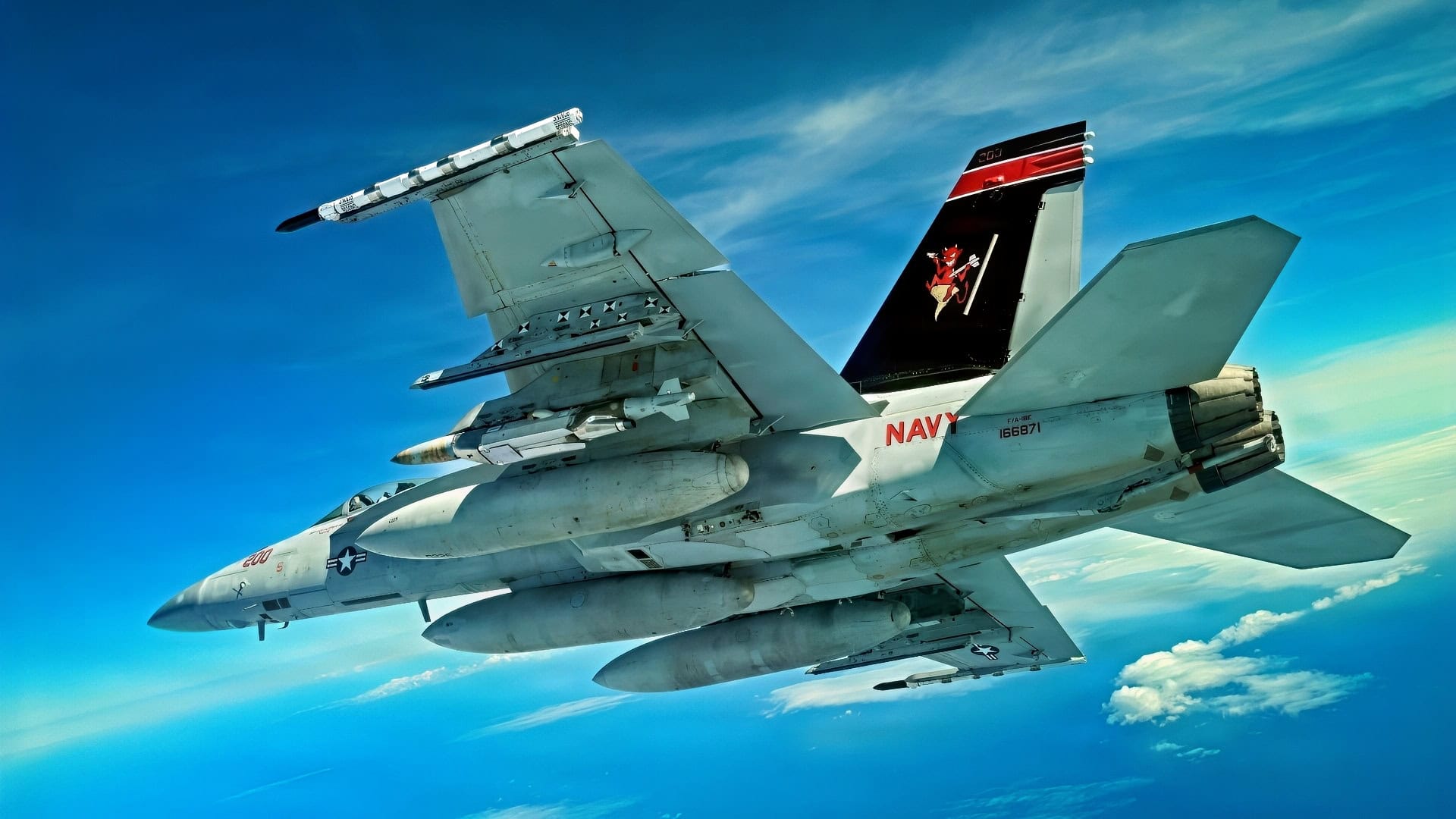
Earlier this month, the U.S. Navy successfully tested the JDAM-LR, or Joint Direct Attack Munition – Long Range.
The JDAM-LR is a low-cost precision-guided cruise missile and is a new iteration of the legendary JDAM bomb, but includes the glide-kit (deployable wings) of the JDAM-ER and a new turbojet engine.
The standard JDAM can reach targets as far as 15 miles out, and the JDAM-ER, equipped with pop-out glide wings, can glide up to 45 miles. In contrast, the JDAM-LR missile has a range of up to 350 miles.
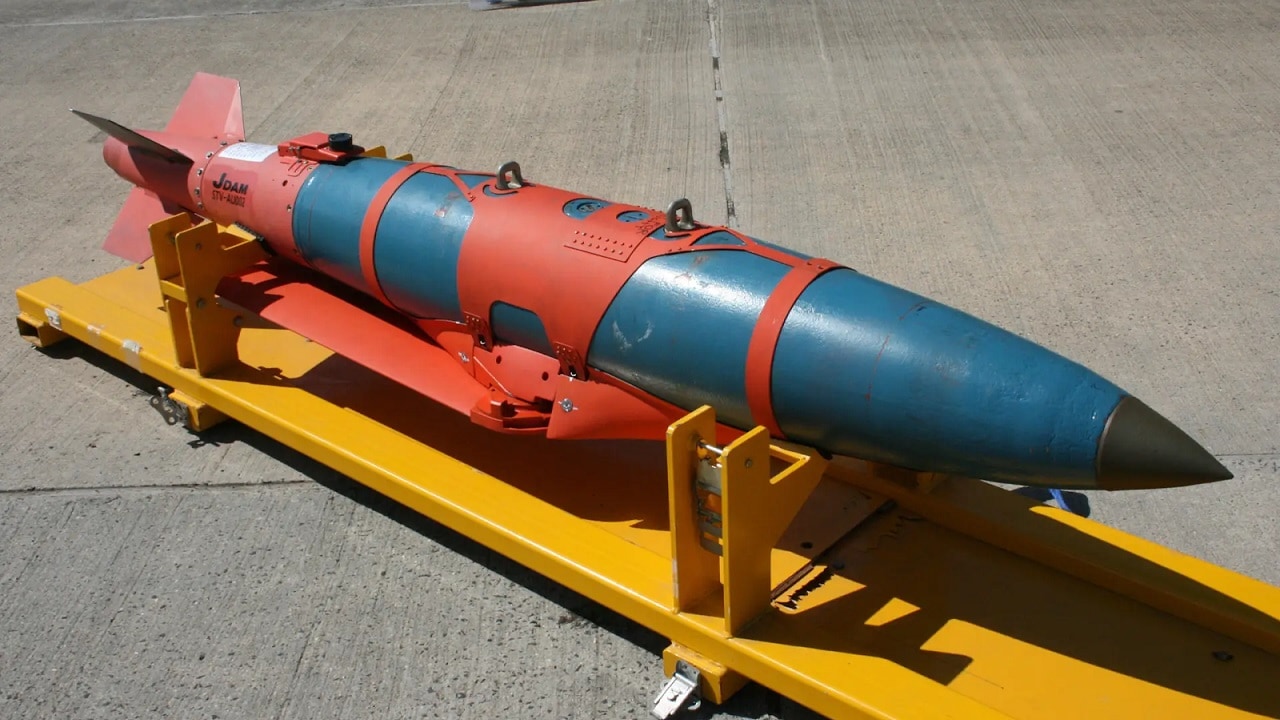
JDAM-ER via Australian Military.
This new iteration also includes onboard power generation, allowing it to have a two-way datalink and advanced new seekers to improve its accuracy – even against moving targets and inside heavily jammed environments.
Further, these new long-range JDAM-LRs can be launched from any aircraft already rated to deploy the JDAM.
JDAM-LR essentially turns the JDAM from a stand-in ordnance into a fully fledged stand-off missile.
The JDAM-LR can be launched from well beyond the reach of enemy air defenses, allowing non-stealth 4th-generation fighters to use these weapons against targets inside contested airspace without fear of being shot down.
The Navy’s testing saw two JDAM-LRs launched from U.S. Navy F/A-18 Super Hornets.
Each weapon traveled over 230 miles under powered flight after successful separation from the fighter using the existing JDAM interface already present on the F/A-18
The JDAM-LR currently comes in two versions.
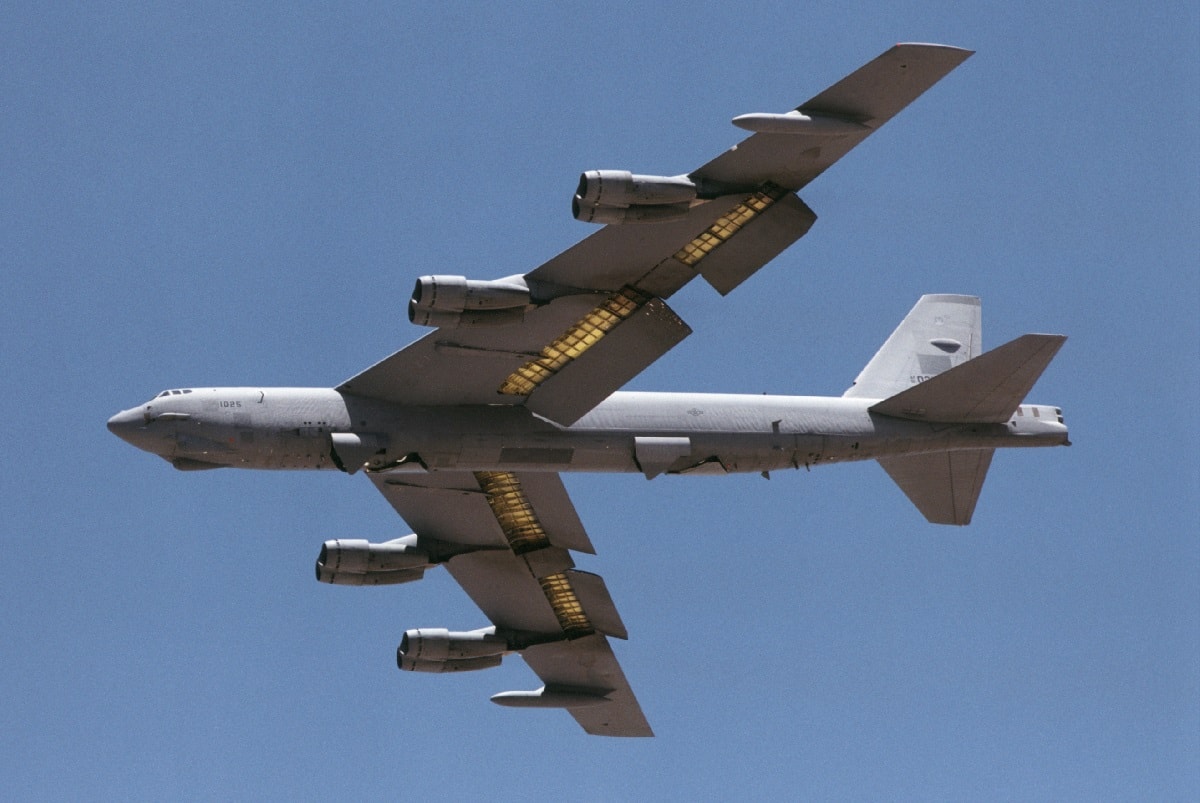
A B-52H, on loan to NASA’s Dryden Flight Research Center, makes a pass down the runway prior to landing at Edwards Air Force Base, California.
The first is a 500-pound-class weapon carrying the Mk-82 general purpose gravity bomb that, under the power of a single TDI-J85 turbojet, can reach targets at more than 300 nautical miles out, or more than 555 kilometers.
The second version is meant to serve as a decoy: It swaps out the explosive payload for a fuel tank and increases the platform’s range to better than 700 nautical miles, or nearly 1,300 kilometers.
But there are also two other forms of JDAM-LR in development that may ultimately have an even bigger impact in conflict zones like the Indo-Pacific: the Quickstrike Long Range (LR) mine and the JDAM-LR Maritime Strike weapon.
The Quickstrike Maritime Mine is effectively a turbojet-powered version of the existing QuickStrike-ER, or extended range, which is a 2,000-pound bomb equipped with a MK57 Target Detecting Device.
The MK57 is a high-tech fuse that senses nearby ships, can differentiate between different types of vessels, and even count the ships that pass by, detonating only under established conditions set before launch.
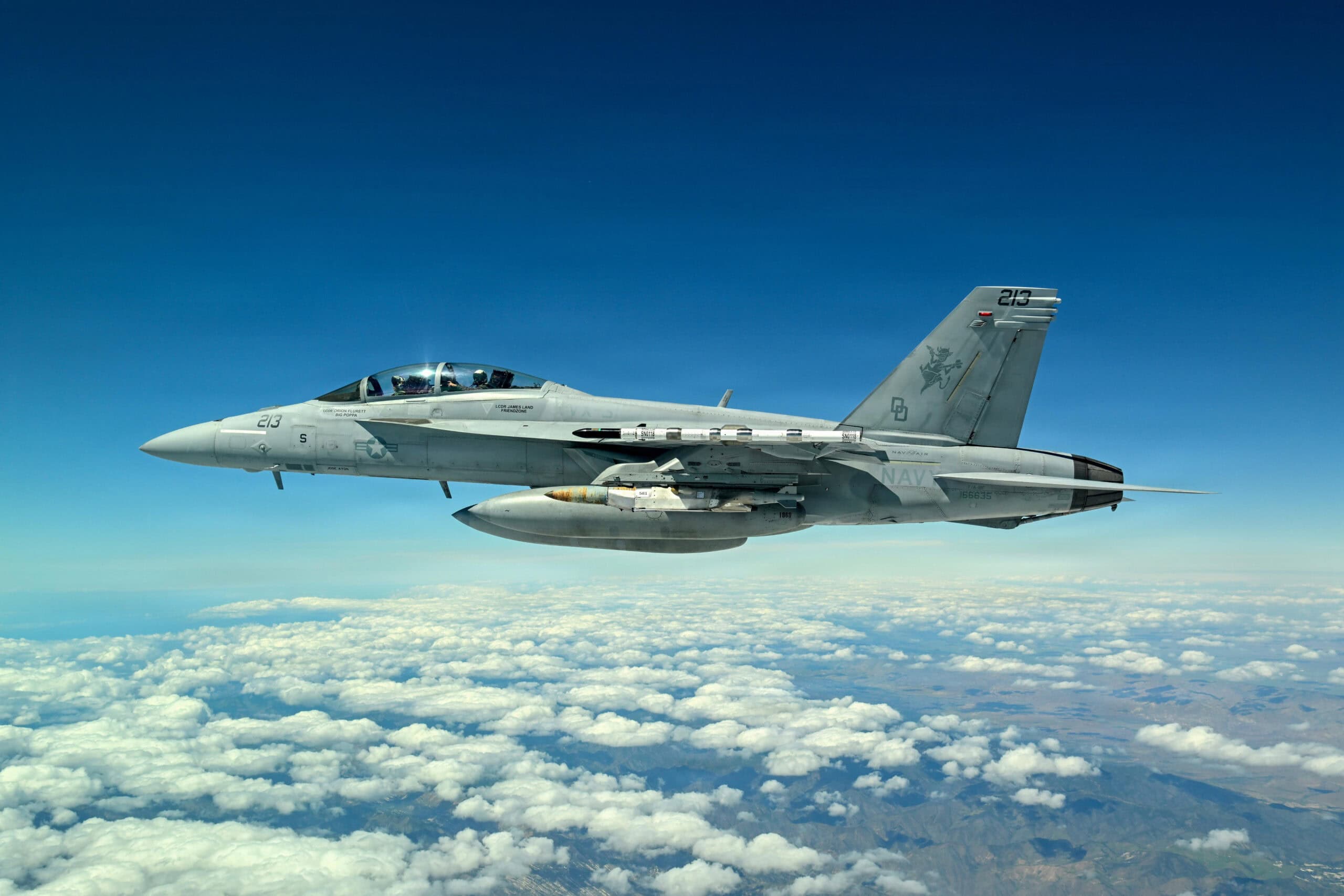
A Navy F/A-18 carries the new Joint Direct Attack Munition (JDAM) Long Range (LR) variant during a test event in early April off the coast of California (U.S. Navy photo/released)
These shallow water mines can already be launched from bombers like the B-52 from more than 40 miles out, but will now be able to cover hundreds of miles on their way to a target area.
On the other hand, details about the JDAM-LR Maritime Strike Weapon are harder to come by, but it seems likely that these weapons are based directly on the Air Force Research Lab’s Quicksink munition, which is a JDAM-based bomb equipped with both a radar seeker and an infrared electro-optical sensor.
The Maritime Strike Weapon can identify enemy warships and then close to the side of their hull just below the waterline, allowing a single bomb to sink even very large ships.
The price point for the new JDAM-LR kit has not been released yet, but it’s estimated that the standard JDAM-LR, with the explosive payload included, will ring in under $200,000 each.
About the Author: Alex Hollings
Alex Hollings is the editor of the Sandboxx blog and a former U.S. Marine that writes about defense policy and technology. He lives with his wife and daughter in Georgia.