As the war in Ukraine enters its fourth year of hostilities, the dynamics on the ground and in the air are shifting. Having traveled to Ukraine on many occasions since the full-scale invasion in 2022, I have witnessed the ebb and flow of the conflict. The war today is markedly different than the war I first reported from the ground in Ukraine’s eastern Donbas region in the spring and summer of 2022.
The Ukraine War in 2026: Where Things Stand
Ukraine’s fortunes have waxed and waned since Russia’s full-scale invasion of Ukraine on February 24th, 2022. In a truly David-versus-Goliath moment for the ages, Ukraine’s defenders managed against all expectations to defend Kyiv and push back Russian forces from Ukraine’s north.
With Russia’s hopes for a quick decapitation of Ukraine’s political leadership in Kyiv, Moscow regrouped and focused on expanding their hold on Ukraine’s eastern Donbas region and captured Mariupol in late May. However, Ukraine launched counteroffensives in the fall and pushed the Russians out of Kharkiv, in the northeast, and Kherson in the south.
But Ukraine’s push against Russia stalled and failed to penetrate much deeper into Russian lines. From the fall of 2022 to early summer the following year, the war’s front line was heavily contested.
Great amounts of men and materiel were hurled by both sides in major urban battles, and Ukraine began targeting Russian logistic hubs and command nodes with the HIMARS system. Bakhmut fell to Russian forces. The second half of 2023 saw Kyiv launch a push toward the south and east, but it largely failed in dislodging deeply entrenched Russian forces.
Russia intensified its attacks in 2024 and 2025 in a grinding and hugely costly push through no-man’s land toward Ukrainian lines, capturing several towns that it had contested for months. Still, Ukraine notched several high-profile successes of its own.
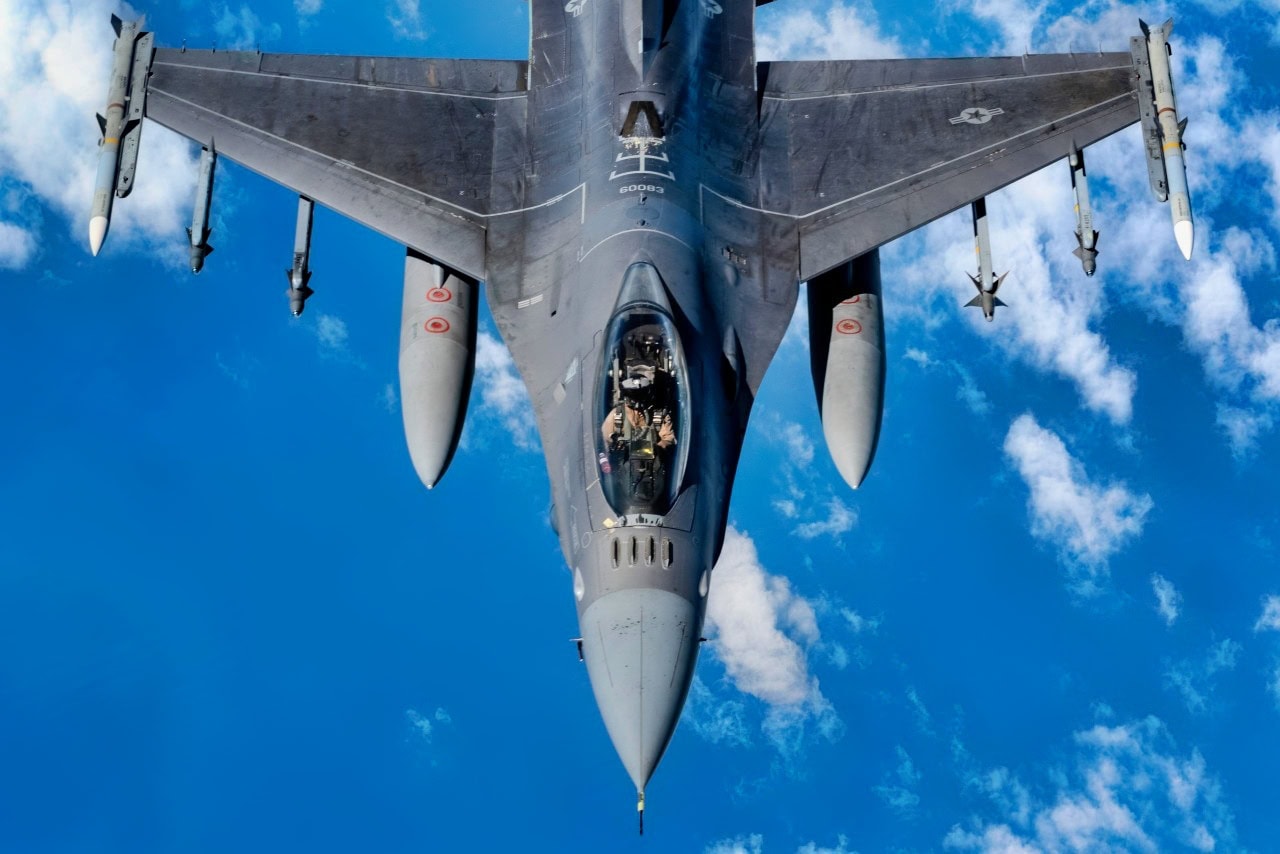
A U.S. Air Force F-16 Fighting Falcon flies a presence patrol over the U.S. Central Command area of responsibility, Feb. 23, 2025. Fighting Falcons fly routine patrols over the AOR to deter aggression and bolster the regional defensive posture. (U.S. Air Force photo by Staff Sgt. Jackson Manske)
Late in 2024, North Korean troops began fighting Ukrainian forces, and the United States gave Kyiv authorization to use long-range weapons to strike deep inside Russia. Unjammable fiberoptic drones made their combat debut.
In June of 2025, the Security Service of Ukraine smuggled explosive-laden FPV drones deep inside Russia, an incredibly intricate operation called Operation Spider Web.
Launched from hidden compartments atop semi trucks, the drones targeted Russian airfields thousands of kilometers from the front. Nearly two dozen of Russia’s long-range strategic bombers were damaged or destroyed in the attack, platforms that had launched long-range cruise missiles at Ukrainian positions and civilian infrastructure with seeming impunity.
The Road Ahead
Fast-forward to today, however, and Ukraine’s position on the battlefield appears to be stronger than it has been for several years. Innovations in drone technology, including FPV quadcopter drones, larger bomber drones, and ground-based vehicles, have become great equalizers for Ukrainian forces.
Ukrainian Foreign Minister Andriy Sybiha detailed the current situation during a meeting with journalists.
“I believe our situation can now be characterized as follows. We are holding the line. Indeed, the battlefield position is the strongest, or most solid, it has been in the past year. Truly the strongest. We have minimized the Russians’ manpower advantage through drone use.”
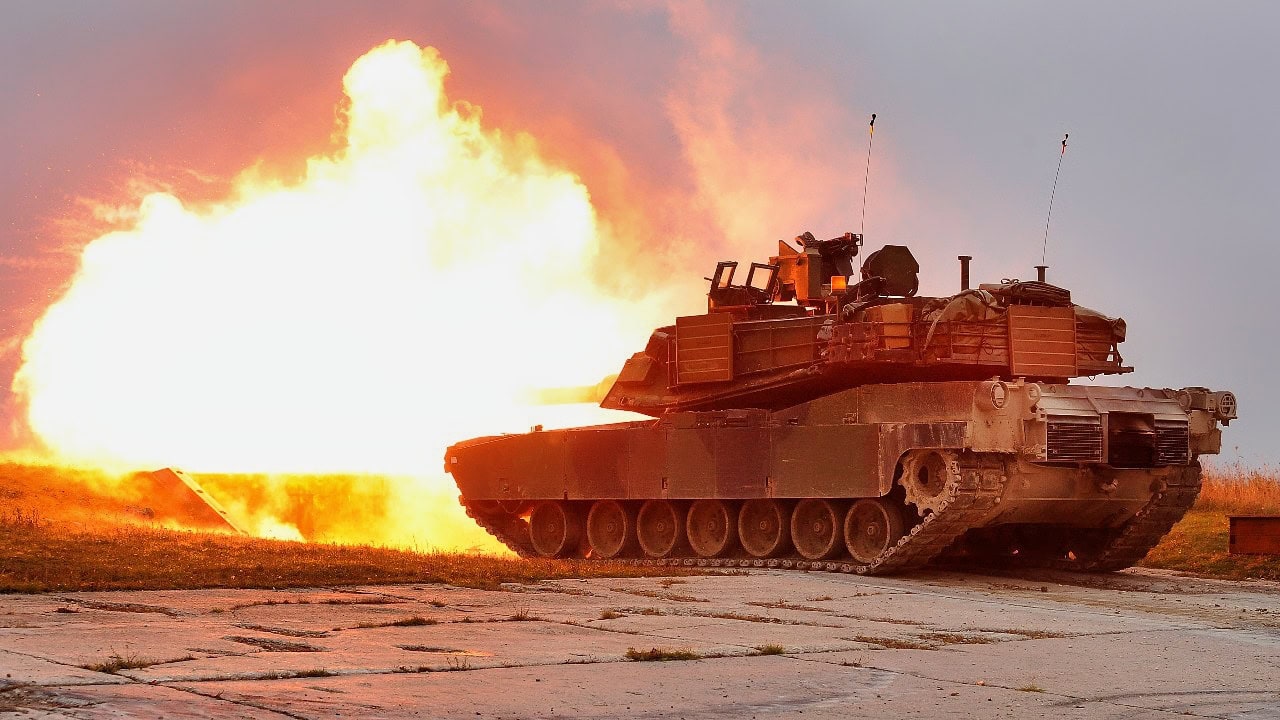
U.S. Soldiers, assigned to the 1st Battalion, 64th Armor Regiment, 1st Armored Brigade Combat Team, 3rd Infantry Division, conduct gunnery with M1A2 Abrams tanks during exercise Combined Resolve V at 7th Army Joint Multinational Training Command in Grafenwoehr, Germany, Oct. 8, 2015. Combined Resolve is designed to exercise the U.S. Army’s regionally aligned force to the U.S. European Command area of responsibility with multinational training at all echelons. Approximately 4,600 participants from 13 NATO and European partner nations will participate. The exercise involves around 2,000 U.S. troops and 2,600 NATO and Partner for Peace nations. Combined Resolve is a preplanned exercise that does not fall under Operation Atlantic Resolve. This exercise will train participants to function together in a joint, multinational and integrated environment and train U.S. rotational forces to be more flexible, agile and to better operate alongside our NATO Allies. (U.S. Army photo by Visual Information Specialist Gertrud Zach/released)
Minister Sybiha explained that what he termed “closing the sky” has proved crucial to Ukraine’s recent battlefield successes. According to him, Ukrainian forces can eliminate up to 90 percent of drones launched by Russia, which he called “our new geopolitical strength.” Ukraine’s prowess in the air is also reflected in international interest in its anti-drone and electronic warfare technology, particularly in the Middle East.
The third element of the current situation is asymmetric actions against the enemy, Sybiha added. “Asymmetry in thinking, asymmetry in building tactics, in developing technologies,” the minister said.
“And I also assure you, when certain other decisions are made, we have a clear command of the figures and Russian arithmetic,” Sybiha said.
A Positive Ukrainian Trend
Ukraine’s position today appears to be better than had been anticipated even just several months ago. Following the beginning of winter, the frontline, like the ground it is dug into, solidified. And while Russia attempted to prosecute assaults against entrenched Ukrainian positions, as hints of spring began, those assaults were not very successful.
Russia has experienced difficulties in building out its reserve forces, let alone expanding the number of non-reserve soldiers it would like to. The Ukrainian armed forces have achieved substantial successes, inflicting enormous losses on Russia.
Though absolute numbers are difficult to peg with complete accuracy, Russia has been forced to contend with monthly losses of up to 35,000, effectively keeping the total number of men-at-arms constant.
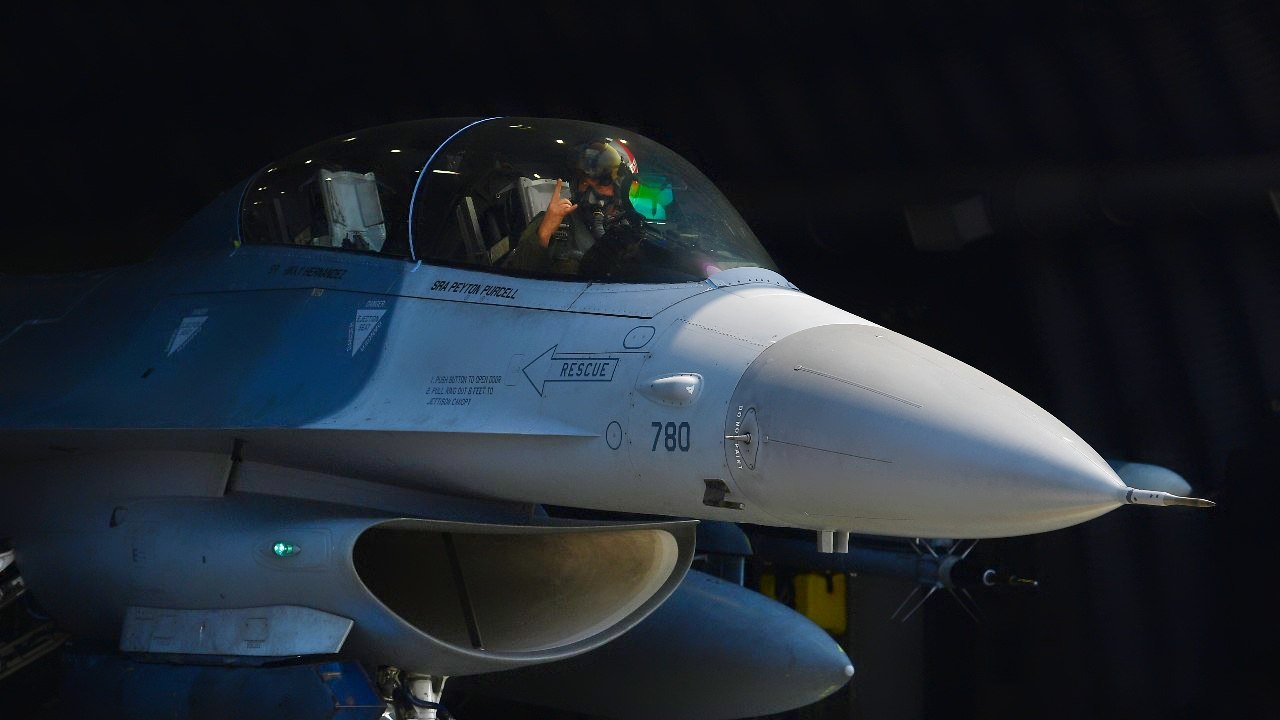
Capt. Michael Terry, 36th Fighter Squadron F-16 pilot, prepares to launch at Osan Air Base, Republic of Korea, July 9, 2020. The 36th Aircraft Maintenance Unit and the flight line operators wokred to make this aircraft mission-capable after being grounded for 186 days. (U.S. Air Force photo by Senior Airman Noah Sudolcan)
During 2025, the engagement zone — an area perhaps 15 to 25 kilometers from the front line was hotly contested.
While Ukraine initially had an edge in contesting that area, as the year progresses, Russia was able to implement some of the innovations in drone technology that Ukraine initially pioneered — Ukrainian innovation cycles are generally faster than Russia’s, but Russia’s ability to identify technology advantages and implement those advantages at scale is one of its strengths.
By the end of the year, the two sides’ contestation of the engagement zone was broadly speaking comparable. And while Russia reached rough parity in the air, it struggled to exploit this new equilibrium. Russian tactics have relied heavily on small groups of soldiers, sometimes as small as two men, to find Ukrainian positions and infiltrate the Ukrainian side of the engagement zone opposite Russian positions — essentially small probing thrusts to locate and exploit weakly defended points.
In a recent episode of War on the Rocks, a podcast, Michael Kofman, one of the leading analysts of the war in Ukraine, explained that these tactics have shifted the shape of the war. Now, the war is “about the drone units of one side, their fire support, their artillery, but particularly their drone units, being able to displace the drone units of the other side.”
Furthermore, once drone units of one side can be suppressed, the other side is able to “displace them to push out that support, then the line shifts because there is no line. There’s just a gray zone between the two sides.”
Estimates of the grey zone no-man’s land separating the two sides are both very ephemeral and shift constantly. Though open-source tracking websites like DeepState Map collate photos and videos of the conflict, as well as satellite imagery to establish Ukrainian and Russian areas of control, those tightly drawn borders may differ considerably from other estimates.
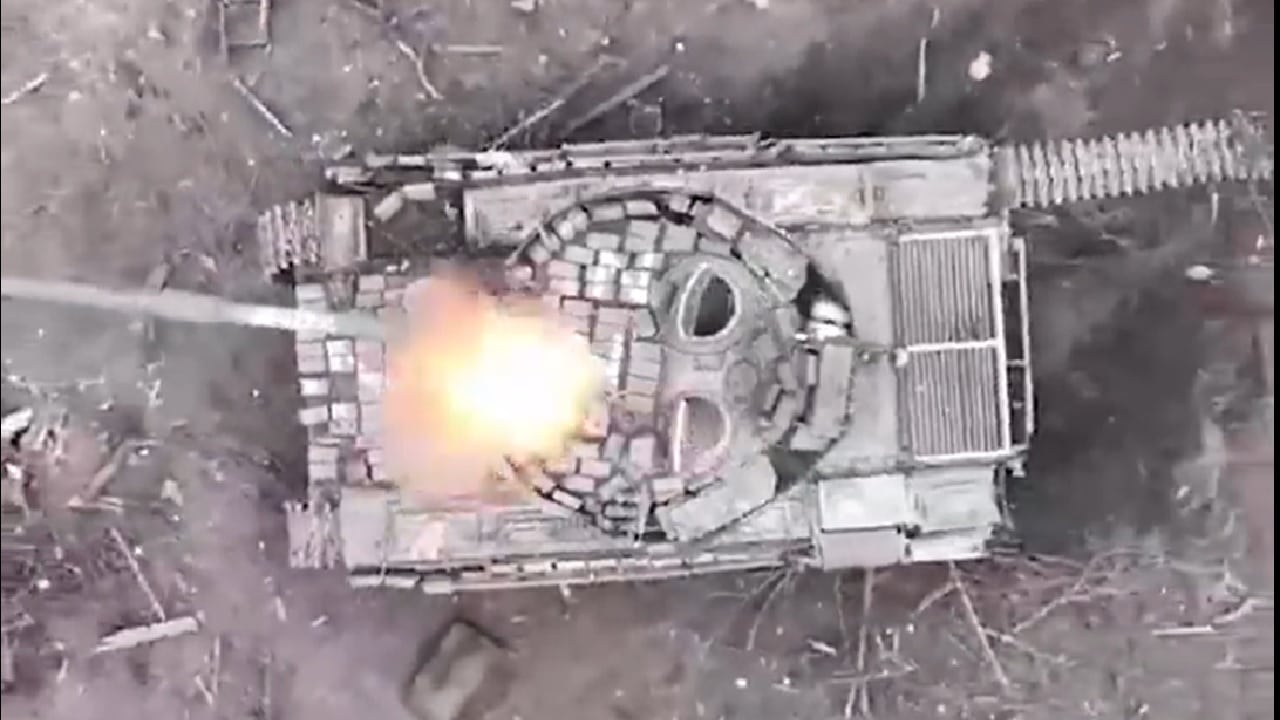
T-72 Attacked by Ukraine. Image Credit: Social Media Screenshot.
Missile Defense
The momentum of the war in Ukraine shifted, however, from the grey-zone front line to the air war. The biggest challenge Ukraine has been forced to contend with is Russia’s ability to prosecute long-range strikes with one-way kamikaze attack drones like the Geran-2, a variant of Iran’s Shahed family of drones. In some months, up to 6,500 of these drones are launched in Ukrainian cities and towns. Though the majority are shot down by Ukrainian forces, they serve to deplete Ukrainian air defense abilities by saturating the skies with inexpensive mass-produced munitions.
But they are relatively easy to shoot down. Arguably, the more significant challenge facing Ukraine is Russian ballistic missiles. These higher-end weapons cannot so easily be shot down. Ukraine is forced to use its PAC-3 air defense interceptors to shoot down Russian missiles — interceptors supplied by the United States and produced in only small numbers each year.
Forced by wartime necessity, Ukraine has adapted and is relatively effective at shooting down both slow-moving drones and ballistic missiles by improving the intercept probabilities of individual PAC-3 interceptors. But both types of Russian weapons, when used in tandem, form a difficult target set, especially when coordinated to strike targets simultaneously from a variety of trajectories, angles, and altitudes.
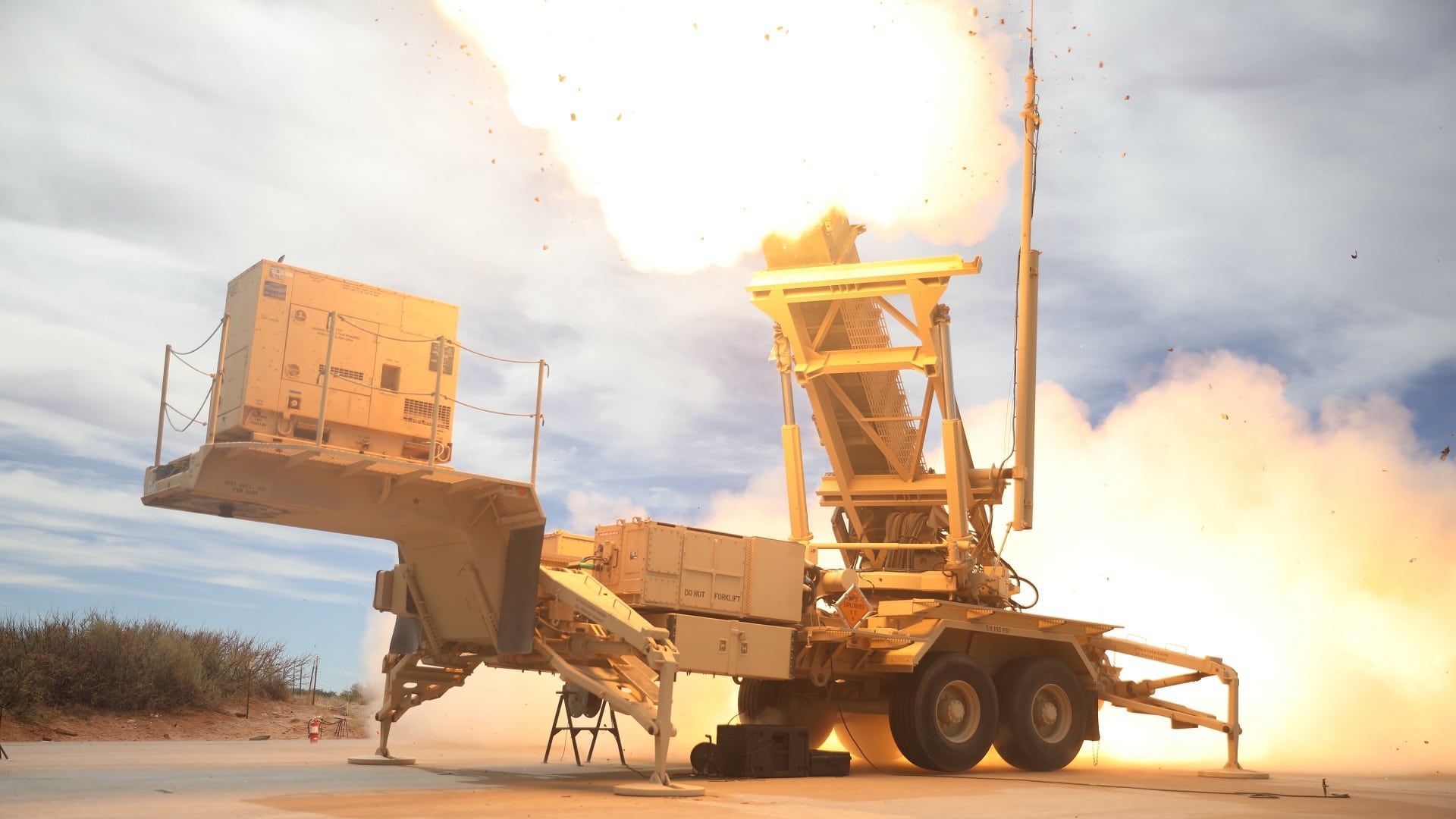
Soldiers from 69th Air Defense Artillery Brigade conducted Patriot Missile live fire training, November 5, at McGregor Range Complex on Fort Bliss. The live fire exercise was conducted jointly with Air Defense counterparts from the Japanese Self-Defense Force. (U.S. Army Photo by Staff Sgt. Ian Vega-Cerezo)
Still, Ukraine is arguably the world leader in air defense, with perhaps the most sophisticated air defense command-and-control network. Other countries have taken notice — particularly those in the Middle East facing down a broadly similar engagement strategy by Iran.
The Iran Connection
Facing barrages of Iranian cruise missiles and one-way attack drones — the latter of which are, in essence, precisely the kinds of weaponry Ukraine has defended against for over four years — Saudi Arabia, Qatar, and the United Arab Emirates have sought to expedite the transfer of Ukrainian know-how. “Not just interceptors alone, but also defense lines, software, electronic warfare systems, and so on.
In other words, we are taking a systemic approach to this,” President Zelenskyy said in a WhatsApp group chat with journalists.
The deal includes not just aerial drones, but Ukraine’s maritime drones that Ukraine has developed and leveraged to target Russian warships and maritime infrastructure in and around the Black Sea. “We shared our experience with the Black Sea corridor and how it operates. They [Saudi Arabia, Qatar, the United Arab Emirates] understand that our Armed Forces have been highly effective in unblocking the Black Sea corridor. We are sharing these details.” The agreements with the Middle Eastern partners cover a 10-year period.
Into the Future
Though time is probably not on Russia’s side, the influx of oil money into its coffers, thanks to the temporary lifting of sanctions on Russian oil due to the war in Iran, complicates the equation. Still, Ukraine has enjoyed marked success in targeting Russian energy refining and export infrastructure.
There are many open questions at the moment — what effect will the war in Iran have on global energy prices in the medium and short term? How will this change Russian budgetary decisions?
Will Ukraine be able to source air defense interceptors in sufficient quantities, particularly now that the Gulf countries also have an acute need for them? For now, at least, we watch and wait.
About the Author: Caleb Larson
Caleb Larson is an American multiformat journalist based in Berlin, Germany. His work covers the intersection of conflict and society, focusing on American foreign policy and European security. He has reported from Germany, Russia, and the United States. Most recently, he covered the war in Ukraine, reporting extensively on the war’s shifting battle lines in Donbas and writing about its civilian and humanitarian toll. Previously, he worked as a Defense Reporter for POLITICO Europe. You can follow his latest work on X.