
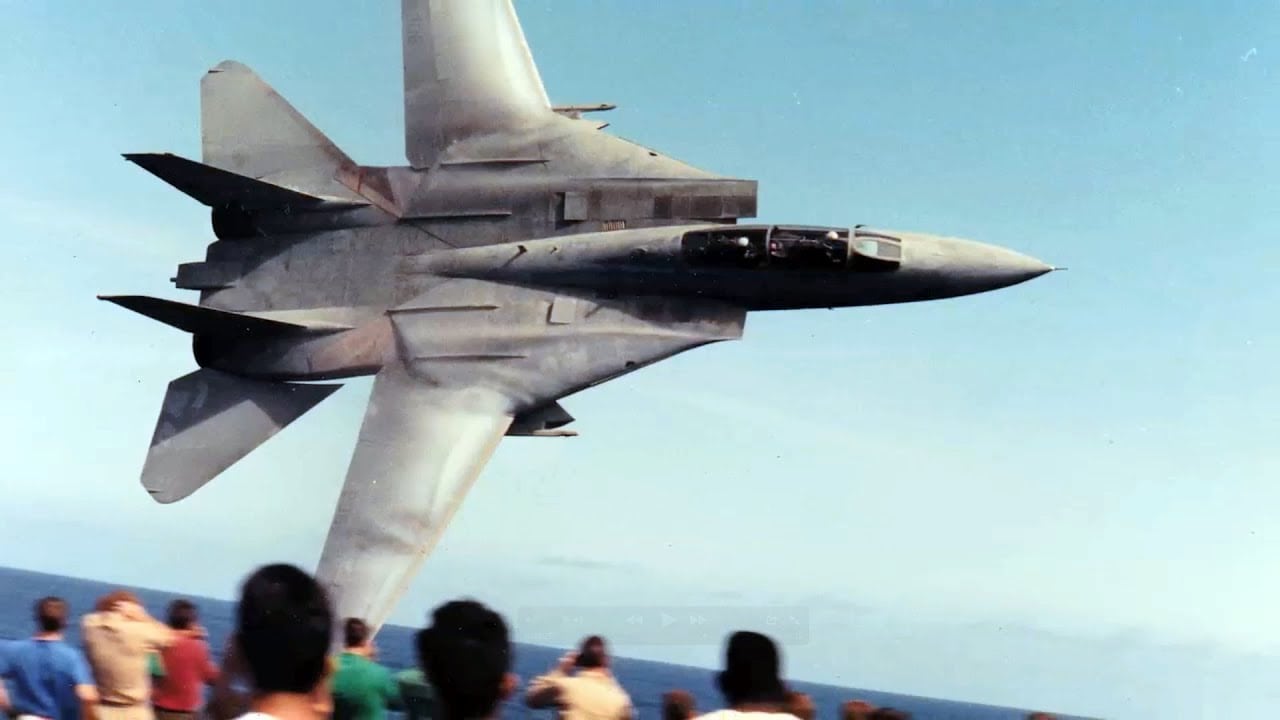
Key Points and Summary: By 1968, United States Navy fighter pilots flying F-4 Phantom II aircraft over North Vietnam had seen their kill ratio against Soviet-trained North Vietnamese pilots deteriorate from approximately 2-to-1 at the beginning of the war to 10 American aircraft lost versus 9 enemy aircraft downed.
-In response, the United States Navy established the U.S. Navy Fighter Weapons School — now officially designated the U.S. Navy Strike Fighter Tactics Instructor Program and popularly known as TOPGUN — which between 1970 and 1973 pushed Navy pilot kill ratios to 12.5-to-1 by teaching a specific psychological framework developed by U.S. Air Force Colonel John Boyd called the OODA Loop.
The TOPGUN Story the Top Gun Movies Missed
We’ve all sat mesmerized during the aerial sequences of “Top Gun” and “Top Gun: Maverick,” and they have been outstanding recruiting tools for the Navy, as well as some great, if flawed, entertainment.
As James Albright wrote, “If your knowledge of the U.S. Navy Fighter Weapons School comes from the 1986 film “Top Gun,” you should begin this article with the thought that very little in that movie resembles the reality of what is now called the U.S. Navy Strike Fighter Tactics Instructor Program.”
So, how do Topgun instructors train to ”slow down” time during dogfights? The simple answer is training, training, and more training.
Using The OODA Loop To Process Information Quickly:
Top Gun instructors “slow down time” during high-speed dogfights by mastering situational awareness (SA) through the OODA loop (Observe, Orient, Decide, Act), allowing them to process information faster than their opponents.
This mental framework, combined with intensive visual scanning techniques and deep experiential training, makes the chaotic environment feel methodical, allowing experienced pilots to stay ahead of the aircraft and the adversary.
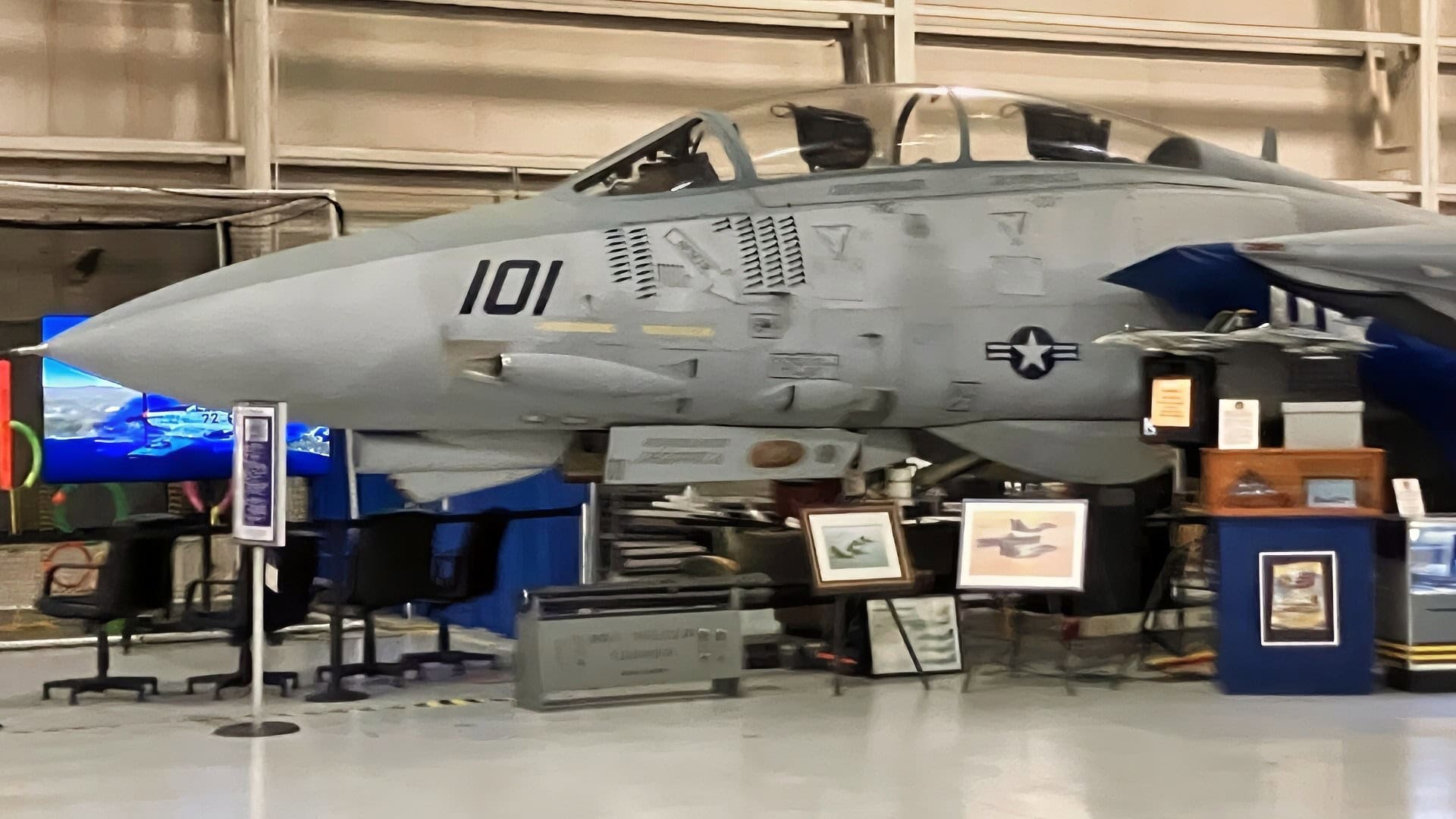
Aviation Museum of Kentucky F-14 Tomcat. Image Credit: 19FortyFive author Christian D. Orr. Taken on March 1, 2026.

Aviation Museum of Kentucky F-14 Tomcat. Image Taken on March 1, 2026, by Christian D. Orr.
Developed by Col. John Boyd, this involves constantly scanning, processing, and reacting. By being faster at orienting (processing the situation), a pilot can disrupt the adversary’s loop, making the dogfight feel slower to themselves while overwhelming the enemy.
“If one is able to ‘turn inside’ the opponent’s decision cycle, especially through superior situational awareness, the thinking goes, one can force the opponent to re-observe, reorient, re-decide, and react, capturing the initiative and driving the action.”
Structured Visual Scanning:
Pilots are trained to break their gaze into “stages” or “clicks,” taking in specific, deliberate snapshots of the environment, rather than a fluid, chaotic look. This systematic scan helps in efficiently detecting enemy positions and movements.
Structured visual scanning for pilots is a methodical “block” system that divides the windshield into segments, focusing on each for 1–2 seconds to detect traffic.
Effective techniques include side-to-side or center-to-side scanning, broken by instrument checks, which prevent empty-field myopia and ensure collision avoidance.
Instructors train using anticipation and experience. Instructors train to recognize patterns in maneuver dynamics (turn rates and radii) and predict their opponent’s next move before it happens, essentially giving them more time to react.
Best Technique For Scanning Enemy Fighters:
John Chesire, a former F-14 Tomcat pilot, wrote on Quora: “The best technique a pilot can use in searching for enemy aircraft is the object of considerable dispute.
“Some schools teach that the sky should be divided into many small segments, say 30° by 30° sectors, and each sector should be searched thoroughly for several seconds to ensure it is clear of targets before shifting to the next sector, and so on.
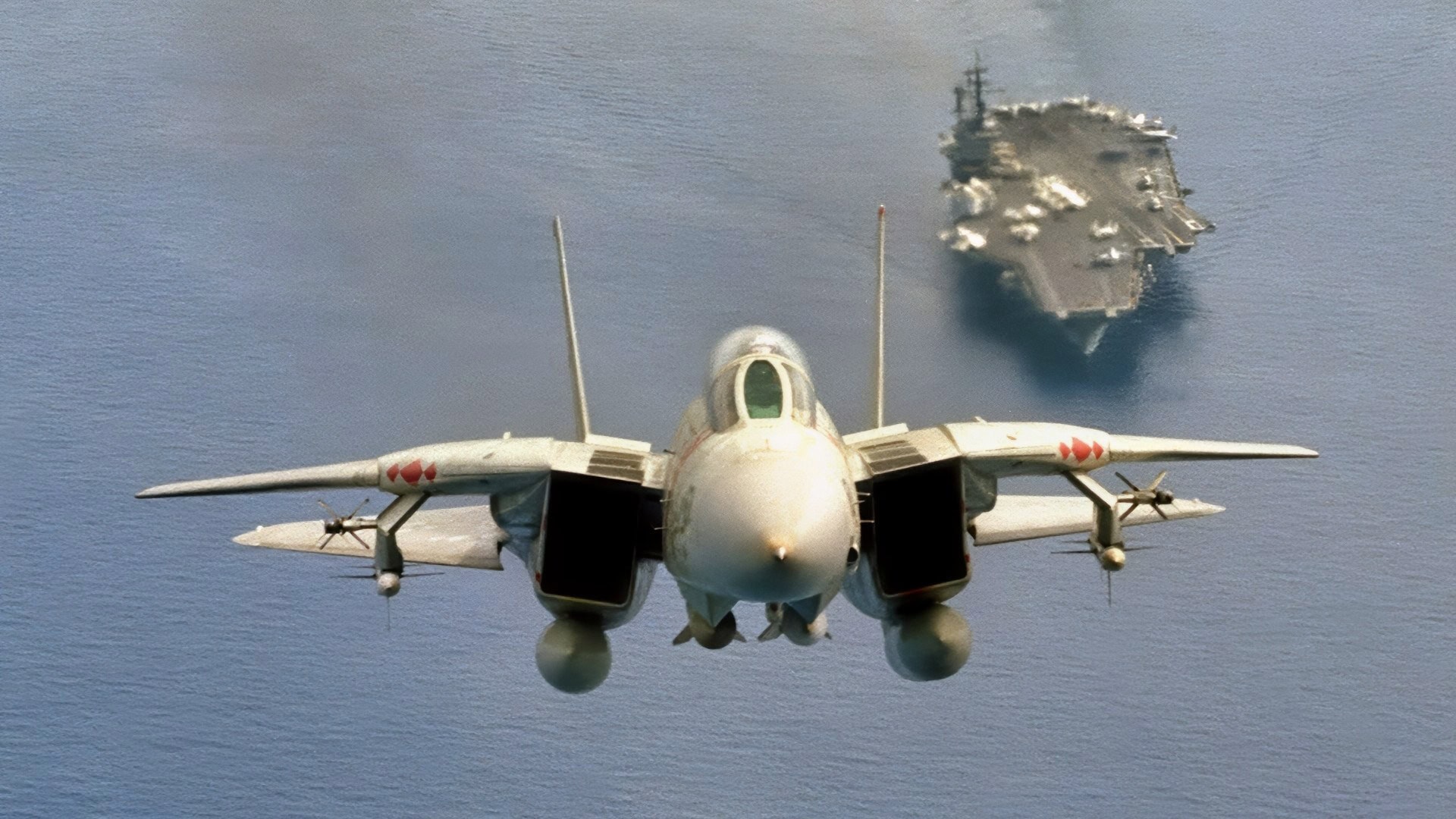
F-14 Tomcat Flying Near Aircraft Carrier. Image Credit: Creative Commons.
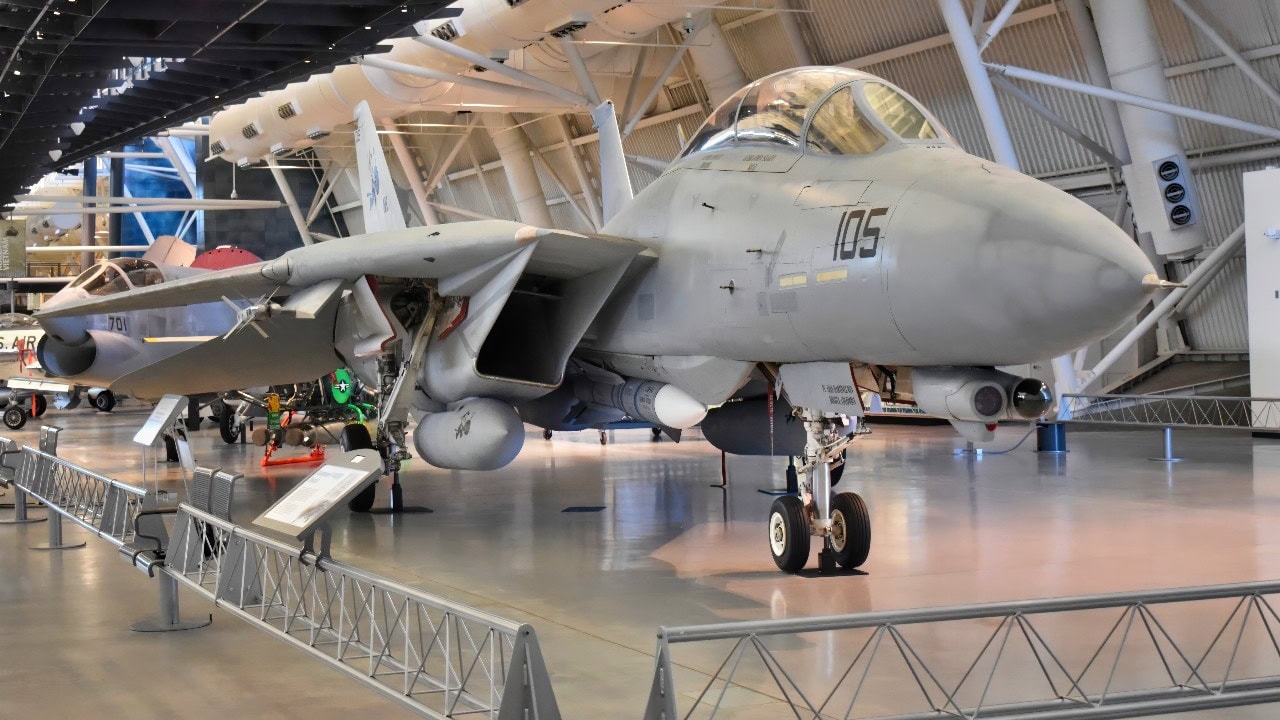
F-14 Tomcat. Image by 19FortyFive.com
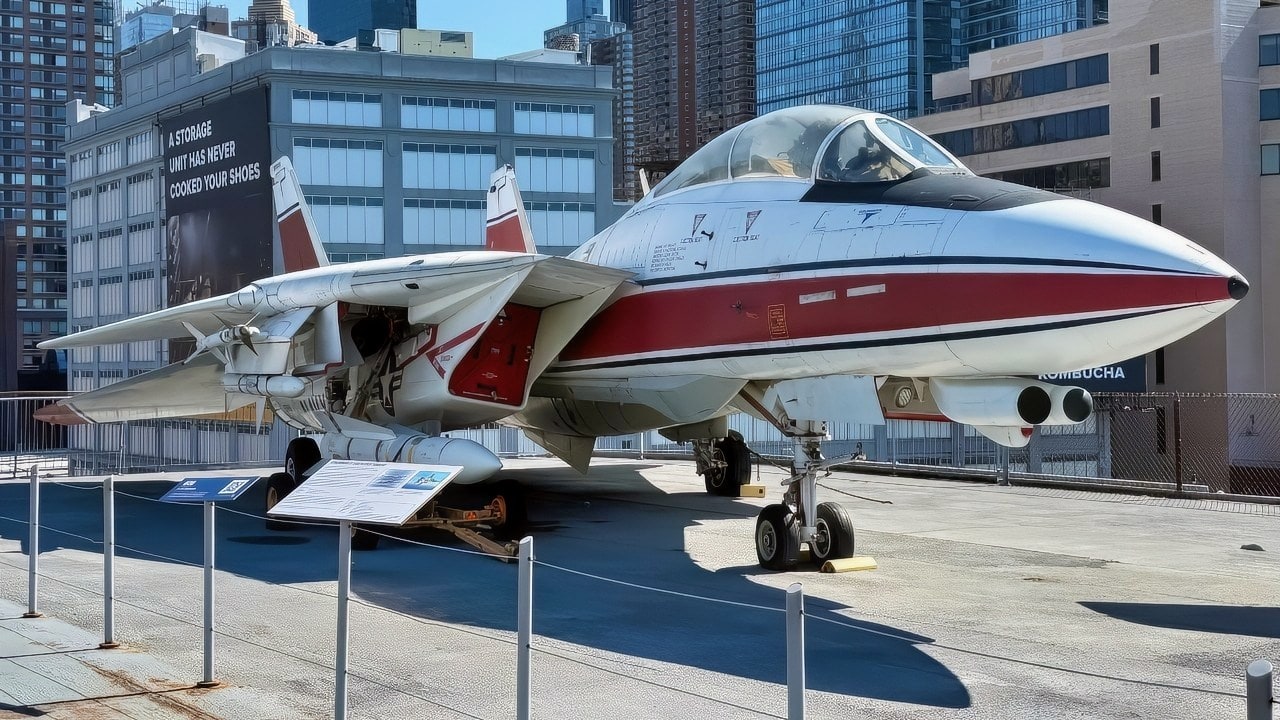
F-14 Tomcat Fighter in USS Intrepid Deck. Image taken late on 2025 by Jack Buckby for 19FortyFive. All Rights Reserved.
“Other schools suggest that the eyes should be moved constantly, never being allowed to stop unless something requires closer investigation. As might be anticipated, each of these techniques has strong and weak points.”
“The brain cannot interpret visual images when the eyes are moving. When a person quickly scans a wide area, the eyes actually move in many small jerks, pausing repeatedly for a fraction of a second to allow the brain to interpret what is seen.
“In order to search a sector as thoroughly as possible, the eyes must be focused at the proper distance. Unfortunately, the eye does not provide us with a reliable indication of focal distance.
“This distance can only be determined by estimating the range to an object in focus. When the eyes have nothing to focus on, as when a person stares into the blue sky, they tend to focus at just a few feet away.
“This focal range is often closer to the canopy than to the bogey, so spots, smudges, and scratches on this surface tend to attract the focus of the eyes.”
Principles Of Deliberate Practice in Top Gun:
The Navy selected its best pilots to serve as Top Gun trainers. These pilots would play the role of the enemy North Vietnamese pilots and engage the students in air-to-air “combat.”
The trainers, known as the Red Force, flew fighter planes similar to MiGs and used the same Soviet tactics the North Vietnamese pilots had learned.
They were, for all practical purposes, top-notch North Vietnamese fighter pilots, with one exception: their aircraft were equipped with cameras to record each encounter. The dogfights were also tracked and recorded by radar.
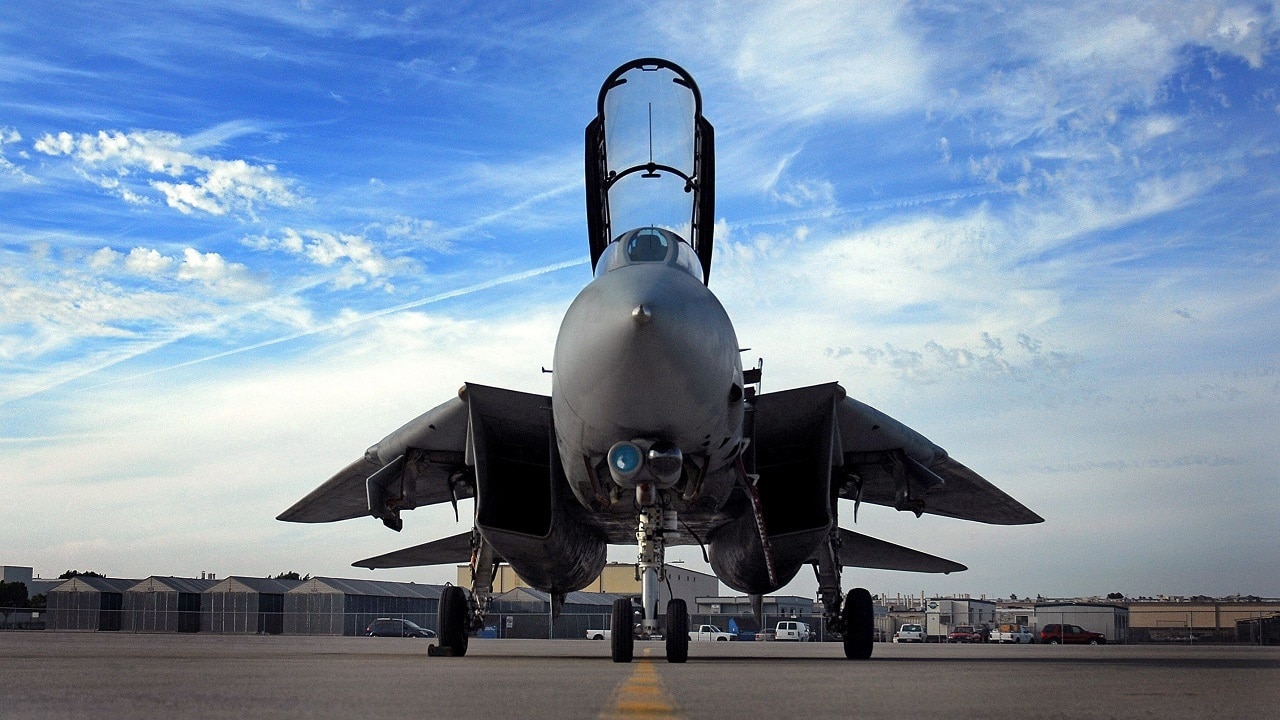
A U.S. Navy F-14D Tomcat aircraft from Fighter Squadron 31, sits on the flight line after completing its final flight at Naval Base North Island, San Diego, Calif., on Sept. 29, 2006. After 36 years of service, the Tomcat is being replaced by the F/A-18E/F Super Hornet aircraft.
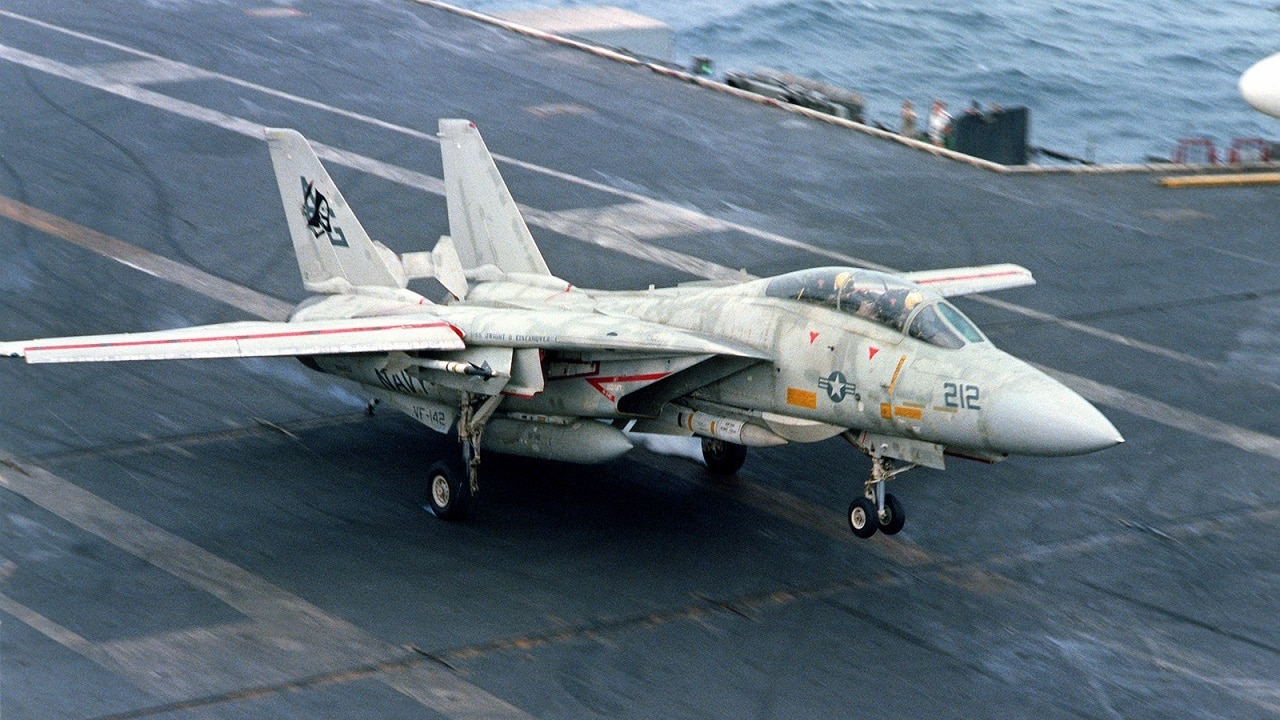
An F-14 Tomcat aircraft makes an arrested landing on the flight deck of the nuclear-powered aircraft carrier USS DWIGHT D. EISENHOWER (CVN-69). The F-14 is assigned to Fighter Squadron 142 (VF-142).
Debriefing Mentality = Lessons Learned:
The most important part of the training flights was the post-mission debriefing sessions. These frequently lasted longer than the flights themselves.
Intensive, brutally honest post-flight debriefs analyze every split-second decision, burning the correct responses into the pilot’s brain for future engagements.
The film and radar reports allowed pilots to watch the dogfights unfold from a higher perspective. Both the instructors and the student pilots would provide input into what they saw and why they acted as they did.
The Value of the Navy’s Topgun Program:
Early in the war, the Navy’s fighter pilots beat Soviet-trained North Vietnamese pilots about two-thirds of the time. But by 1968, that all changed. In fact, the North Vietnamese (and sometimes Soviet) pilots shot down 10 American aircraft while losing nine. The air war was paused in 1969 due to political agreements.
Those losses, however, were unacceptable, so the Navy established the U.S. Navy Fighter Weapons School, better known as Top Gun.
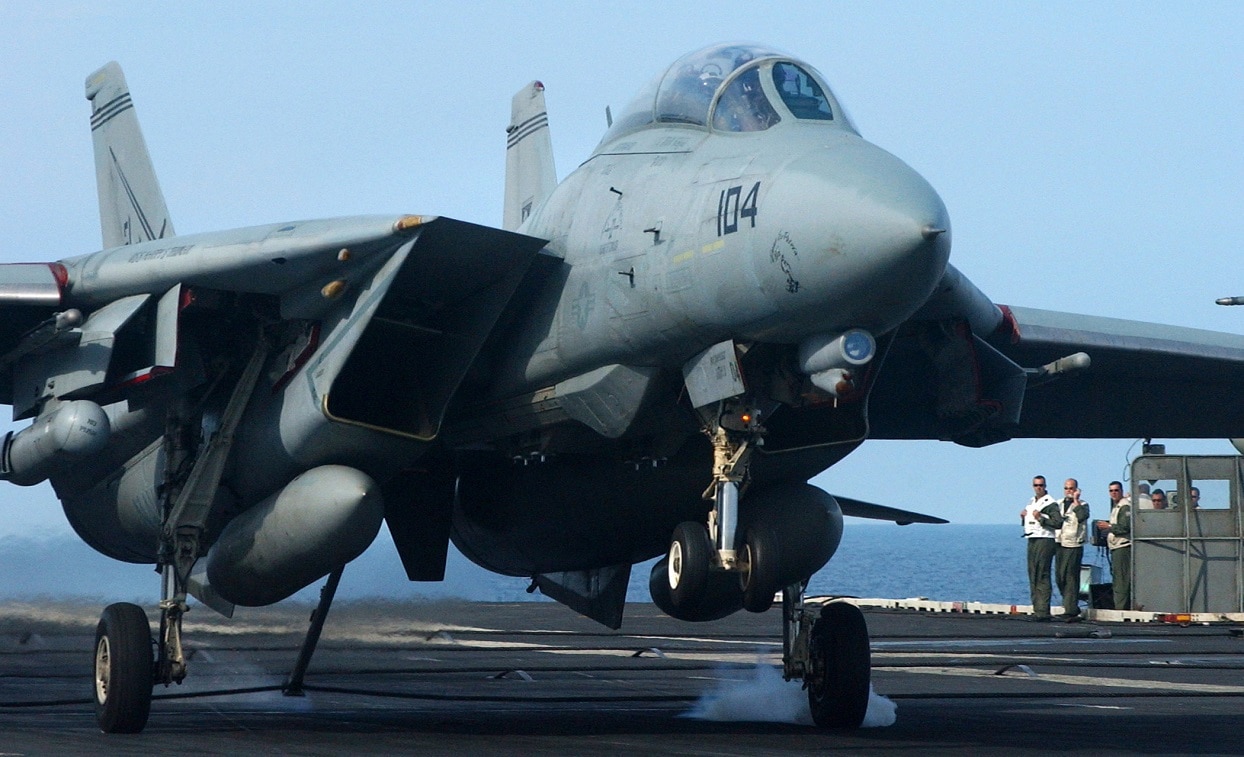
F-14 Tomcat landing. Image Credit: US Navy.
After the Navy started the Topgun program, from 1970 to 1973, U.S. Navy pilots shot down an average of 12.5 North Vietnamese fighter planes for every U.S. Navy plane that was lost.
At the same time, air force pilots had approximately the same two-to-one ratio as before the bombing halt in 1969.
About the Author: Steve Balestrieri
Steve Balestrieri is a National Security Columnist. He served as a US Army Special Forces NCO and Warrant Officer. In addition to writing on defense, he covers the NFL for PatsFans.com and is a member of the Pro Football Writers of America (PFWA). His work was regularly featured in many military publications.