
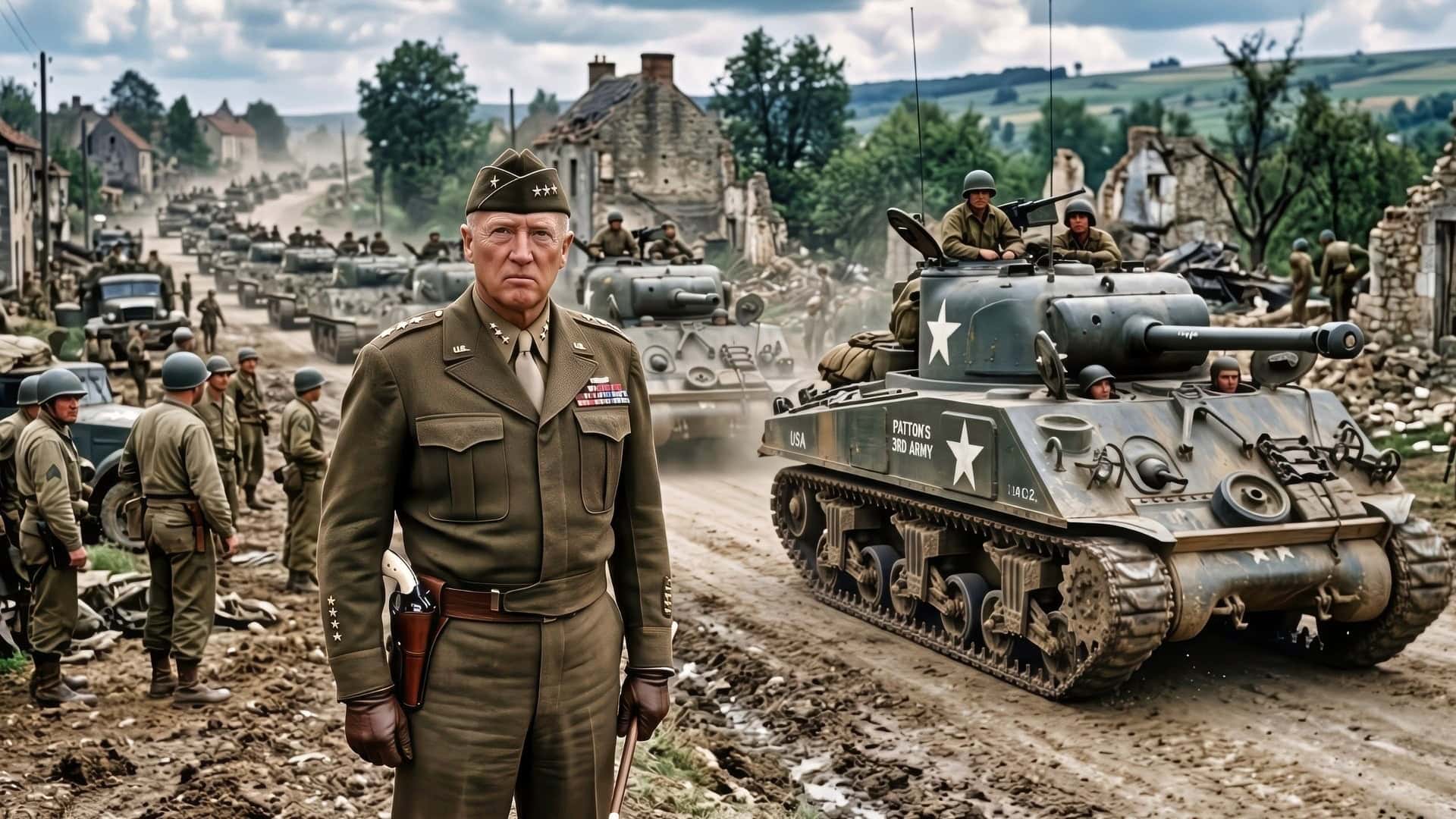
A Good Plan, Violently Executed Now, Is Better Than A Perfect Plan Next Week – General George Patton
General George Patton was an outstanding combat leader, rising from a lieutenant in Mexico during the Punitive Expedition to chase Pancho Villa, to commanding a battalion of the new armored forces in World War I, to commanding the Third Army in Europe during World War II.
Army Quote of the Day By Patton: A True U.S. Army Legend
Patton was arguably the finest combat commander that the United States ever produced. He was adamantly against defensive warfare, believing that wars are won by relentless aggression, speed, and audacity, frequently quoting Frederick the Great, with the phrase “L’audace, l’audace, toujours l’audace” (Audacity, audacity, always audacity).
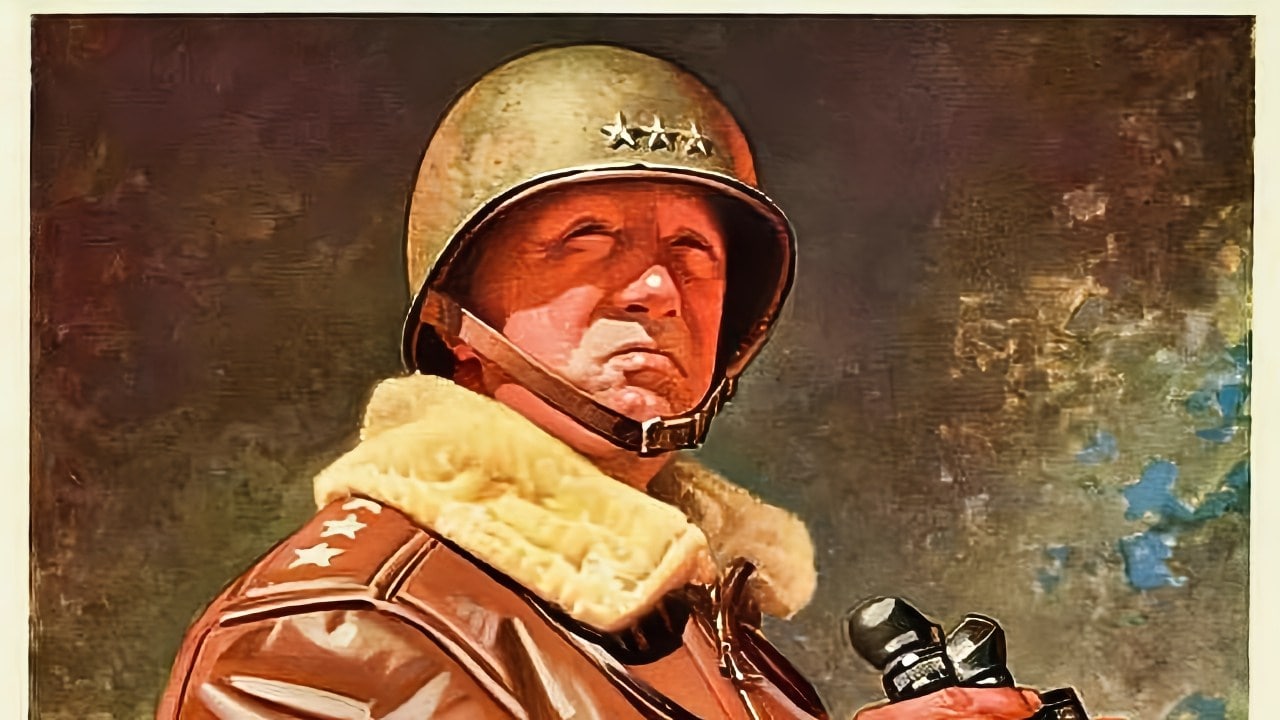
General George Patton. Image Credit: Creative Commons.
Patton saw himself as a student of history, often invoking Frederick’s relentless, offensive mindset regarding discipline and speed to motivate his troops.
Patton grew up in a military family, where his ancestors fought in the American Revolution and for the Confederacy during the Civil War. He believed in reincarnation and wrote poetry. Although in public, he often delivered intense, profane, and charismatic extemporaneous speeches designed to instill aggression, confidence, and a “killer instinct”.
What Was Patton’s Meaning Of the Quote?
Patton’s philosophy was rooted in his cavalry upbringing in the Army. Patton insisted on speed, the violence of action, and aggression to keep the enemy off balance. Patton’s military philosophy revolved around the conviction that wars are won by offensive attacks, not by defense.
He was looking to break through the enemy’s lines and exploit gaps before the enemy could react. Speed, initiative, and bravery in the face of the enemy were the only sure path to victory.
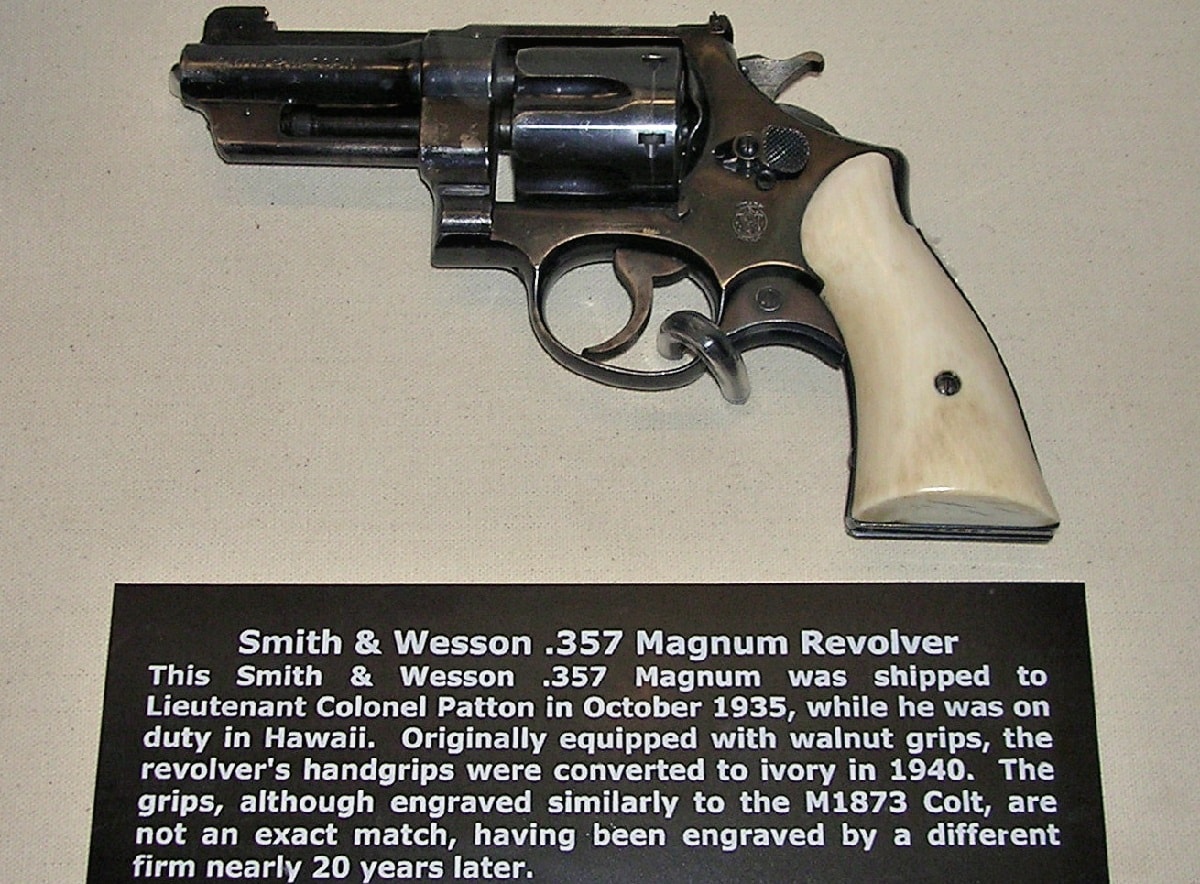
Patton’s well-known custom ivory-handled revolver.
This philosophy contrasted with British Field Marshall Montgomery, who favored a set-piece” battle, ensuring his forces were fully prepared, supplied, and secured before attacking to minimize casualties.
“No Form Of Defense Is Worth A Damn”
Patton espoused the offensive and considered fixed defenses a folly.
“No form of defense is worth a damn.” Surveying history, as well as the tactics of the contemporary Germans, proved, he said, “that people who build walls or ditches or pillboxes, or think that the ocean can defend them are gullible fools.”
Before the Third Army’s activation in France, Patton told his officers and soldiers they would be in constant motion.
“I don’t want to get any messages saying, ‘I am holding my position!’ We’re not holding anything. Let the Hun do that. We are advancing constantly and are not interested in holding onto anything, except the enemy. We’re going to hold him by the nose, and we’re going to kick him in the ass. We’re going to kick the hell out of him all the time.”
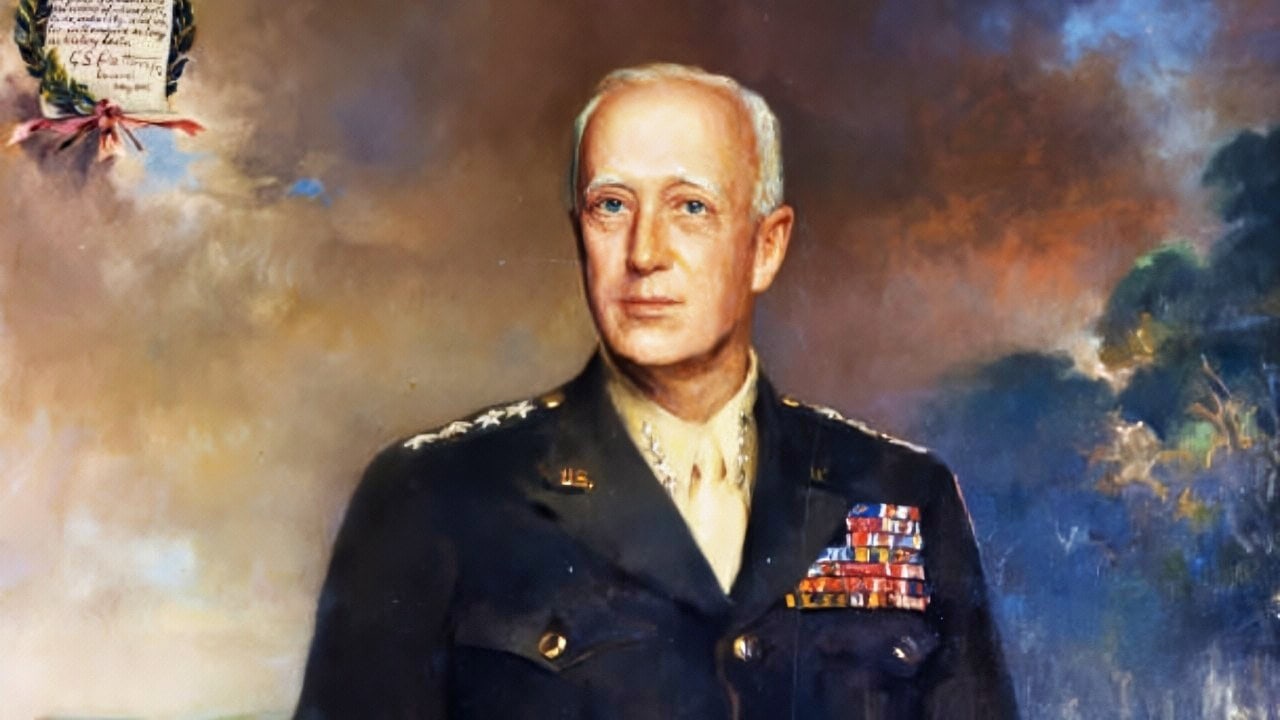
Portrait of Army General Patton. Image Credit: Creative Commons.
Post D-Day, Third Army’s Aggressive March Across France:
After the Allies invaded France on D-Day, Patton was given command of the follow-on forces of the Third Army.
It wasn’t until August 1 that the Third Army was activated, and, together with the First Army, it became the 12th Army Group under General Omar Bradley, who had always been a subordinate to Patton and had received a field command in France.
The Third Army under Patton’s leadership executed one of the most rapid and brilliant campaigns in modern history, advancing across France, moving farther and faster than any other army at the time. They traveled 150 miles in 19 hours at one point, completely having German defenders on their heels.
Using the Germans’ blitzkrieg tactics, his forces swept eastward to Le Mans, closed the Falaise Gap, where German forces in the West were encircled, and moved 475 miles to the Meuse River, where a lack of logistics and fuel slowed their advance before the fortified cities of Nancy and Metz during the Lorraine Campaign.
The weather also worsened, slowing Allied advances across the Western Front.
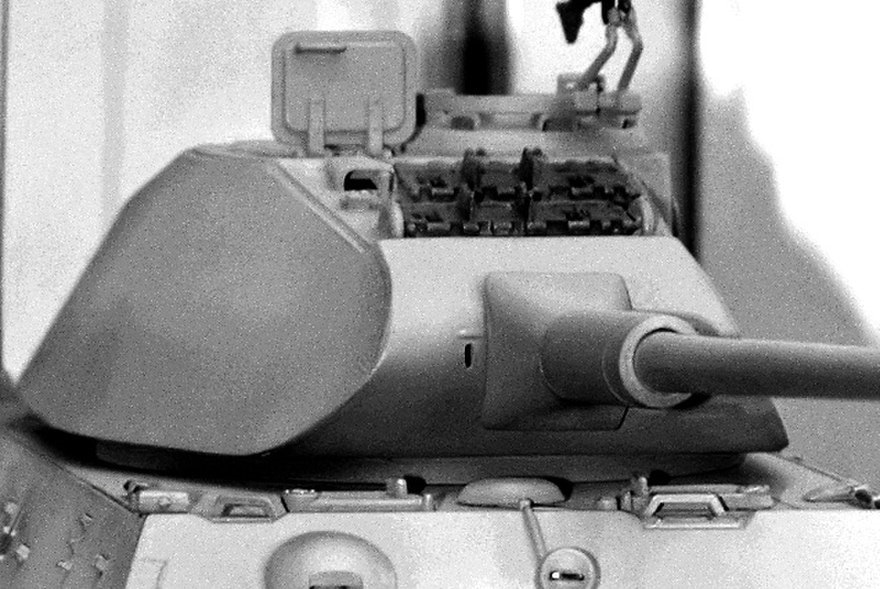
Tiger II Tank Close Up
The Battle Of The Bulge And Turning An Army 90 Degrees
The Germans’ Ardennes Offensive, known as the Battle of the Bulge, was Patton’s finest hour. Well before other Allied leaders recognized it for what it was (they thought it was merely a spoiling attack), Patton saw it and immediately had his staff begin planning for a pivot north.
Indeed, he was convinced the Germans would attack in the First Army area. On November 25, he wrote in his diary, “First Army is making a terrible mistake leaving the VIII Corps static; it is highly probable that the Germans are building up east of them.”
The day before the German attack on December 16th, he told his staff, “I want you, gentlemen, to start making plans for pulling the Third Army out of its eastward attack, change the direction ninety degrees, moving to Luxembourg and attacking north.”
Indeed, the Germans attacked with 29 divisions, totaling 250,000 men, for the initial assault, aiming to split the Allied armies in two and reach Antwerp.
When Allied Supreme Commander Dwight Eisenhower held a crisis meeting on December 19, 1944, Patton promised and then delivered decisive action, pivoting his entire Third Army of over 250,000 men and hundreds of tanks in terrible weather.
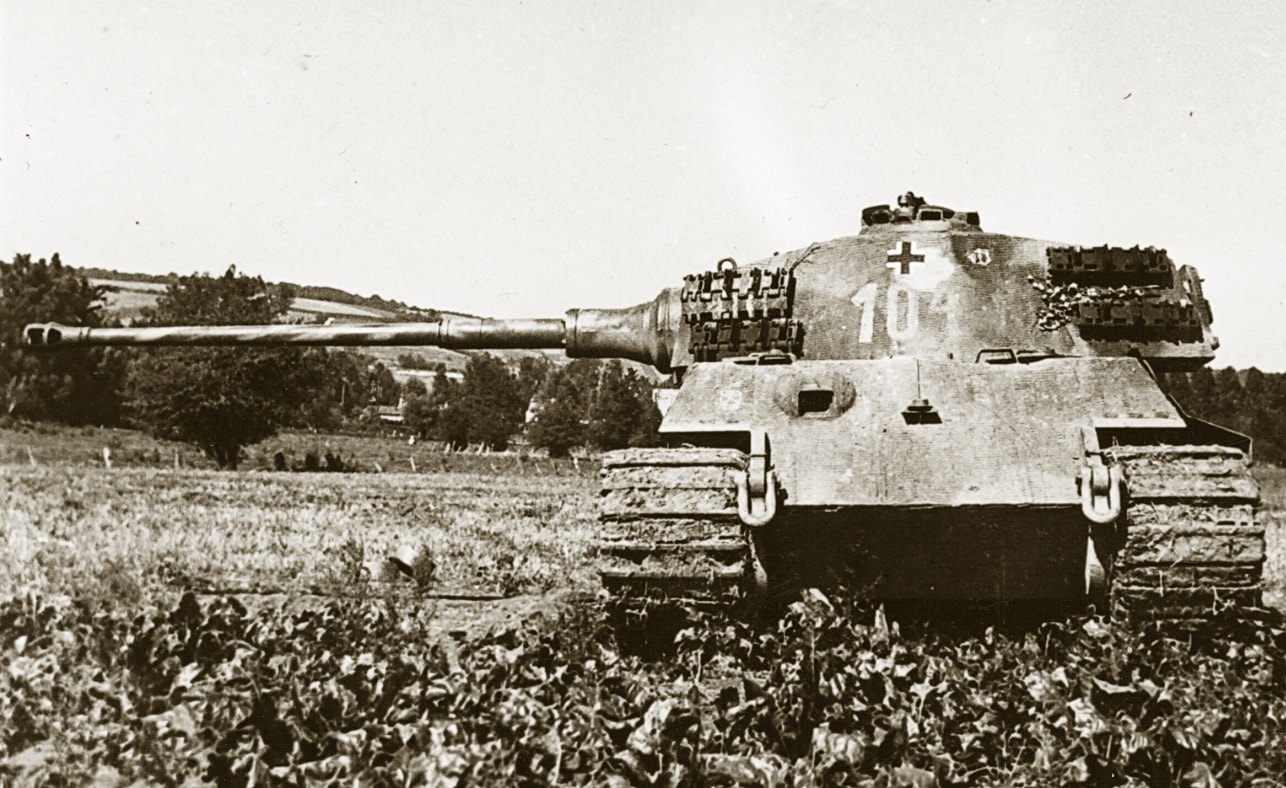
Tiger II. Image Credit: Creative Commons.
Patton stunned all in the room by announcing, “I can attack with three divisions in forty-eight hours.”
Patton Pivoted The Third Army From The Saar To The Ardennes
It was an outstanding example of operational control of an Army, pivoting Third Army from a campaign in the Saar on the German border, turning 90 degrees and attacking the German flank of the Bulge.
This attack occurred during the worst winter in over 50 years.
His troops of the 4th Armored Division broke the siege of Bastogne, allowing vital supplies to reach the 101st Airborne and allowing the evacuation of the wounded. By January 16th, his troops took Houfalize and sealed off the Bulge.
It was his finest hour and showed the value of intelligence, prior planning, and superb operational control. No other US commander could have accomplished that in December 1944.
But it followed his quote perfectly. By directing his staff to prepare a good plan in advance, rather than waiting for orders and taking time to make a perfect plan the next week, Patton’s Third Army moved quickly against the German left flank before the Germans could react.
He remains arguably the finest combat leader in the history of the US Army.
About the Author: Steve Balestrieri
Steve Balestrieri is a National Security Columnist. He served as a US Army Special Forces NCO and Warrant Officer. In addition to writing on defense, he covers the NFL for PatsFans.com and is a member of the Pro Football Writers of America (PFWA). His work has been regularly featured in many military publications.