For many years, Elon Musk talked about Mars as if it were the sole reason that SpaceX came into existence. Though one project among his many, it seemed to have singular importance. Publicly, Mars was the mission that justified everything else — from reusable rockets, to increasingly lower launch costs, rapid prototyping and testing, to revenue generated from Starlink internet access. Musk tended to frame the idea of going to Mars in broad, sweeping terms. Humanity must become an interplanetary species, Musk maintained, if it were to survive. Mars would be the first stop.
“If we can establish a Mars colony, we can almost certainly colonize the whole Solar System, because we’ll have created a strong economic forcing function for the improvement of space travel. We’ll go to the moons of Jupiter, at least some of the outer ones for sure, and probably Titan on Saturn, and the asteroids,” Musk once said.
“Once we have that forcing function and an Earth-to-Mars economy, we’ll cover the whole Solar System. The key is to make the Mars thing work. If we’re going to have any chance of sending stuff to other star systems, we need to be laser-focused on becoming a multi-planet civilization. That’s the next step.”
But more recent comments from Musk focus more on Earth’s nearest neighbor, the Moon.
This has led to the assumption that Musk, cognizant of the incredible challenge posed by reaching Mars, has backed away from that long-held goal.
In reality, however, it is perhaps not so much that Musk is moving away from Mars as that his idea has abutted with reality.
Mars Realities
In 2016, Elon Musk unveiled plans to send one million people to Mars, promising initial cargo missions, followed by crewed missions, and ultimately a self-sustaining city. More recent comments from him that emphasize a focus on the Moon suggest that Mars is no longer the lofty yet attainable goal Musk once envisioned.
But rather than backing away from Mars completely, it could be more accurate to say that Musk’s Mars target ran into reality.
“For those unaware, SpaceX has already shifted focus to building a self-growing city on the Moon, as we can potentially achieve that in less than 10 years, whereas Mars would take 20+ years,” Musk wrote on X, formerly Twitter.

NASA’s Discovery. Image Credit: 19FortyFive.com taken on October 1, 2022.

NASA’s Space Shuttle Discovery. Image Taken by 19FortyFive.com on October 1, 2022.
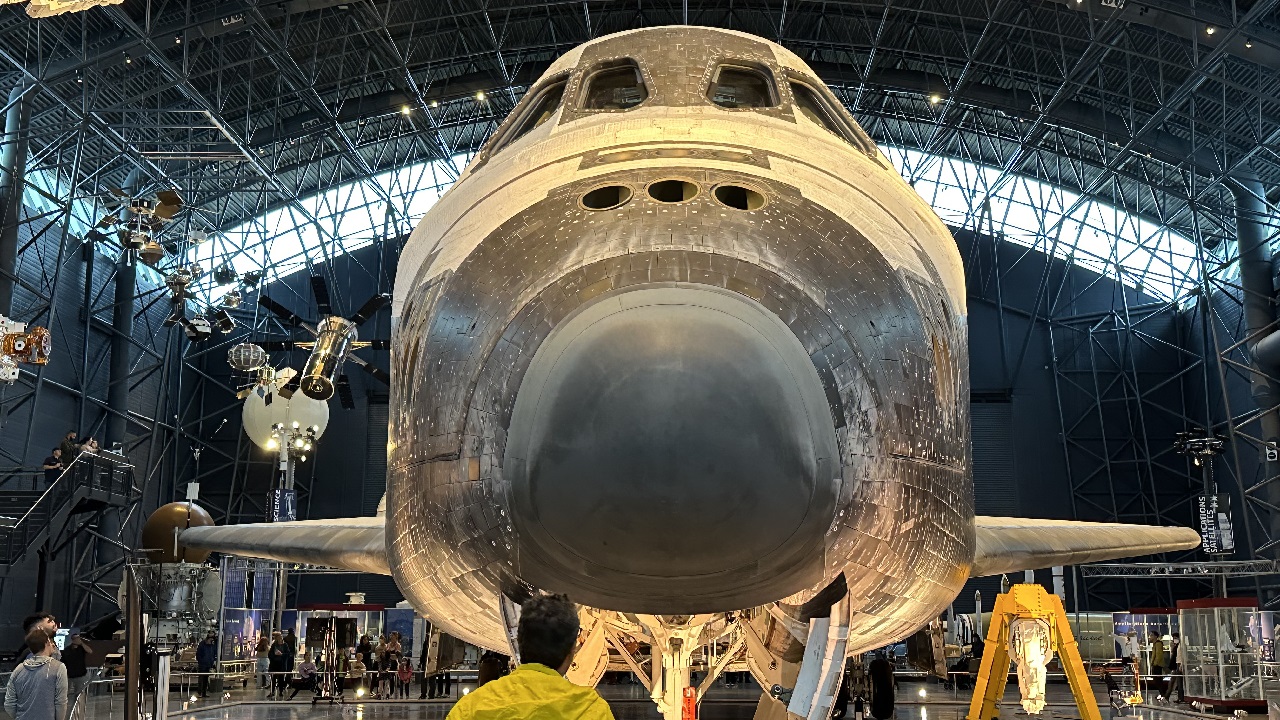
NASA Space Shuttle Discovery. Image Credit: 19FortyFive.com taken on October 1, 2022.
But, Musk added, “the mission of SpaceX remains the same: extend consciousness and life as we know it to the stars.”
“It is only possible to travel to Mars when the planets align every 26 months (a six-month trip time), whereas we can launch to the Moon every 10 days (2-day trip time). This means we can iterate much faster to complete a Moon city than a Mars city. That said, SpaceX will also strive to build a Mars city and begin doing so in about 5 to 7 years, but the overriding priority is securing the future of civilization, and the Moon is faster.”
Moonshot
The comments were somewhat unexpected, particularly in light of comments Musk made last year, when he characterized the Moon as a “distraction.”
The biggest limiting factor, Musk argued, was the amount of payload that can be launched toward Mars. Though work on the Moon could certainly afford some valuable experience for the Mars end goal, the Moon has, in his eyes, been a sideshow rather than the main event.
Time and Place
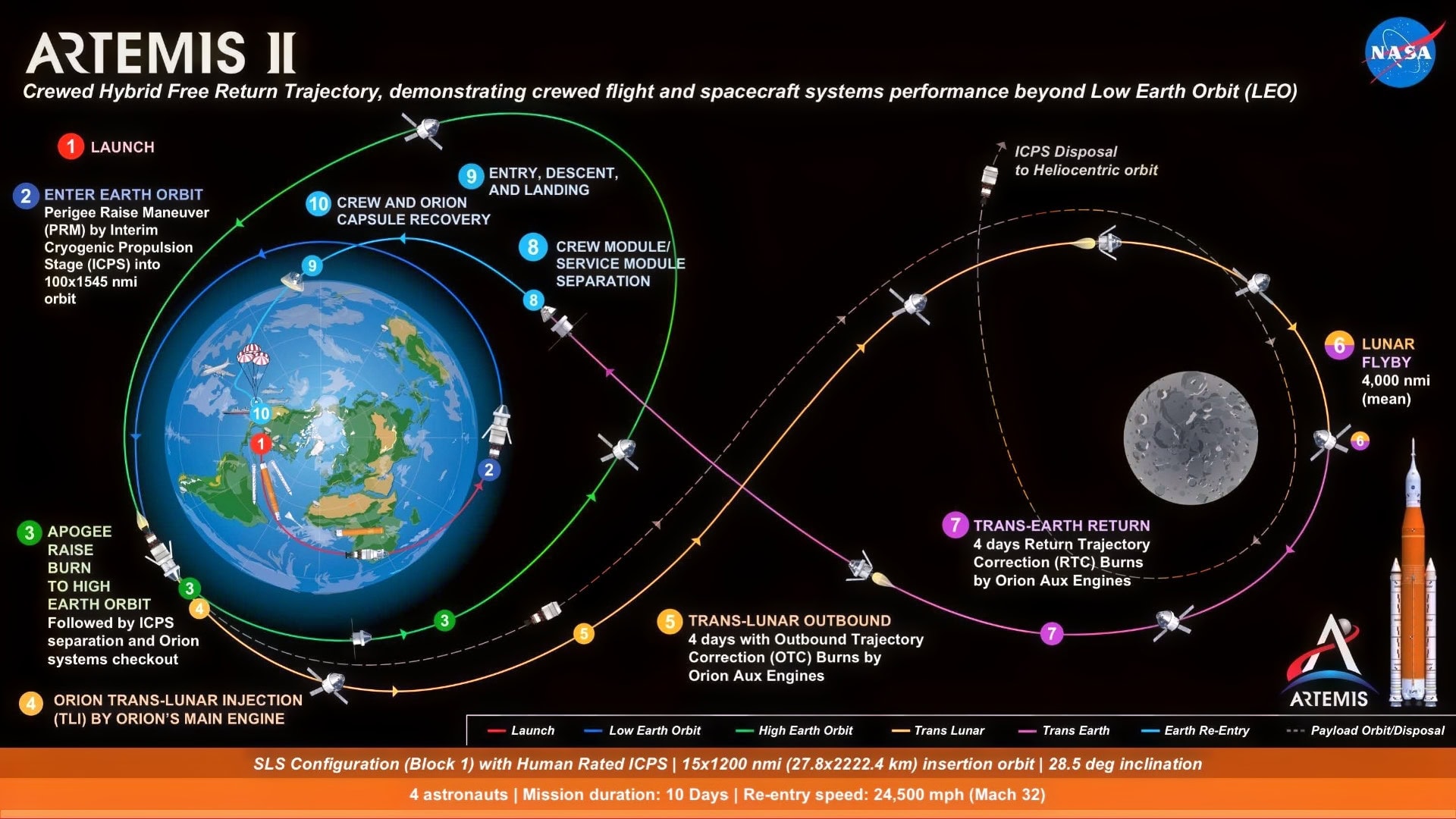
The recently-completed Artemis II mission dovetails with Musk’s Moon realignment.
Though the astronauts on that mission did not land on the Moon, they set the record for the farthest distance from Earth for any manned space mission.
NASA’s Artemis program gives Musk’s firm something the distant goal of Mars has not: immediate demand and achievable milestones.
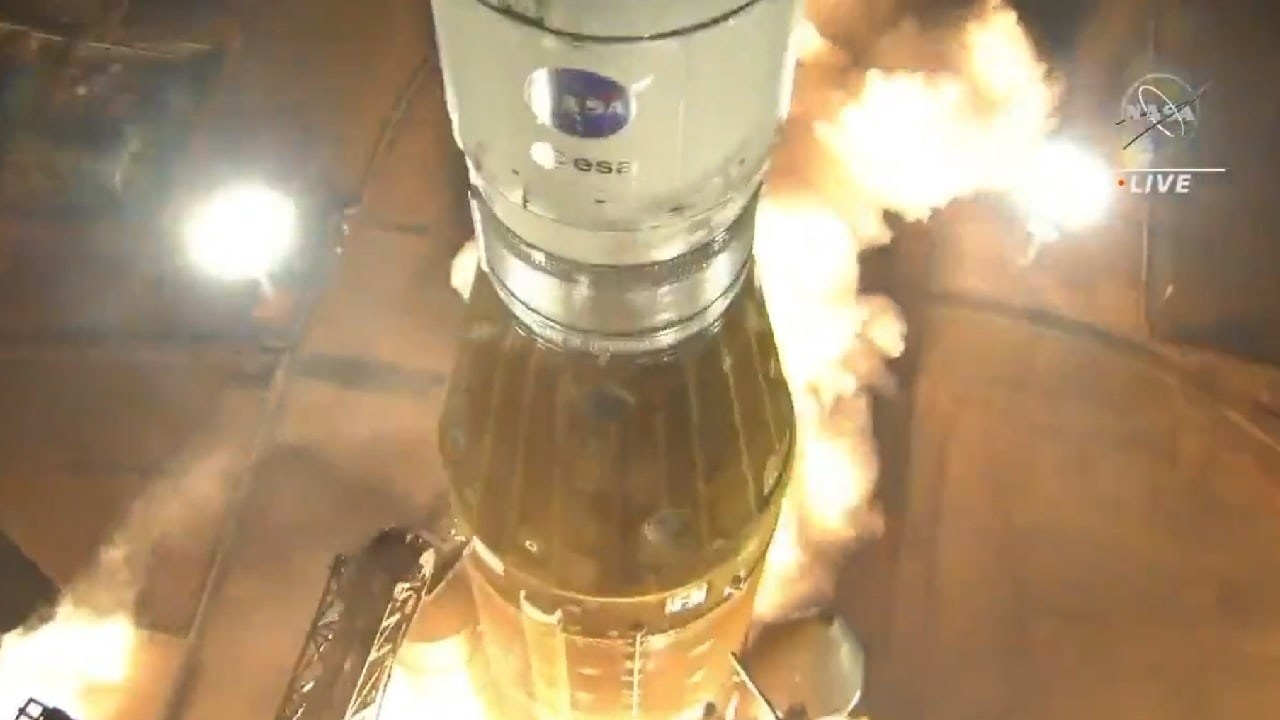
Artemis I. Image Credit: NASA Twitter Screenshot.
SpaceX was selected to provide the Human Landing System version of Starship for later Artemis missions, tying the company directly to lunar operations.
Though Artemis II does not use Starship to transport the crew — instead, it used NASA’s Space Launch System rocket and Orion Capsule — its success is important because it validates the Artemis sequence that will, in the future, include SpaceX hardware.
Though not principally a SpaceX mission, Artemis II helps establish a path forward in which SpaceX is a vital part of future lunar exploration.
A reinvigorated lunar campaign allows SpaceX to test capabilities it would eventually need for Mars, including long-duration space operations, docking, fuel transfer, surface landing systems, space logistics, and sustaining crews beyond low Earth orbit.
Mars will presumably remain a central goal of Musk and SpaceX, but the Moon is where the money is for now — and an important stepping stone to the Red Planet.
About the Author: Caleb Larson
Caleb Larson is an American multiformat journalist based in Berlin, Germany. His work covers the intersection of conflict and society, focusing on American foreign policy and European security. He has reported from Germany, Russia, and the United States. Most recently, he covered the war in Ukraine, reporting extensively on the war’s shifting battle lines from Donbas and writing on the war’s civilian and humanitarian toll. Previously, he worked as a Defense Reporter for POLITICO Europe. You can follow his latest work on X.