
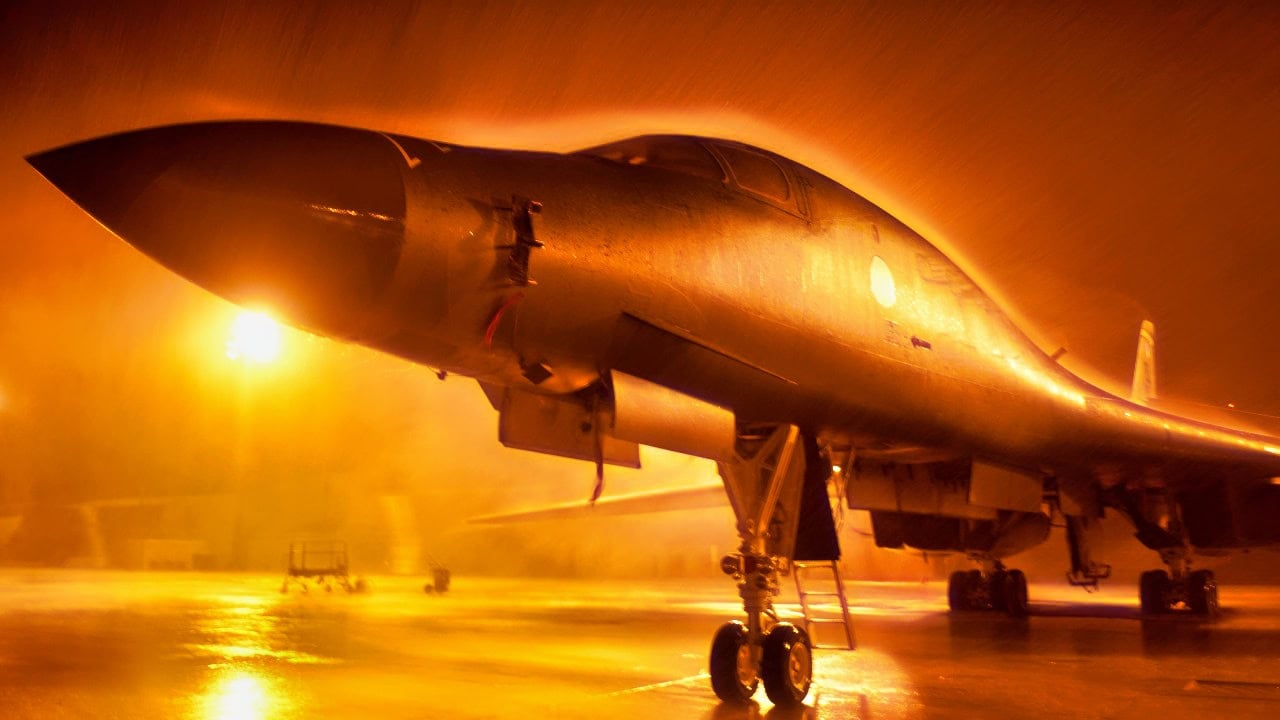
There is just no substitute for an aerial bomber – whether stealth or conventional. Operation Epic Fury against Iran has shown that the U.S. Air Force needs immense numbers of strike airplanes to suppress enemy air defenses, destroy nuclear infrastructure, and eliminate military targets such as command and control centers and missile launchers. But the United States only possesses 19 B-2 Spirit bombers and around 45 B-1B Lancer non-stealth strike aircraft. The Air Force wants many more, and it can’t wait for the B-21 Raider stealth bomber to be ready. The B-21 is supposed to make the B-1B obsolete and replace the B-2, but now the flying branch has other plans for the B-2 and B-1B.
We Are Talking an Significant Influx of Funding Into the Programs

The crew of a U.S. Air Force B-1B Lancer display their mascot from the cockpit window during a presence patrol above the U.S. Central Command’s area of responsibility Oct. 30, 2021. Multiple partner nations’ fighter aircraft accompanied the B-1B Lancer at different points during the flight, which flew over the Gulf of Aden, Bab el-Mandeb Strait, Red Sea, Suez Canal, Arabian Gulf, Strait of Hormuz and the Gulf of Oman before departing the region. (U.S. Air Force photo by Senior Airman Jerreht Harris)
The Air Force is proposing to spend $1.7 billion to upgrade the existing B-1B and B-2 fleets to support service through the mid-2030s and beyond. This is a surprise because both were slated for retirement by the early 2030s. The B-1B is an airplane meant for the Cold War, and the B-2 is expensive to keep in the air. Plus, the limited numbers make them both difficult airplanes to serve in a two-front war against Iran and China.
The B-52 Is Part of This Mix
There is also the venerable B-52 Stratofortress, a key member of the bomber fleet. The new B-52J will feature updated engines and radar systems and can serve for another 10 years or more. But the B-52J is not a Day One asset. It needs complete air dominance, free from the threat of enemy surface-to-air missiles. This is not always possible in modern warfare, especially in Iran, where many SAM sites are underground and need ample bunker-busting bombs to eliminate.
B-1B Gets a Lion’s Share Monetary Commitment
The Department of Defense is proposing an immense $1.5 trillion military budget, making it the largest in history. The proposal includes $342 million for B-1B bomber modernization. With these upgrades, the B-1B could remain in service until 2037. Not bad for the “Bone” that was meant for Cold War nuclear weapons scenarios.
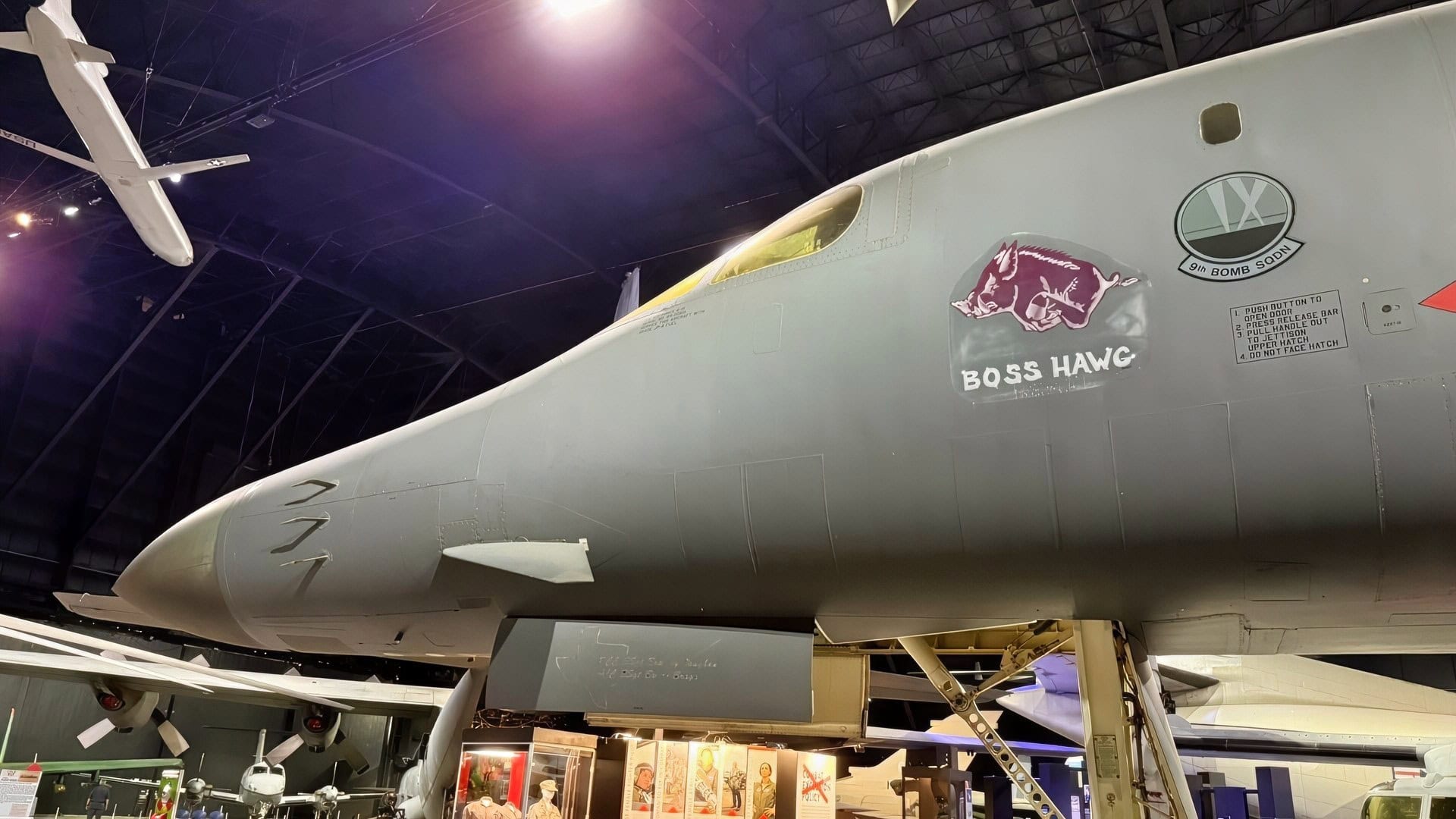
B-1B Lancer Bomber at National Museum of the Air Force. 19FortyFive.com Photo.
But It’s the B-2 That May Get the Most Injection of Funding
It’s the B-2 that will get a massive investment under the National Defense Authorization Act, should the $1.5 trillion spending package be approved by Congress. The B-2 program will receive $1.35 billion. This would be enough for upgrades over the next five years for a new service horizon that could last until 2040.
Two-front War Means More Bombers Are Needed
The U.S. war against Iran has shown that having a limited supply of bombers is a problem in modern conflicts in which there are thousands of targets needed for destruction in a large country. Any war with China would necessitate the use of all the bombers the Air Force could muster. These would have to fly through contested airspace and refuel several times to reach East Asia.
Enemy Air Defenses Are Only Getting Better
The bomber fleet needs to be updated for modern warfare, with enemy air defenses capable of blowing a strike aircraft out of the sky, no matter how stealthy. The B-21 will be great, but it may not be ready for another five years. That means the current number of bombers will remain static until the Raider comes online. The Air Force plans to buy between 100 and 150 B-21s. That would greatly boost the strike force of fighter-bombers, and the new bombers would make a difference in future warfare for sure.
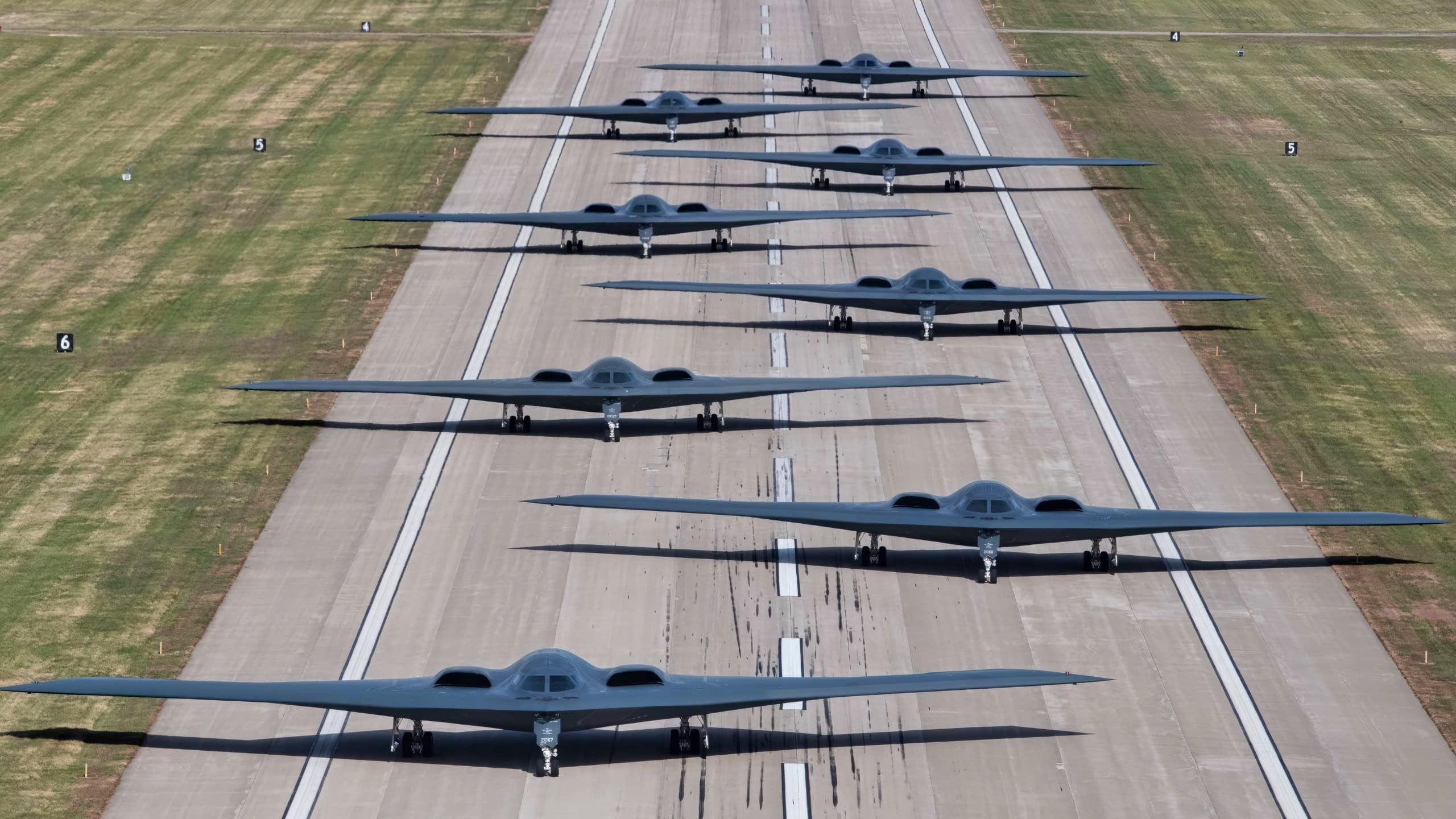
B-2 Spirit stealth bombers assigned to Whiteman Air Force Base taxi and take-off during exercise Spirit Vigilance on Whiteman Air Force Base on November 7th, 2022. Routine exercises like Spirit Vigilance assure our allies and partners that Whiteman Air Force Base is ready to execute nuclear operations and global strike anytime, anywhere. (U.S. Air Force photo by Airman 1st Class Bryson Britt)
They Bring Much to the Table
The B-2s are important for different reasons. The Spirit can be armed with nuclear weapons, making it a significant piece of the nuclear triad. The B-1B has a large payload and can carry precision-guided weapons, such as JDAMs, which are less expensive and easier to produce than high-end ballistic missiles like the Tomahawk. The United States has found out that its ballistic missiles and interceptors are running out fast against Iran. That’s why bombers are taking on such a huge importance in the American strike packages during the war.
Trump Is a Fan of the B-2
President Donald Trump is a proponent of the B-2. He ordered Operation Midnight Hammer last summer with a force of B-2s striking Iranian nuclear infrastructure. This was a devastating attack, but no B-2s were lost. So far, the Spirits have accomplished many destructive bombing runs during Operation Epic Fury. The stealthiness is top-notch, and their ability to be refueled multiple times on a single mission has been critical to their success.
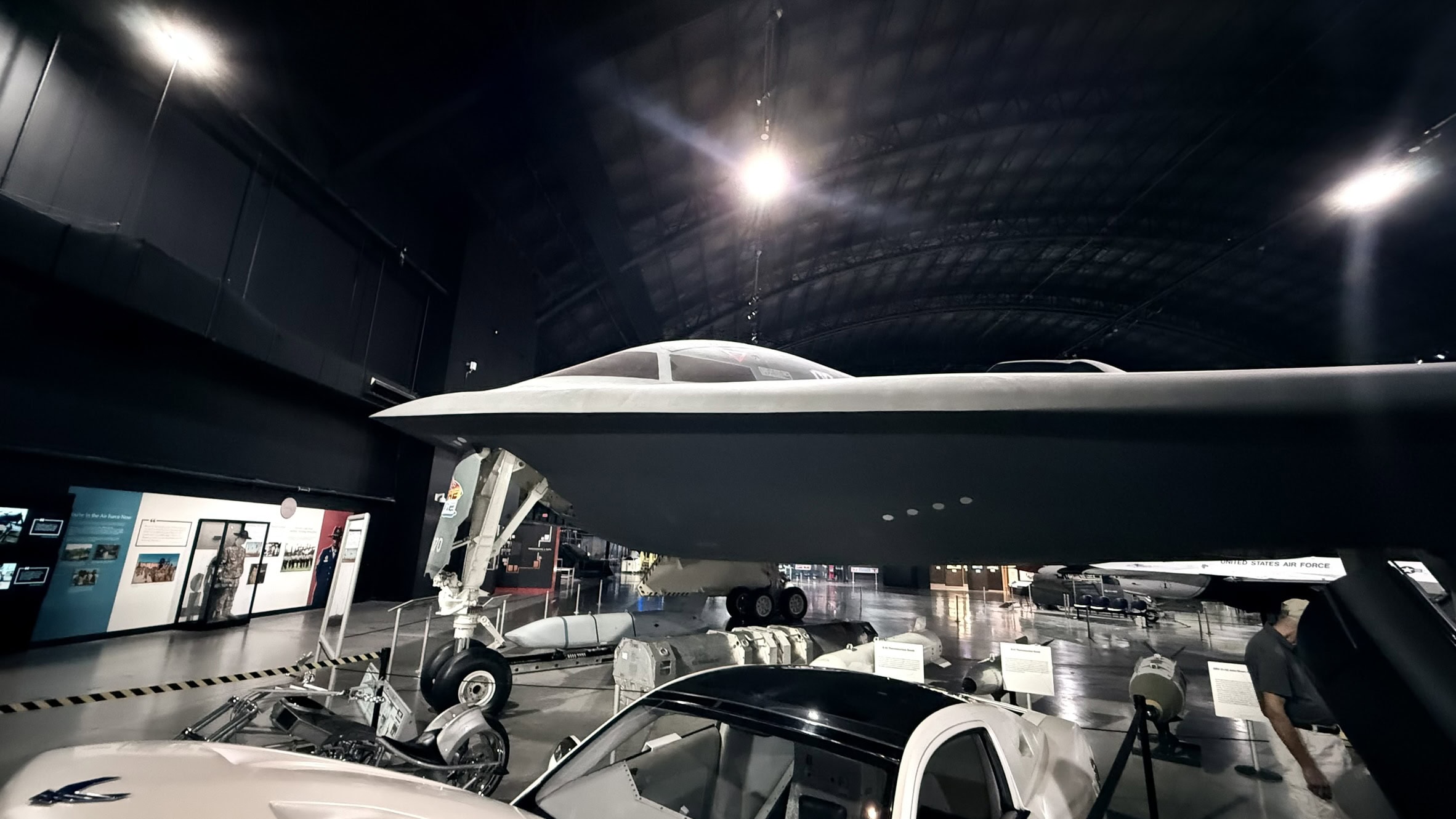
B-2 Spirit Stealth Bomber. 19FortyFive.com Photo from National Museum of the U.S. Air Force Visit in 2025.
The Need to Bust Some Bunkers
B-2s can also carry the Massive Ordnance Penetrators (MOPs). The Air Force can’t have enough of these bunker-busting bombs. Iran has done an enviable job of placing their ballistic missile launchers and assembly lines underground, and the MOPs have been useful in destroying these sites.
Can Hegseth and His Minions Get Congress to Loosen the Purse Strings?
Secretary of Defense Pete Hegseth and Air Force Secretary Troy E. Meink will have to face Congress during hearings to substantiate the huge new defense budget proposal. They will have to explain why bombers are so important to the Air Force and how the existing fleet needs to be extended until the B-21 is ready.
They should have plenty of use cases to demonstrate that the Air Force needs a modernization plan to ensure the B-2 and B-1B programs can continue for another 10 years. Future warfare depends on it, and lawmakers on Capitol Hill should recognize the need for renewed emphasis on the fleet and a significant investment in the bomber fleet to be extended for the next decade.
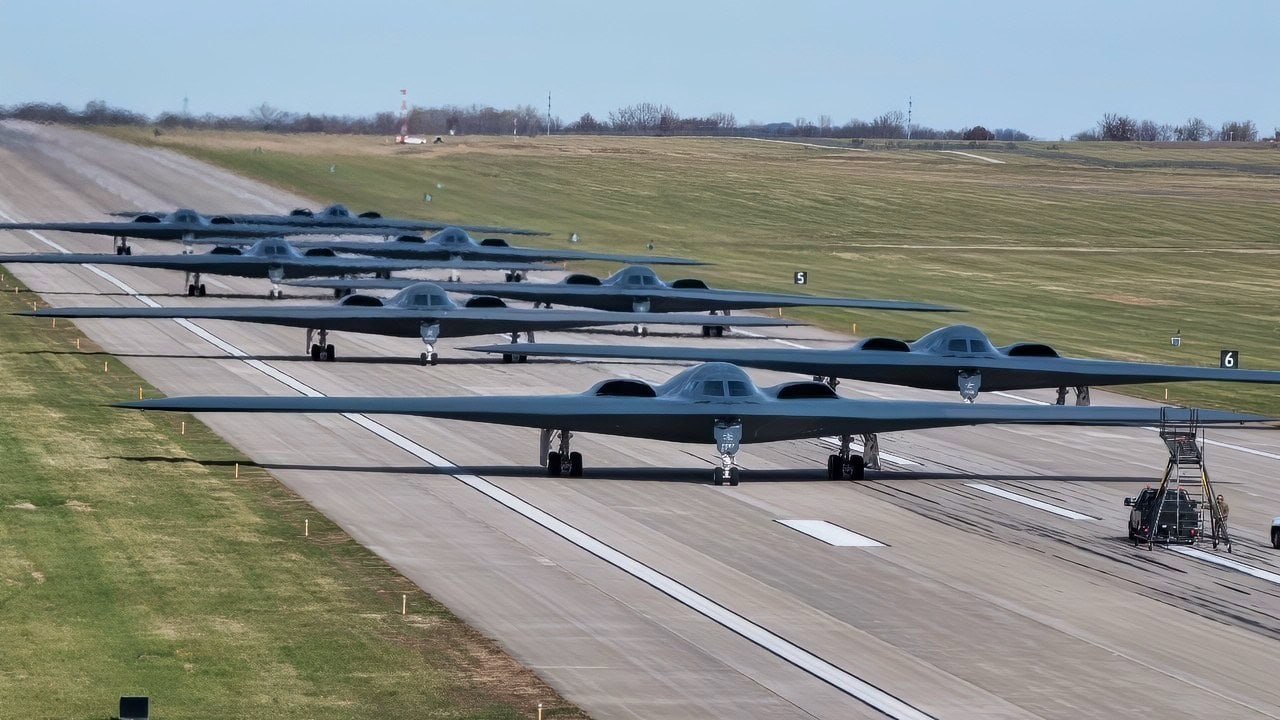
B-2 Spirit stealth bombers assigned to Whiteman Air Force Base taxi and take-off during exercise Spirit Vigilance on Whiteman Air Force Base on November 7th, 2022. Routine exercises like Spirit Vigilance assure our allies and partners that Whiteman Air Force Base is ready to execute nuclear operations and global strike anytime, anywhere. (U.S. Air Force photo by Airman 1st Class Bryson Britt)
About the Author: Dr. Brent M. Eastwood
Author of now over 3,500 articles on defense issues, Brent M. Eastwood, PhD, is the author of Don’t Turn Your Back On the World: A Conservative Foreign Policy and Humans, Machines, and Data: Future Trends in Warfare, plus two other books. Brent was the founder and CEO of a tech firm that predicted world events using artificial intelligence. He served as a legislative fellow for US Senator Tim Scott and advised the senator on defense and foreign policy issues. He has taught at American University, George Washington University, and George Mason University. Brent is a former US Army Infantry officer. He can be followed on X @BMEastwood.