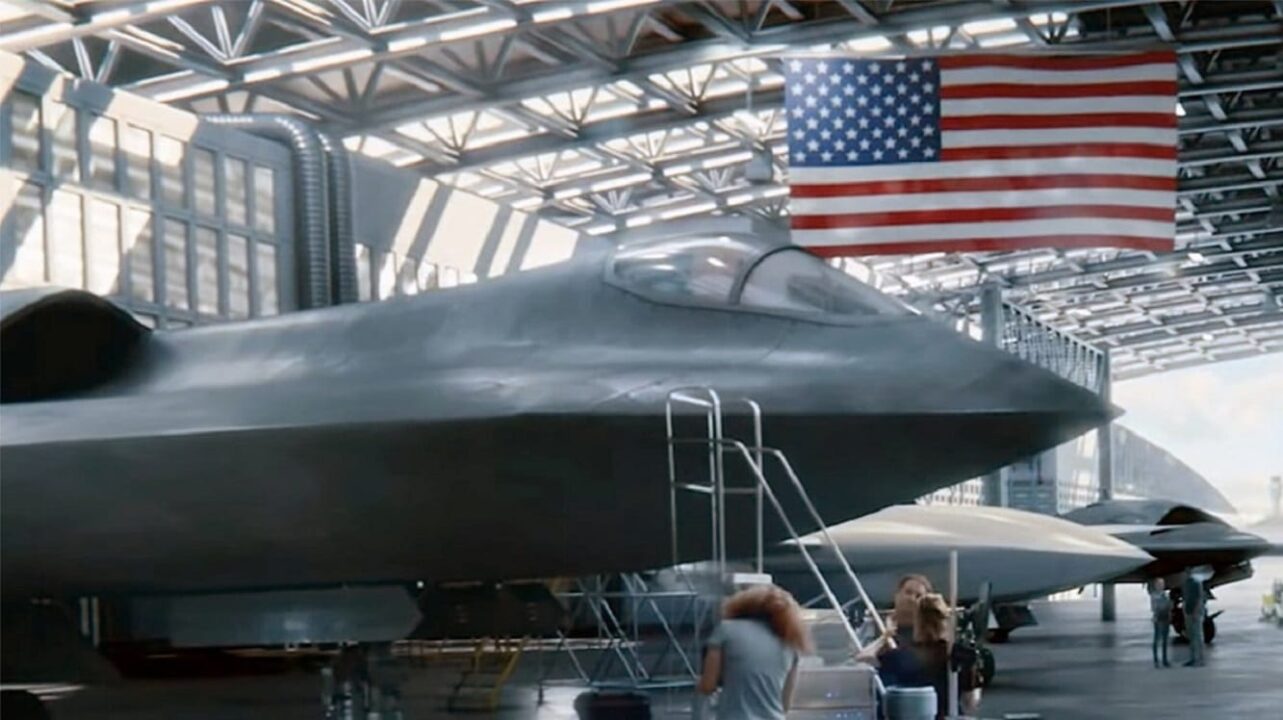
The Pentagon has found its next great, expensive obsession: the sixth-generation warplane. Already, the Trump administration authorized the procurement of the F-47 Next-Generation Air Dominance (NGAD) warplane for the United States Air Force.
As if that wasn’t enough, news is now coming out that the Pentagon is choosing a contractor for the Navy’s massively expensive F/A-XX sixth-generation warplane for carrier flight operations by August. Not wanting to be left out of the fray of the race to break the American taxpayer, the United States Marine Corps has stated it is starting its search for its own sixth-generation warplane.
Given these claims from the three branches that operate warplanes–the Air Force, Navy, and Marine Corps–one begins to comprehend why the next defense budget put forward by the Trump administration comes with a potential $1.5 trillion price tag.
Stick Shock: The Cost of Chasing Air Superiority
The sixth-generation warplane is costly. For instance, the F-47 is slated to cost the Air Force $300 million per unit. Similarly, the F/A-XX will cost between $200 million and $300 million per plane.
Whatever system the Marines settle on will likely have a price tag similar to that of the F-47 and F/A-XX.
Proponents of the sixth-generation warplane insist that the cost is worth it.
After all, the more of these systems built, the more the supply chain is refined, the less they will cost over time.
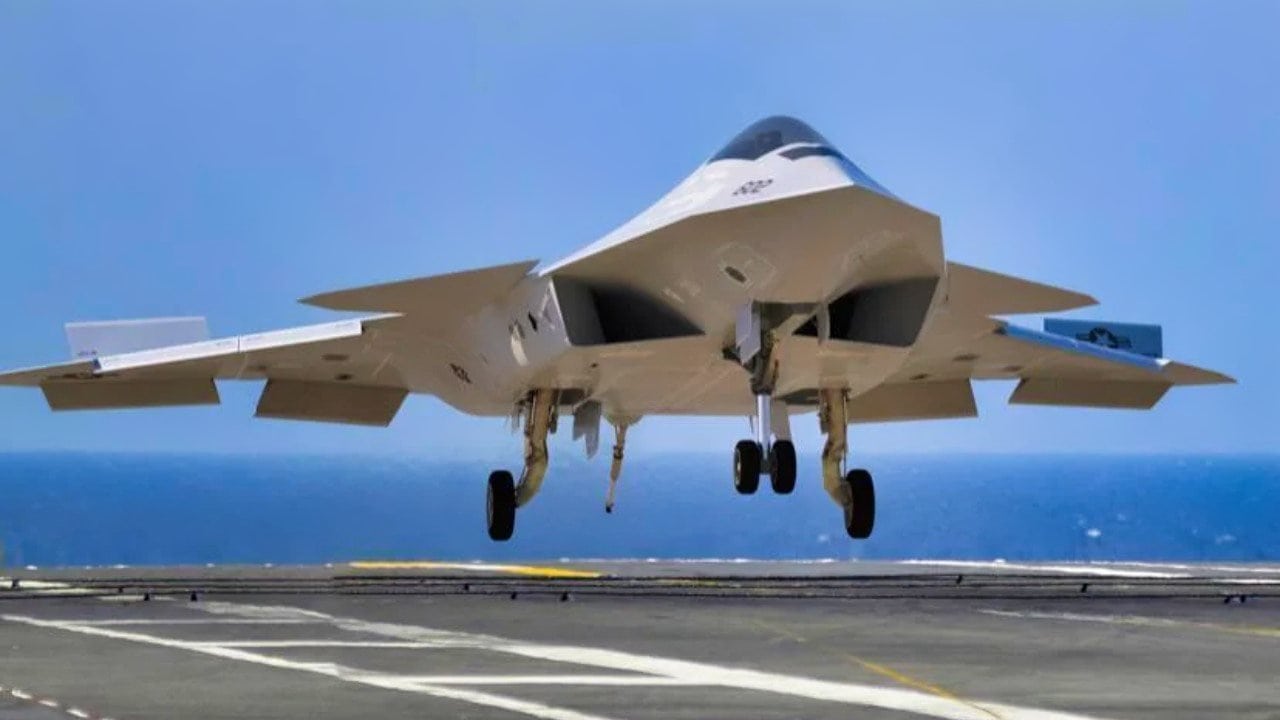
F/A-XX. Image Credit: Creative Commons.
Plus, the proponents argue that the sixth-generation warplane will offer a quantum leap in capabilities that even America’s vaunted fifth-generation warplanes did not.
These supporters of a robust sixth-generation warplane capability further claim that, since China is clearly ahead of the United States in fielding its own sixth-generation planes, the US must do whatever it can to catch up and, eventually, surpass China in this domain.
Timeline: Fantasy vs. Reality
There is no evidence that the sixth-generation warplane will deliver the significant leap in capabilities the Pentagon claims it will.
If the past is prologue, judging how much of a letdown the fifth-generation warplanes were (considering their high cost, the time it took to build, and the resources committed to the development of the fifth-generation warplanes), why assume that the sixth-generation warplane will be any less of a disappointment?
Further, all this talk that the F-47 will be available to the Air Force as early as 2028 or 2029 is wildly optimistic. Indeed, even people like Rep. Rob Wittman believe that the F-47 and the F/A-XX will not be available at least until the end of the 2030s.
Are the Marines Jumping In?
Now the Marines are trying to get into the game by declaring that they, too, are developing a sixth-generation warplane. Of course, the 2026 Marine Aviation Plan for procuring a sixth-generation plane will not take effect until after 2041.
Nevertheless, the concept discussions are underway according to Marine Lt. Gen. William Swan. But the Marines aren’t even looking to buy anything too soon, seeing as they’re still finishing the transition to the F-35 and moving to Block Four, which the Government Accountability Office (GAO) warns is already $6 billion above earlier estimates and at least 5 years late.
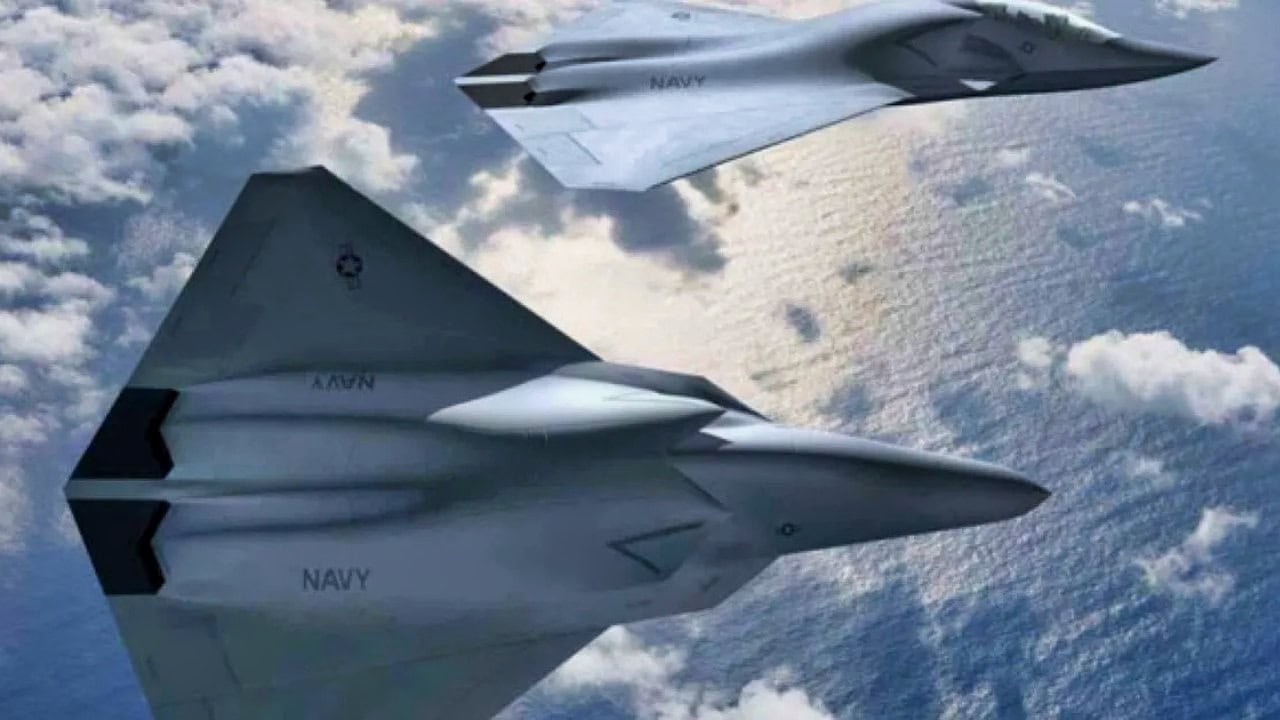
F/A-XX Fighter. Image Credit: Boeing.
To say that talk about the Marines procuring a sixth-generation warplane is premature is the understatement of the century.
Carrier Aviation’s Hidden Cost Explosion
And let’s touch on the cost of the other two proposed sixth-generation warplanes, the Air Force’s F-47 and the Navy’s F/A-XX. The Air Force keeps selling Congress on the notion that the F-47 will have a unit cost below that of the F-22 Raptor.
But most experts consider this an unrealistic claim. In fact, a sixth-generation crewed stealth warplane with advanced sensors, adaptive engines, drone-control interfaces, and other accouterments will ensure that the F-47 is far more expensive than the F-22 ever was.
The cost of the F/A-XX will likely top the onerous cost of the F-47, simply because the F/A-XX, as a carrier-based bird, requires additional structural weight, corrosion hardening, enhanced landing gear, and deck-cycle advances.
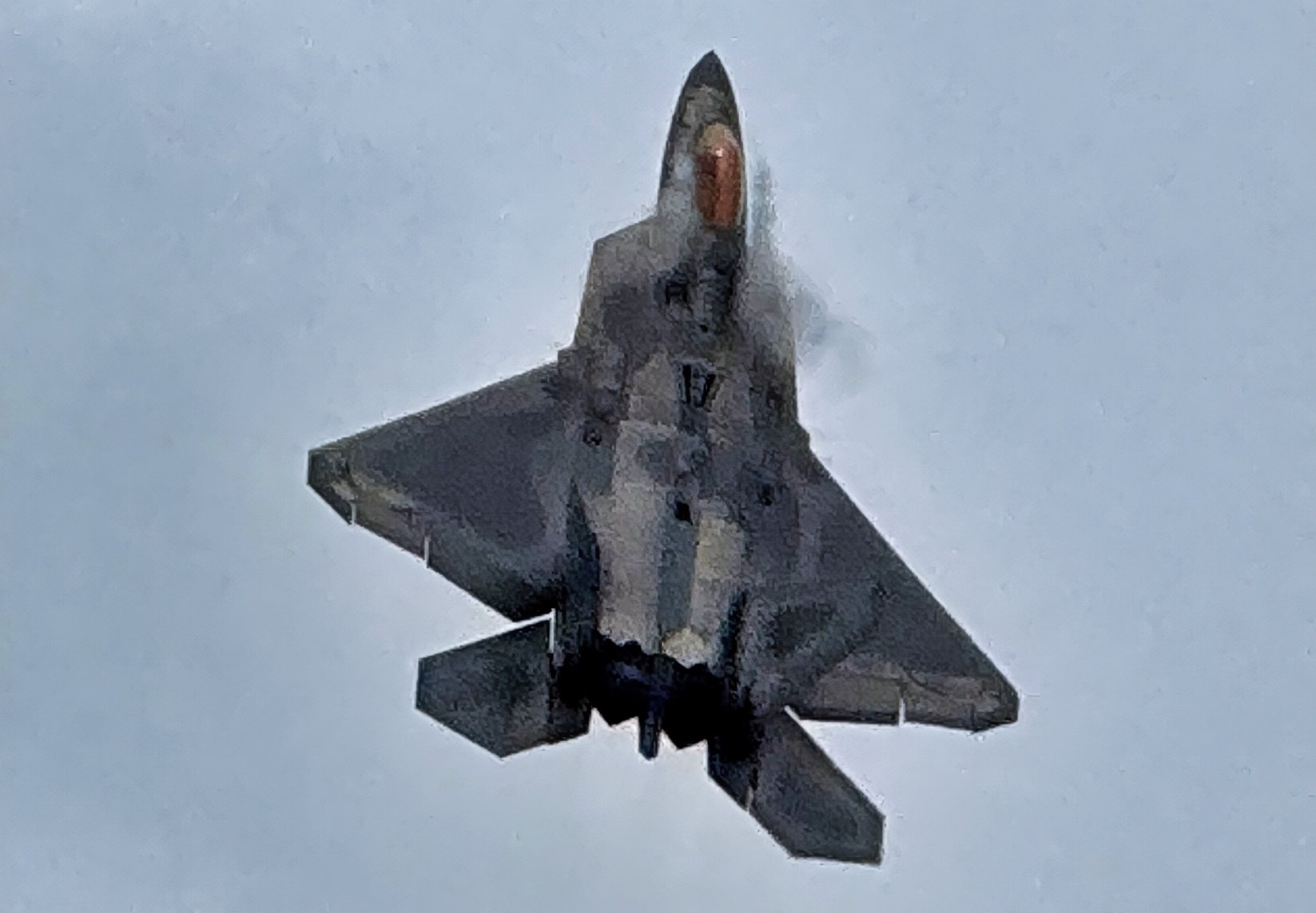
F-22 Raptor high in the sky. Image taken by Harry J. Kazianis in Lakeland, Florida on 4/19/2026.
If the Marines sought their own, separate sixth-generation warplane, it would likely break the budget of the Department of the Navy, by the way.
Three Air Forces, One Broken Industrial Base
Essentially, the Pentagon is trying to build three future air forces at once, all while still struggling to finish the F-35! Sure, the Air Force has the lead. But what does that mean?
The Navy is struggling to keep from being left behind–but being left behind might have been the best thing for the Navy, as it would have forced the maritime branch to become really innovative.
The Marines have the opportunity to hang back and watch the other two branches break the bank to build absurdly expensive planes that will underperform and underdeliver.
The future of warfare is not manned systems, no matter how advanced. The future remains with drones. That’s what the Marines should focus on. Forget the sixth-generation boondoggle.
A Trillion-Dollar Mistake in Waiting
Besides, there is no guarantee America’s broken defense industrial base could even meet the demands for the F-47 and/or F/A-XX.
Given how complex these planes would be, there will be software delays, engine technology complications, drone integration problems, and budget politics over the years that will turn this into a pre-failed project with a price tag of more than $1 trillion.
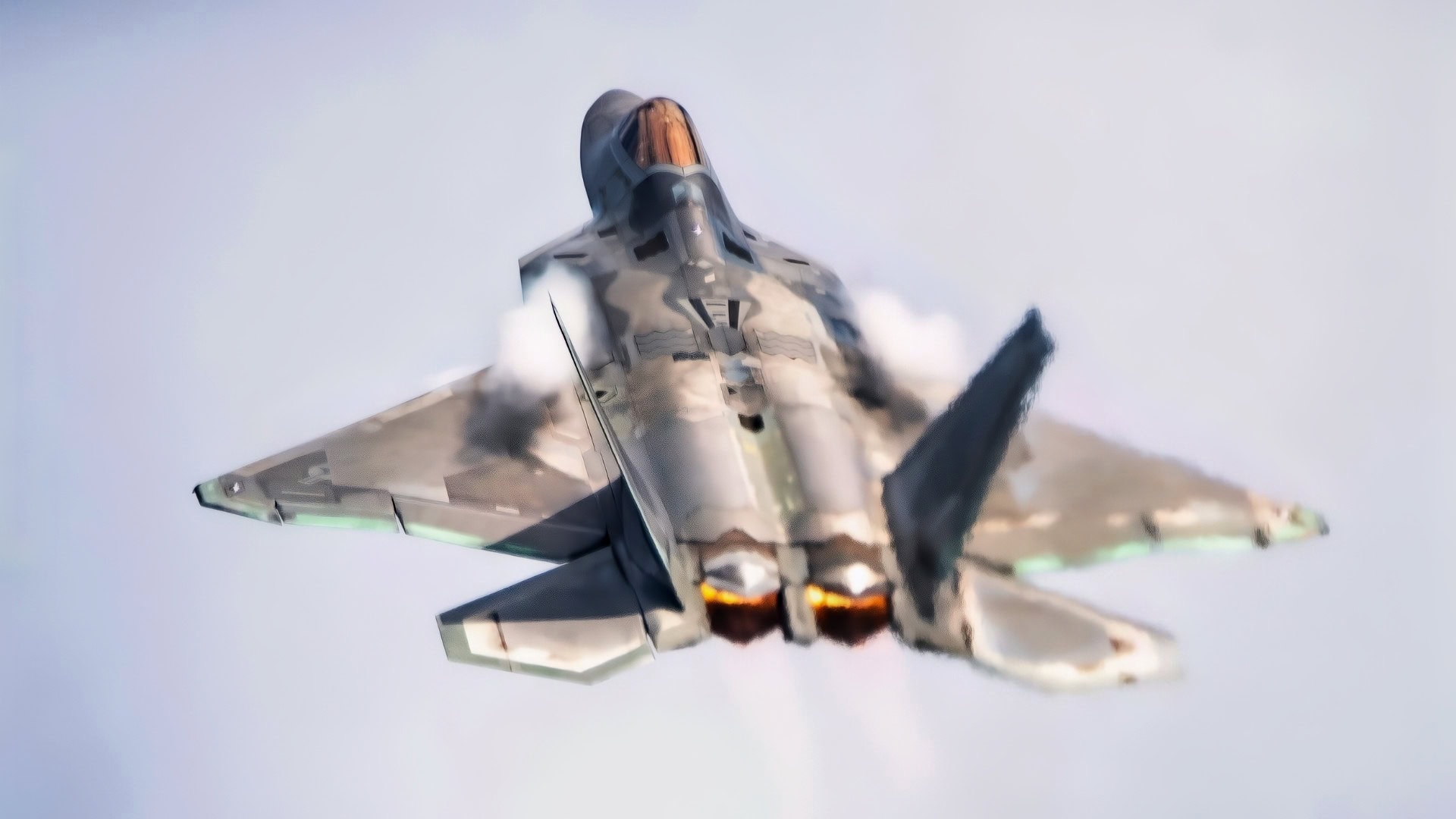
U.S. Air Force Maj. Paul Lopez, F-22 Demo Team commander, performs an aerial demonstration during the Thunder over Georgia Air Show at Robins Air Force Base, Sept. 28, 2019. Founded in 2007, the F-22 Raptor Demo Team showcases the unique capabilities of the world’s premier 5th-generation fighter aircraft. (U.S. Air Force photo by 2nd Lt. Sam Eckholm)
In the end, Washington is just chasing a fantasy. The Pentagon is betting that three separate sixth-generation programs will somehow deliver revolutionary capability without repeating the cost overruns, delays, and disappointments of the past.
But history–and the current state of America’s defense industrial base–suggests otherwise. Unless priorities shift toward scalable, survivable systems like drones, the United States risks pouring trillions into exquisite platforms it cannot build in sufficient numbers, cannot sustain in prolonged conflict, and may not even need.
The real danger is not that America falls behind its foes. The real concern should be that, like the Soviet Union, the US bankrupts itself in its attempt to stay ahead.
About the Author: Brandon J. Weichert
Brandon J. Weichert is the Senior National Security Editor at 19FortyFive.com. Recently, Weichert became the editor of the “NatSec Guy” section at Emerald. TV. He was previously the senior national security editor at The National Interest. Weichert hosts The National Security Hour on iHeartRadio, where he discusses national security policy every Wednesday at 8 pm Eastern. He hosts a companion show on Rumble entitled “National Security Talk.” Weichert consults regularly with various government institutions and private organizations on geopolitical issues. His writings have appeared in numerous publications, among them Popular Mechanics, National Review, MSN, and The American Spectator. And his books include Winning Space: How America Remains a Superpower, Biohacked: China’s Race to Control Life, and The Shadow War: Iran’s Quest for Supremacy. Weichert’s newest book, A Disaster of Our Own Making: How the West Lost Ukraine, is available for purchase at any bookstore. Follow him via Twitter/X @WeTheBrandon.