
Thirty-five national veterans groups—including the American Legion, Disabled American Veterans, Veterans of Foreign Wars, and Iraq and Afghanistan Veterans of America—have just endorsed the Written Informed Consent Act, demanding greater transparency for veterans prescribed antidepressants, antipsychotics, and narcotics through the VA. The legislation has stalled since being introduced last August, but a coordinated press conference and letter campaign on Capitol Hill is aimed at finally pushing it across the finish line.
Written, Informed Consent Act: Will It Pass?
Last August, Reps. Gus Bilirakis (FL-12), Jack Bergman (MI-01), and Keith Self (TX-03) introduced the Written Informed Consent Act, which the three Republican lawmakers pitched at the time as “a significant step toward enhancing transparency and protecting patient rights.”
The purpose of the proposed law was to provide greater transparency to veterans who are prescribed certain drugs through the Department of Veterans Affairs, including “antipsychotics, stimulants, antidepressants, anxiolytics, and narcotics.”
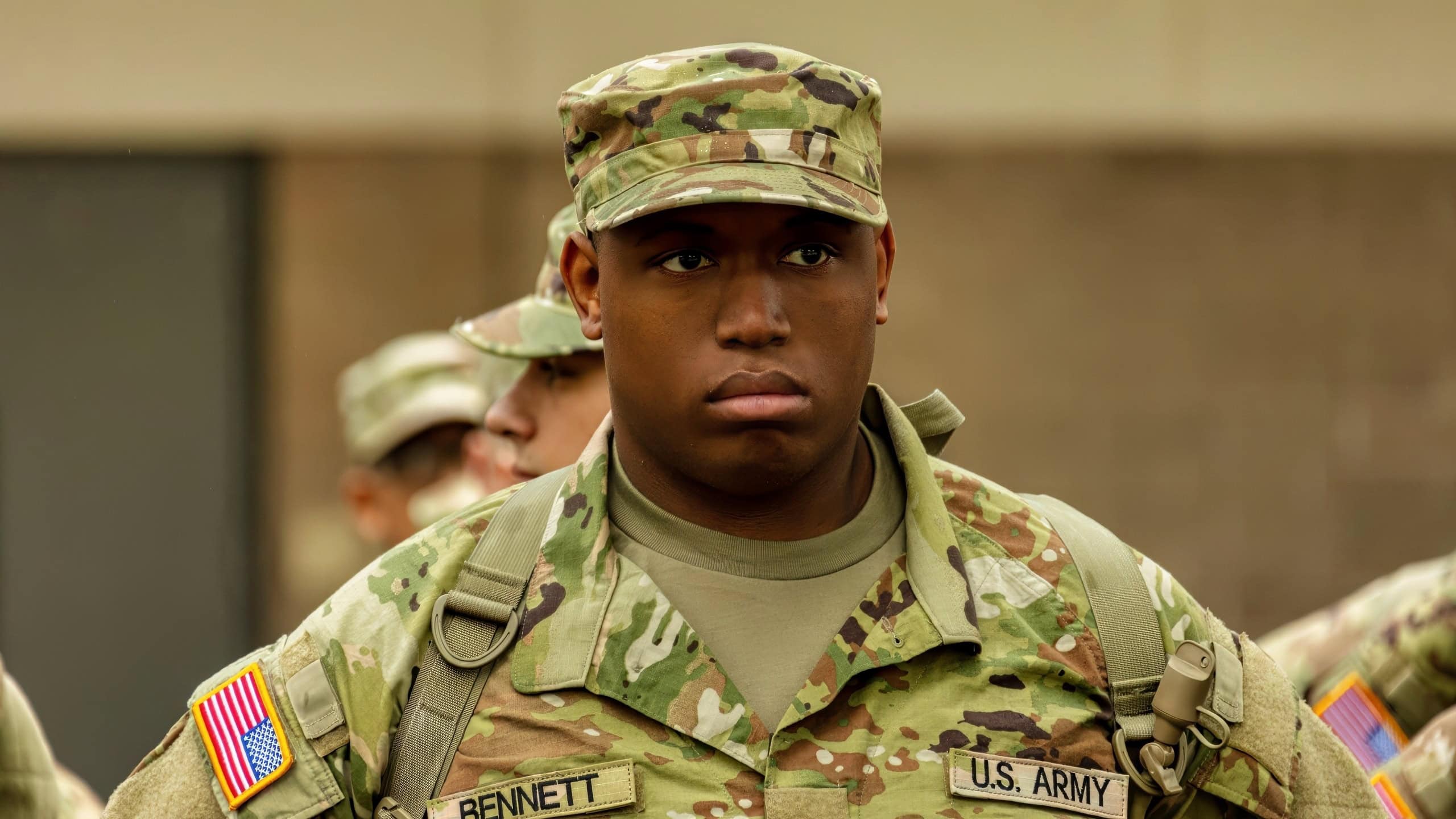
Basic Combat Training, also known as “boot camp,” is the process in transforming civilian volunteers into Soldiers. Over 10 weeks, trainees will go through four phases that cover Army core values, physical training, first aid, hand grenades, obstacle course, basic rifle marksmanship, navigation, and three separate field exercises. Basic training produces Soldiers that are disciplined, resilient, physically fit and competent in their basic skills who can successfully contribute as members of a team when they arrive at their first unit of assignment. (US Army photo by Robin Hicks)
The bill has been referred to the House Committee on Veterans’ Affairs and the Subcommittee on Health, and it now has 19 cosponsors, most of whom are Republicans, including two Democrats. One of them is Rep. Don Davis (D-NC), who is an Air Force veteran.
A separate version was introduced in the U.S. Senate in December, sponsored by Sen. Tim Sheehy (R-MT) and Sen. Tommy Tuberville (R-AL).
A New Push
Now, though, the Written Informed Consent Act has been endorsed by 35 national veterans groups, Stars and Stripes reported.
The groups that have backed the legislation include the American Legion, Disabled American Veterans, Veterans of Foreign Wars, and Iraq and Afghanistan Veterans of America. Some groups, including the VFW, AMVETS, and the Reserve Officers Association of America, had been supportive of the legislation when it was first introduced last August.
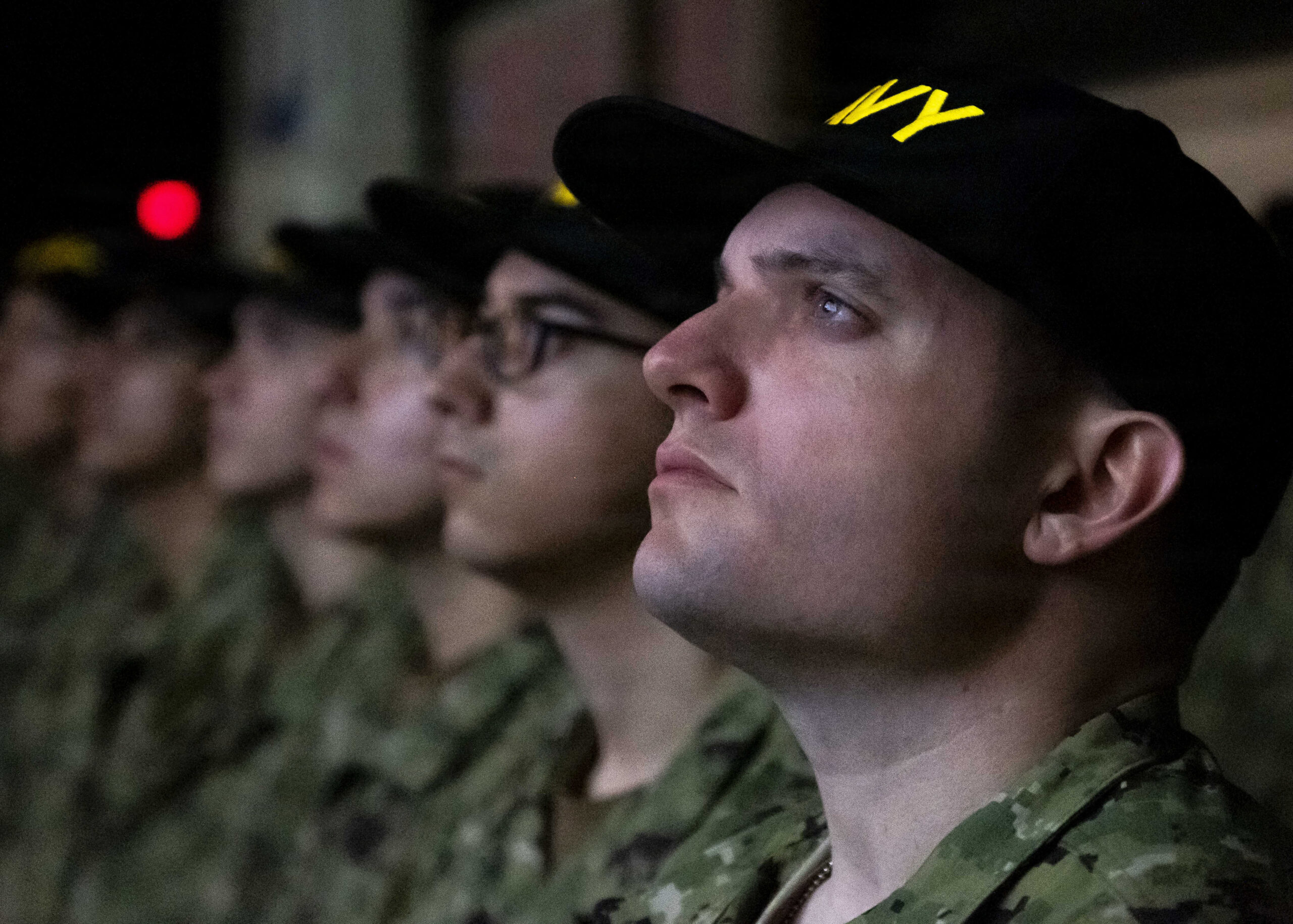
1116 GREAT LAKES, Ill. (Mar. 26, 2026) – Sailors stand at attention during the capping ceremony at USS Trayer (BST-21) onboard Recruit Training Command (RTC), Mar. 26, 2026. Trayer, more commonly referred to as “Battle Stations,” is the crucible event that recruits are required to pass prior to graduation, testing their knowledge and skills in basic seamanship, damage control, firefighting and emergency response procedures. Training is approximately nine weeks and all enlistees in the U.S. Navy begin their career at the command. More than 40,000 recruits train annually at the Navy’s only boot camp. (U.S. Navy photo by Mass Communication Specialist 2nd Class Jacob West)
The groups also held a press conference and sent a letter to the House and Senate Veterans’ Affairs Committees, asking them to prioritize the bill.
“Our veterans deserve nothing less than complete transparency when it comes to their health and the medications they’re prescribed,” Rep. Gus Bilirakis, one of the original cosponsors, said at the press conference, as reported by Stars and Stripes.
Many veterans are prescribed antidepressants and other drugs to deal with PTSD and other after-effects of their military service.
How Will Veterans React?
The publication also quoted Charles Garbarino, a retired Army colonel who spent more than 30 years as a military physician.
“No one discusses all the side effects. I’m talking about all physicians,” Garbarino told Stars and Stripes.
“Because it was my psychiatrist who was prescribing, I did not question it,” Garbarino said. “But my psychiatrist also said that if I have any questions or problems, I should call.” Garbarino, in speaking to the publication, added that the treatments he received were effective.
He said that while he is not in opposition to the bill, he is worried that more warnings could discourage some veterans from taking their medication.
“If the veteran says, ‘I don’t want it,’ their refusal would need to go into their chart,” the retired physician said. “Leaving a serious mental health problem untreated can lead to suicide.”

191009-N-WB795-1126 GREAT LAKES, Ill. (Oct. 9, 2019) Electronics Technician 1st Class Troy Kruyer performs the push-ups portion of the physical readiness test inside Pacific Fleet Drill Hall at Recruit Training Command. More than 35,000 recruits train annually at the Navy’s only boot camp. (U.S. Navy photo by Chief Mass Communication Specialist Brandie Nix/Released)
One advocate for the bill was Air Force veteran and veteran policy fellow at the Grunt Style Foundation Derek Blumke, who also spoke to Stars and Stripes.
“Veterans will become more aware and know when to reach out to their doctors if there are problems,” Blumke said. “Taking prescribed medication is not bad. But not informing patients of the risks is dangerous.”
Will It Pass?
The bill was introduced last year and has not yet been the subject of a hearing; the letter and press conference this week are clearly meant to build momentum for it. Whether the bill passes may depend on whether Congressional leadership or the White House gets behind it.
There is, however, some opposition. A group of medical organizations, including the American Academy of Family Physicians, the American Psychiatric Association, and the National Association of Social Workers, wrote a letter last December to the chairs and ranking members of the House and Senate Veterans Affairs Committees, expressing opposition to the informed consent legislation.
“While we share the bill’s goal of promoting informed, collaborative decision making between clinicians and patients, as currently written, it risks creating unintended barriers to timely treatment and duplicating existing processes,” the letter said.
“The VA’s current informed consent policy (VHA Handbook 1004.01) already requires written consent for treatments and procedures involving significant or unusual risks, including certain psychiatric and pain management medications,” the letter continues. “By requiring a new, separate written consent process for virtually all psychotropic drugs (antipsychotics, stimulants, antidepressants, anxiolytics, and narcotics), the legislation would add unnecessary administrative steps that delay care without improving patient safety or understanding.”
About the Author: Stephen Silver
Stephen Silver is an award-winning journalist, essayist, and film critic, and contributor to the Philadelphia Inquirer, the Jewish Telegraphic Agency, Broad Street Review, and Splice Today. The co-founder of the Philadelphia Film Critics Circle, Stephen lives in suburban Philadelphia with his wife and two sons. For over a decade, Stephen has authored thousands of articles that focus on politics, national security, technology, and the economy. Follow him on X (formerly Twitter) at @StephenSilver, and subscribe to his Substack newsletter.