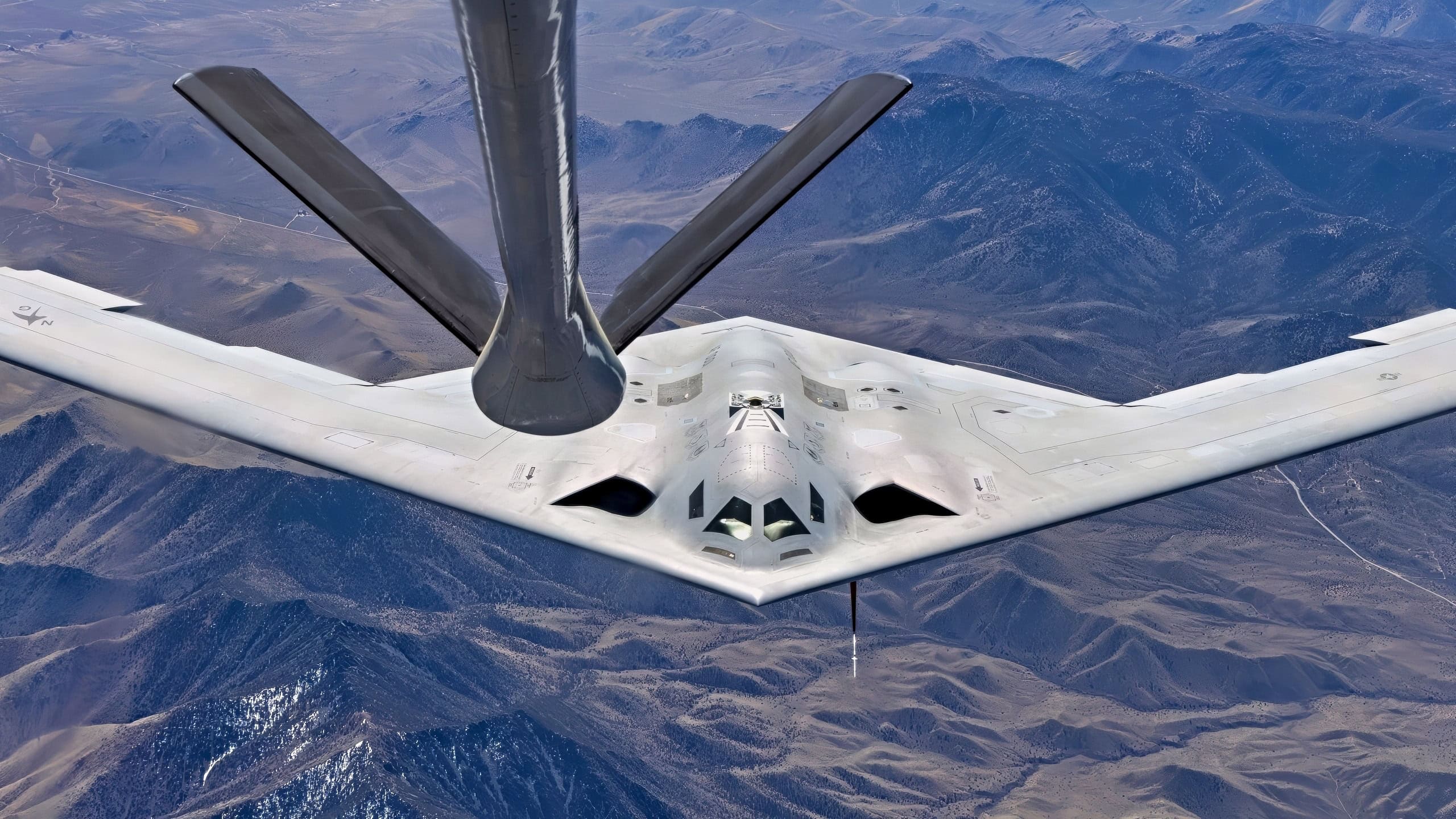
I have been studying the U.S. Air Force for decades, and one thing seems clear. The B-21 Raider stealth bomber will enter U.S. Air Force service alongside two transformative weapons: the Long Range Standoff Weapon (LRSO) and the B61-13 nuclear gravity bomb. Together, these create a layered strike capability that adversaries can’t easily counter—stand-off cruise missiles fired from outside enemy defenses, plus precision gravity weapons that can punch through hardened underground bunkers.
The B-21 Raider Stealth Bomber Is On the Way
The arrival of the B-21 Raider marks a generational shift in how the United States Air Force approaches long-range strike and nuclear deterrence, as it will be integrated with a new generation of weapons.
Designed from the outset to operate in highly contested environments, the B-21 is expected to rely not only on its stealth and range, but also upon advanced sensing, computing, and weaponry. Among the most significant of these are the Long Range Stand Off Weapon and the B61 Mod 13, both of which will substantially expand the aircraft’s flexibility, survivability, and deterrence value.
Using new applications of broadband stealth, the B-21 is intended to penetrate advanced air defenses and hold high-value targets at risk across vast distances. However, modern integrated air defense systems—particularly those fielded by near-peer competitors—are becoming increasingly sophisticated, incorporating layered radar networks, digital networking, long-range surface-to-air missiles, and advanced tracking technologies.
In this environment, even a stealth platform benefits from the ability to strike from beyond the reach of enemy defenses. This is where the Long Range Stand Off Weapon plays a critical role for the B-21.
Dual-Use LRSO
The LRSO is a nuclear-armed cruise missile designed to be launched from well outside contested airspace. By allowing the B-21 to engage targets without directly overflying heavily defended areas, the missile reduces risk to both the aircraft and its crew.
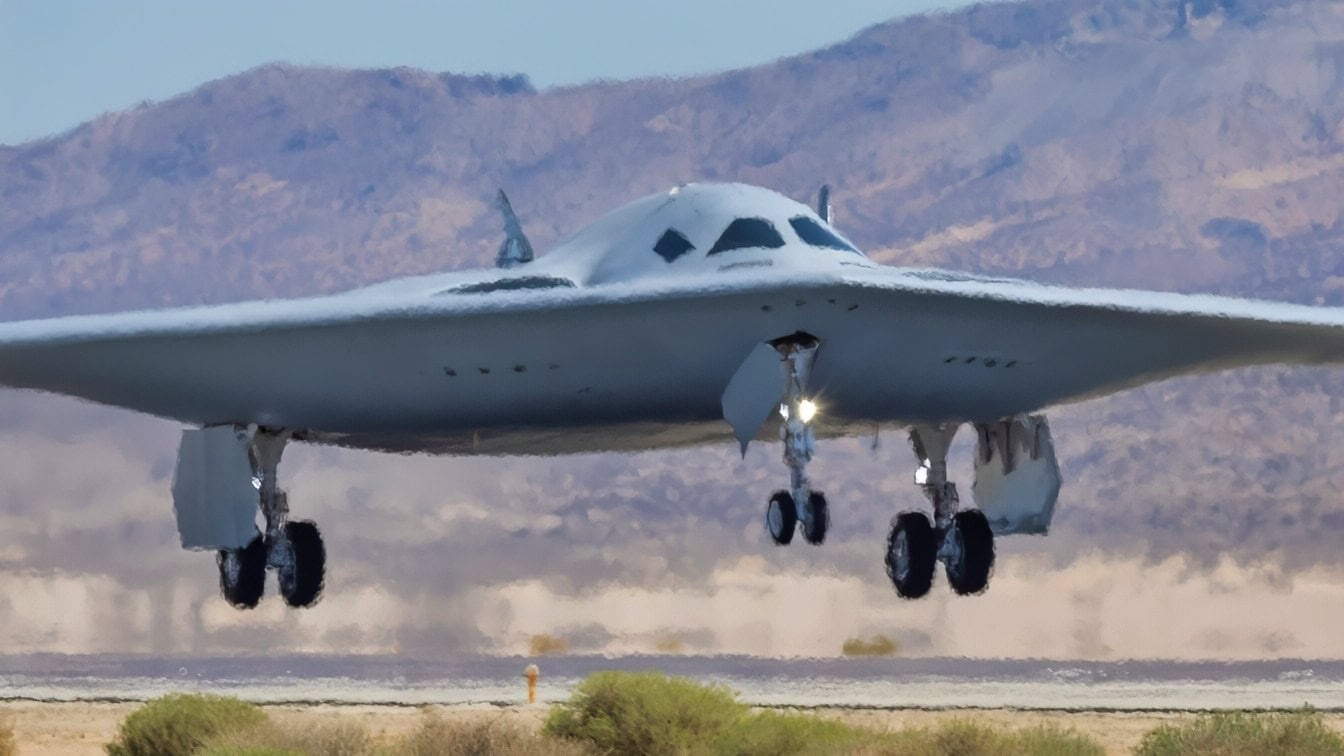
A B-21 Raider test aircraft lands at Edwards Air Force Base, Calif., during ongoing developmental flight testing, Sept. 11, 2025. The B-21 will be the backbone of the bomber fleet; it will incrementally replace the B-1 Lancer and B-2 Spirit bombers. (U.S Air Force photo by Todd Schannuth)

A second B-21 Raider, the world’s sixth-generation stealth bomber, test aircraft arrives at Edwards Air Force Base, Calif., Sept. 11, 2025. The addition of the second test aircraft expands mission systems and weapons integration testing, advancing the program toward operational readiness. (Courtesy photo)

The B-21 Raider was unveiled to the public at a ceremony Dec. 2, 2022 in Palmdale, Calif. The B-21 will provide survivable, long-range, penetrating strike capabilities to deter aggression and strategic attacks against the United States, allies, and partners. (U.S. Air Force photo)
It also complicates an adversary’s defensive calculations, as the launch platform may remain undetected or positioned far from the target area.
The missile’s expected low-observable characteristics and advanced guidance systems further enhance its survivability, enabling it to evade or penetrate modern air defense networks. The LRSO weapon is considered a “dual-use” weapon, meaning it can be used as both a conventional and nuclear weapon.
For the B-21, this creates a powerful combination of capabilities. The aircraft can operate as a stealthy penetrating bomber when necessary, but it can also function as a launch platform for stand-off strikes when conditions demand greater caution.
This dual capability ensures that commanders have multiple options for delivering strategic effects, whether the objective is to hold targets at risk continuously or to respond rapidly in a crisis.
Equally important is the integration of the B61 Mod 13, the latest evolution of the long-serving B61 family of nuclear gravity bombs. Unlike the LRSO, which is designed for stand-off delivery, the B61 Mod 13 is intended for direct deployment over a target.
When paired with the B-21’s stealth and precision navigation systems, this weapon provides a highly accurate and flexible option for striking hardened or deeply buried targets.
The B-61 Mod 13 bomb is a modern upgrade of the B-61 series, combining a variety of blast effects into a single munition. Instead of requiring separate weapons for earth-penetrating, point detonation, or “area blast” effects, the B-61 Mod 13 combines all of these options into a tailorable weapon capable of achieving any of them.
The B61 Mod 13, which was completed ahead of schedule, is expected to incorporate modern safety, security, and guidance improvements, building on earlier variants such as the Mod 12.
These upgrades likely include enhanced accuracy through tail-kit guidance systems, as well as selectable yield options that give planners greater control over the scale of an attack. For the B-21, this means the ability to deliver tailored effects against a wide range of targets, from fortified military installations to other strategic assets.
Stand-Off & Close-In Attack for B-21 Raider
One of the most important advantages of combining the B-21 with both the LRSO and the B61 Mod 13 is the resulting flexibility across the spectrum of conflict.
In lower-intensity scenarios or situations where escalation must be carefully managed, the aircraft can rely on stand-off weapons to maintain distance and reduce visibility. In higher-end conflict, where deeply buried or heavily protected targets must be neutralized, the B-21 can leverage its stealth to penetrate defenses and deliver gravity weapons with precision.
This layered approach strengthens deterrence by presenting adversaries with multiple dilemmas.
An opponent must defend not only against stealth aircraft but also against long-range cruise missiles that can be launched from unpredictable locations.
At the same time, the ability to deliver precise gravity bombs adds another dimension, ensuring that even the most hardened targets remain vulnerable.
The combination of these capabilities increases uncertainty for potential adversaries, which is a key element of effective deterrence.
Another critical factor is survivability.
The B-21 is being designed with advanced materials, reduced maintenance requirements, and the ability to operate in contested environments with a lower logistical footprint than previous bombers.
When paired with the LRSO, the aircraft can remain farther from threats, reducing exposure to enemy defenses. When employing the B61 Mod 13, its stealth characteristics and advanced avionics enhance its chances of successfully penetrating defenses and completing its mission.
Nuclear Triad
The integration of these weapons also reflects a broader modernization effort within the U.S. nuclear triad. As legacy systems age and adversaries field more capable defenses, maintaining a credible deterrent requires both new platforms and updated munitions.
The B-21, combined with the LRSO and the B61 Mod 13, represents a coordinated effort to ensure that the airborne leg of the triad remains effective well into the future.
Importantly, these capabilities are not solely about nuclear deterrence.
The technologies that enable the LRSO and B61 Mod 13—such as advanced guidance, survivability features, and secure communications—also contribute to the broader mission set of the B-21. The aircraft is expected to perform conventional strike, intelligence gathering, and electronic warfare missions, and its ability to integrate cutting-edge weapons enhances its overall versatility.
Overall, the pairing of the B-21 Raider with the Long Range Stand Off Weapon and the B61 Mod 13 creates a highly adaptable and resilient strike capability.
The LRSO extends the aircraft’s reach and reduces risk by enabling stand-off engagements, while the B61 Mod 13 provides a precise and flexible option for penetrating strikes against hardened targets.
Together, these systems ensure that the B-21 can operate effectively across a wide range of scenarios, reinforcing both deterrence and operational effectiveness.
As the strategic environment continues to evolve, this combination of platform and weapons will play a central role in maintaining the United States’ ability to project power and deter aggression.
About the Author: Kris Osborn
Kris Osborn is the Military Technology Editor of 19FortyFive. Osborn is also President of Warrior Maven – Center for Military Modernization. Osborn previously served at the Pentagon as a highly qualified expert in the Office of the Assistant Secretary of the Army—Acquisition, Logistics & Technology. Osborn has also worked as an anchor and on-air military specialist at national TV networks. He has appeared as a guest military expert on Fox News, MSNBC, The Military Channel, and The History Channel. He also has a Master’s Degree in Comparative Literature from Columbia University.