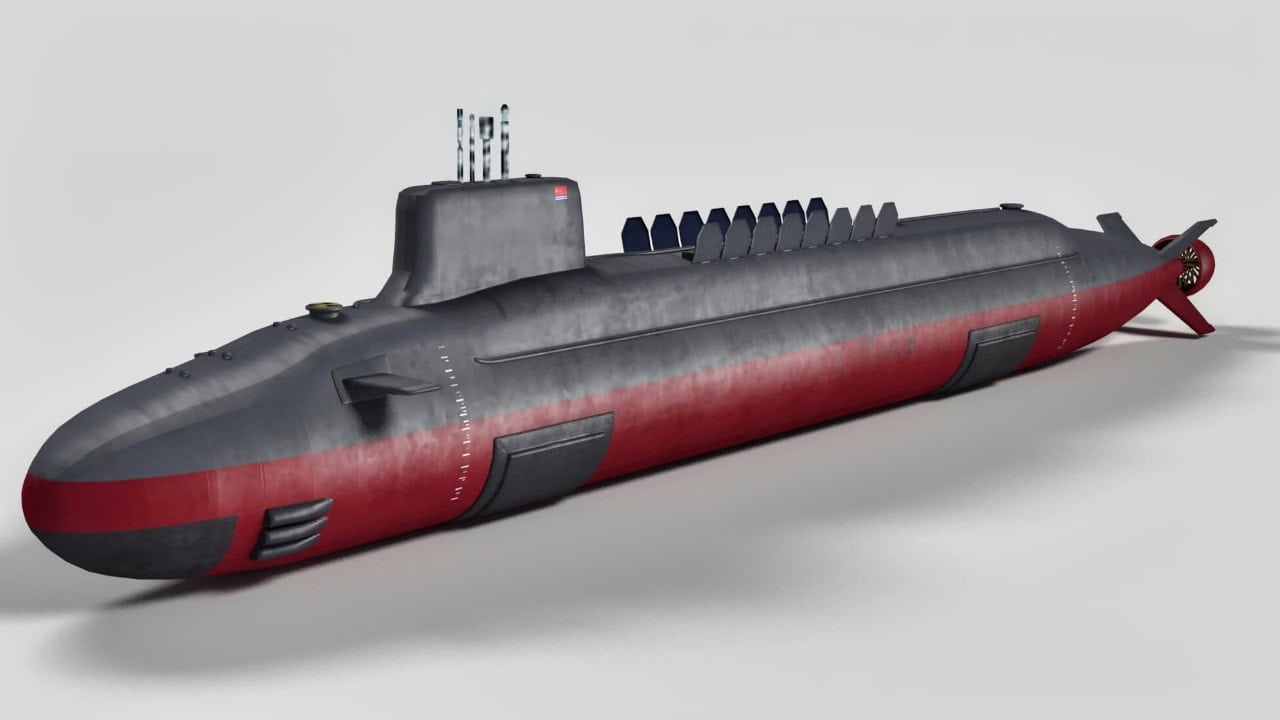
China is close to operating more attack submarines than the United States Navy, and Beijing is rolling out the new SHANG III class with multiple boats already in production. The U.S. is retiring aging Los Angeles-class submarines faster than it can build new Virginia-class boats—and the gap is widening fast.
China’s Submarine Forces are A Problem for the U.S. Navy
The People’s Liberation Army Navy currently operates a large number of attack submarines – almost as many as the U.S. Navy – and is accelerating production even further. This includes the rollout of a new SHANG III class and the near-term addition of several guided-missile nuclear-powered attack submarines.
China’s growing attack-submarine capability is regularly highlighted in the Pentagon’s annual report, Military and Security Developments Involving the People’s Republic of China, which notes that the PLA Navy will have one operational SHANG III by 2025, with several others in production.
According to 2026 data from GlobalFirepower, China maintains the third-largest submarine fleet, behind only those of the U.S. and Russia. China’s fleet is growing.
A key concern among Navy officials and lawmakers is the size of the U.S. Fleet. Aging Los Angeles-class submarines are being retired faster than newer Virginia-class submarines can be constructed, creating what many describe as a growing shortfall in U.S. attack submarine numbers.
This imbalance is expected to widen in the near term, prompting close collaboration between Navy acquisition officials, Congress, and the defense industrial base to increase production capacity and reduce the deficit.
An industrial base assessment conducted several years ago concluded that shipbuilders could expand output to produce at least one additional Virginia-class submarine per year beyond earlier projections.
In response, General Dynamics Electric Boat and Huntington Ingalls Industries have both significantly increased their manufacturing capacity to meet Navy demand.
That demand remains high, as requests from combatant commanders for attack submarines have consistently exceeded available supply.
SHANG III vs Virginia-class
Beyond fleet size, however, a central issue in any potential U.S.–China undersea competition is technological advantage.
Attack submarines are especially critical in the Pacific, where advanced capabilities—such as improved quieting, undersea surveillance systems, and cutting-edge features found in Block III and later Virginia-class submarines—play a decisive role.
Enhanced quieting technologies, large-aperture bow sonar, long-range, high-fidelity sensors, and modern communications systems enable submarines to conduct covert surveillance missions in contested waters.
These capabilities are particularly valuable in coastal and island regions near adversary territory, where larger surface ships are more vulnerable to detection and attack by submarines, torpedoes, and land-based weapons.
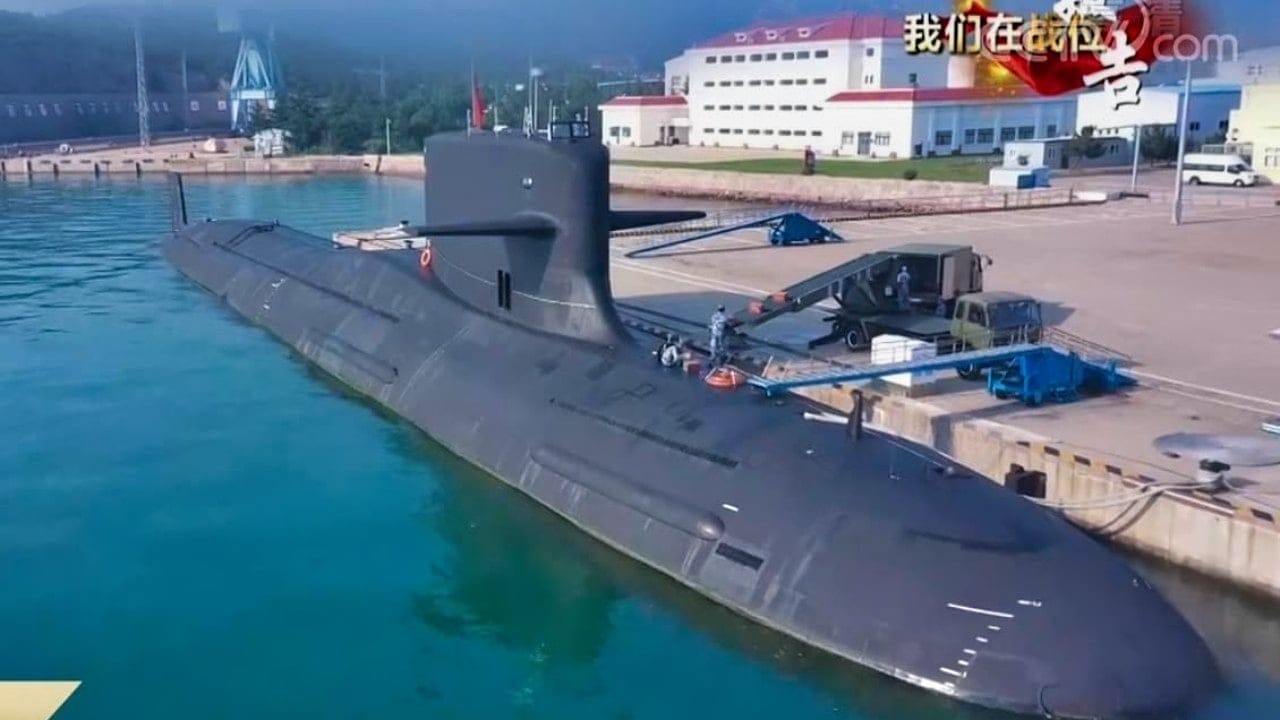
Type 093B Submarine from China. Image Credit: Screengrab.
Ultimately, the outcome of any competition between U.S. and Chinese attack submarines may depend more on these qualitative differences than on fleet size alone. If U.S. submarines are quieter, harder to detect, and better able to locate and engage adversary targets, that advantage could outweigh any numerical advantage.
At the same time, the Pentagon report indicates that the new SHANG III class is being designed with modern technologies intended to support clandestine operations.
This makes it essential for U.S. defense planners to assess how advanced these systems are and work to ensure that Virginia-class submarines retain a clear edge.
Submarines in War
An analysis published by “Covert Shores” as far back as 2017 examined earlier SHANG-class submarines and found evidence of significant advancements.
The report noted improvements such as enhanced sensors and increased stealth features, and also described structural changes, including a lengthened sail with a blended leading edge similar to that of the U.S.
Virginia-class submarines, as well as refinements to the hull behind the sail. Additional upgrades included an integrated towed sonar array extending from the upper rudder and the application of anechoic coatings made of small rubber tiles to reduce acoustic signatures, the Covert Shores essay explains.
At the same time, any numerical gap between the U.S. and Chinese submarine fleets could still have serious implications in a large-scale conflict.
A greater number of attack submarines enables expanded firepower and operations across a broader area of the undersea battlespace.
Given the size of China’s naval forces, the U.S. Navy would likely need a substantial number of attack submarines to counter potential scenarios such as an amphibious assault on Taiwan or other offensive actions in the Pacific.
About the Author: Kris Osborn
Kris Osborn is the Military Technology Editor of 19FortyFive. Osborn is also President of Warrior Maven – Center for Military Modernization. Osborn previously served at the Pentagon as a highly qualified expert in the Office of the Assistant Secretary of the Army—Acquisition, Logistics & Technology. Osborn has also worked as an anchor and on-air military specialist at national TV networks. He has appeared as a guest military expert on Fox News, MSNBC, The Military Channel, and The History Channel. He also has a Masters Degree in Comparative Literature from Columbia University