The strategic logic behind the Australia-United Kingdom-United States (AUKUS) agreement was straightforward. Australia needed nuclear-powered submarines to operate effectively across the vast Indo-Pacific. The United States wanted a stronger allied undersea presence to contain China’s growing naval power in the First and Second Island Chains. Britain, meanwhile, sought relevance in a rapidly evolving maritime balance of power.
Both the United States and the United Kingdom were desperate to boost their ailing naval shipyards and defense industrial bases by creating an entirely new market for their submarines in Australia.
So, on paper, the whole deal sounded like a masterstroke.
And, the British got to stick it in the eye of France by edging the French out of their submarine agreement with Australia. In reality, sadly, the agreement has collided head-on with the ugly truth about America’s submarine industrial base: the US currently lacks the capacity to meet its own naval requirements, let alone arm allies at the pace AUKUS demands.
The Trump administration’s Undersecretary of Defense for Policy, Elbridge Colby, has argued that the United States must produce its nuclear-powered Virginia-class attack submarines at a rate of 2.3 per year. At best, America’s naval shipyards have produced these submarines at a languid pace of 1.2 per year.
Not only has the current Undersecretary of Defense for Policy set the goal of 2.3 nuclear-powered submarines per year for American naval shipyards, but that is the exact production rate the AUKUS agreement demands. Even senior Navy leadership has conceded that the gap is becoming insurmountable, as US (and British) naval shipyards continue to decline.
The Virginia-Class Crisis and AUKUS
For years, the Navy’s ideal production target was two Virginia-class submarines per year. That pacing was supposed to stabilize the attack submarine fleet while allowing the Navy to retire older Los Angeles-class attack subs gradually.
Instead, production has stagnated.
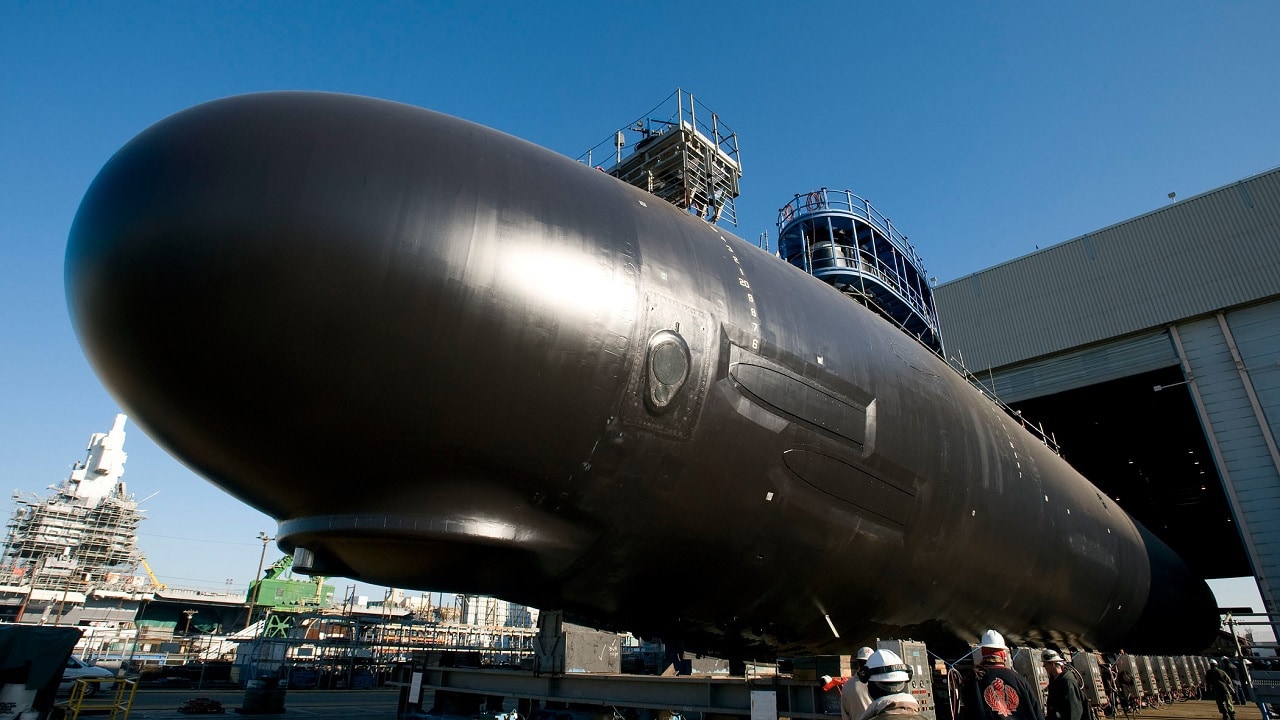
Virginia-Class. Image Credit: Creative Commons.
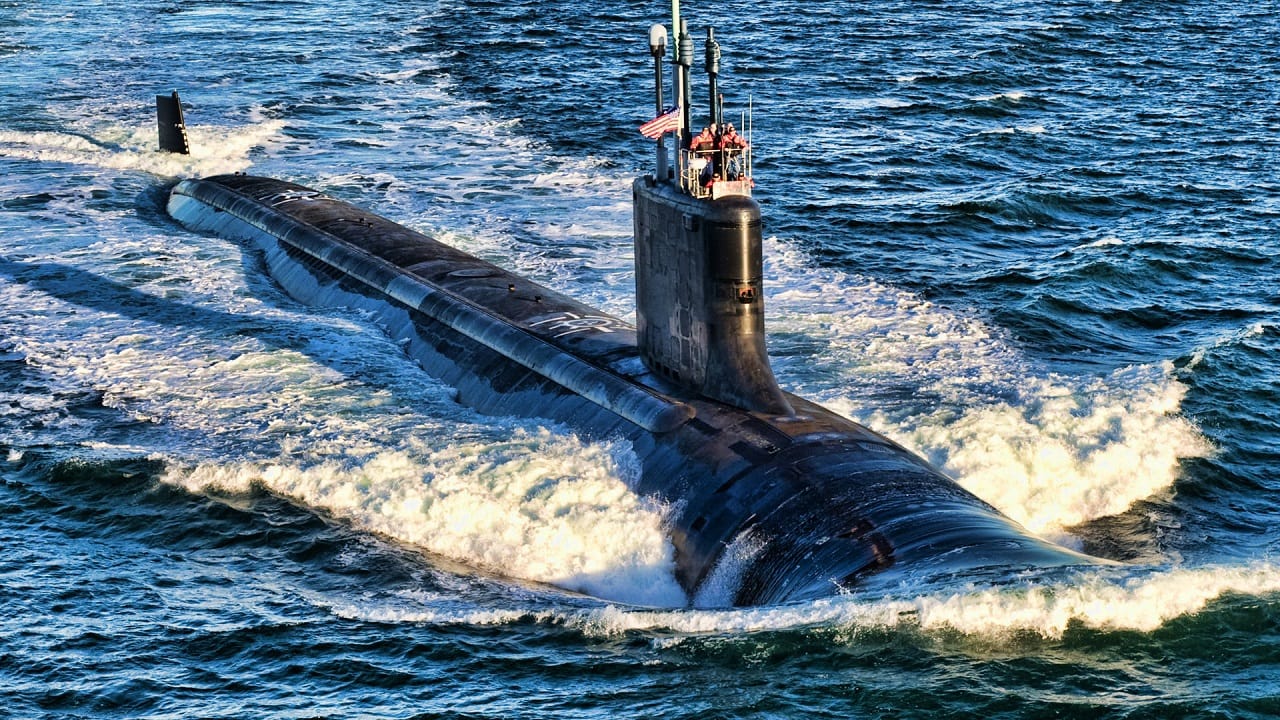
US Navy Attack Submarine. Image Credit: Creative Commons.
Workforce shortages continue to hammer the shipyards. Supply chain fragility remains severe. The simultaneous construction of the Columbia-class ballistic missile submarine–the Navy’s top modernization priority–has absorbed whatever industrial bandwidth America’s ailing shipyards have.
This situation has led to a US submarine force under severe industrial duress.
The Congressional Research Service (CRS) recently warned Congress that submarine production delays are worsening year over year and that industrial recovery remains uncertain.
Admiral Daryl Caudle, one of the Navy’s top senior submarine leaders, has openly acknowledged that achieving a stable production rate of two Virginia-class submarines annually likely will not occur until the 2030s. That admission alone fundamentally undermines the original AUKUS timeline.
Australia is supposed to begin receiving between three and five Virginia-class submarines during the early 2030s. But procuring that many Virginia-class submarines by the 2030s is not feasible given current U.S. industrial limitations.
AUKUS is Colliding With Strategic Reality
The problem is not merely industrial. It is both legal and strategic.
American law, for instance, prohibits transferring submarines to foreign allies if doing so would degrade the US Navy’s combat readiness. That legal restriction has become increasingly important as the Navy’s attack submarine fleet shrinks faster than replacements arrive.
The Navy’s long-term requirement remains approximately 66 attack submarines. Yet force-structure projections show fleet numbers dipping well below that threshold over the coming decade as aging submarines retire faster than new boats are delivered.
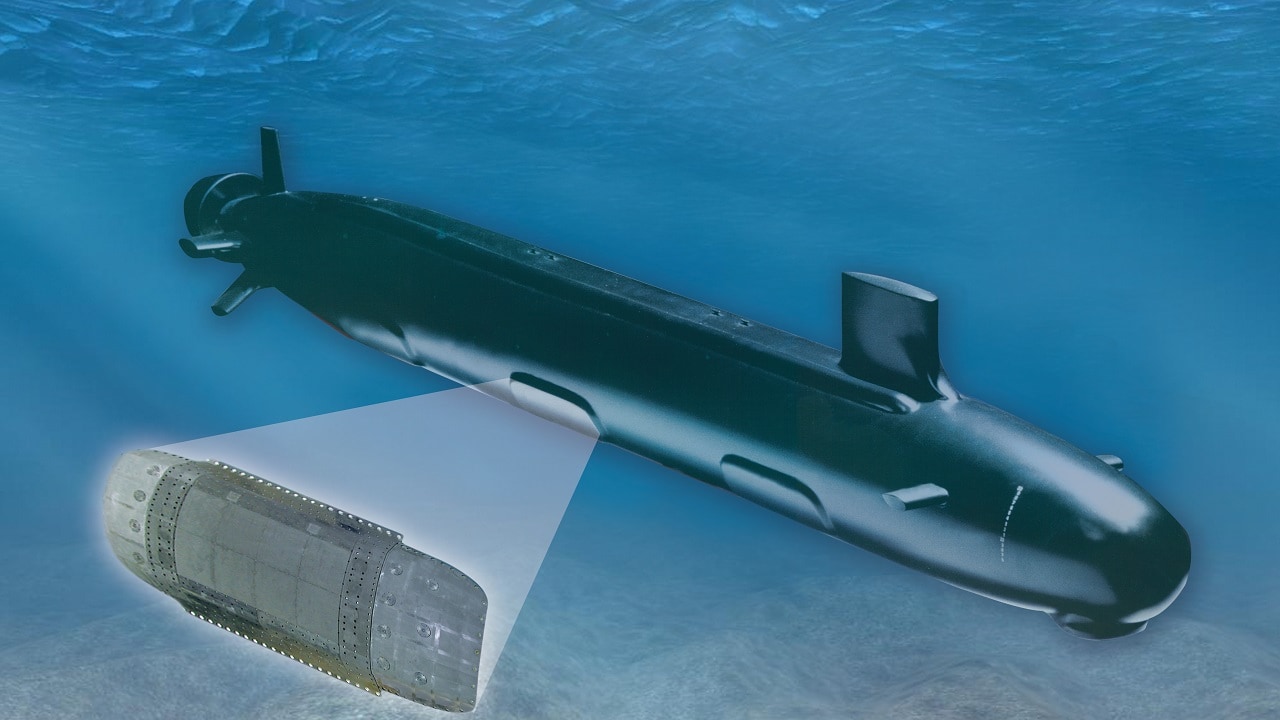
Block IV Virginia-class Submarine.
This reality has fueled growing skepticism among defense analysts, lawmakers, and even allied observers.
Critics now openly question whether Australia will receive any Virginia-class submarines on schedule at all. Meanwhile, some congressional discussions have explored alternatives where American submarines simply rotate through Australian ports under US command rather than transferring ownership outright. That would represent a major restructuring of the original AUKUS vision, though.
Billions Spent to Save the Industrial Base
Washington understands the problem.
The Pentagon and Congress have already allocated billions of dollars toward rebuilding the submarine industrial base.
In fact, the Navy has attempted several emergency adjustments to accelerate output. Some measures include expanding supplier networks, increasing workforce recruitment, spreading production across broader industrial facilities, deploying artificial intelligence (AI)-enabled management systems to reduce bottlenecks, and injecting direct funding into vulnerable subcontractors.
None of these initiatives produced the intended results.
That’s because the submarine base remains highly specialized. The US cannot simply create skilled welders, nuclear-certified technicians, pipefitters, and engineers overnight. What’s more, the Navy’s shipyards need to offer more in the way of incentives and better pay to encourage more workers to both join the workforce and to retain existing skilled personnel.
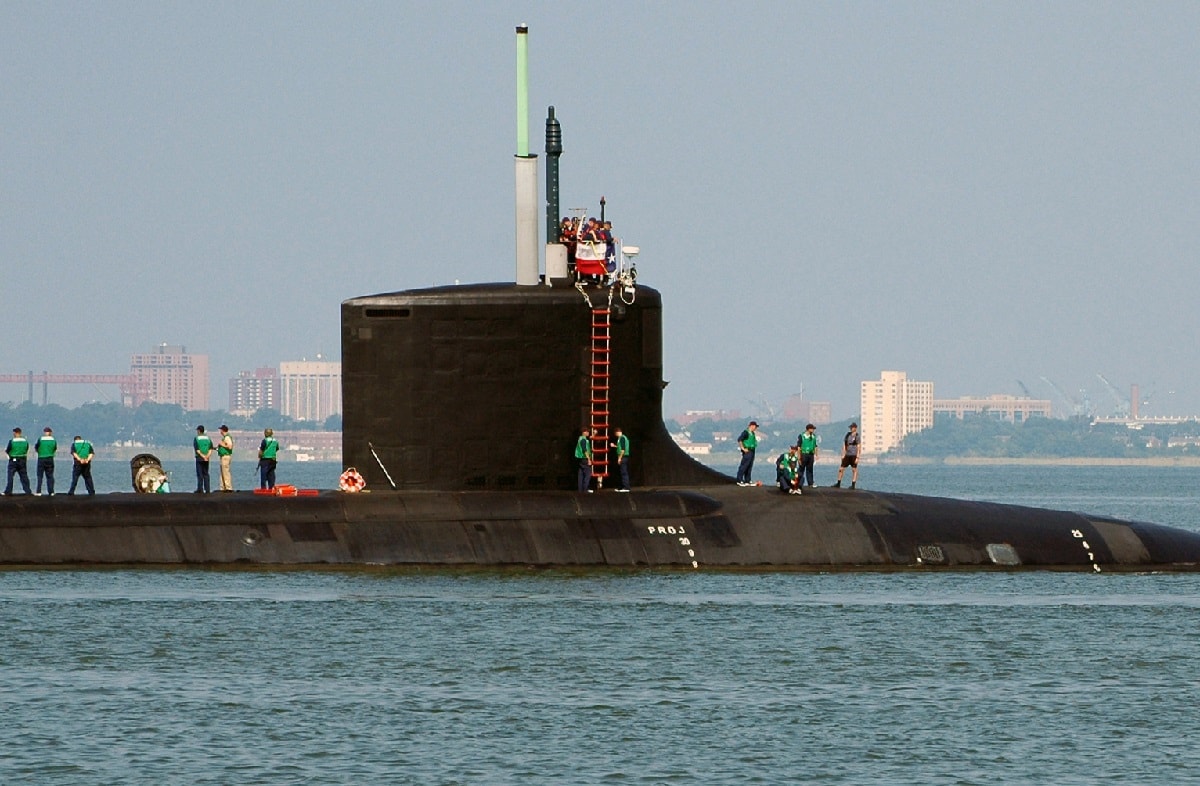
U.S. Navy Sailors stationed aboard the Virginia Class New Attack Submarine Pre-Commissioning Unit (PCU) TEXAS (SSN 775) stands topside as the boat gets underway from Naval Station Norfolk, Va., Aug. 22, 2006. TEXAS is the second Virginia Class submarine built and the first major U.S. Navy combatant vessel class designed with the post-Cold War security environment in mind. TEXAS will be commissioned Sept 9, 2006 in Galveston, Texas. (U.S. Navy photo by Mass Communication Specialist Seaman Kelvin Edwards) (Released)
Then there’s the problem of how most businesses operate. Many suppliers operate on razor-thin margins and have limited surge capacity. They operate under the “just-in-time” logistics model. But this model should have been proven as ineffective in the wake of the pandemic supply chain shocks. Instead, suppliers must operate off a “just-in-case” mentality. Years of chronic underinvestment hollowed out large portions of the American maritime manufacturing ecosystem.
And now Washington is trying to restore that ecosystem while simultaneously competing with China, sustaining global naval deployments, replenishing missile stockpiles, and modernizing its nuclear triad.
The strain is becoming visible everywhere. Something must give. It looks as though AUKUS is the first to go (if not officially, then in practice).
China Benefits From America’s Industrial Weakness
AUKUS increasingly exposes the broader structural weaknesses within the American defense industrial base. The United States still possesses immense technological sophistication. But America’s ability to mass-produce military capability at scale no longer resembles the industrial dominance it enjoyed during the Cold War.
China, however, continues expanding capacity at breakneck speed. And with each iteration of their expansion, China’s military systems become more advanced than the last generation.
What’s more, Beijing launches commercial and military vessels at alarming rates that the United States cannot match. Chinese shipyards benefit from enormous state subsidies, integrated supply chains, lower labor costs, and industrial coordination that America’s fragmented defense ecosystem struggles to replicate.
Ironically, Washington created AUKUS to contain China’s rise in the Indo-Pacific. Instead, the agreement itself does little more than highlight the long-run industrial imbalance favoring Beijing. Every delayed submarine delivery reinforces the perception that America’s defense industrial machinery is overextended.
Australia’s Growing Anxiety
Canberra publicly maintains confidence in the agreement. Australian officials continue describing AUKUS as essential for national security and regional deterrence. Privately, however, anxiety is growing. After all, Australia’s Collins-class submarines are aging rapidly. Delays inside both the American and British submarine sectors have raised fears that Australia could face a dangerous capability gap in the 2030s.
The costs for Australia are also exploding.
Current projections, for example, estimate that AUKUS may cost Canberra up to $245 billion through the 2050s.
As for the industrial challenges facing Britain, Parliamentary inquiries in London recently warned that British submarine availability has become “critically low,” further complicating the broader AUKUS roadmap. In fact, the entire arrangement increasingly depends on three strained industrial bases simultaneously achieving what amounts to miracles (in terms of industrial capacity) under tightening geopolitical timelines.
The Future of AUKUS Depends on Industrial Resurrection
AUKUS was never just another submarine deal. The agreement was a test of whether the Western alliance system still had the industrial capacity to sustain great-power competition.
As it stands, the Western alliance lacks that capability.
Sure, America still builds the world’s most advanced submarines. But quantity matters in maritime warfare. Industrial throughput matters, too. Repair cycles and supply chains are important. America’s current submarine enterprise, like the rest of its defense industrial base, is dangerously overburdened.
Unless the United States achieves a true industrial renaissance–one capable of dramatically expanding shipbuilding capacity–the original AUKUS timeline will continue slipping deeper into the stuff of fantasy.
At this rate, Canberra should expect that the submarines the United States and the United Kingdom promised will never arrive. And, if they do, they won’t be either in the quantities needed or in any meaningful timescale.
About the Author: Brandon J. Weichert
Brandon J. Weichert is the Senior National Security Editor at 19FortyFive.com. Recently, Weichert became the editor of the “NatSec Guy” section at Emerald. TV. He was previously the senior national security editor at The National Interest. Weichert hosts The National Security Hour on iHeartRadio, where he discusses national security policy every Wednesday at 8 p.m. Eastern. He hosts a companion show on Rumble entitled “National Security Talk.” Weichert consults regularly with various government institutions and private organizations on geopolitical issues. His writings have appeared in numerous publications, among them Popular Mechanics, National Review, MSN, and The American Spectator. And his books include Winning Space: How America Remains a Superpower, Biohacked: China’s Race to Control Life, and The Shadow War: Iran’s Quest for Supremacy. Weichert’s newest book, A Disaster of Our Own Making: How the West Lost Ukraine, is available for purchase at any bookstore. Follow him via Twitter/X @WeTheBrandon.