

The Undersea Defense Technology (UDT) 2026 conference wrapped up in Scotland this month, and it appears that the AUKUS pact has a new lease on life. The alliance’s goal is for the United States, the United Kingdom, and Australia to band together and work toward balancing against China in improved undersea warfare. Australia will receive three to five Virginia-class submarines from the United States in the 2030s, if the alliance progresses as planned.
In 2027, Virginia-class submarines are expected to be based in Australia. The United Kingdom and Australia are working on a new submarine called the SSN-AUKUS. Rolls-Royce Submarine is progressing on work toward that goal.
British Defense Industrial Base Is Chugging Along
Executives from Rolls-Royce Submarine said the British are on track with the new powerplant and have passed key milestones. “Seven reactors are currently under construction in Derby, with manufacturing pace doubling as demand increases. Progress on the PWR3+ reactor and next steps in the program were also discussed, with multiple speakers reinforcing that AUKUS remains on track and progressing to schedule,” according to VisionGain.
British-Australian Partnership Is Healthy
The company is also working well with Australia on “industry skills, supply chains, and innovation ecosystems.”
This means the AUKUS project is focused on its delivery phase with advanced manufacturing on the power plant and other systems. The program will be “delivered, integrated, and sustained.”
Australian Collins-class Submarines Are Not Pulling Their Weight
The Virginia-class and the SSN-AUKUS must be built in a timely manner to replace Australia’s Collins-class boats. Problems abound with this class of submarines. The engines are aging, and the subs have corrosion issues.
There are only six boats in the class, and if one or two are in maintenance periods at any given time, the Australian navy does not have the capability to defend the shoreline, much less take the undersea fight to the enemy.
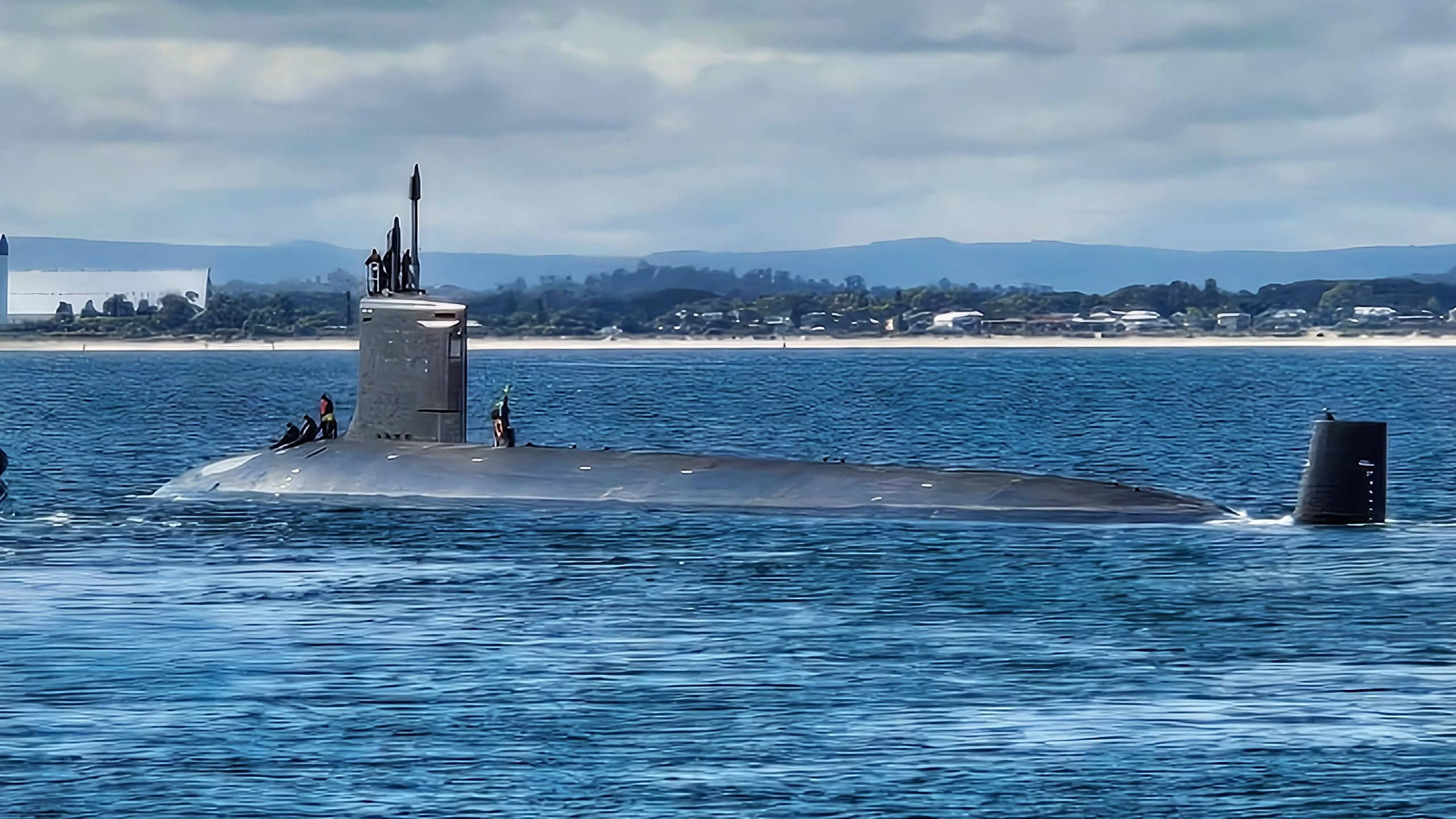
HMAS STIRLING, Western Australia, Australia (Sep. 10, 2024) — USS Hawaii (SSN 776) departs HMAS Stirling Sept. 10, marking the conclusion of a historic submarine maintenance period in Western Australia. As part of the Australia, United Kingdom, United States (AUKUS) Pillar 1 effort, Royal Australian Navy personnel assigned to submarine tender USS Emory S. Land (AS 39) worked alongside their U.S. Navy counterparts to make repairs on the U.S. Virginia-class SSN in Australia during a multi-week Submarine Tendered Maintenance Period, or STMP. (U.S. Navy photo by Rory O’Connor)
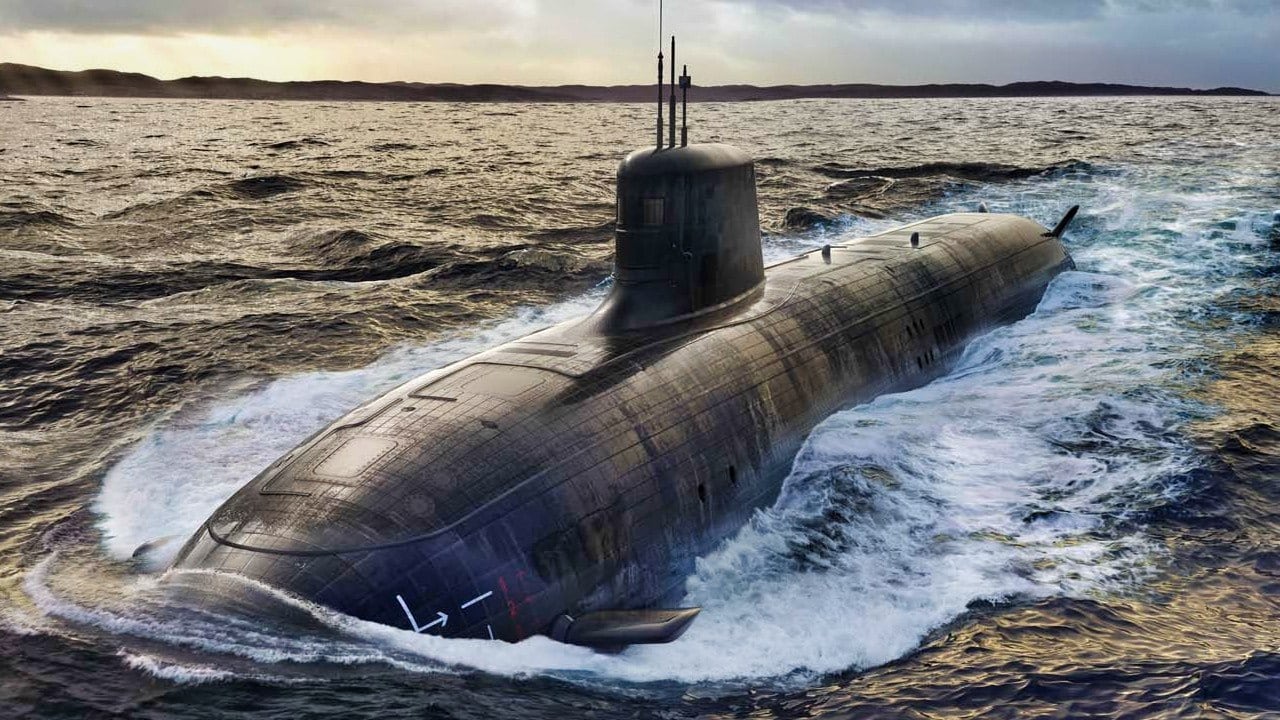
SSN-AUKUS Submarine. Image is Creative Commons Artist Rendering.
The Aussies Are Investing Ample Funding
However, the Australian government is fully in support of the AUKUS plan, setting aside $2.7 billion to upgrade shipyards and invest in new workers to maintain the Collins-class and prepare for the arrival of the Virginia-class.
AUKUS is a key part of Australia’s defense strategy. Undersea warfare is considered a non-negotiable aspect of the security pact and will focus on improving deliverables in the new program.
Good News – Bad News from America
News on the American end has been mixed. The good development was that President Donald Trump indicated he would support the AUKUS pact last year. The problem is that American shipyards may not be able to produce submarines for both the U.S. Navy and the Australian Navy.
AUKUS Pillar Two Is Not Progressing
Another part of AUKUS is known as “Pillar Two,” which aims to renew cooperation among allies in artificial intelligence for national security, hypersonic missiles, and cyber defense. This initiative is behind schedule due to difficulties in sharing the classified information underlying these technologies.
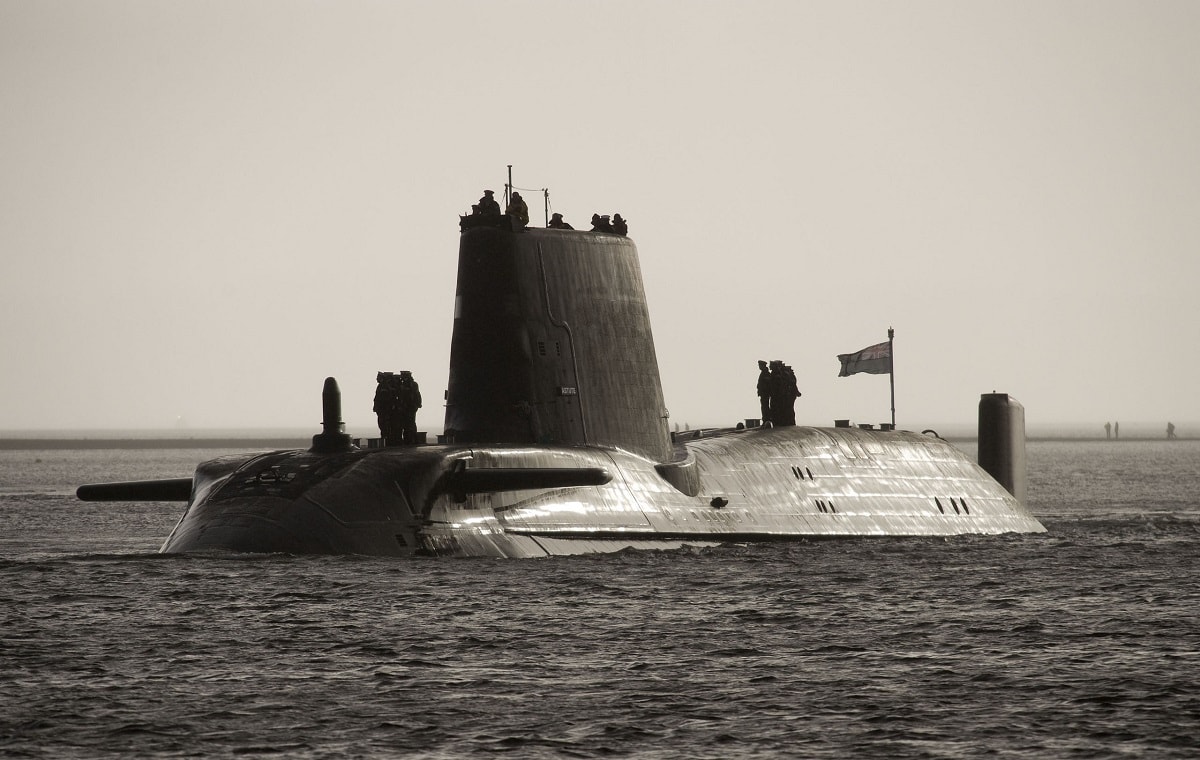
Image of Astute-class Submarine. Image Credit: Creative Commons.
Can the Americans Make Good on Their Pledge?
Despite these difficulties, Trump has said the United States would transfer the Virginia-class subs to Australia. There are other concerns about the Americans’ ability to produce enough boats for both countries at once.
That has some wondering if the deal can be consummated as designed. Australia desperately needs AUKUS to go off without a hitch. As mentioned earlier, the Collins-class is inadequate to meet Australia’s defense needs.
If the Virginia-class boats are not delivered in a timely fashion, the AUKUS pact could be dead in the water. Meanwhile, the British are doing their part to develop an entirely new submarine. The Australian government is putting up sufficient funds; it is just the Americans who need a long-term commitment to the deal.
Trump May Get An Earful from Xi Jinping
Getting Trump’s support is one step in the right direction. But the mercurial president is often forgetful of his prior commitments and changes his mind often. Plus, the Americans are dealing with the war in Iran, and China is not happy with AUKUS. Indeed, Xi Jinping may discuss the AUKUS agreement with Trump during their summit in May.
This Is One Ambitious Deal
One of the problems with AUKUS is its huge ambitions. The alliance is a good strategy, but the scope of work is daunting. A Virginia-class submarine is not like a tank or even a new F-35.
Building a submarine is a huge undertaking, and designing an entirely new model like the SSN-AUKUS is even more difficult.
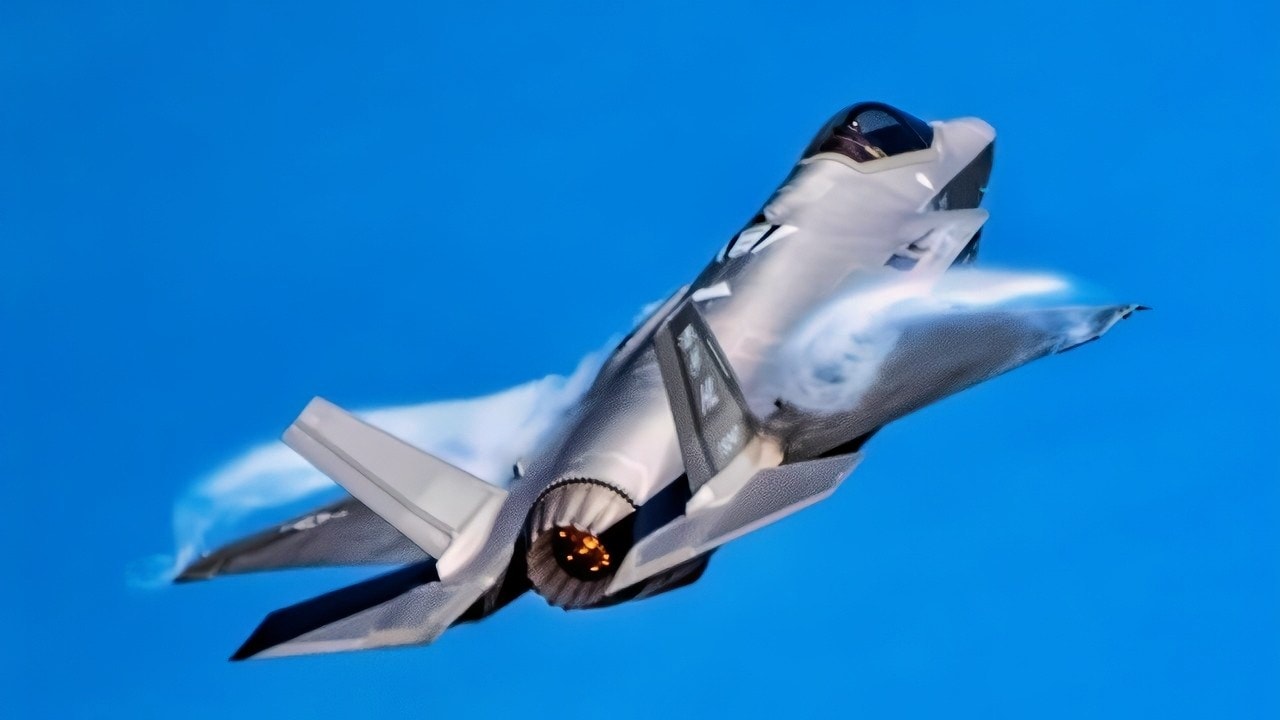
U.S. Air Force Maj. Kristin Wolfe performs a demonstration in the F-35A Lightning II during at the Reno Air Races in Reno, Nevada, September 19, 2021. The F-35 Lightning II Demonstration Team is based out of Hill Air Force Base, Utah. (U.S. Air Force photo by Tech. Sgt. Nicolas Myers)
Congress Is Doing Its Job
So is this agreement dead? Let’s not call for its funeral yet. The political willpower is partially there. The U.S. Congress is doing its part. Lawmakers on Capitol Hill approved the transfer of two Virginia-class boats to Australia in the FY2024 National Defense Authorization Act. That is a step in the right direction with bipartisan support from legislators.
Anglo-American Relations Have Been Better
Britain’s political leadership is less pro-American than it used to be, though. Prime Minister Keir Starmer is no fan of Trump, and the two countries are not working together during the war against Iran. Starmer said that this is not Britain’s war.
The prime minister also said that Britain would not participate in the U.S. blockade of Iranian ports. Trump had earlier replied that Starmer is “no Churchill.”
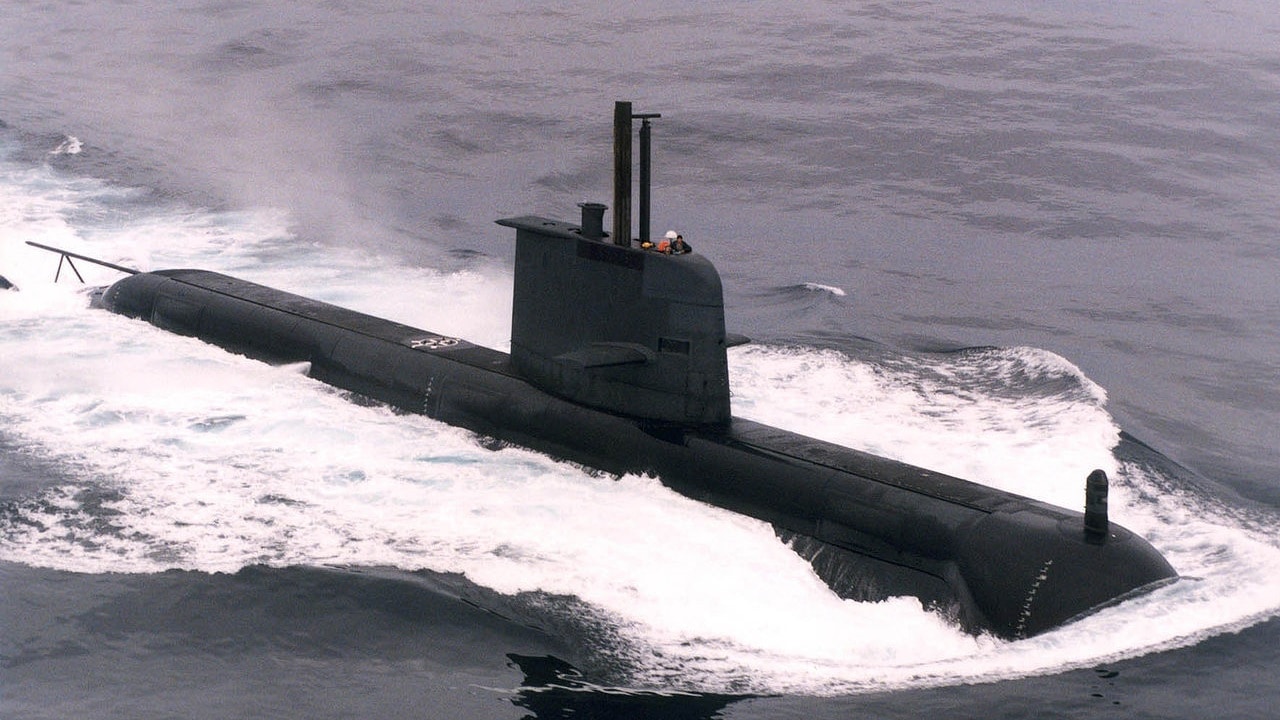
Collins-Class Submarine from Australia.
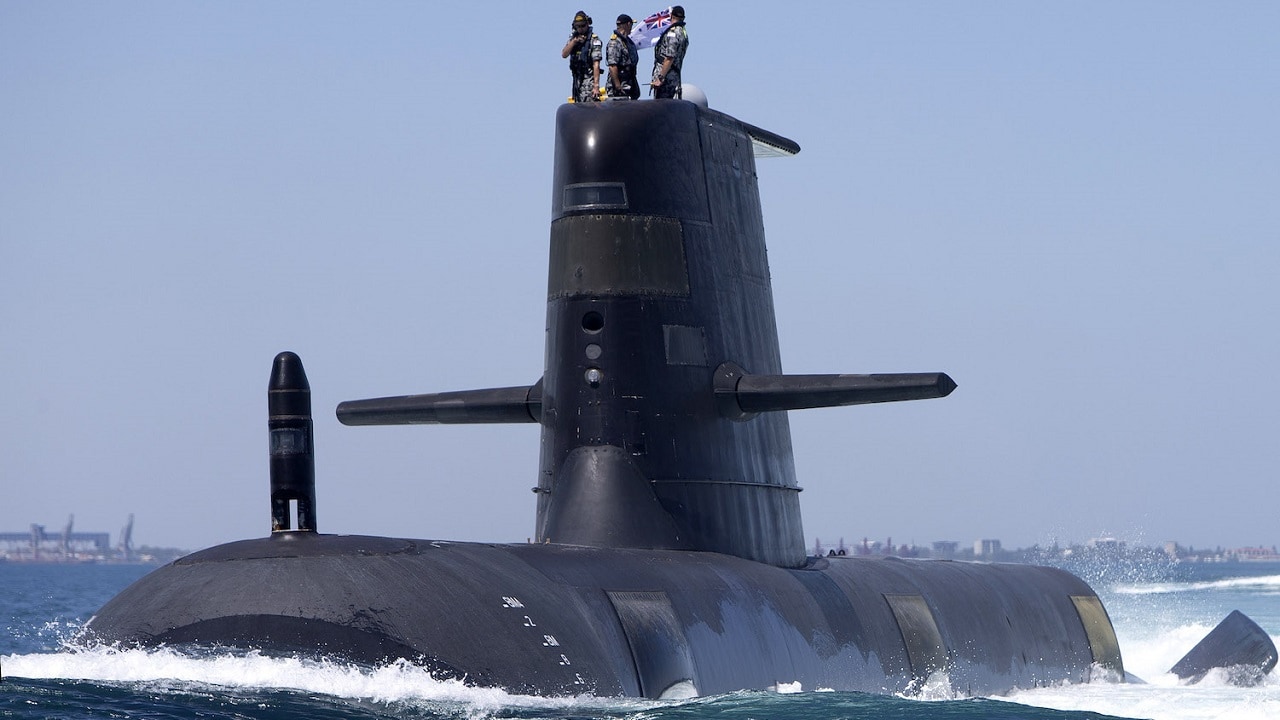
Collins-Class Submarine from Australia’s Navy.
Australia Must Keep Its Eyes on the Prize
The main country that needs to lobby the United States is Australia. Their submarines are the worst among the three countries. The Collins-class needs to be replaced, and Australian officers and sailors are already training with the U.S. Navy on the Virginia-class. That’s an excellent development.
AUKUS is one of those strategic deals that sounded good at summits and on paper, but in reality may not work out as well as everyone has hoped. There are green shoots of positive news in this plan, but it could fall apart at any moment.
The three countries seem supportive, though the U.S.-U.K. alliance has weaknesses. The British private sector is doing its part, and the Australian government is putting its money where its mouth is.
That leaves Trump to ensure that the United States remains committed to delivering the Virginia-class submarines to Australia. We will keep our eyes on this pact to see how it advances toward its ultimate goal of keeping China down and out in the Indo-Pacific.
About the Author: Brent M. Eastwood, PhD
Author of now over 3,500 articles on defense issues, Brent M. Eastwood, PhD, is the author of Don’t Turn Your Back On the World: A Conservative Foreign Policy and Humans, Machines, and Data: Future Trends in Warfare, plus two other books. Brent was the founder and CEO of a tech firm that predicted world events using artificial intelligence. He served as a legislative fellow for US Senator Tim Scott and advised the senator on defense and foreign policy issues. He has taught at American University, George Washington University, and George Mason University. Brent is a former US Army Infantry officer. He can be followed on X @BMEastwood.