
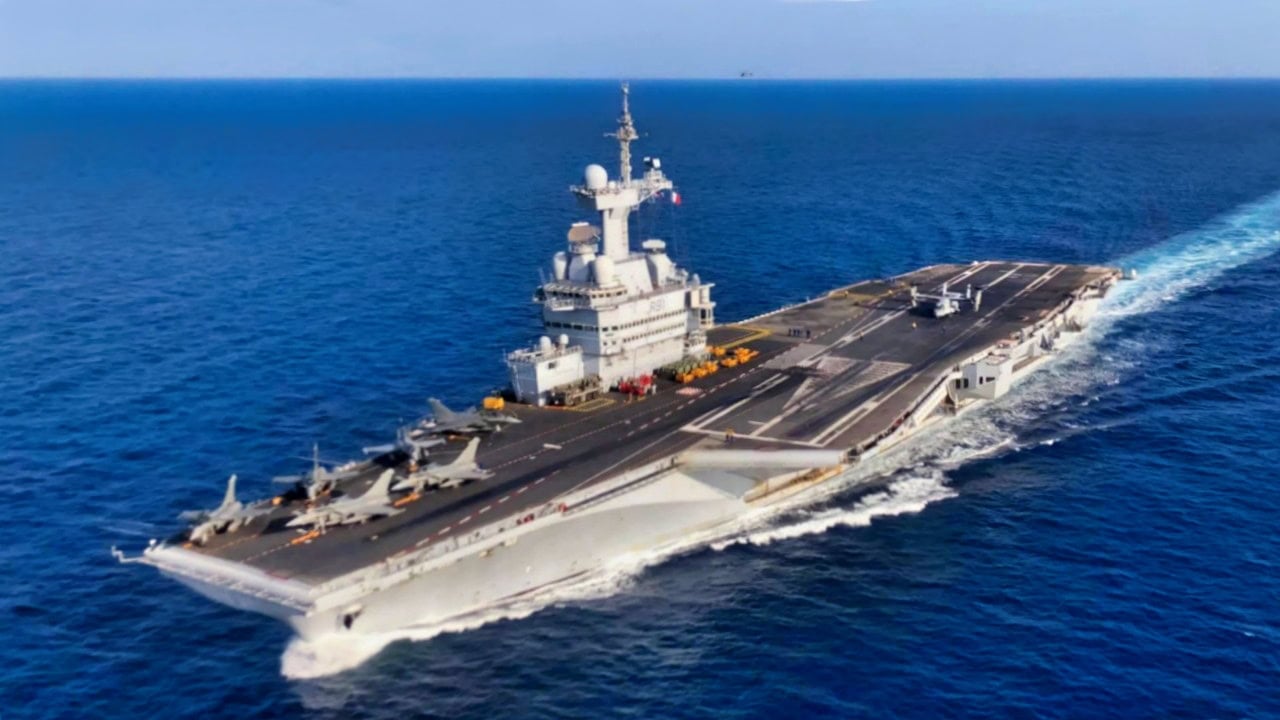
The FS Charles de Gaulle (R91) — the only nuclear-powered aircraft carrier in the world outside the U.S. fleet — has arrived in the Red Sea after transiting the Suez Canal. French President Emmanuel Macron deployed the carrier to support Donald Trump’s Project Freedom mission to help reopen the Strait of Hormuz, which the International Energy Agency calls the biggest oil supply disruption since the 1970s OPEC embargo. The carrier displaces 42,000 tons, runs on two Areva K15 pressurized water reactors, and operates a 40-aircraft air wing — Dassault Rafale M fighters, E-2C Hawkeye airborne command and control aircraft, and helicopters. The Charles de Gaulle entered service in 2001 replacing the conventionally powered Foch.
France’s Nuclear-Powered Aircraft Carrier: Meet the Charles de Gaulle
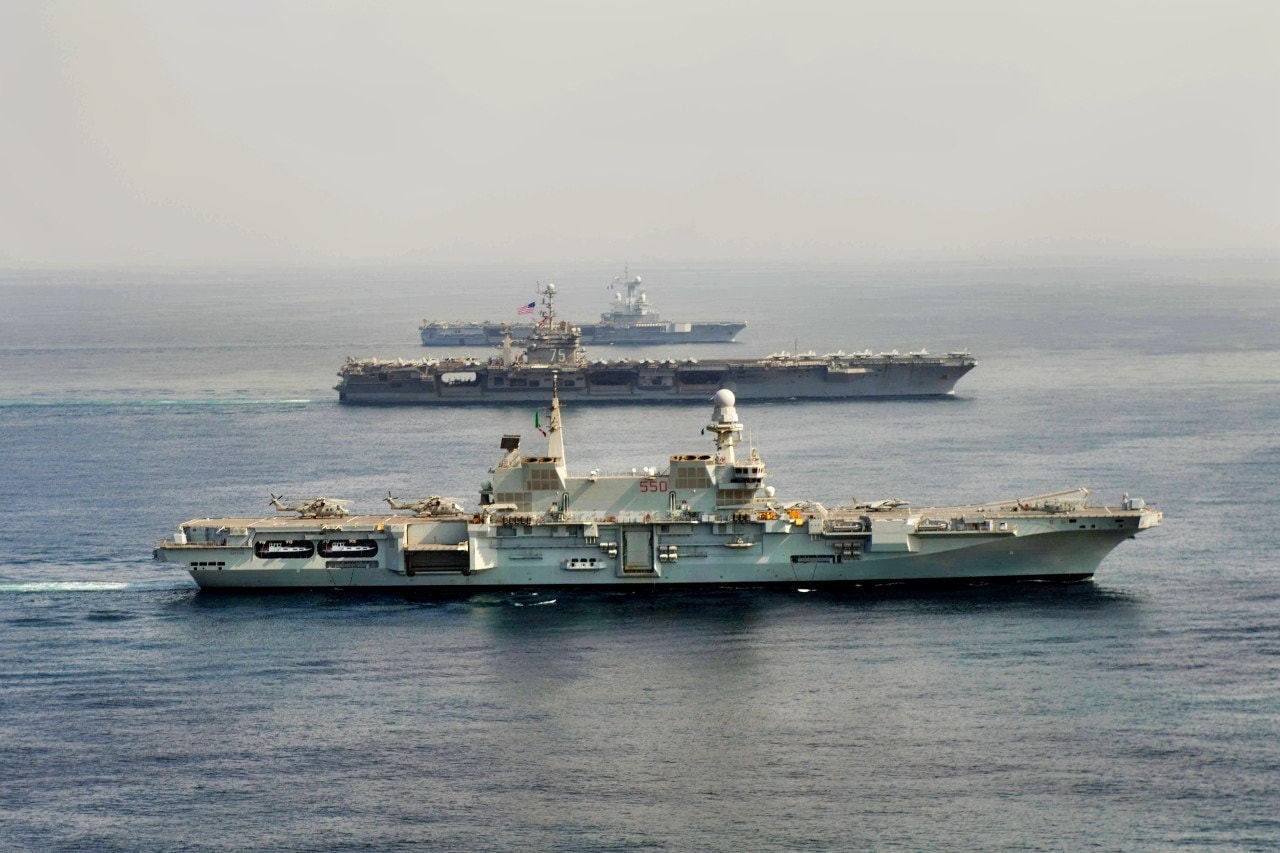
(Jan. 3, 2014) The Italian navy aircraft carrier ITS Cavour (CVH 550), front, the aircraft carrier USS Harry S. Truman (CVN 75) and the French navy aircraft carrier Charles de Gaulle (R 91), conduct operations in the Gulf of Oman. Harry S. Truman, flagship for the Harry S. Truman Carrier Strike Group, is conducting operations with Task Force 473 to enhance levels of cooperation and interoperability, enhance mutual maritime capabilities and promote long-term regional stability in the U.S. 5th Fleet area of responsibility. (U.S. Navy photo by Mass Communication Specialist 3rd Class Ethan M. Schumacher/Released)
France’s current aircraft carrier strike group is in business and ready to mix it up in the Middle East. It has arrived in the Red Sea after transiting the Suez Canal. The FS Charles de Gaulle (R91) is the only nuclear-powered carrier in the world, aside from the ones in the American fleet. This allows U.S. allies to help open the Strait of Hormuz and provides NATO with another strategic option to counter Russia and China.
The French Have a Role to Play to Counteract Strait of Hormuz Crisis
This deployment is necessary. The ceasefire following the United States’ Operation Epic Fury brought about an effective closure of the Strait of Hormuz. This has created an oil shock worldwide not seen since the OPEC embargo of the 1970s. The International Energy Agency deems this the biggest supply disruption in the history of the global oil market, the Associated Press noted.
The French are trying to work within the parameters of President Donald Trump’s “Project Freedom,” which aims to help keep the strait open by guiding cargo ships and oil tankers through the strategic waterway.
French President Has Seen Enough and Is Ready for Global Naval Action
France’s Emmanuel Macron decided that, since Europe is highly dependent on Middle Eastern oil, it is in NATO’s interest to help keep the strait open. This is a well-thought-out mission for the Charles de Gaulle. The French are not known for pursuing an aggressive global strategy, so this is a departure from their usual foreign policy.
De Gaulle’s mission “may help restore confidence among shipowners and insurers,” Macron said on X, the Associated Press noted. “It remains distinct from the parties at war.”
A French spokesperson said that De Gaulle’s deployment upholds a standard in French regional strategy. “The French position is the same since the beginning — defensive posture, respecting international law.”
More About Charles de Gaulle Aircraft Carrier
The Charles de Gaulle displaces 42,000 tons, so it is on the smaller side when compared to U.S. Navy supercarriers like the USS Gerald R. Ford. The French have long been experts in civilian nuclear reactors, and the De Gaulle doesn’t disappoint in this area.
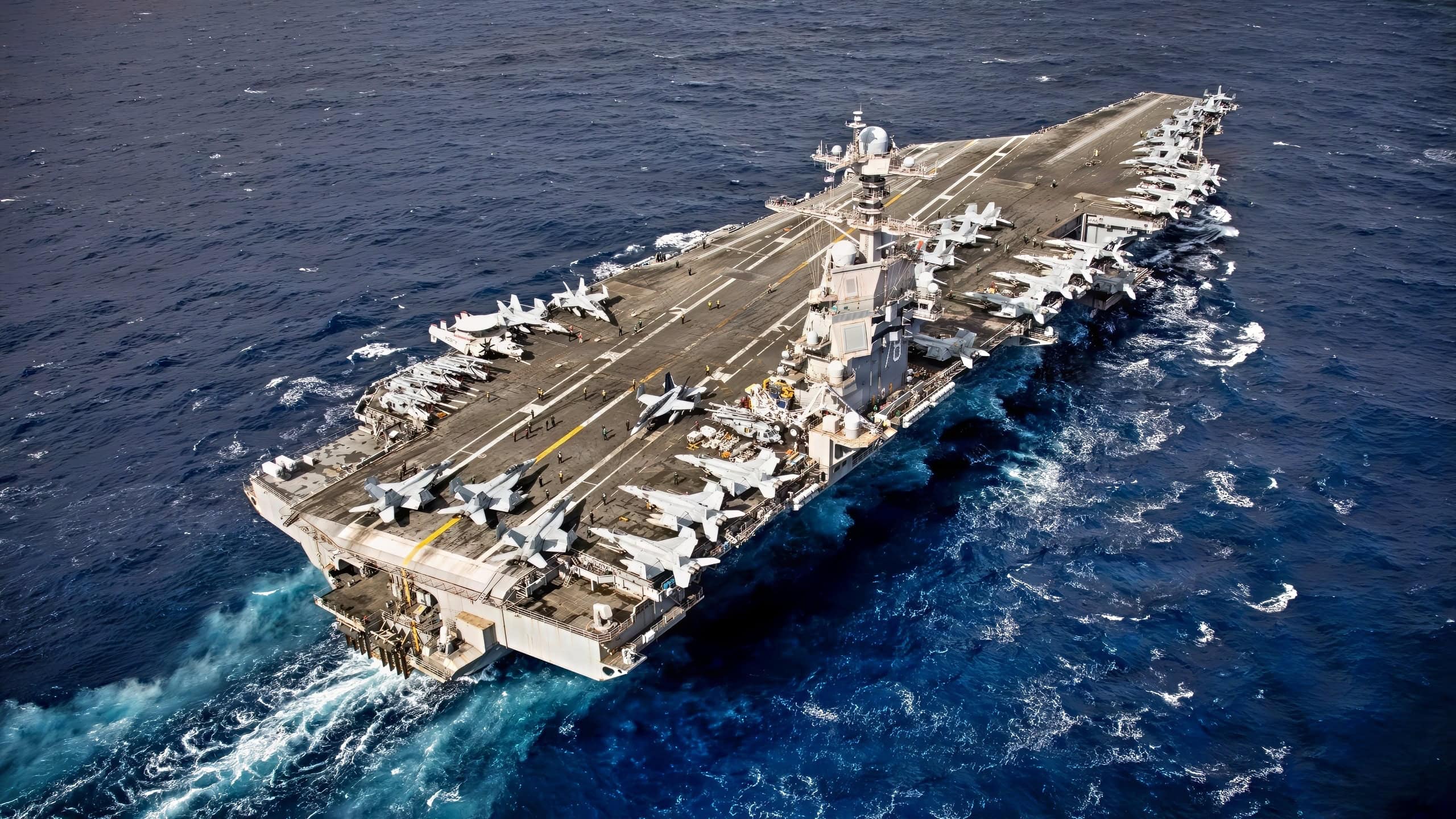
U.S. Sailors conduct routine flight deck operations on the flight deck of the world’s largest aircraft carrier, USS Gerald R. Ford (CVN 78), while underway in the Eastern Mediterranean Sea, March 22, 2026. Gerald R. Ford is on a scheduled deployment in the U.S. 6th Fleet area of operations to support the warfighting effectiveness, lethality and readiness of U.S. Naval Forces Europe Africa, and defend U.S., Allied and partner interests in the region. (U.S. Navy photo by Mass Communication Specialist 2nd Class Tajh Payne)
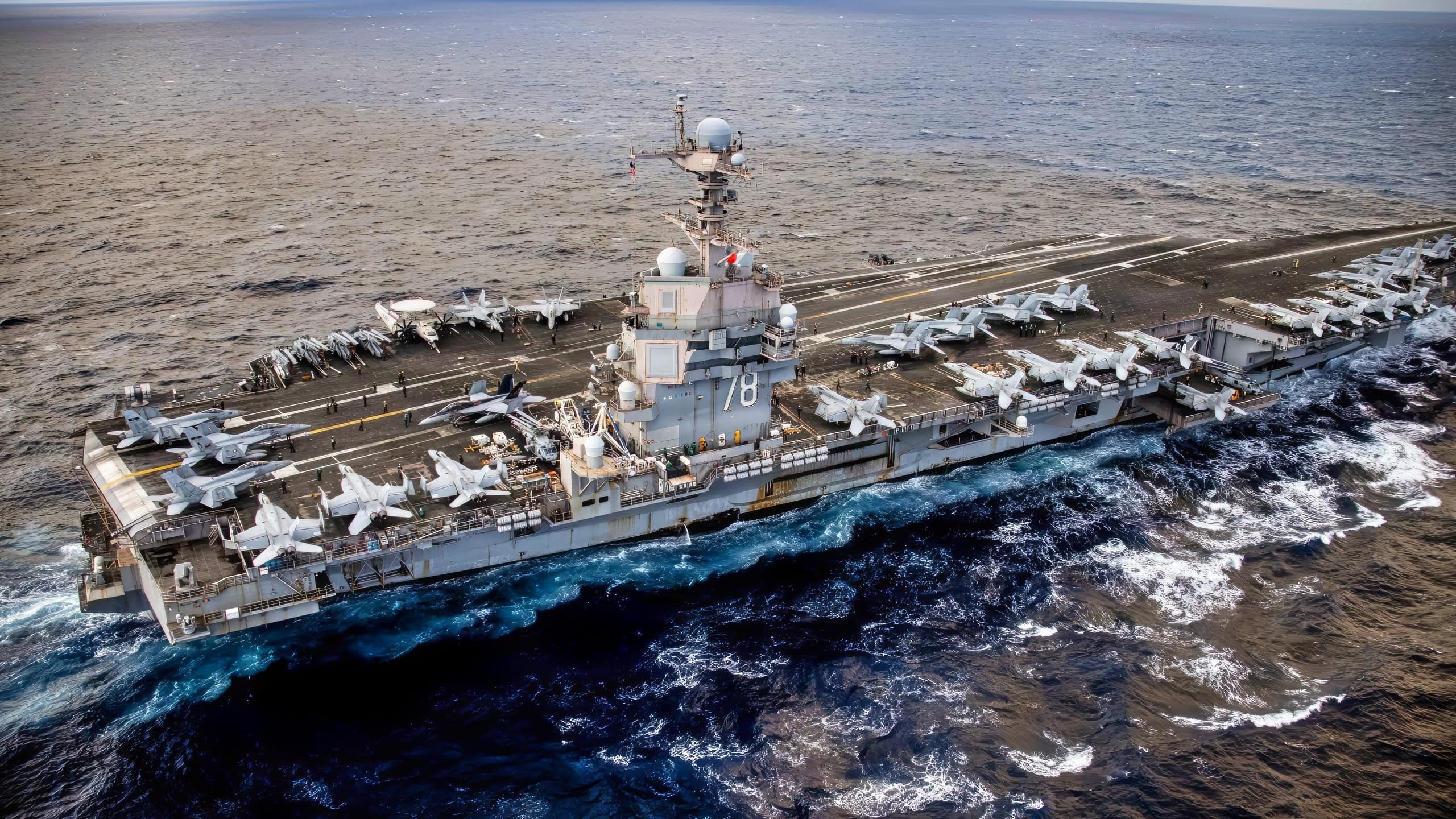
The world’s largest aircraft carrier, USS Gerald R. Ford (CVN 78), transits the Eastern Mediterranean Sea, March 22, 2026. Gerald R. Ford is on a scheduled deployment in the U.S. 6th Fleet area of operations to support the warfighting effectiveness, lethality and readiness of U.S. Naval Forces Europe Africa, and defend U.S., Allied and partner interests in the region. (U.S. Navy photo by Mass Communication Specialist 2nd Class Tajh Payne)
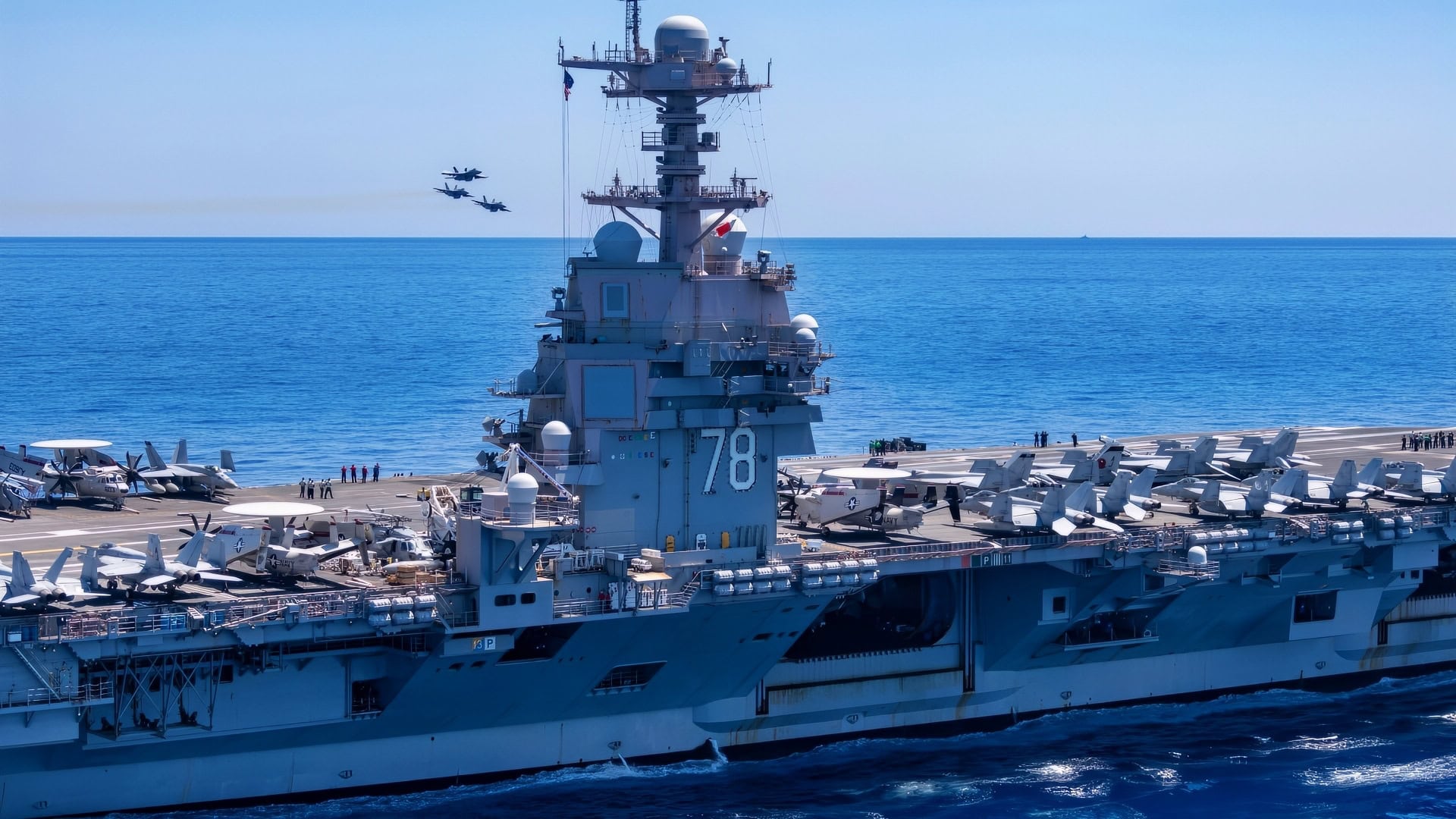
Carrier Air Wing 8 F/A-18E Super Hornets attached to Strike Fighter Squadron 37 fly by the world’s largest aircraft carrier, USS Gerald R. Ford (CVN 78), during the squadron’s in-flight change of command ceremony, August 1, 2025. Gerald R. Ford, a first-in-class nuclear aircraft carrier and deployed flagship of Carrier Strike Group Twelve, is on a scheduled deployment in the U.S. 6th Fleet area of operations to support the warfighting effectiveness, lethality, and readiness of U.S. Naval Forces Europe-Africa, and defend U.S., Allied, and partner interests in the region. (U.S. Navy photo by Mass Communication Specialist Seaman Brianna Barnett)
This enables the French to carry the flag to global hotspots and serve as a quick-reaction force, supporting NATO’s ability to balance against great powers like Russia and China and to answer the call when the continent needs help with its energy needs.
Charles De Gaulle Answers the Call
While the De Gaulle has a steam catapult, it can still launch aircraft to execute hunter-killer or reconnaissance missions with the best of them. De Gaulle’s first mission is to guard France’s sovereignty. But later, political leadership realized that with a nuclear carrier and a strike group with global reach, France could be a naval power capable of answering the call wherever needed.
Quick History
The Charles de Gaulle replaced the conventionally powered carrier Foch in 2001. But de Gaulle’s history goes back to the 1980s, when the Cold War necessitated a balance of power against the Soviet Union. France wanted to join the nuclear-powered carrier club, and the designers and engineers knew they could base a ship’s nuclear reactors on civilian dual-use technology.
The hull was laid down in April 1989 at the DCN Brest naval shipyard. The De Gaulle was delivered in May 1994 and, with a full combat load, was the biggest vessel built in Western Europe since HMS Ark Royal in 1950.
Almost Not a Reality
The path to active duty was not smooth for the carrier. The French wanted a peace dividend after the Soviet Union broke apart. Defense spending was reduced as the country believed its main adversary had been eliminated. The De Gaulle project could have died, but President Jacques Chirac took over, saw the value of a nuclear-powered carrier, and pushed the program over the finish line.
Quick Look at Specs
The vessel has a length of 857 feet, a beam of 211 feet, a draught of 30 feet, and a height of 218 feet.
The De Gaulle is propelled by two Areva K15 pressurized water reactors. They have a thermal output of 150 MWt. Two Alstom steam turbines enable a total shaft power of 61 MW (82,000 hp). Maximum speed is a respectable 27 knots.
The air wing comprises 40 aircraft, including Dassault Rafale M fighters, E-2C Hawkeye airborne command-and-control aircraft, and several helicopters.
Featured NATO Mission During Global War on Terror
The De Gaulle enjoyed a solid deployment with a strike group that was instrumental in NATO’s efforts against the Taliban in Afghanistan. This mission came right after 9/11 and showed the world that the French could also deploy naval assets to help an ally.
The Charles de Gaulle has enjoyed an excellent service record. It will be supplemented by the new nuclear-powered France Libre carrier that will come online in the late 2030s.
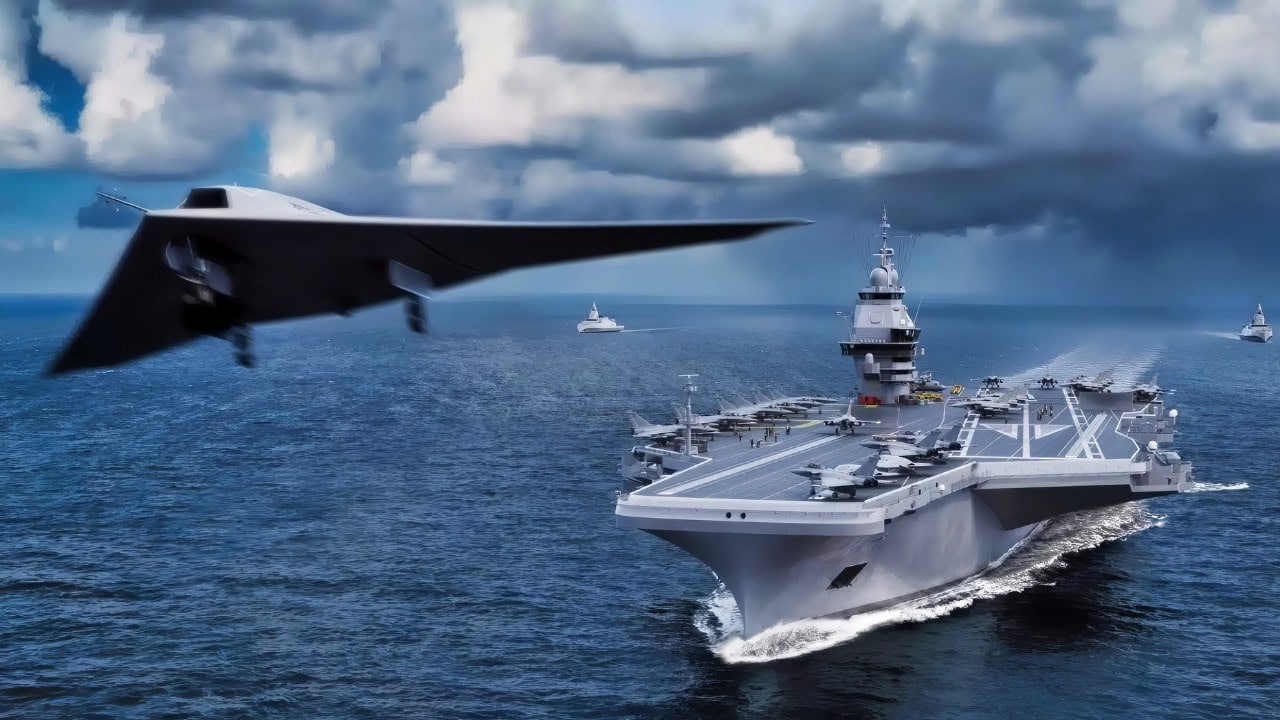
PANG France Nuclear Aircraft Carrier. Image Credit: French Government.
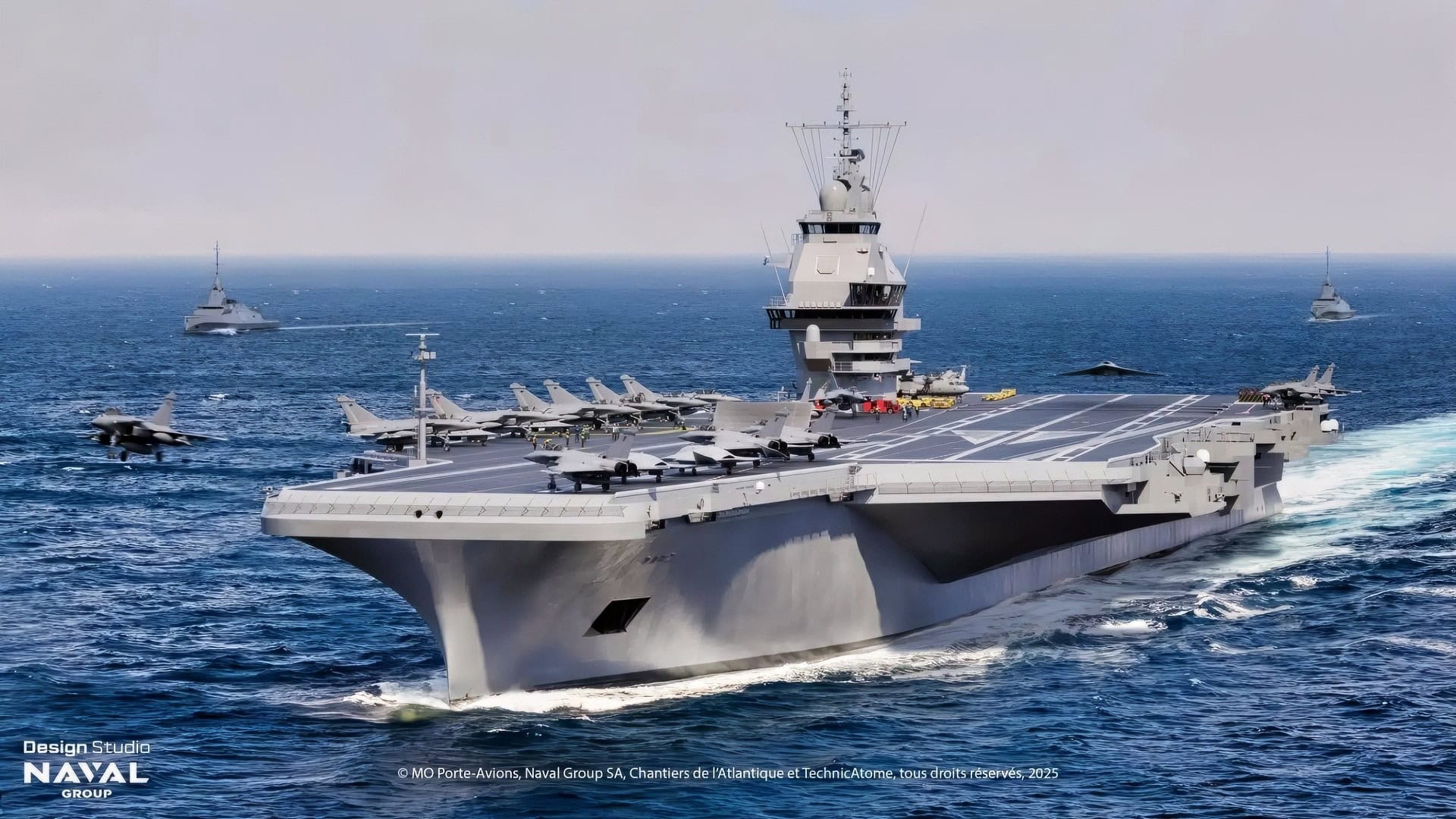
PANG Aircraft Carrier French Navy Photo.
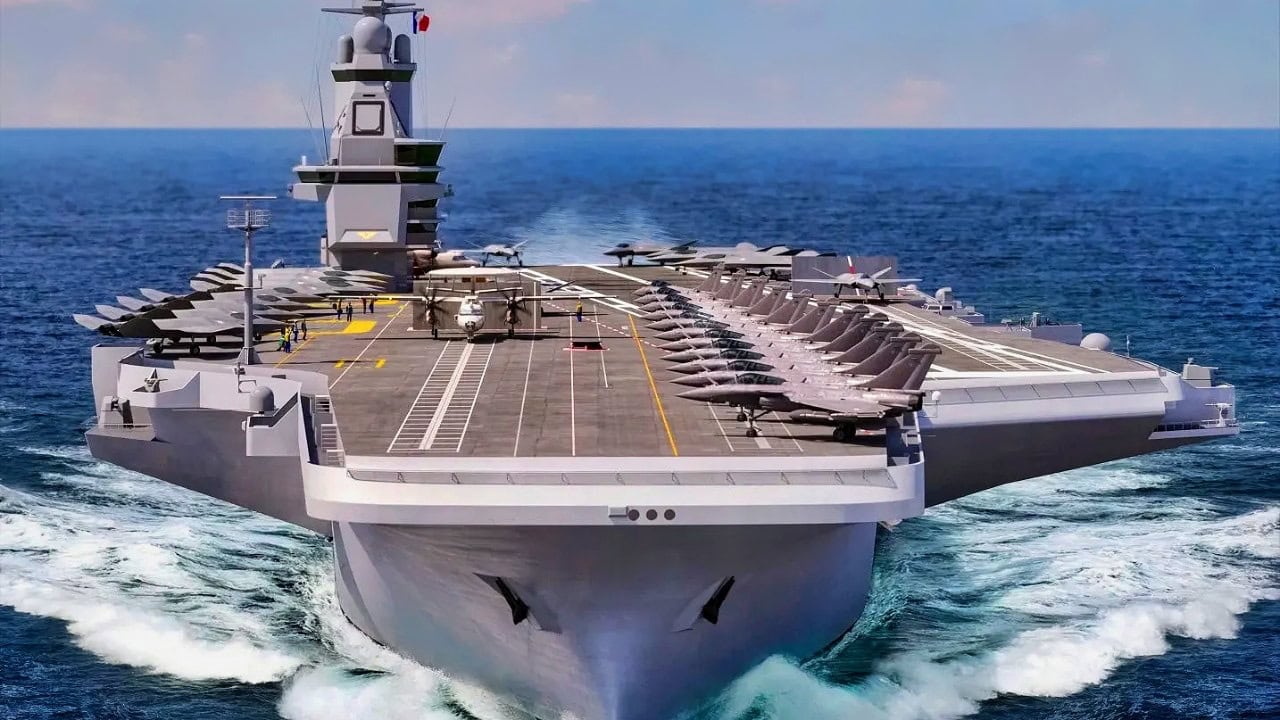
PANG Aircraft Carrier from France. Image Credit: Industry Handout.
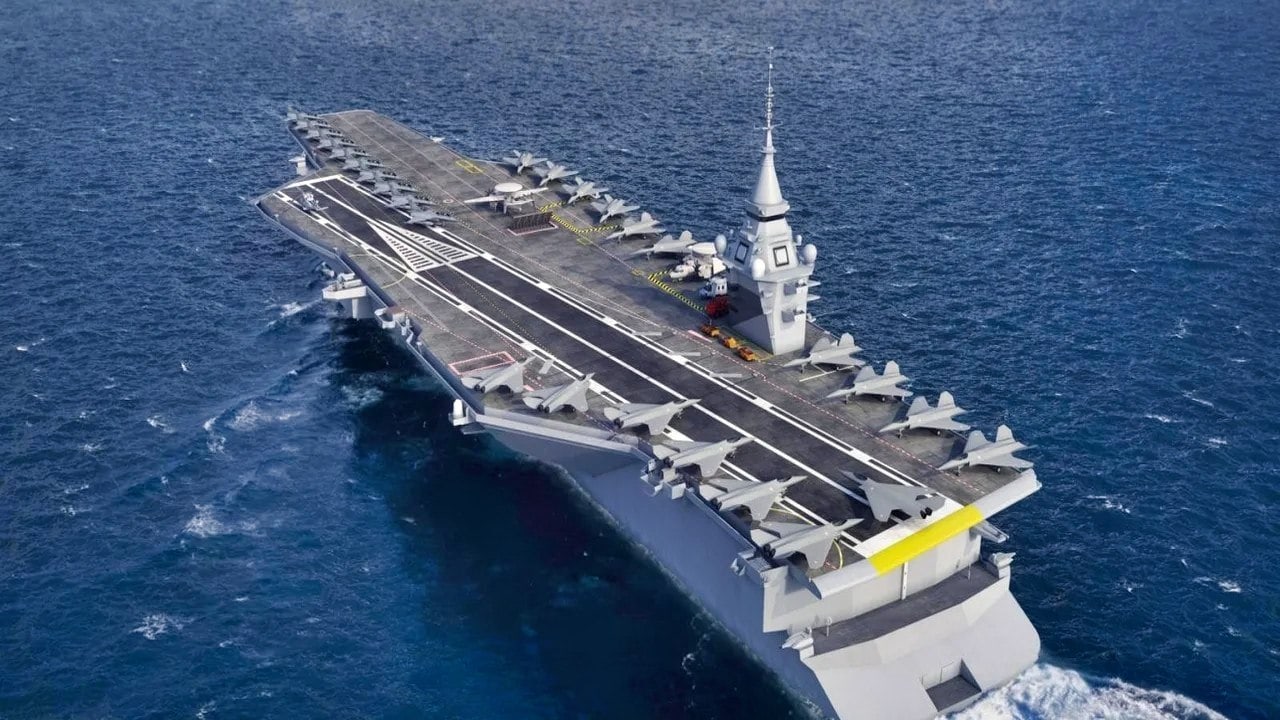
PANG Aircraft Carrier from France. Image Credit: French Navy.
France is showing the world that its commitment to the NATO alliance is steadfast and that its military is a force to be reckoned with. Let’s see how well the De Gaulle can execute its mission in the Middle East and if the success during the Global War on Terror can be replicated.
About the Author: Brent M. Eastwood, PhD
Author of now over 3,500 articles on defense issues, Brent M. Eastwood, PhD, is the author of Don’t Turn Your Back On the World: A Conservative Foreign Policy and Humans, Machines, and Data: Future Trends in Warfare, plus two other books. Brent was the founder and CEO of a tech firm that predicted world events using artificial intelligence. He served as a legislative fellow for US Senator Tim Scott and advised the senator on defense and foreign policy issues. He has taught at American University, George Washington University, and George Mason University. Brent is a former US Army Infantry officer. He can be followed on X @BMEastwood.