
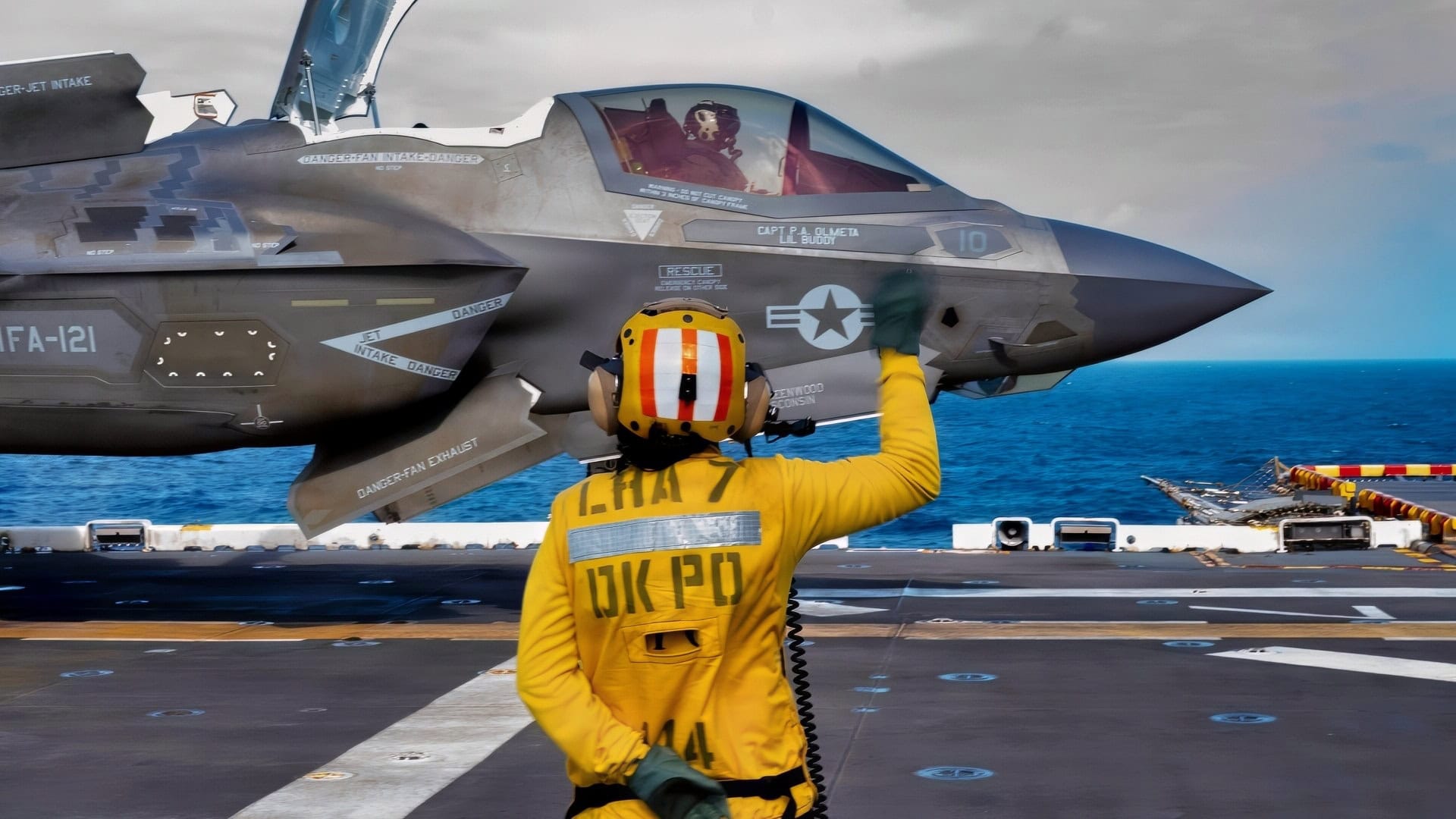
Amid U.S.-China competition, Australia has proven to be a strong U.S. ally and, frequently, a thorn in China’s side.
While Australia continues to demonstrate an impressive array of military capabilities, its recently released National Defense Strategy shows that Canberra remains committed to securing a free and open Indo-Pacific alongside the United States.
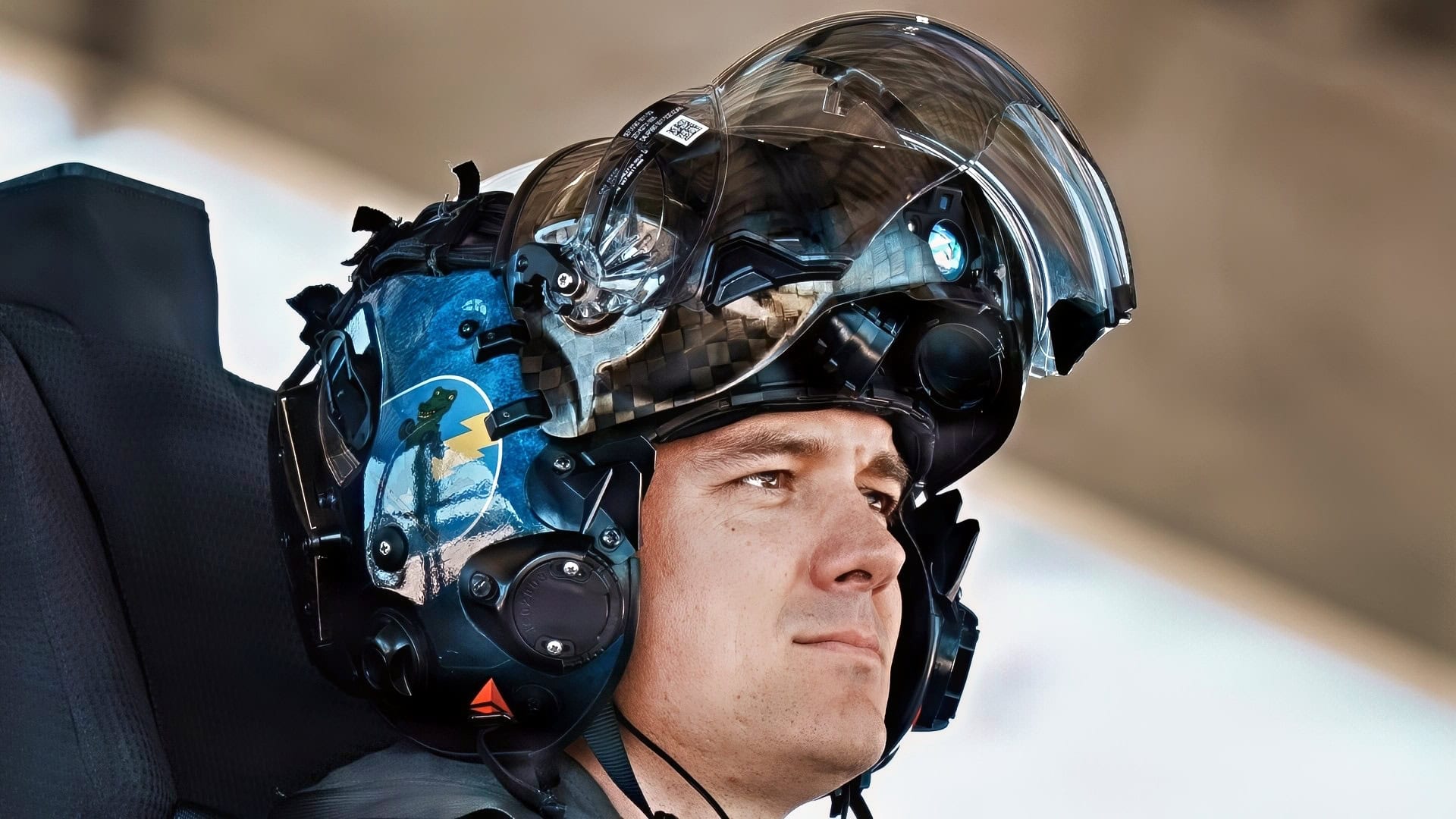
An F-35A Lightning II pilot assigned to the 125th Fighter Wing conducts a preflight maintenance check at Jacksonville Air National Guard Base, Florida, April 15, 2026. Coordination between pilots and maintainers ensures aircraft are mission-ready to execute aerospace control and air defense missions under Air Combat Command. The 125th FW sustains readiness to support federal and state missions, including combat operations, humanitarian assistance, and disaster response. (U.S. Air National Guard photo by Staff Sgt. N.W. Huertas)
In April, Australia published its 2026 National Defense Strategy (NDS) and 2026 Integrated Investment Program (IIP), both of which were built and expanded on the NDS and IIP published by Canberra in 2024. The 2026 NDS emphasizes the importance of the U.S.-Australian alliance and outlines the many ways Australia seeks to maintain and increase its contributions to the alliance while also becoming more self-reliant and more capable of generating military force independently to defend Australian national interests.
Australia engages in long-term defense strategy development and defense budgeting planning in tandem, a practice that ensures defense budgeting derives from and aligns with strategy. The 2026 IIP increases Australian spending beyond previous planned increases and sets a goal of 3 percent of GDP for defense spending by 2033-34.
The 2026 NDS identifies China as the primary cause of the worsening security dynamics in the Indo-Pacific, and highlights the pivotal role that only the United States can play in deterring China, saying that any “effective balance of military power in the Indo-Pacific will require the continued presence and role of the United States,” while also stressing the need for America’s allies and partners to contribute far more to collective defense in the region.
The 2026 NDS stresses the need for self-reliance even more than the 2024 NDS. It defines self-reliance not as self-sufficiency, in which Australia would no longer need access to the technological, capability, or industrial strengths of its allies and partners, but as “prudent, meaningful, and feasible investments to reduce critical dependencies and mitigate strategic and operational risks.”
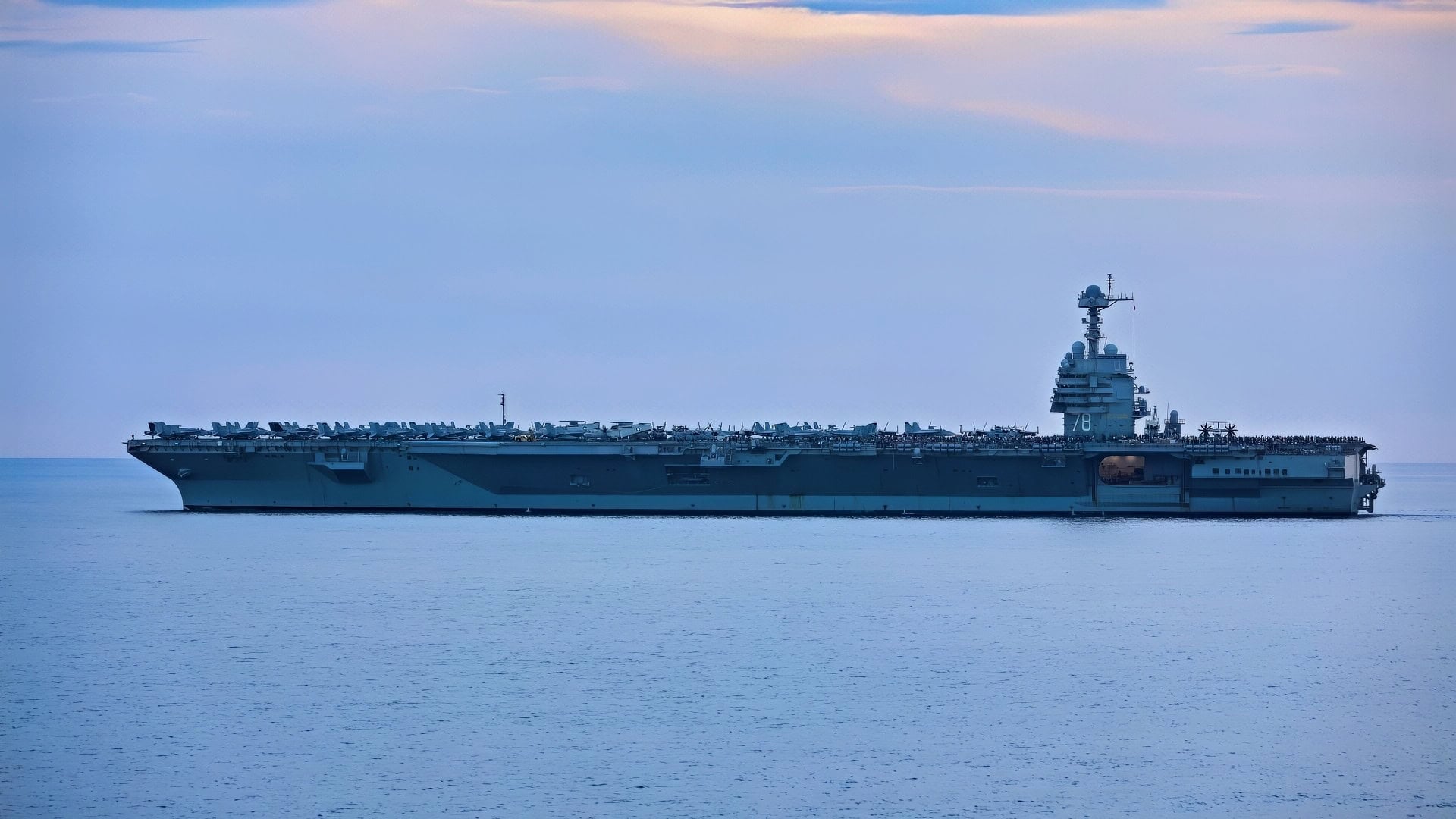
(July 4, 2023) The crew of Ford Class Aircraft Carrier USS Gerald R. Ford (CVN 78) stand on the flight deck to watch a Fourth of July gun shoot from Arleigh Burke-class guided-missile destroyer USS Ramage (DDG 61) (not pictured), July 4, 2023. Ramage is part of the Gerald R. Ford Carrier Strike Group and is on a scheduled deployment in the U.S. Naval Forces Europe area of operations, employed by the U.S. Sixth Fleet to defend U.S., allied, and partner interests. (U.S. Navy photo by Mass Communication Specialist 3rd Class Adriones Johnson)
Canberra continues to focus on building Australian naval power, with additional investments beyond what was previously planned. In addition to the six planned Hunter-class frigates, for example, Australia is now also purchasing 11 new general-purpose frigates of the Japanese Mogami class design.
Recent changes to Japanese defense export laws and Tokyo’s increased investments in the Japanese defense industrial base are proving to be a game-changer throughout the Indo-Pacific, adding naval capacity and capability to several of America’s most important allies and partners in the region. Of course, the acquisition of U.S. Virginia-class nuclear submarines remains Australia’s top priority.
Australian Army and Air Force planning is complementary to the focus on maritime power, with the Army being optimized for littoral combat operations with long-range strike capability (in a way similar to U.S. Marine Corps Force Plan 2030 planning) and an Air Force equipped with F-35s, F/A-18s, and P-8s to identify and strike maritime targets at range. The strategy emphasizes the need for logistically networked and resilient bases across northern Australia, an especially important investment if Australia is to generate military power independently in the region.
Australia’s 2026 NDS highlights some of the truly impressive work Canberra has done over the last two years in building stronger national security cooperation in its region. In particular, the Australia-Indonesia Treaty on Common Security and the Mutual Defense Treaty with Australia’s newest ally, Papua New Guinea, stand as groundbreaking diplomatic achievements that will be a boon to regional security. Australia is also seeking to enhance interoperability with allied New Zealand, which, under the conservative leadership of Prime Minister Christopher Luxon, has taken substantial steps to improve New Zealand’s defense readiness and reverse the decline overseen by his predecessor.
Australia’s efforts in the Pacific islands are also crucial. Most recently, Australia and Fiji announced the Vuvale Union, a treaty-level agreement focused on the security challenges both countries face. This agreement follows a notable trend in Australia’s proactive outreach to secure security agreements with Pacific countries, including Papua New Guinea in 2025, Nauru in 2024, and Tuvalu in 2023. These agreements have generally led countries to reduce security engagements with China.
These security agreements also benefit U.S. interests by making the Pacific safer and more secure against malign Chinese influence operations. Australia’s combined military and diplomatic approaches in the region are well coordinated with the United States and serve as a great example of a U.S. ally stepping up to the plate to counter China.
Along with New Zealand, which is also a Five Eyes intelligence partner with Australia, the United States has capable allies and partners actively committed to making the Pacific safer, pushing back against Chinese advancements, and building resilient relationships across the Pacific. Although the competition continues, Australia’s new strategic documents are a strong signal that it will remain well aligned with U.S. interests in the Pacific.
Australia’s 2024 and now 2026 National Defense Strategies and Integrated Investment Programs are indicative of a country that recognizes the worsening security environment in the Indo-Pacific and is taking the defense of its sovereign interests seriously. Americans should applaud and encourage Canberra’s moves on defense planning and spending, and provide ever-higher levels of defense technology sharing and cooperation in recognition of the critical role Australia is playing in Indo-Pacific security and the U.S.-Australian alliance.
About the Authors:
Wilson Beaver is a Senior Policy Advisor for defense budgeting at the Heritage Foundation. Andrew J. Harding is a Policy Analyst for National Security and Indo-Pacific Affairs in Heritage’s Asian Studies Center.