
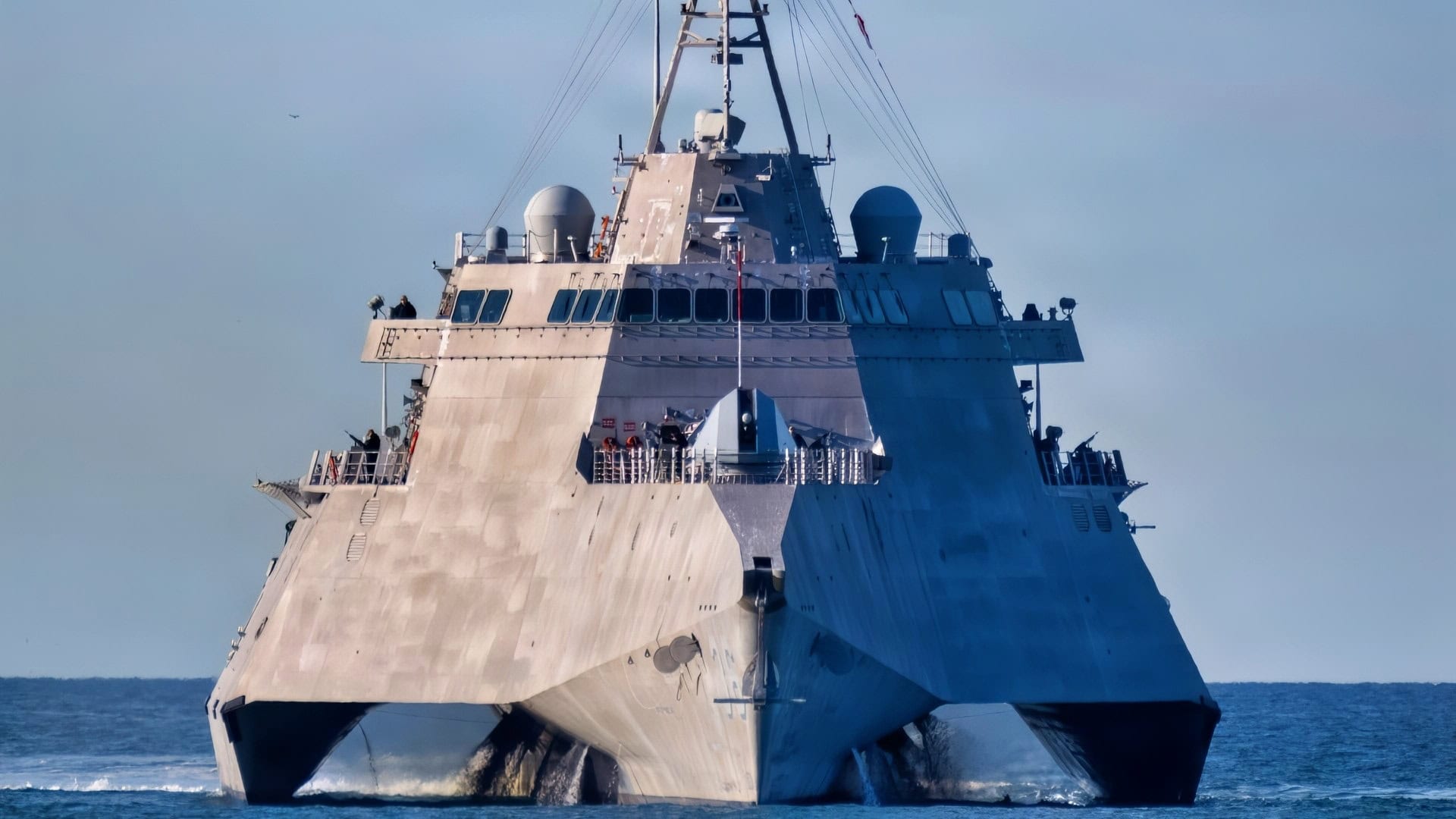
Wars are easier to start than to judge. The guns fall silent, a document is signed, and everyone reaches for a verdict before the ink is dry. Trump’s Iran war will be no different. The ceremony in Switzerland will produce a settlement, and the settlement will produce a flood of interpretation — most of it premature, much of it wrong.
The problem is not that people will disagree. It is that the most important questions about this war cannot be answered at the moment of signing. A peace agreement is not self-explanatory. It may mark the moment Iran was forced into genuinely new behavior. It may also mark the moment both sides needed the shooting to stop and papered over the rest. Those two outcomes look identical on the day the document is signed and very different five years later.
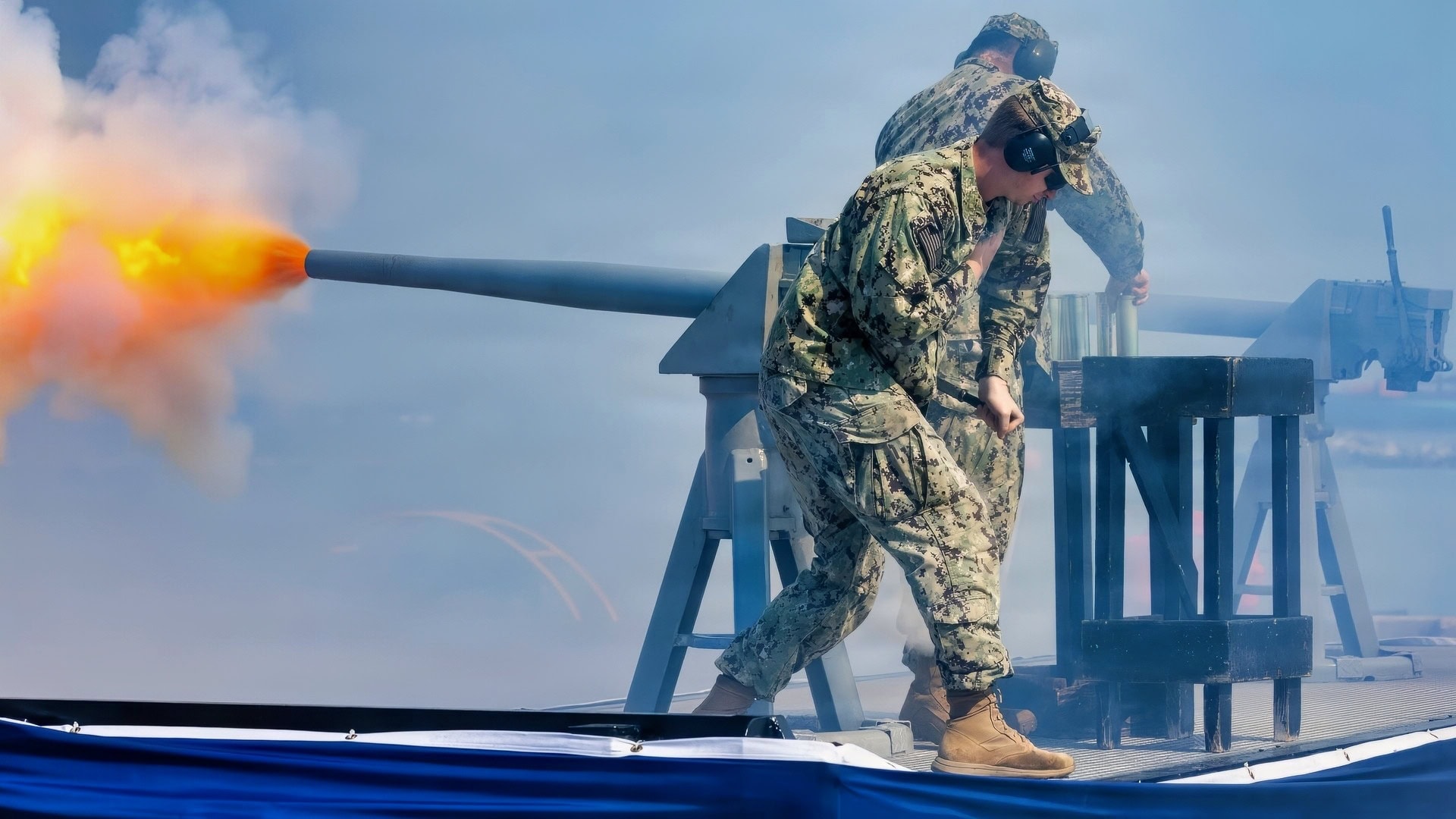
NORFOLK, Va. (April 11, 2026) – Gunner’s Mate 2nd Class Charles Sullivan and Gunner’s Mate 2nd Class Adams Correa, assigned to Naval Station Norfolk Security Department’s Weapons Division, fire a 40 mm cannon during the commissioning ceremony of the Navy’s newest Arleigh Burke-class guided-missile destroyer USS Harvey C. Barnum Jr. (DDG 124) in Norfolk, Virginia, April 11, 2026. The warship bears the name of a living Medal of Honor recipient, retired Col. Harvey C. “Barney” Barnum Jr. (U.S. Navy photo by Mass Communication Specialist 1st Class Theoplis Stewart)
That is where Trump’s Iran war will be judged. Not at the signing table. Not in the first market reaction. Not in the first round of statements from Washington, Tehran, Jerusalem, or the Gulf capitals. The judgment will depend on whether the final settlement actually changes the instruments Iran used before the war began — and keeps them changed. Pressure in the Strait of Hormuz, nuclear latency, ballistic missiles, and armed partners across the region. Each of those will take time to reveal what the settlement was really worth. Some will take years.
Hormuz Will Be the Easiest Part to Read
Hormuz will be the easiest part to see. Normal traffic through the strait will show up in tanker schedules, insurance rates, naval movements, and oil prices. If the market keeps treating every transit as a political event, the settlement will have already failed its first test.
A deal that keeps the Strait of Hormuz open would give Trump something real. Iran weaponized a narrow waterway that was already a global problem. The United States has seen this before. During the Tanker War in the 1980s, Kuwaiti tankers were reflagged, and American naval power was drawn into protecting commerce through the Gulf. Operation Earnest Will was supposed to be about escorting ships. It quickly became a reminder that maritime security in the Gulf is never just maritime security.
A mine strike becomes a market event. A tanker problem becomes a presidential problem. A local fight draws in outside powers because the water carries too much of the world’s energy to be treated as local.

STRAIT OF HORMUZ (Jan. 8, 2026) A U.S. Sailor, assigned to the Arleigh Burke-class guided-missile destroyer USS Roosevelt (DDG 80), observes an MH-60R Sea Hawk, assigned to Helicopter Maritime Strike Squadron (HSM) 79, during flight operations in the Strait of Hormuz. Roosevelt is deployed to the U.S. 5th Fleet area of operations to support maritime security and stability in the U.S. Central Command area of responsibility. (U.S. Navy photo by Mass Communication Specialist 1st Class Indra Beaufort)
Still, Hormuz is the part of the settlement most likely to flatter the diplomacy. Tankers moving again will look like success. It may be a success. But if Iran leaves the war with some new understanding that threatening the strait brings Washington to the table, then the lesson Tehran takes away may be different from the one Trump wants to advertise.
The Nuclear File Is Where the War Will Really Be Judged
The nuclear file will carry more weight. Trump did not enter this crisis because of tanker insurance alone. Nuclear danger was the central stated justification for the war. A settlement that only restores old limits, releases frozen money, and leaves inspection fights for later will be difficult to defend as the product of a war. If the nuclear issue is made central, the nuclear terms have to matter.
The 2015 nuclear deal will hang over the negotiations, whether anyone wants it there or not. The old categories return: enriched stockpiles, centrifuges, inspection access, possible military dimensions, sunset clauses, and the durability of any agreement that depends on American political continuity. The earlier agreement constrained Iran for a time. It also left a long argument over how much latency Washington could live with.
This new settlement would need to do better on that point. Does Iran ship enriched uranium out of the country? Are advanced centrifuges dismantled or sealed? Can inspectors gain access before a dispute becomes another crisis? Does the agreement slow Iran down, or does it change the character of the program?
Those questions are technical, but they are not secondary. A signing ceremony can obscure them. History will not.
Missiles Sit Closer to the Nuclear Question Than Diplomats Like to Admit
Missiles belong near the nuclear question, even if diplomats try to keep them at the edge of the room. Iran’s missile force is a deterrent, a prestige project, and a substitute for conventional weakness. It also gives nuclear latency military meaning. Tehran will not trade it away wholesale. At most, a serious settlement may limit range, testing, transfers, or deployment patterns.
Even that would be hard. Iran built much of its missile identity out of remembered vulnerability. The Iran–Iraq War still sits behind Iranian strategic thinking. Tehran learned then that it could be isolated, bombarded, and left with few reliable suppliers. That history does not make missile limits impossible. It does mean the most plausible deal will begin at the margins: range, testing, transfers, and deployment patterns, rather than a wholesale rollback of the program.
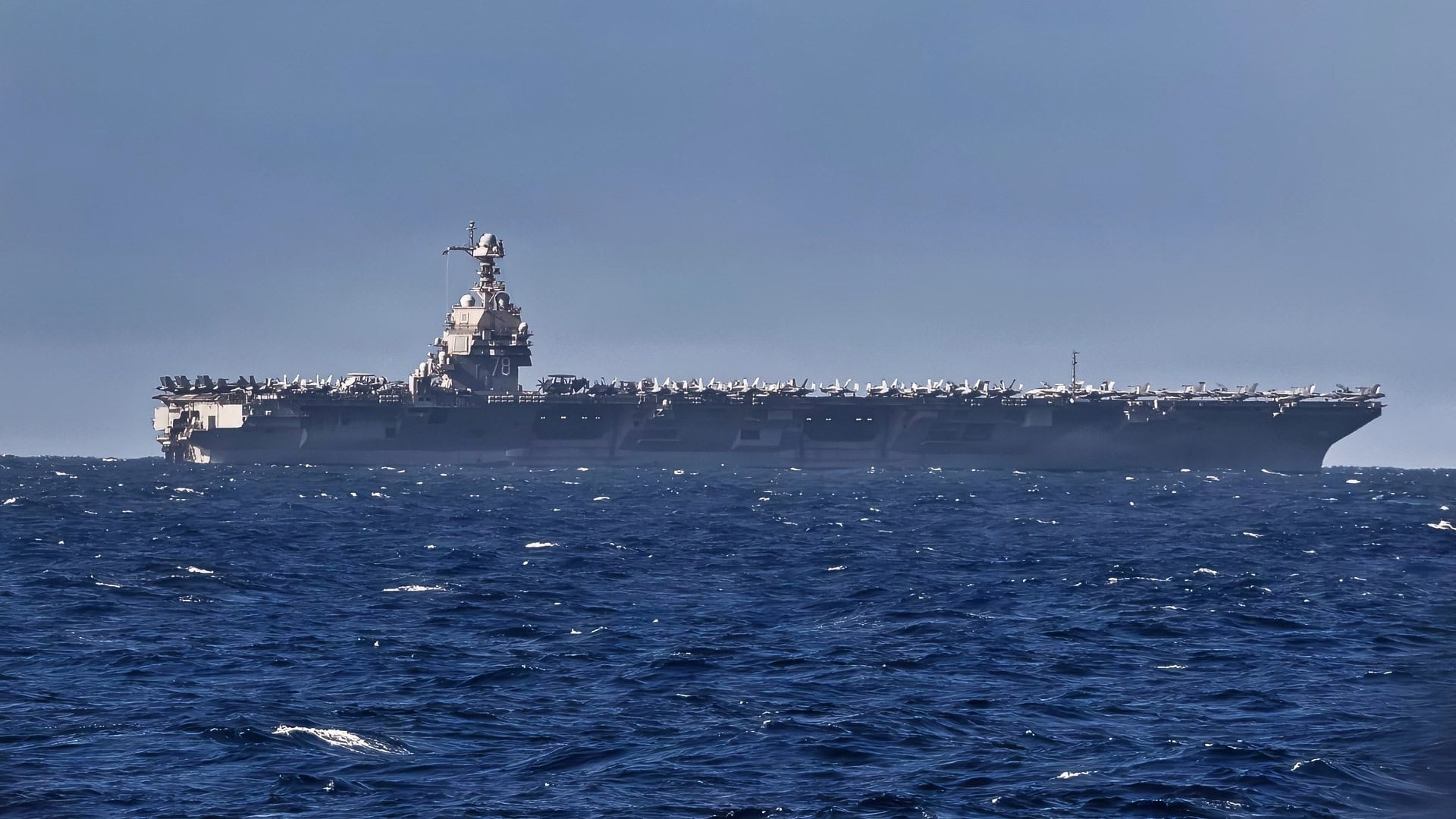
The world’s largest aircraft carrier, USS Gerald R. Ford, as seen from Arleigh Burke-class guided missile destroyer USS Bainbridge (DDG 96) before a replenishment-at-sea with Henry J. Kaiser-class fleet replenishment oiler USNS Kanawha (T-AO 196) while underway during Operation Epic Fury, Mar. 8, 2026. (U.S. Navy Photo)
Proxy Commitments Are Where Peace Agreements Go to Disappoint
The proxy question is harder to put into treaty language. Hamas, Hezbollah, the Houthis, and Iranian-aligned militias in Iraq and Syria are often discussed as if Tehran runs them from a single switchboard. Sometimes that is close enough for a political argument. It is not close enough for judging a peace settlement.
Iran funds, arms, trains, encourages, and sometimes directs. At other moments, it benefits from choices made by local actors for their own reasons. That is why proxy commitments so often disappoint. Outside powers want clean language. Local armed groups live in messier arrangements.
A meaningful settlement would have to show up in the traffic. Fewer weapons are moving along familiar routes. Fewer trainers. Less money. Less political cover when a militia acts. The harder test would be whether Hezbollah, the Houthis, or Iraqi militias show more hesitation before assuming that Iran will absorb the consequences of their escalation.
What a Thin Deal Would Leave Behind
If Iran accepts durable nuclear restraints, some missile limits, a less coercive posture in Hormuz, and a real reduction in support for armed clients, the war will still look dangerous. It will still have risked a wider regional fire. But the settlement would give Trump something substantial to point to: Iranian conduct changed after a war.
A thinner deal would leave a different record. Hormuz reopened. Some nuclear language revived. Some money has been released. Missiles pushed into a later file. Proxies quiet for a while. That might end the crisis. It would not change much about the machinery that made Iran dangerous before the first shot was fired.
Most settlements land somewhere awkward. This one may too. A document signed in Switzerland will not settle the historical argument. The first inspection flight, the first missile test, the first militia attack, or the first Iranian move to treat Hormuz as leverage again will tell us more than the ceremony did.
About the Author: Dr. Andrew Latham
Andrew Latham is a professor of international relations and political theory at Macalester College in Saint Paul, MN. You can follow him on X: @aakatham. He writes a regular column for 19FortyFive.com.