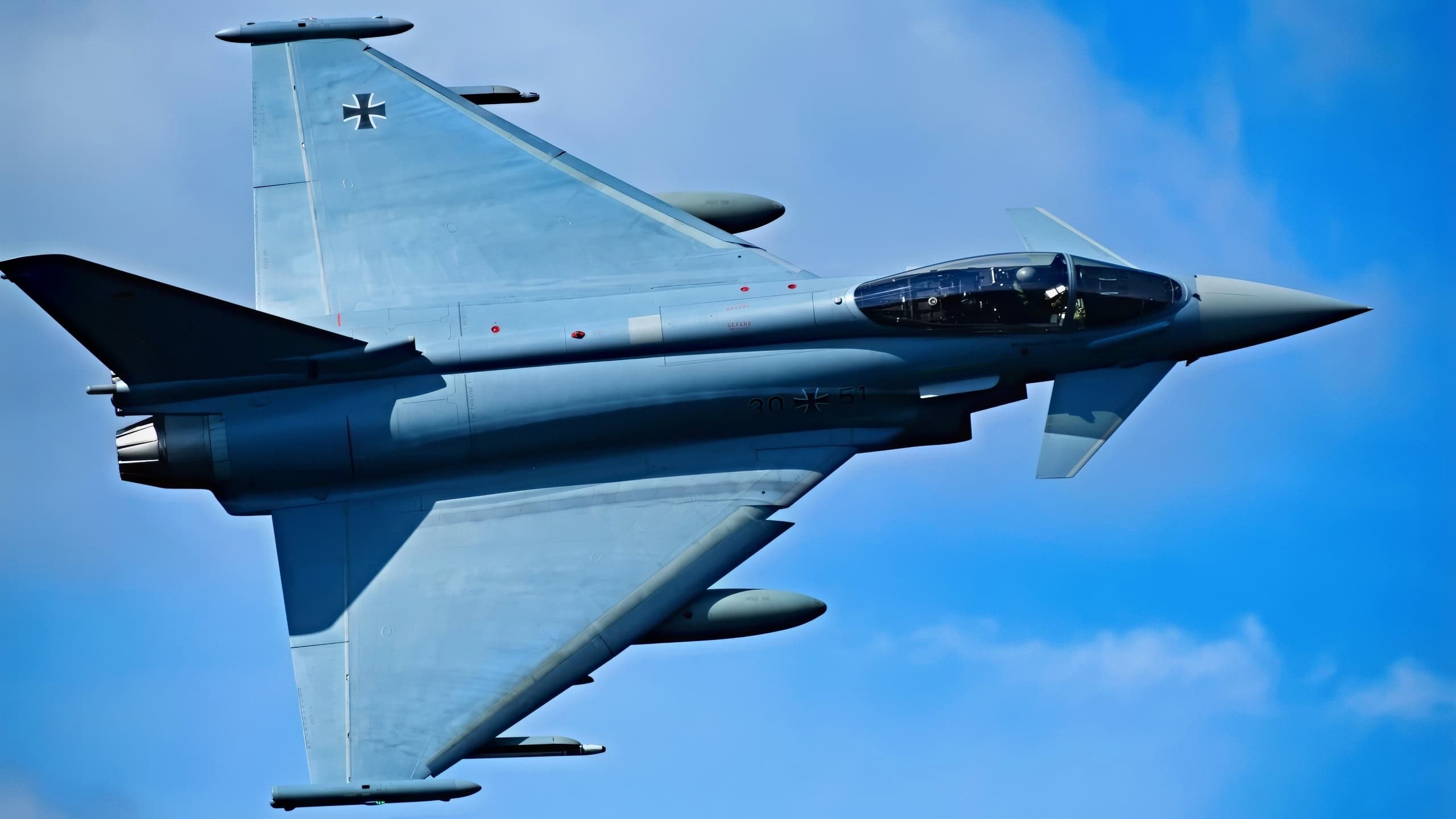
In response to the largest, most deadly war in Europe in over eighty years, as well as persistent pressure from American President Donald Trump, countries across the continent are bolstering their military capabilities, hedging against further aggression from Moscow.
One of the countries leading Europe’s rearmament is Germany.
From Cold War-era Heavyweight to an Amateur
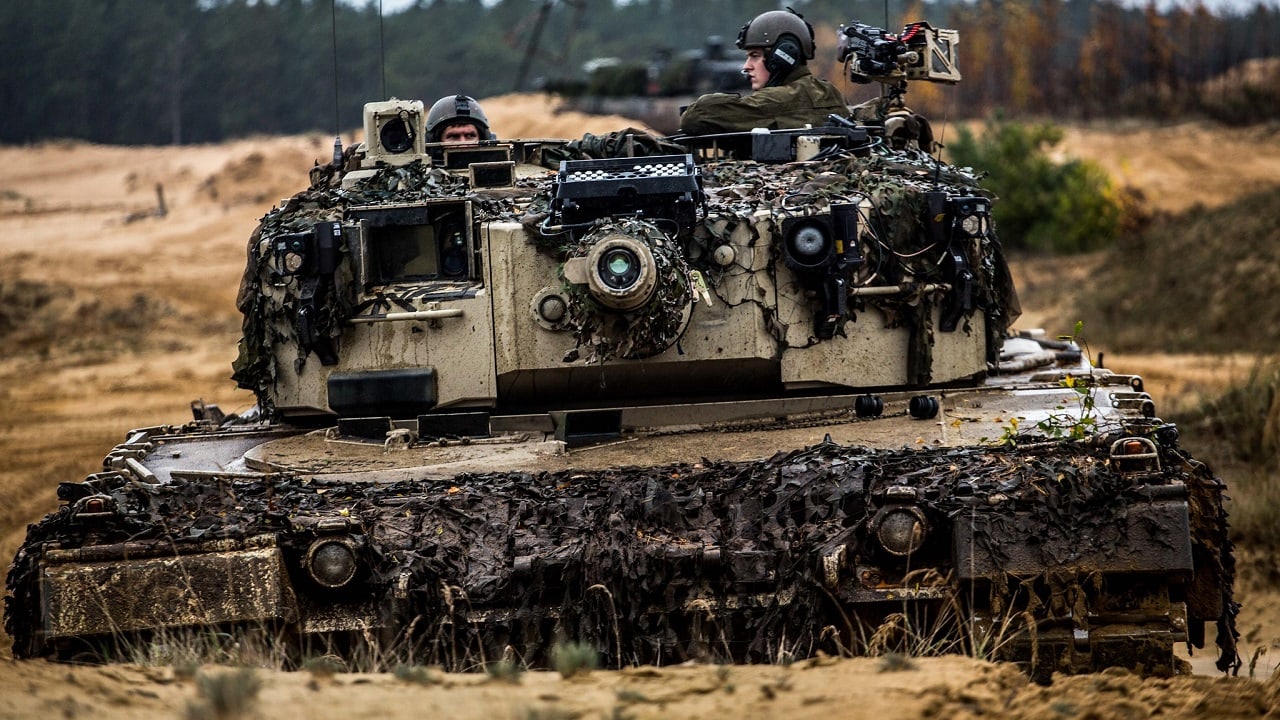
A Norwegian Leopard 2A4 main battle tank during Iron Wolf II in Lithuania. It involves 2,300 troops from 12 NATO Allies. The Lithuanian-led exercise is helping to train the NATO Battlegroup which consists of soldiers from Germany, Belgium, Luxembourg, the Netherlands and Norway. Shot in Rukla, Lithuania.
During the Cold War, the West German Bundeswehr was one of NATO’s central pillars.
With nearly half a million men-at-arms, backed by nearly 200,000 reserves, and armed with some of the most sophisticated weapons platforms in the world, Germany would have borne the main thrust of the Warsaw Pact had Moscow ever given the green light to an invasion of Western Europe.
But following reunification with the former East Germany and the end of the Cold War, the newly unified German state allowed its armed forces to wither and atrophy.
Having shed both platforms and personnel and missed NATO spending targets, the Bundeswehr has been a shadow of its former self.
A profoundly pacifist streak runs deep through the German consciousness, a sort of penance for the country’s catalyzation of two world wars and the Holocaust.
But jolted awake by Russia’s full-scale invasion of Ukraine, opinions toward defense have shifted profoundly, and a clear majority of Germans support their country’s active military assistance to Ukraine.
Retooling for War
As an export-driven economy, the automobile industry has been the lifeblood of the German economy for years.
Powered by cheap Russian energy and incredible demand from Asia and elsewhere around the globe, German brands like Mercedes-Benz, Audi, BMW, Porsche, and Volkswagen were synonymous with quality, luxury, reliability, and status.
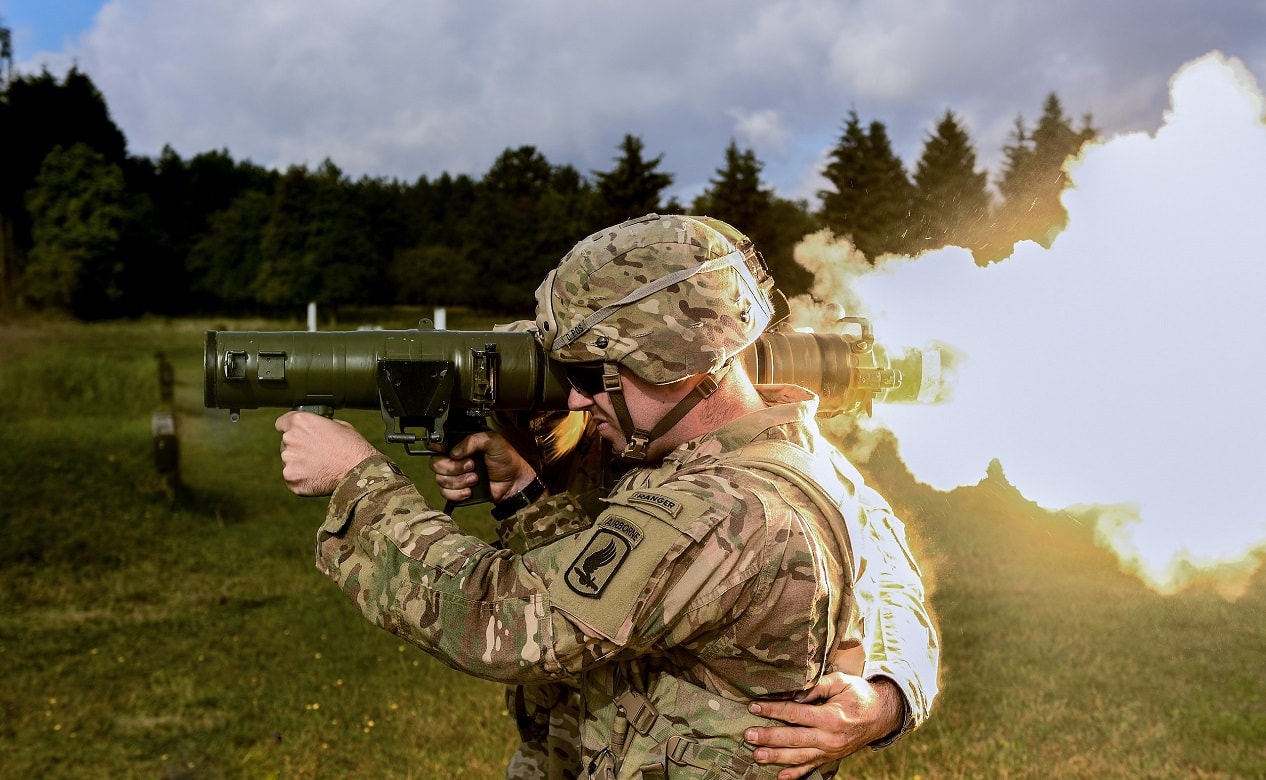
Carl Gustaf Firing: Sky Soldiers from 1st Battalion, 503rd Infantry Regiment engaged targets with the Carl Gustaf 84mm weapon system in Grafenwoehr, Germany September 8, 2018 during Saber Junction 18. Exercise Saber Junction 18 is a U.S. Army Europe-directed exercise designed to assess the readiness of the U.S. Army’s 173rd Airborne Brigade to execute unified land operations in a joint, combined environment and to promote interoperability with participating allies and partner nations.
But buffeted by the war in Ukraine and higher energy costs, as well as cooling demand for the internal combustion engine and a sluggish pivot toward electric cars and the infrastructure necessary for that adjustment to be practical, the auto sector is shedding jobs at an astonishing rate.
Shifts in investment toward Asia are partially responsible for job cuts in Germany and historically low hiring levels.
But as Germany’s export-driven economic model falters, firms are pivoting production — not toward the latest and greatest new automobile, but toward tanks, artillery, and ammunition.
Thanks to a spate of regulatory changes in Europe, the continent’s defense primes, including those in Germany, have better access to the capital needed to jump-start weapons production.
The financial shift has dovetailed with a glut of skilled machinists, engineers, and other highly skilled workers necessary to design and produce some of the world’s most sophisticated platforms, from cutting-edge tanks and armored vehicles to advanced, programmable ammunition and air defenses.
But rather than putting Germany’s old economic model on life support, the new plan is to transform the patient and turn Germany into Europe’s arsenal.
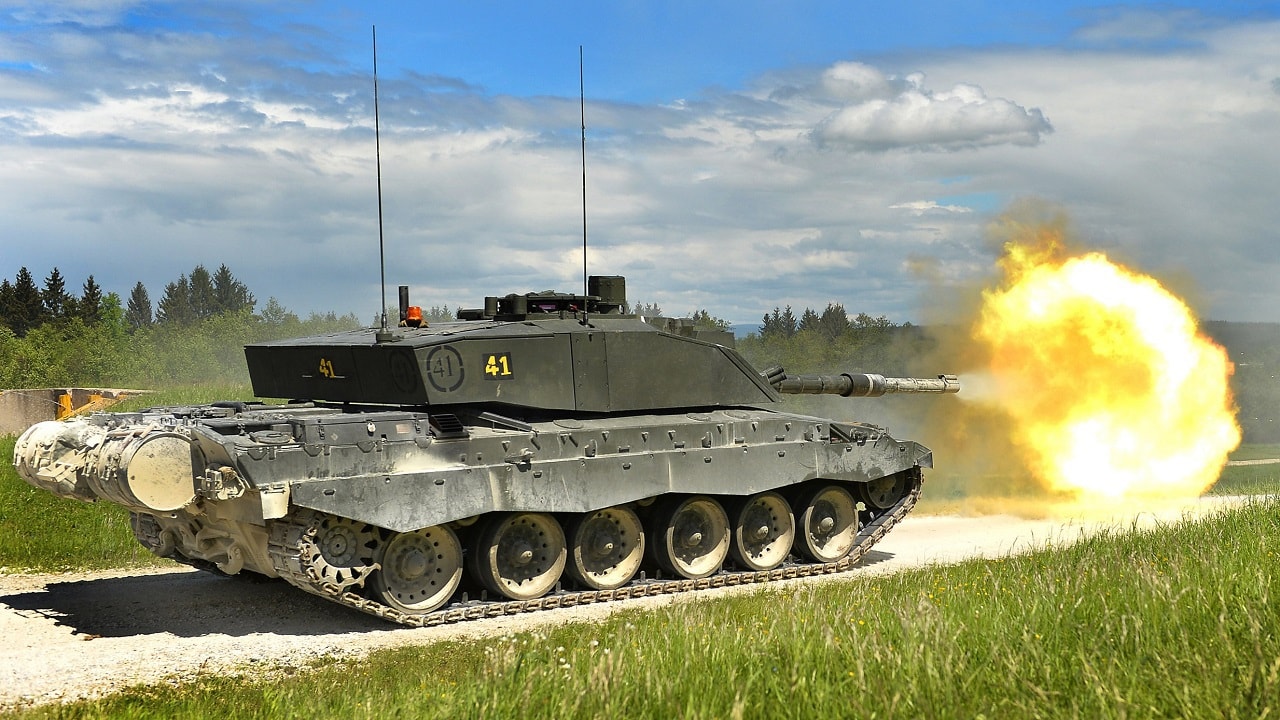
A Challenger 2 main battle tank (MBT) is pictured during a live firing exercise in Grafenwöhr, Germany. Exercise BAVARIAN CHARGER was the first of three large contingency operation exercises being undertaken by 20th Armoured Brigade between May – October 2013. Contingency Operations training is known as Hybrid Foundation Training or HFT.
Shouldering the Burden of Defense
Since the end of the Second World War, American troops have been stationed in Germany.
Originally part of a nation-sized occupational force, deployments to Germany now fall under the auspices of the North Atlantic Treaty Organization, or NATO.
But in response to criticism of the war in Iran by German Chancellor Friedrich Mertz, American Defense Secretary Pete Hegseth announced he would review the American troop presence in Germany.
Though far from withdrawing from NATO, American interest in the alliance appears to be on the wane, prompted in large part by the American president’s deep skepticism of what he has characterized as European free-riding on American security guarantees and unmet financial commitments.
But Germany’s defense posture has been transformed. A €100 billion injection into the Bundeswehr by former Chancellor Olaf Scholz — what he termed a Zeitenwende, or turning point — jump-started a defense revolution that has been sustained under the current German leadership by long-term defense budget financing.
One of the starkest changes evident in Germany’s revamped defense posture is the Bundeswehr’s Lithuania Brigade.
Stationed in the small Baltic country that borders Belarus as well as Russia’s Kaliningrad exclave, the German troop presence marks the first time since the Second World War that German soldiers are permanently stationed abroad — but this time not as an invading force, but as protectors of the peace, invited by their foreign hosts.
About the Author: Caleb Larson
Caleb Larson is an American multiformat journalist based in Berlin, Germany. His work covers the intersection of conflict and society, focusing on American foreign policy and European security. He has reported from Germany, Russia, and the United States. Most recently, he covered the war in Ukraine, reporting extensively on the war’s shifting battle lines in the Donbas and writing about its civilian and humanitarian toll. Previously, he worked as a Defense Reporter for POLITICO Europe. You can follow his latest work on X.