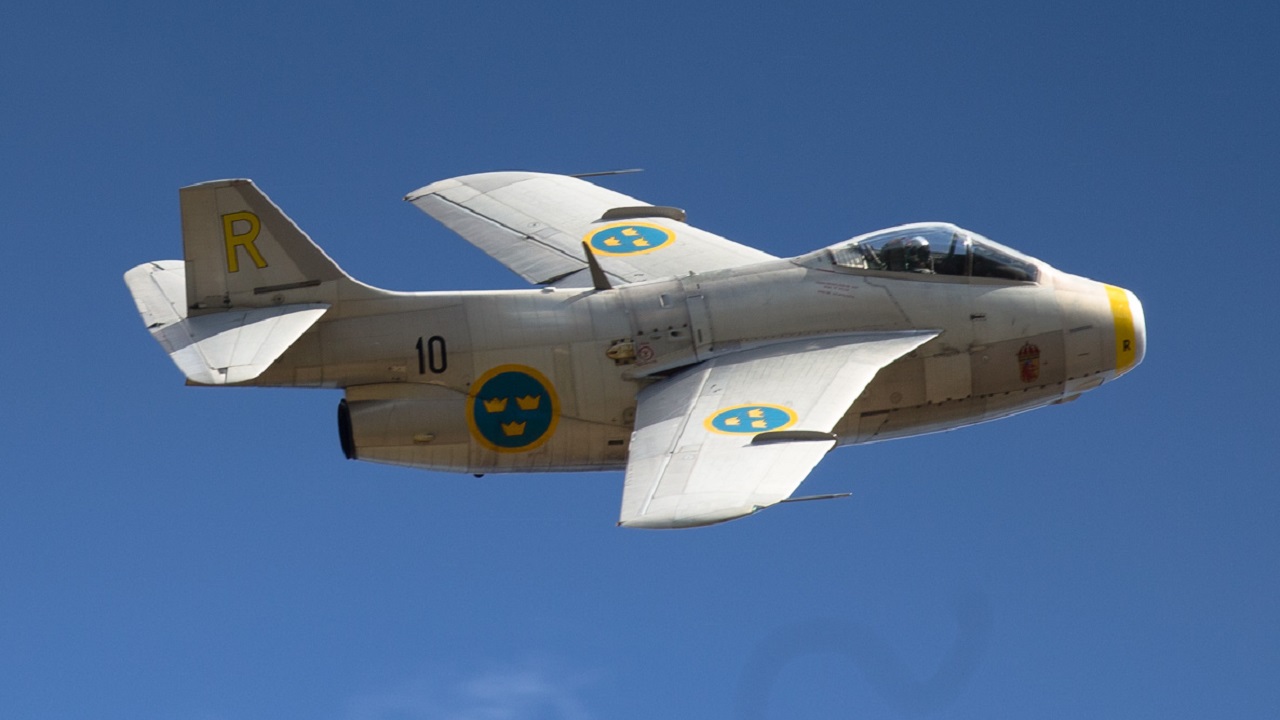
The Saab 29 Tunnan is one of the forgotten fighters of the Cold War era.
When people think of Cold War-era fighters, they may imagine the American F-86 Sabers or the Soviet MiG-15s, but the Swedish Tunnan was a fighter that, despite emerging from a neutral country, proved to be one of the most capable of its generation.
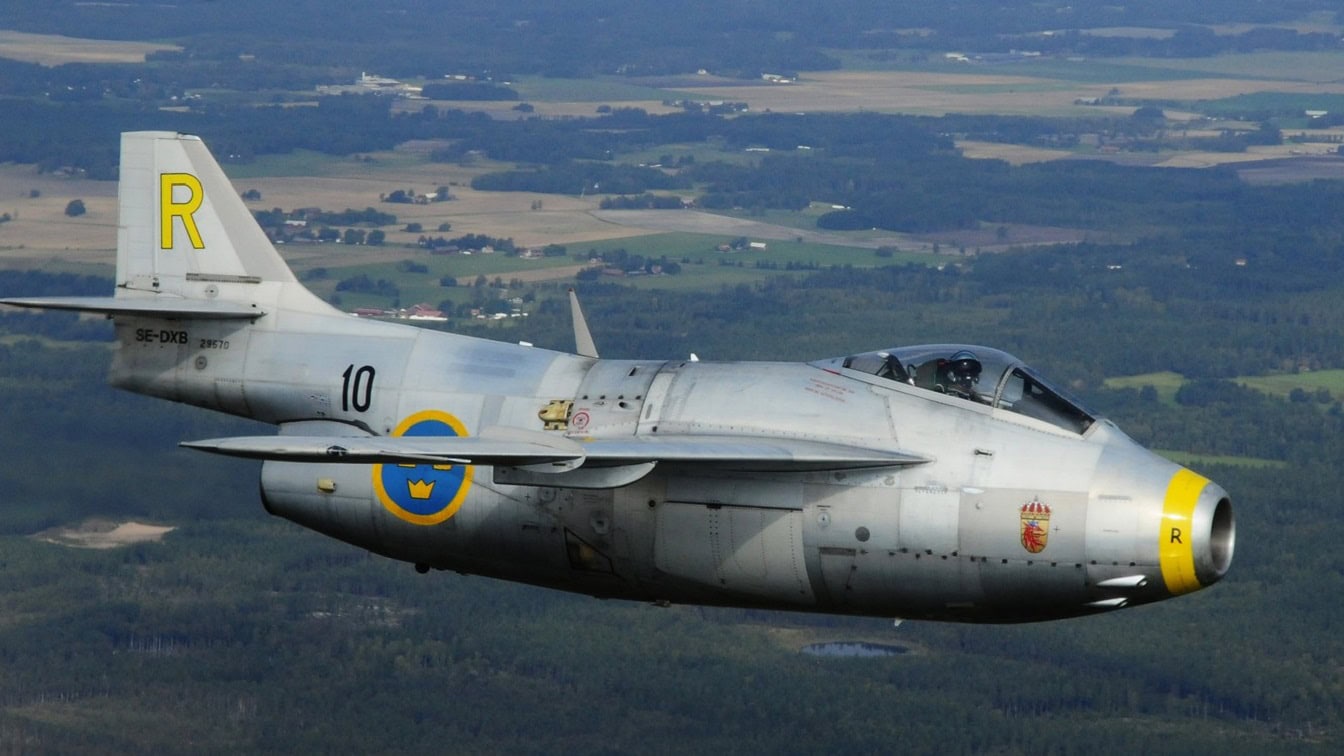
Saab J-29 Tunnan
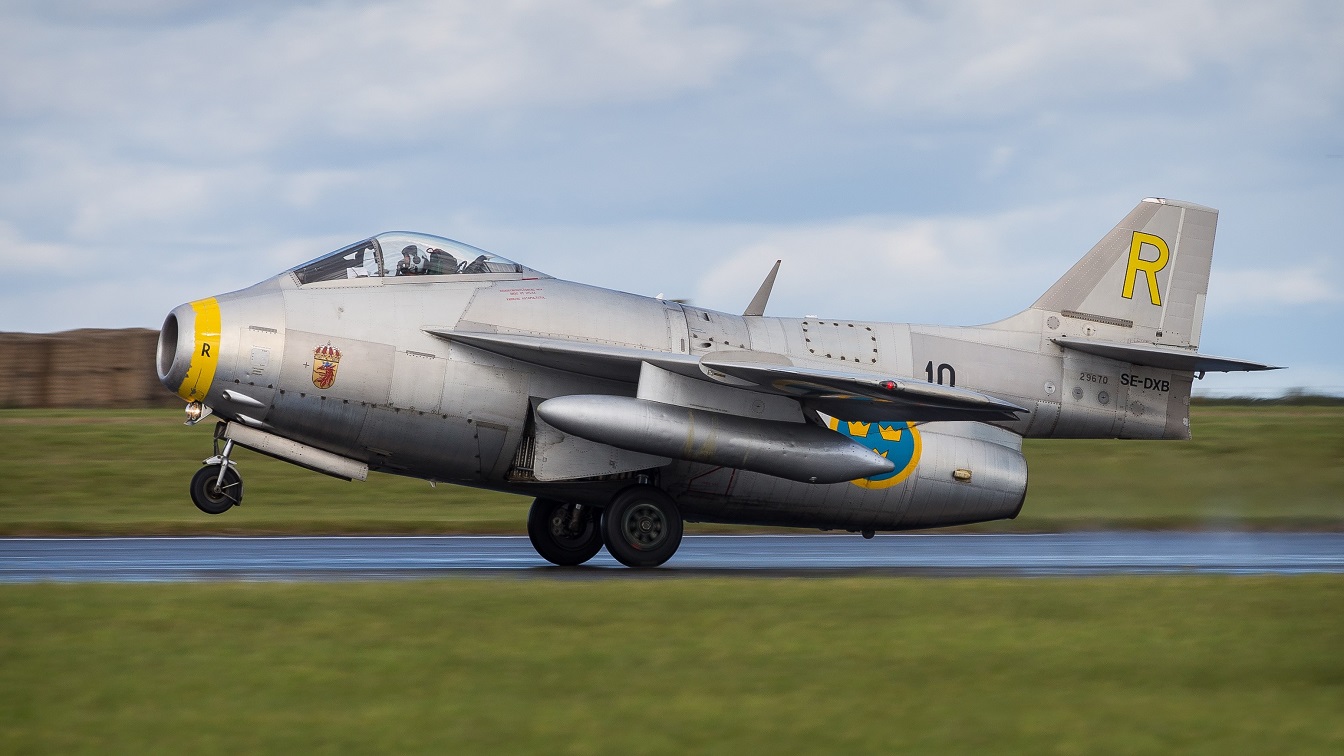
Saab 29. Image Credit: Creative Commons.
Known as the “Flying Barrel” because of the distinctive shape of its fuselage, the Saab 29 became a symbol of Sweden’s determination to maintain an advanced and independent air force during the Cold War.
It was the first-ever Swedish fighter to feature swept wings, and it helped establish Saab as one of the world’s top aircraft manufacturers.
Sweden’s Fighter Jet Search
We can trace the origins of the Saab 29 back to the final years of the Second World War. Although Sweden was officially neutral during the war, military planners watched the conflict unfold closely and monitored developments in aviation.
They recognized that piston-engine fighters were quickly becoming obsolete and began preparing for the future. Engineers at Saab gained access to German aerodynamic research when the war ended and began studying swept-wing designs.
Their findings proved that the wings significantly improved performance at high speeds and would become essential as aircraft transitioned to jet engines.
In 1945, Saab began work on a new fighter that would replace older aircraft in Swedish service. The project was ambitious. It was built to ensure if a war ever did break out with the Soviet Union, Sweden was ready in the air.
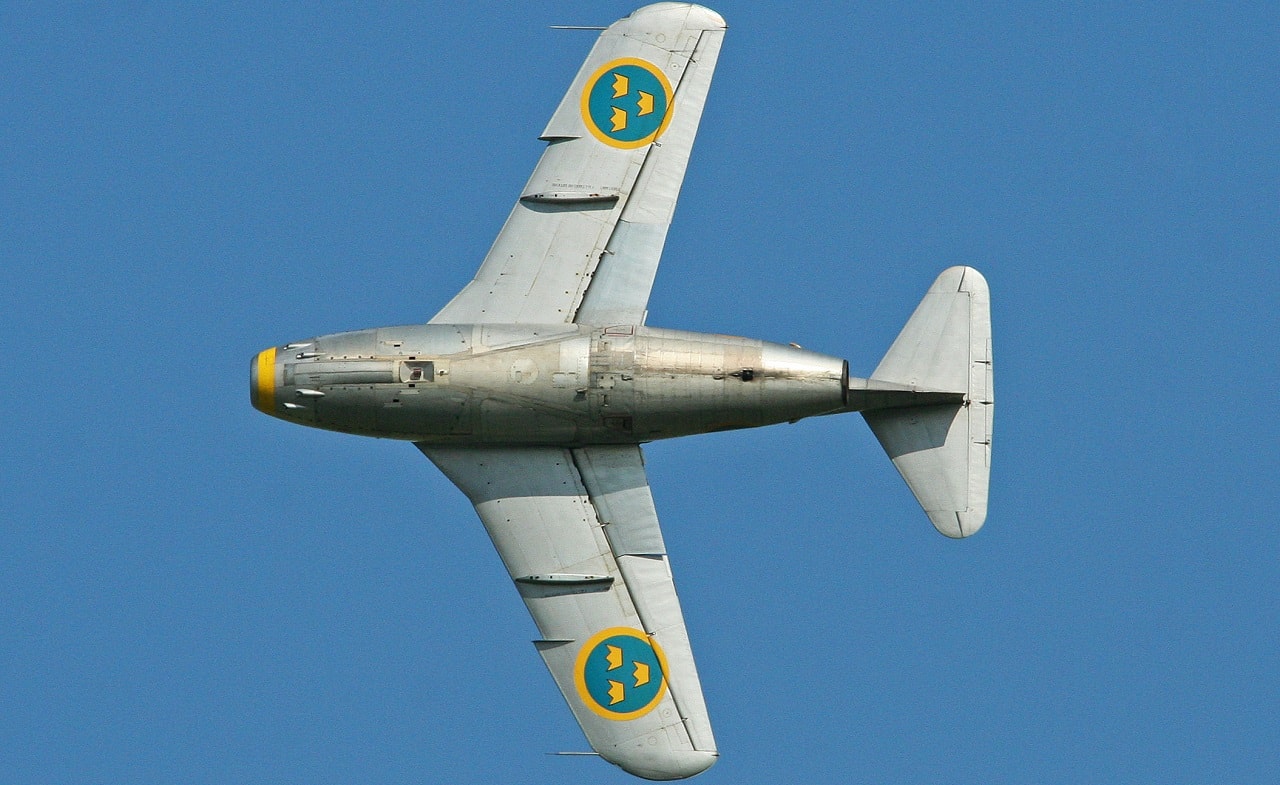
Saab J-29 Tunnan. Image Credit: Creative Commons.
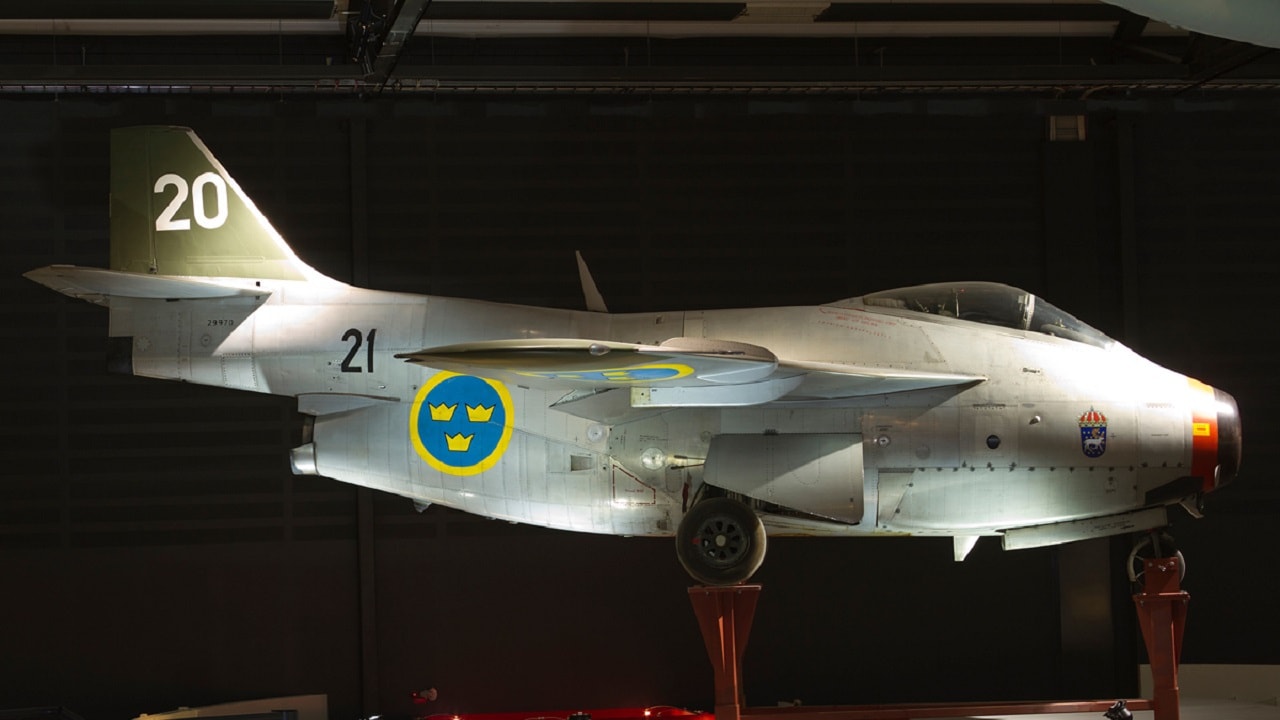
Saab J-29 Tunnan on permanent display at the Swedish Air Force Museum in Linköping, Sweden.
Sweden sought an aircraft capable of defending its airspace. The result was the Saab 29, which made its maiden flight on September 1, 1948.
Test pilots quickly discovered that despite its unusual appearance, the aircraft possessed impressive speed and maneuverability.
The “Flying Barrel” and Why It Worked
The Tunnan’s nickname came about as a result of the aircraft’s strange design. The fighter aircraft had a wide fuselage often compared to a barrel.
It was unlike any aircraft that came before it, and while unconventional, the design actually served a practical purpose.
Powered by a license-built version of the British de Havilland Ghost turbojet engine, the aircraft generated enough thrust to make it one of Europe’s most advanced fighters of the early 1950s.
The swept-wing configuration allowed it to approach transonic speeds, placing it in the same technological generation as the MiG-15 and F-86.
The aircraft quickly entered operational service with the Swedish Air Force in 1951 and soon became the backbone of Sweden’s fighter fleet.
It was armed with four 20mm cannons and could carry rockets and bombs. It was also designed to be an interceptor, but was also capable of performing ground-attack missions.
Later variations of the fighter also featured improved engines, greater fuel capacity, and enhanced weapons.
Even though it was so stocky, pilots often reported that it was agile in flight and very effective in combat training exercises.
A Barrel That Broke Records
Not only was the flying barrel a capable military aircraft, but it also demonstrated Sweden’s growing aerospace expertise on the world stage.
In 1954, a modified version of the Tunnan broke a world speed record over a closed circuit, averaging more than 600 miles per hour.
The achievement proved that the aircraft could perform remarkably well and reinforced Sweden’s excellent reputation as a serious aviation power, despite its small population.
More than 660 Tunnans were eventually produced, making it one of the most successful aircraft programs in the country’s history – even if much of the rest of the world forgot about it.
The fighter came at a time when Sweden was investing heavily in its national defense, fearful that a European conflict might spill over into Stockholm.
Stockholm maintained one of the strongest air forces in Europe despite its general neutrality, and the Tunnan was central to its strategy.
The Tunnan’s Only Combat Deployment
Although it was originally designed for defense purposes during the Cold War, the Saab 29 eventually did see operational service – but it was far from Scandinavia.
In 1961, Sweden deployed Tunnan fighters to the Congo as part of a United Nations peacekeeping mission during the Congo Crisis.
It was the first time Swedish combat aircraft had ever participated in an international military operation under United Nations command.
It operated in difficult conditions and flew reconnaissance and patrol missions.
It also conducted ground attacks, with pilots conducting strikes against rebel positions and providing air support for UN forces attempting to stabilize the conflict.
The deployment proved that the Tunnan was a perfectly capable interceptor in real-world conditions, and thousands of miles away from home.
The Tunnan remained in frontline Swedish service until the 1960s, but was gradually replaced by newer aircraft, including the Saab 32 Lansen.
About the Author: Jack Buckby
Jack Buckby is a British researcher and analyst specializing in defense and national security, based in New York. His work focuses on military capability, procurement, and strategic competition, producing and editing analysis for policy and defense audiences. He brings extensive editorial experience, with a career output spanning over 1,000 articles at 19FortyFive and National Security Journal, and has previously authored books and papers on extremism and deradicalization.