
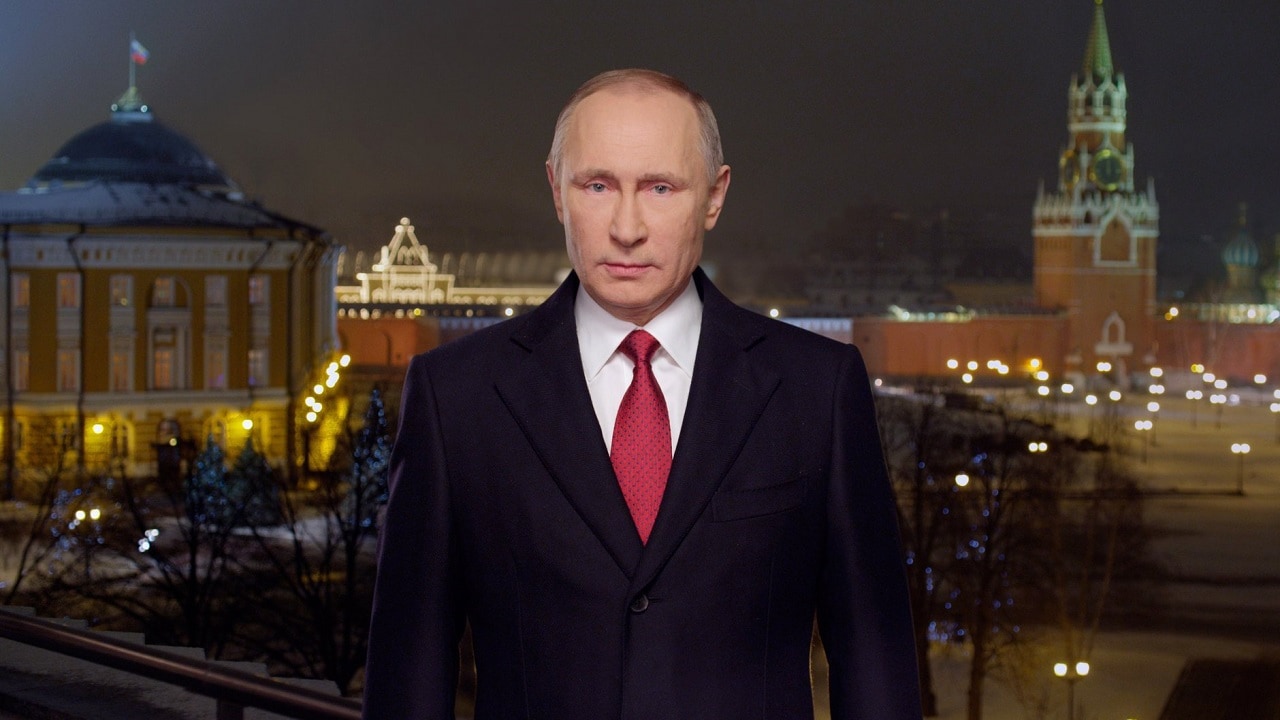
Putin Keeps Threatening Escalation Because Ukraine Found the Seam He Can’t Defend: On June 18th, Ukraine launched close to 200 drones at Moscow and struck the Kapotnya oil refinery for the second time in a week — the largest drone attack on Moscow to date. Russia’s defense ministry reported shooting down 555 drones overnight. Four airports grounded flights. Smoke rolled over the city. Putin was in Kazan at a regional summit, and his office issued no immediate response to what nationalist commentators were calling a breakdown of air defense credibility.
His escalation warnings have started to sound less like threats than like a man explaining why his house is on fire.
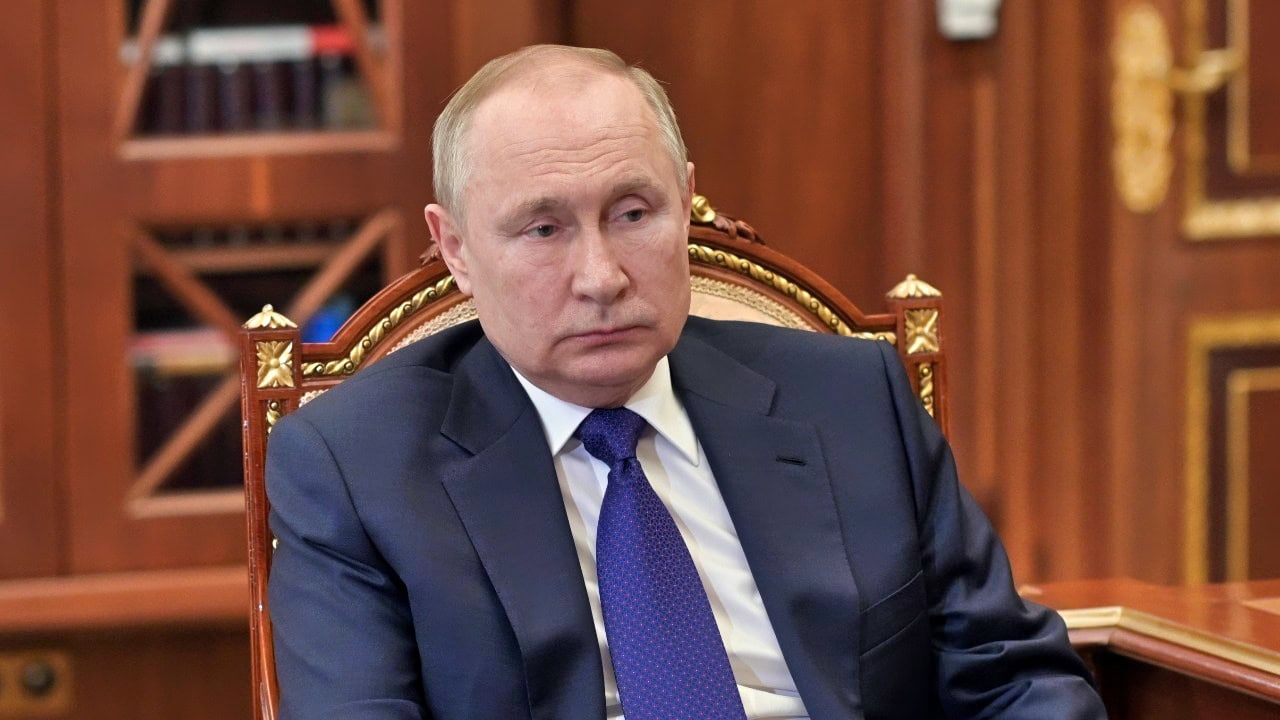
Russia’s President Putin. Image Credit: Russian Government.
For most of this war, the threat worked. Tanks for Ukraine became a months-long crisis in Western capitals. Long-range missiles turned into a seminar. Every new system handed to Kyiv got treated as a possible on-ramp to a wider war with a nuclear power, and the hesitation that produced was itself the prize. Putin didn’t need the West to believe he would push the button. He needed the West to slow down, and for a long stretch it obliged.
How bad this gets depends less on Putin’s nuclear theatrics than on how far both sides are willing to widen the war’s target set.
The One-Way War Is Over
The drone campaign does not decide anything at the front, and nobody serious in Kyiv thinks it does. Russia still has the missiles, the glide bombs, the manpower it draws from its poorer regions, and a willingness to flatten Ukrainian cities when the fighting turns against it. What has changed is narrower and, for the Kremlin, more uncomfortable. The war has arrived in places Russians were promised it never would.
Distance was always part of Putin’s domestic bargain. Russia could do to Ukraine what it has done — the power grid in winter, the apartment blocks, the ports — while the heartland went on undisturbed. Moscow was not supposed to feel like Kyiv. Refineries were supposed to be assets, not targets.
That arrangement is what Ukraine is now picking at. The Kapotnya facility supplies roughly 40 percent of Moscow’s petrol — and it has been hit twice in a week. On June 20, Zelenskyy said Ukrainian drones had struck the Antipinsky refinery in Tyumen, more than 2,000 kilometers from the border, deeper into Russian territory than Kyiv had previously reached.
Russia’s refining sector was already badly strained; fuel shortages had spread across more than a dozen regions, and Russia had started planning gasoline imports by sea. On June 21, occupied Crimea suspended all civilian fuel sales — the Russian-appointed governor said it was a temporary measure, though nobody there seemed to believe that. None of it decides the war.
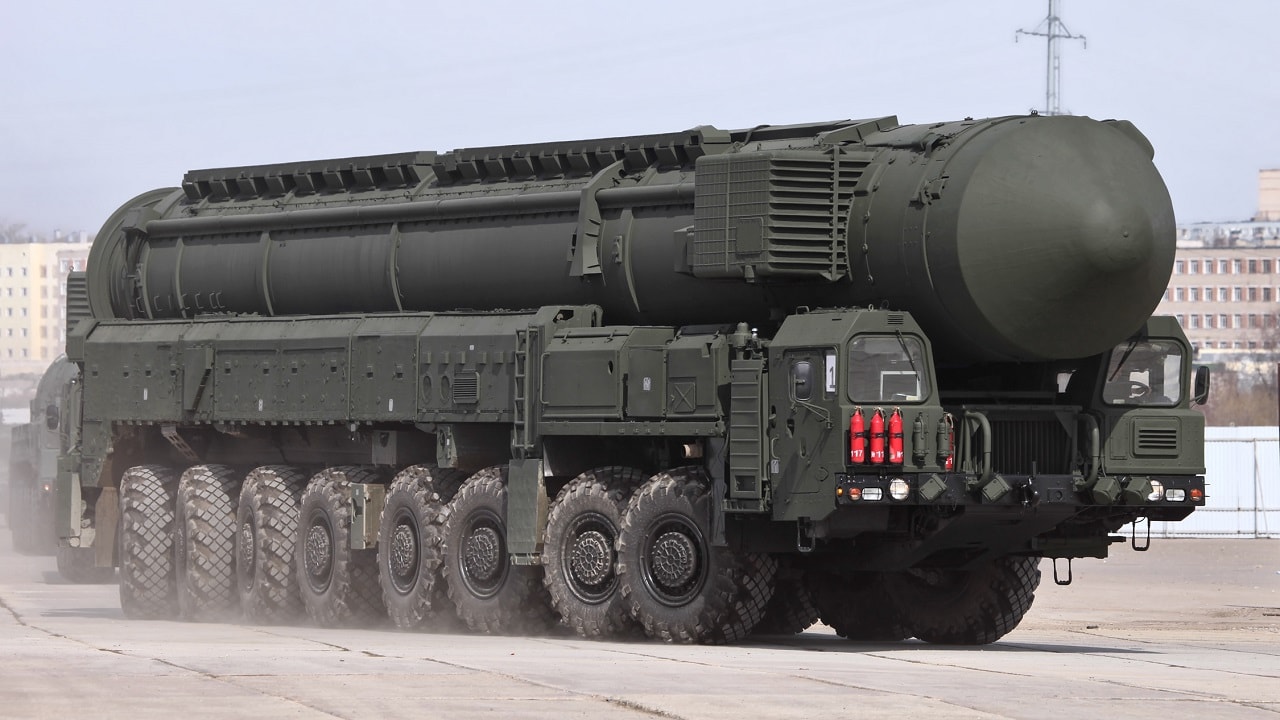
Russian Mobile ICBMs. Image Credit: Creative Commons.
All of it chips at the proposition the Kremlin has sold at home: that the fighting is something happening to other people, somewhere else, under control.
This is why the official anger is worth reading closely. When Russian spokesmen call these strikes intolerable escalation, part of the message is aimed at Washington, where the word still has a paralyzing effect. But part is aimed inward. The Russian public is being told that Russia is the wronged party — that the war has come home through some foreign outrage rather than through a decision Putin made to start a war he couldn’t keep at arm’s length. A red line crossed without a crushing response stops being much of a red line. The volume goes up precisely because the line already got crossed, and the sky over Russia is still there.
An embarrassed Kremlin can answer with heavier barrages against Ukrainian cities, go harder after the energy system, or make trouble along NATO’s eastern edge. That danger is the cost of contesting the asymmetry, not a reason to hand it back.
Trump Is Sitting on Leverage He Doesn’t Seem to Want
President Trump says he wants the war over. An open-ended war with no political endpoint is not a strategy; it’s a drift with a flag stuck in it. Restraint is defensible. It is not the same as diplomacy, and the two are often confused.
Putin has had no reason to hurry toward a settlement. He can wait. He can grind. What the June strikes tell Moscow is that delay now carries a price beyond the slow arithmetic of the front — air-defense problems around the capital, refineries offline, logistics under strain, and a domestic mood that gets harder to manage. That is leverage. The question is whether Washington treats it as leverage rather than as an inconvenience that makes negotiations messier than the President would like.
At the G7 summit in Évian, Trump signed a joint statement committing to tougher sanctions on Russian oil and renewed support for Kyiv. He said Russia should make a deal. Then, on June 21, Zelenskyy disclosed that Trump had signaled openness — for the first time — to licensing US missile production in Ukraine. Washington had not previously acted on that request, in part because Patriot production is already stretched thin. Whether Trump follows through matters less right now than the fact that Putin is already working to reverse it.
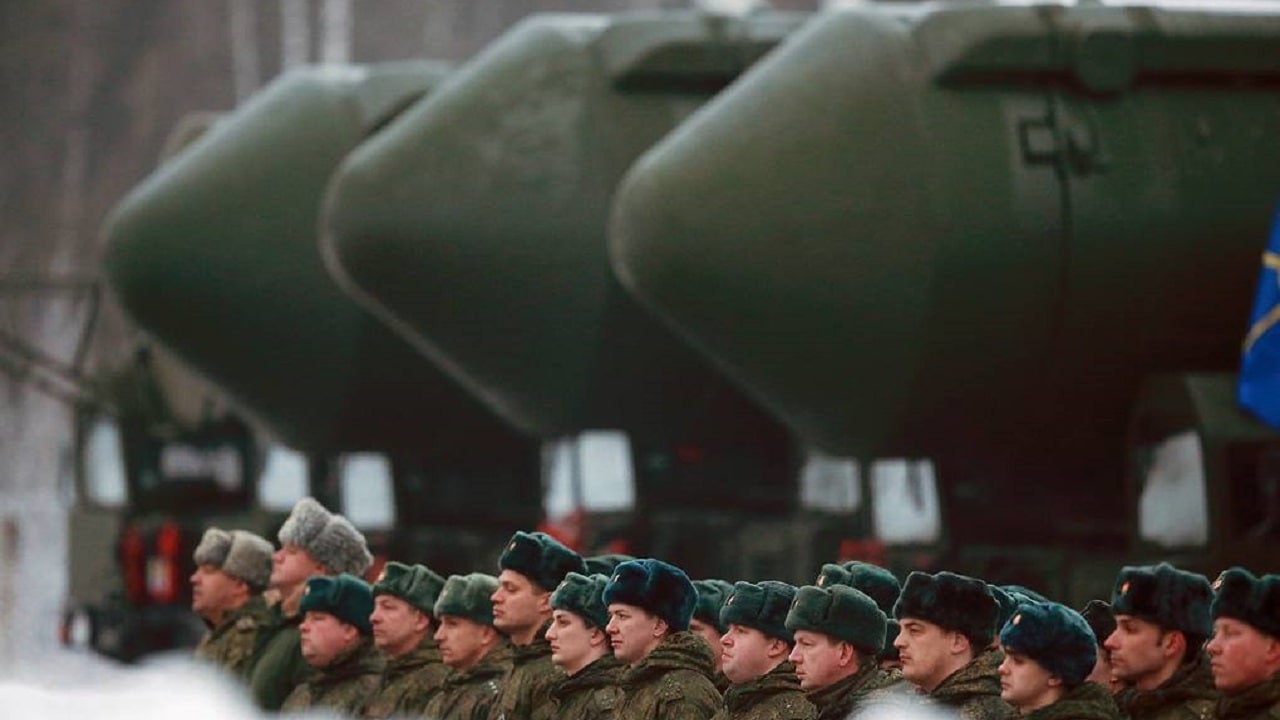
Russian nuclear weapons. Image Credit: Russian State Media.
That is how this leverage works: it is real only if Washington is willing to hold it.
Putin will ask for Ukrainian restraint, framing Russian discomfort as the destabilizing factor in the talks, because that discomfort is only useful to him if he can convert it into Western pressure on Kyiv. Falling for that would be a particular kind of error: helping Russia restore the war’s one-way character under the banner of de-escalation. Russia decided that Ukrainian cities, grids, ports, and civilians were inside the battlefield. It is a strange diplomacy that treats Ukraine reaching back toward the Russian war economy as the provocation that needs fixing.
Russian officials threatened retaliation after June 18, and by June 22, nothing on the scale implied by the rhetoric had arrived. The likelier trouble is duller: bigger drone salvos both directions, more refineries burning, missile barrages on Ukrainian cities, incidents near borders nobody wanted, and civilians pulled deeper into a war their governments keep insisting is contained.
Much of this now comes down to distance. Russia wants the space between Moscow and Kyiv to work one way — keeping Russians on the spectator side of a war Russia is waging. Ukraine, with cheap drones and the knowledge that it has had no sanctuary for years, is refusing to let that stand. Putin can still inflict terrible suffering, and he probably will.
That is not an argument for easing the pressure. It is a reason to make him pay more for waiting. If Trump genuinely wants this settled, he needs to decide whether Russian vulnerability is leverage to use or a problem Washington is expected to solve for Putin.
About the Author: Dr. Andrew Latham
Andrew Latham is a professor of international relations and political theory at Macalester College in Saint Paul, MN. You can follow him on X: @aakatham.