
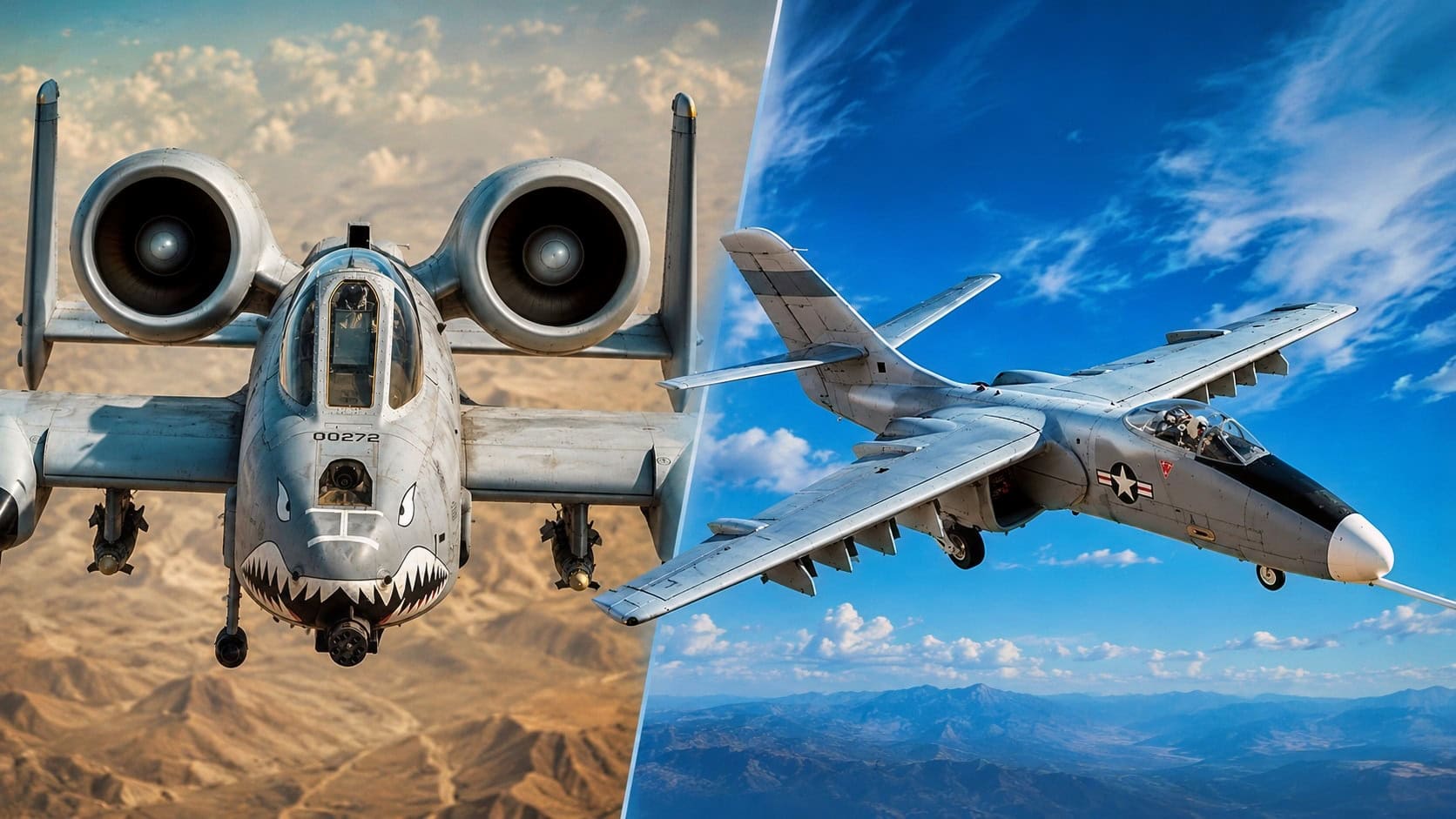
The YA-9, The Aircraft That Could Have Been The A-10: The Northrop YA-9 was the primary competitor to the Fairchild Republic YA-10 in the U.S. Air Force’s 1970s A-X program to find a dedicated close-air-support aircraft capable of knocking out Soviet tanks.
Although the YA-9 was a highly capable “flying tank,” the Air Force selected the A-10 Warthog in 1973. An interesting footnote to the story is that the YA-9 may have lived on in another design.
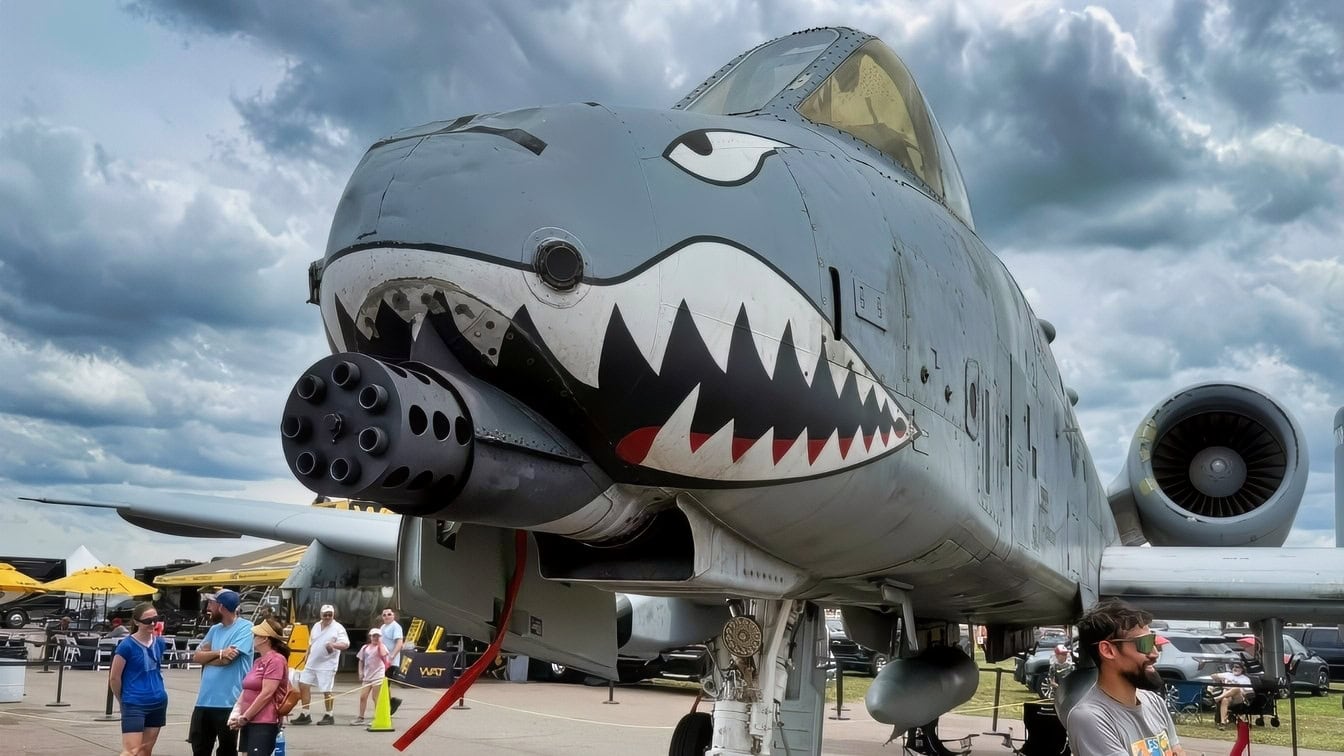
A-10 Warthog. 19FortyFive.com image from Lakeland, Florida airshow on 4/19/2026.
The aircraft bears a striking resemblance to the Soviet Sukhoi Su-25 “Frogfoot” ground-attack aircraft, which was adopted shortly after the US competition was announced.
While the YA-9 was an outstanding aircraft in many respects, it ultimately lost the competition to what is arguably the greatest ground-attack aircraft of all time, the A-10 Thunderbolt.
NOTE: We have included select photos of our recent visit with an A-10 Warthog back in April at an air show in Lakeland, Florida.
Meet The YA-9 Ground Attack Aircraft
The YA-9 ground-attack aircraft was designed by Northrop in the early 1970s in response to a request from the US Air Force for a low-flying, slow, close-air-support aircraft capable of destroying the heaviest Soviet tanks and armored vehicles.
The Army and the Air Force were fighting over budgetary funds, and the Army was designing attack helicopters for close air support (CAS), a task the Air Force wasn’t interested in, and many analysts believe they still aren’t.
During the Vietnam War, the CAS mission was largely handled by A-1 Skyraiders, a hand-me-down from the Navy. But the Army’s development spurred the Air Force to advance CAS designs… money talks.
The aircraft was developed with Short Take Off and Landing (STOL) capabilities and had excellent maneuverability, much like its competitor. The YA-9 also possessed the ability to loiter over the target for long periods of time.
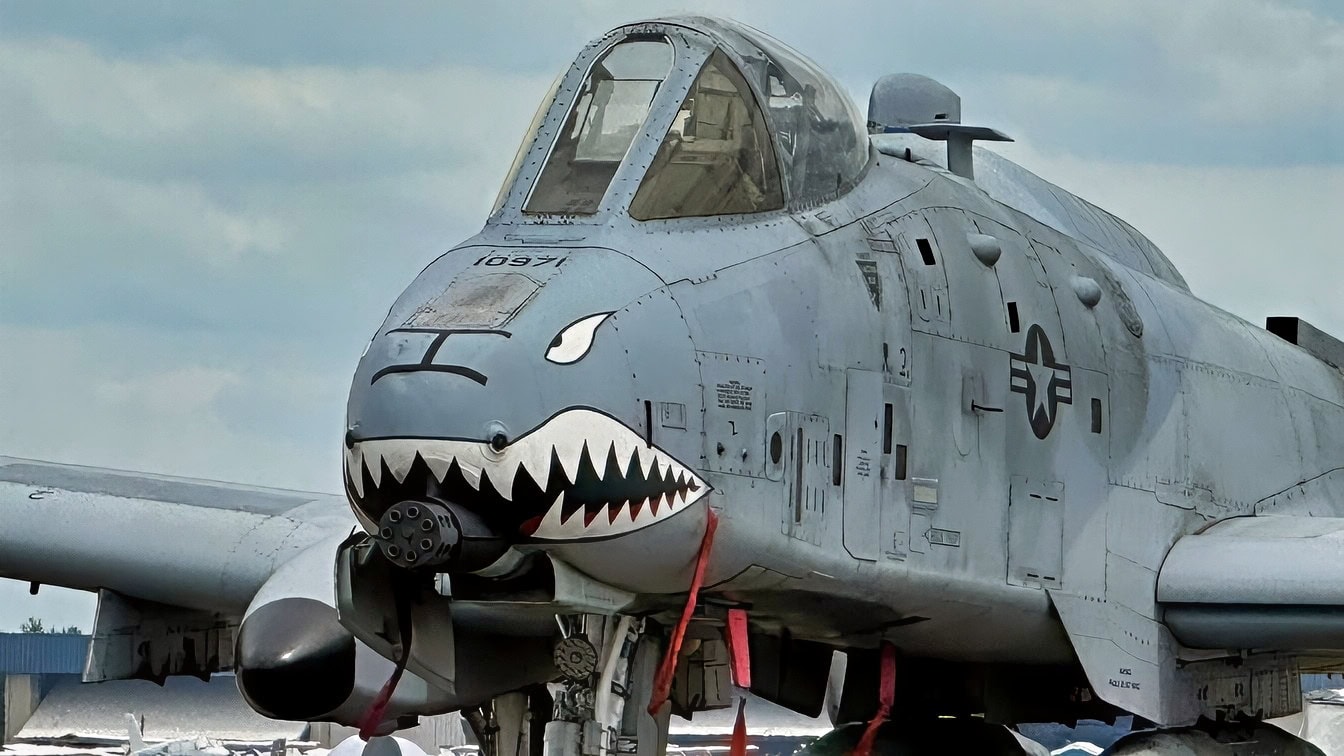
A-10 Warthog Lakeland Florida Airshow. Taken on 4/19/2026 by 19FortyFive.com
The A-9 was designed with low-level flight survivability in mind. The pilot sat in a bubble canopy that afforded excellent 360-degree over-the-nose visibility.
With redundant flight control systems and robust aluminum alloy armor 1.25 to 2.5 inches thick that protected the pilot and key components of the aircraft, the A-9 could withstand multiple direct hits from Soviet 23mm anti-aircraft cannons.
However, if adopted, the plan was to switch the pilot’s armor to a titanium bathtub design.
The wings featured ten weapons pylons that could carry up to 16,000 pounds of weapons, depending on the mission. The aircraft was armed with a M61 Vulcan 20mm Gatling gun because the GAU-8 Avenger 30mm cannon was not yet ready for testing.
The aircraft was equipped with twin turbofans fitted in nacelles beneath the wing roots. Northrop selected the Lycoming YF102 engine for the YA-9 rather than the more powerful General Electric TF34 used by the A-10.
Each engine produced 7,200 pounds of thrust, powering the aircraft to a top speed of 520 mph. The engines could be replaced by maintenance crews in an hour.
Northrop built only two YA-9A prototypes, serial numbers 71-1367 and 71-1368. The two YA-9s completed 123 flights, totaling 307.6 flight hours, during the ground attack aircraft competition.
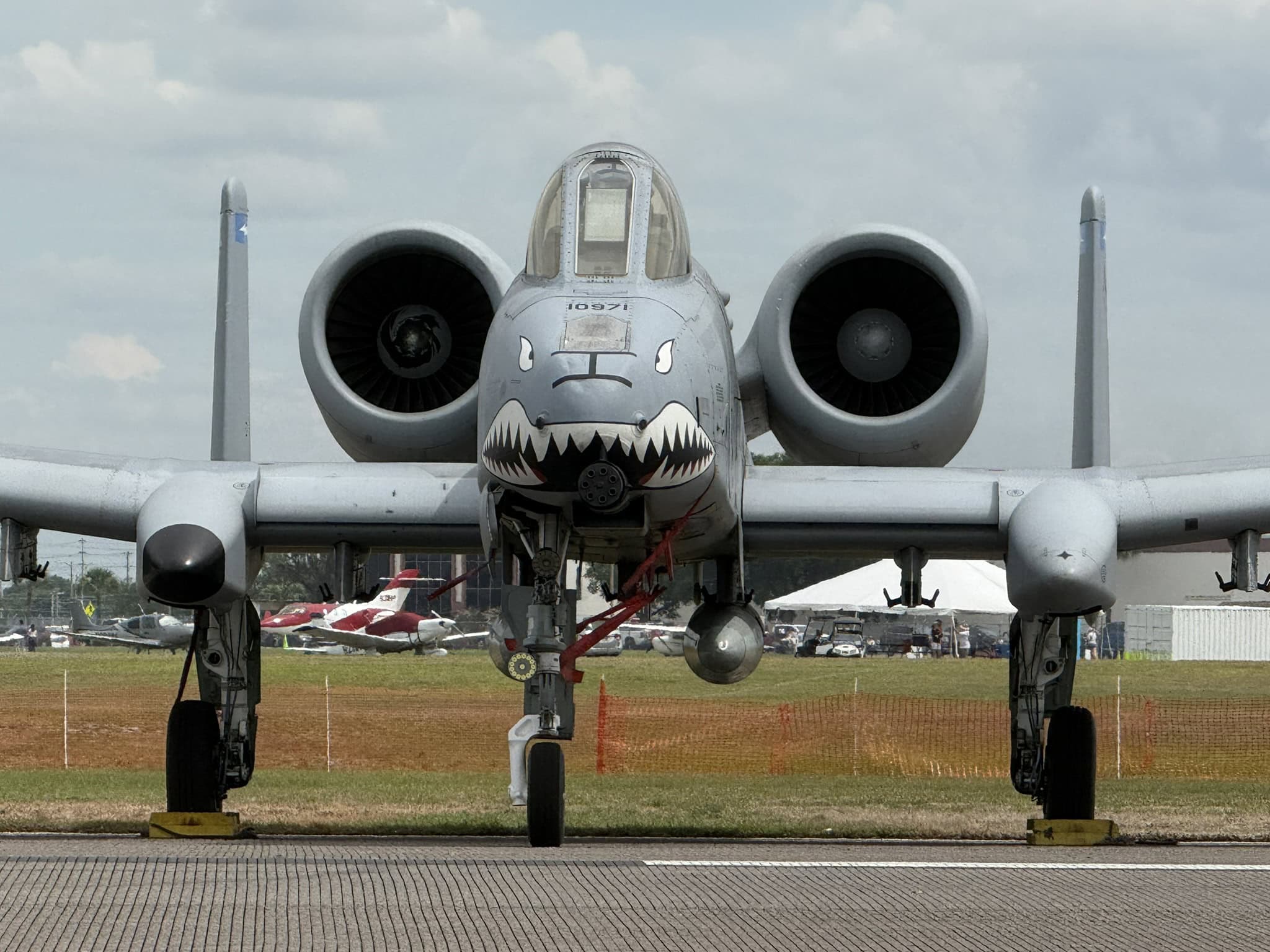
A-10 Warthog. Image Credit: 19FortyFive.com Taken on 4/19/2026.
Following the competition, the two YA-9s were transferred to the NASA Dryden Research Center before being retired from service on April 2, 1973. However, both are currently on display as museum pieces. The March Field Air Museum is the host of 71-1368, while Edwards AFB is the home of 71-1367.
Key Differences Between The YA-9, And The A-10
While both aircraft were built to fly low, fly slow, and absorb heavy ground fire, they took very different structural approaches:
The YA-9 used two Lycoming YF-102 turbofan engines mounted directly at the wing roots. In contrast, the A-10 used General Electric TF34 engines mounted high on the rear fuselage to shield them from ground fire and reduce their heat signature. The engines’ location and power favored the A-10.
The YA-9 featured a more conventional low/mid-mounted wing design. The A-10 utilized a high-mounted wing that sat closer to the ground, allowing ground crews to re-arm and refuel the aircraft faster and with less equipment.
The YA-9 was originally tested with a 20mm Vulcan cannon, whereas the A-10 was specifically designed and built around the massive, armor-piercing 30mm GAU-8 Avenger rotary cannon, which brings the BRRRT in the A-10.
Why the A-10 Won The Competition
Although the YA-9 was an excellent aircraft, many practical considerations during the fly-off tilted the competition in favor of the A-10.
Engine reliability was a significant factor. The Air Force preferred the more developed and reliable engines of the A-10, viewing the YA-9’s engines as somewhat unproven at the time.
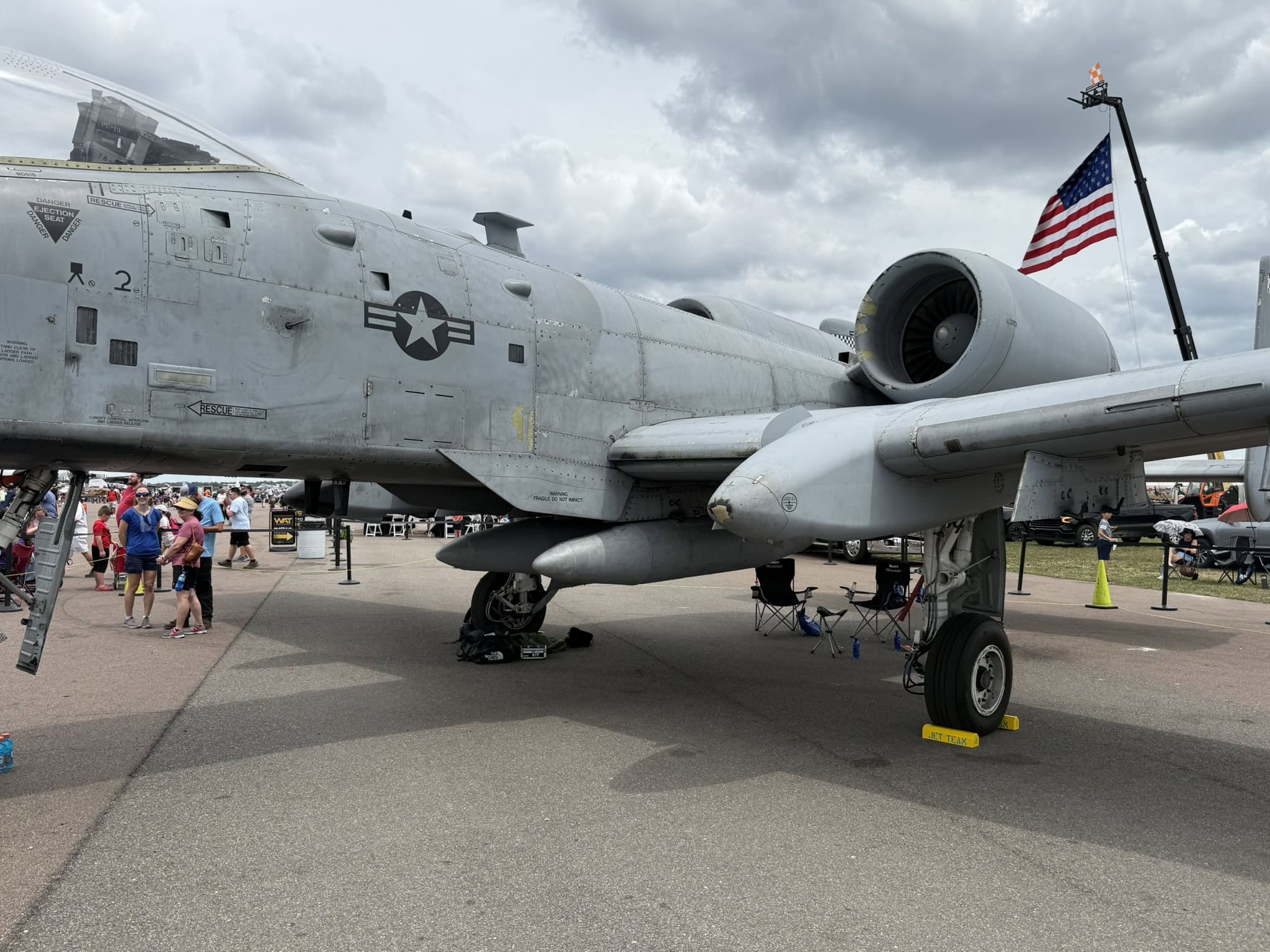
A-10 Warthog. Image Credit: 19FortyFive.com
Maintenance and ordnance loading were much easier to accomplish on the Thunderbolt. The A-10’s lower profile and wing configuration made reloading weapons and servicing the aircraft far easier in a rugged, forward-base environment.
The flyaway cost was lower for the A-10. Fairchild’s initial prototype strategy resulted in an airframe closer to a production-ready design, keeping the projected flyaway cost lower.
Although the YA-9 was an excellent aircraft and its pilots said it handled like a fighter, it lost the competition to the A-10, which is hard to argue with, as its success has been well documented and its popularity with the troops it supported is legendary.
About the Author: Steve Balestrieri
Steve Balestrieri is a National Security Columnist. He served as a US Army Special Forces NCO and Warrant Officer. In addition to writing on defense, he covers the NFL for PatsFans.com and is a member of the Pro Football Writers of America (PFWA). His work was regularly featured in many military publications.