
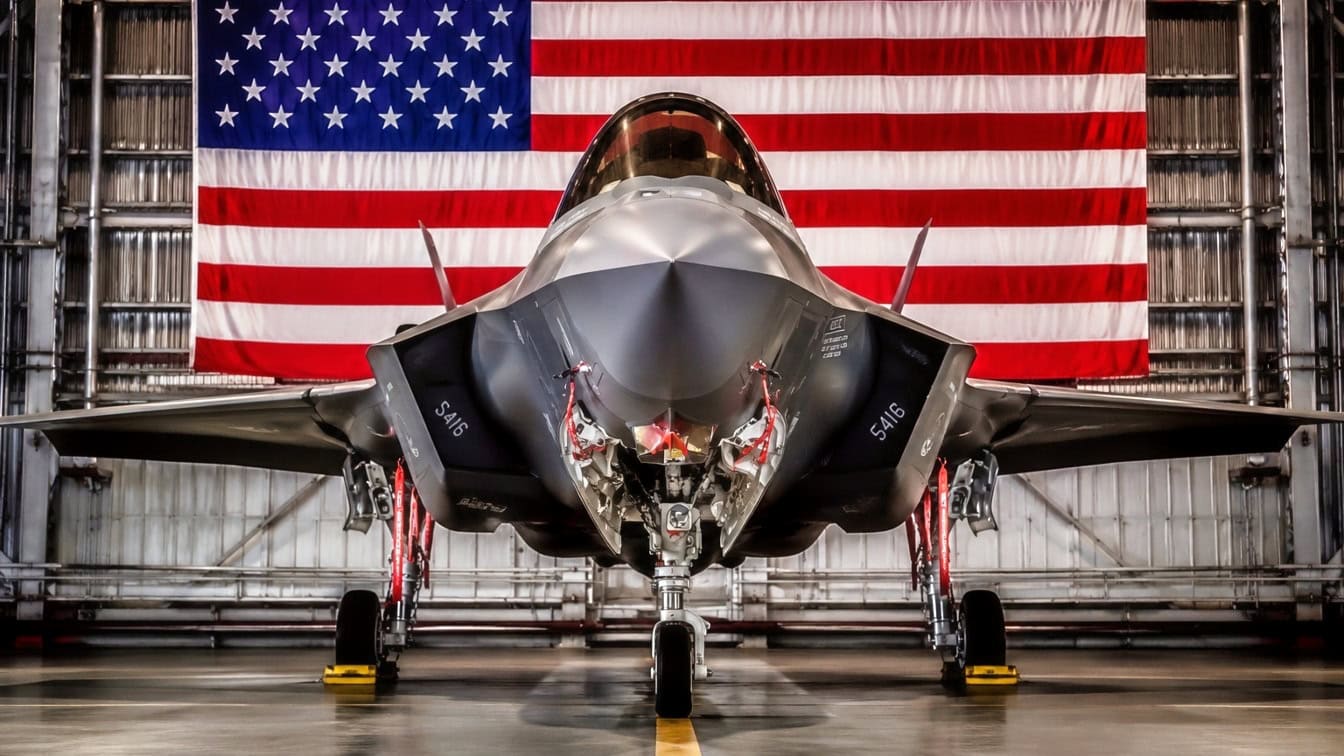
The US has reportedly approved the first-ever export of the AIM-260 Joint Advanced Tactical Missile (JATM) to Australia as part of a $31.6 billion Foreign Military Sale package.
Although many of the AIM-260’s technical details remain classified, the sale marks a strategically significant moment, suggesting that Washington is willing to share one of its next-generation air-to-air weapons with a close ally.
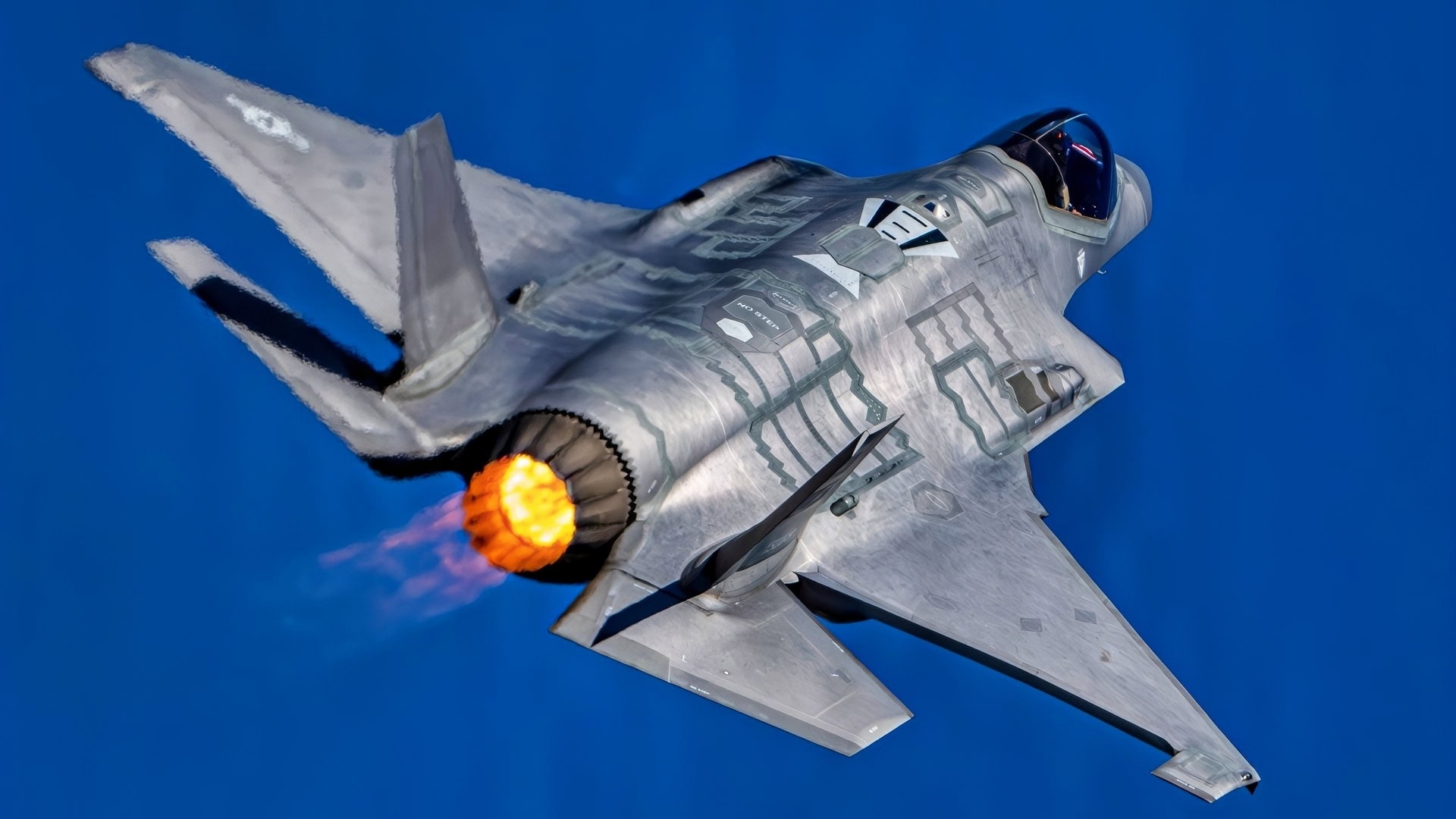
U.S. Air Force Maj. Sean “Rambo” Loughlin, pilot of the F-35A Demonstration Team, performs aerial maneuvers at the Luke Days Airshow at Luke Air Force Base, Arizona, March 21, 2026. The team travels worldwide to showcase the power and capabilities of the U.S. Air Force’s most advanced fifth-generation fighter and its Airmen. (U.S. Air Force photo by Staff Sgt. Nicholas Rupiper)
The export also marks an increased effort to counter China in the Indo-Pacific.
What is the AIM-260
The AIM-260 JATM is America’s next-generation beyond-visual-range air-to-air missile. Developed to eventually replace or supplement later AIM-120 AMRAAM variants, the AIM-260 was designed for the F-22, F-35, F/A-18E/F, and future sixth-generation fighters.
The program reportedly began around 2017 in response to advances in Chinese long-range air-to-air missiles, as an attempt to close the “range gap.”
Chinese PL-15 missiles are widely assessed to outrange legacy AIM-120 variants; the AIM-260 is intended to restore or exceed that engagement envelope.
So, rather than fundamentally altering fighter tactics, the AIM-260 simply extends how far Western aircraft can engage enemy aircraft before entering their own weapons’ range.
Also, modern missiles increasingly operate as part of a larger sensor network.
The AIM-260 is likely networked, offering potential advantages like launching without immediately illuminating a target, mid-course updates, off-board targeting, and cooperative engagement with AWACS, ships, or other fighters.
The missile just becomes one more node inside a much larger kill chain.
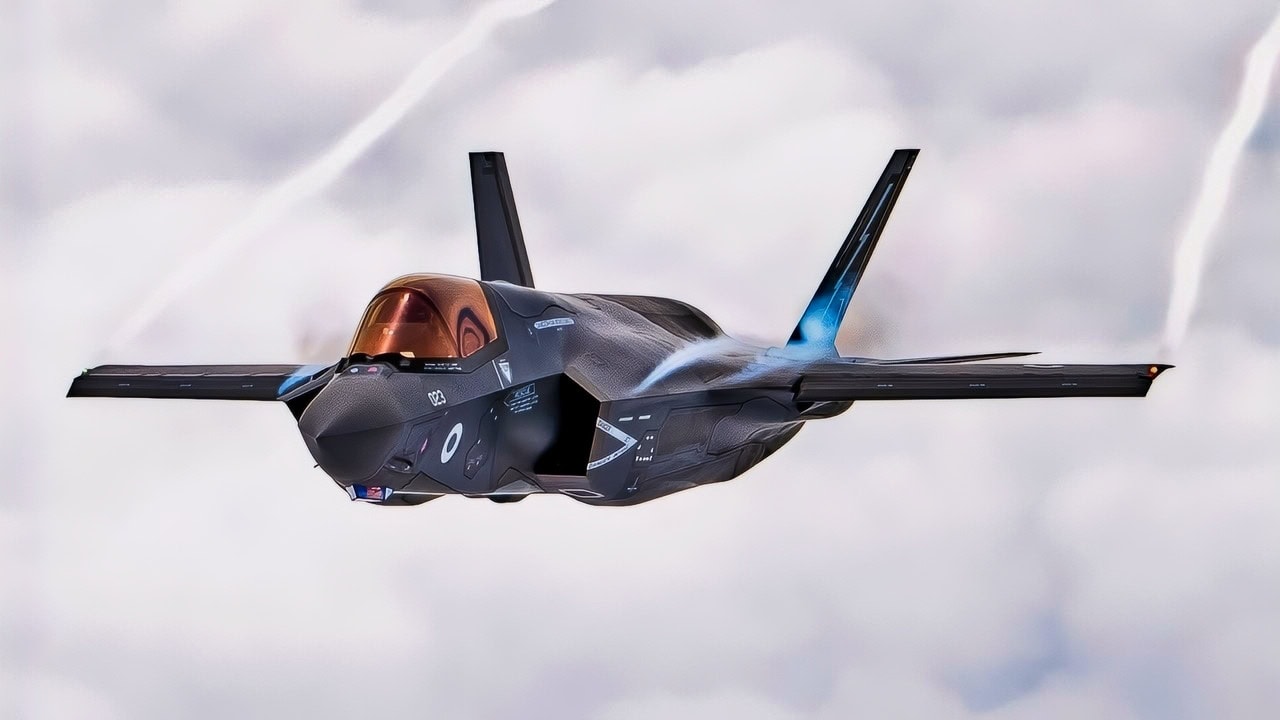
A UK F-35 flies above the Baltics on 25 May 2022.
UK and Czech fighter jets have been taking part in air defence training over the Baltic region. UK Eurofighter Typhoons, F-35s and Czech Gripens were involved in an exercise as part of Neptune Shield 22 (NESH22), a multinational maritime vigilance activity. NESH22 has seen a range of multi-domain activities between air, land and maritime assets across Europe and in the Baltic and Mediterranean Seas. It runs from 17 to 31 May 2022.
Classified Technology
Much of the AIM-260’s technical details remain classified. But public reporting suggests the new missile will have the same external dimensions as the AIM-120 to fit existing internal weapon bays, with an estimated engagement range of around 160–300 kilometers and estimated speeds approaching Mach 5.
The AIM-260 is believed to be equipped with an advanced RF seeker and a two-way datalink, with improved resistance to electronic warfare and jamming, and compatibility with fifth-generation sensor fusion architecture.
Public analysis also suggests several engineering changes to the AIM-260.
Notably, the new missile is believed to feature reduced external control surfaces to lower drag, increased internal propellant volume, more compact electronics, and possibly a dual-pulse rocket motor.
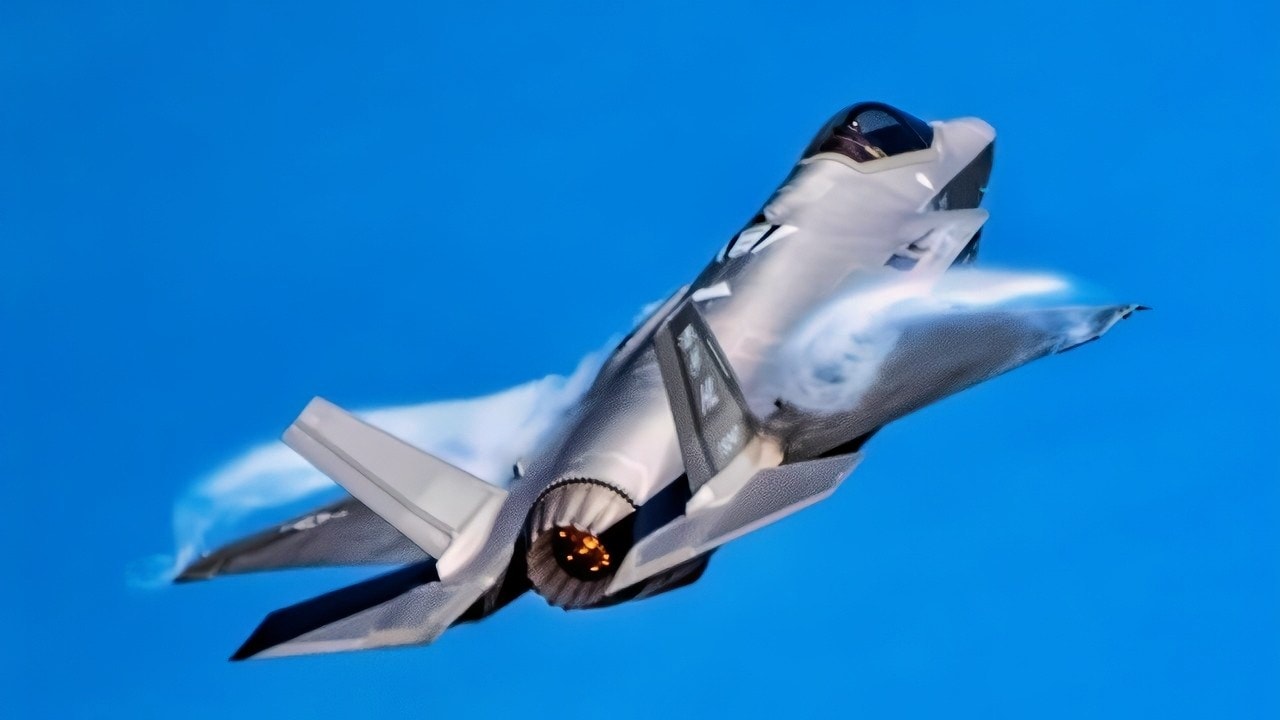
U.S. Air Force Maj. Kristin Wolfe performs a demonstration in the F-35A Lightning II during at the Reno Air Races in Reno, Nevada, September 19, 2021. The F-35 Lightning II Demonstration Team is based out of Hill Air Force Base, Utah. (U.S. Air Force photo by Tech. Sgt. Nicolas Myers)
If true, these changes would improve the missile’s endgame energy and increase the “no-escape zone.” Granted, these assessments are based on open-source analysis—not official confirmation.
Why Australia?
Australia is reportedly the first to approve the export of the AIM-260. That alone sends a strategic signal; Washington appears comfortable extending one of its newest air combat capabilities to Canberra.
This would fit the broader AUKUS defense integration, deepening common logistics, weapon inventories, and operational planning.
And the export would be a game-changer for Australia, whose F-35A fleet would gain a longer engagement range, improved compatibility with US forces, greater survivability while remaining internally armed, and an enhanced ability to participate in coalition air-superiority missions.
The RAAF can now transition from simply defending Australian airspace to serving as a long-range, expeditionary force better integrated into wider Indo-Pacific contingency planning.
Modern missiles increasingly operate as part of a larger sensor network.
Potential advantages of networked missiles include launching without immediately illuminating a target, mid-course updates, off-board targeting, and cooperative engagement with AWACS, ships, or other fighters. The missile just becomes one more node inside a much larger kill chain.
Strategic Implications
The export reflects broader changes in Pacific air power. As China continues to expand J-20 production and PL-15 inventory, the US response is not simply to build more fighters—it is also to extend advanced weapons to trusted regional allies.
This is a textbook example of offshore balancing, allowing the US to avoid directly policing the far corners of Oceania, instead deputizing, arming, and relying on Australia—now equipped with cutting-edge missile technology—to counter Chinese influence in the region.
China will need to heed the export; the Australian F-35 fleet will now have enhanced abilities to engage at long range.
The AIM-260 export is significant because it suggests Washington is deputizing regional partners to counter China, and specifically, because it prioritizes long-range air power capabilities.
While many technical details of the new missile remain secret, the strategic direction is clear: future air power will depend, in part, on extended engagement ranges.
About the Author: Harrison Kass
Harrison Kass is a writer and attorney focused on national security, technology, and political culture. His work has appeared in Tablet, City Journal, The Hill, The Spectator, and The Cipher Brief. He holds a JD from the University of Oregon and a master’s in Global & Joint Program Studies from NYU. More at harrisonkass.com.