
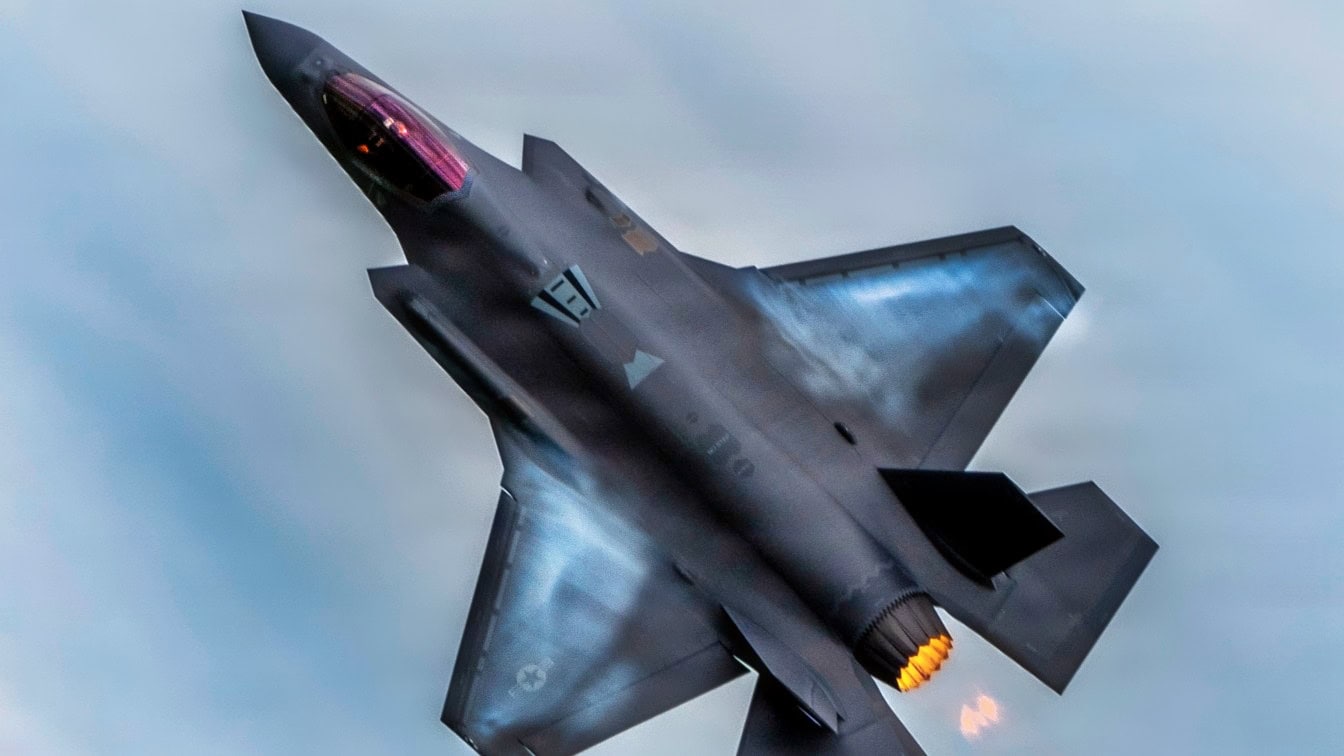
Does the F-35 Have a “Kill Switch”? – The F-35 Lightning II is one of the most capable fifth-generation stealth fighters in the world and the most popular on the international market.
Currently operated by 12 different nations, the aircraft has garnered a favorable reputation at home and abroad for its reliability and unmatched capabilities.
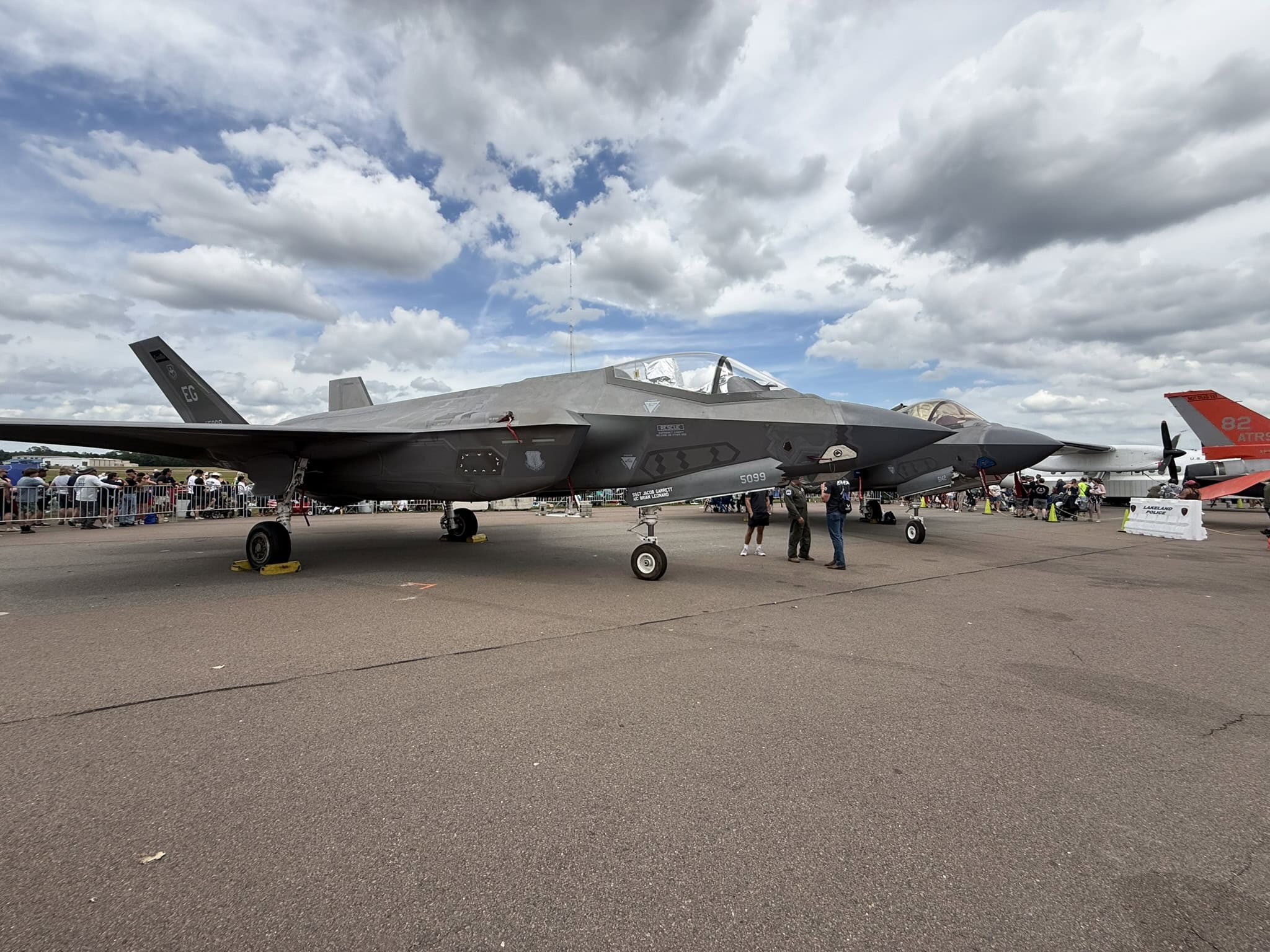
F-35 19FortyFive Original Photo. Taken in Lakeland, Florida, back in April of 2026. Photo taken by Harry J. Kazianis.
Occasionally, whenever tensions between Europe and the U.S. heat up, the conversation comes up on the topic of the F-35’s “kill switch.”
While there is no button available to the U.S. that automatically bricks all export fighters, the U.S. undeniably holds significant leverage over its customers and can still inflict substantial damage on a foreign F-35 fleet even without a hard kill switch.
The Question Won’t Go Away
Fears over the alleged “kill switch” first arose in 2025, when President Trump assumed office for his second term, and relations with Europe began to falter.
Some nations, notably Spain and Canada, questioned their previous decisions to purchase F-35s from the U.S., with Spain straight up refusing to acquire the fighter jet.
Canada considered canceling its previous agreement with the U.S. to purchase 80 aircraft, but ultimately went through with the contract to acquire 30 aircraft.
One of the main fears was the alleged kill switch, through which the U.S. could disable or significantly hinder its exported fighters.
When the rumors first started to spread, the Pentagon tried to reassure its international partners that there was no reason to fear tampering by the U.S. “There is no kill switch,” the Joint Program Office (JPO) for the F-35 program said in a statement. “The program operates under well-established agreements that ensure all F-35 operators have the necessary capabilities to sustain and operate their aircraft effectively.
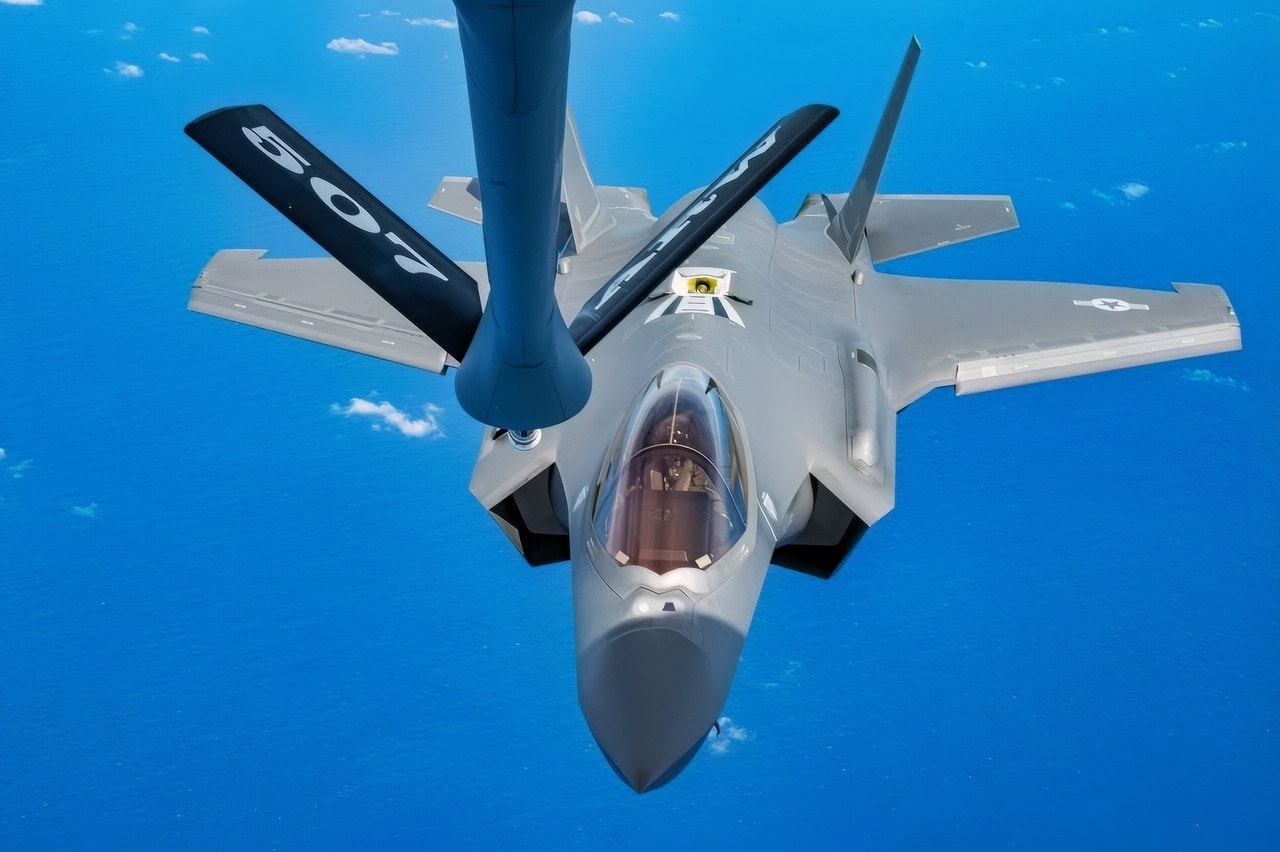
A U.S. Air Force F-35A Lightning II assigned to the 134th Fighter Squadron, Burlington Air National Guard Base, Burlington, Vermont is in pre-contact over the U.S. Indo-Pacific Command area of responsibility before receiving fuel from a U.S. Air Force KC-135 Stratotanker assigned to the 465th Air Refueling Squadron, Tinker Air Force Base, Oklahoma during exercise Cope North 2025, Feb. 7, 2025. The KC-135 provides the core aerial refueling capability for the U.S. Air Force and has performed this role for over 50 years. It provides aerial refueling to the U.S. Air Force, U.S. Navy, U.S. Marine Corps and allied nation aircraft during CN25 to support exercise operations. (U.S. Air Force photo by Staff Sgt. Caleb Roland)
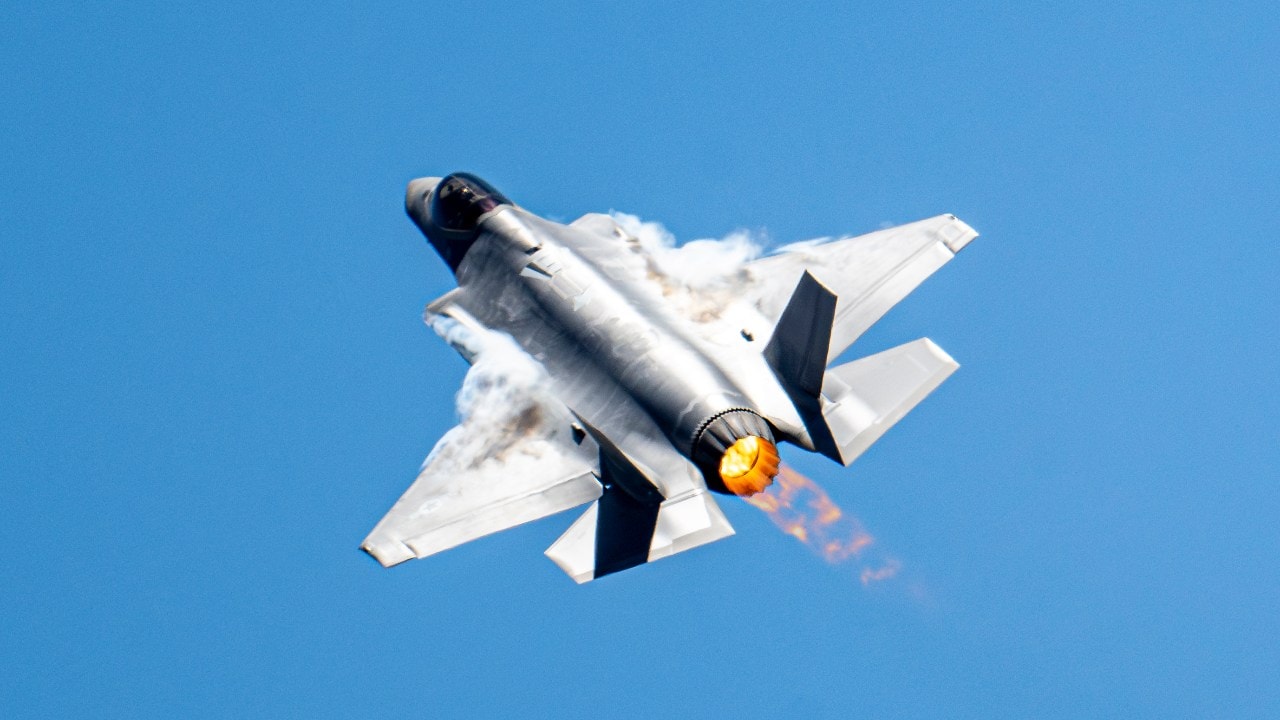
U.S. Air Force Maj. Melanie “Mach” Kluesner, pilot of the F-35A Demonstration Team, performs aerial maneuvers at the Wings and Eagles Airshow at Kingsley Field, Oregon, on July 19, 2025. The demonstration team travels across the country to showcase the power and precision of the world’s most advanced 5th-generation fighter jet. (U.S. Air Force photo by Senior Airman Nicholas Rupiper)
The strength of the F-35 program lies in its global partnership, and we remain committed to providing all users with the full functionality and support they require.” There is, in fact, no hard kill switch on the F-35.
Adding such a feature would be downright foolish on the U.S.’s part, as the discovery of such a system would destroy any confidence in the aircraft and in the U.S.’s credibility as an international partner.
Spare Parts and Software
That being said, however, the U.S. does have its ways of hurting a foreign operator’s fleet should the situation call for it.
All American aircraft rely on maintenance expertise and spare parts from the U.S. While it cannot take control of or brick a foreign-operated F-35, it can refuse to supply spare parts or perform essential maintenance.
Without regular maintenance on its stealth coatings or other valuable components, a foreign-operated fleet would soon fall into disrepair as more and more stress is placed on the airframes.
Regular maintenance on any aircraft is essential to keep it flying safely and reliably.
In the absence of spare parts, the F-35 could find itself at a major disadvantage in combat, especially against other fifth-generation stealth fighters.
The real Achilles heel of the F-35 lies not in some kill switch, nor even in its spare parts, but in its software.
The digital backbone of the aircraft makes up its heart and soul.
These systems are designed and maintained by the United States and are responsible for tasks such as weapon system management, data integration, battle management, and more.
To account for contemporary threats, these software systems require continual updates from the U.S. to maintain their effectiveness.
In an extreme situation, the U.S. could stop updating the software on a foreign nation’s F-35 fleet.
This would not render the aircraft unflyable, but over time, the software would become outdated, leaving it at a severe disadvantage when in combat against modern aircraft and contemporary air defense systems.
Unmatched Capabilities at a Price for F-35
In fact, there is one instance when the U.S. was forced to take such measures against an allied nation. In 2019, Turkey received its first batches of Russian-made S-400 air defense systems, which greatly distressed the United States.
In response, Turkey was removed from the F-35 program, and an embargo was placed against its fleet of F-16 Block 70s. During this time, Turkey was restricted from spare parts and software upgrades from the U.S., which had far-reaching implications for Ankara’s fleet.
The embargo was eventually lifted when Turkey vetoed Finland and Sweden’s NATO membership in 2024. Full functionality was restored to its fleet in exchange for allowing the two nations to join the alliance, although Turkey still remains blacklisted from the F-35 program.
While there is no hard kill switch on the F-35, nor a secret backdoor that would allow the U.S. to control it remotely, the American-supplied maintenance and software upgrades give Washington considerable leverage over its partners.
Is it worth sacrificing one’s autonomy to gain access to the F-35? To many nations, the answer is yes. The F-35 is one of the most advanced, if not the most advanced, fighter jets in the world right now and is unmatched in its stealth and technological sophistication.
Consider that cases like Turkey are incredibly rare, and the U.S. is also heavily reliant on its foreign partners. One has to try especially hard to get on Washington’s bad side in order to reach the point where software and spare parts are no longer provided.
About the Author: Isaac Seitz
Isaac Seitz, a Defense Columnist, graduated from Patrick Henry College’s Strategic Intelligence and National Security program. He has also studied Russian at Middlebury Language Schools and has worked as an intelligence Analyst in the private sector.