
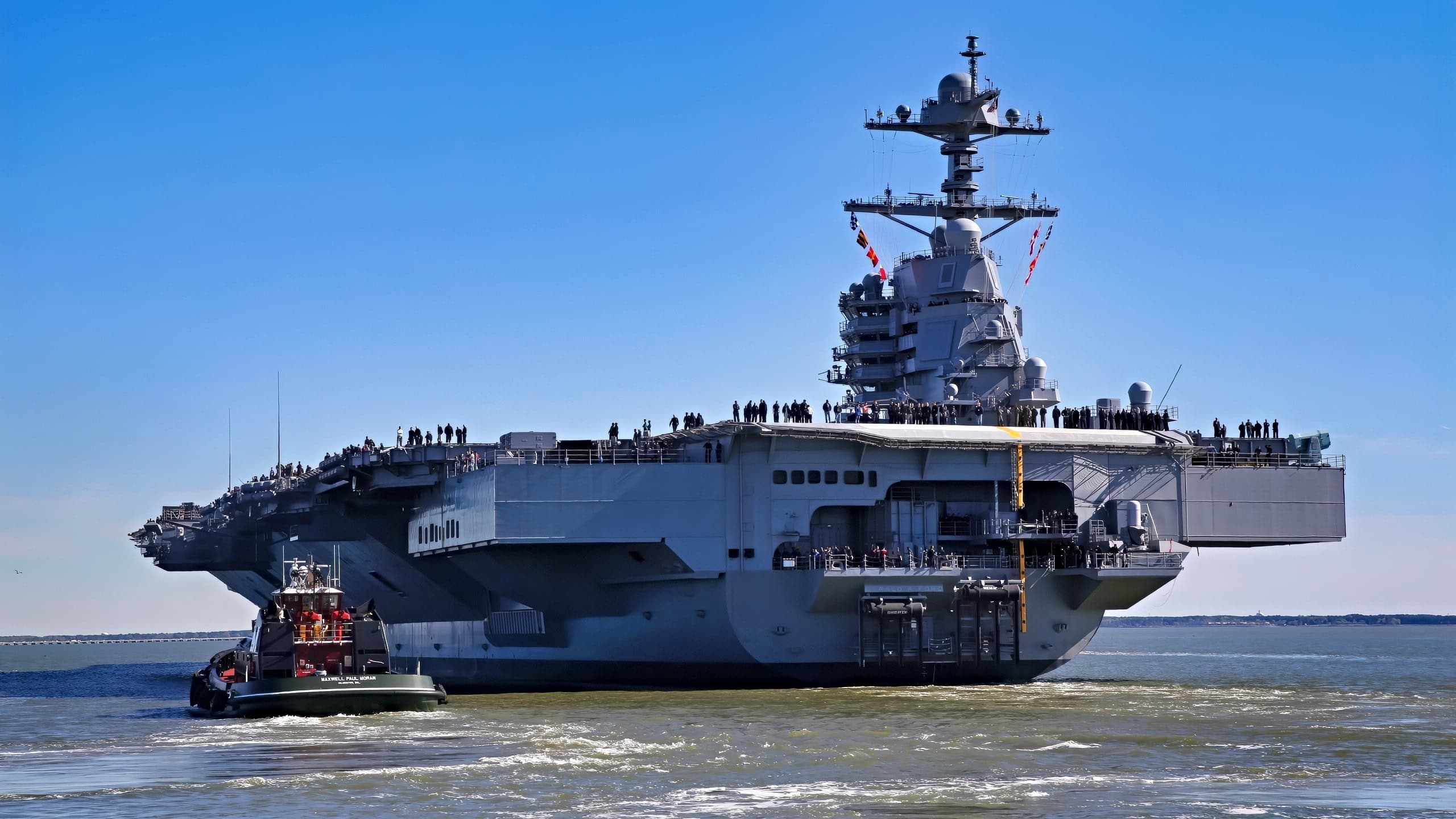
The Strait of Hormuz has been a flashpoint in the Iran-United States conflict, drawing the rest of the world into it.
During the initial phase of the US and Israeli bombing campaign, Iran’s senior leadership was killed, its Air Force and Navy were largely obliterated, and its command and control was severely hampered. But the Iranians had a hole card to play.
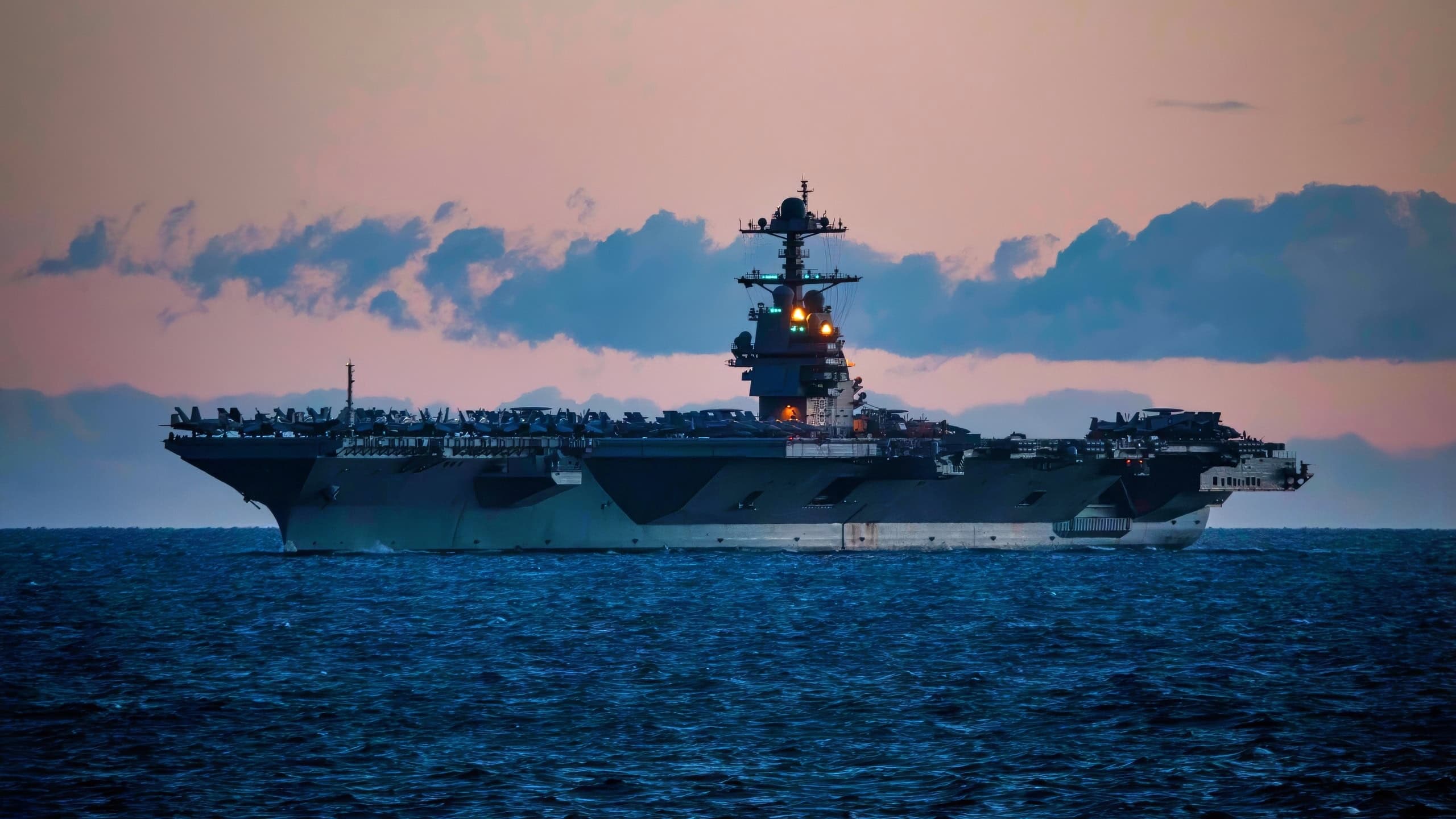
240105-N-LK647-1019 STRAIT OF GIBRALTAR (Jan. 5, 2024) A view from the Ticonderoga-class guided missile cruiser USS Normandy (CG 60) of the first-in-class aircraft carrier USS Gerald R. Ford (CVN 78), as the Ford Carrier Strike Group passes through the Strait of Gibraltar, Jan. 5, 2024. Normandy is part of the Gerald R. Ford Carrier Strike Group and is currently operating in the Mediterranean Sea, at the direction of the Secretary of Defense. The U.S. maintains forward-deployed, ready, and postured forces to deter aggression and support security and stability around the world. (U.S. Navy photo by Mass Communication Specialist 2nd Class Malachi Lakey)
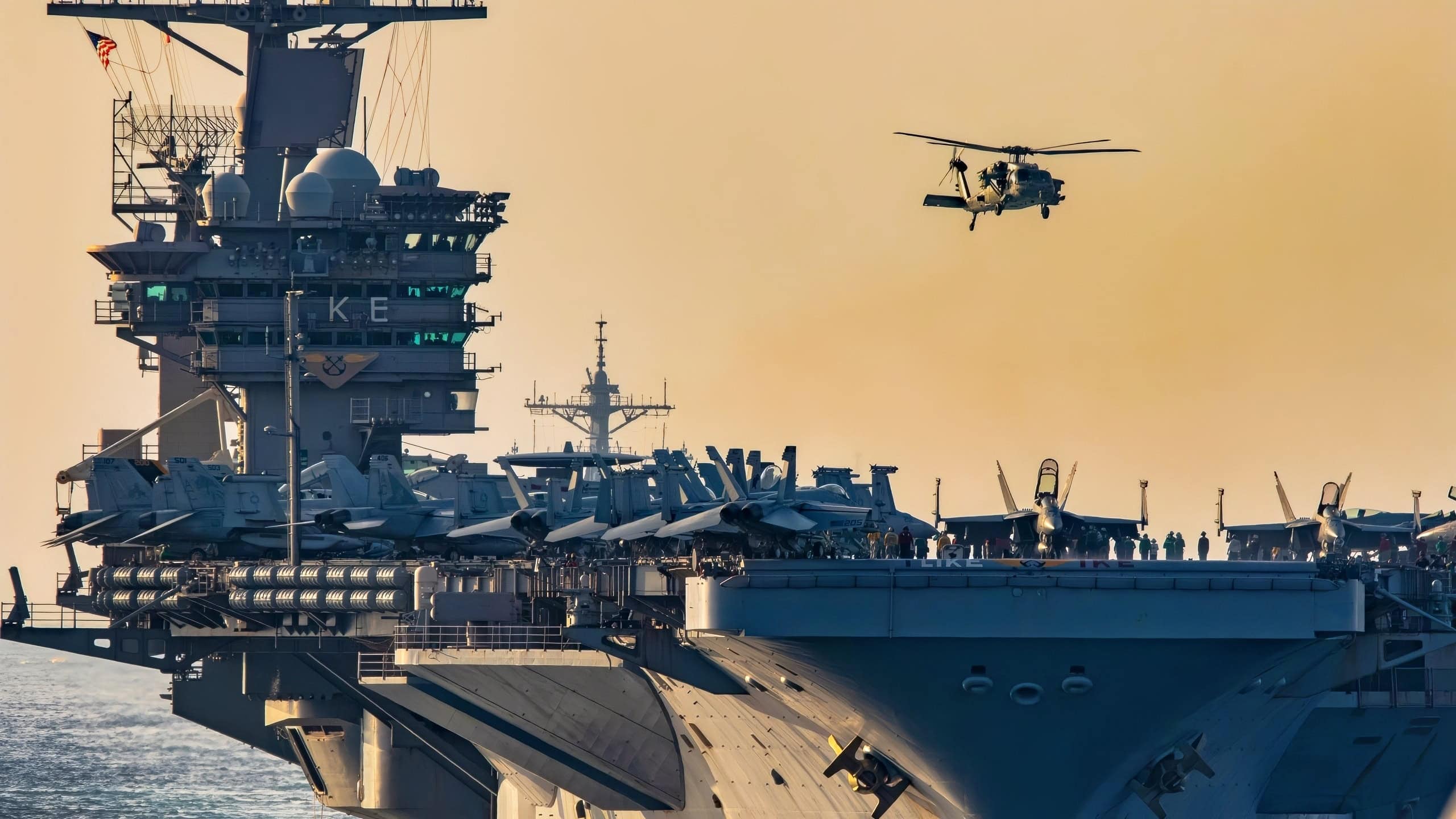
Components of the Dwight D. Eisenhower Carrier Strike Group (IKECSG), guided-missile destroyer USS Stethem (DDG 63) and French Navy frigate FS Languedoc (D 653) transited the Strait of Hormuz. IKECSG is deployed to the U.S. 5th Fleet area of operations to help ensure maritime security and stability in the Middle East Region. (U.S. Navy photo by Electronics Technician 2nd Class Daniel Goodin)
IRGC fast boats, drones, mines, and ballistic missiles closed the Strait as the regime tried to force the rest of the world to urge the US to stop the bombing by holding 20 percent of the world’s oil supply hostage.
Iran attacked more than 40 neutral merchant vessels, killing several innocent sailors. And now, it sees a way to rebuild its shattered economy by charging tolls or fees for all ships transiting the Strait.
After the Memorandum of Understanding (MoU) was signed, an extremely shaky truce ensued, and ships that had been stranded for months are trying to transit the Strait quickly, unless hostilities break out again.
An Emboldened Iran Wants To Control The Strait
Although President Trump has said passage through the Strait will be ‘permanently toll-free’, the Iranians claim that after the 60-day window expires, they will work with Oman in conversation with other littoral states to ‘define the future administration and maritime services’ in the Strait.
Iranian officials had previously said ‘fees will be charged’ for unspecified ‘services’ going forward.
Fees and tolls are the same thing. In the event of any future conflict or in the case of an emboldened IRGC, Iran will very likely attempt to close or control the Strait of Hormuz in the future.
They want to impose the same kind of control over the Strait of Hormuz that Egypt imposes on the man-made Suez Canal and that Panama imposes on the US-built Panama Canal.
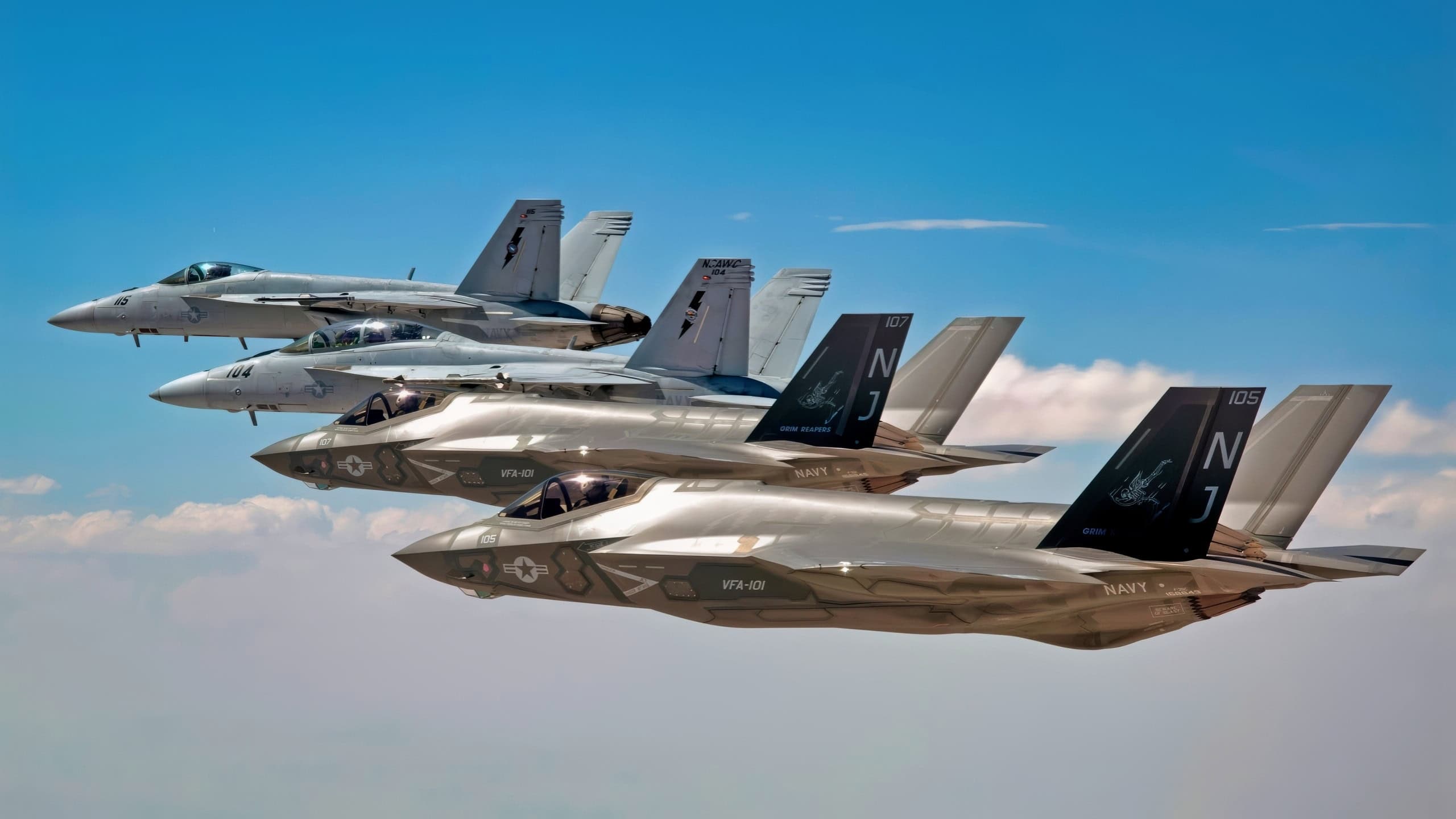
FALLON, Nev. (Sept. 3, 2015) F-35C Lightning IIs, assigned to the Grim Reapers of Strike Fighter Squadron (VFA) 101, and an F/A-18E/F Super Hornets assigned to the Naval Aviation Warfighter Development Center (NAWDC) fly over Naval Air Station Fallon’s (NASF) Range Training Complex. VFA 101, based out of Eglin Air Force Base, is conducting an F-35C cross-country visit to NASF. The purpose is to begin integration of F-35C with the Fallon Range Training Complex and work with NAWDC to refine tactics, techniques and procedures (TTP) of F-35C as it integrates into the carrier air wing. (U.S. Navy photo by Lt. Cmdr. Darin Russell/Released)
The Strait is not man-made, but a narrow waterway, and under the United Nations Convention on the Law of the Sea, the Strait of Hormuz is an international strait where all ships enjoy a right of transit passage that coastal states cannot suspend.
Omani Foreign Minister Badr bin Hamad Al-Busaidi denied any tolls would be charged; however, he did not rule out fees for navigational, environmental, or other “services,” modeled on the Straits of Malacca and Singapore, where pilotage service fees are voluntary.
Iran’s long-term geopolitical objective is to legitimize its sovereignty over the waterway. Tehran can leverage asymmetric tactics like mines, drones, and selective tolls to assert control and close the Strait to traffic again.
Is The Strait Forever Changed?
Many analysts believe that traffic will never return to the pre-conflict state.
“We are no longer dealing with the traditional maritime arrangement in the Strait of Hormuz, which we are familiar with, the one that existed before the war,” Noam Raydan, a senior fellow at the Washington Institute, said to CBS News. “This new navigational order has been created by Iran, and what Iran is trying to do right now is ensure that it plays a central role in it.”
Iran created the Persian Gulf Strait Authority (PGSA) during the conflict with the US, and now the regime claims sole responsibility for regulating traffic through the vital waterway and says it will require ships to obtain insurance to cross the strait.
More likely than not, the insurance will pay for Iran not attacking the ships.
Why No Country Should Agree To “Protection Money”
What exactly are the fees that Iran wants to charge for? Iran won’t and has never provided any services to transit the Strait of Hormuz. Unlike the Suez and Panama Canals, which are completely located within a country’s borders, the Strait is an international (albeit narrow) waterway.
It would be coercing vessels to pay “protection money” for exercising a pre-existing right of transit through an international strait. Failure to pay would result in Iran doing what it did earlier this spring, attacking neutral shipping and killing innocent sailors.
Some Call For The World To Capitulate And Agree
And while many are urging negotiations to try to convince Iran not to charge fees, that is a fool’s errand, as it will only convince them to dig their heels in even more.
Ali Vaez, director of the Crisis Group think tank’s Iran Project, believes that a regional management of the Strait, including Oman, Iran, Pakistan, Qatar, Saudi Arabia, Turkey, and Egypt,is a possibility.
“They might come up with an arrangement that doesn’t apply to some or most of the countries in the region, certainly not any of the littoral states in the Gulf,” Vaez said to CBS News.
Iran could also try to impose a system that exempts countries in the so-called global south, allowing their vessels to transit for free while charging fees to richer nations, Vaez added.
US Options Remain Limited
The US doesn’t agree with any kind of charges, be they tolls or fees, and without support from its allies and partners, its options are limited.
There are only three options open to Washington: resume the fighting, attack the IRGC drone and ballistic missile launchers, especially along the coast, conduct further naval and economic blockades, and reinstate the economic sanctions that have crippled Iran’s economy.
The Strait of Hormuz will not return to its pre-conflict traffic without either a deal that ends Iranian control or a US-led military operation that forces the strait open to prevent Iranian control.
Of course, any protracted negotiation with Tehran (which is every negotiation) will only embolden it to make further demands.
About the Author: Steve Balestrieri
Steve Balestrieri is a National Security Columnist. He served as a US Army Special Forces NCO and Warrant Officer. In addition to writing on defense, he covers the NFL for PatsFans.com and is a member of the Pro Football Writers of America (PFWA). His work was regularly featured in many military publications.