
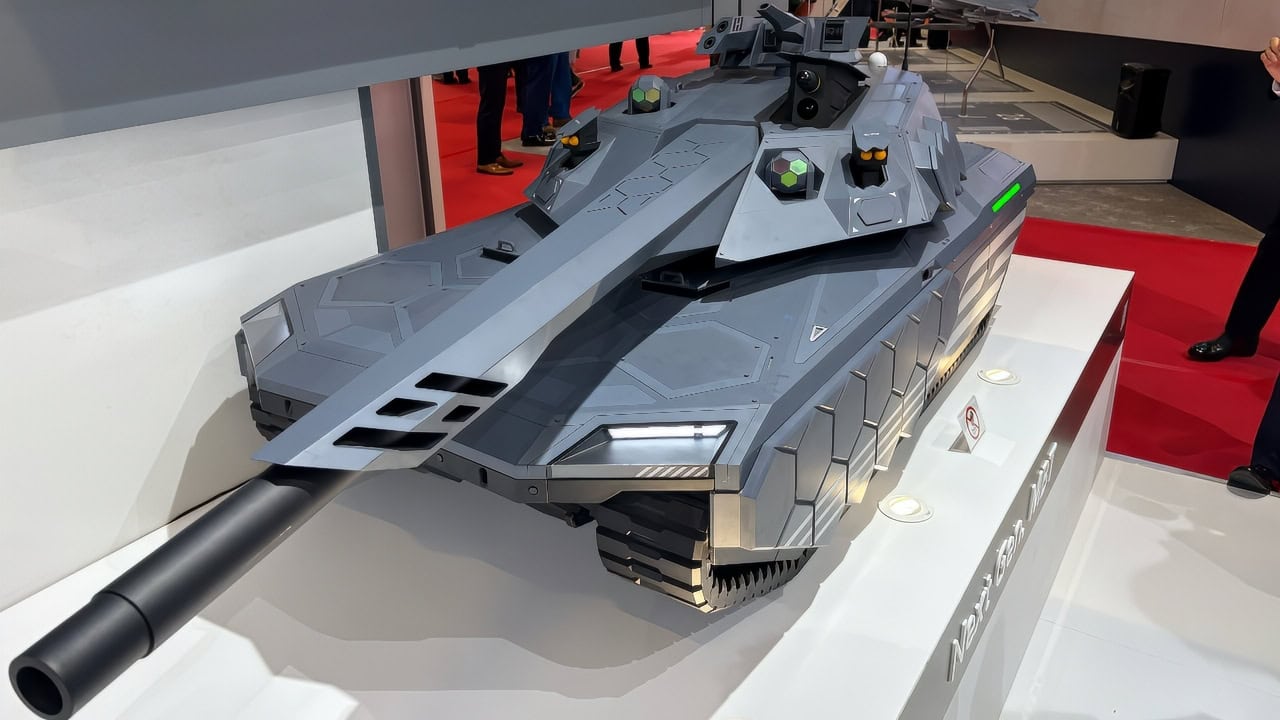
The 5 Biggest Tank Armies on Earth: Russia Wins the Raw Count, But the Raw Count Is a Graveyard – Count every hull with tracks and a cannon, and Russia still owns the biggest tank army on earth, almost 13,000 strong on paper. Count the tanks that actually run, and Russia falls to third, behind two Asian armies, while the United States barely makes the list at all. Four years of war in Ukraine and a new generation of satellite-counting analysts have turned the most famous statistic in military power rankings into the most misleading one.
Here are the five biggest tank forces as they actually exist in 2026. This is a measure of scale, not of who would win a war.
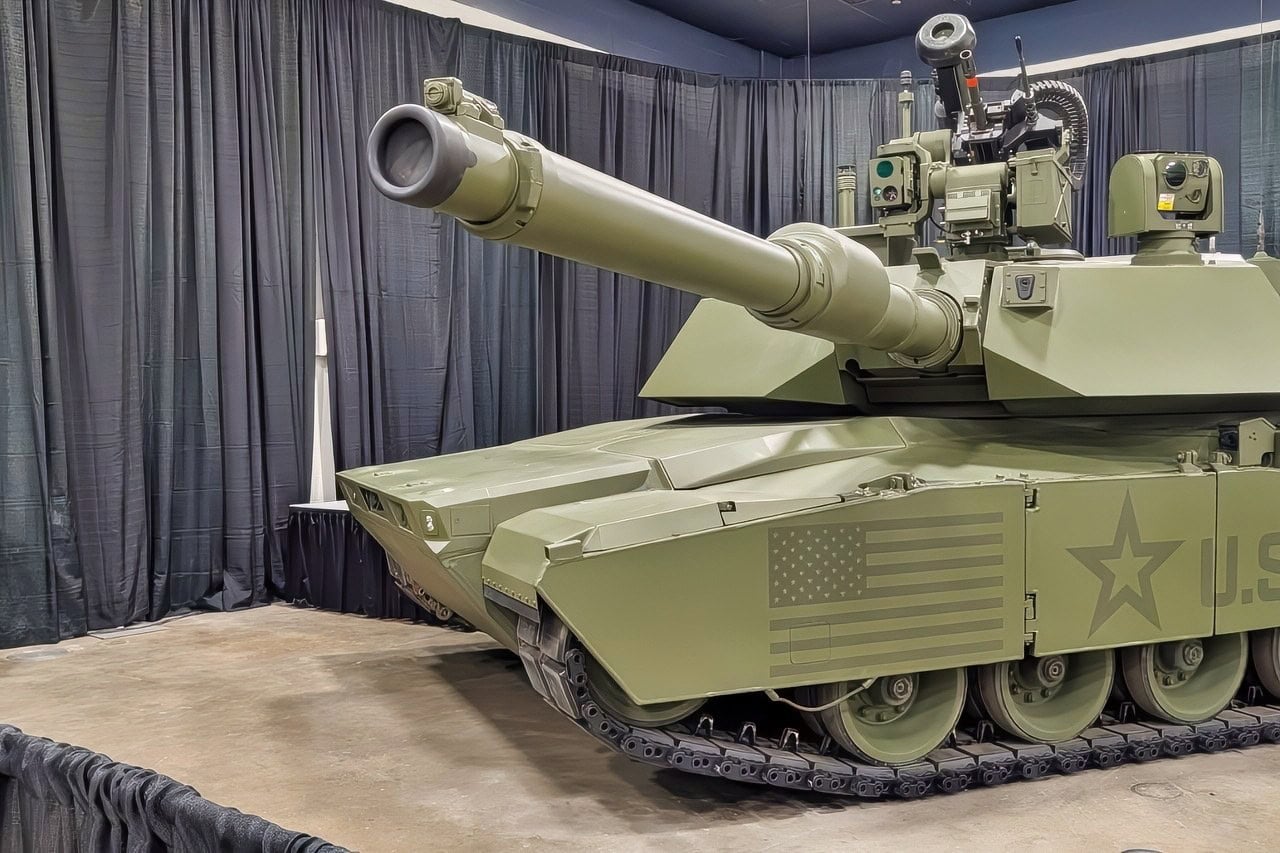
M1E3 Tank at the Detroit Auto Show. Image Credit: 19FortyFive.com
The 5 Biggest Tank Armies on Earth by Active Main Battle Tanks: A Hard Look at Who Really Fields the Most Armor, and Why the Famous Numbers Mislead
China fields the most warships on earth. China fields the most soldiers. America flies nearly a quarter of the world’s military aircraft. Count main battle tanks, though, and the answer depends entirely on which ledger you open, because no weapon on earth has a wider gap between the number on paper and the number that runs.
I built this list on active main battle tanks, the ones assigned to units with crews, fuel, and ammunition, not the rows of hulls sitting in open fields that the famous rankings love to count.
I did that because the past four years have amounted to one long audit of those rows, conducted at the front by Ukrainian drones and everywhere else by analysts with satellite imagery subscriptions.
The audit changed this list. It will keep changing.
How This Ranking Counts Tanks, and Why Russia’s Famous 12,566 Is a Ghost Number
The raw ledger is real and worth looking at because it explains every inflated tank claim you have ever read. Global Firepower’s 2026 count credits Russia with 12,566 tanks and North Korea with 5,845, and on its own terms, it is not wrong: it counts everything with tracks and a gun, including hulls that have not moved in decades. The problem is that the category mixes museum-grade metal with combat-ready armor as if they were the same thing.
So this ranking runs on active main battle tanks instead, drawing on the fleet surveys and International Institute for Strategic Studies-lineage counts that separate the active fleet from the boneyard, cross-checked against the two audit tools the Ukraine war made famous: Oryx, the open-source project that counts losses one photograph at a time, and the satellite analysts who now count storage yards hull by hull from orbit.
Every number below is a band, not a decimal, and I will say so in each entry. Where the bands overlap, the war usually settles the argument.
Number 5: The United States, the Smallest Fleet on the List and the Best
The US Army fields roughly 2,640 active Abrams tanks, with a couple of thousand more in storage and a total fleet of nearly 4,650 by Ukrainian and Western counts, of which about 2,100 are the modern SEPv2 and SEPv3 variants.
Yes, fifth. Hold. The. Hate. Mail. Thanks.
The American entry on this list has always been the argument for why raw counts mislead in the other direction: no army on earth pairs its tanks with comparable thermal sights, ammunition, training hours, maintenance depth, and enablers, and the Abrams went 33 years without losing a single tank-on-tank duel.
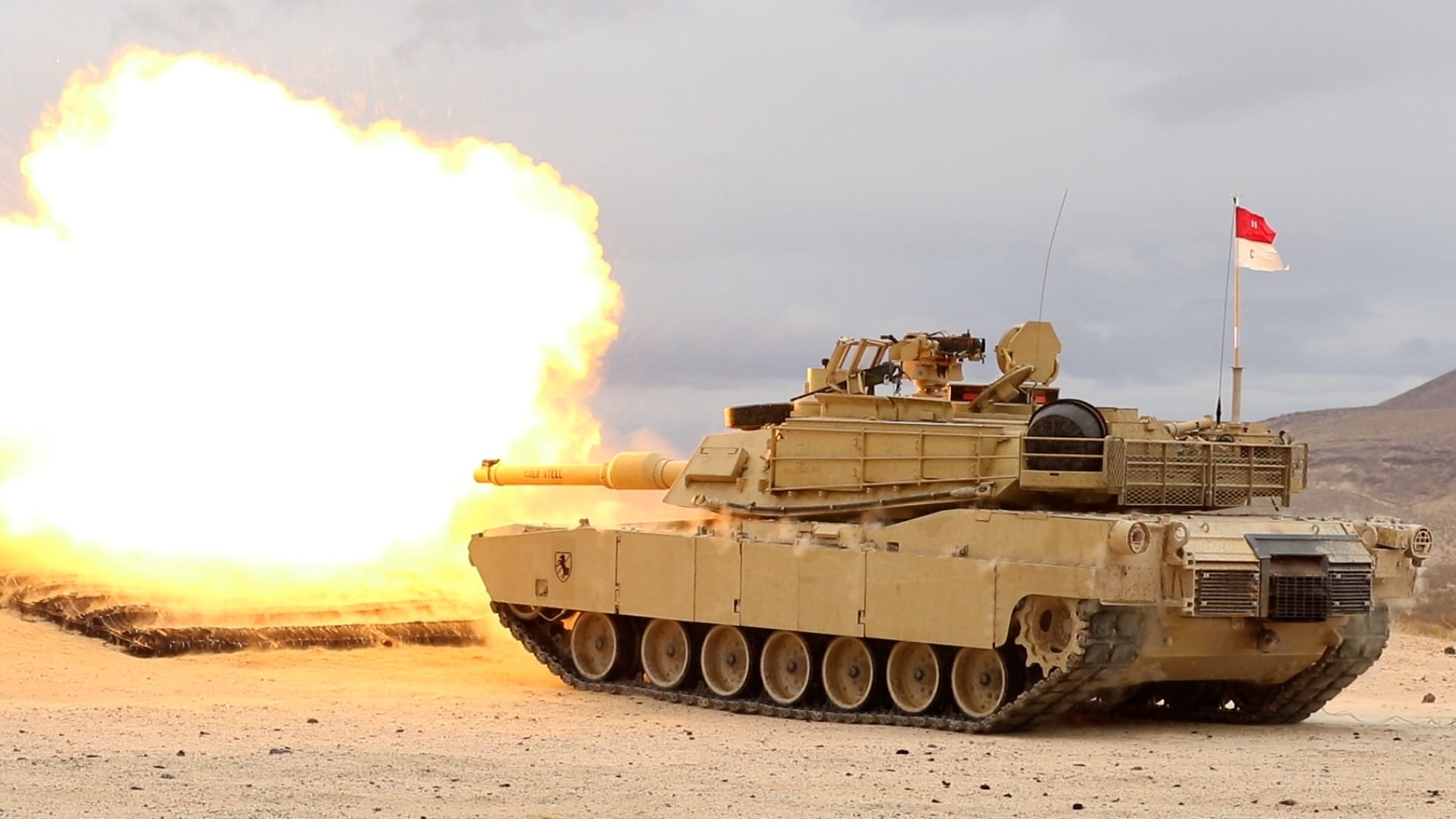
An M1A2 Abrams SEP V2 main battle tank, assigned to Cold Steel Troop, 1st Squadron, 11th Armored Cavalry Regiment, fires a M865 target practice cone stabilized discarding sabot with tracer on December 9, 2021, at the National Training Center and Fort Irwin training area.
The honest caveat cuts here too, because the 31 M1A1s sent to Ukraine were mauled by cheap drones like everyone else’s armor, which is exactly why the Army is now spending survivability money on 400 of its own tanks and rushing the redesigned M1E3 into testing at Fort Hood this summer. America’s answer to fifth place is a different tank, not a bigger number.
Number 4: North Korea, the Entry That Proves Why the Method Section Exists
North Korea is the reason this list states its rules up front.
The raw ledgers credit Pyongyang with 5,845 tanks; conservative counts of the active force run closer to 3,500-4,300. Nobody outside North Korea knows the true figure, which is within a couple of thousand, and the fleet’s own history shows why: production estimates for the Chonma series, the T-62-descended family that forms the fleet’s core, range from 800 to 2,600 vehicles depending on the source.
What can be said with confidence is that the force is enormous, old, and dug in along the most fortified border on earth, resting on decades of Chonma variants and Songun-ho tanks. The modern claims ride on the Cheonma-2, the tank unveiled at the October 2020 parade, officially named in May 2024, shown exercising with mechanized units that March, and followed by an upgraded Cheonma-20 at the October 2025 parade.
Pyongyang has doubled capacity at its Kusong tank plant and claims mass production; roughly ten Cheonma-2s have ever been confirmed in photographs. North Korea makes the top five on any ledger.
Which ledger do you believe determines whether it belongs at number two or barely here at all?
Number 3: Russia, the Only Entry With a Direction Attached
Russia’s active fleet stands at nearly 3,460 main battle tanks, a mix running from T-55As and T-62Ms through the T-72 family to about 620 T-90Ms, with roughly 2,100 older hulls left in storage.
Every other number in this entry is about how it got there and where it is going. Oryx has visually confirmed 4,390 Russian tank losses since February 2022, a tally so long that the list physically maxed out the post-size limit on the blogging platform that hosts it.
The storage yards that were supposed to make those losses irrelevant have been counted from orbit: OSINT analyst Jompy’s June 9 satellite survey found 2,088 tanks remaining across nine Russian storage bases, of which only about 851 look usable after accounting for decay and cannibalization, with the T-80 hulls feeding the Omsk refurbishment line projected to run out within a year.
British defense officials have put Russian losses at around 100 tanks a month, against new production estimated at around 200 a year; however, Moscow promised 2,000.
Open-source counts documented the storage park falling from roughly 7,300 hulls to 3,500 by the end of 2024, and the drain has only continued since. Russia still fields the third-largest active tank army on earth. It is also the only entry on this list whose number is preceded by an arrow, and that arrow points downward.
Number 2: India, the Giant Nobody Writes About
India is the quiet colossus of world armor, with counts ranging from 3,700 by conservative estimates to 4,614 in the raw ledgers, and it is the most stable number on this list.
The fleet rests on more than 1,300 T-90S Bhishma tanks and roughly 2,400 older T-72 Ajeyas, both license-built at the Heavy Vehicles Factory in Avadi, alongside a small fleet of indigenous Arjuns with 118 improved Mk1As on order. The production line hit a genuine milestone on May 22, when the 1,000th Indian-built T-90 rolled out of Avadi, a tank now roughly 80 percent Indian by content. The force is structured for two completely different wars at once: massed armor on the Pakistani plains, and high-altitude fighting on the Chinese frontier, where the 2020 Galwan standoff pushed New Delhi to order the Zorawar light tank for exactly the terrain China built its Type 15 to own.
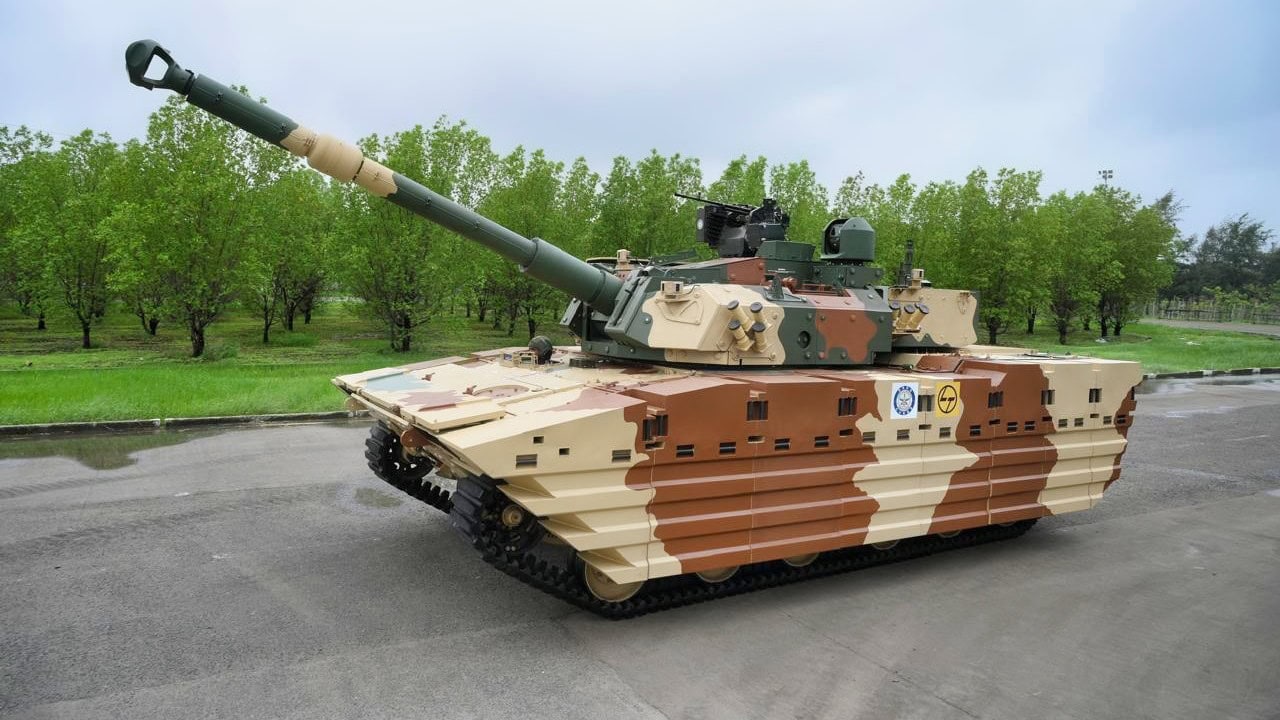
DRDO conducts successful Field Firing Trials of Indian Light Tank ‘Zorawar’ on September 13, 2024.
Indian crews have been welding cage armor onto their tanks since Ukraine made the drone threat universal, and the Future Ready Combat Vehicle program plans roughly 1,770 next-generation tanks to retire the T-72s. India spends none of its time bragging about any of this, which may be why the world’s second-largest tank army is also its least covered.
Number 1: China, First on the Ledger That Counts
The People’s Liberation Army fields approximately 4,700 active main battle tanks, the largest force on earth by the honest count, and the composition matters as much as the total: roughly 1,000 ZTZ-96s and 1,500 ZTZ-96As form the mass, 600 ZTZ-99s and 700 ZTZ-99As form the spearhead, and the remaining first- and second-generation types are a shrinking rump. IISS-lineage assessments have called China’s the world’s largest active-service tank force for years, and unlike Russia’s, the number is not being consumed by a war.
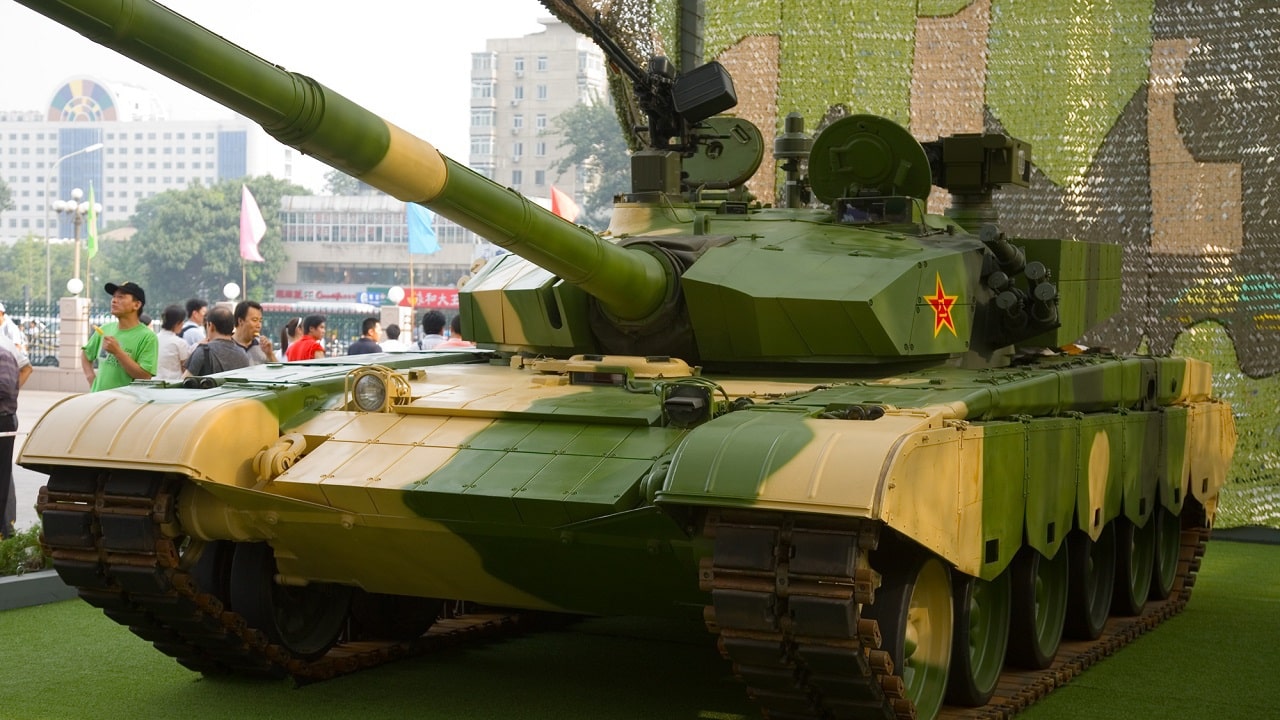
Type 99. Image Credit: Creative Commons.
It reflects two decades of deliberate consolidation, shedding thousands of obsolete Type 59s while the modern core grew, backed by a production base that never stopped running. The forward-looking note belongs here too: the newest Chinese tank, the Type 100 that entered service this spring, is lighter than the ones it joins and carries a smaller gun, a bet that sensors, active protection, and drones now matter more than mass. China holds first place on the ledger that counts, and it is the one big number on this list not being consumed by anything.
What Active Tank Counts Do and Do Not Show
Three armies just missed this list, and each one says something about the measure. Egypt’s main tank park numbers over 5,300 tanks, but it is a mixed fleet of Abrams and Cold War-era M60S, with much of it in reserve.
Pakistan’s 3,742 sit close behind India in quantity and well behind in modernity. Türkiye’s 2,381 tanks make it the largest tank operator in Europe, while Poland, racing toward 1,800 or more Abrams, K2S, and Leopards, is quietly assembling the continent’s most modern armored force and cracks nobody’s raw ranking at all.
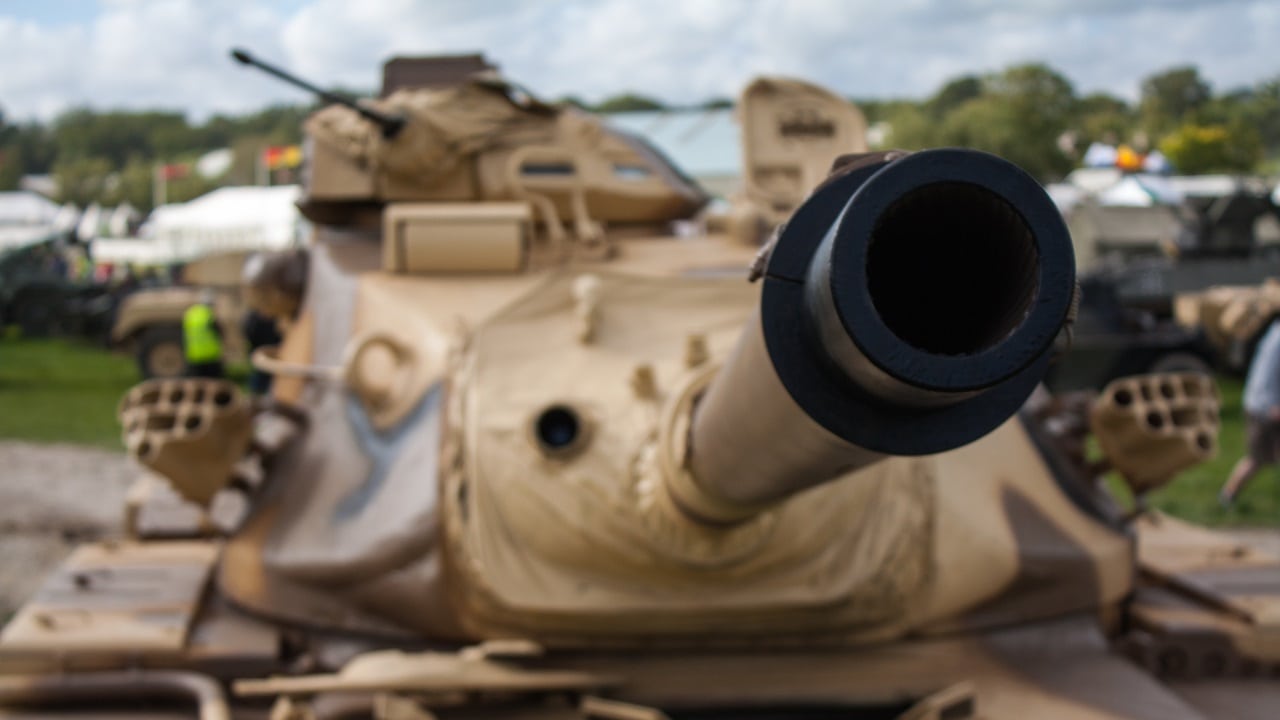
M60 Tank. Image Credit: Creative Commons.
Lessons Learned
That is the recurring lesson of this whole series. An active tank is not a crewed tank, a crewed tank is not a trained one, and a trained one is not supplied, which is why this list measures scale and nothing else.
What is new, and what separates the tank count from the warship and soldier counts that came before it, is that this number can now be audited by anyone. Ukrainian drone footage checks the front, satellite imagery checks the storage yards, and Oryx logs the losses one photograph at a time. Satellites ended the era when a government could win this argument by pointing to a full parking lot, and every army on this list is now counted, whether it likes it or not.
About the Author: Harry J. Kazianis
Harry J. Kazianis (@Grecianformula) was the former Senior Director of National Security Affairs at the Center for the National Interest (CFTNI), a foreign policy think tank founded by Richard Nixon based in Washington, DC. Harry has over a decade of experience in think tanks and national security publishing. His ideas have been published in the NY Times, The Washington Post, The Wall Street Journal, CNN, and many other outlets worldwide. He has held positions at CSIS, the Heritage Foundation, the University of Nottingham, and several other institutions related to national security research and studies. He is the former Executive Editor of the National Interest and the Diplomat. He holds a Master’s degree focusing on international affairs from Harvard University.

