
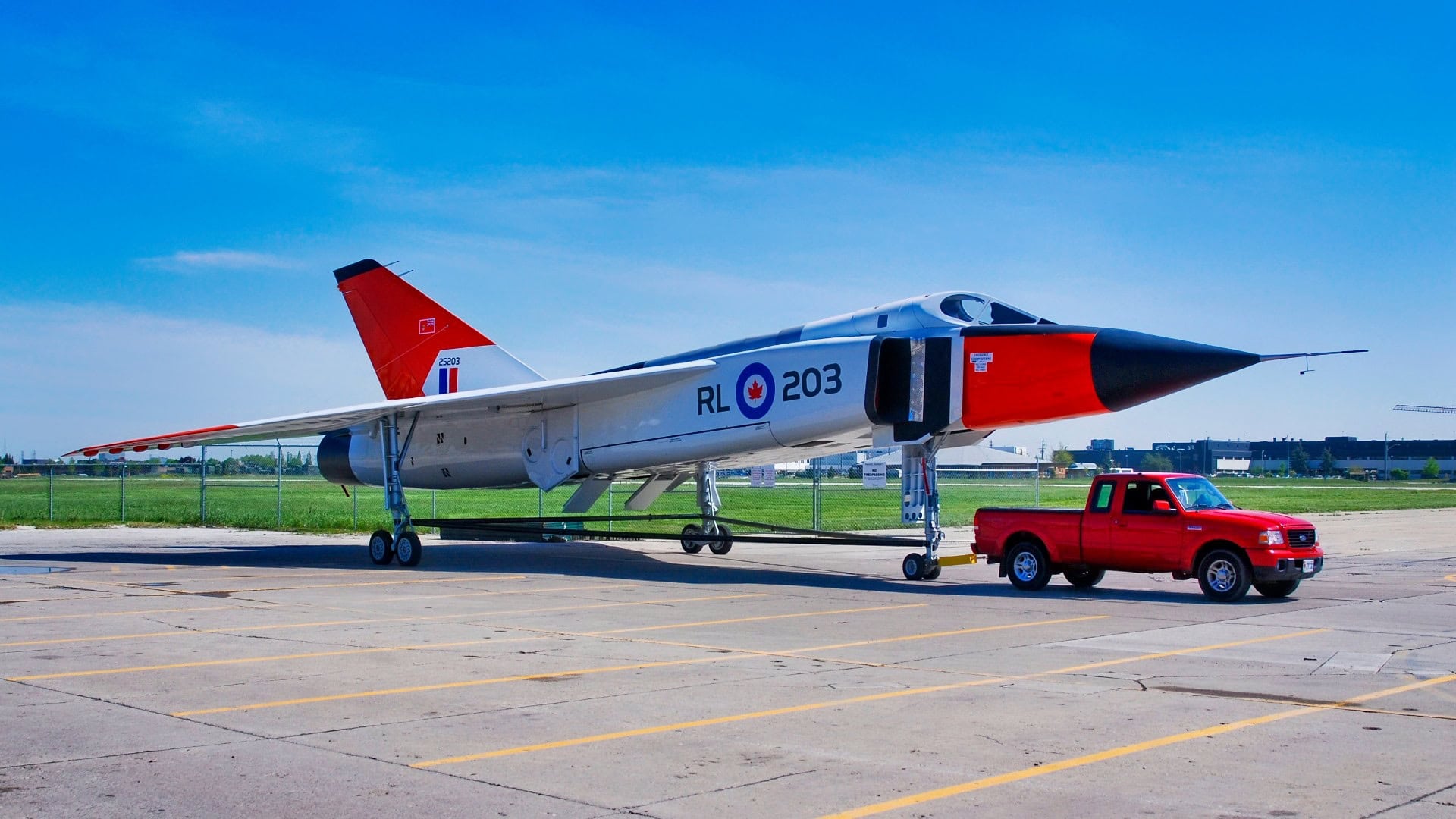
On February 20, 1959, Canada canceled the Avro Arrow, the delta-winged Mach 2 interceptor that had briefly put the country at the front rank of world aviation, and fired the workforce that built it the same afternoon. Within months, every aircraft was cut apart with torches. The decision was defensible on the day and is debated to this hour. What nobody in Ottawa foresaw was where the discarded talent would land: inside NASA, with fingerprints on Mercury, Gemini, and the machine that landed on the Moon.
The Avro Arrow: The Defense Debate in Canada That Won’t End
Avro Canada CF-105 Arrow. Image Credit: Creative Commons.
There was nothing unusual about the morning of Friday, February 20, 1959, at the A.V. Roe Canada plant in Malton, Ontario, where some of the most advanced aircraft on Earth were taking shape. The break came from Ottawa in the early afternoon. Prime Minister John Diefenbaker rose in the House of Commons and announced, after what he called a careful re-examination of the threat and the cost, that “the development of the Arrow aircraft and Iroquois engine should be terminated now.”
At Malton, company president Crawford Gordon delivered the news over the plant’s public address system, and the layoffs began the same day. More than 14,000 Avro employees were dismissed that afternoon, and once the work flowing to some 650 suppliers and subcontractors is counted, estimates of the total jobs lost run from 25,000 to as high as 60,000. Canadian aviation still calls it Black Friday. Two months later, a second order came down, and the torches came out.
The Arrow: A Mach 2 Interceptor Years Ahead of Its Time
The aircraft being destroyed was the product of the most ambitious industrial program Canada had ever attempted. Design studies began in 1953, serious development in March 1955, and Avro built the CF-105 Arrow straight off production tooling, skipping the hand-built prototype stage entirely, a then-radical method that traded early risk for speed into service. The result rolled out before a crowd of thousands on October 4, 1957. The same day, the Soviet Union launched Sputnik 1, and the omen went unread: the missile age arrived in the same news cycle as the interceptor built for the bomber age.
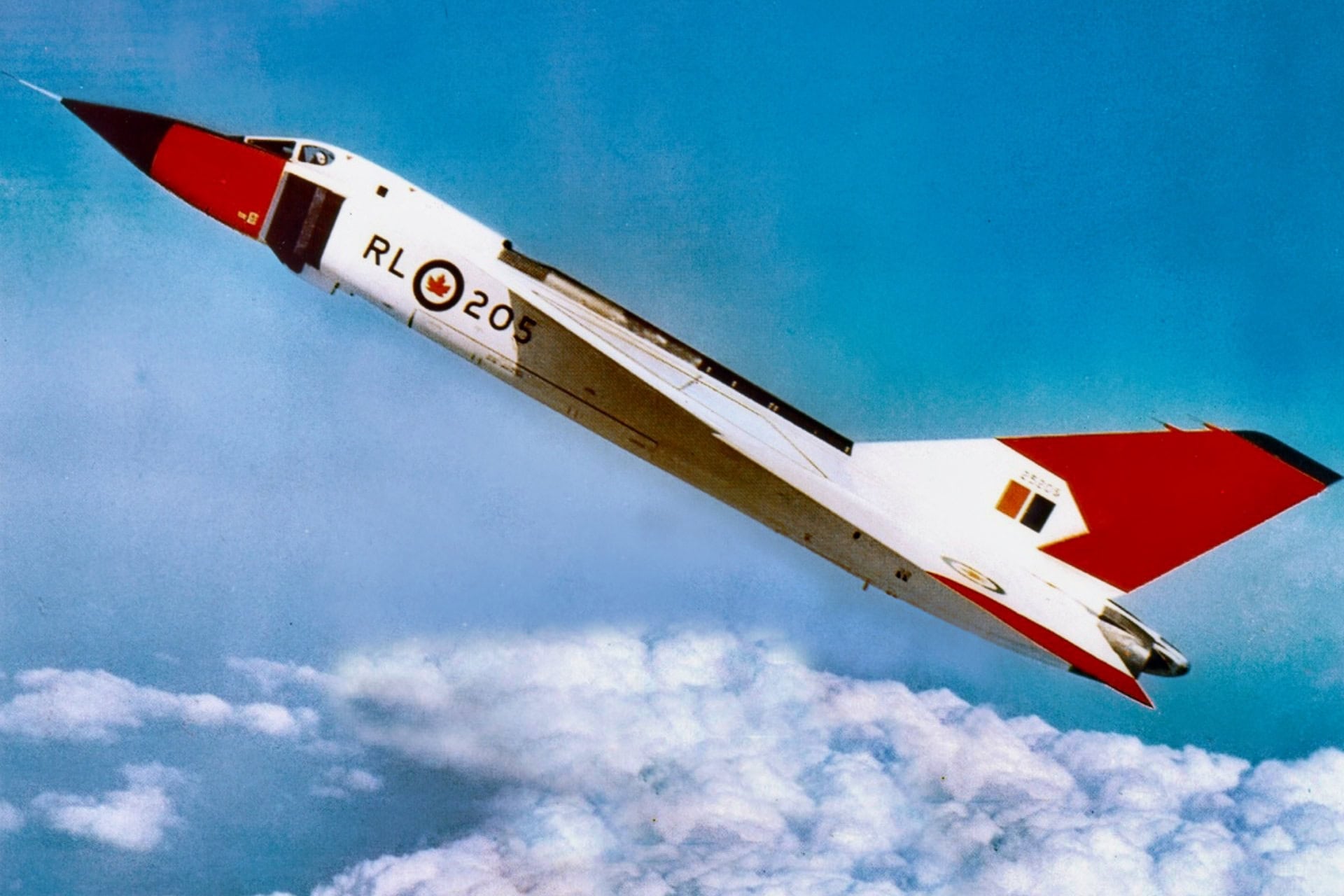
On its merits, the Arrow was extraordinary. A big two-seat delta with an internal weapons bay, it carried one of the first fly-by-wire control systems ever flown, with artificial feel for the pilot, and hydraulics running at 4,000 psi, well beyond contemporary practice. Test pilot Janusz Żurakowski took RL-201 up for the first time on March 25, 1958, went supersonic on the third flight, and the five Mark 1 aircraft, flying on interim Pratt & Whitney J75 engines, reached Mach 1.9 in level flight and reached Mach 1.98 over roughly 70 hours across 66 flights.

Canada’s CF-105 Avro Arrow fighter.
The airplane the program was actually about was next in line. RL-206, the first Mark 2, sat nearly complete with the Canadian-designed Orenda Iroquois engine installed, an engine that had first flown in November 1957, slung on a borrowed B-47 testbed and was described at the time as perhaps the most powerful jet engine in the world. The Arrow’s job, established once and for all, was to intercept Soviet bombers coming over the Arctic. With the Iroquois, it was expected to do that job faster and higher than anything then flying in the West.
Avro Arrow Fighter: Why Ottawa Ended It
The cancellation reads as a tragedy, and it was also a real dilemma, which is the part the legend tends to drop. The Arrow was devouring money at a rate a country of 17 million had never spent on a single weapon, and the arithmetic worsened as it went: the RCAF’s planned buy shrank, and every cut pushed the cost of each remaining aircraft higher.
At the same moment, Ottawa was being asked to fund the new Bomarc anti-bomber missile, to deepen its integration into the just-formalized NORAD command, and to reckon with a strategic consensus, sincerely held in 1958, that intercontinental missiles were making manned interceptors obsolete. Defense Minister George Pearkes had pushed for cancellation as early as August 1958; the cabinet committee refused twice, accepted the Bomarc purchase, which Pearkes later described as bought in lieu of more airplanes, and scheduled a full program review for March 31, 1959. Attempts to share costs by selling the Arrow to Washington or London went nowhere; both allies were buying their own programs. Diefenbaker did not wait for the review. The announcement came five weeks early, and the suddenness, more than the decision, is what Malton never forgave.
Aerospace Legend: The Destruction and the Debate That Never Ended
What followed the cancellation is the part historians still argue about. Canceling a program is ordinary business for governments; ordering its physical erasure is not, and the erasure is what turned a procurement decision into a national wound. Within two months, the government ordered the five flying Arrows, the nearly complete RL-206, the production line, the tooling, and the plans destroyed.
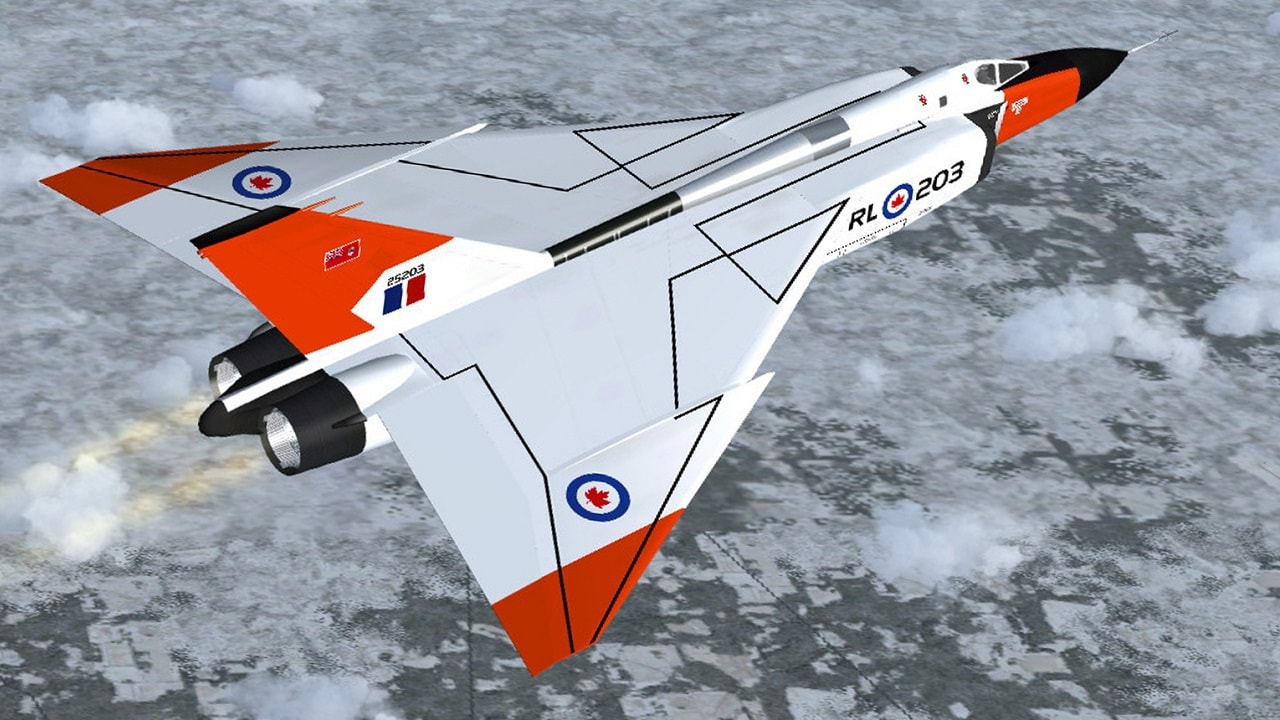
Avro CF-105 Arrow. Image Credit: Creative Commons.
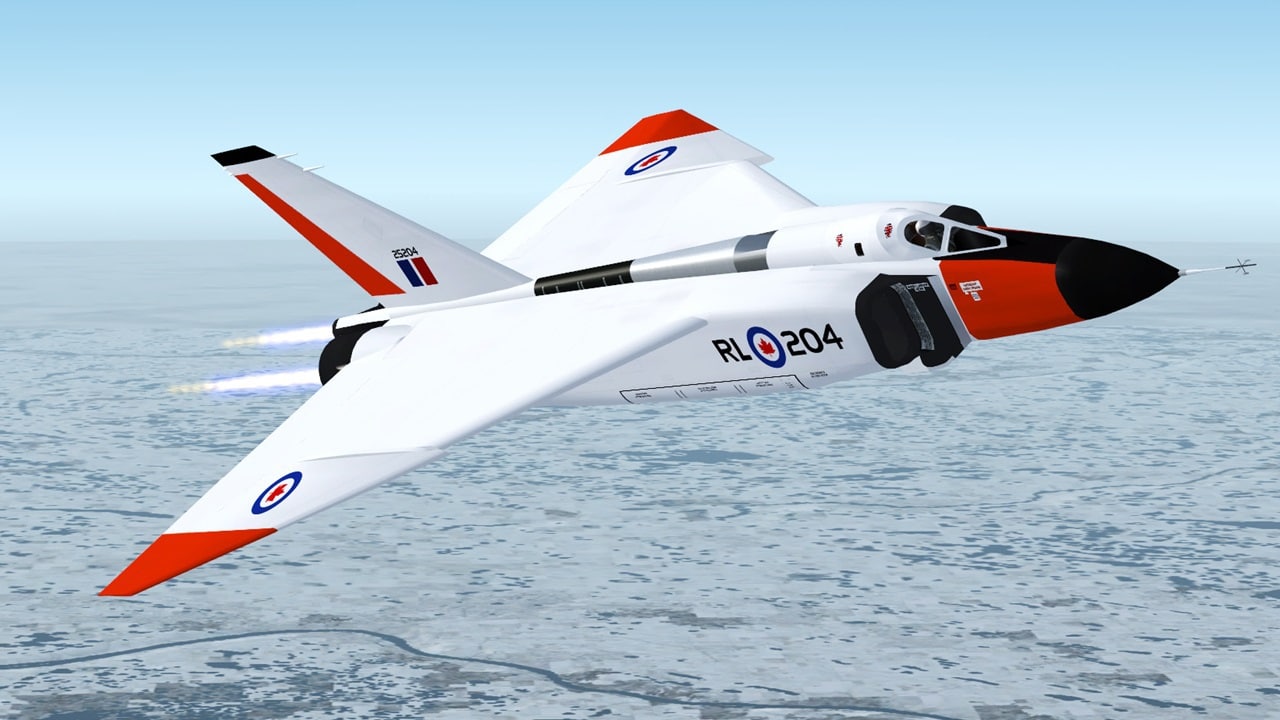
Avro CF-105 Arrow. Image Credit: Creative Commons.
Crews cut the airframes apart with torches and sold the remains for scrap. Why the erasure was so total has never been settled: one school points to security concerns, including documented Soviet espionage inside Avro, and a wish to keep the technology from leaking; another sees a government removing the physical evidence of an embarrassing reversal. The record supports neither verdict, and the honest answer is that it remains contested.
The erasure also failed in small ways that took decades to surface. The nose and cockpit section of RL-206 survived, and even its survival is told in two ways: in the long-told version, airmen spirited it away and kept it hidden until Ottawa’s mood softened, while Avro’s chief engineer Jim Floyd later confirmed a plainer account, that it was officially spared for high-altitude pressure research at the RCAF’s aviation-medicine institute.
It is currently on display at the Canada Aviation and Space Museum in Ottawa, alongside two outer wing panels from RL-203 and one of the two known surviving Iroquois engines. And in 2020, CBC revealed that Ken Barnes, a senior Avro draftsman, ordered to destroy the program’s documents, had instead taken the blueprints home and kept them in his basement for decades.
The Twist: Avro’s Fired Engineers Helped Put Men on the Moon
NASA was not yet five months old on Black Friday, and its Space Task Group at Langley, the small team assigned to put an American in space, was desperately short of engineers who had actually built complex flying machines. Its leader, Robert Gilruth, knew exactly what had just come onto the market; two of the Arrow’s rocket-launched test models had flown from an American range in Virginia, and NASA people had seen Avro’s work up close. Recruiters moved within weeks. Avro engineers were interviewed on a Friday and had job offers by Saturday, and on April 9, 1959, by one historian’s account, the very day NASA introduced the Mercury Seven astronauts to the world, the first 25 of them reported for work at Langley. The group grew to 32, and in a detail Canada’s telling often omits, 19 of them were British-born engineers who had immigrated to work on the Arrow, making the exodus a double brain drain.
Their fingerprints ended up everywhere. Jim Chamberlin, the Arrow’s chief aerodynamicist, led the group south, worked on Mercury, and then produced the approved design of the Gemini spacecraft, the two-man ship that taught NASA to rendezvous and dock. Owen Maynard, by the account of historian Chris Gainor, was the first person at NASA to seriously sketch what a lunar lander would need, drawing a spindly “landing bug” that fed the Lunar Module, and he rose to chief of systems engineering for the entire Apollo program, the man responsible for making everything fit together.
John Hodge served as a flight director for Mercury, Gemini, and Apollo, running Mission Control’s blue team. Tecwyn Roberts served as NASA’s first Flight Dynamics Officer, helped lay out the design of Mission Control in Houston, and is credited with popularizing “A-OK.” Canada Post eventually put Chamberlin and Maynard on stamps commemorating the Apollo program, a quiet national admission of what had been given away.
The Coda: Used Voodoos, a Recovered Model, and a Debate That Won’t Die
Canada still needed interceptors, and in 1961 it acquired 66 used CF-101 Voodoos from the United States, an aircraft the RCAF had originally evaluated and rejected before choosing to build the Arrow.
The controversy over arming the Voodoos and Bomarcs with nuclear warheads helped bring down Diefenbaker’s government in 1963. The Arrow itself survived only in fragments and in legend. The persistent story that one complete aircraft escaped the torches, usually RL-202, flown away in the night, remains exactly that, a legend, with no evidence behind it; even the Royal Canadian Mint’s telling states plainly there is no evidence that any completed Arrow sits at the bottom of Lake Ontario. What the lake did hold were the program’s nine rocket-launched free-flight test models, fired from Point Petre between 1954 and 1957. The Raise the Arrow project was launched in September 2017 and raised it in August 2018, its nose bent by the water, mussels removed by scalpel during conservation; the curator described it as looking like “a rocket with large triangular wings.” It has been displayed in Ottawa since 2019, and four of the nine models have now been located. The Arrow even shadows the present: this February, The Walrus argued that Canada’s current F-35 debate is really an argument about 1959, about a country that gave up building its own fighters and has imported every one since.
But the truest coda came on July 20, 1969, ten years and five months after Black Friday, when the Lunar Module settled onto the Sea of Tranquility. The lander traced back to Owen Maynard’s sketches; the control room guiding it had been shaped by Tecwyn Roberts and was staffed by flight directors, including John Hodge; the rendezvous techniques that made the mission architecture work had been proven aboard Jim Chamberlin’s Gemini.
The men Canada fired on a Friday afternoon in Malton had spent the decade building the machines that carried human beings to the Moon.
About the Author: Harry J. Kazianis
Harry J. Kazianis (@Grecianformula) was the former Senior Director of National Security Affairs at the Center for the National Interest (CFTNI), a foreign policy think tank founded by Richard Nixon based in Washington, DC. Harry has over a decade of experience in think tanks and national security publishing. His ideas have been published in the NY Times, The Washington Post, The Wall Street Journal, CNN, and many other outlets worldwide. He has held positions at CSIS, the Heritage Foundation, the University of Nottingham, and several other institutions related to national security research and studies. He is the former Executive Editor of the National Interest and the Diplomat. He holds a Master’s degree focusing on international affairs from Harvard University.

