
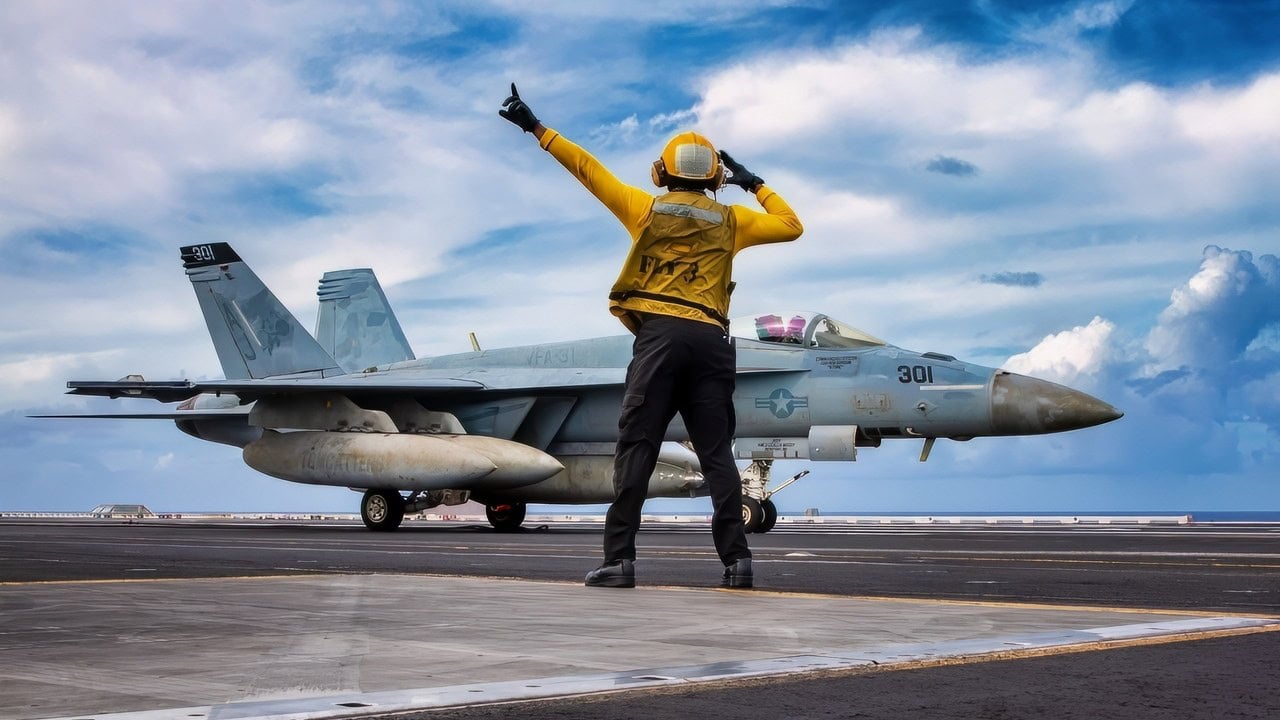
Last week, President Donald J. Trump issued a memorandum to “fix critical long-term issues in Navy shipbuilding and ship repair programs and restore capacity and competition to the maritime industrial base.” As part of this memo, Trump is canceling the development and construction of electromagnetic aircraft launch systems (EMALS) in favor of returning to the traditional steam catapults.
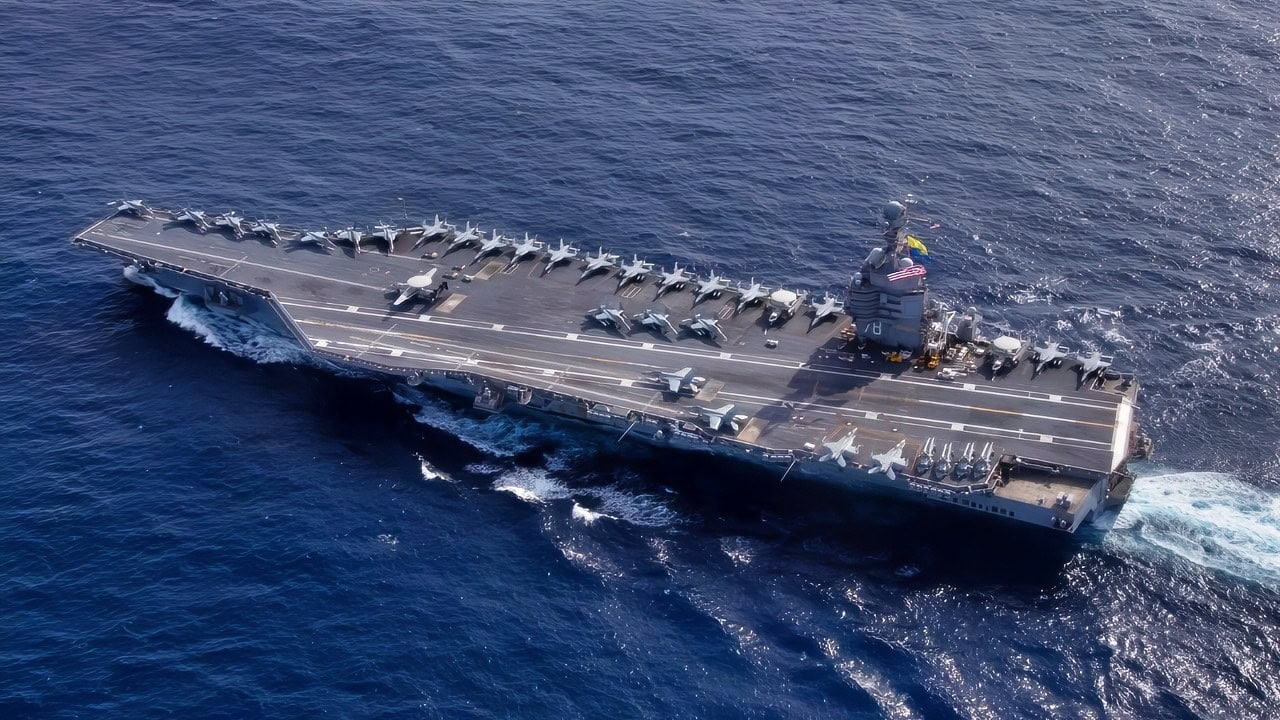
The first-in-class aircraft carrier USS Gerald R. Ford (CVN 78) steams in the Atlantic Ocean, Nov. 7, 2022. Exercise Silent Wolverine is a U.S.-led, combined training exercise that tests Ford-class aircraft carrier capabilities through integrated high-end naval warfare scenarios alongside participating allies in the Eastern Atlantic Ocean. The Gerald R. Ford Carrier Strike Group is conducting their first deployment in the U.S. Naval Forces Europe area of operations. (U.S. Navy photo by Mass Communication Specialist 3rd Class Jacob Mattingly)
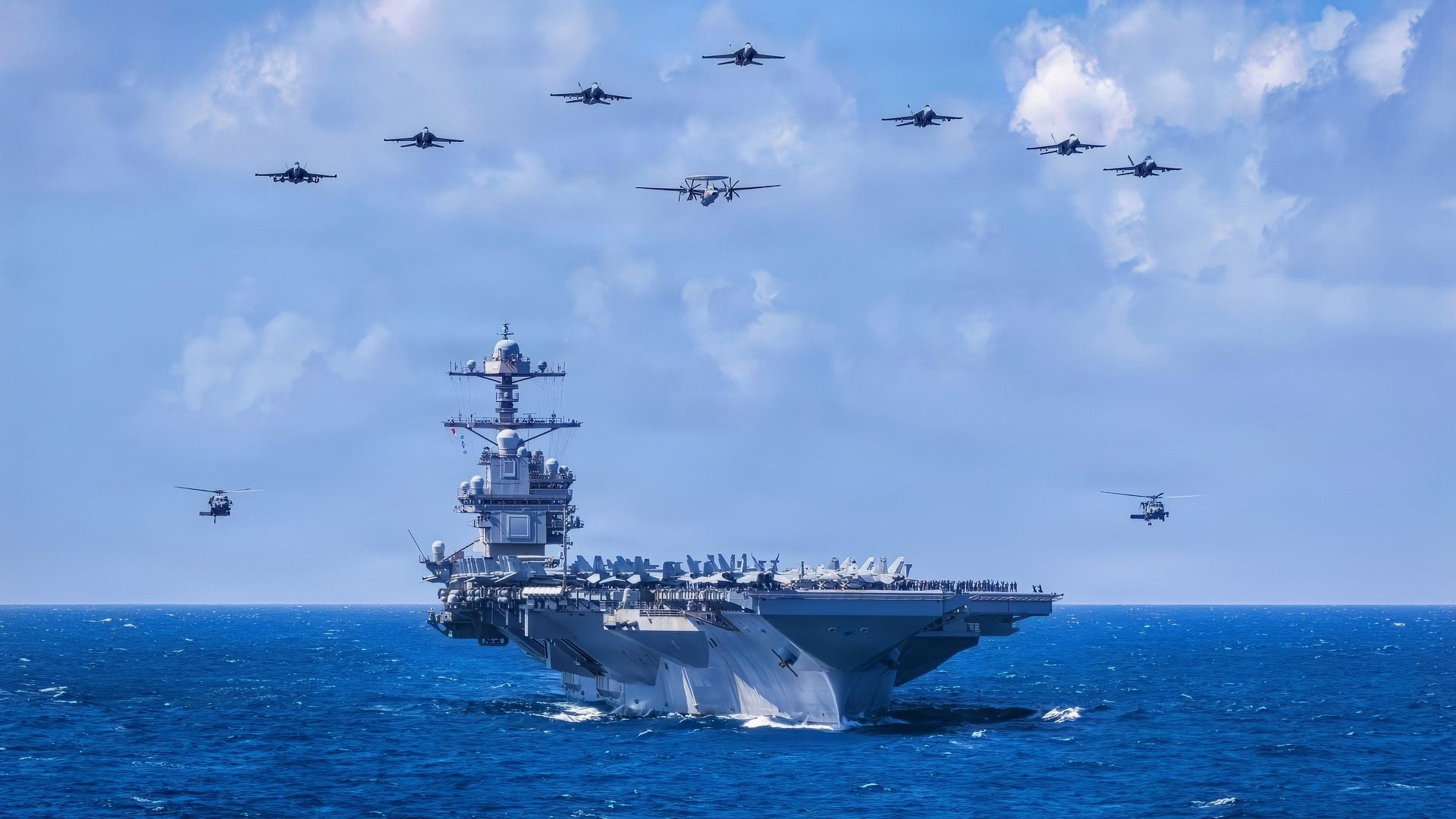
USS Ford Supercarrier U.S. Navy. Image Credit: U.S. Navy.
The order was issued as part of a broader effort to reduce shipbuilding costs and wait as well as efforts to simplify the maintenance process across the Navy.
Trump has opposed EMALS since his first term, but is this really a good idea? Are EMALS more trouble than they’re worth, or is the U.S. shooting itself in the foot by ditching the system?
Why EMALS Catapults Are a Good System… Mostly
EMALS launchers, first introduced on the USS Gerald R. Ford (CVN 78), use linear induction motors to generate a strong electromagnetic field that is then used to propel an aircraft at high speed across the carrier’s flight deck.
This system generates a precisely controlled electrical pulse and replaces the old steam-pressure system currently used across the Nimitz-class fleet.
The Ford-class’s A1B nuclear reactors generate power for the EMALS, allowing it to launch more diverse aircraft, including F/A-18 Super Hornets, F-35Cs, UAVs, and pretty much any aircraft not compatible with current steam systems.
On paper, EMALS offers many advantages. It allows for smoother acceleration, which reduces the wear and tear on any given aircraft.
The system accommodates a wider range of aircraft from currently operational aircraft to, in theory, next-generation aircraft, UAVs, heavier support aircraft, and so on. Compared to steam systems, EMALS requires a smaller operational crew because it needs less plumbing and fewer pressure vessels.
When the system works right, the Ford-class can achieve a 30% higher sortie rate than the previous Nimitz-class.
While the previous steam systems are typically reliable, they often require more maintenance and are hard to adapt for lighter, more delicate aircraft.
Technologically Unreliable
EMALS is far superior when it works.
The problem, of course, is that it is somewhat prone to accidents. During the development of the Ford-class, the Navy has encountered serious roadblocks with the EMALS system.
Because of the system’s complexity, Ford’s delivery was delayed multiple times. According to a 2018 report from the Office of the Director of Operational Test and Evaluation (DOT&E), the system experienced 10 “critical failures” across 747 aircraft launches during sea trials since its delivery in 2017. Likewise, the Advanced Arresting Gear (AAG) experienced 10 “operational mission failures” across 763 landing attempts during the same time frame.
One could argue that the low failure rate isn’t so bad. However, further reports from 2023 indicated that these difficulties have persisted with both the EMALS and AAG. “Despite engineering upgrades to hardware and software, reliability has not appreciably changed from prior years, and reliance on off-ship technical support remains a challenge,” a DOT&E report from 2025 read.
While EMALS was supposed to raise the Ford-class’s sortie rate, the continued reliability problem has ironically decreased Ford’s reliability compared to her older Nimitz-class counterparts.
It would not be surprising if Ford experienced one or more technical difficulties with her EMALS system during Operation Epic Fury.
Trump’s Personal Vendetta Against EMALS
President Trump himself has often derided the EMALS system for its high complexity and comparatively low reliability. “They have magnets… Somebody decided to use magnets… I’m going to sign an executive order: when we build aircraft carriers, it’s steam for the catapults and hydraulics for the elevators. Do you agree? Everybody agrees,” Trump said during his visit to the USS George Washington in 2025 while it was stationed in Yokosuka, Japan. “They’re spending billions of dollars to build stupid electric,” Trump continued. “And the problem, when it breaks, you have to send up to MIT, get the most brilliant people in the world, fly them out. The steam, they said they can fix it with a hammer and blowtorch.
And it works just as well, if not better.” Even during his first term as president, Trump has signaled his intention to abandon the EMALS system entirely and return to the traditional steam-powered system.
While Trump’s criticisms do have some weight, switching from EMALS back to the old steam system is much easier said than done.
The Ford-class carriers, for example, were built from the ground up to include these systems. EMALS is deeply ingrained in the Ford-class structure, and replacing it with a steam catapult system would require a complete redesign and several billion dollars.
Ford’s sister ships are already well into their construction, with John F. Kennedy (CVN-79) already conducting sea trials and Enterprise’s (CVN-80) hull has already been laid down.
The ambiguity is whether current carriers under construction will retain their EMALS or be replaced with older steam catapults.
The (Allegedly) Chinese Made it Work
Meanwhile, the Chinese have reported no problems with their EMALS-equipped Type 003 Fujian aircraft carrier (not that they would make such details public anyway).
The Chinese skipped straight from ski-jump ramps to EMALS, seemingly without the development hurdles the U.S. experienced.
Then again, the Fujian has not yet been in service for a full year, and because of Chinese state control over the media, any technical difficulties aboard the Fujian are unlikely to be reported.
About the Author: Isaac Seitz
Isaac Seitz, a Defense Columnist, graduated from Patrick Henry College’s Strategic Intelligence and National Security program. He has also studied Russian at Middlebury Language Schools and has worked as an intelligence Analyst in the private sector.