
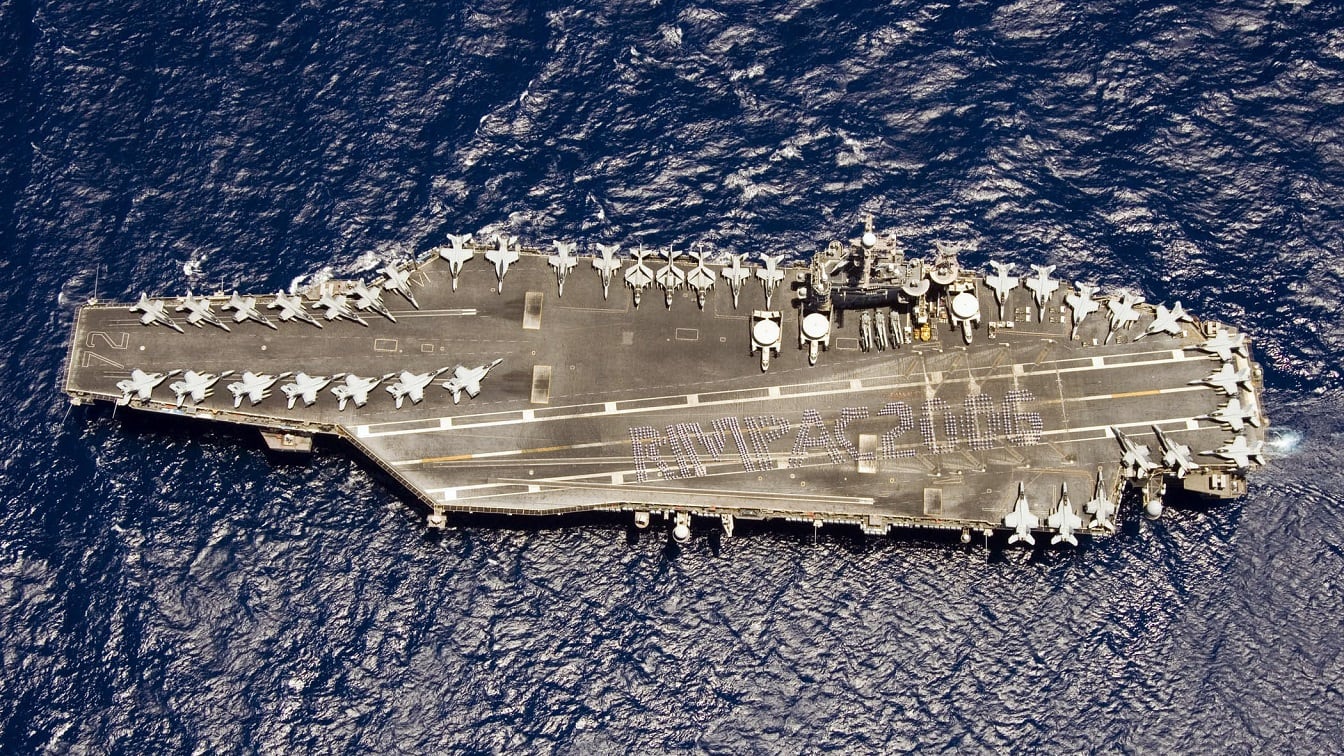
The Nimitz-class nuclear-powered aircraft carriers, aka “supercarriers,” are arguably the most successful “flattops” of the post-World War II era, fittingly named for a WWII hero and one of the most beloved U.S. Navy flag officers of any era, Admiral Chester William Nimitz. However, as the one saying goes, “All good things must come to an end,” and the Nimitz-class ships are being slowly but surely slated for retirement, to be replaced by the Gerald R. Ford-class supercarriers, named for a former WWII USN officer who didn’t make Admiral but did eventually become President of the United States.
Sensibly enough, the first ship of the class set for decommissioning is the eponymous lead vessel, USS Nimitz (CVN-68). This is now as good a time as any to take a brief look back at CVN-68’s proud history.
USS Nimitz (CVN-68) Initial History, Tech Specs, and Vital Stats
This carrier was built by Newport News Shipbuilding (NNS) — a division of Huntington Ingalls Industries (HII) – in Newport News, Virginia. She was ordered on March 8, 1967, laid down on 12 February 1969, launched on 13 May 1972, and commissioned on 3 May 1975, just missing the end of the Vietnam War. Interestingly enough, USS Nimitz stands out as the only ship of her class whose official name is just the surname, as opposed to the full name, of the person it is named for, i.e. she’s just plain “USS Nimitz” and not “USS Chester W. Nimitz; contrast this with, say, USS Abraham Lincoln (CVN-72), USS Harry S. Truman (CVN-75), USS Ronald Reagan (CVN-76), etc.
The warship’s motto is “Teamwork, a Tradition.”
When we look at USS Nimitz’s vital stats, we see that she truly is a “super carrier,” worthy of being named for a super admiral like Chester Nimitz.
The ship displaces approximately 100,000 tons fully laden, with a hull length of 1,092 feet, a beam width of 252 feet, and a draft of 37 feet. Two Westinghouse A4W nuclear reactors power that impressive bulk, generating 260,000 horsepower and enabling the behemoth to reach a maximum speed in excess of 30 knots.
That impressive bulk also accommodates 3,500 commissioned officers and enlisted sailors in the ship’s company and an additional 2,480 seamen in the air wing…not to mention the aircraft carrier’s raison d’etre, the 90 fixed-wing and rotary-wing assets, namely:
-F-35C Lightning II – The Navy and Marine Corps’ player in the 5th Generation stealth fighter game
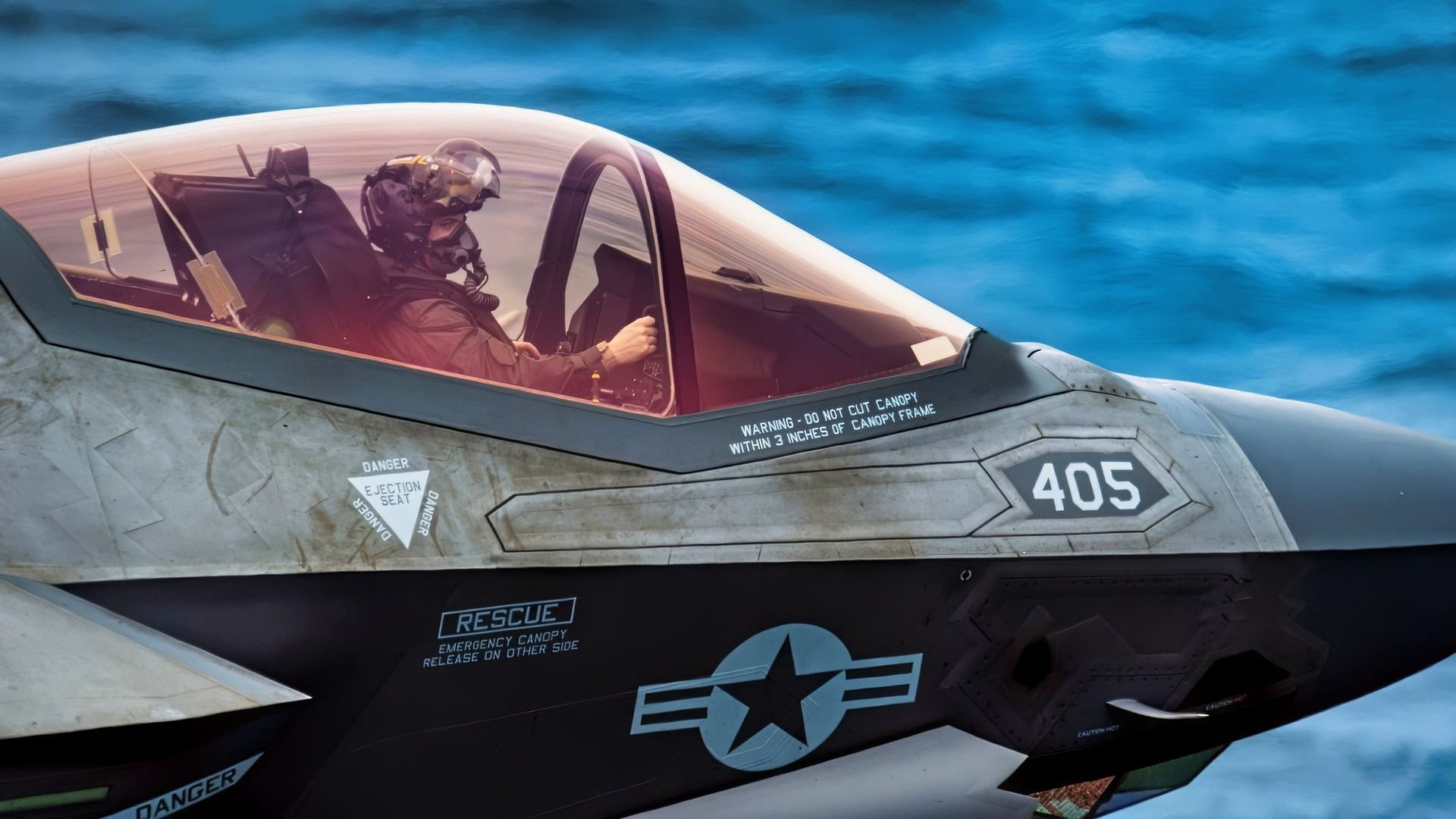
(Jan. 10, 2025) Lt. Cmdr. Joseph Anderson, of Severna Park, Md., waits for launch in an F-35C Lightning II, assigned to the “Warhawks” of Strike Fighter Squadron (VFA) 97, on the flight deck of the Nimitz-class aircraft carrier USS Carl Vinson (CVN 70), Jan. 10, 2025. Vinson, the flagship of Carrier Strike Group ONE, is underway conducting routine operations in the U.S. 7th Fleet area of operations. (U.S. Navy photo by Mass Communication Specialist 3rd Class Nate Jordan)
–E-2D Advanced Hawkeye (AHE) – Long-range airborne early warning and control aircraft, in the same vein as the U.S. Air Force’s E-3 Sentry AWACS platform
-EA-18G Growler – The USN’s go-to warbird for electronic warfare (EW), particularly suppression of enemy air defenses (SEAD)
-F-A-18E/F Super Hornet – The air-to-air and air-to-ground combat platform immortalized by “Top Gun 2: Maverick”
-MH-60R/S Seahawk – The Navy’s anti-submarine warfare (ASW) and search and rescue (SAR) helicopter
-MV-22B Osprey – Both fish *and* fowl metaphorically speaking, this hybrid tiltrotor aircraft serves amphibious assault missions
–C-2 Greyhound – Naval Aviation’s equivalent of a Greyhound bus, e.g., a transport aircraft for moving personnel and cargo
Combat History in Brief
The venerable warship was first “blooded” in combat during the Gulf of Sidra Incident of 19 August 1981, whereupon two Grumman F-14 Tomcats of Nimitz’s VF-41 shot down two of then-Libyan strongman Muammar Gaddafi’s Sukhoi Su-22 “Fitter” jets. To name just a few of her subsequent engagements:
-Deploying to the North Arabian Sea on 29 October 1988 in support of Operation Earnest Will, the reflagging of Kuwaiti oil tankers to protect them from the ravages of the Iranian Navy…predating Operation Epic Fury by 27 years.
-The Persian Gulf War AKA Operation Desert Storm, January 17 to February 28, 1991; once again, the tiny, oil-rich nation of Kuwait was the beneficiary of her services.
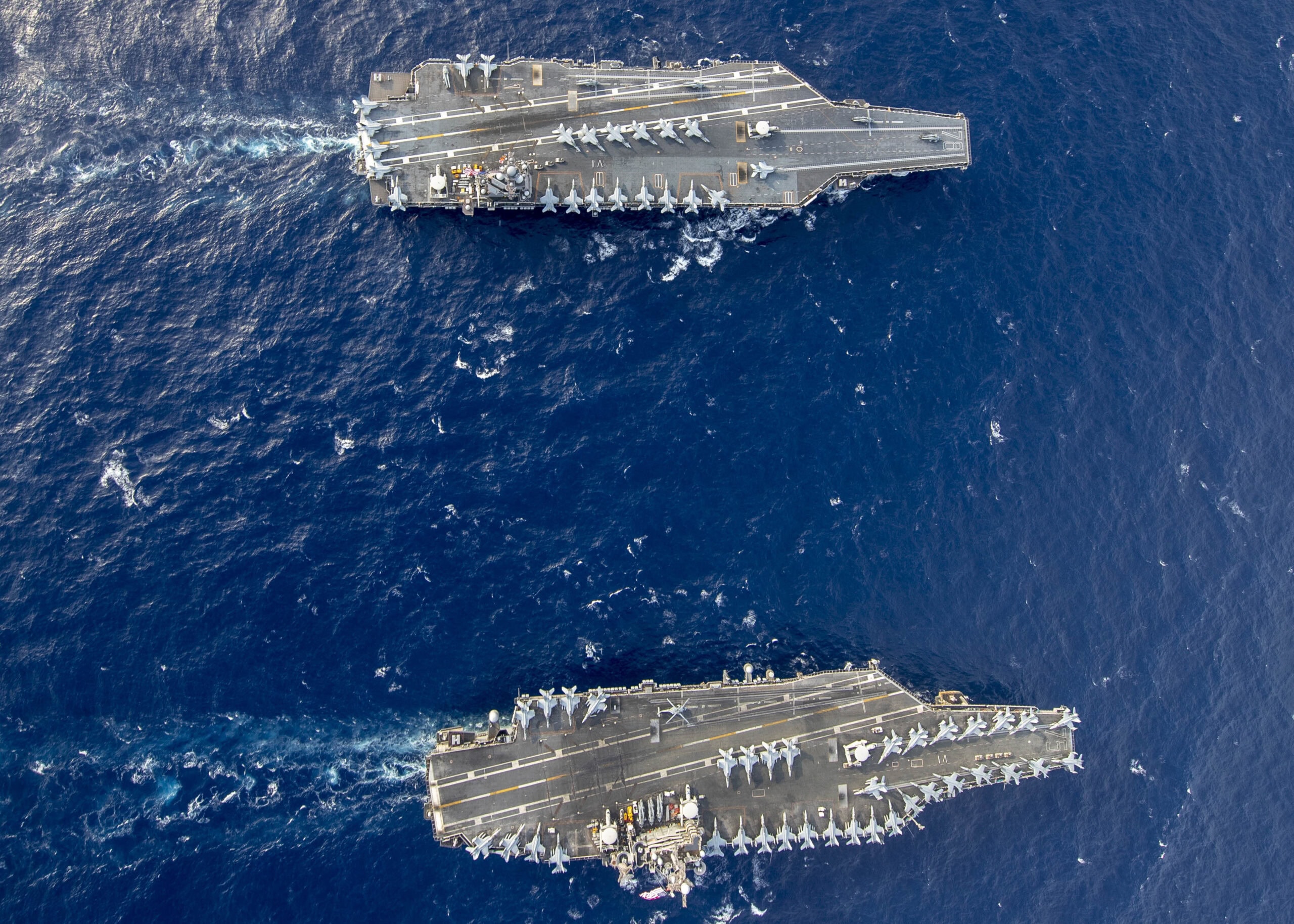
The Ford-class aircraft carrier USS Gerald R. Ford (CVN 78) and the Nimitz-class aircraft carrier USS Harry S. Truman (CVN 75) transit the Atlantic Ocean June 4, 2020, marking the first time a Ford-class and a Nimitz-class aircraft carrier operated together underway. Ford is underway conducting integrated air wing operations, and the Harry S. Truman Carrier Strike Group remains at sea in the Atlantic as a certified carrier strike group force ready for tasking in order to protect the crew from the risks posed by COVID-19, following their successful deployment to the U.S. 5th and 6th Fleet areas of operation. (U.S. Navy photo by Mass Communication Specialist Seaman Riley McDowell)
Indeed, all five ships of the Nimitz class actively serving at the time participated in the multinational coalition’s ultimately successful campaign to evict then-Iraqi strongman Saddam Hussein’s forces from their brutal occupation of Kuwait.
-Operation Inherent Resolve (OIR), June 2017; fighting against the Islamic State/ISIS/ISIL/Da’esh terrorist group in Iraq and Syria, USS Nimitz’s F/A-18 Super Hornets played a vital role in the Battle of Tal Afar, providing precision close air support (CAS) for the advancing—and ultimately triumphant—Iraqi soldiers of the post-Saddam era.
“Uncle Chester” in Pop Culture
This already-famous ship also gained a bit of movie stardom when she took part in the shooting of the 1980 sci-fi/action-adventure film “The Final Countdown,” whose storyline was specifically set aboard the Nimitz.
For the benefit of any of our readers who are unfamiliar with the movie, the short version is that the Nimitz and her crew somehow get time-warped to the day before the Imperial Japanese Navy’s December 7, 1941 attack on Pearl Harbor. Among other things, the film shows that—surprise, surprise—the IJN’s piston-engine, propeller-driven Mitsubishi A6M Zero fighters, top-of-the-line warbirds though they were in the early years of WWII, would’ve been no match for supersonic jet-powered F-14 Tomcats.
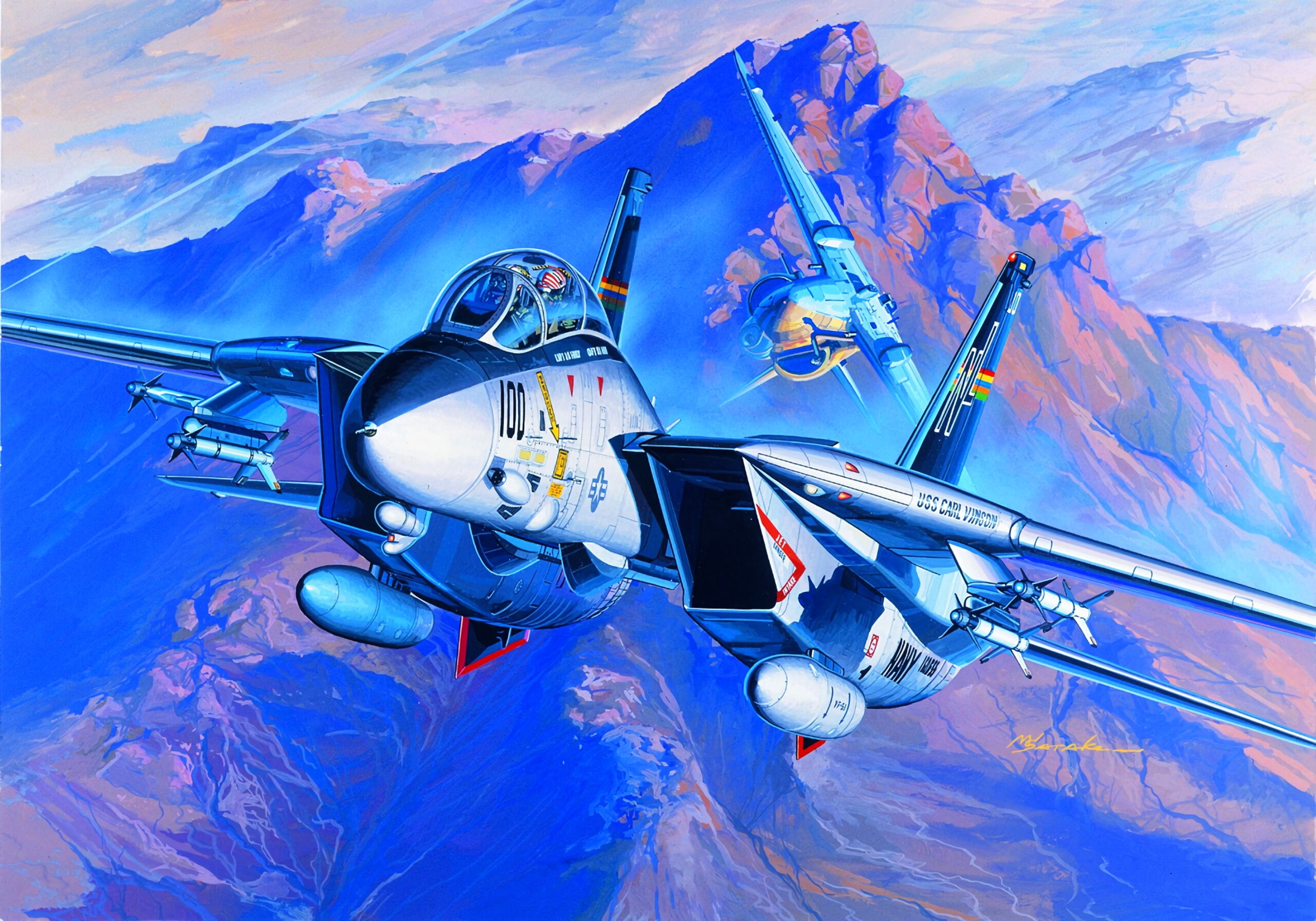
F-14 Fighter. Image Credit: Creative Commons.

F-14 Tomcat in Museum. Image was taken by Jack Buckby for 19FortyFive.com. All rights reserved.
Meanwhile, in the world of written fiction, there’s the 1996 Tom Clancy novel “SSN: A Strategy Guide to Submarine Warfare”—the so-called “forgotten Clancy novel”—wherein a 2 August 1997 Chinese attack on the Nimitz is the casus belli that catalyzes the book’s main plotline.
The Last Hurrah for “Old Salt”
USS Nimitz is now not only the oldest US aircraft carrier in service, but indeed the oldest serving aircraft carrier in the world.
She is slated to be replaced by the Ford-class carrier USS John F. Kennedy (CVN-79); this was originally supposed to happen this May, but was postponed to March 2027, prompting Nimitz’s skipper, Capt. Joseph Furco, to joke that “As I say, I might be the last captain, I say this tongue in cheek: I am the third ‘last captain’ of USS Nimitz.”
About the Author: Christian D. Orr
Christian D. Orr is a Senior Defense Editor. He is a former Air Force Security Forces officer, Federal law enforcement officer, and private military contractor (with assignments worked in Iraq, the United Arab Emirates, Kosovo, Japan, Germany, and the Pentagon). Chris holds a B.A. in International Relations from the University of Southern California (USC) and an M.A. in Intelligence Studies (with a concentration in Terrorism Studies) from American Military University (AMU). He is also the author of the book “Five Decades of a Fabulous Firearm: Celebrating the 50th Anniversary of the Beretta 92 Pistol Series,” the second edition of which was recently published.