
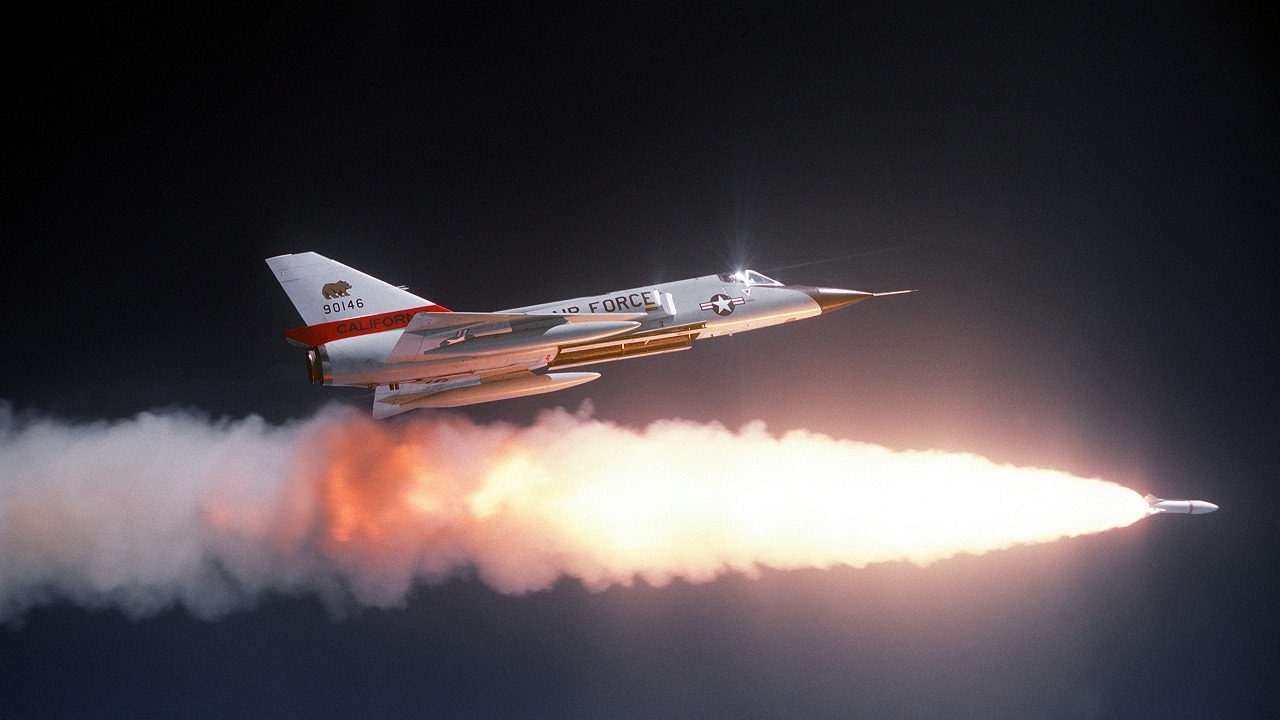
Summary and Key Points: On a frozen morning in February 1970, a sheriff in rural Montana drove out to a wheat field and found a supersonic Air Force jet sitting in the snow with its engine idling, its cockpit empty, and no pilot anywhere in sight. The man who had been flying it was miles away, hanging under a parachute in the mountains, watching in disbelief as the aircraft he had abandoned at 15,000 feet broke its own fatal spin, leveled its wings, and glided down to land itself. This is the story of how that happened, why the physics worked, and why the Air Force put the jet back in the air for another sixteen years.
An Introduction: The F-106 Delta Dart Accident
In February 1970, a supersonic Air Force interceptor fell out of control over Montana, and its pilot ejected to save his life. The jet he left behind then did something no engineer had ever designed it to do. It broke its own spin, leveled its wings, and glided down to a gentle belly landing in a snowy wheat field, engine still idling, and it went on to fly for another sixteen years.
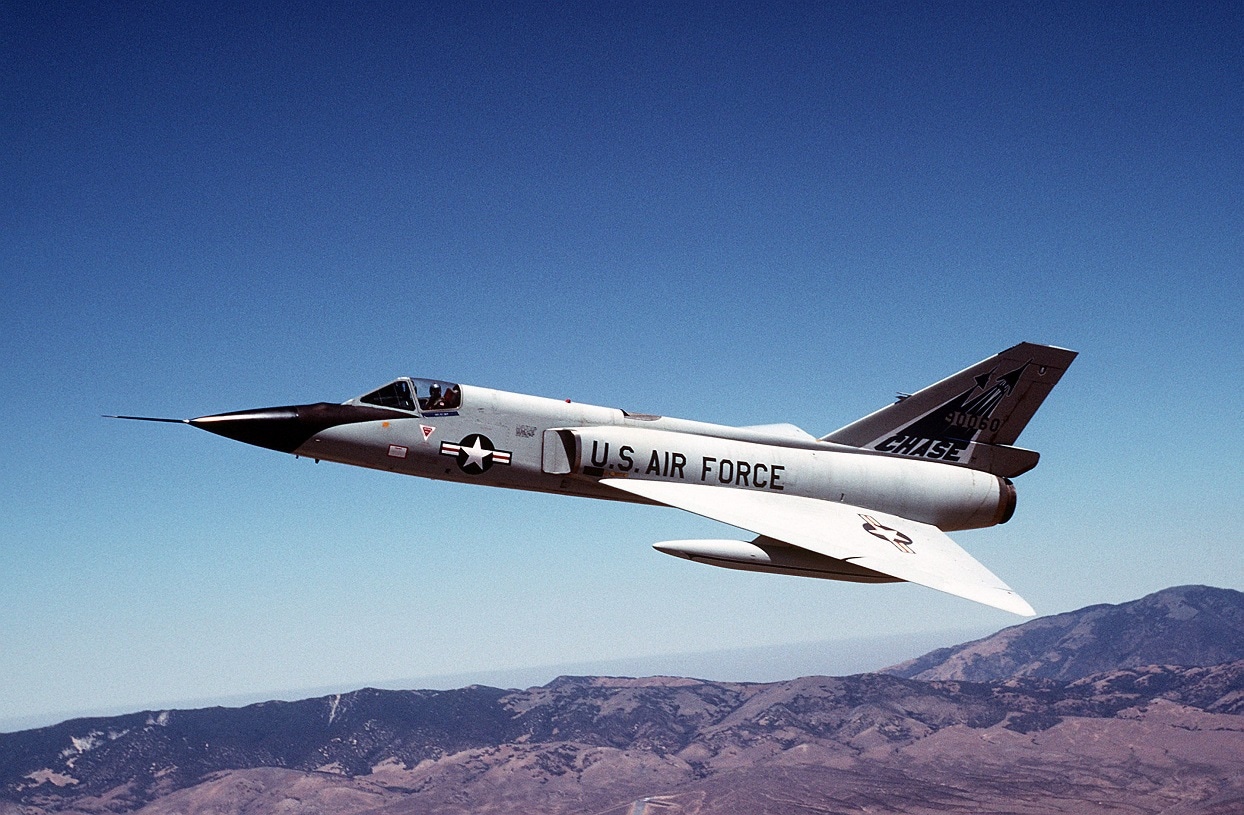
F-106. Image: Creative Commons.
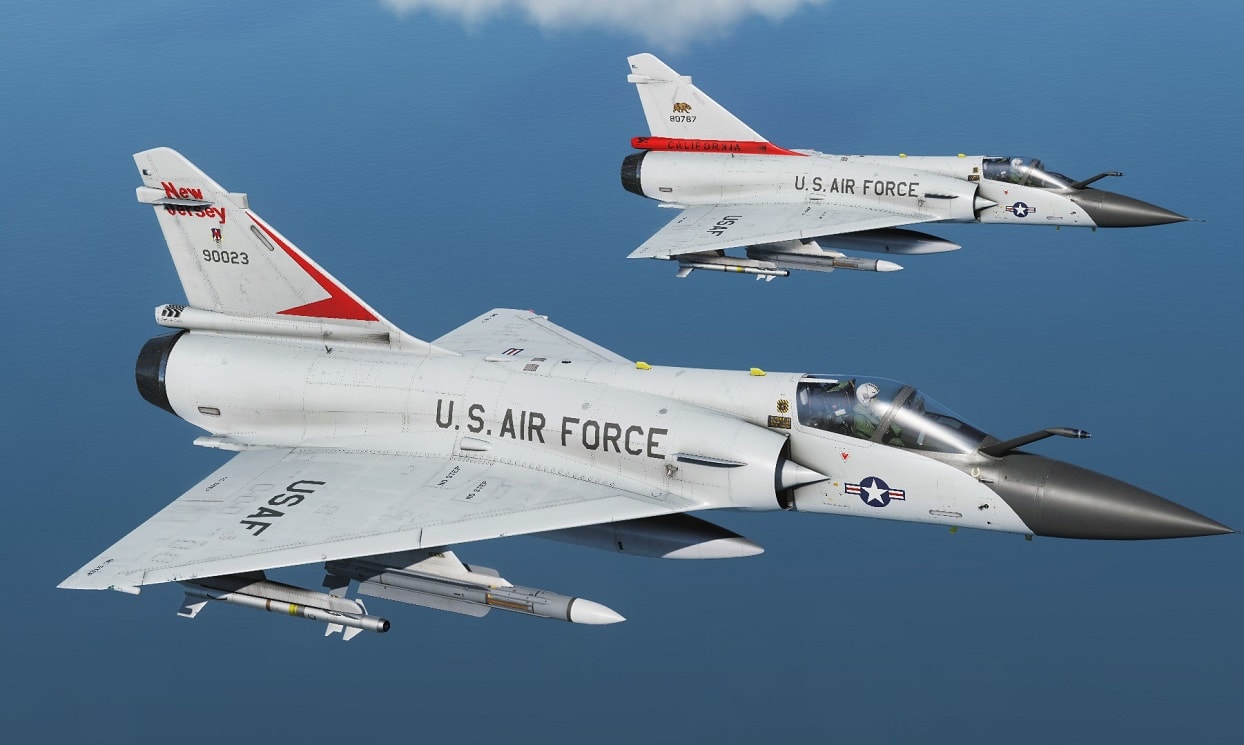
F-106. Image: Creative Commons.
The local sheriff who drove out across the frozen fields near Big Sandy, Montana, on the morning of February 2, 1970, found something that should not have existed.
A supersonic Air Force interceptor sat upright in a farmer’s field, belly in the snow, canopy gone, cockpit empty, and its engine still running.
There was no pilot, no crater, no fire, just a Convair F-106 Delta Dart idling quietly in the middle of nowhere as if someone had taxied it there and walked away.
The pilot was miles off, hanging under a parachute in the mountains, watching in disbelief. His jet had landed.
The “Ultimate Interceptor” and a Routine Montana Morning
The aircraft in that field was no trainer. The F-106 Delta Dart was the last dedicated interceptor the US Air Force ever fielded, a Mach 2 delta-wing machine built for a single job: climbing fast and high to shoot down Soviet bombers before they could reach American cities.
Guided by the Hughes MA-1 fire-control system and tied into the continental SAGE air-defense network, it was, in the Air Force’s own shorthand, the Ultimate Interceptor.
It carried Falcon missiles and, as its primary weapon, the AIR-2 Genie, an unguided nuclear-tipped rocket meant to be salvoed into a formation of incoming bombers. This was a frontline Cold War weapon, not a forgiving one.
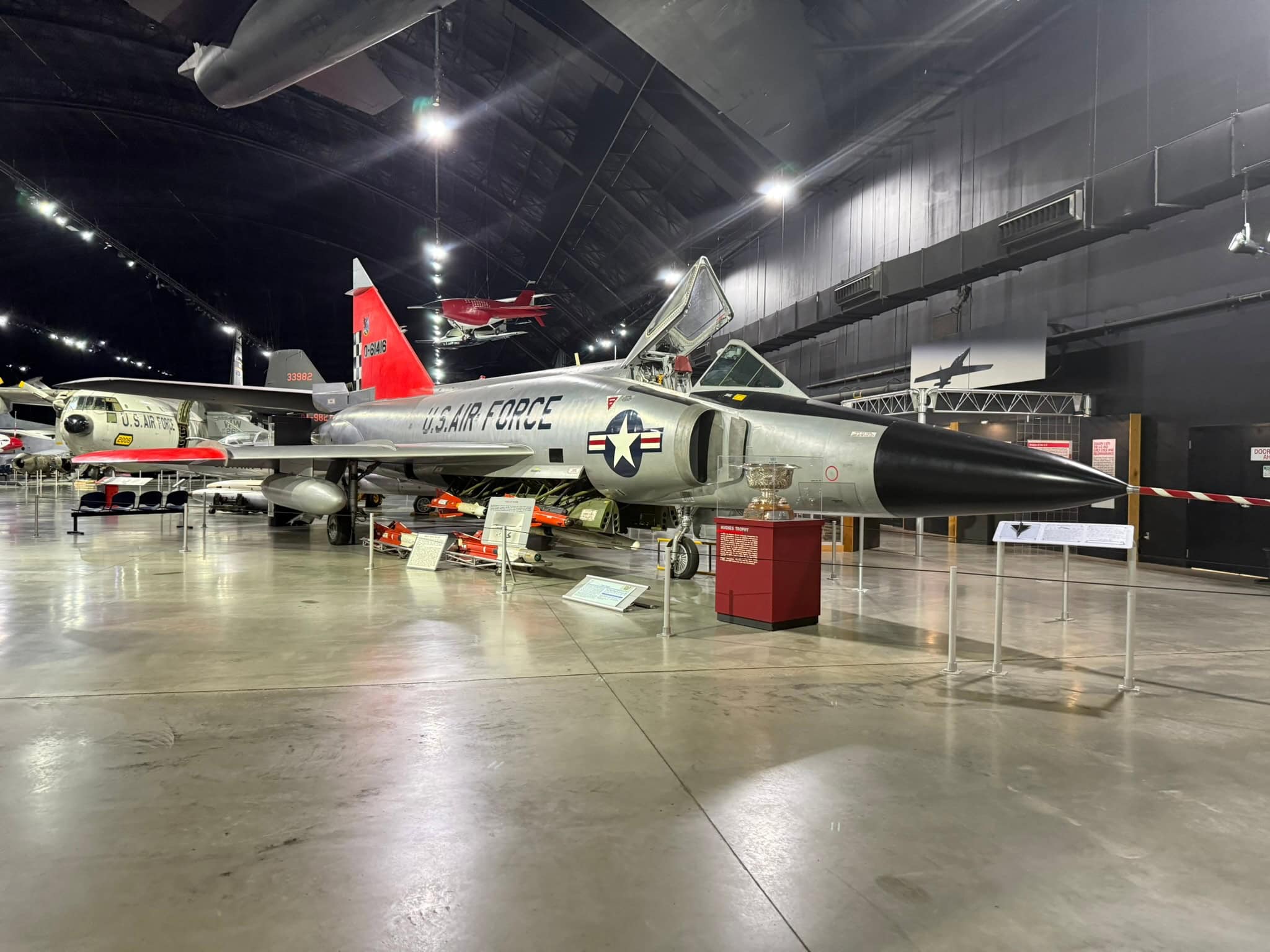
F-102 Delta Dart. Image Credit: Harry J. Kazianis for 19FortyFive.com
That morning, three F-106s of the 71st Fighter-Interceptor Squadron, known as the Ironmen, took off from Malmstrom Air Force Base near Great Falls for an air-combat-maneuvering sortie.
The plan had been a two-versus-two engagement, but the day started slightly off-script: the fourth jet had to abort when its drag chute popped open on the ramp, so the exercise became two instructors against one.
First Lieutenant Gary Foust, flying tail number 58-0787, would play the lone target as instructor pilots Tom Curtis and James Lowe came at him from twenty miles out. When the jets merged at closing speeds well over a thousand miles an hour, the mock fight was on.
The Flat Spin
It went wrong quickly. Maneuvering hard to keep his position, Foust let the F-106 slip into an accelerated stall at around 35,000 feet, exceeding the wing’s angle of attack while bleeding off speed.
The jet fell through a series of post-stall gyrations and settled into a flat spin, rotating nose-high around its own vertical axis while dropping like a plate. For a delta-wing aircraft, this was close to a death sentence. In a flat spin, the airflow over the wing and tail is so disrupted that the controls do almost nothing, and the F-106 had a reputation for not coming back from it.
Foust did everything the emergency procedures asked. He worked the anti-spin controls by the book, and when the aircraft ignored him, he reached for a last resort and deployed the drag chute normally used to slow the jet on landing, hoping it might drag the tail around and break the rotation.
Instead, the chute wrapped uselessly around the vertical tail. The Delta Dart kept spinning, kept falling, and the altimeter kept unwinding. After riding it down for what must have felt like a very long time, with the ground coming up and no recovery in sight, Foust pulled the ejection handle at roughly 15,000 feet. The canopy blew away, the seat rocket fired, and he was thrown clear into the cold Montana sky.
The Jet That Flew Itself
What happened next is the reason anyone remembers 58-0787. The violence of the ejection changed everything about the aircraft in an instant.
The seat rocket firing upward shoved the nose down, and the sudden loss of the pilot’s weight shifted the jet’s balance and center of gravity.
Crucially, Foust had earlier set the aircraft’s trim for takeoff and pulled the throttle back to idle as part of his recovery attempts.
With the nose now pushed below the stall angle and the trim holding that attitude, the wing bit into clean air again and started to fly. The spin broke.
The nose came up to level. And the pilotless F-106 settled into a shallow, stable glide at about 175 knots, descending across the Montana plains as if a careful hand were on the stick.
One of the other pilots, watching the empty jet fly itself out of the spin, radioed Foust, who was under his parachute, incredulous, telling him he had better get back in it. Foust could only hang there and watch, certain the aircraft was about to auger into the wilderness. It did not.
The Delta Dart flew on, wings level, and eased down toward the snow-covered wheat fields near the town of Big Sandy. There, it made a wheels-up belly landing, the snow cushioning and spreading the impact, and slid to a stop largely intact, having flown a controlled descent that no one was aboard to command.
The Sheriff on the Wing
That is the scene the local sheriff drove into. The F-106 was sitting in the field with its engine still idling and its radar still sweeping, and the sheriff, understandably, had no idea what to do with it. Reading the name stenciled beneath the canopy rail, which belonged to the unit’s maintenance officer rather than the man who had been flying, he got on the phone to Malmstrom and was talked through how to shut the jet down.
He climbed the boarding steps to reach the cockpit, but the running engine had begun melting the snow beneath the fuselage, and the aircraft started to slide forward across the field. The sheriff got down and sensibly decided to let it idle until it ran out of fuel.
It crept some 400 feet across the snow before the tanks finally went dry and the engine wound down. Foust, meanwhile, had come down under his parachute into the nearby Bear Paw Mountains, uninjured, and was picked up by local residents who reached him on snowmobiles.
Repaired, Reflown, and Preserved
By all reasonable expectations, an aircraft that has departed controlled flight, spun down through 20,000 feet, lost its pilot, and belly-landed in a field should be a total loss. This one was not. When the recovery team examined 58-0787, they found only minor damage.
The Air Force made the decision that still surprises people: it repaired the jet. The Delta Dart was hauled out, sent to McClellan Air Force Base in California for work, and returned to flying status.
It went back to the 71st Squadron and later to the 49th Fighter-Interceptor Squadron, the last Air Force unit to fly the F-106. In a fitting turn, Gary Foust was reunited with the very aircraft he had abandoned and flew 58-0787 again in 1979.
The nickname it earned along the way, the “Cornfield Bomber,” was wrong in both of its parts, as Foust himself has pointed out over the years. The F-106 was an interceptor, not a bomber, and the field was wheat under snow, not corn.
Accuracy was lost to the fact that the name simply sounded good, and it stuck. The airframe flew on for another decade and a half before the F-106 fleet was retired, and there is a quiet irony in its end. Many surviving Delta Darts were converted into QF-106 target drones and flown, genuinely pilotless this time, to be shot down in weapons tests.
The one jet that had already proven it could fly and land without anyone aboard was spared that fate. Instead, 58-0787 was preserved, and in August 1986, it was flown to the National Museum of the United States Air Force at Wright-Patterson Air Force Base in Ohio, where it sits on display today, still wearing its 49th Squadron markings, perhaps the most famous aircraft ever to land without a pilot.
About the Author: Harry J. Kazianis
Harry J. Kazianis (@Grecianformula) was the former Senior Director of National Security Affairs at the Center for the National Interest (CFTNI), a foreign policy think tank founded by Richard Nixon based in Washington, DC. Harry has over a decade of experience in think tanks and national security publishing. His ideas have been published in the NY Times, The Washington Post, The Wall Street Journal, CNN, and many other outlets worldwide. He has held positions at CSIS, the Heritage Foundation, the University of Nottingham, and several other institutions related to national security research and studies. He is the former Executive Editor of the National Interest and the Diplomat. He holds a Master’s degree focusing on international affairs from Harvard University.

