
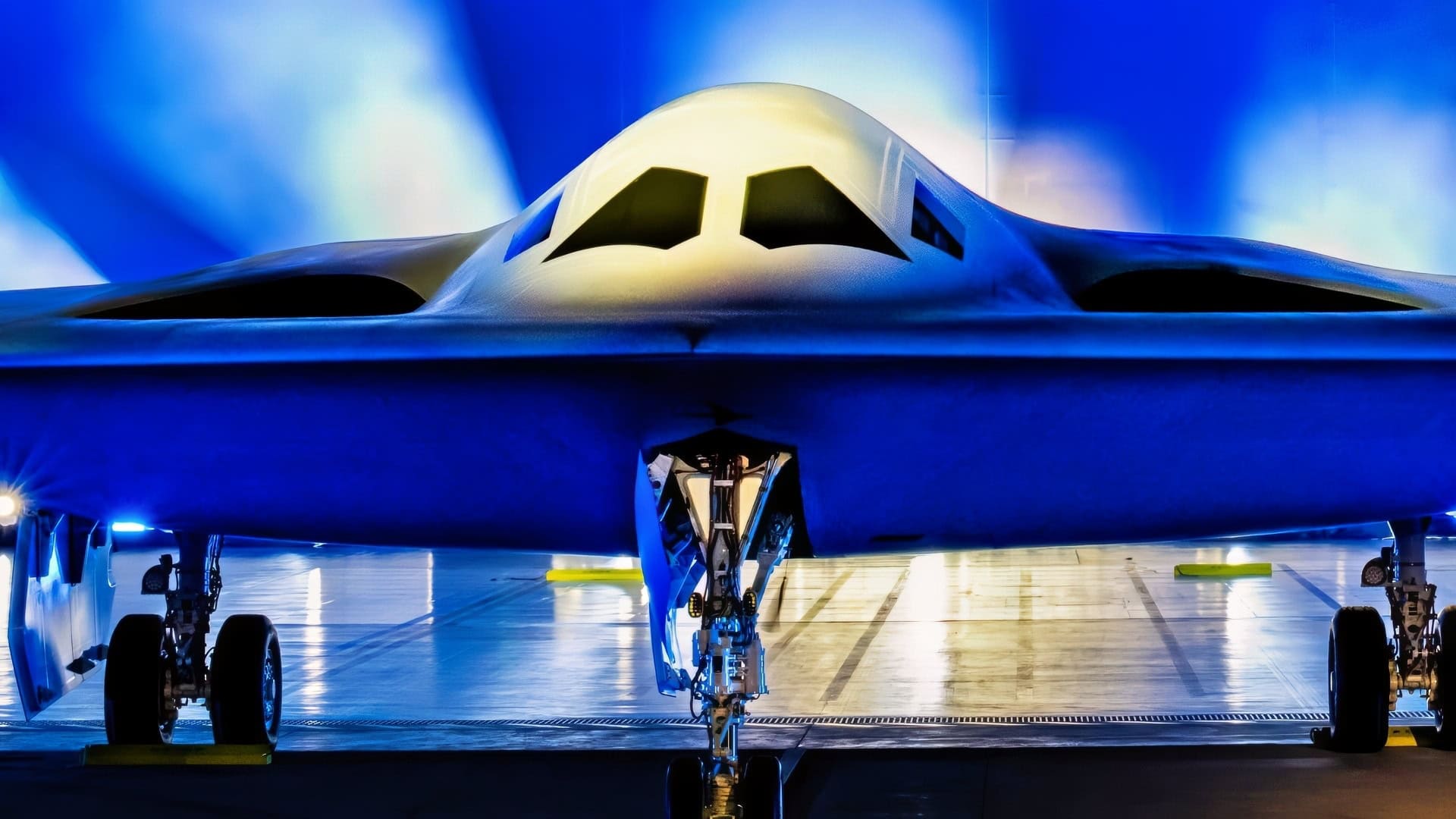
Northrop Grumman spent the 1980s redesigning the most expensive aircraft in history to fly a mission it would never fly — and the evidence is still visible on the back of every B-2 ever built. Four decades later, the company’s new B-21 Raider quietly leaves that scar off the drawing board, and the shape of its trailing edge tells the story of a billion-dollar requirement the Cold War canceled before the bomber ever entered service. What changed between the two aircraft is a lesson in how a single mid-program decision can reshape an airplane, drive up its cost, and answer a threat that has already disappeared.
Northrop Grumman Redesigned the B-2 for a Mission the Cold War Cancelled. The B-21’s Trailing Edge Shows What It Cost
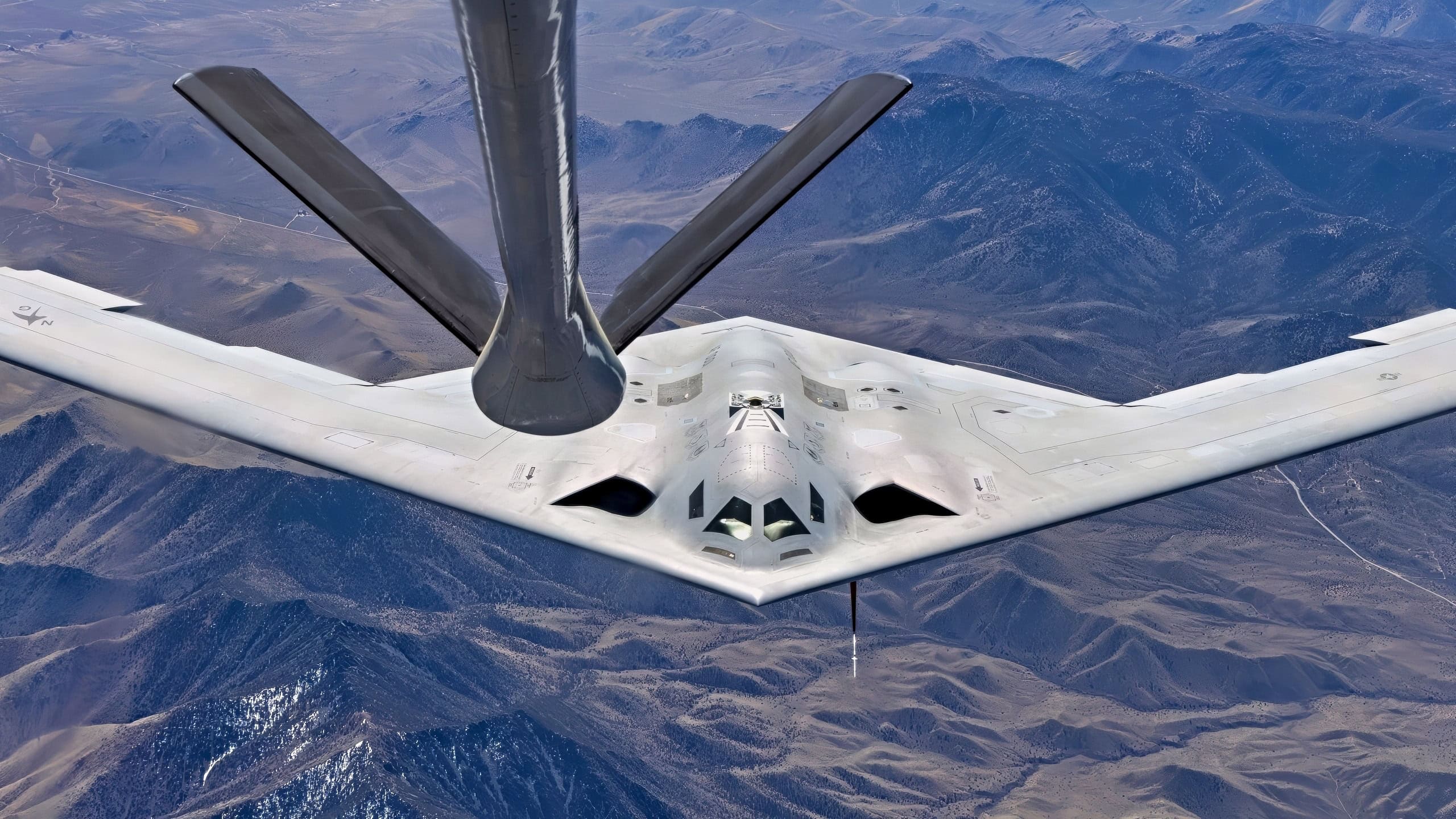
B-21 Raider. Image Credit: U.S. Air Force.
Northrop Grumman won the Advanced Technology Bomber contract in October 1981 with a flying-wing design code-named Senior Ice, and the shape it first drew was cleaner than the B-2 that the world eventually saw.
The original configuration had a simple wedge-shaped trailing edge, without the deep four-notch sawtooth that became the B-2’s signature.
That sawtooth was not the engineers’ first choice. It was the visible consequence of a requirement the Air Force added years into the program, one that reshaped the airplane, drove up its cost, and addressed a threat that had largely disappeared by the time the bomber entered service. The B-21 Raider, now flying at Edwards Air Force Base, shows what Northrop’s designers do when that requirement is removed.
Why the Air Force Made the B-2 Fly Low, and What It Cost
The B-2 began as a high-altitude aircraft.
The logic of stealth is that a low-observable airplane does not need to hide in ground clutter, because radar cannot see it well at any altitude, so it can cruise high, see farther, and range farther on the same amount of fuel.
That was the original Advanced Technology Bomber concept. In the mid-1980s, the Air Force changed the mission profile, adding a low-altitude, terrain-following penetration requirement on top of the high-altitude design, driven by the fear that improving Soviet air defenses might eventually detect even a stealth aircraft at height and force it down into the weeds.
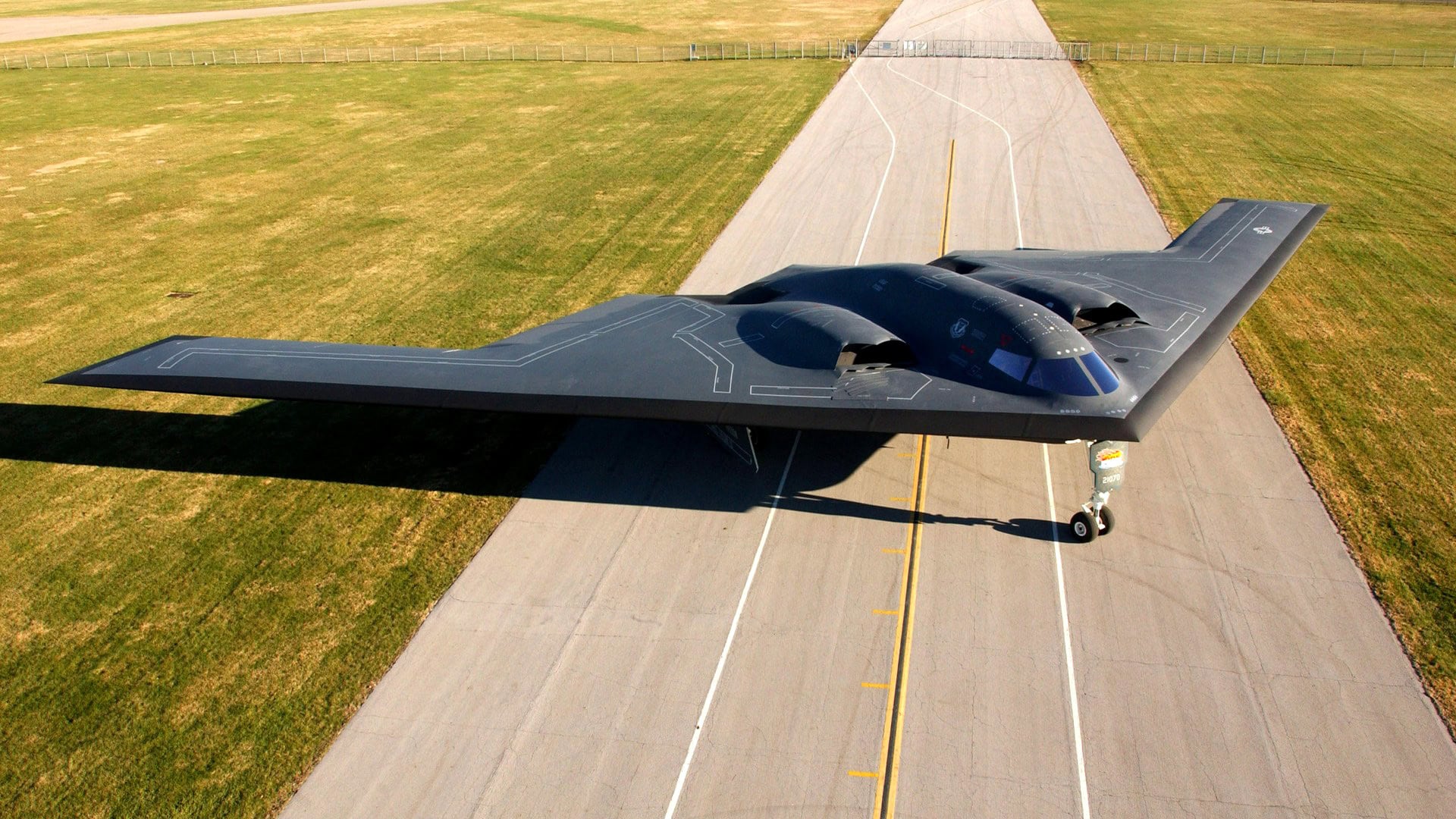
B-2 Bomber. Image Credit: Creative Commons.
Flying a large flying wing at low altitude is a punishing aerodynamic problem.
Down low, the air is turbulent, and an aircraft with no tail needs additional control authority to hold itself steady and to absorb the structural loads of gust after gust. Northrop answered by reshaping the trailing edge into the sawtooth arrangement that gave the B-2 four pairs of control surfaces, adding the structure and control power needed to survive low-level flight.
The redesign was not cheap. By multiple accounts of the program, the switch to the low-altitude, terrain-following profile delayed the B-2’s first flight by roughly two years and added on the order of $1 billion to development costs.
The airplane got heavier, more complex, and more expensive, all to do a job the Cold War was about to cancel.
The Mission That Vanished Before the B-2 Ever Flew It
Timing turned the requirement into waste. The B-2 made its first flight in 1989, and the Soviet Union, which it was designed to penetrate at low altitude, collapsed within two years.
The threat that justified the redesign evaporated before the fleet reached service, and the operational history that followed never called for the capability. Aviation Week’s reporting on the program, cited in subsequent analysis of the two bombers, indicates the B-2’s low-altitude capability was never used in operational service.
Every B-2 combat mission the Air Force has flown, from Kosovo in 1999 through Afghanistan, Iraq, Libya, and the strikes against Iranian nuclear sites in 2025, was flown at high altitude, where the aircraft’s stealth and its long range make it most effective.
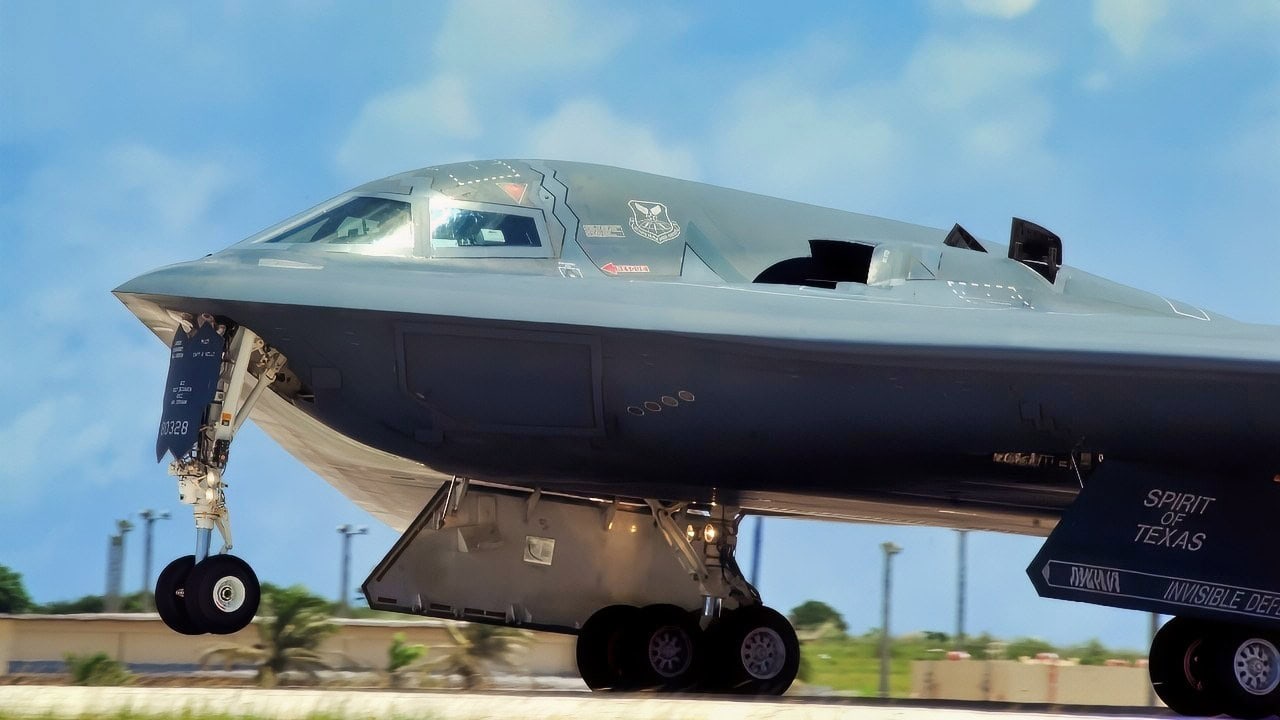
A U.S. Air Force B -2 Spirit aircraft deployed from Whiteman Air Force Base, Mo., launches from the runway at Andersen Air Force Base, Guam, Aug. 12, 2016. With its subsonic speeds and its nearly 7,000 mile unrefueled range, the B-2 Spirit is capable of bringing massive firepower, in a short time, anywhere on the globe through the most challenging defenses. (U.S. Air force photo by Senior Airman Jovan Banks)
The B-2 still carries the machinery of that abandoned mission. The aircraft retains terrain-following radar within its AN/APQ-181 system, and later modernization blocks improved it, so the capability was not stripped out.
What went unused was the mission the requirement was imposed for, while the airframe kept the weight and structural cost the requirement had forced onto it.
The Air Force bought a low-altitude bomber, paid the cost and schedule penalty, and then operated the aircraft for its entire career as the high-altitude penetrator it was originally intended to be.
What the Back of the B-21 Raider Tells You
This is where the B-21 Raider becomes readable.
When Northrop Grumman unveiled the Raider at Palmdale in December 2022 and as flight testing has progressed at Edwards, the clearest external difference from the B-2 sits at the trailing edge.
The B-21 does not carry the B-2’s deep sawtooth. Its rear aspect is cleaner and simpler, closer to a wedge, and defense analysts who have studied the images read that shape as the signature of an aircraft optimized for high-altitude penetration without the low-level requirement that complicated its predecessor.
Free of the mission that reshaped the B-2, Northrop appears to have returned to something much like the clean configuration it had drawn for the original Advanced Technology Bomber more than three decades earlier.
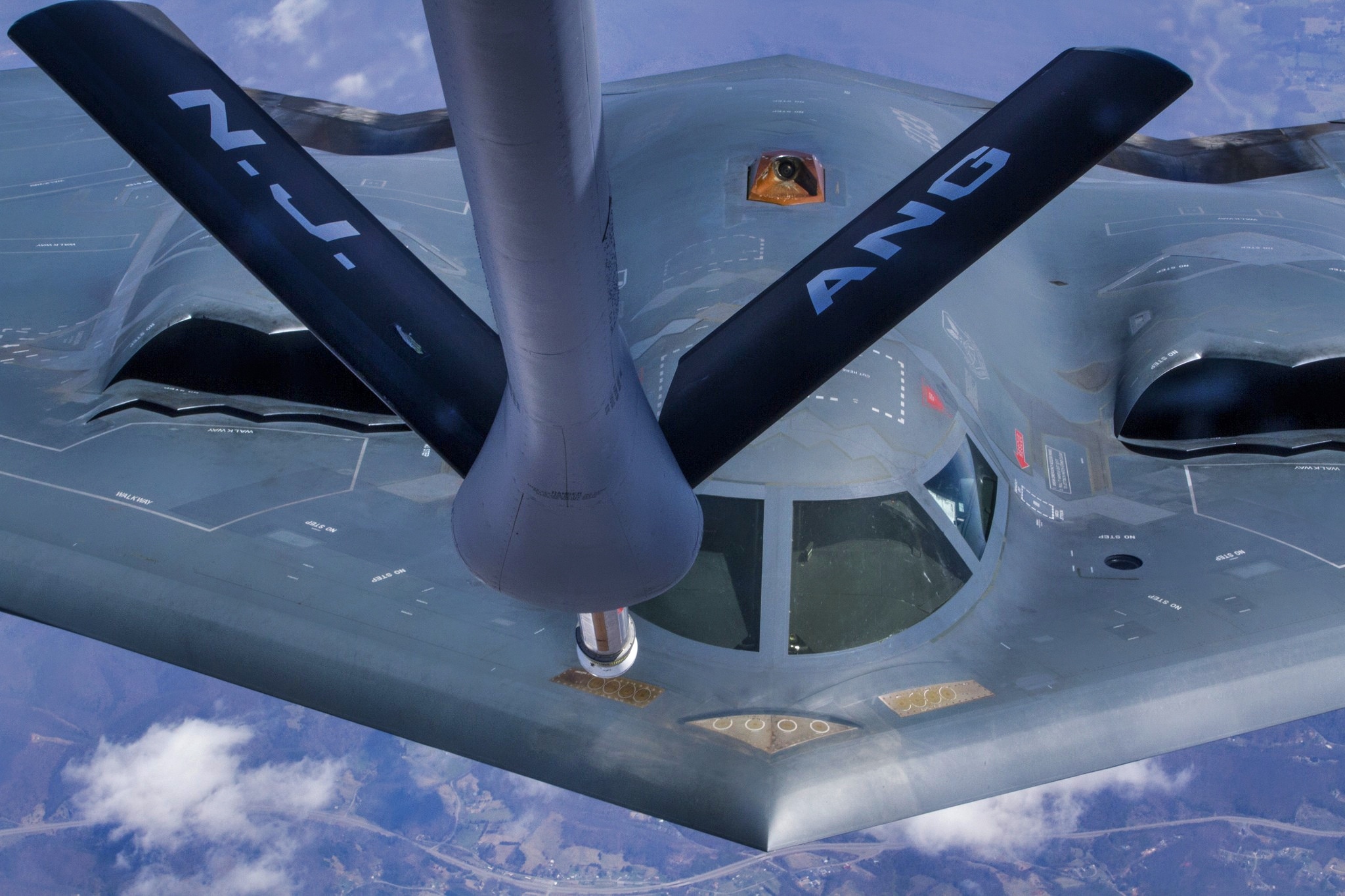
B-2 Spirit Stealth Bomber. Image Credit: Creative Commons.
The trailing edge is not a cosmetic choice. A cleaner aft shape has real consequences for stealth and efficiency, particularly in how the aircraft manages its engine exhaust.
The B-2’s requirements produced an aft-deck design that carried thermal and signature costs, and analysts examining the B-21 have noted that its exhaust arrangement appears designed to keep hot gases away from the most detectable angles, reducing the aircraft’s infrared signature.
Pairing that cleaner exhaust treatment with a more fuel-efficient, higher-bypass engine than the B-2’s fighter-derived F118 would let the Raider hold or extend its range on a smaller airframe, which is part of why the B-21 can be smaller than the B-2 without sacrificing reach. The shape at the back of the airplane is doing stealth, efficiency, and cost work at once.
Northrop Grumman’s Lesson in What Not to Repeat
The B-2 program is, among other things, a case study in how a mid-development requirement change ripples through cost and schedule, and the Air Force built the B-21’s acquisition strategy to avoid repeating it.
The Raider is managed through the Air Force Rapid Capabilities Office rather than the traditional procurement bureaucracy, and Northrop designed it from the start around a modular open-systems architecture, so that new capabilities can be added through software and swappable components instead of by cutting into the airframe.
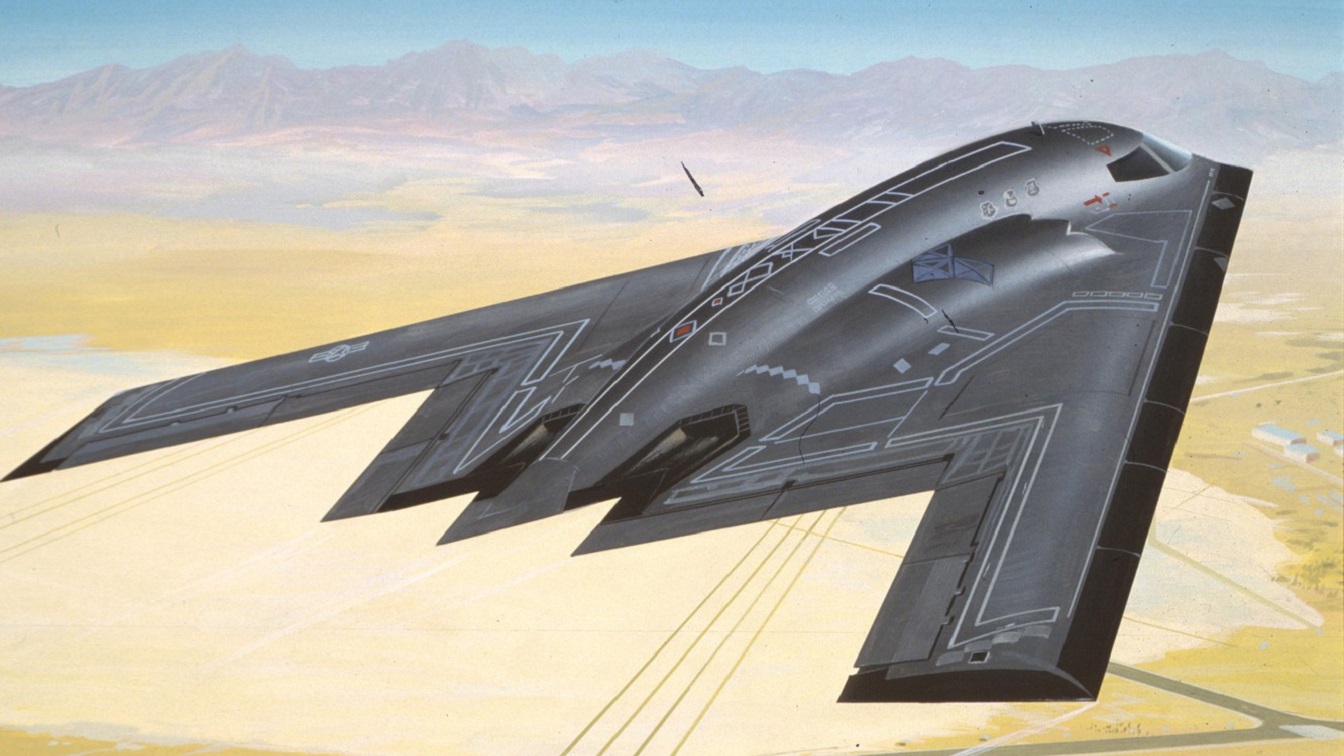
B-2 Bomber. Image Credit: Artist Rendition.
That approach is a direct response to the lesson the B-2 taught: a hard requirement bolted onto a maturing airframe is the expensive way to change an airplane. The B-21 program has kept its requirements more stable and has remained comparatively on schedule and on budget as it moves through flight testing toward its first operating base at Ellsworth Air Force Base in South Dakota.
None of this diminishes the B-2, which remains one of the most consequential combat aircraft ever built and, until the Raider arrives in numbers, the only stealth bomber capable of reaching the most heavily defended targets on the planet.
The contrast with the B-1, a bomber actually built and used for low-altitude penetration, only sharpens the point.
The most visible difference between the two Northrop Grumman flying wings is not that the B-21 is smaller.

The B-21 Raider was unveiled to the public at a ceremony December 2, 2022 in
Palmdale, Calif. Designed to operate in tomorrow’s high-end threat environment, the B-21 will play a critical role in ensuring America’s enduring airpower capability. (U.S. Air Force photo)
It is that the B-21 does not carry the mark of a mission the B-2 was forced to accommodate and never performed, and the sawtooth the Air Force added in the 1980s is the one piece of the B-2 that the Raider was designed to leave on the drawing-room floor.
About the Author: Harry J. Kazianis
Harry J. Kazianis (@Grecianformula) was the former Senior Director of National Security Affairs at the Center for the National Interest (CFTNI), a foreign policy think tank founded by Richard Nixon based in Washington, DC. Harry has over a decade of experience in think tanks and national security publishing. His ideas have been published in the NY Times, The Washington Post, The Wall Street Journal, CNN, and many other outlets worldwide. He has held positions at CSIS, the Heritage Foundation, the University of Nottingham, and several other institutions related to national security research and studies. He is the former Executive Editor of the National Interest and the Diplomat. He holds a Master’s degree focusing on international affairs from Harvard University.

