

Summary and Key Points: The United States removed the B-1B Lancer from its nuclear mission in two stages separated by more than a decade. President George H.W. Bush ordered a refit in the early 1990s that stripped the bomber’s nuclear arming hardware, and the aircraft came off nuclear alert by 1995. Under arms control accounting, however, the jet remained a nuclear-capable bomber on paper until a verified conversion, begun in 2007 and completed in 2011 under the New START treaty, welded sleeves into its pylon attachments and removed nuclear wiring so the capability became physically impossible. Russian inspectors now visit bases such as Ellsworth and Dyess each year to confirm the fleet remains conventional.
The B-1B Lancer: The Forgotten ‘Nuclear’ Bomber
The B-1B Lancer began life as a nuclear weapon. President Ronald Reagan revived the canceled B-1 program in the 1980s explicitly to give the Air Force a fast, low-flying bomber that could slip under Soviet radar and deliver nuclear gravity bombs and short-range attack missiles deep into Soviet territory.
When the first B-1B entered service in 1986, it was a pillar of the American nuclear triad.
The story of how it stopped being one is usually compressed into a single sentence about the 1990s, and that compression hides a two-stage process that took roughly fifteen years to complete.
The 1990s: The Hardware Comes Out
The first stage happened where the popular account says it did. As the Soviet Union collapsed and the first Strategic Arms Reduction Treaty reshaped the American bomber force, the B-1B’s nuclear mission lost its purpose. The United States already had the B-52 and the stealthy B-2 to carry nuclear weapons, and precision conventional bombing was becoming the dominant form of American air power. President George H.W. Bush ordered a refit, reported at around $3 billion, that removed the aircraft’s nuclear arming and fuzing hardware.
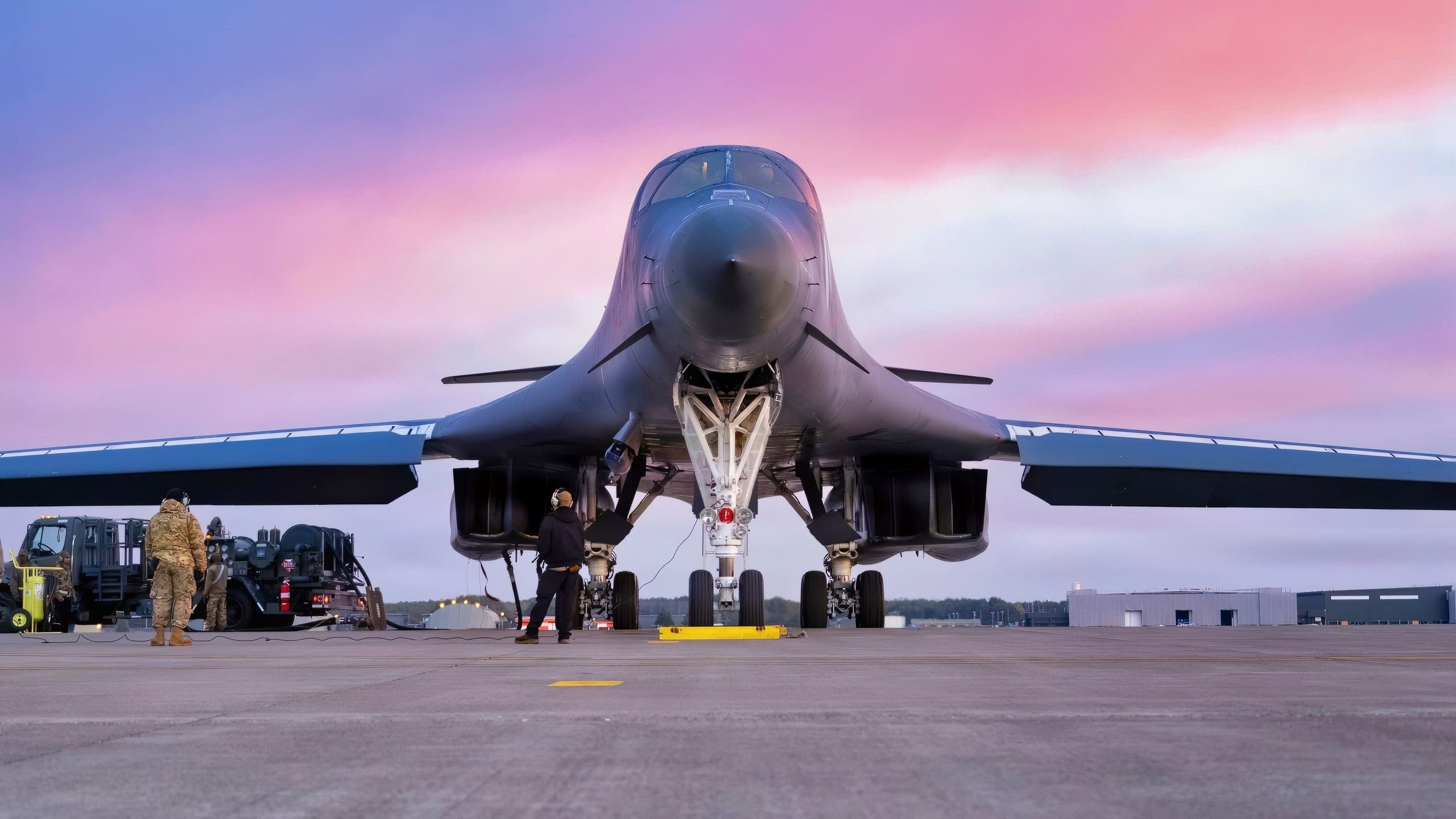
A U.S. Air Force B-1B Lancer gets hot pit refueled before its return to Dyess Air Force Base, Texas, at Misawa Air Base, Japan, Nov. 17, 2025, concluding a bomber task force deployment. BTF operations employ U.S. strategic bombers globally, deter adversaries, assure allies and partners, strengthen interoperability and maintain readiness and global strike capability. (U.S. Air Force photo by Senior Airman Emma Anderson)
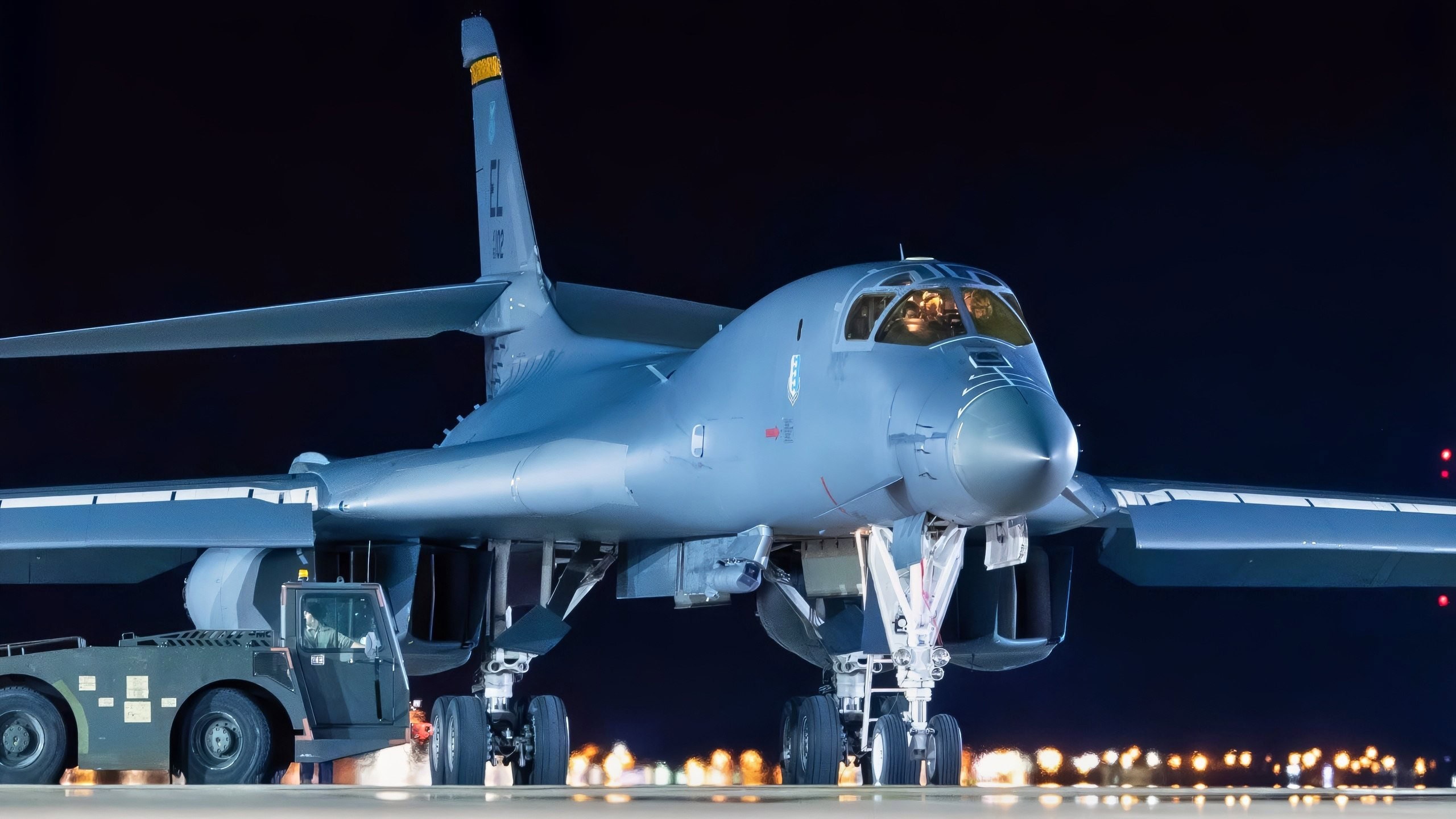
Aircrew piloting a B-1B Lancer prepare to park at Ellsworth Air Force Base, S.D., April 30, 2020. A pair of B-1s flew from the continental United States and conducted operations over the South China Sea as part of a joint U.S. Indo-Pacific Command and U.S. Strategic Command Bomber Task Force mission. (U.S. Air Force photo by Tech. Sgt. Jette Carr)
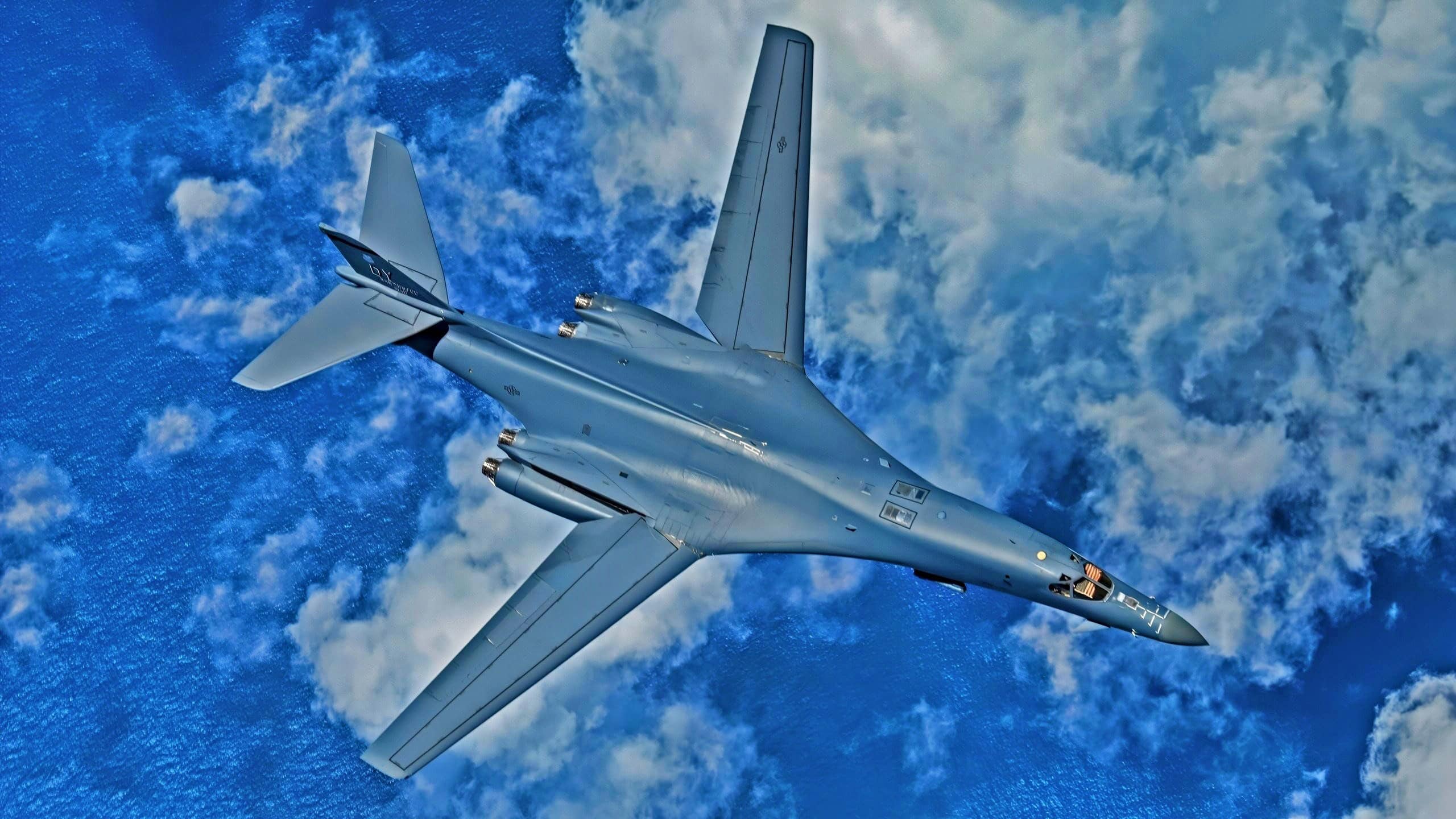
A 9th Expeditionary Bomb Squadron B-1B Lancer flies over the East China Sea May 6, 2020, during a training mission. The 9th EBS is deployed to Andersen Air Force Base, Guam, as part of a Bomber Task Force supporting Pacific Air Forces’ strategic deterrence missions and commitment to the security and stability of the Indo-Pacific region. (U.S. Air Force photo by Senior Airman River Bruce)
By 1995, the B-1B had been taken off nuclear alert and reoriented toward a conventional role under the Conventional Mission Upgrade Program, which gave the bomber the precision-weapons interfaces, targeting sensors, and smart-munitions capability that turned it into the conventional heavy hitter it is today.
That is the moment most retellings treat as the end of the B-1B’s nuclear life. In operational terms, it nearly was.
The aircraft was no longer assigned nuclear weapons, no longer trained for the mission, and no longer stood at alert. Yet in the terms that mattered to arms-control lawyers, the job was not finished, and it would not be finished for years.
Why the Paperwork Outlived the Hardware
The complication is that arms-control treaties do not count intentions. They count capability. Under START accounting, an aircraft was treated as a nuclear delivery vehicle as long as it retained the physical ability to deliver nuclear weapons, regardless of whether it was actually assigned to do so.
A B-1B that had been reoriented to conventional missions but still had, for instance, hardpoints capable of mounting nuclear pylons could still be counted against treaty limits on nuclear-capable bombers. Removing the aircraft from alert did not remove it from the ledger.
That gap is why the B-1B remained, on paper, a nuclear-capable bomber well into the 2000s.
The formal, verified conversion to a purely conventional aircraft did not begin in earnest until 2007, and it was carried out in specific physical steps designed to make nuclear capability provably impossible rather than merely discontinued.
According to accounts of the modifications drawn from Air Force records, the work proceeded in two steps: crews welded a metal cylindrical sleeve into the aft attachment point of each set of pylon attachments, which prevented nuclear-capable cruise-missile pylons from ever being installed again, and then removed the nuclear-specific cable connectors from each of the aircraft’s weapons bays.
The exterior hardpoints were modified so that nuclear pylons could no longer be attached. This was the difference between an aircraft that was not carrying nuclear weapons and an aircraft that physically could not.
2011: Russia Comes to Look
The final act played out under New START, the arms-reduction treaty signed in 2010 that entered into force in February 2011.
The treaty required each side to verify the other’s compliance, and that verification closed the B-1B’s nuclear chapter for good.
The conversion process was completed in 2011, and the United States conducted a one-time exhibition of a B-1B equipped with non-nuclear armaments to demonstrate to Russia that the aircraft could no longer employ nuclear weapons. From that point forward, Russian officials were permitted to inspect the bombers at their American bases, with teams traveling annually to sites such as Ellsworth and Dyess to confirm the fleet remained disarmed.
The point of those inspections is exactly the distinction this history turns on. As Air Force personnel have put it, the common description of the B-1B as nuclear-capable is simply wrong, because the exterior attachment points were modified specifically to prevent nuclear pylons from ever being fitted to the jet again.
The bomber cannot be quietly returned to nuclear service, and the annual Russian visits exist to keep it that way.
What the 1990s refit began as an American operational choice, the 2011 conversion finished as a verified, treaty-bound, and physically permanent fact witnessed by the other side.
So the tidy version of the story, that the B-1B was denuclearized in the mid-1990s, gets the beginning right and the ending wrong.
The bomber that Reagan built to carry nuclear weapons into the Soviet Union spent the better part of two decades shedding that identity, first in practice and only much later on paper. The real end did not come with a budget line in the 1990s.
It came when the welding was done, the wiring was pulled, and Russian inspectors stood on an American flight line and confirmed that the fastest bomber in the fleet had, at last, been rendered incapable of the one mission it was born to fly.
About the Author: Harry J. Kazianis
Harry J. Kazianis (@Grecianformula) was the former Senior Director of National Security Affairs at the Center for the National Interest (CFTNI), a foreign policy think tank founded by Richard Nixon based in Washington, DC. Harry has over a decade of experience in think tanks and national security publishing. His ideas have been published in the NY Times, The Washington Post, The Wall Street Journal, CNN, and many other outlets worldwide. He has held positions at CSIS, the Heritage Foundation, the University of Nottingham, and several other institutions related to national security research and studies. He is the former Executive Editor of the National Interest and the Diplomat. He holds a Master’s degree focusing on international affairs from Harvard University.

