
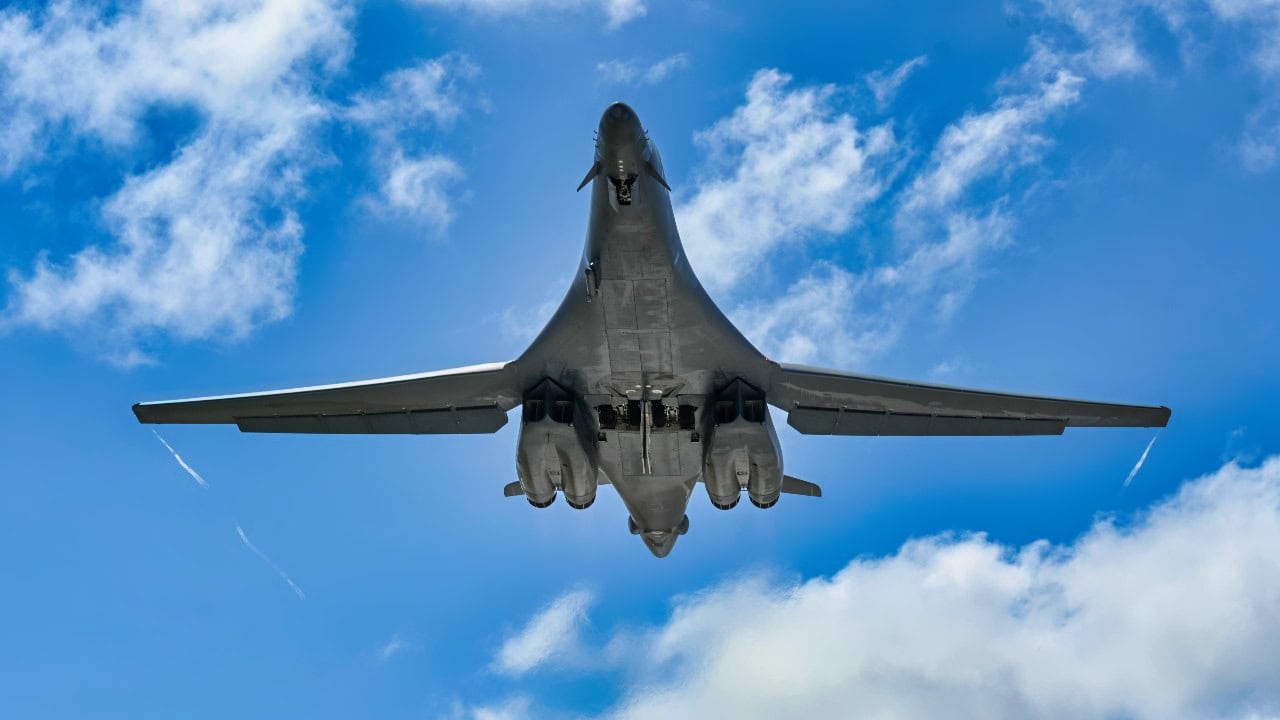
Summary and Key Points: The United States Air Force is rebuilding its Boeing B-52 fleet to fly into the 2050s while retiring the B-1B Lancer and B-2 Spirit, the two bombers designed to replace it. A modernization effort, the Pentagon’s inspector general estimates at $48.6 billion, is giving all 76 aircraft new Rolls-Royce F130 engines, an AESA radar, and a digital backbone under the B-52J standard. The same upgrade logic runs across the fighter fleet, from a doubled F-15EX buy to new radars for the F-16, while the service retires the A-10 and B-1B rather than pay their sustainment bills. The discipline of choosing what to modernize and what to retire has become one of the Air Force’s quiet advantages.
The B-52 Will Outlive the Bombers Built to Replace It, and That Reveals the Air Force’s Most Underrated Weapon: The Upgrade
A 1950s bomber, the B-52, is being rebuilt with new engines and radar to fly into the 2050s, even as the newer B-1B and B-2 head for retirement. Across the fleet, the Air Force keeps taking decades-old airframes, the F-15, the F-16, the F-22, and turning them into effectively new aircraft, because doing so is cheaper, faster, and far less risky than building from scratch. It is one of the service’s most underrated strengths. And the real skill is not the upgrades themselves, but the discipline to know which proven jets are worth keeping and which, like the A-10 Warthog, to finally let die.
There is a strange fact buried in the U.S. Air Force’s modernization plans. The Boeing B-52 Stratofortress, a bomber that first flew in 1952, is being upgraded to keep flying into the 2050s, at which point some airframes will be close to a century old. The Rockwell B-1B Lancer and the Northrop B-2 Spirit, both designed decades later specifically to succeed it, are being retired first. The oldest bomber in the fleet is outliving the two aircraft built to replace it. That inversion is not an accident or an embarrassment. It is the clearest illustration of what may be the Air Force’s most underrated advantage: not any single new jet, but its relentless, disciplined practice of upgrading proven airframes rather than replacing them.
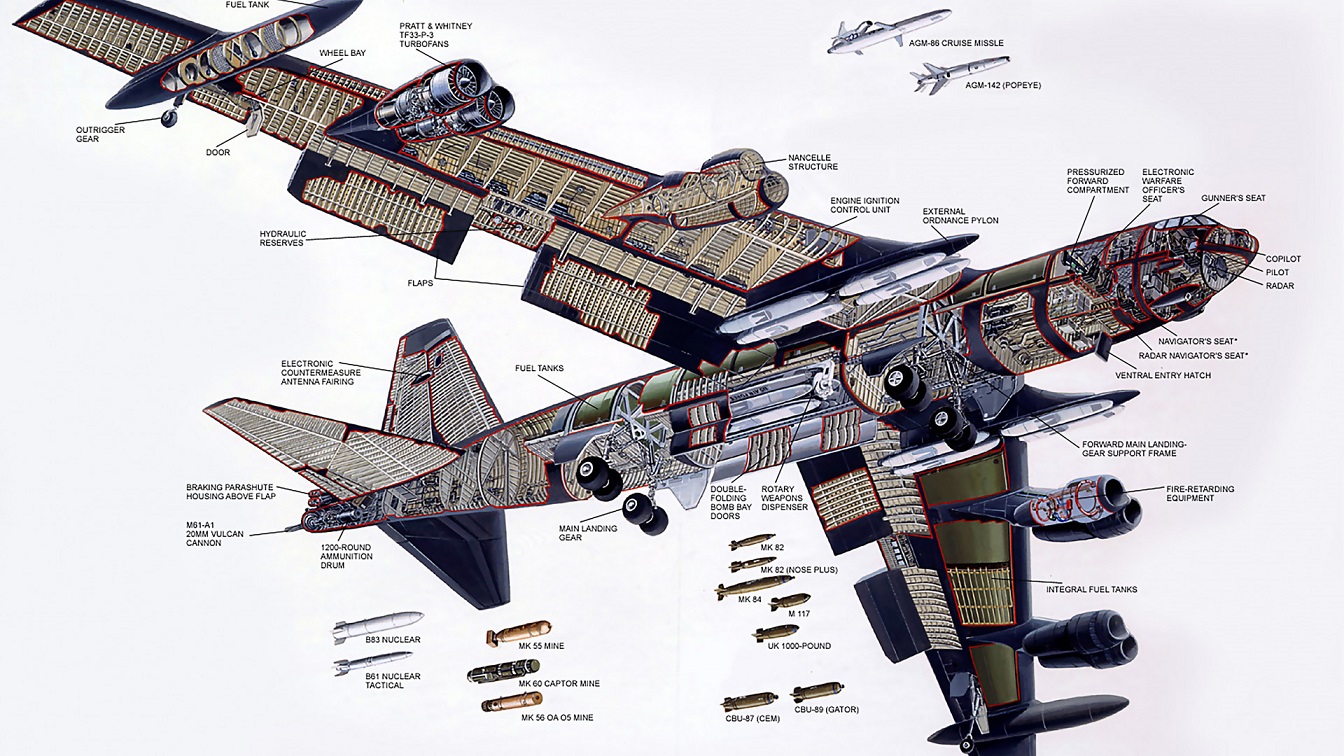
B-52 bomber. Image Credit: Creative Commons.
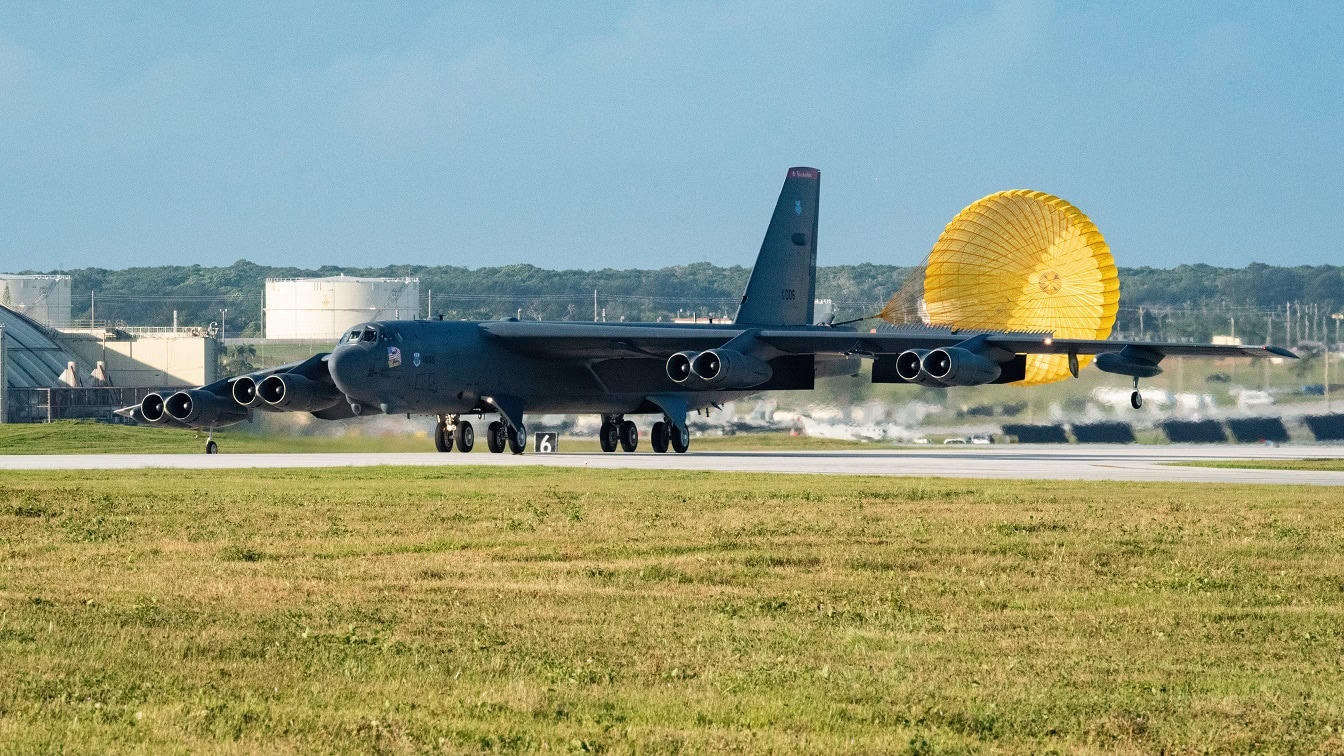
A B-52 Stratofortress from Barksdale Air Force Base, prepares to land on a flightline in support of a Bomber Task Force mission at Andersen Air Force Base, Guam, Feb. 9th, 2022. BTF missions demonstrate lethality and interoperability in support of a free and open Indo-Pacific. (U.S. Air Force photo by Senior Airman Jonathan E. Ramos)
The Fleet That Keeps Getting Reborn
Start with the B-52 itself. Under a modernization effort, the Pentagon’s inspector general has estimated at roughly $48.6 billion across a dozen programs, the bomber is getting new Rolls-Royce F130 engines to replace power plants that date to the early 1960s, a modern AESA radar, and a new digital backbone of avionics and displays, changes expected to extend its service life by decades. All 76 aircraft will be rebuilt to a standard called the B-52J, intended to serve as the long-range “standoff” partner to the stealthy new B-21 Raider in a future two-bomber force.
The same logic runs across the fighter fleet. The F-15EX Eagle II is a brand-new aircraft built on a design that first flew in the 1970s, and in its fiscal 2027 budget request, the Air Force more than doubled its planned buy from 129 to 267 jets, making it the fastest-growing fighter program in the American inventory. The venerable F-16, still in production for export customers, is kept current by swapping its old mechanically scanned radar for a modern AESA, with an even more advanced “Block 80” variant under discussion.
Even the stealthy F-22 is being sustained with new sensors, pylons, and networking. The Air Force has been candid about the strategy: a spokesperson said fighter readiness would be maintained by “modernizing older, but still capable” F-16s, F-15s, and F-22s to the maximum extent the budget allows.
Why Upgrading Beats Building New
The appeal of this approach is not nostalgia. It is arithmetic and risk. A modern airframe like the F-15EX is engineered for 20,000 flight hours, more than double the life of most tactical jets, which lets the Air Force amortize its cost over decades of service. It offers one of the lowest cost-per-flight-hour figures in its class, and because it shares parts, simulators, tankers, infrastructure, and maintenance culture with the Eagles already in service, a squadron can transition in months with almost no startup cost.
As Boeing frames it, buying more of a mature airplane avoids the integration and sustainment costs of fielding a wholly new one. The same reasoning underpins the B-52J: modernizing the existing bomber, as one analysis put it, avoids the cost and risk of developing an entirely new large stand-off aircraft.
That “risk” word is doing a lot of work, and it is the deeper reason the upgrade path looks so attractive right now. Clean-sheet programs have become a graveyard of cost overruns and delays. The Navy’s A-12 stealth attack jet collapsed under a fixed-price contract and never flew. Boeing has bled billions on the fixed-price KC-46 tanker and the Air Force One replacement.
The new E-7 radar plane was just canceled. And the F-35, the crown jewel of American airpower, was fully mission-capable only about one in four times last year, according to the Government Accountability Office. Against that backdrop, taking an airframe that already works and bolting on a new engine, radar, and weapons is not a compromise. It is often the smart money, a hedge against the very real chance that an ambitious new program arrives late, over budget, or not at all.
The Bomber That Outlived Its Replacements
Which brings the story back to the B-52 and the newer bombers it is outlasting. The reason the 1950s Stratofortress survives while the B-1B and B-2 are shown the door has nothing to do with age and everything to do with what each airframe costs to keep flying and how much it can adapt.
The B-1B, though decades younger than the B-52, has been flown to its limits. Designed as a high-speed, penetrating bomber, it spent the last two decades flying long, grinding close-air-support missions over the Middle East for which it was never built, wearing out its complex swing-wing structure. It now requires an estimated 74 to 150 maintenance hours per hour of flight, the worst ratio in the bomber force. The B-2, for its part, is a tiny fleet of exquisitely expensive stealth aircraft whose bleeding-edge technology is ruinous to maintain.
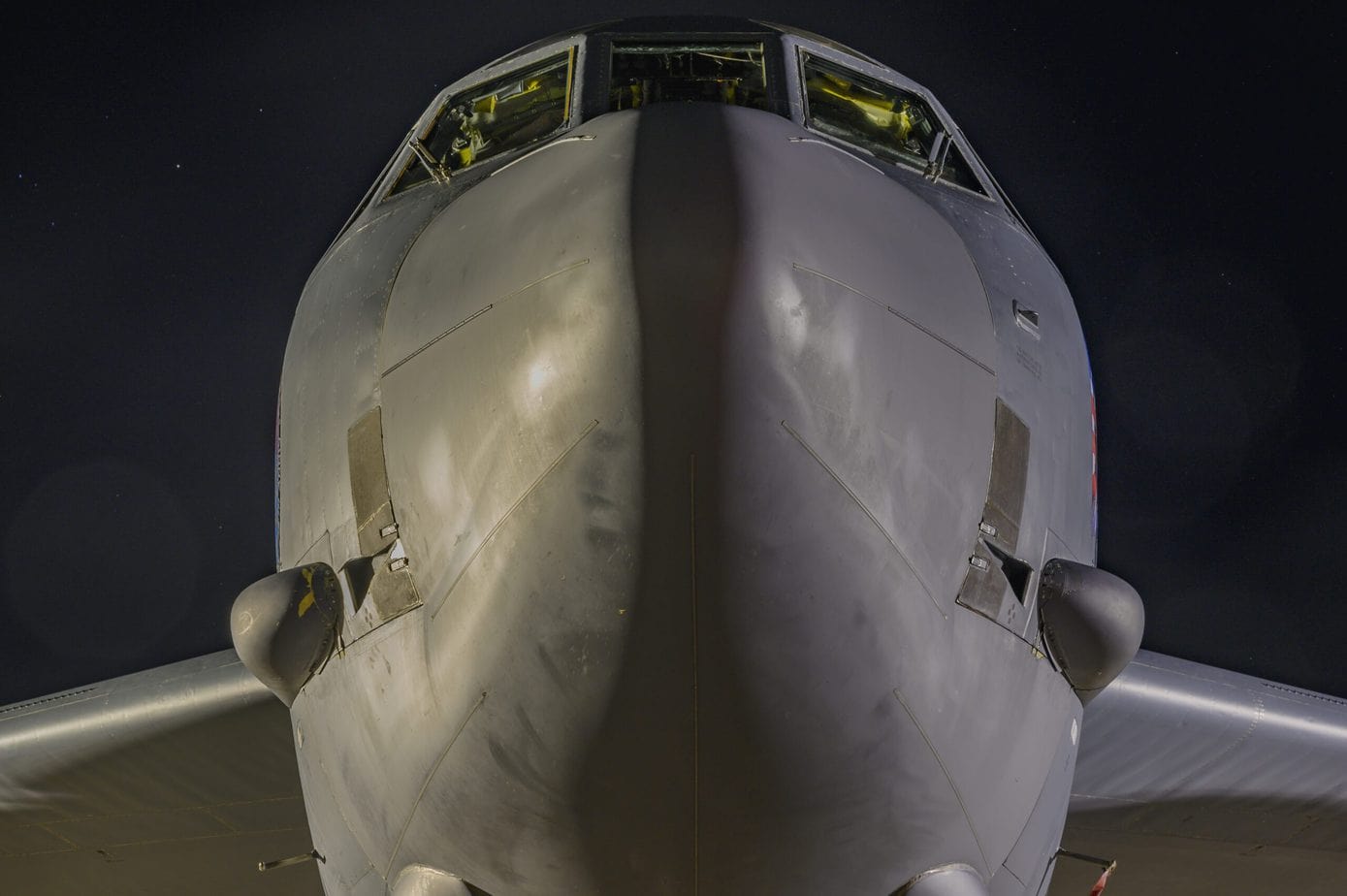
A U.S. Air Force B-52 Stratofortress assigned to Barksdale Air Force Base, La., is prepared for a Mark-82 munitions load, in support of a Bomber Task Force deployment, Feb. 1, 2020, at Andersen Air Force Base, Guam. The bomber deployment underscores the U.S. military’s commitment to regional security and demonstrates a unique ability to rapidly deploy on short notice. (U.S. Air Force photo by Senior Airman Jacob M. Thompson)
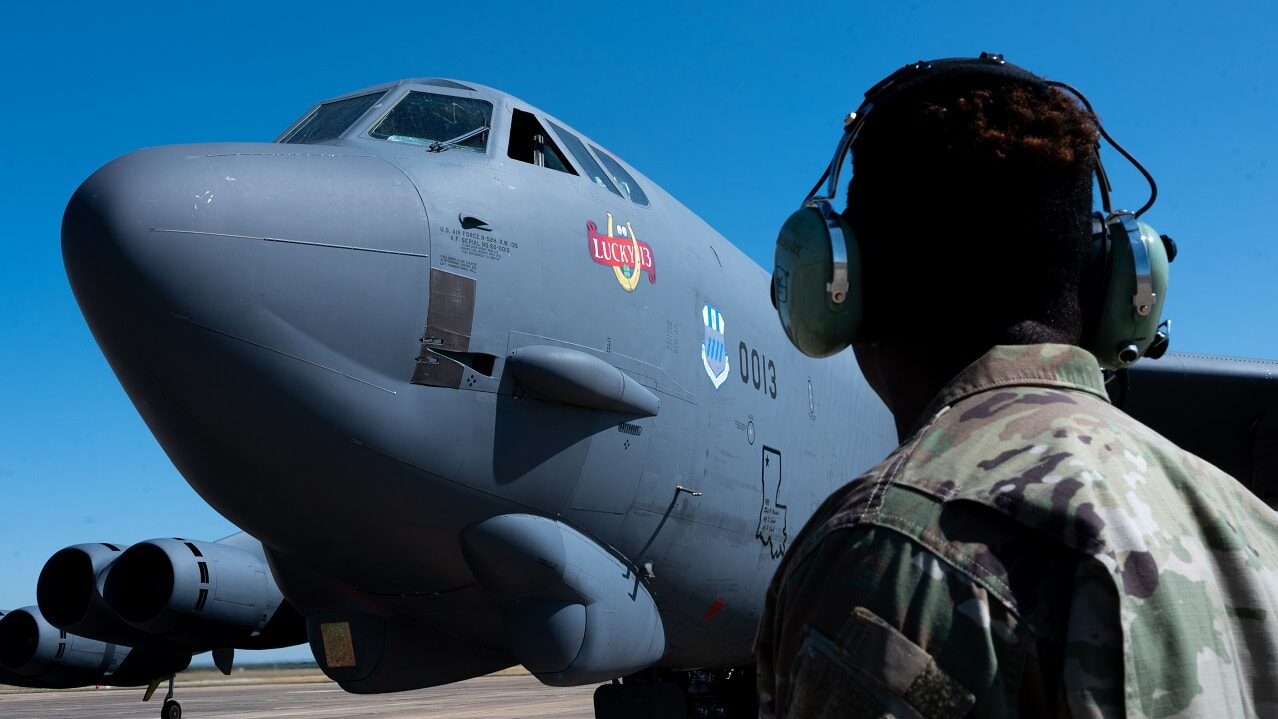
A U.S. Air Force maintainer conducts a visual inspection of a B-52H Stratofortress at Morón Air Base, Spain in support of Bomber Task Force 21-3, May 24, 2021. Strategic bomber missions enhance the readiness and training necessary to respond to any potential crisis or challenge across the globe. (U.S. Air Force photo by Staff Sgt. Jason Allred)
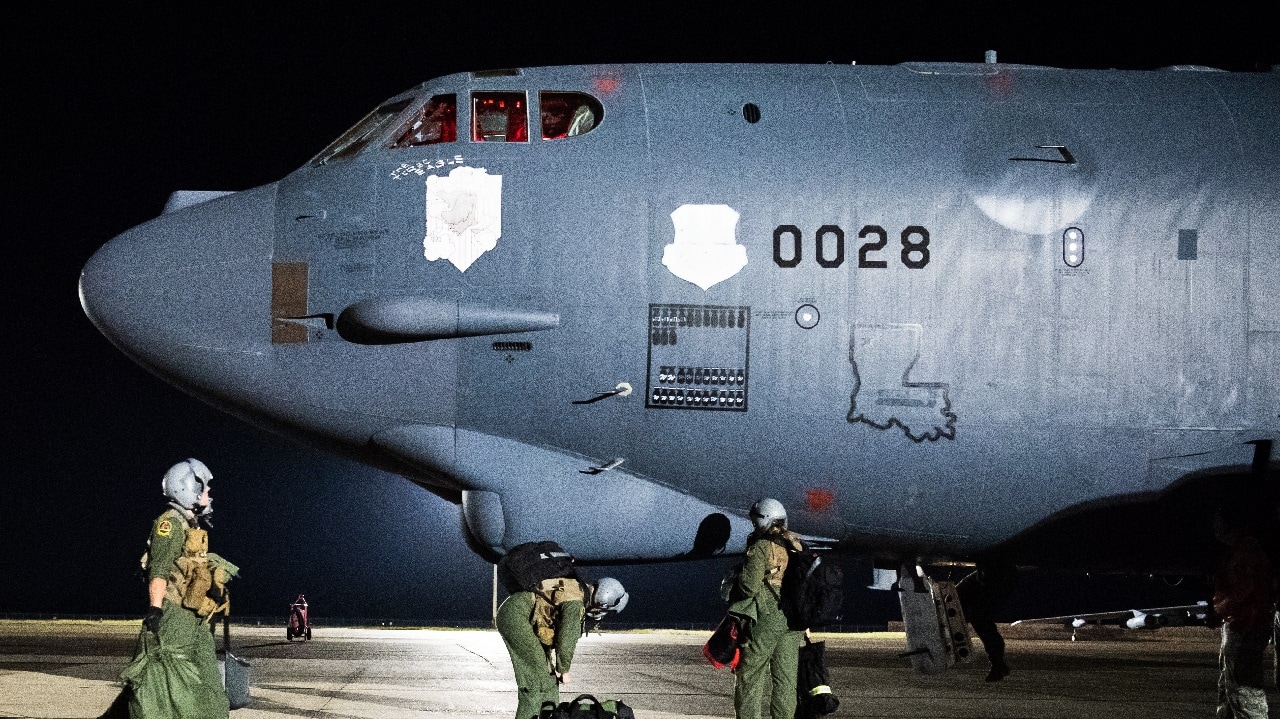
Airmen from the 96th Bomb Sqaudron load gear onto a B-52H Stratofortress at Barksdale Air Force Base, La., Oct. 13, 2020. The crew took part in a NATO crossover exercise designed to increase interoperability with NATO mission partners. (U.S. Air Force photo by Airman 1st Class Jacob B. Wrightsman)
The B-52, by contrast, is a big, simple, roomy design with an enormous payload and plenty of internal space for new systems, which is precisely what makes it so easy and cheap to keep modernizing. Age was never the deciding factor. Sustainability, adaptability, and cost were key, and by those measures the old bomber wins.
Where the Logic Ends: The Warthog and the Lancer
If the upgrade strategy were simply “keep the old jets forever,” it would be a recipe for a museum, not an air force. What makes it a genuine strength is the flip side: the willingness to kill airframes that are no longer worth the money, and here the A-10 Warthog is the clearest case.
Beloved as it is, the A-10 is a single-mission, non-stealthy Cold War aircraft built to kill tanks in an environment where the enemy could not shoot back effectively. Against a modern air defense network, it would not survive, and no amount of upgrades would change that.
So after fighting Congress for more than a decade to divest it, the Air Force is retiring the entire fleet of 162 jets by the end of fiscal 2026, on a timeline it accelerated by four years.
The B-1B is the same judgment applied to a bomber. When an aircraft costs more to maintain than it delivers in capability, and a better replacement is coming, the disciplined move is to let it go rather than pour money into a losing proposition. The Air Force plans to build its future bomber force around the B-21 and the modernized B-52, retiring both the B-1B and the B-2 in the 2030s. Knowing what not to upgrade is half of the strategy, and it is the half that separates a shrewd modernization plan from simple hoarding.
The Limits of the Upgrade
None of this makes upgrading a cure-all, and it would be a mistake to pretend otherwise. There are things you simply cannot bolt onto an old airframe, and stealth is the biggest of them.
You cannot upgrade a B-52 or an F-15 into a low-observable aircraft that penetrates a dense, modern air-defense system; the airplane’s shape is the stealth, and that shape is fixed. That is exactly why the Air Force is still spending heavily on all-new designs, the stealthy B-21 bomber and the F-47 next-generation fighter, for the missions where survivability in contested airspace is non-negotiable.
The upgraded jets are built to work alongside those stealth platforms, not to substitute for them. The F-15EX is explicitly a “missile truck,” a high-capacity shooter that hauls enormous loads of long-range weapons from outside the most dangerous airspace, while stealth aircraft operate forward. Flown that way, it is formidable. Flown as if it were a penetrating stealth fighter, it would be a target. The honest version of the upgrade strategy, then, is that it buys the Air Force time, mass, and cost-efficiency across most of its missions, freeing money and industrial capacity for the handful of clean-sheet programs that truly cannot be avoided. It does not, and cannot, do everything.
The Real Weapon Is the Judgment
Put it all together, and the Air Force’s quiet advantage comes into focus.
It is not that the service loves old airplanes. It is that it has become disciplined about a hard question that sinks a lot of military budgets: when to keep evolving a proven design, and when to walk away from it.
Upgrading the B-52, the F-15, and the F-16 stretches billions of dollars and decades of proven engineering further than any new program could, while retiring the A-10 and the B-1B frees resources for the aircraft that truly need to be built new.
In an era when clean-sheet designs routinely arrive late, over budget, or not at all, the ability to squeeze another generation of life out of the airframes worth keeping, and to ruthlessly retire the ones that are not, is an unglamorous but powerful edge.
By the 2050s, a re-engined bomber designed in the Truman administration will be flying strike missions alongside a stealth bomber designed in the 2020s, and both will make sense.
That combination, old and new, kept and killed, is the whole strategy, and few air forces in the world execute it as well.
About the Author: Harry J. Kazianis
Harry J. Kazianis (@Grecianformula) was Senior Director of National Security Affairs at the Center for the National Interest (CFTNI), a foreign policy think tank founded by Richard Nixon based in Washington, DC. Harry has over a decade of experience in think tanks and national security publishing. His ideas have been published in the NY Times, The Washington Post, The Wall Street Journal, CNN, and many other outlets worldwide. He has held positions at CSIS, the Heritage Foundation, the University of Nottingham, and several other institutions related to national security research and studies. He is the former Executive Editor of the National Interest and the Diplomat. He holds a Master’s degree focusing on international affairs from Harvard University.

