
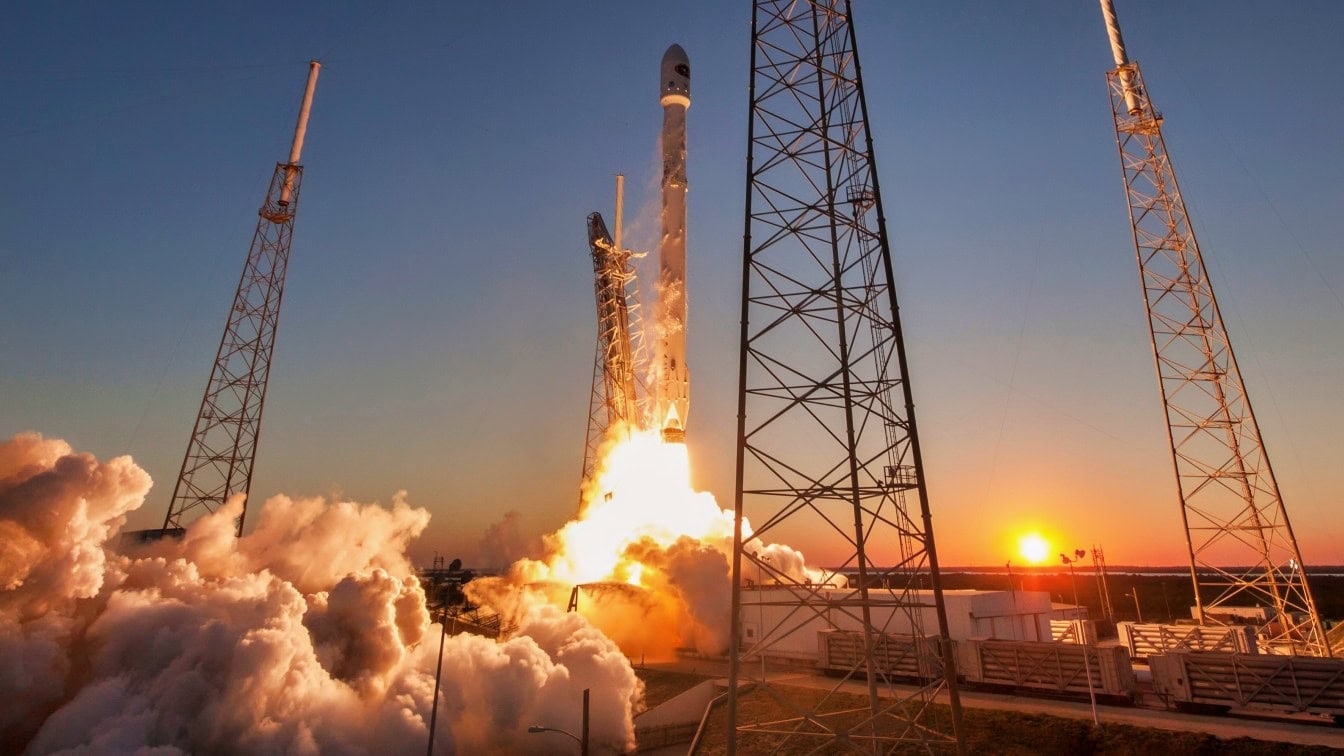
Summary and Key Points: On July 10, 2026, China launched its new Long March 10B rocket, placed a satellite into orbit, and did something no other country has managed on a rocket’s very first flight: it brought the booster back. Roughly six minutes after the first and second stages separated, the descending first stage was caught in a net strung across a ship at sea, snagging on four hooks that gripped the vessel’s steel cables. China’s space agency called it the world’s first net-based recovery of a launch vehicle, and it says the same booster will fly again before the end of 2026. It is the clearest sign yet that China has cracked the technology that made SpaceX the dominant force in spaceflight, and it did it by taking a different path.
Space History Has Been Made
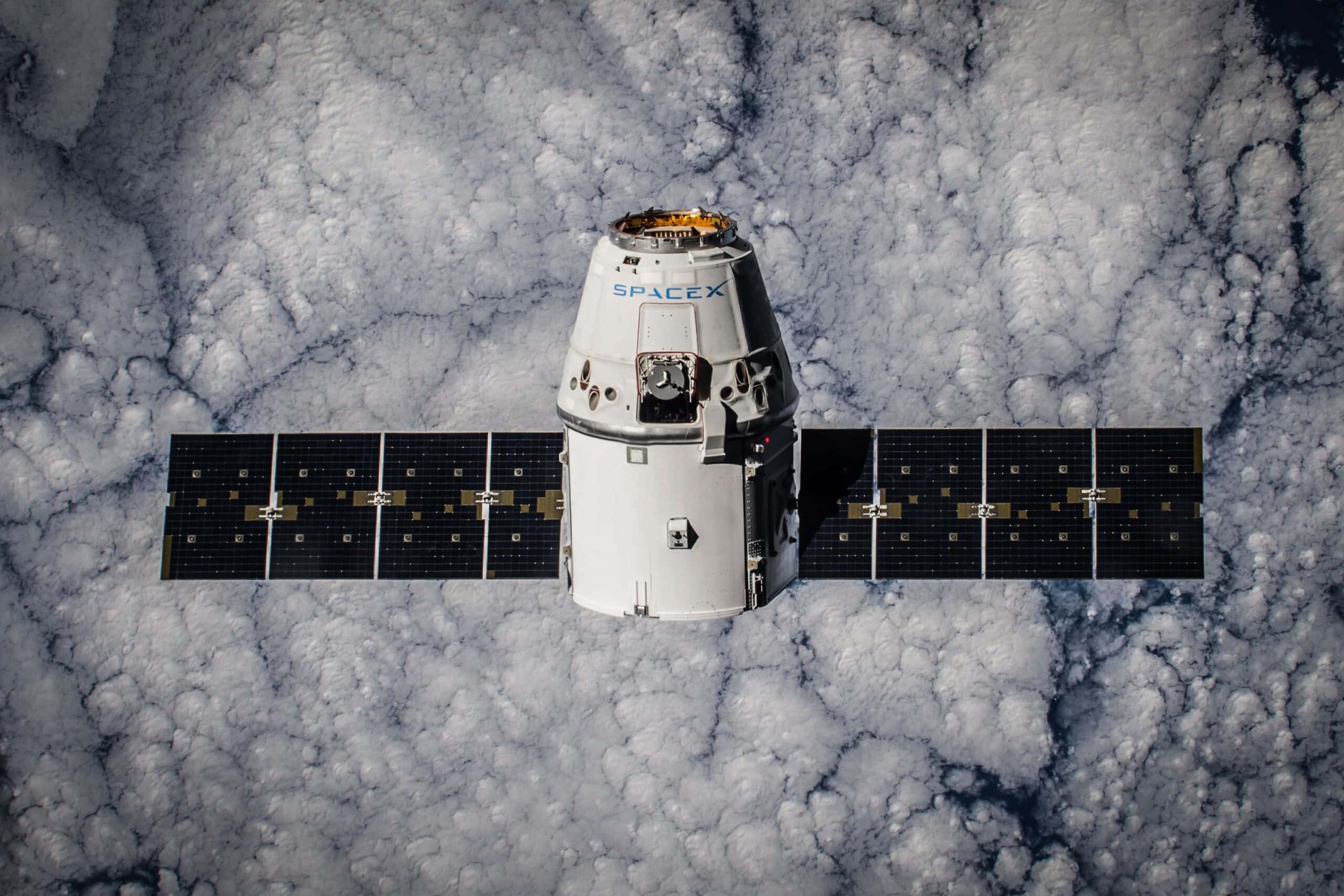
SpaceX Satellite. SpaceX Photo.
For a decade, reusable rockets have been almost synonymous with one company and one method. SpaceX lands its Falcon 9 boosters upright on unfolding legs, settling them onto a ground pad or a floating drone ship, and that image of a rocket descending tail-first on a pillar of flame has defined the modern space age. On Friday, China showed there is more than one way to catch a falling rocket, and the version it chose is genuinely novel. The Long March 10B did not land on its legs. It flew into a net.
What Happened in the South China Sea
The 63-meter rocket lifted off at 12:15 p.m. local time from the Wenchang Commercial Space Launch Site on the island of Hainan, its first stage powered by seven YF-100K kerosene-and-liquid-oxygen engines producing a combined thrust of 890 tons.
The engines burned for about two and a half minutes before the first and second stages separated, with the upper stage continuing to orbit to deliver its satellite payload. Then the interesting part began.
Rather than falling away as discarded hardware, the first stage began a controlled descent back toward a recovery ship named the Linghangzhe, or Navigator, waiting downrange in the sea. According to Chinese state media accounts relayed by SpaceScout, the booster relit three of its engines for a reentry burn to survive the thermal stress of falling back through the atmosphere and to refine its path, using four grid fins to steer during the unpowered portion of the descent. It then relit engines again to shed most of its remaining speed before throttling down to a single engine for the final approach and hover.
In the last moment, four metal hooks at the top of the stage engaged tensioned steel cables strung across a large frame on the ship, and the net-and-cable system absorbed the remaining energy, leaving the booster suspended in midair. Auxiliary cables then secured it against wind and waves, and an automated platform clamped it in place for transport.
The recovery came about six minutes after stage separation, and China’s main space contractor, the China Aerospace Science and Technology Corporation, confirmed the full success of the flight, including the satellite reaching its intended orbit, roughly 90 minutes after liftoff. State media identified the customer as China Satellite Network Group and the payload as an experimental satellite, which observers have linked to the Guowang broadband megaconstellation, though CASC did not disclose the spacecraft’s name, purpose, or orbit.
Second in the World, and a First Nobody Else Has Achieved
The accomplishment placed China in extremely rare company. Bringing an orbital-class booster back under control is something only the United States has done, through SpaceX, which first landed a Falcon 9 in December 2015, and Blue Origin, whose New Glenn booster returned in November 2025. China is now the second nation to join that club, and the first outside the United States.
But the more striking record is narrower and harder to dispute. Counting every launch system that has ever recovered a first stage during an orbital launch attempt, the Long March 10B is the sixth in history, after the Space Shuttle in 1981, the Falcon 9 in 2015, Rocket Lab’s Electron in 2020, SpaceX’s Starship in 2024, and New Glenn in 2025. And it is the only one of those six to succeed on its debut flight. As Scientific American noted, no one else has ever achieved such a clean first-stage recovery on a vehicle’s inaugural launch, underscoring how much confidence Chinese engineers had in the design before they flew it.
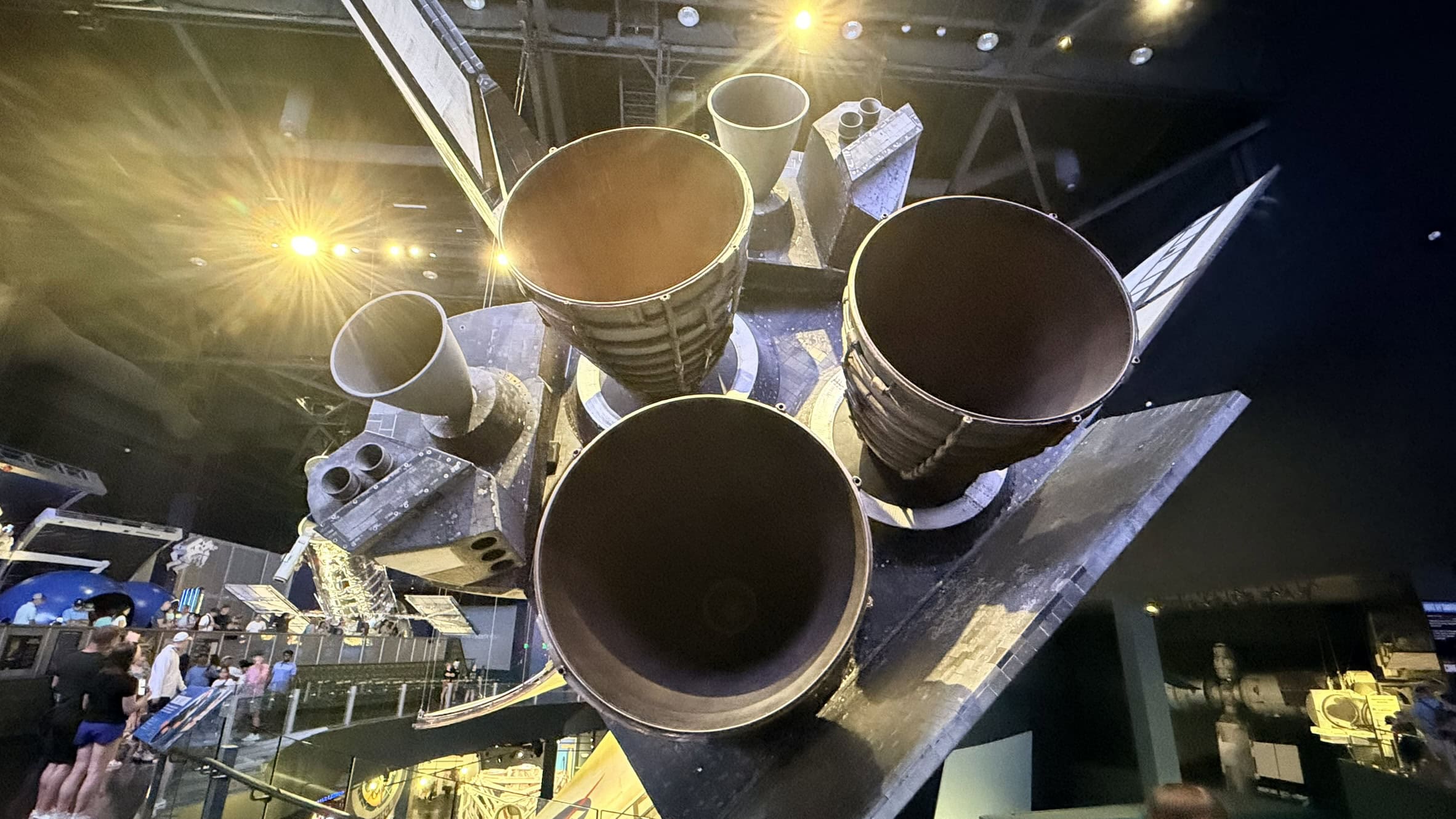
NASA Atlantis Space Shuttle Exhibit at the Kennedy Space Center. 19FortyFive Photo.
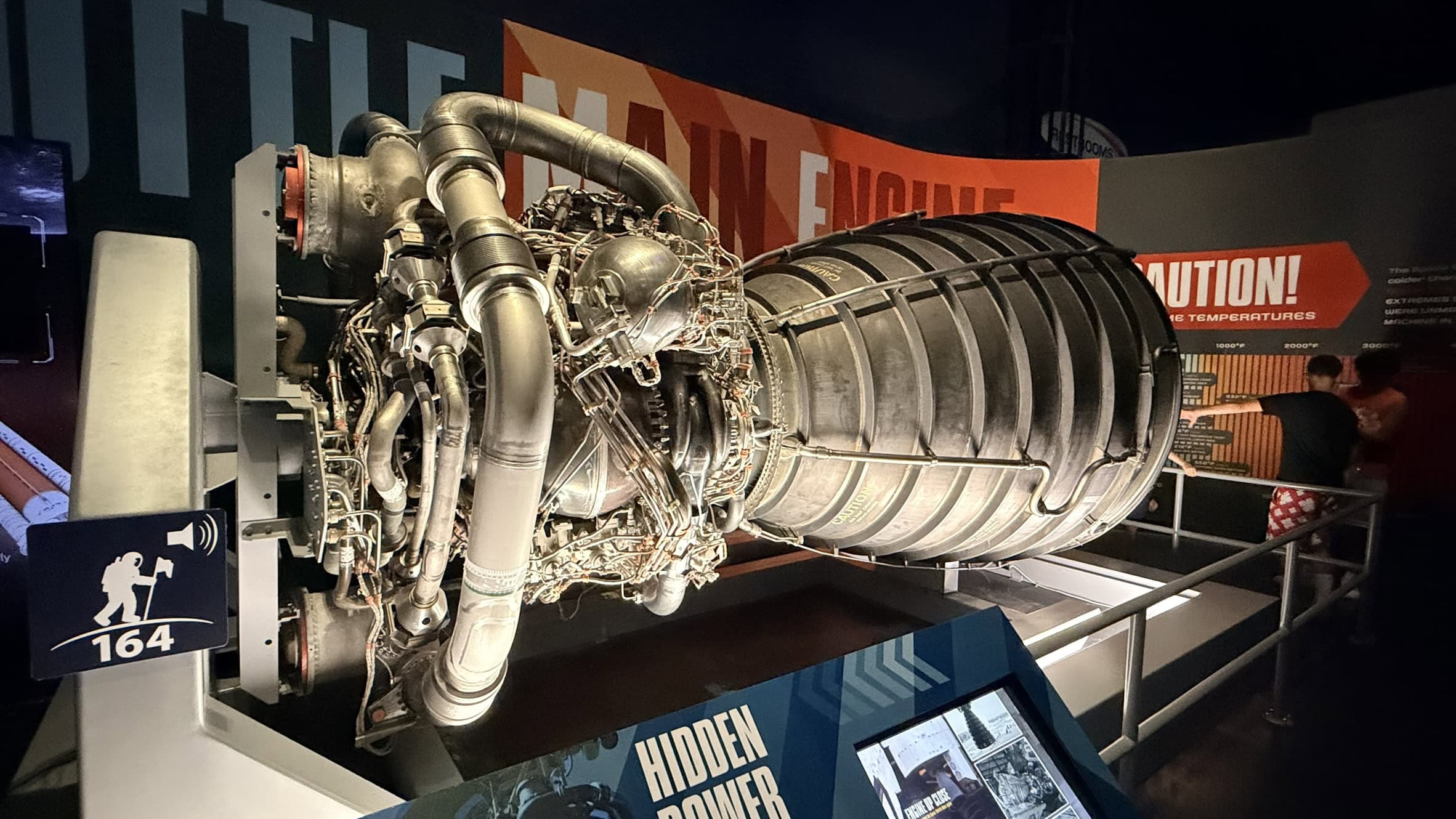
NASA Atlantis Space Shuttle Exhibit at the Kennedy Space Center. 19FortyFive Photo.
Why a Net Instead of Legs
The choice of a net over landing legs is not a gimmick. It reflects a real engineering tradeoff, and Chinese engineers have been explicit about the logic. Landing legs are heavy and complex, and they ride all the way to the edge of space and back on every flight, adding mass that could otherwise be payload or fuel. A net-capture system shifts that burden from the rocket to the ground infrastructure. The booster needs only a set of hooks and grid fins, while the expensive, complicated catching apparatus stays on the ship.
A specialist from the China Academy of Launch Vehicle Technology, which built the rocket, told the state news agency Xinhua that net-based recovery simplifies the rocket’s onboard structure, reduces vehicle mass, and increases payload capacity, and that it adapts well to landing-point deviations because a coordinated net system can effectively widen the capture window. In reusable mode, the Long March 10B can lift about 16 tons to low Earth orbit, roughly comparable to the Falcon 9, which makes it a serious workhorse rather than a technology demonstrator. Whether the net approach proves as robust and rapidly reusable as SpaceX’s legs over many flights is an open question, but the reasoning behind it is sound, and the first attempt worked.
Why China Needs This Badly
The recovery matters because of a problem that has been holding China back. Beijing is racing to deploy two enormous broadband satellite constellations, Guowang and the Shanghai-backed Qianfan, or Thousand Sails, together envisioned to place nearly 28,000 satellites into orbit as China’s answer to SpaceX’s Starlink. Both are strategic, dual-use systems, and China’s military took close notice of how vital Starlink proved to Ukraine’s war effort, sharpening the urgency to field a sovereign equivalent.
The bottleneck has been the cost of getting to orbit. According to an analysis by the Mercator Institute for China Studies, launch costs in China run around 21,000 dollars per kilogram on expendable Long March rockets, against roughly 2,700 to 3,000 dollars per kilogram on a reusable Falcon 9, a gap of about 94 percent.
To keep their international spectrum rights, Guowang and Qianfan must each place at least 10% of their planned networks in orbit by the end of 2026, and with only a few hundred satellites launched between them so far, that target is nearly impossible to meet on expendable rockets alone. A working, reusable booster is the technology that could change the math, drive down the cost per launch, and let China begin filling the sky at a pace closer to the one Starlink has set.
The Honest Limits
None of this closes the gap with SpaceX, and the distance remains vast. A single successful recovery is not a reusable program. SpaceX landed Falcon 9 boosters many times before it dared to refly one, and years passed before block upgrades made rapid, routine reuse the norm. CASC has not yet demonstrated a reflight, has not disclosed how many recovery attempts preceded this success, and has said nothing about how long it will take to refurbish a booster. The company’s own recent history is a cautionary tale: China’s Long March 12A and the commercial Zhuque-3 from Landspace both reached orbit in December but failed their booster-landing attempts.
The raw cadence gap is starker still. SpaceX came close to launching a rocket every other day in 2025, completing roughly 165 orbital flights, nearly twice as many as China’s entire space program managed. Reusing a booster once by year’s end, as CASC has promised, would be a meaningful step, not a transformation.
Still, the direction is unmistakable, and the strategic stakes reach beyond commercial launch. The same Long March 10 family that produced Friday’s rocket is the backbone of China’s plan to land astronauts on the Moon before 2030, and the shared first stage means every recovery test also buys down risk for the crewed lunar program. Reusable boosters are the substrate on which sustained access to space is built, whether the destination is a megaconstellation in low orbit or the Moon’s surface. China spent Friday morning proving it can build that substrate its own way, and the fact that it worked on the first try is what its competitors will study most closely.
About the Author: Harry J. Kazianis
Harry J. Kazianis (@Grecianformula) was the former Senior Director of National Security Affairs at the Center for the National Interest (CFTNI), a foreign policy think tank founded by Richard Nixon based in Washington, DC. Harry has over a decade of experience in think tanks and national security publishing. His ideas have been published in the NY Times, The Washington Post, The Wall Street Journal, CNN, and many other outlets. He has held positions at CSIS, the Heritage Foundation, the University of Nottingham, and several other institutions related to national security research and studies. He is the former Executive Editor of the National Interest and the Diplomat. He holds a Master’s degree focusing on international affairs from Harvard University.

