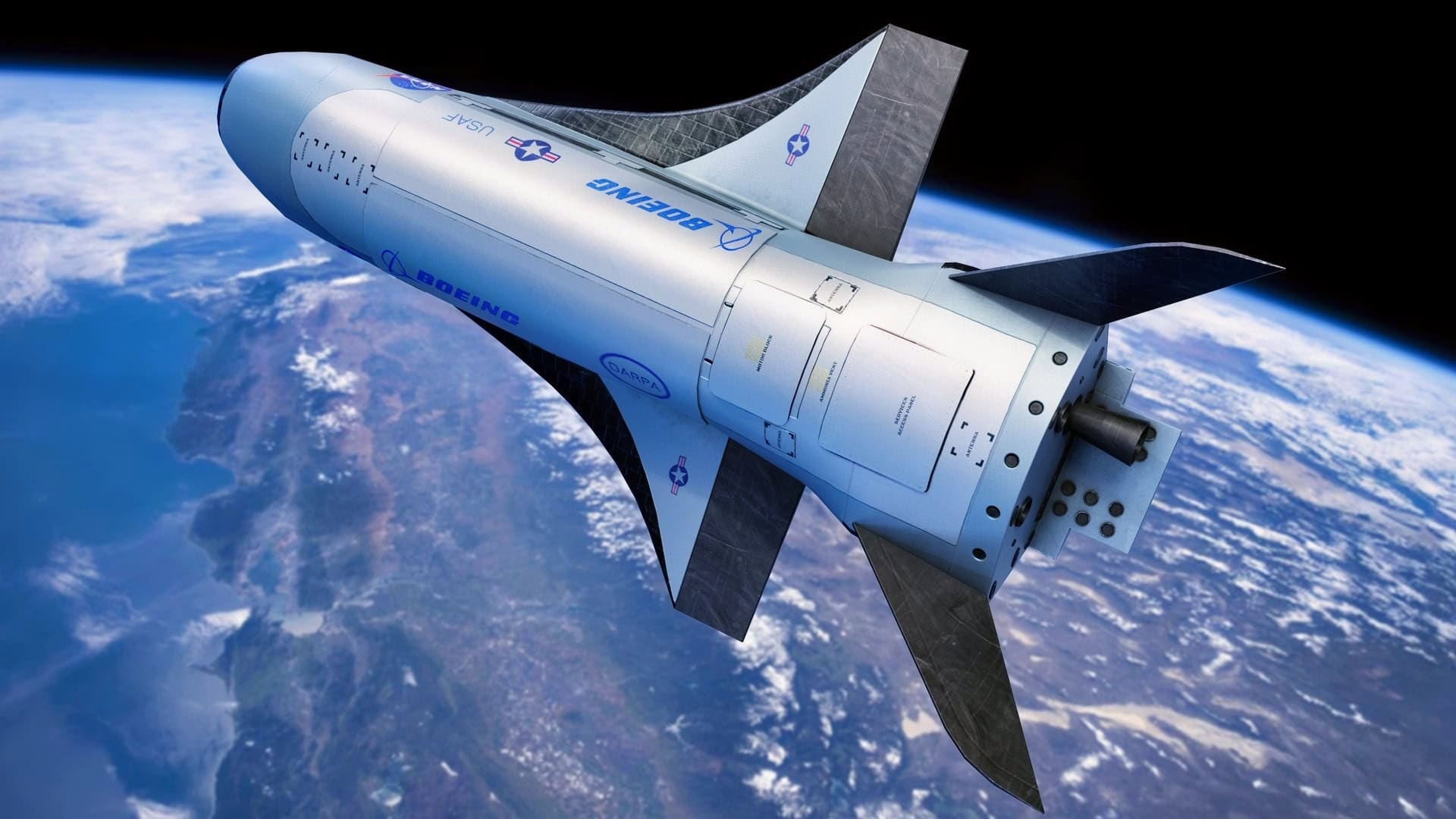
For years, the United States enjoyed a near-monopoly on reusable military spacecraft. Boeing’s X-37B Orbital Test Vehicle quietly orbited the Earth for months, sometimes even years, while conducting classified experiments.
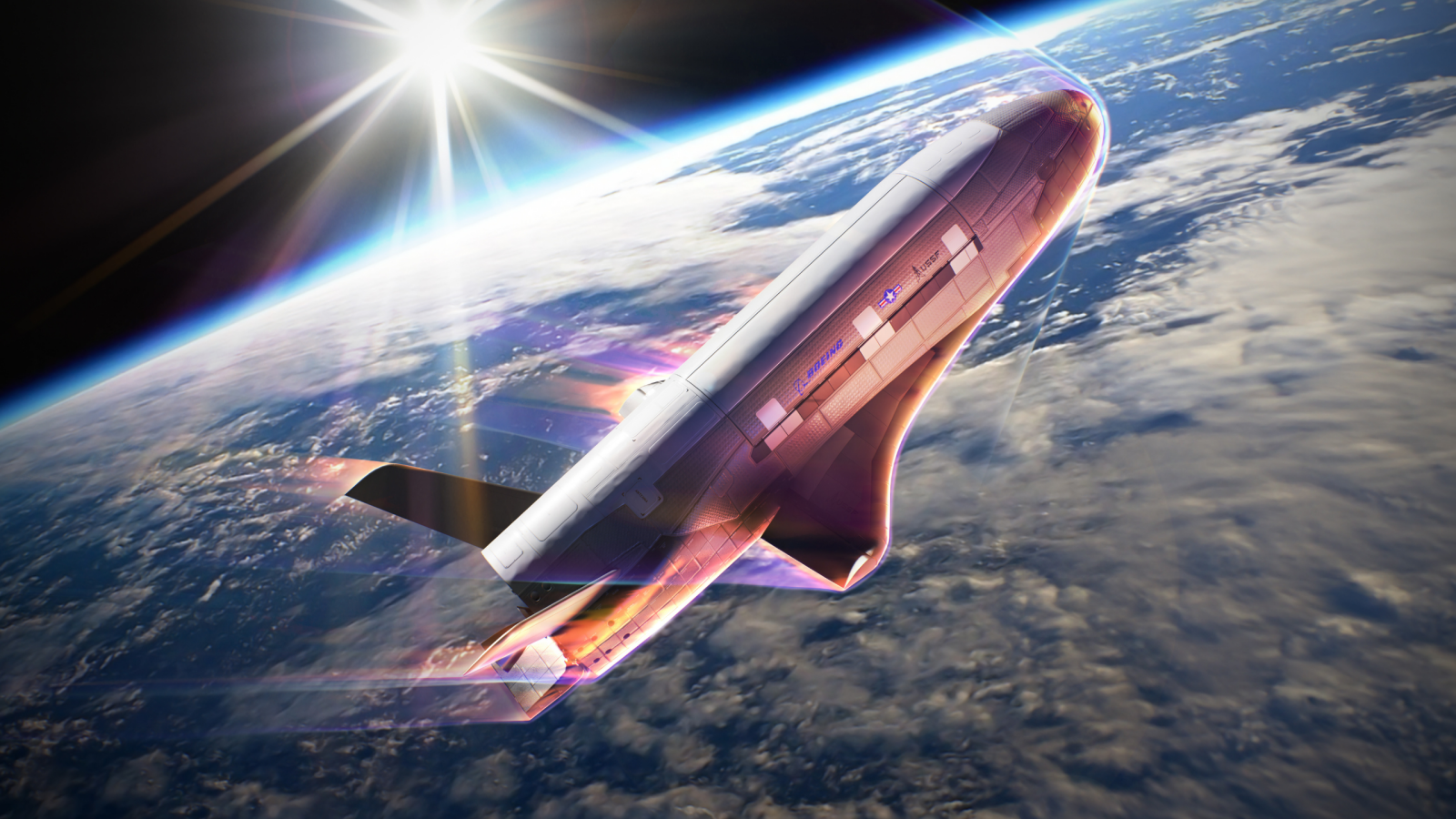
X-37B. Image Credit: Creative Commons.
Foreign intelligence agencies aware of these historic missions by the X-37B could only guess as to what the Americans were doing.
That era, like so much of America’s hegemony today, is over.
China now has its own reusable military spaceplane that is competitive with America’s X-37B. Known as Shenlong (or “Divine Dragon” in Chinese), this system demonstrates Beijing’s undying commitment to matching US military capabilities in all strategic domains–including the strategic high ground of space.
Indeed, Shenlong proves that China intends to live up to Mao’s dictum from 1949 when he called for his country to “overtake the United States.”
Right now, this capability simply matches the one that the Americans have enjoyed for more than a decade.
Yet, China has already proven that “catching up” with and matching the United States technologically is merely the first step. Once caught up, Chinese leaders do not intend to remain at parity with the Americans.
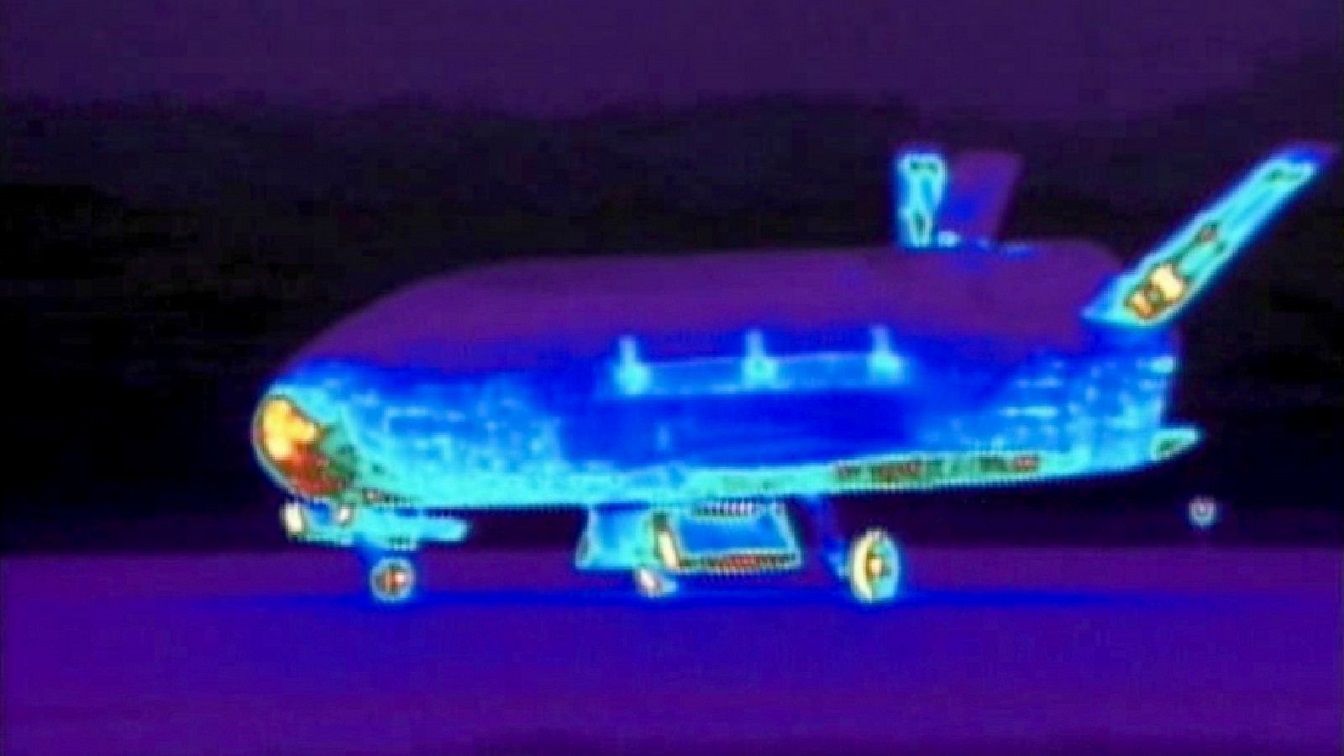
X-37B. Image Credit: NASA YouTube/Screenshot.
The X-37B Orbital Test Vehicle (OTV), the Air Force’s unmanned, reusable space plane, landed at Vandenberg Air Force Base at 5:48 a.m. (PDT) June 16. OTV-2, which launched from Cape Canaveral Air Force Station, Fla., March 5, 2011, conducted on-orbit experiments for 469 days during its mission. The X-37B is the newest and most advanced re-entry spacecraft. Managed by the Air Force Rapid Capabilities Office, the X-37B program performs risk reduction, experimentation and concept of operations development for reusable space vehicle technologies. (photo credit: Boeing)
They want supremacy.
China’s Shenlong Is Becoming Increasingly Sophisticated
China launched Shenlong on its fourth known mission earlier this year. Like the X-37B, the vehicle is highly secretive.
Beijing officially describes it as a reusable experimental spacecraft designed to advance low-cost access to space.
Few outside China believe that is the whole story behind Shenlong any more than China and the rest of the world accept that the X-37B is benign.
Commercial tracking data has shown Shenlong repeatedly releasing objects into orbit, conducting rendezvous-and-proximity operations, and in some cases, apparently maneuvering near those objects after deployment.
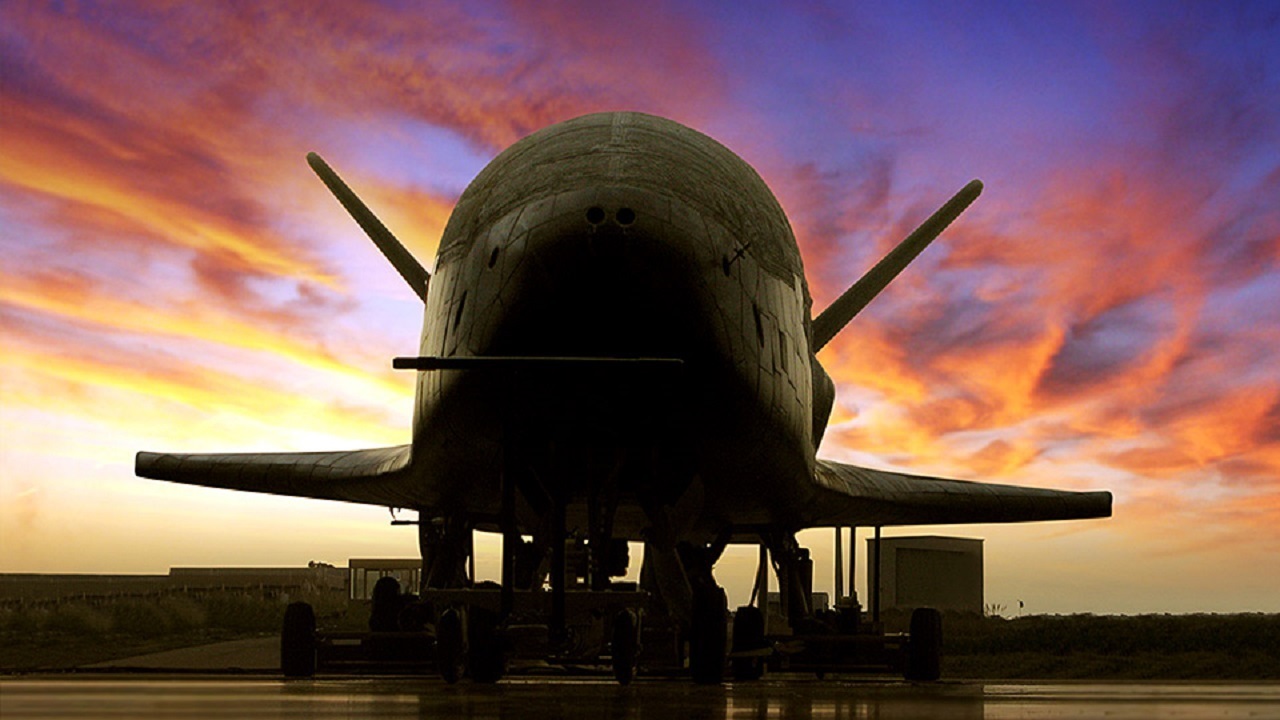
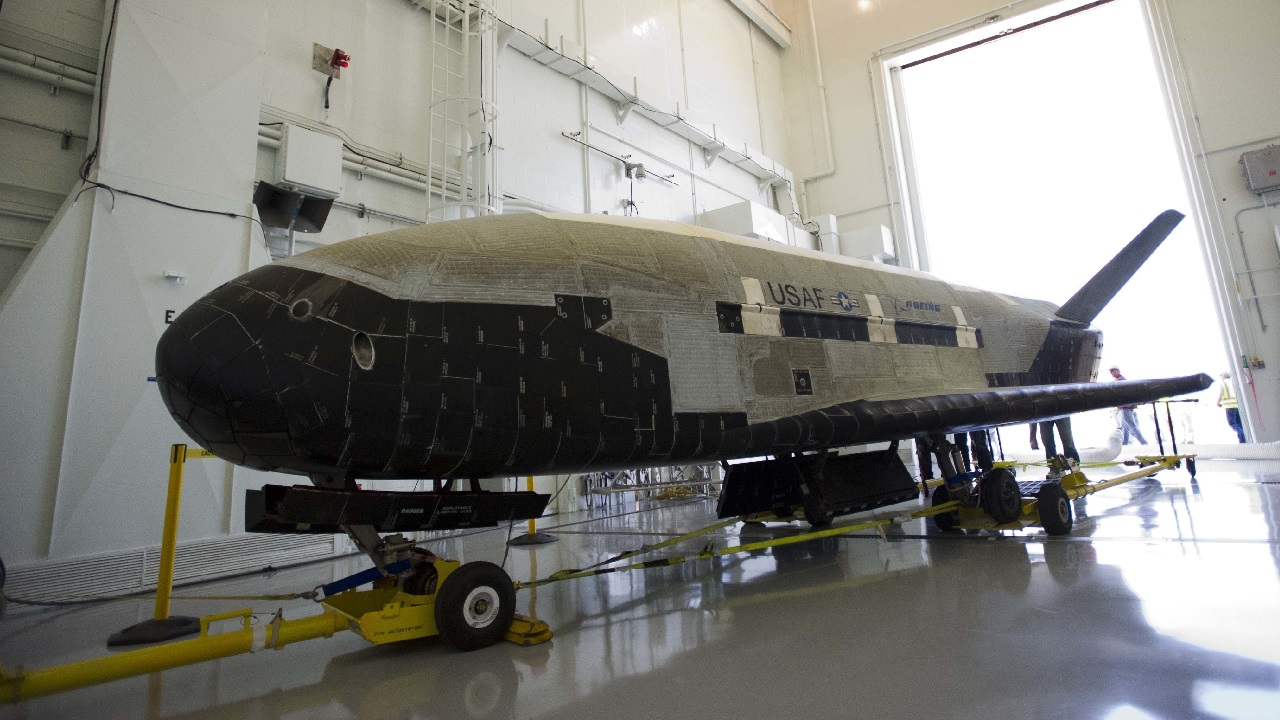
X-37B. Image Credit: Boeing.
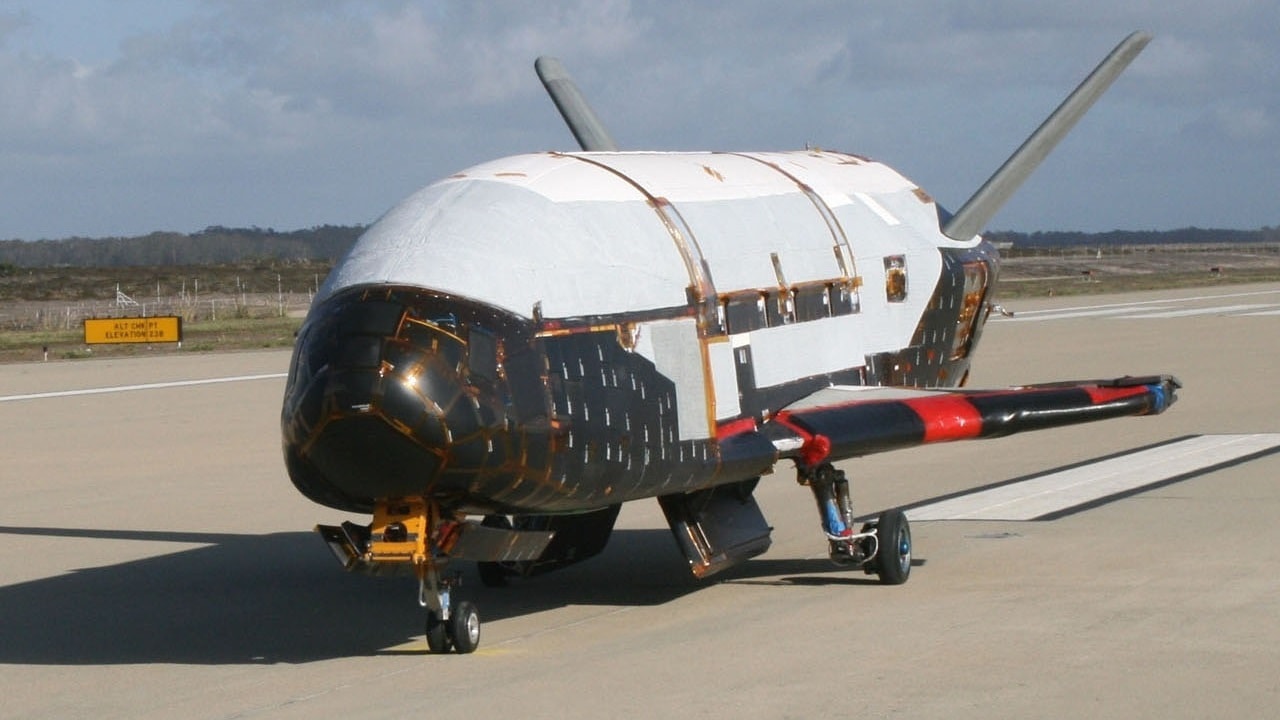
In a testing procedure, the X-37B Orbital Test Vehicle taxis on the flightline March 30, 2010, at the Astrotech facility in Titusville, FLa. (Courtesy photo)
Previous missions appear to have involved docking or close interactions with satellites that the vehicle itself released.
In my 2020 book, Winning Space: How America Remains a Superpower, I outlined how these maneuvers by Chinese spacecraft were not friendly.
They were proofs of concept demonstrating to both the Chinese military and the rest of the world that Beijing possessed the means for co-orbital satellite warfare and espionage.
Russia and the United States possess similar capabilities.
Nevertheless, China’s development of such capabilities does not help the United States maintain its dominance in the strategic high ground of space, notably in orbits around Earth, where many sensitive satellites operate relatively undefended against the kind of co-orbital space attack that China’s Shenlong can conduct at will.
Spaceplanes Are About Access, Not Just Weapons
Many discussions of China’s reusable spacecraft immediately jump to the idea of orbital dogfights or “space fighters.”
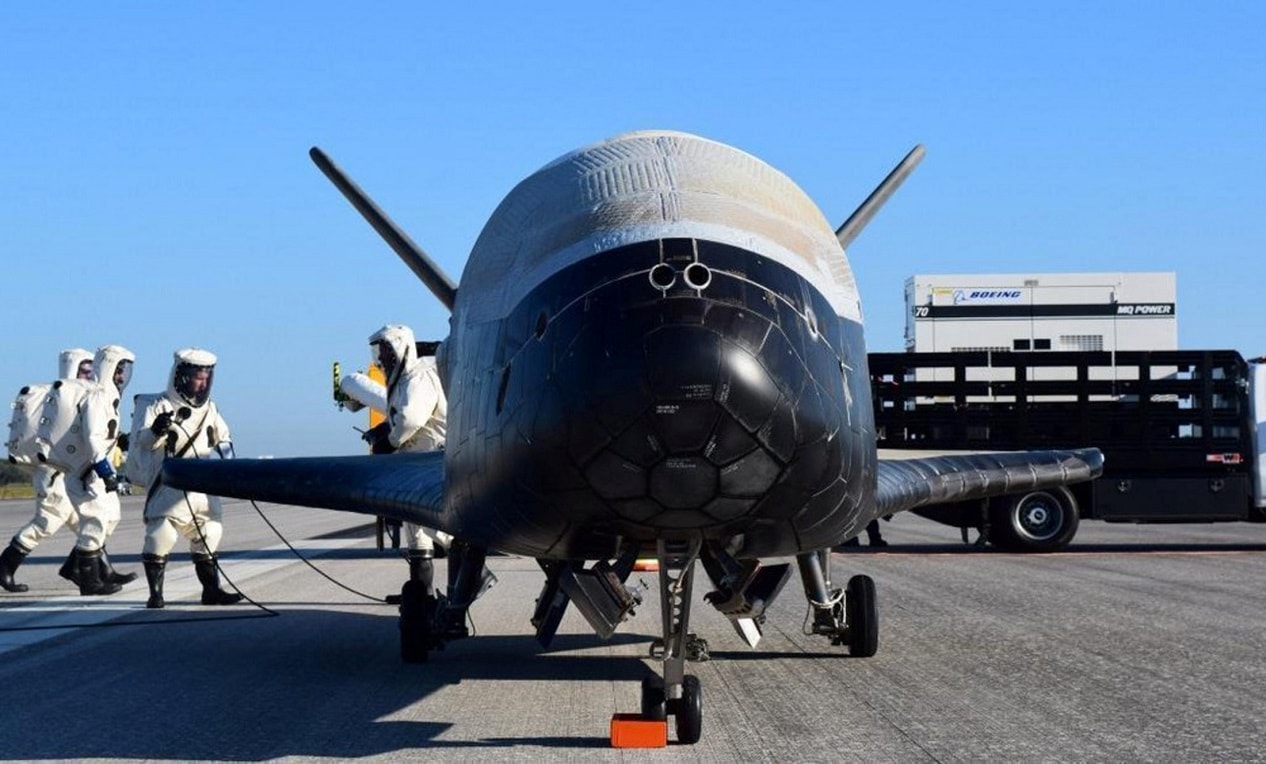
The U.S. Airforce’s X-37B Orbital Test Vehicle mission 4 after landing at NASA’s Kennedy Space Center Shuttle Landing Facility in Cape Canaveral, Florida, U.S., May 7, 2017. U.S. Air Force/Handout.
That misses the larger strategic picture. The true value of a reusable military spaceplane is not that it can shoot something down. The value is that it allows a military power to rapidly:
- Deploy payloads,
- Recovery payloads,
- Inspect satellites (the co-orbital warfare methods mentioned above),
- Test new technologies,
- Conduct classified experiments,
- Practice orbital maneuver warfare
In other words, reusable spaceplanes are less like a fighter jet and more like a combination of a truck, spyplane, and special operations platform.
The X-37B has demonstrated exactly this kind of flexibility over multiple missions.
The vehicle has tested advanced communications systems, navigation technologies, orbital maneuver technologies, and long-duration spacecraft operations.
According to the South China Morning Post, China wants very badly to have that same–or better–capability.
China Thinks the X-37B Is a Weapon
Interestingly, Chinese military researchers have for years argued that the X-37B is nothing more than a successful backdoor attempt to weaponize space, which, per the Outer Space Treaty (OST) of 1967, is not to be weaponized at all.
Researchers affiliated with China’s Space Engineering University recently warned that the X-37B could become a “space killer” capable of supporting US efforts to achieve military dominance in orbit.
According to commentary published through official People’s Liberation Army (PLA) channels, Chinese military theorists view the American military spaceplane as a potentially weaponizable platform and a symbol of American ambitions for space dominance.
It is. And Washington had better realize that Beijing is now working to both counteract those plans and implement its own version of them–at America’s expense.
Why America Cannot Afford to Ignore This
The biggest mistake would be dismissing Shenlong as merely an imitation of the X-37B.
China’s space program has repeatedly demonstrated a pattern (and it is the same pattern that modern China has exhibited throughout its post-1949 existence): first, copy.
Then, improve. Finally, scale.
China’s achievements in the infrastructure that underlies successful space programs, such as launch systems, satellite production, lunar exploration, and space infrastructure, have followed that trajectory for decades.
Shenlong is following that same path.
The greater concern is that China is integrating these capabilities into a broader strategy to contest US military operations in space.
Modern American warfare depends upon satellites for essentially all of its operations. So, too, does the American economy require satellites to move the vast sums of money around the world instantaneously, as it does every day.
Should those satellites be degraded or destroyed–even temporarily–American military and even economic advantages vanish.
A reusable spaceplane capable of operating near those assets is therefore strategically significant (even if it never carries a conventional weapon).
The Bottom Line
Should Americans panic about China’s version of the X-37B spaceplane?
No.
Shenlong isn’t the Death Star any more than the X-37B is an X-Wing. It is evidence that the Chinese intend to counter the Americans across-the-board strategically. And Beijing is signaling that it has the resolve and means to do so.
It means that the Americans have ignored space for too long, allowing their once-impressive dominance to disappear and be challenged by a country like China, which 20 years ago wasn’t a significant challenger at all.
The future space race will not be won by whoever plants the next flag on the moon or who gets to Mars first. Those are part of the new space race.
But the true winner of the new space race is determined by whichever side can master maneuverability, sustainment, orbital repair and inspection capabilities, and the ability to fight in orbit.
So, China isn’t just watching the X-37B. Beijing is learning from it. They’re improving upon it.
And they’re replicating the American strategy of space dominance with more discipline and rigor than Washington has demonstrated.
The future belongs to the side that is more rigorous and disciplined.
About the Author: Brandon J. Weichert
Brandon J. Weichert is the Senior National Security Editor at 19FortyFive.com. He also manages The Weichert Brief on Substack. Weichert also hosts “National Security Talk” on Rumble. He is the author of four bestselling national security books, the most recent of which is A Disaster of Our Own Making: How the West Lost Ukraine (Encounter Books). Follow him via Twitter/X @WeTheBrandon.