
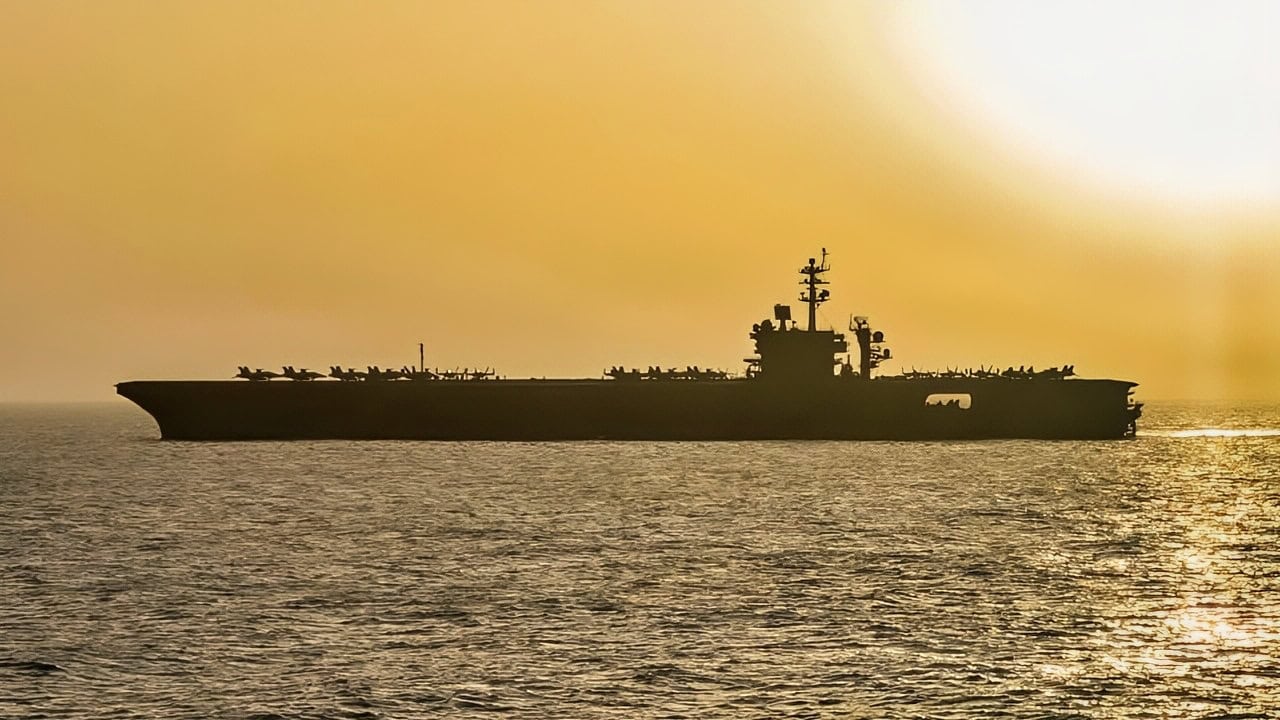
China can build aircraft carriers faster than any nation since the Second World War, but it may not be able to build the fleet required to protect them — and that, not the carrier count, is what will decide whether its flattops are a genuine blue-water threat or expensive targets. A carrier never fights alone. It survives only inside a strike group: air-defense destroyers to shoot down incoming missiles, frigates and submarines to hunt enemy submarines, and a train of replenishment ships to keep it fueled and armed far from home.
Building that screen is harder and slower than building the carrier itself, and it is the part where China is furthest behind. Beijing can launch hulls at a staggering rate, but escorts, anti-submarine capability, attack submarines, and at-sea logistics cannot be mass-produced on the same timeline — and even China’s own naval experts admit it does not yet have enough top-tier escorts.
The Aircraft Carrier Buildup: Three Today, Nine By 2035
The headline numbers are real and without precedent in modern times.
China operates three aircraft carriers today — the Liaoning, a rebuilt Soviet-era hull; the Shandong, its first domestically built carrier; and the Fujian, a far more capable flat-deck design with electromagnetic catapults, commissioned in November 2025. The Pentagon projects China will field a force of around nine carriers by 2035. And at the Dalian shipyard, the Type 004, China’s first nuclear-powered supercarrier, had prefabricated hull modules, as confirmed by September 2025 satellite imagery, with a displacement estimate of 110,000 to 120,000 tons, placing it in the class of the United States Navy’s Ford-class.
That pace of carrier construction is the fastest the world has seen since American yards turned out flattops during the Second World War. But the carrier hull, for all the engineering it requires, is the part of naval power China has proven it can build. The harder question is everything that has to sail alongside it — and there the picture is very different. It is also worth noting that the Liaoning and Shandong are widely assessed as training and limited-capability carriers rather than full blue-water decks, which means the burden of building a real escort screen falls hardest on the Fujian and the nuclear carriers to come.
Aircraft Carriers Never Fight Alone
A carrier is the center of a strike group, not a standalone weapon, and the concrete comparison is the American standard. According to the U.S. Navy, a carrier strike group is built around a single carrier, escorted by at least one cruiser, a flotilla of six to ten destroyers and frigates, and a 65- to 70-aircraft air wing, totaling roughly 7,500 personnel. Beneath the surface, one or two nuclear-powered attack submarines screen ahead of the formation, and a combined ammunition, oiler, and supply ship keeps it sustained at sea.
That entire apparatus exists to protect and enable one carrier.
Each layer addresses a different threat. The cruisers and destroyers provide area air defense, the umbrella that intercepts the anti-ship missiles and aircraft that would otherwise sink the carrier.
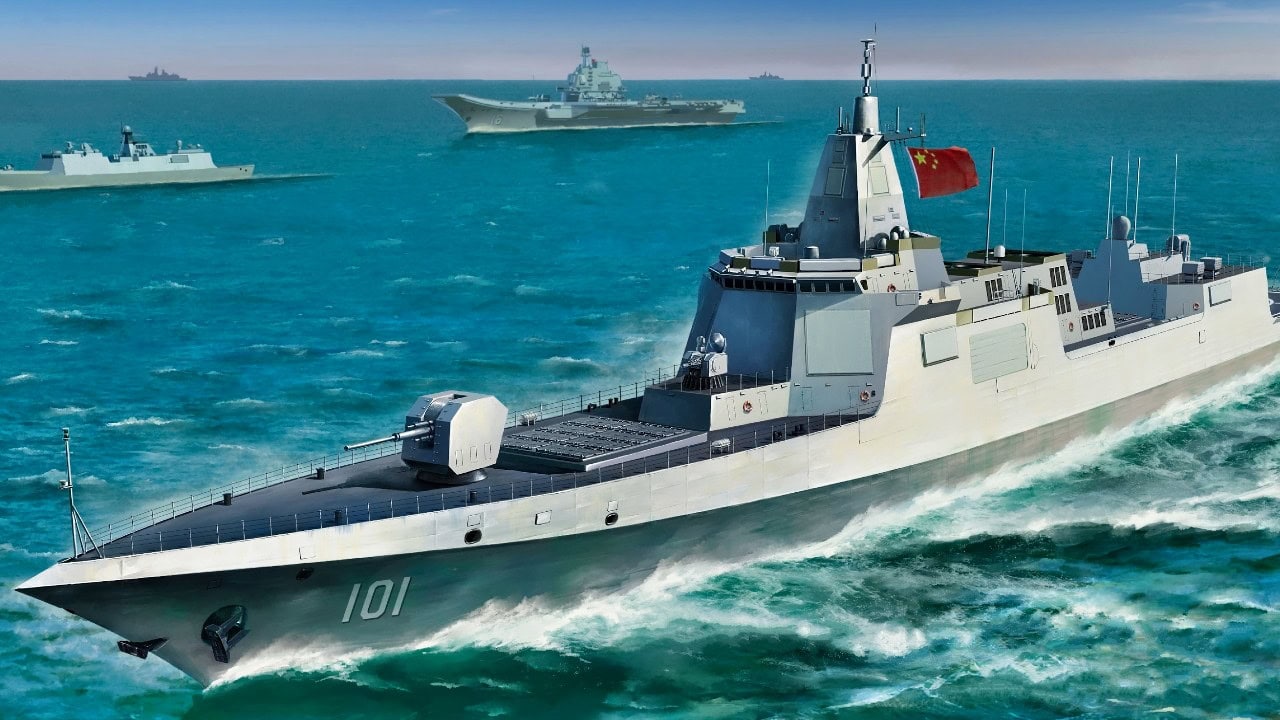
Chinese Navy Warship Created by Artist. Image Credit: Creative Commons.
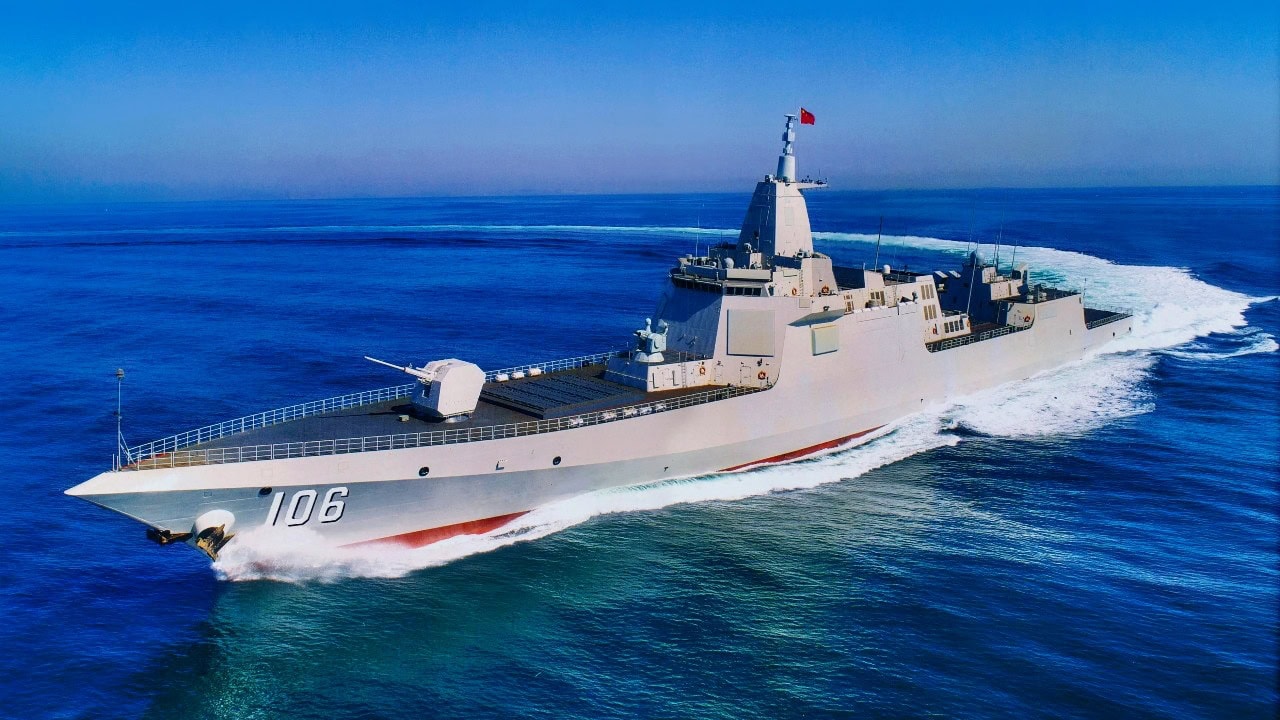
Type 055 Destroyer from China. Chinese Navy Handout/State Media.
The frigates and submarines hunt enemy submarines, a threat that a carrier cannot easily detect or defend against on its own. The replenishment ships provide the fuel, food, and ordnance that let the group operate thousands of miles from a friendly port for months at a time. Strip any of those layers away, and the carrier becomes vulnerable; strip away the logistics, and it cannot leave home at all.
Building carriers is the achievable part. Building, crewing, and learning to coordinate the screen around each one is the part that takes decades — and it is where China’s gap lives.
The Escort Math: Ten Destroyers, Spread Thin
China’s premier escort is the Type 055, a 13,000-ton guided-missile destroyer that Western analysts classify as a cruiser, carrying 112 vertical-launch cells for air-defense, anti-ship, anti-submarine, and land-attack missiles. It is a genuinely formidable warship — among the most capable surface combatants afloat. As of March 2026, when the Chinese navy debuted the Hull 109 Dongguan and Hull 110 Anqing on state television, the People’s Liberation Army Navy operated ten Type 055 destroyers, the first eight commissioned between 2020 and 2023, and two more in a second batch.
Ten top-tier destroyers sound like a substantial force, and it is, but it thins quickly when measured against China’s ambitions, and the people pointing that out are Chinese. A military affairs expert quoted by state media noted that a carrier formation typically needs one to two large destroyers as its main escorts, and that, accounting for training rotations and maintenance cycles, sustaining multiple carrier groups or long-range deployments would require considerably more escorts.
Spread ten destroyers across a planned nine carriers, plus the amphibious assault groups built around the Type 075 and Type 076 ships, plus the independent task forces the Type 055 is also meant to lead, and the math gets tight fast. The strain is already visible: when China assigned its two newest Type 055s to the Eastern Theater Command, which faces Japan and Taiwan, it concentrated a large share of the class in one theater, leaving fewer destroyers available to escort the carriers based under the Northern and Southern commands.
The Chinese Admission: “Still Insufficient”
The most telling evidence is that Beijing’s own analysts say the escort fleet is too small. Speaking to Chinese state media after the two newest destroyers entered service, the naval expert Zhang Junshe said the current number of Type 055s was “still insufficient,” and that construction should continue to expand to meet the navy’s needs for far-seas operations, protecting maritime supply lines, and safeguarding overseas interests.
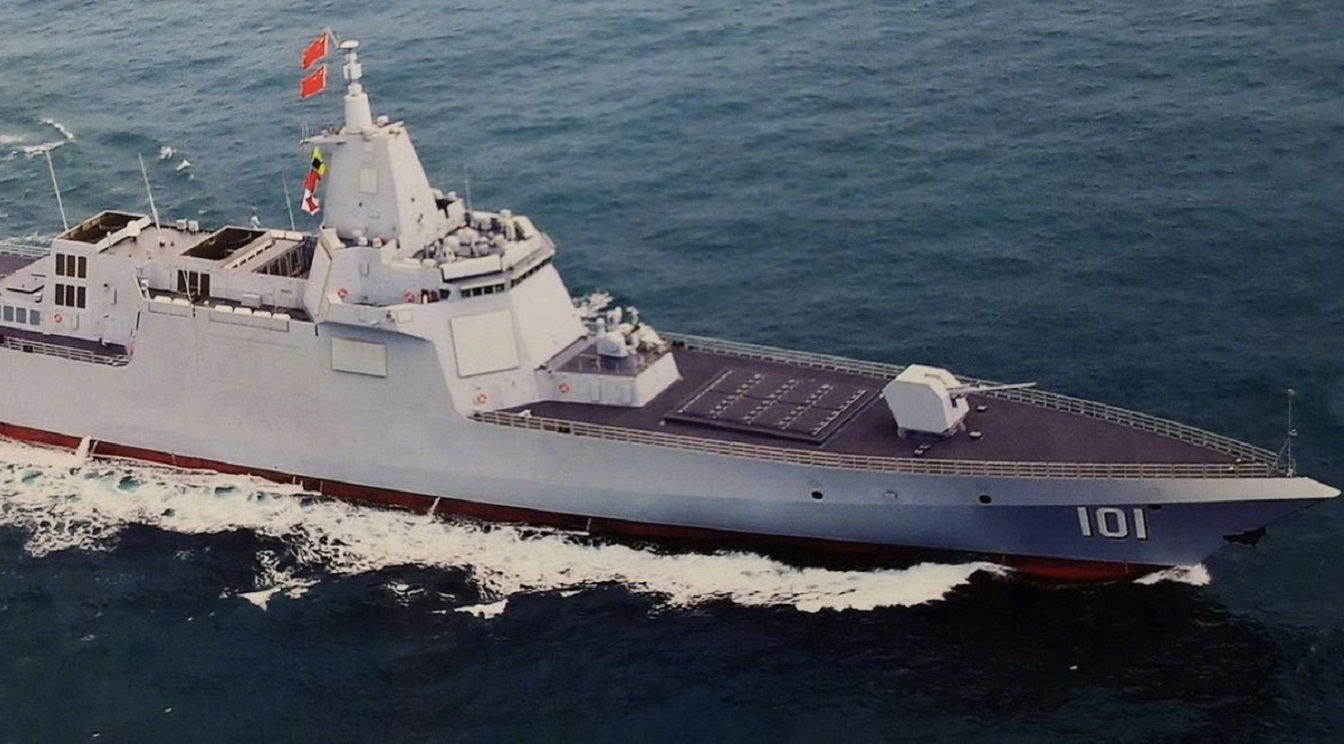
China Navy Destroyer. Image Credit: Creative Commons.
China is believed to be heading toward a fleet of around sixteen Type 055s, but even that expanded number, distributed across carriers, amphibious groups, and independent missions, leaves the escort screen stretched.
When a country’s own military commentators, speaking in its own state press, concede that the escort fleet cannot yet meet the mission, that is the honest center of the matter. The Type 055 is an excellent ship, and China is building more of them at a rapid clip, but the gap between the number of carriers China plans to operate and the number of high-end escorts available to protect them is real, and Beijing is openly acknowledging it.
The Deeper Gaps: Submarines, Logistics, And The Hardest Capability To Build
The escort shortfall is only the most visible part of the problem. The deeper weaknesses are in the capabilities that take the longest to build, and anti-submarine warfare is the one Chinese and Western analysts alike cite most often as the PLA Navy’s softest spot. China is rushing a new frigate, the Type 054B, specifically to address it — an anti-submarine-focused design with advanced sonar, dual helicopter hangars, an electric propulsion system for quieter operation, and the ability to carry the Z-20F anti-submarine helicopter.
The lead ship, the Luohe, entered service in January 2025, and a third and fourth hull were photographed at an advanced stage of construction in March 2026, indicating a shift from initial production to sustained shipbuilding. But anti-submarine warfare is built on experience, sensor networks, and the accumulated craft of hunting submarines, not on hulls alone, which makes it the hardest capability to stand up quickly, no matter how fast the frigates roll out.
Two further gaps compound it. A carrier group needs attack submarines running ahead of it, and China’s nuclear-powered submarine fleet remains smaller and, by consensus Western assessment, noisier than the American and allied boats it would face — a gap that the forthcoming Type 095 attack submarine is intended to narrow but that cannot be closed quickly.
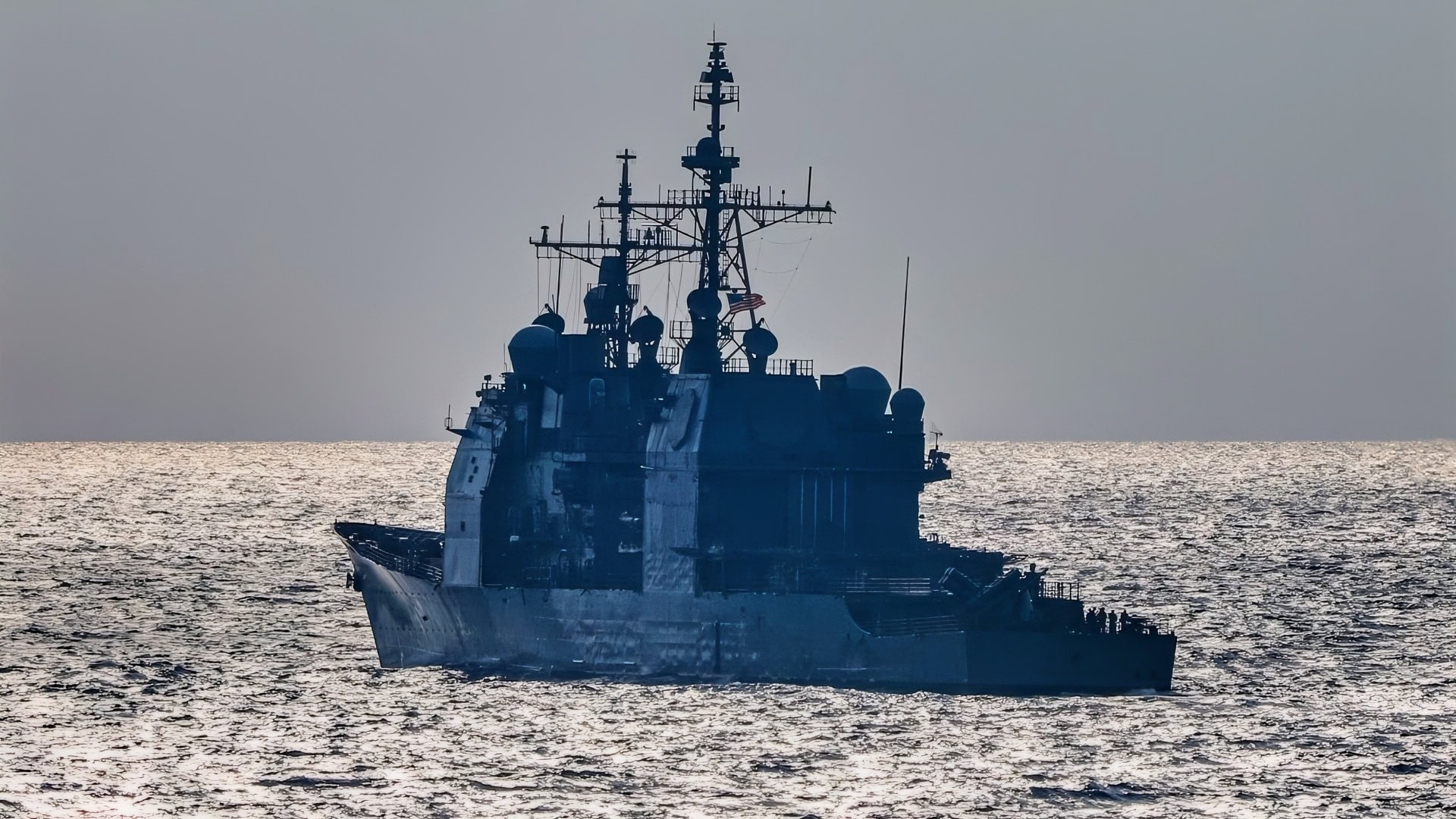
TAIWAN STRAIT (Aug. 28, 2022) Ticonderoga-class guided-missile cruiser USS Antietam (CG 54) transits the East China Sea during routine underway operations. Chancellorsville is forward-deployed to the U.S. 7th Fleet area of operations in support of a free and open Indo-Pacific. (U.S. Navy photo by Mass Communication Specialist 2nd Class Justin Stack)
Blue-water carrier operations require a train of replenishment ships, the Type 901 fast combat support vessels at around 45,000 tons that refuel and rearm the group at sea. China has relatively few of them against a nine-carrier ambition, and without enough of that logistics train, its carriers are tethered to home waters — which defeats the entire purpose of building a blue-water fleet.
The Experience Layer: You Cannot Build Decades Overnight
Even with all the hulls, a carrier strike group is a feat of coordination as much as hardware. Operating one means choreographing layered defensive formations, synchronizing air, surface, and subsurface units across vast distances, generating aircraft sorties under stress, and conducting underway replenishment in open ocean — a body of institutional skill the U.S. Navy has accumulated over roughly eight decades of continuous carrier operations. China is drilling exactly these tasks and improving visibly.
In May 2026, Japan tracked a five-ship Chinese formation in the Western Pacific led by the carrier Liaoning, in which the new Type 054B frigate made its first deployment as part of a carrier strike group alongside a Type 055 destroyer, a Type 052D destroyer, and a Type 901 supply ship — the clearest picture yet of an emerging carrier strike group that deliberately mirrors the American escort template, pairing a high-end air-defense destroyer with an anti-submarine frigate and a replenishment vessel for sustained operations.
That deployment shows China assembling the pieces and practicing the choreography. What it cannot show is experience, which is the one thing that cannot be welded or launched. The proficiency that lets a navy run a carrier group smoothly in combat — the muscle memory of crews, commanders, and maintainers built up over generations — is something China is only beginning to accumulate, and it is precisely the kind of capability that takes decades rather than budget cycles to mature.
The Honest Balance: A Real Gap, Deliberately Attacked
None of this means China’s carriers are useless or that Beijing is ignoring the problem — the opposite is true, and the counterweight deserves real weight. Ten Type 055 destroyers built in roughly five years is itself a staggering industrial pace, faster than any other navy is producing top-tier surface combatants.
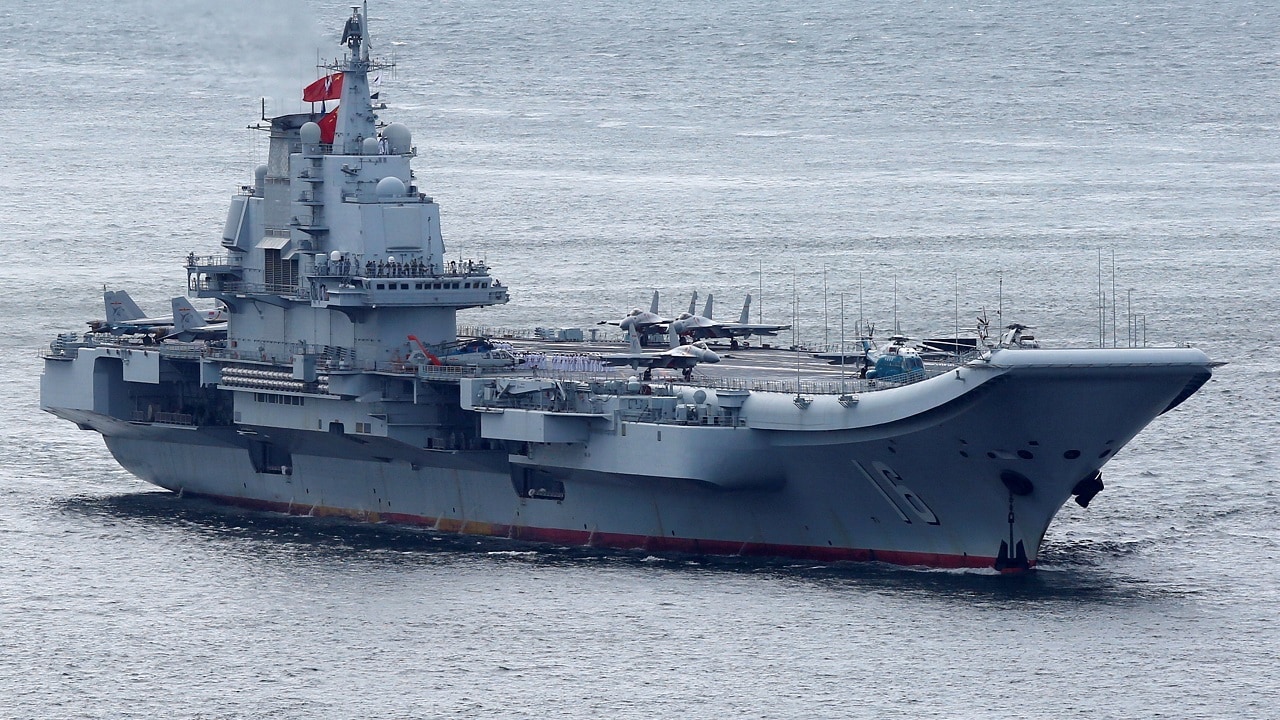
Members of the People’s Liberation Army navy are seen on board China’s aircraft carrier Liaoning as it sails into Hong Kong, China July 7, 2017. REUTERS/Bobby Yip
The Type 054B is purpose-built to attack the anti-submarine gap. And the overall force design is coherent rather than haphazard: the Type 055 provides high-end area air defense and command, the Type 052D adds multirole firepower, and the Type 054B thickens the screen with anti-submarine escort. China is not blundering toward a carrier force it cannot protect; it is methodically building the screen, and doing so at a rate that should not be underestimated.
The fair conclusion is that the escort fleet is the binding constraint on China’s carrier ambitions, and the real contest is whether Beijing can close that gap as fast as it launches carriers. The hulls are coming faster than the screen; the anti-submarine, submarine, and logistics capabilities are the slow-to-build parts; and the experience to tie it all together is the slowest of all. But China is aware of every piece of this and is moving against it deliberately, which is why the honest framing is a race, not a verdict.
The Strategic Payoff: Strong Near Home, Exposed Far From It
Where the gap matters most depends on where China intends to fight. In a conflict close to home — over Taiwan or within the first island chain — China can lean on its land-based air force and its vast inventory of shore-based missiles to provide much of the protective umbrella a carrier group would otherwise supply itself. Close to the mainland, the carriers operate under a defensive shield they do not have to carry, and the escort shortfall matters less. It is far from home, in the open Pacific or beyond, that the screen becomes everything — and there China would have to bring the entire apparatus along, the apparatus it does not yet have in sufficient numbers.
That produces an outcome that inverts the entire logic of carrier aviation. Aircraft carriers exist to project power far from home, into waters where no friendly land base can help — that is the whole point of building them. China’s carriers, for now, may be most formidable near China and most vulnerable far from it, which is the opposite of how carriers are supposed to work.
Until China builds the escorts, the submarines, the logistics train, and the hard-won experience to protect a carrier group on the far side of the ocean, its flattops will be powerful symbols close to home and exposed targets far from it.
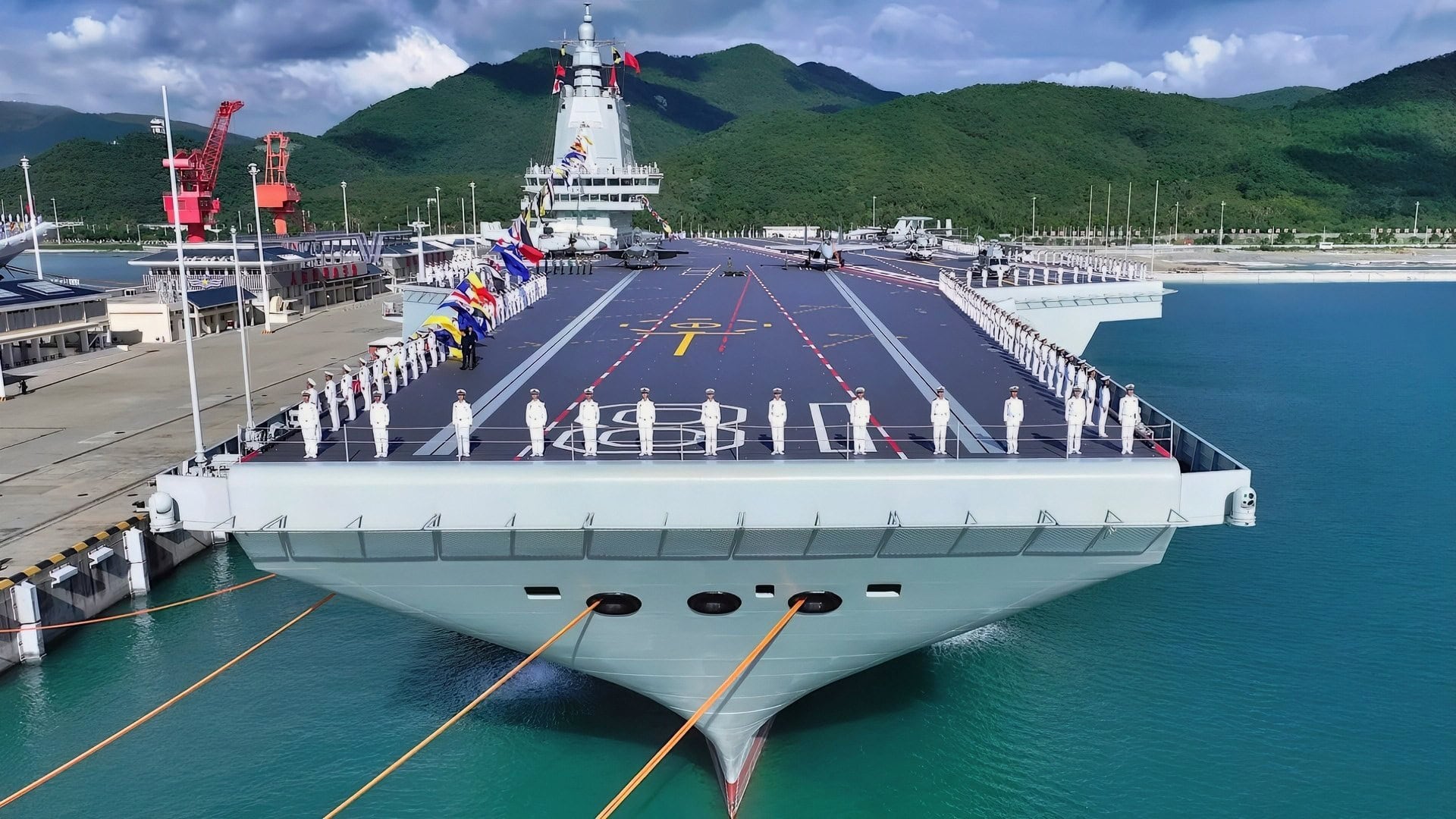
China Aircraft Carrier PLAN Image
The Verdict: The Aircraft Carriers Are The Easy Part
China has proven it can build aircraft carriers at a rate no other country can match, and the Type 004 will soon make it one of only two nations operating nuclear-powered supercarriers. That achievement is genuine and fast.
But it is also the most straightforward part of becoming a true carrier power, and the parts that remain are the ones that have always been harder and slower: the air-defense escorts to survive a missile salvo, the anti-submarine capability that takes years of practice to master, the attack submarines to screen ahead, the replenishment ships to range far from home, and the decades of operational experience that let a navy run all of it together under fire.
Beijing knows this, which is why its own experts are saying the escort fleet is insufficient and why it is building frigates and destroyers as fast as it can.
The question that decides whether China’s carriers become a genuine blue-water threat is not how many flattops it launches — it is whether it can build, crew, and learn to operate the fleet required to protect them, before the carriers outrun the ships meant to keep them alive.
The carrier count is the easy part. The screen is the real measure, and it is the one China has not yet built.
About the Author: Harry J. Kazianis
Harry J. Kazianis (@Grecianformula) was the former Senior Director of National Security Affairs at the Center for the National Interest (CFTNI), a foreign policy think tank founded by Richard Nixon based in Washington, DC. Harry has over a decade of experience in think tanks and national security publishing. His ideas have been published in the NY Times, The Washington Post, The Wall Street Journal, CNN, and many other outlets worldwide. He has held positions at CSIS, the Heritage Foundation, the University of Nottingham, and several other institutions focused on national security research and analysis. He is the former Executive Editor of the National Interest and the Diplomat. He holds a Master’s degree focusing on international affairs from Harvard University.

