
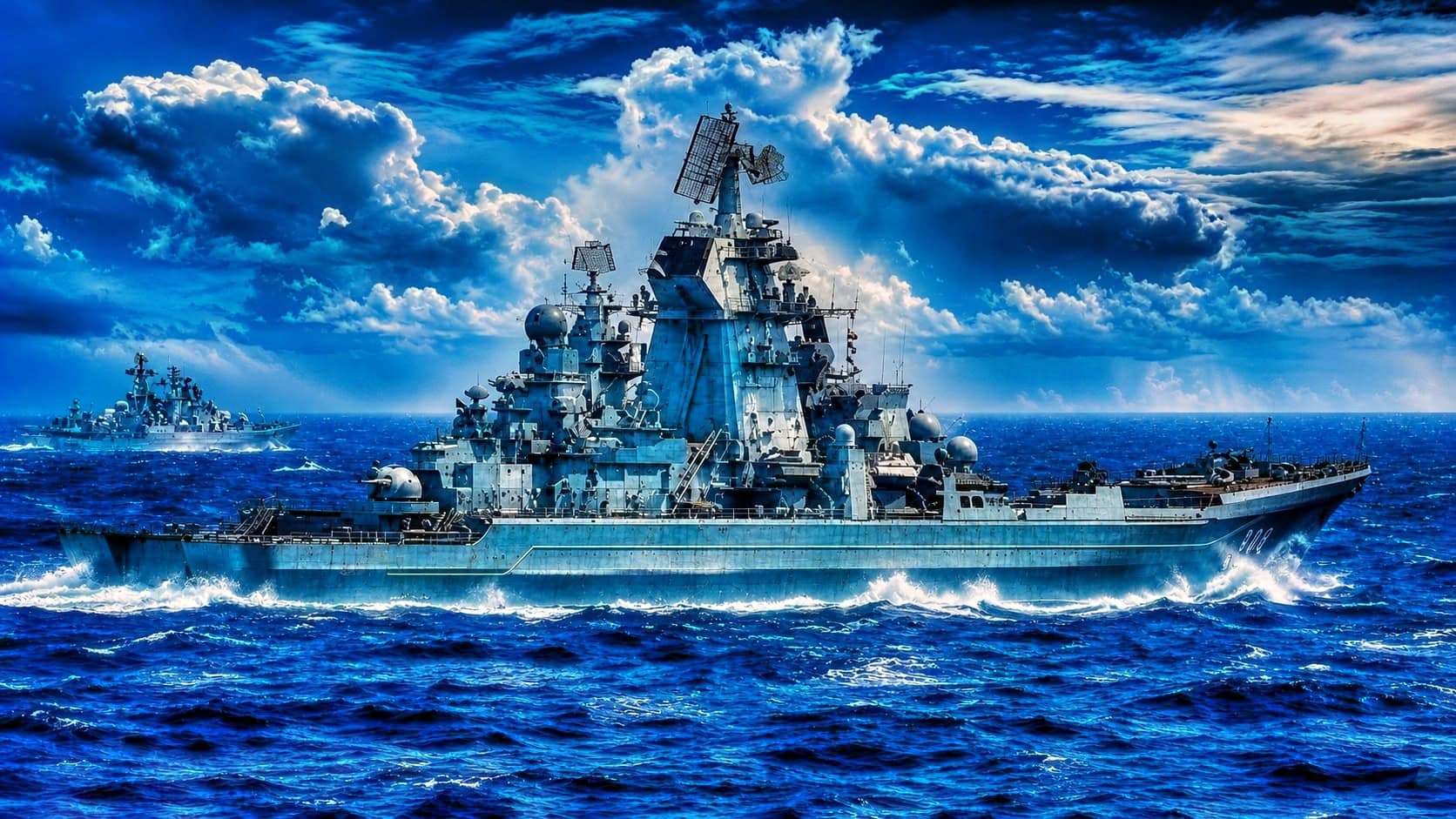
Several weeks ago, the nuclear battlecruiser Admiral Nakhimov, the second of Russia’s remaining Project 1144 Orlan (NATO designation: Kirov-class) ships, entered its final sea trials with hopes of entering full service sometime in the year. The ship has been undergoing extensive modernization since 2014, and her reintroduction to the Navy has been repeatedly delayed. Originally designed to combat submarines and carrier strike groups, the Kirov-class heavy cruisers are some of the most heavily armed surface ships in the world. The modernized battlecruiser is equipped with 176 vertical launch systems (VLS tubes), which can be armed with S-400 air defense missiles, Kalibr cruise missiles, or Zircon hypersonic missiles.
Kirov-Class Battlecruiser: What Took So Long?
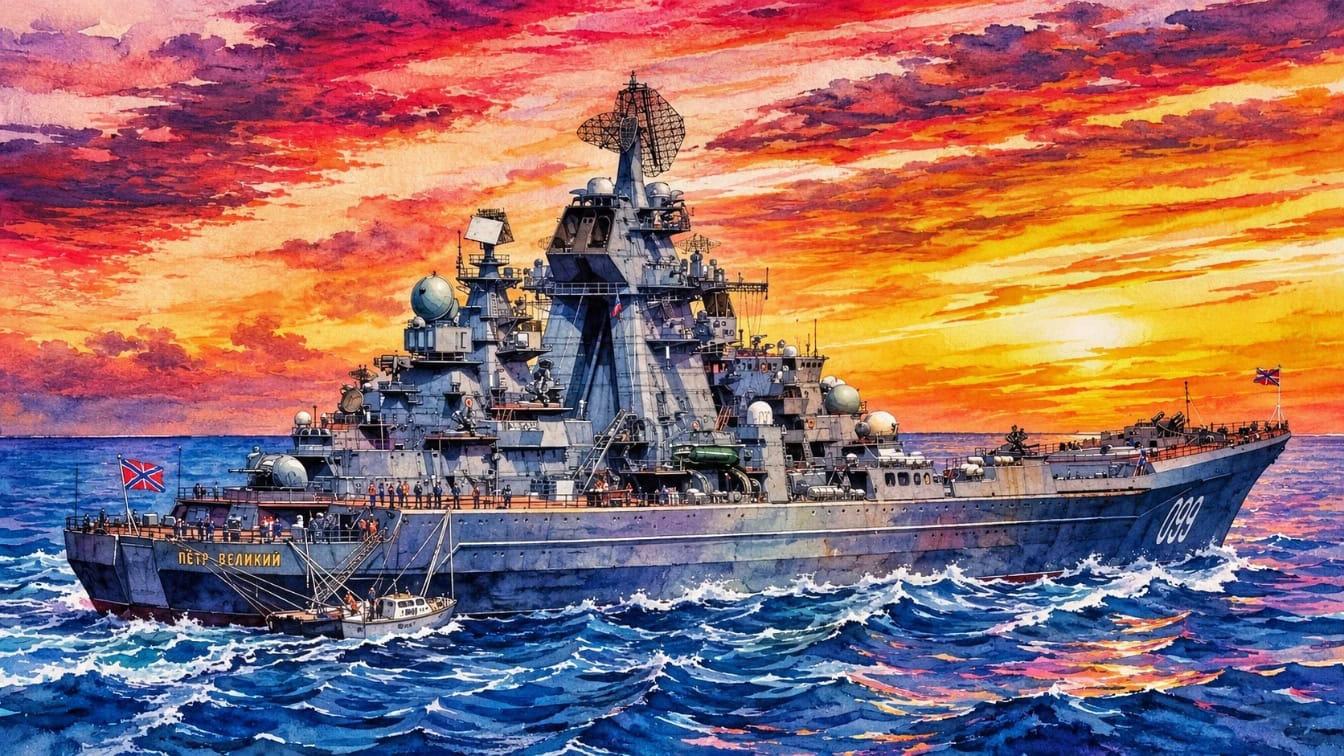
Kirov-Class Battleship New Artist Rendition. Image Credit Banana Nano.
Originally built in the USSR in 1986 as Kalinin, Admiral Nakhimov was sent to the shipyard in Severodvinsk for maintenance after the Cold War, with little prospect of returning to the fleet anytime soon.
The decision to restore her was made in 2006 with hopes of returning her to the fleet as soon as 2012. Modernization work was halted for a few years to allow the Russian Navy to finalize the design of the refurbished ship.
Work continued in 2014, but at a snail’s pace, with frequent delays. Almost two decades after the dissolution of the USSR, the infrastructure and expertise that had built the Kirov-class ships had disappeared, making the work much more difficult. With the outbreak of the war in Ukraine, work slowed even further as valuable resources were diverted to other, more urgently needed fields.
The fall of the Soviet Union has been a disaster for the Russian Navy. Most of the USSR’s shipbuilding projects were laid down at the Mykolaiv shipyard in Ukraine and subsequently scrapped. The infrastructure available in Russia was either decommissioned or refitted for building civilian ships.
Since the Cold War, the Russians have not been able to lay down a destroyer-sized vessel, mainly due to these intensive shipbuilding constraints. With that in mind, it is amazing that Admiral Nakhimov and Pyotr Veliky (Peter the Great) were saved from the chopping block, considering the cost of refurbishing and modernizing them.
Their sister ships, along with many other projects, were scrapped for parts.
Admiral Nakhimov: Almost 30 Years Away From the Fleet
Despite everything working against the project, Admiral Nakhimov took to the waves on her own power in June 2025 when she began the first of her sea trials. In June, after almost 30 years of delays, the ship began her final sea trials. “Currently, the cruiser is at the testing stage, the procedure and timing of which are determined by the general schedule approved by the Navy. The work is being carried out on time and is in its final stages,” said General Director of the United Shipbuilding Corporation (USC) Andrey Puchkov.
The hope is to finally deliver the ship to the fleet sometime in late 2026 or early 2027. Although considering the general trend of this project, another massive delay cannot be ruled out.
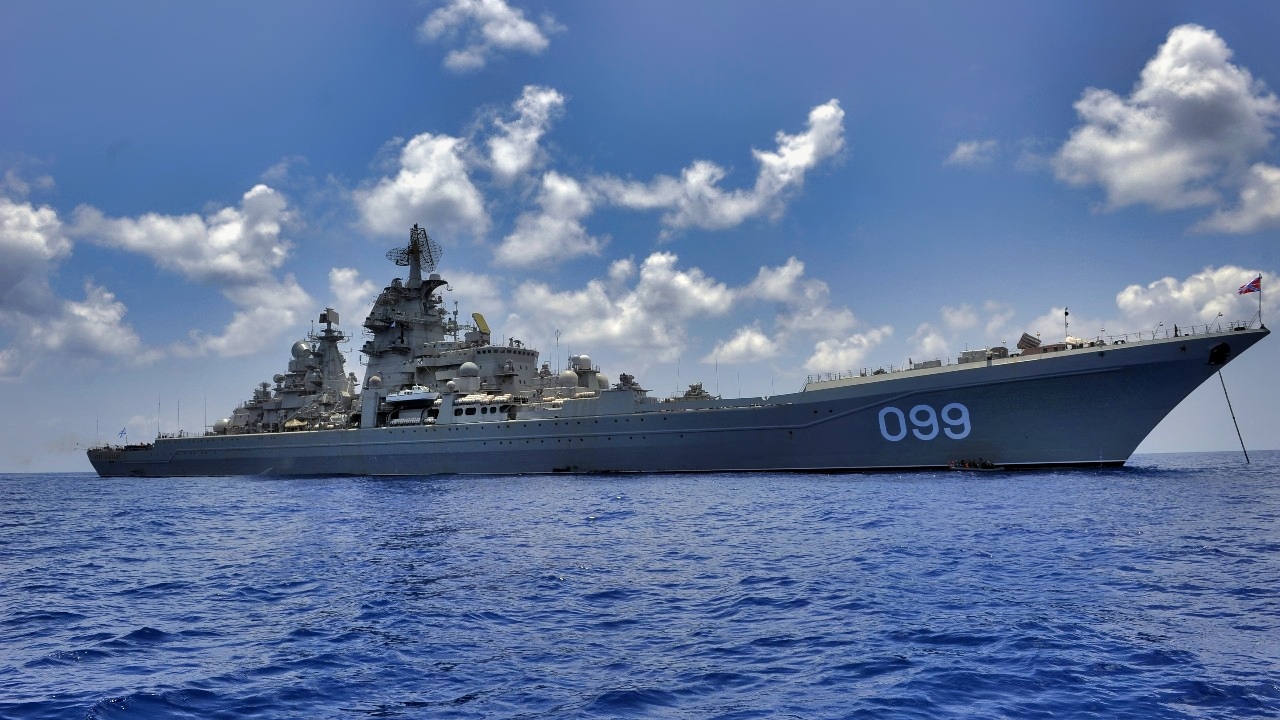
Kirov-Class Russian Navy. Image Credit: Creative Commons.
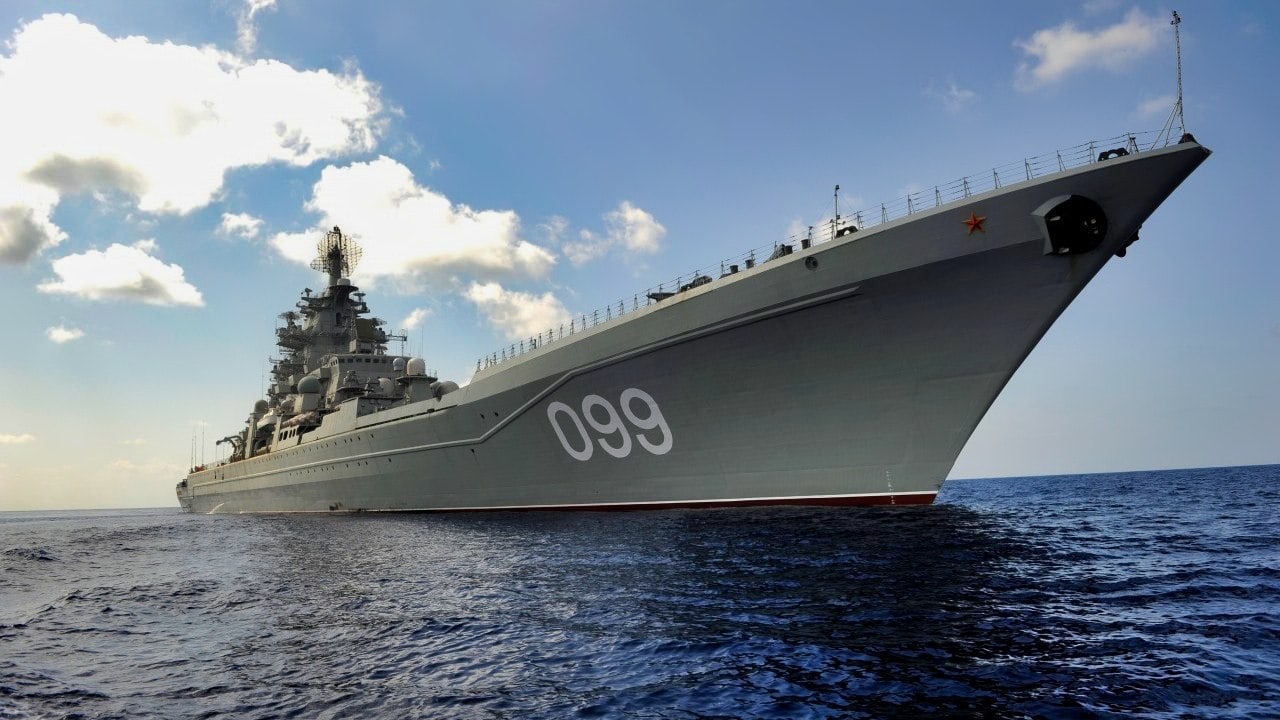
Kirov-Class Battlecruiser Russian Navy
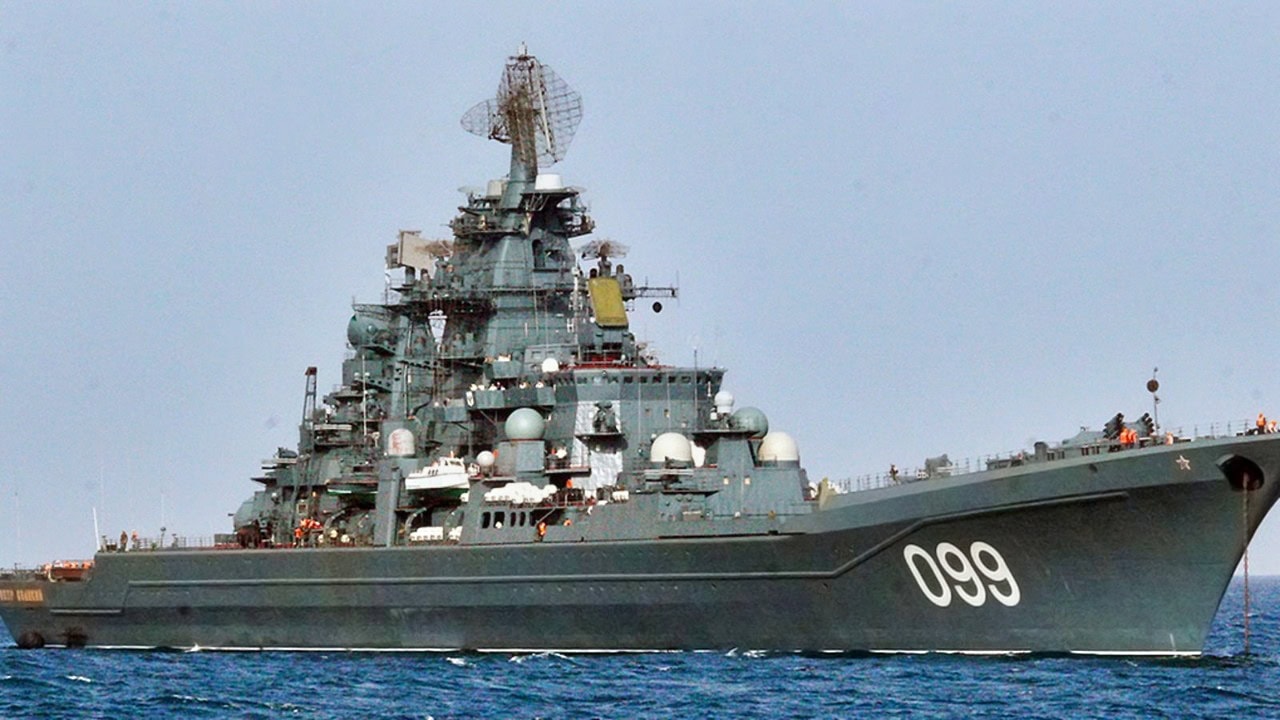
Kirov-Class Battlecruiser Russian Navy. Image Credit: Creative Commons.
Although Admiral Nakhimov is all but set to return to the fleet, the fate of her sister ship, Pyotr Veliky, is not as certain. Originally laid down in 1986, Pytor Veliky was not completed until the end of the Cold War. Unlike Nakhimov, she did not receive large-scale modernizations, relying instead on her late-Cold-War systems. The Kirov-class ships, due to their massive size and armaments, are expensive to field and maintain.
Although the Kremlin has not stated this explicitly, Russian experts generally assume the ship will be decommissioned soon after Admiral Nakhimov returns to the fleet. Although there is no official statement from the Russian Navy, the combined cost of the two ships is likely too much to bear for the Navy in its current state.
Strategic Rationale: A Big Ship With a Lot of Missiles
The Kirov-class has always been known for its massive arsenal. During the Cold War, a single battlecruiser, on paper, had enough armaments to take on an entire American carrier strike group. Admiral Nakhimov has been upgraded to include more advanced radar and sonar systems to counter contemporary naval threats. Her armament has likewise been modernized to include Russia’s most capable anti-ship missiles.
Her 80 VLS tubes can carry Kalibr cruise missiles, P-800 Oniks anti-ship missiles, and Zircon hypersonic cruise missiles. Additionally, the ship has 96 VLS tubes dedicated to air defense, which can carry modified S-400 air defense missiles, greatly increasing the cruiser’s air defense capabilities against modern missile systems.
There is a debate to be had about the value of large ships such as the Kirov-class. Even in Russian circles, some experts are unconvinced that a ship as large as Admiral Nakhimov is needed in the age of advanced anti-ship missiles or unmanned undersea systems (UUSs).
There is, however, value to be had in larger ships with larger magazines.
As some experts have said in defense of aircraft carriers, smaller ships like frigates and corvettes are unable to hold sea territory as larger vessels can, due to their limited endurance and armaments.
That being said, this defense works for larger navies like the U.S. Navy. The Russian Navy, with a much smaller budget and a struggling shipbuilding industry, is less suited to field and maintain massive surface ships.
Regardless, the modernization and reintroduction of Admiral Nakhimov continue; whether this is due to genuine strategic need for the Russian Navy or simple nostalgia for the Kirov-class (which, in the author’s opinion, is somewhat understandable) remains unknown.
The battlecruiser will take its place in the Northern Fleet. Afterward, the fate of her sister ship will be decided.
About the Author: Isaac Seitz
Isaac Seitz, a Defense Columnist, graduated from Patrick Henry College’s Strategic Intelligence and National Security program. He has also studied Russian at Middlebury Language Schools and has worked as an intelligence Analyst in the private sector.